
Including drones and high-performance computers in export controls will help provide a safe trade environment for companies, promote healthy development of the industries and better fulfill international obligations, said MOC spokesman ShenDanyang in a press conference.
Under the new rule announced by the MOC and the General Administration of Customs, starting from Aug. 15, companies that make certain drones and computers specified on the MOC website will have to register with commerce authorities and obtain a license before exporting them.
The items include drones capable of flight for longer than an hour.
By Ruchi Singh

Copyright ⓒ Aju Press All rights reserved.
Related News
-
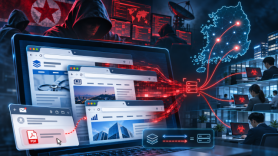 North Korea-linked hackers resume cyber operations to steal drone technology
An artificial intelligence (AI)-generated image SEOUL, November 12 (AJP) - A North Korea-linked hacking group has apparently resumed cyberespionage operations targeting Europe's drone industry, Voice of America reported on Thursday. Citing a report by Slovakia-based cybersecurity firm ESET, the U.S. state-funded broadcaster said the Lazarus Group resumed its hacking activities around June. The group used fake job offers to trick employees at defense companies into installing malicious software, in an attempt to obtain sensitive information about drone technology and manufacturing processes. ESET said the cyber activities may be part of North Korea's broader push to strengthen its domestic drone industry, as Pyongyang appears to recognize the growing importance of drones on the battlefield amid its military support for Russia's war against Ukraine. In one case detailed in the report, an employee at a European defense company received a password-protected file containing what appeared to be a job offer from British aerospace company BAE Systems. The PDF was designed so it could not be opened normally, prompting the employee to run a separate program included in the file to view the document. That program displayed the fake job offer while secretly installing malware on the employee's computer. The tactic resembles Lazarus' long-running "Operation DreamJob" campaign, in which hackers pose as recruiters from well-known companies to trick employees into opening malicious files and gain access to their systems. ESET said the hackers targeted not only manufacturers of complete drones but also suppliers of critical components, suggesting they sought to gather information about both the technology used in drones and the processes involved in making them. However, the report did not disclose whether the hackers successfully obtained sensitive technical information, nor did it specify what data, if any, may have been stolen. ESET also identified South Korea as an increasingly prominent target of North Korea-linked hacking groups, amid Pyongyang's growing military ties with Moscow.
-
 Six Defense Innovation Products Designated, Including Drone Stations and Combat Uniforms
The Ministry of National Defense and the Ministry of Economy and Finance have designated six products as the first defense innovation items, including mobile drone stations and flame-resistant combat uniforms. This initiative aims to support the rapid adoption of civilian technologies that meet military needs and assist innovative companies in entering the public procurement market. On November 12, the two ministries announced the designation of these six defense innovation products through the Public Demand Discovery Committee, led by the Ministry of Economy and Finance. The defense innovation product designation system was established in December last year to quickly introduce and expand the use of civilian innovative technologies and products needed by the military. Previously, the military purchased and utilized innovation products designated by other ministries, but this time, it has independently identified and designated products that reflect the unique demands and requirements of the defense sector. The designated products have been recognized for their excellence through four programs: defense research and development, military-civilian technology cooperation projects, the excellent commercial product pilot program, and the introduction of new technologies in defense informatization. Out of 171 applications, the Ministry of National Defense reviewed potential military demand and selected 16 projects for further consideration. After evaluating nine applications based on public interest, innovation, and procurement suitability, six products were ultimately designated. The designated products include equipment for washing, disinfecting, and drying gas masks, mobile drone stations, and 'No Melt No Drip' combat uniforms. These items can be utilized in various areas, including military equipment management, operational execution, and soldier safety and clothing. Once designated as innovation products, these items can be procured through direct contracts for a minimum of three years. This allows the military to quickly introduce products that meet its needs while providing companies with opportunities to secure initial market access through public procurement. The two ministries plan to expand the scope of designated products and improve evaluation criteria and operational procedures starting next year. They aim to increase the discovery of civilian technologies and products that align with military demands by incorporating feedback from this year's initial implementation. The Director of the Logistics Management Bureau at the Ministry of National Defense stated that this designation establishes a foundation for utilizing excellent civilian innovative technologies and products to meet various military needs. He expressed hope that the introduction of civilian technologies into the military would create a virtuous cycle leading to enhanced advanced defense capabilities and continuous technological development by innovative companies. The Procurement Contract Policy Officer at the Ministry of Economy and Finance noted, “We will work closely with the Ministry of National Defense to activate innovative procurement in the defense sector while also collaborating with new institutions such as the Aerospace Administration and local governments to broaden the path for innovative products to actively enter the public market.”* This article has been translated by AI.
-
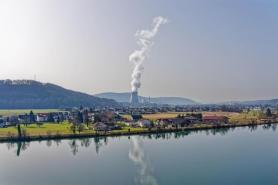 Swiss utilities face drone threat with limited defenses
The Leibstadt nuclear power plant in the canton of Aargau, northern Switzerland, near the German border. Swiss power companies may have to protect their plants from drones themselves after the defense ministry refused to make the army responsible. (Photo: Achilaos/Wikimedia Commons, CC BY-SA 4.0) ZURICH, November 09 (AJP) -Switzerland’s power companies face pressure to defend nuclear plants and dams against drones and armed attacks after the defense ministry rejected calls to give the army primary responsibility for protecting them. The dispute exposes a gap between responsibility and authority: operators must secure their facilities but lack the powers to intercept drones or detain suspects. First reported by Swiss newspaper Blick, the disagreement shows how concerns over drone incursions and sabotage are spreading to neutral Switzerland as European countries reassess the vulnerability of their energy infrastructure. The Swiss government has identified sabotage and air attacks on critical infrastructure, including power plants and dams, as the country’s most likely security threat. Internal documents obtained by Blick show that the Swiss Federal Office of Energy has listed drones, anti-tank weapons and arson among the risks facing energy facilities. Officials working under Energy Minister Albert Rösti told the defense ministry that some power companies believe the army should at least protect their sites against drones and aircraft. The defense ministry, led by Martin Pfister, rejected that position. Operators remain responsible for their own security, it said, with military assistance available only after civilian resources have been exhausted. Under defense ministry guidelines, the army could protect a region or selected facilities for weeks or months. It cannot provide the same high level of protection to every energy site simultaneously. Power companies can reinforce buildings, install drone detection systems and erect nets or screens. They can also stock spare parts to restore operations after an attack. But they cannot shoot down drones or detain suspects. They must call the police, whose response may come too late to prevent damage. The energy office is drafting legislation that would require operators to take “appropriate protective measures” against physical and electronic threats. No timetable or cost estimate has been made public. Some lawmakers argue that stronger obligations must come with greater authority. Thomas Hurter, a lawmaker from the right-wing Swiss People’s Party (SVP), wants operators to be allowed to deploy signal jammers and interceptor drones, or shoot down drones in an emergency. Parliament’s security committee has also called for a national office to collect reports of drone sightings near critical sites. The stakes are substantial for Switzerland’s electricity supply. Nuclear power generates about a third of the country’s electricity, with four reactors operating at three plants, including Leibstadt near the German border. Drone sightings around Swiss airports, military installations and energy facilities have increased, Blick reported. Elsewhere in Europe, unidentified drones have disrupted airports in Denmark, Germany and Belgium. Officials have linked several incidents to Russia. Russia’s repeated attacks on Ukraine’s power infrastructure have demonstrated the consequences of disabling electricity generation and distribution, leaving civilians without power and heating during winter. For South Korea, the Swiss dispute raises a familiar question about how to protect critical facilities against small aircraft that can evade conventional defenses. In December 2022, five North Korean drones crossed into South Korean airspace, with one entering the no-fly zone around the presidential office in Seoul. The military failed to shoot down any of them, prompting efforts to strengthen anti-drone defenses. The Swiss debate adds another dimension: deciding who can act when a drone approaches an essential civilian facility, and who bears the cost of keeping it secure. - Tags: Switzerland, Swiss army, Federal Council, Swiss Federal Office of Energy, Martin Pfister, Albert Rösti, Thomas Hurter, Swiss People’s Party, Leibstadt, nuclear power, drones, critical infrastructure, Blick, South Korea, North Korea