

[YG Entertainment Blog]
SEOUL -- YG Entertainment disclosed the name of a second new boy band involving six trainees, saying they would make their joint debut with "TREASURE", the first group of seven trainees from an inner survival show. The second group was named "MAGNUM".]
YG said Thursday through its official blog that the boys would begin promotional activities between May and July as a 13-member band "TREASURE 13" before being split into two units. "I plan to increase the capacity and weight of individuals through group and separate activities," YG head Yang Hyun-suk said.
Yang said MAGNUM, which means a big wine bottle, reflects his wish that global fans would be lost in the music of the 13 boys who were selected last year through "Treasure Box", the company's music audition survival TV show. YG has created two boy groups, WINNER and iKON, through a similar survival show.
Unlike other YG groups which have actively composed and written songs, TREASURE 13 will work in a different environment, Yang said, adding that through the active involvement of exclusive producers from the beginning, the new group would try to achieve rapid growth with the quick and steady release of new songs.
Copyright ⓒ Aju Press All rights reserved.
Related News
-
 K-pop seeks to fight stagnation with non-music ventures
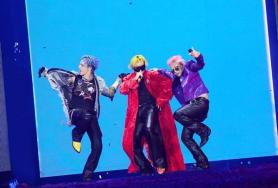
K-pop artists perform onstage during the "COSMOS" tour in Goyang, Gyeonggi Province. Courtesy of YG Entertainment SEOUL, November 24 (AJP) - K-pop has entered a phase of stagnation amid fading enthusiasm for the all-too-familiar idol model, and labels are trying to sustain revenue by commercializing their intellectual property. HYBE, SM Entertainment, JYP Entertainment and YG Entertainment are expanding into gaming, artificial intelligence, fashion, education and digital platforms. The results remain uneven: merchandise and licensing are growing, while ventures further removed from the artists themselves have yet to prove their commercial value. Participants in HYBE's "HI, HIGH" training program pose for a group photo at the company's headquarters in Yongsan, Seoul. Courtesy of HYBE A smaller example of that expansion came Monday, when HYBE announced the completion of “HI, HIGH,” a 12-week, government-backed program that trained 28 young adults in content planning, filming and editing under the K-New Deal Academy initiative. The broader push coincides with renewed hopes that China will ease its decade-long restrictions on Korean cultural content, opening another route to growth for entertainment companies and related industries. The four major labels are pursuing increasingly distinct strategies. HYBE has invested in gaming and AI-powered voice technology alongside Weverse, its global fan platform. Weverse’s monthly active users averaged 14.22 million in the third quarter, slightly below the second quarter’s record of 14.43 million. Earlier this month, HYBE also announced a partnership with U.S. talent agency Creative Artists Agency to explore fashion, film and brand-related businesses. Captured image of an official webpage of SM UNIVERSE. SM is expanding into education through SM UNIVERSE and content production using AI and extended reality. YG has identified character merchandise, gaming and food and beverage licensing as areas for intellectual property expansion. JYP is building its merchandise and digital fan businesses through subsidiary Blue Garage. JYP’s SKZOO characters, modeled after members of Stray Kids, illustrate the appeal: artists’ identities can generate sales of toys, clothing and accessories even between music releases. Recent earnings show where that strategy is paying off. HYBE posted record third-quarter revenue of 1.53 trillion won, up 109.8 percent from a year earlier, driven by BTS’s world tour. Concerts generated 726.8 billion won, while merchandise and licensing revenue rose 98.7 percent to a record 334.6 billion won. Together, the segments accounted for about 70 percent of sales. SM’s merchandise and licensing revenue increased 23.5 percent to 62.1 billion won, becoming its largest revenue category even as total revenue fell 9.5 percent to 291.1 billion won. JYP’s merchandise revenue climbed 46.7 percent to 58.6 billion won as overall revenue reached a record 267.5 billion won. Gaming has been less lucrative. Captured photo of an official webpage of HYBE's Drimage. Drimage, HYBE’s gaming subsidiary formerly known as HYBE IM, recorded revenue of 44.8 billion won and a net loss of 28.6 billion won in the first nine months of 2026, extending a run of annual losses into a fifth year. It has since begun cutting staff and winding down low-earning games. The contrast exposes the limits of diversification. An established fan base can support merchandise sales, but success in gaming requires different technology, development expertise and investment decisions. Despite HYBE’s record earnings, Samsung Securities lowered its target price from 280,000 won to 235,000 won on Nov. 4. “We maintained a 50 percent valuation premium over industry peers, given HYBE's potential for global expansion and the success of new IP,” said Samsung Securities analyst Choi Min-ha. China offers another potential source of expansion, although access remains uncertain. South Korea and China announced the substantive conclusion of their free trade agreement services and investment negotiations on Nov. 18, alongside a summit in Shenzhen. The agreement still requires legal review, formal signing and ratification. China agreed to grant Korean films and games most-favored-nation treatment and expand joint production opportunities to dramas, animation, variety shows and documentaries. Large-scale K-pop concerts in mainland China were not explicitly included. Photo of K-pop boy group BTS. Courtesy of BIGHIT Music For Alia Zhou, a 36-year-old Beijing resident, the restrictions mean traveling abroad to see her favorite performers. “I want to see BTS and BIGBANG perform. Since I travel to the United States frequently, I try to catch their concerts while I'm there,” Zhou told AJP. “But it's really inconvenient. I would be able to attend concerts much more frequently if they were held in mainland China.” The labels have been preparing. HYBE established a Beijing subsidiary in 2025, while SM announced a joint venture with Tencent Music Entertainment in August to develop Chinese artists. JYP has pursued similar localization strategies. Revenue would take longer to follow. “Even after concerts receive approval, staging them takes time,” said SK Securities analyst Park Jun-hyung. With preparations typically beginning six months in advance, major mainland performances might not take place until 2028 even if an agreement is reached next year, he said. Renewed cultural exchange could also benefit Korean beauty brands. Zhou regularly visits Korea to buy makeup, Beauty of Joseon skincare products and facial masks, with Olive Young becoming a favorite shopping destination. The cosmetics industry, however, has already diversified its markets. China accounted for about 14 percent of Korean cosmetics exports in the first nine months of 2026, down from roughly half in 2021. October exports reached a record for the month at $1.44 billion, up 57.5 percent and led by the United States. Shipments to China rose 31.6 percent, their fifth consecutive monthly increase. Companies are rebuilding their local presence. APR’s Medicube brand was available in about 1,500 Chinese retail outlets as of November, while LG Household & Health Care and Amorepacific are restructuring their businesses there. For K-pop labels, China could similarly broaden the customer base. The harder task remains generating earnings that depend less on the next tour or comeback of their biggest stars.
-
 BIGBANG drops 'GiiiRIP' celebrating 20th anniversary
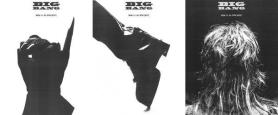
A series of promotional posters for BIGBANG's digital single "GiiiRIP," released as part of the group's 20th-anniversary activities. Courtesy of YG Entertainment SEOUL, November 20 (AJP) - K-pop group BIGBANG released a surprise digital single "GiiiRIP" on Friday, its second new song in three months as the group continues a world tour marking its 20th debut anniversary, YG Entertainment said. The track, released at 2 p.m., follows "BiiiG," which arrived in August to coincide with the anniversary of the group's 2006 debut. "GiiiRIP" blends heavy electronic sounds with hip-hop rhythms, contrasting high-pitched melodies with deep bass sections and an energetic chorus. The song reflects the group's determination to challenge itself and explore new musical directions after two decades in the industry. G-Dragon contributed to both the lyrics and composition, while Taeyang participated in songwriting. Longtime collaboratory and producer Teddy also worked on the track. K-pop group BIGBANG members G-Dragon, Taeyang and Daesung appear in a promotional photo for their new digital single "GiiiRIP," released on Nov. 20, 2026. Courtesy of YG Entertainment The single incorporates an interpolation of "Milkshake," the 2003 hit by American singer Kelis, written and produced by Pharrell Williams and Chad Hugo. The technique recreates elements of an existing composition rather than directly using its original recording. The release comes as BIGBANG continues its "XX : COSMOS" world tour, which has expanded to 41 performances across 20 cities, including an additional show in Los Angeles. The three-member group, consisting of G-Dragon, Taeyang and Daesung, is also scheduled to perform at the 2026 MAMA Awards at Kyocera Dome Osaka in Japan on Saturday. The new single and ongoing tour form part of BIGBANG's anniversary activities, bringing the group back to international stages two decades after its debut
-
 AJP FAQ : Which YG girl group reached 10 billion YouTube views fastest?
Image Generated Using Chat GPT BABYMONSTER became the fastest K-pop girl group to surpass 10 billion cumulative views on a single official YouTube channel, according to YG Entertainment's announcement on Sept. 3, 2026. The group reached the milestone approximately three years and eight months after its YouTube channel opened in December 2022. BLACKPINK was the first K-pop girl group to reach the same milestone. BABYMONSTER's rapid growth reflects the role of video platforms in bringing K-pop performances to international audiences. Its channel combines music videos with performance clips and other original content. The 10 billion figure is not the view count of a single song or music video. It represents cumulative views across the group's official channel, and the record is measured from the channel's launch rather than the group's formal debut.