

[Courtesy of Uber]
SEOUL -- Global ride-hailing service operator Uber has launched a new Seoul-based call taxi service, similar to that provided by South Korean web service giant Kakao, three years after it was forced to close a ride-hailing service due to strong protests from taxi drivers.
Uber has consistently tried to expand its base in South Korea's mobility market, starting with "Uber X", a derailed car-sharing service, in 2014. However, the American company has launched other services such as "Uber Black", a premium taxi service, "Uber Assist" for the weak and disabled, and "UberEATS", a food delivery service.
Uber said in a statement Tuesday that its smart mobility service would start connecting customers with ordinary taxis in Seoul. Customers can use Uber's smartphone app to call a taxi and pay their fare just like catching an ordinary cab in the streets.
"We plan to provide more diverse and advanced mobility services and continue to pursue cooperation with domestic partners," Uber's South Korean mobility service director Son Hee-seok was quoted as saying.
Uber's new taxi service is similar to Kakao T, a smartphone-based call taxi service provided by the operator of South Korea's most popular messenger app. SK Telecom, the country's top mobile carrier, operates a revamped navigation app-based call taxi service.
Former Uber head Travis Kalanick was slapped with a 20 million won ($17,583) fine in 2018 for operating illegal taxi services.
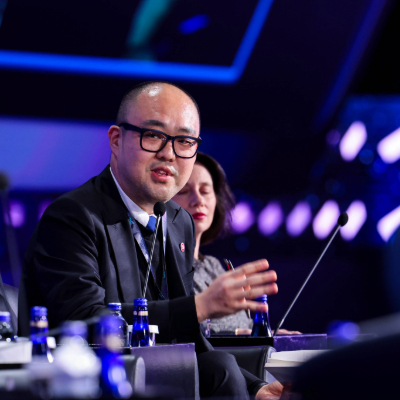
Park Sae-jin
Experienced journalist and editor at AJU PRESS specializing in multilingual news. I cover international diplomacy, geolpolitics, and policy, consistently delivering highly accurate, compelling reporting for a worldwide audience.
Copyright ⓒ Aju Press All rights reserved.
Related News
-
 Vietnam's Ride-Hailing Market Faces Commission Wars
The actual earnings for drivers in Vietnam's ride-hailing market have become a new competitive standard. Recently, some drivers for Grab halted operations in protest against the variable app usage fees, while GreenSM and Be maintain a fixed revenue-sharing model. The key issue has shifted from simple commission rates to how much drivers can expect to earn after each ride.According to VnExpress on September 18, Grab, GreenSM, and Be show distinct differences in their revenue-sharing models. Grab employs a flexible system where commissions vary based on ride time, distance, and supply and demand, while Be and GreenSM maintain a relatively fixed distribution structure.Driver Earnings Differ by PlatformBe pays drivers approximately 63.6% of the total fare in Hanoi and about 69.4% in Ho Chi Minh City. GreenSM offers a distribution rate of up to 90% for motorcycles and 85% for cars, with drivers' actual earnings reported to be around 73% to 83% of the total payment.Grab's structure is more complex. The company applies a 'flexible app usage fee' that varies by ride. An analysis by VnExpress of 26 rides from September 10 to 12 found that drivers received about 64.6% for motorcycles and 65.6% for cars. However, some drivers claim their earnings, which previously ranged from 67% to 73%, have recently dropped to between 50% and 75% for certain rides, indicating an overall decrease in their share.Various additional costs also impact the net earnings. Grab applies separate charges for insurance and carbon-neutral initiatives, which can further reduce drivers' earnings on short rides. Even fixed platforms face complaints regarding the distribution of extra fees.Drivers are increasingly focused on the actual amount they receive from the fares paid by passengers rather than nominal commission rates. A market analyst from EBC Financial Group stated, "We need to look at the 'effective receipt rate,' which indicates how much drivers actually earn when customers pay."International Trends in Commission Caps and Transparency RegulationsThis flexible commission model is not unique to Vietnam. Grab also implements flexible fees in the Philippines and Thailand, but with caps of 20% and 25%, respectively. In Indonesia, the commission for motorcycle ride-hailing services has been limited to 8% since July, with platforms required to cover insurance costs.Chinese ride-hailing company DiDi also uses flexible commissions but has lowered the caps and allows drivers to see the commission rates for each ride. In the U.S., Uber employs an algorithm to calculate both passenger fares and driver earnings.In Vietnam, discussions about regulatory frameworks have begun. The National Competition Commission recently requested ride-hailing platforms to submit data regarding their pricing policies, commissions, discounts, and driver deductions. Be has argued that differing calculation standards across platforms make comparisons difficult, emphasizing the need for a common standard that discloses both driver and platform shares based on total amounts paid by passengers.Meanwhile, local users have expressed a need for a transparent structure that allows drivers to easily verify their actual earnings rather than focusing solely on commission rates. One user remarked, "Grab's commission structure is too complicated for drivers to understand," adding that it appears relatively high compared to other platforms. Another user noted, "With GreenSM, I can easily see my revenue, actual payments, and bonuses, making it straightforward to plan my earnings from the start." A different user commented, "Drivers bear the fuel costs directly, making it hard to calculate their actual earnings, and the current structure seems to favor Grab excessively."* This article has been translated by AI.
-
Uber Pursues Acquisition of Delivery Hero, Parent Company of Baedal Minjok
Global mobility company Uber is seeking to acquire Delivery Hero SE (DH), which indirectly controls Woowa Brothers, the operator of Baedal Minjok. The Fair Trade Commission (FTC) has initiated a preliminary review of Uber's acquisition of DH to assess its impact on competition in the domestic taxi-hailing and delivery app markets.On September 22, the FTC announced that it has received a preliminary review application regarding Uber's plan to acquire all shares of DH.Uber intends to acquire DH shares through a public tender offer. The company aims to complete the acquisition process by November this year, securing more than 50% plus one share of DH, subject to approvals from competition authorities in various countries, with the goal of finalizing the stock acquisition in the second half of next year.This procedure is a preliminary review, not a final decision on merger approval. It allows the merging company to request the FTC to assess whether the merger would substantially restrict competition before the formal merger notification period. Acquisitions through public tender offers are generally subject to post-reporting requirements.DH controls Woowa Brothers, which operates Baedal Minjok through its subsidiaries. If the transaction is completed, Uber, which operates taxi services in South Korea, will gain management control over Baedal Minjok.As of February this year, Uber is the second-largest player in the domestic taxi-hailing platform market based on monthly active users (MAU). In the delivery app market, as of April, Baedal Minjok led with 23.4 million users, followed by Coupang Eats with 13.15 million and Yogiyo with 4.21 million.The FTC views this merger as a 'mixed merger' between the taxi-hailing platform business and the delivery platform business. Should Uber gain control over Baedal Minjok, there is potential for the integration of taxi-hailing and delivery-related memberships or the expansion of advertising and promotional services across both platforms.Uber has also highlighted key expected benefits of the transaction, including increased cross-utilization of mobility and delivery services and the expansion of advertising and promotional services for partner merchants.In response, the FTC plans to closely examine the impact of the merger on the competitive structure of the domestic taxi-hailing and delivery app markets. The review will consider not only the activities of competing businesses but also the choices available to users and partner companies. An FTC official stated, "We plan to conduct a thorough review in accordance with the standards and procedures set forth in the Fair Trade Act."* This article has been translated by AI.
-
Lotte Rental Joins SK Rent-a-Car in Private Equity Ownership Amid Market Competition
The Korea Fair Trade Commission (KFTC) has approved the merger of Lotte Rental with Texas Pacific Group (TPG), signaling an intensification of competition in South Korea's rental car market. With Lotte Rental and SK Rent-a-Car, both considered major players, moving away from their parent companies to embrace private equity ownership, analysts suggest that the competitive landscape is shifting from synergy among corporate affiliates to rivalry in the capital markets.According to industry sources, the KFTC determined that the acquisition of Lotte Rental shares by Lexicon Korea Holdings, a TPG affiliate, would not restrict competition. TPG operates private equity investments in South Korea and is involved in the infant nutrition business through its local subsidiary, HB F&B. The KFTC concluded that TPG's business operations do not overlap with Lotte Rental's core vehicle rental services, categorizing the transaction as a non-restrictive merger.Previously, Hotel Lotte and Busan Lotte Hotel had signed a stock purchase agreement to sell 61.2% of Lotte Rental to TPG at a price of 59,000 won per share, totaling approximately 1.31 trillion won. Following this, TPG filed for the merger with the KFTC in accordance with fair trade laws.Last year, Lotte had attempted to sell its stake in Lotte Rental to Affinity Equity Partners, but the deal fell through due to concerns over market monopolization raised by the KFTC. As a result, both SK Rent-a-Car and Lotte Rental have transitioned to private equity ownership.The recent interest from private equity firms in the rental car market is attributed to the potential for stable cash flow. The rental car business is less sensitive to economic fluctuations and can secure consistent revenue and cash flow from corporate clients over set periods, making it an attractive investment.Additionally, the residual value of used cars is guaranteed, allowing for further revenue generation through sales or exports. TPG, for instance, has a portfolio that includes mobility-related businesses such as Uber and Kakao Mobility.Currently, the domestic rental car market is dominated by Lotte Rental and SK Rent-a-Car. As of the end of last year, there were 1.296 million registered rental cars, with Lotte Rental leading at 255,553 vehicles (19.7% market share), followed by SK Rent-a-Car with 195,008 vehicles (15%), and Hyundai Capital with 157,607 vehicles (12.2%).With a market share gap of around 5 percentage points between Lotte Rental and SK Rent-a-Car, industry experts anticipate that the acquisition by private equity will further intensify competition in the rental car market. To enhance corporate value, both companies will need to increase their market share quickly, which could lead to aggressive price competition. This is particularly likely in Jeju, where the market share difference is around 1 percentage point.An industry insider noted, "With the owners of the top two rental car companies shifting to private equity, the competition is transitioning from 'inter-corporate rivalry' to a 'profitability competition dominated by private equity.' Unlike the corporate culture that considers group synergy, brand value, and long-term strategies, private equity firms prioritize returns on investment, making metrics like EBITDA and dividends increasingly important."Concerns have also been raised that the intensifying competition could destabilize the existing rental car ecosystem. The rental car business is capital-intensive, involving significant financial costs, depreciation, insurance, and maintenance. If the industry engages in prolonged price wars, the financial burden on private equity firms could increase, potentially leading to a collapse in the residual value of used cars.One rental industry representative warned, "If private equity firms adopt a strategy of sacrificing prices to rapidly expand market share, the entire industry could devolve into a chicken game. In such a scenario, all ecosystems related to automobiles, finance, used car distribution, and vehicle maintenance could collapse."* This article has been translated by AI.