

Through a general meeting, KAVKAS said on December 15 that Professor Ryu Kwon-ha was appointed as the scholar association's new president. The 62-year-old professor from Jeonbuk University's Department of Media Communication Studies will start his two-year term in 2024.
Professor Ryu earned his Ph.D. in German Studies from the University of Wuppertal University in Germany and has been teaching at Jeonbuk University since 2022. He has previously served as a Berlin correspondent of JoongAng Ilbo, a major South Korean media company, the CEO of Korea Joongang Daily, an English newspaper media, and the chairman of the Korean Foreign Language Newspaper Association.
KAVKAS focuses on researching various fields, including education, welfare, labor, and policies in Europe, with an emphasis on Germany. The scholars' organization regularly holds seminars and forums as well as other scholastic events.
Park Sae-jin
Experienced journalist and editor at AJU PRESS specializing in multilingual news. I cover international diplomacy, geolpolitics, and policy, consistently delivering highly accurate, compelling reporting for a worldwide audience.
Copyright ⓒ Aju Press All rights reserved.
Related News
-
 Chinese Scholar Predicts Democrats Could Dominate U.S. Midterm Elections
Jia Qingguo, a professor at Peking University's School of International Studies, has suggested that the Democratic Party could potentially gain control of both the House and Senate in the upcoming U.S. midterm elections. He noted that trust between the United States and its allies has been significantly undermined by the policies of President Donald Trump, making it difficult for the Democrats to fully restore past alliances even if they regain power.According to Jia, speaking at the 2026 China Global Forum in Singapore, key factors influencing the midterm elections include the timing of the end of military conflicts involving the U.S., Israel, and Iran, as well as rising prices due to the ongoing Middle East war. He emphasized that high oil prices could significantly affect voter sentiment in the U.S. He also predicted that domestic political disputes and media coverage would play a crucial role in shaping the election outcome.Jia pointed out that historically, the ruling party often loses control of either the House or Senate during midterm elections. He highlighted that a key point of interest in this election will be whether the Republican Party loses its majority in both chambers.Regardless of the election results, Jia noted that the U.S. alliance system is undergoing structural changes. He explained that during Trump's first term, allies were shocked by the treatment they received from the U.S. but hoped for normalization of relations under former President Joe Biden. However, he argued that Trump's potential return to power and subsequent policies have shattered those expectations.As a result of these changes, Jia assessed that allies no longer view the U.S. as a reliable partner. He described a 'two-legged strategy' where allies seek to maintain and strengthen security cooperation with the U.S. while also exploring alternative security measures. This reflects a desire to reduce dependence on the U.S. and diversify risks rather than completely sever ties.Jia emphasized that the political landscape in the U.S. has fundamentally changed. Even if the Democrats regain power, he believes it will be challenging to return to the previous form of relations with allies. As U.S. allies begin to adjust their security strategies in light of potential policy shifts, restoring trust that has been eroded will not be easy.* This article has been translated by AI.
-
 Chinese scholar cites digital currency as tool to bypass U.S. sanctions in case of escalating conflict
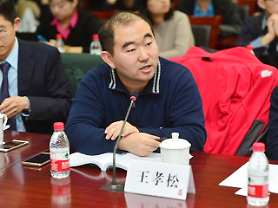
SEOUL -- China's national digital currency being developed with blockchain and cryptographic technology will be a sufficient substitute if a Sino-U.S. conflict escalates and the United States excludes the world's second-largest economy from a dollar-based system that runs on a network of financial institutions globally, a Chinese scholar said. China's DCEP (Digital Currency Electronic Payment) could become the world's first central bank digital currency (CBDC). The goal is to increase the circulation of China's official currency yuan and international reach. Beijing has established an initiative to push forward Blockchain adoption, with the goal of beating competitors, insisting Facebook Libra poses a threat to the sovereignty of China. DCEP will not be for speculation of value. "DCEP has unlimited legal clearance, and all DCEPs deposit 100 percent yuan reserves, so no one can refuse to pay at the settlement stage without decreasing their value," Wang Xiaosong, a professor of economics at Renmin University of China, said at the Asia Pacific Financial Forum in Seoul on March 17. He said DCEP would gradually replace cash circulating in China. "DCEP could be a contingency plan for China" if Washington prevents Beijing from using the Society for Worldwide Interbank Financial Telecommunication (SWIFT) and the Clearing House Interbank Payments System (CHIPS), a U.S. private clearinghouse for large-value transactions, Wang said. SWIFT runs on a network of financial institutions globally. Wang said that China has developed CIPS, an international payment system for the yuan, to prepare for trade conflicts with the U.S. and to prepare for U.S. monetary sanctions in the future. "If DCEP can be combined with CIPS in the future, we will strongly push for the use of CIPS as it will result in very fast cross-country payments and much better safety than traditional payment methods," he said, adding that DCEP adopts a centralized ledger. DCEP has higher security than Bitcoin because it records clear time and information on both sides of each transaction, the scholar said, adding Bitcoin can cause problems in current legal and economic activities. "Even if Bitcoin is fully identified and guaranteed to be anonymous, transaction information is released to everyone," he said. "While DCEP is more secure because only the central bank can see transaction information."
-
 Chinese scholar urges Washington to stop pressure on Beijing's science and technology buildup
SEOUL -- The United States, which has long been the biggest beneficiary of science and technology opening and cooperation around the world, should stop its diplomatic and trade pressure to check China's science and technology buildup, a Chinese professor said, stressing that global science and technology cooperation is an engine for the growth of the international economy. "Technological cooperation is in the interests of both countries," Bian Yongzu, a professor at the strategic and safety research center at Tsinghua University is a major public research university in Beijing, said at the Good Growth Global Forum (GGGF) in Seoul on September 9. "Competition between China and the U.S. should not lead to a full-scale collision in the high-tech sector. They need to find a field of cooperation through continuous dialogue." "The U.S. attempt to suppress China's science and technology industry will not be successful," Bian said, pointing to the rapid improvement of China's scientific research capabilities and close science and technology cooperation between U.S. and American companies. U.S companies cannot miss China's attractive market, he said, adding the two countries have cooperated in science and technology, even after the U.S.-China trade friction intensified in 2018. Bian said that the same is true of technology cooperation between companies in the two countries, as proven in the listing of Chinese big tech companies including Alibaba and Baidu on the U.S. stock market. Currently, there are a total of 265 Chinese companies listed on the U.S. stock market, including 156 on the NASDAQ and 43 on the New York Stock Exchange. "In recent years, when the U.S.-China economic trade conflict intensified, Chinese companies were listed on the U.S. stock market more frequently," the professor said. The professor thinks the U.S. government, which regards China's development of science and technology as a threat to U.S. technology hegemony, has stepped up pressure on China's science and technology. U.S. and Chinese intellectuals hoped that the launch of the Joe Biden administration would improve relations, especially in the field of science and technology, but Washington still maintains a strong stance toward Beining, raising concerns over "decoupling" between the two countries, Bian said.