

Journalist

Ryu Yuna and Candice Kim
Julia37@ajupress.com
-
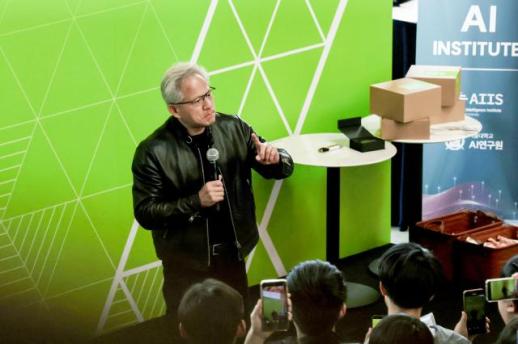 From chicken to K-pop: why Jensen Huang fell for Korea's soft power SEOUL, June 09 (AJP) — Nvidia CEO Jensen Huang surely knew how to mix business with pleasure. He returned home Tuesday with deals on not just memory chips for Nvidia's next-generation Rubin and Vera platforms, but also bags of HBM chip snacks to munch on and the lingering aftertaste of chicken, soju and Korean hospitality. Since his arrival last Friday, Huang dominated headlines and social media feeds, shuttling between beer and soju gatherings with Korean tech giants, a baseball stadium appearance complete with a ceremonial first pitch, meetings with esports icon Faker and ordinary pedestrians, a brief dance to a K-pop hit and an enthusiastic discussion of singer Hwasa. While his meetings with business leaders focused on the future of artificial intelligence and multibillion-dollar partnerships, many of the moments that resonated most with the public reflected his enthusiasm for Korean culture and soft power. Food topped the list. "I love to eat," Huang told reporters. "I thought my favorite food in Korea was fried chicken, but I was wrong." He had discovered samgyetang, Korea's traditional ginseng chicken soup, and samgyeopsal, the country's ubiquitous pork barbecue. The food tour began almost immediately after his arrival. On his first evening, Huang was joined by SK Group Chairman Chey Tae-won, LG Group Chairman Koo Kwang-mo and Naver founder Lee Hae-jin for a barbecue dinner in Seoul's Hongdae district, with hundreds of fans and reporters closely following and livestreaming what was being served. Reflecting on the meal during his appearance on tvN's popular talk show "You Quiz on the Block," Huang joked, "I ate most of it, because I'm the oldest." Afterward, he greeted citizens outside the restaurant, signing autographs and handing out HBM Chip snacks. The images quickly went viral. Convenience store chain Seven Eleven said sales of the snack jumped 704 percent during June 6-7 compared with a week earlier. The following day, he was photographed enjoying samgyetang with family members at a well-known restaurant in central Seoul. Korean media soon noticed a pattern: wherever Huang went, chicken seemed to follow. During a previous visit to Seoul in October 2025, he attended a chimaek gathering with Samsung Electronics Chairman Lee Jae-yong and Hyundai Motor Group Executive Chair Chung Eui-sun at a chicken restaurant in Gangnam. That theme resurfaced at Jamsil Baseball Stadium, where Huang threw out the ceremonial first pitch before a Korea Baseball Organization game. "Nothing is better than chimaek," he said, using the popular Korean term for fried chicken and beer. Even after a schedule dominated by AI, semiconductors and business meetings, food remained on his mind. Speaking at the Shilla Hotel after a private meeting with Samsung Electronics DS Division Vice Chairman Jun Young-hyun at the Guest House, Huang enthusiastically revisited his first meal in Korea. "A little sesame oil, a little bit of salt. Come on, that's incredible," he said, smacking his lips at the memory. Food, however, was only one part of the story. Later on "You Quiz on the Block," Huang surprised viewers by dancing to "Golden," the hit soundtrack from Netflix's animated film "KPop Demon Hunters." "Who doesn't love Golden?" Huang said with a smile. He also expressed admiration for singer Hwasa. "I do also love Hwasa," Huang said. "She's a very good dancer, a good singer." He even referenced her songs "Good Goodbye" and the newer "So Cute," surprising host Yoo Jae-suk with his familiarity with her music. He was pleased with an observation from fortune teller Park Sung-jun, who interpreted his facial features on the show — saying his high forehead signified extraordinary intelligence and his nose indicated lifelong prosperity. Huang responded with characteristic humor. "Your nose is not big enough," he told the host. "My nose is extraordinary tycoon - "New Korea fashion: Jensen nose," he joked. His up-close show appearance was notable for another reason. Despite being one of the world's most recognizable technology executives, Huang chose a Korean variety show for his first appearance on an entertainment program. His interest in Korean culture extended beyond food and K-pop. Shortly after arriving in Seoul, Huang visited T1 Base Camp and met legendary esports player Lee Sang-hyeok, better known as Faker. Days later, he appeared at Jamsil Stadium wearing a Doosan Bears jersey bearing the number 93, a tribute to Nvidia's founding year. Taken together, the images formed a striking contrast to Huang's public image as the face of the global AI boom. Rather than appearing only in boardrooms and conference halls, he spent much of his visit engaging with the cultural experiences that millions of people around the world increasingly associate with South Korea. For Huang, those experiences were not separate from the country's technology ambitions. He told reporters what he had told Korea's deputy prime minister for science and ICT Bae Kyung-hoon - that Korea's cultural strengths are one reason the country is uniquely positioned for the AI era. "I told the deputy prime minister that this is Korea's moment and that this moment must take advantage of Korea's culture," Huang said. "Korea's culture is very, very adaptable to technology. The culture is very accepting of new technology. In the last 25 years, so much technology came into Korean culture and it was adapted so easily." "The culture is perfect for new technology, artificial intelligence." He also pointed to Korea's geopolitical position and openness to global partnerships. "If there's a country that represents lovers, not fighters, it would be Korea," Huang said. The comment drew laughter, but it also reflected a recurring theme throughout his visit: that Korea's appeal extends beyond manufacturing and technology. For Huang, the country's competitive advantage lies equally in its people. "There's a culture of Korea that is about knowledge and wisdom and dedication and suffering. You have to protect that," he said. As artificial intelligence makes computing power and even intelligence itself increasingly accessible, Huang argued that character becomes the true differentiator. "Intelligence is now a commodity because of artificial intelligence. Running fast is a commodity." "Intelligence plus character is not a commodity." "The character is suffering, the ability to suffer. I have a deep ability to suffer. Nobody can suffer better than I can." Then he turned the observation toward Korea itself. "No country can suffer better than Korea." "The grandparents, your parents created everything that we see today from their suffering, from their resilience, from their incredible desire to create this future for you." "This is the national character of Korea." "If you combine that with AI, incredible things can happen." 2026-06-09 17:52:57
 -
 British Museum to showcase collection of late Samsung chairman Lee Kun-hee SEOUL, June 09 (AJP) - The British Museum will stage its first major exhibition dedicated to Korean art in more than four decades this fall, featuring works from the collection donated by the late Samsung chairman Lee Kun-hee and tracing over 2,000 years of Korea's artistic and cultural history. The British Museum said Monday that it will present Korea, an exhibition running from Oct. 1, 2026, to Jan. 31, 2027, bringing together masterpieces from the National Museum of Korea, the National Museum of Modern and Contemporary Art, and the museum's own Korean collection. The exhibition is the third overseas showcase of works donated by Lee Kun-hee, following exhibitions in Washington and Chicago. The museum said the exhibition will provide historical context for modern Korea's growing global influence, as Korean culture continues to gain popularity through Hallyu, or the Korean Wave. "Korean art has evolved through exchanges with other cultures while developing its own distinct identity," museum director Nicholas Cullinan said. "Visitors will see how that identity was shaped through the country’s engagement with the wider world." Key pieces include Celadon Gourd-shaped Ewer with Inlaid Lotus Design, a Goryeo celadon vessel renowned for its jade-green glaze and craftsmanship, and White Porcelain Bottle with Underglaze Bamboo Design, reflecting the understated elegance of Korea's Joseon Dynasty (1392–1910). The exhibition will also feature Inwangjesaekdo (Scene of Mount Inwang After Rain) by 18th-century painter Jeong Seon, one of Korea's most celebrated landscape paintings. Other notable works include pottery decorated with small clay figures from Korea's ancient Three Kingdoms period, Buddhist sculptures and manuscripts, folding screens symbolizing longevity and prosperity, traditional tiger-and-magpie paintings, and royal screens featuring the sun, moon and five mountain peaks, a symbol of the Korean monarchy. “The exhibition presents a new story of Korea to international audiences," said You Hong-june, director of the National Museum of Korea. "Visitors in London will have an opportunity to discover the roots of K-culture." The modern and contemporary section will feature works by Paik Nam-june, one of the world's most influential video artists; Woman in a Red Dress (1965) by Kim In-seung, a leading Korean painter known for his Western-style portraits; and Self-portrait (2019) by Suh Do-ho, a Korean installation artist based in London. The museum said Suh’s work explores themes of identity, migration and memory, reflecting the exhibition's broader focus on the connections between Korea's past and present. 2026-06-09 10:35:25
 -
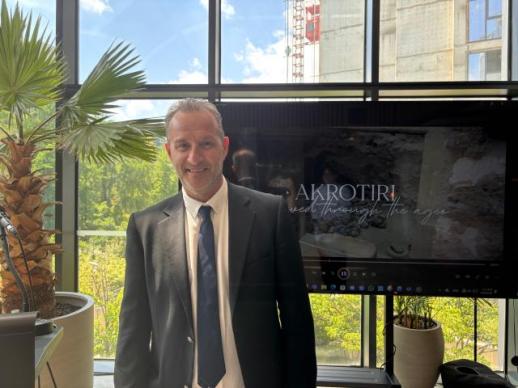 Greek seeks direct flight from Seoul to Athens SEOUL, June 08 (AJP) — Greek tourism officials on Monday highlighted efforts to strengthen deeper tourism ties with South Korea built around direct air connectivity, sustainable tourism, and authentic local experiences, as Greece seeks to attract more Korean travelers while broadening its appeal beyond traditional sightseeing. Speaking at the "Greece: A 365 Day Destination" tourism promotion event at the Mondrian Hotel in Yongsan District near central Seoul, Greek Ambassador to South Korea Loukas Tsokos said tourism has become one of the strongest bridges connecting the two countries, with Korean culture gaining popularity in Greece. "Tourism is more than an economic activity. It is a bridge between societies," Tsokos told the audience. The event brought together representatives from the Greek Embassy, the Greek National Tourism Organization (GNTO), Athens International Airport, and Santorini tourism authorities to discuss growing travel demand between the two countries and opportunities to deepen tourism cooperation. A recurring theme throughout the event was the push for a direct air connection between Seoul and Athens, which officials said would strengthen tourism and cultural exchanges in both directions. "Our main objective is to establish a permanent direct connection between our two capitals, Athens and Seoul," Tsokos said, adding that the direct flight route will allow both Koreans and Greeks to travel and have a better understanding of their respective countries. The envoy also highlighted Santorini's popularity among Korean travelers, saying the island has become synonymous with Greece for many Koreans. Villy Christoflopoulou, head of the advertising department at the Greek National Tourism Organization, shared the message "Step Into Your Next Story," during an interview with AJP, explaining that the message resonates particularly with South Korean travelers, who are highly digital-savvy and heavily influenced by social media. She also highlighted Greece's effort to focus on quality, sustainability and year-round travel experiences, pointing to activities like sailing, yachting, water sports, hiking, trekking, skiing and rock climbing, that appeal strongly to Korean travelers. She added that Greece's music scene, nightlife and open culture also attract visitors seeking local experiences. "Our goal is not just more tourists, but better tourists," she said. More than 60 percent of Greece's tourism promotion efforts are now focused on special-interest tourism, including culture, gastronomy, luxury travel, conferences and exhibitions (MICE), outdoor activities and city breaks. The approach has been accompanied by strong tourism growth, with international arrivals rising to about 38 million in 2025 from 32.7 million in 2023, while tourism revenue increased to 23.6 billion euros from 20.6 billion euros, according to the organization. Athens International Airport also renewed its call for direct air services between the two countries, emphasizing that growing travel demand and geopolitical uncertainty have strengthened the business case for a nonstop route. "We hope and wish that 2027 will be the Korean year," said Ioanna Papadopoulou, director of communications and marketing at Athens International Airport. Athens Airport handled a record 34 million passengers in 2025 and is currently connected to 174 destinations in 55 countries through 70 airlines, Papadopoulou said. More than 50,000 passengers travel annually between Korea and Greece via Middle Eastern hubs, she noted, arguing that regional geopolitical tensions have made a direct Seoul-Athens connection increasingly important. "As soon as there is a direct connection, we believe the air travel market can grow from roughly 50,000 passengers to as many as 150,000," Papadopoulou told AJP. Asked what would be needed to make the route a reality, Papadopoulou said the decision ultimately rests with a Korean carrier. "We are trying to persuade Korean Air," she said, adding that Athens International Airport is offering substantial incentives, including a full waiver of certain airport charges and marketing support for new routes. The final presentation focused on Santorini, where local officials sought to highlight the island's cultural heritage and local traditions alongside its internationally recognized scenery. Nomikou Georgia, president of the City Council of Santorini, described the island as a destination shaped by nearly 7,000 years of history, archaeological heritage, wine culture and local traditions. She highlighted sites such as Akrotiri, often referred to as the "Pompeii of the Aegean," as well as the island's museums, medieval settlements and growing reputation as a gastronomic destination, with Santorini recently added to the Michelin Guide. Nomikou also emphasized efforts to address overtourism. Since January 2025, Santorini has operated a berth-allocation system that limits daily cruise arrivals to 8,000 passengers. She noted that South Korean travelers tend to flock to Santorini in May and October. The city council president said that Santorini seeks to balance the growth in tourism while preserving people's everyday lives by highlighting local identities such as wine, agricultural products and traditional cultural events. Among them are "panigiria," traditional religious community festivals that bring together residents and visitors through local music, food and cultural celebrations. She added that 2025 was Santorini's "Year of Authenticity," part of an effort to place local culture and community life at the center of the island's tourism model. "Santorini is not merely a place to visit. It is a place that touches you — a place you wish to protect just as you protect something you love," she said. 2026-06-08 18:03:34
 -
 Key highlights from Nvidia CEO Jensen Huang's Seoul itinerary SEOUL, June 8 (AJP) - Nvidia's CEO Jensen Huang is in the final leg of his four-day visit to Seoul, which included meetings with business leaders, artificial intelligence (AI)-related startups and entrepreneurs, and researchers. His trip also featured a visit to T1 Base Camp, where he met T1 players including esports player Faker, as well as a television appearance and a ceremonial first pitch at a baseball stadium in Jamsil, southern Seoul. He also had another casual gathering over chicken and beer with tech business leaders and executives, a reminder of his visit here last fall. The visit comes as Nvidia deepens cooperation with major South Korean memory-chip makers and other partners amid surging global demand for AI chips. 2026-06-08 11:19:04
 -
 Semiconductor selloff raises questions over AI rally SEOUL, June 5 (AJP) - A sharp selloff in semiconductor stocks is raising questions about the future of the artificial intelligence-driven rally, following HSBC's prediction on Thursday that the current chip boom is entering a broader phase, with gains spreading beyond chipmakers. While chipmakers such as Nvidia have dominated the AI rally so far, HSBC, one of the world's largest banking groups, said that the current AI cycle has produced an uneven pattern of growth, with AI-related investment surging while spending in many non-tech sectors remains comparatively weak. On South Korean bourse, Samsung Electronics and SK hynix recently accounted for 51.5 percent of the KOSPI200 index, up from 38.7 percent at the start of the year, while the two companies contributed 90.8 percent of the increase in KOSPI earnings estimates through April, according to Meritz Securities. Yet the market's heavy reliance on semiconductor stocks was also on display Thursday. The KOSPI tumbled 5.54 percent after concerns over chip-sector earnings triggered a global selloff in semiconductor shares. Samsung Electronics fell 6.40 percent and SK hynix dropped 9.92 percent, highlighting how closely market performance remains tied to a handful of AI-related companies. That imbalance is one reason the bank expects the next phase of the boom to be defined by what it calls "broadening out." As investment in AI infrastructure continues to grow, HSBC expects the benefits of AI to spread beyond technology companies and across borders, creating opportunities in non-tech sectors and emerging markets. Under its base-case scenario, the bank expects AI-driven growth to become more broadly distributed across industries and regions while U.S. economic growth remains around 2 percent. The bank said strong corporate profits driven by the AI boom are helping markets look past geopolitical tensions and supply-side shocks. The bank described the current environment as one in which "markets and economists describe different worlds," noting that markets have largely shaken off geopolitical concerns despite a complicated macroeconomic backdrop of trade tensions, supply-chain disruptions and geopolitical uncertainty. As spillovers from the AI capital-expenditure boom become more apparent, HSBC expects strong profit growth to hold and broaden beyond borders into non-tech sectors. The bank said emerging markets could be well positioned to benefit from that trend. The report also highlights opportunities outside the United States. HSBC said emerging markets may benefit from expanding AI supply chains and manufacturing investment, while non-U.S. equity markets could gain as AI-driven growth becomes less concentrated in a handful of American technology companies. The bank also urged investors to "diversify the diversifiers," arguing that opportunities are no longer limited to a narrow group of AI-related stocks. The bank said higher bond yields are creating new income opportunities across fixed-income assets and defensive equity sectors. The report comes as investors question whether the AI-driven rally has become overheated. HSBC acknowledged concerns over elevated valuations and the market's reliance on a small number of technology companies. Still, the bank said strong corporate profits continue to support markets despite a complicated macroeconomic backdrop, although periodic volatility remains possible amid geopolitical tensions and supply-side shocks. 2026-06-05 18:15:49
 -
 South Korea signs free trade deal with Serbia SEOUL, June 5 (AJP) - South Korea has signed a comprehensive economic partnership agreement (CEPA), a broader form of free-trade agreement, with Serbia, the Ministry of Trade, Industry and Resources said on Friday. The agreement, which comes after about two years of negotiations, was signed in Belgrade by South Korean Trade Minister Yeo Han-koo and his Serbian counterpart Jagoda Lazarević. The broader deal goes beyond tariff reductions to include economic and supply-chain cooperation, opening new opportunities for exports and access to critical minerals used in batteries and other strategic industries. Despite its relatively small population of seven million, Serbia has become an increasingly important manufacturing hub in Southeast Europe. It also holds significant reserves of lithium, copper, zinc and other minerals used in batteries and other high-tech industries. Under the agreement, the two countries will eliminate tariffs on more than 90 percent of traded goods, covering over 96 percent of import value. It is expected to particularly benefit South Korean technology exporters, as Serbia, which is not part of the World Trade Organization's Information Technology Agreement (ITA), has agreed to eliminate tariffs of up to 25 percent on semiconductors and electronic products. South Korean automakers are also set to benefit, with tariffs on all automotive parts to be removed immediately and market access expanded for electric and hybrid vehicles. Broader access to the Serbian market will be available, with tariffs to be removed on South Korean exports including instant noodles, roasted seaweed, ginseng, cosmetics, pharmaceuticals and defense-related goods. Beyond trade, the agreement is expected to strengthen supply chains for advanced industries. Tariffs on Serbian raw materials, including lithium, cobalt, nickel, graphite and rare-earth elements, will be eliminated either immediately or phased out within five years, supporting South Korea's battery and advanced manufacturing sectors. It would improve business efficiency, with imported goods cleared within 48 hours of arrival and express shipments processed within six hours. It also includes measures to strengthen intellectual property protection, including efforts to curb online infringement. "The agreement marks a major step forward in economic cooperation between South Korea and Serbia," Yeo said. "It creates a platform for collaboration not only in trade but also in supply chains, energy, critical minerals and future industries such as AI and biotechnology." 2026-06-05 17:10:38
 -
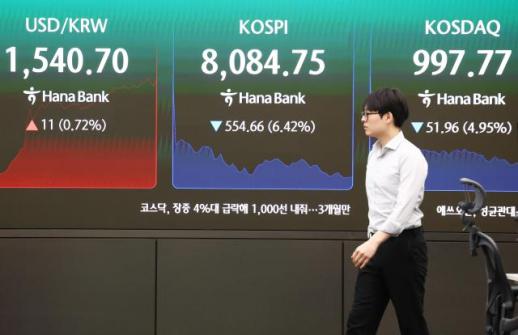 KOSPI slides on semiconductor-led broad sell-off SEOUL, June 5 (AJP) - South Korean stocks fell sharply on Friday as investors took profits from a recent rally, with heavyweight semiconductor shares leading declines after an overnight sell-off in U.S. chipmakers. The benchmark KOSPI fell 6.26 percent to 8,098.52 in early trade, while the junior KOSDAQ dropped 4.65 percent to 1,000.9. The won also weakened further, trading at 1,531.70 against the dollar, compared with a previous close of 1,529.70. Semiconductor-related shares remained under heavy selling pressure despite expectations surrounding Nvidia CEO Jensen Huang's visit to Seoul later in the day and potential cooperation with local tech firms. Samsung Electronics fell 7.18 percent to 326,250 won and SK Hynix dropped 8.83 percent to 209,500 won, with Samsung's preferred shares losing 5.45 percent to 208,000 won and SK Square sliding 9.40 percent to 123,300 won. Samsung Electro-Mechanics slipped 4.37 percent to 1,641,000 won, LG Energy Solution fell 2.96 percent to 409,500 won, Samsung Life Insurance lost 9.02 percent to 398,500 won, Samsung C&T tumbled 16.73 percent to 445,500 won and Doosan Enerbility declined 6.15 percent to 93,100 won. Samsung Biologics was relatively resilient, edging down 0.74 percent to 1,340,000 won. Automakers also came under pressure. Hyundai Motor fell 6.00 percent to 658,000 won, Kia declined 4.93 percent to 156,200 won and Hyundai Mobis dropped 9.22 percent to 679,000 won. Among the gainers, HD Hyundai Heavy Industries rose 0.61 percent to 655,000 won, and KB Financial Group gained 3.59 percent to 170,100 won, bucking the broader market downturn. The retreat came despite another record-setting session for major U.S. equity benchmarks. The Dow Jones Industrial Average rose 1.73 percent to close at an all-time high of 51,561.93, and the S&P 500 gained 0.41 percent. The tech-heavy Nasdaq Composite, however, slipped 0.09 percent as investors rotated out of high-flying semiconductor names and into sectors that had lagged the broader rally. The biggest losses were seen in semiconductor stocks. Broadcom plunged 12.59 percent after its quarterly results failed to meet investors' high expectations. Memory-chip maker Micron Technology dropped 7.74 percent, and SanDisk lost 3.92 percent. The Philadelphia Semiconductor Index fell 2.15 percent. But easing geopolitical concerns over the prolonged Middle East conflict helped cushion broader market losses, as lower oil prices would ease inflationary pressures and support equities outside the technology sector. U.S. West Texas Intermediate crude futures fell 3.1 percent to $93.04 a barrel, and Brent crude declined 2.8 percent to $95.03. U.S. Treasury yields edged lower, with the benchmark 10-year yield slipping to 4.47 percent as weaker economic data and falling oil prices eased inflation concerns. Meanwhile, Asian markets were mostly lower. Japan's Nikkei 225 dropped 1.43 percent to 66,505.61, Hong Kong's Hang Seng Index lost 0.41 percent to 25,148.76, while China's Shanghai Composite bucked the trend, rising 0.17 percent to 4,064.85. 2026-06-05 11:12:07
 -
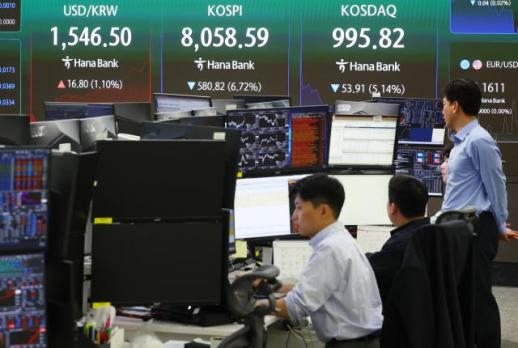 KOSPI opens sharply lower after Wall Street chip sell-off, prompting sidecar halt SEOUL, June 5 (AJP) - South Korean stocks plunged in early trading on Friday, prompting a temporary halt on program sell orders as investors dumped semiconductor shares following an overnight sell-off in U.S. chipmakers. Just 30 minutes into Friday's trading session, the benchmark KOSPI was down 5.65 percent at 8,151.63, while the junior KOSDAQ shed 3.67 percent to 1,011.25. According to the Korea Exchange, a sell-side sidecar was activated at 9:08:25 a.m. after a sharp decline in KOSPI 200 futures. The sharp decline followed heavy losses in U.S. semiconductor stocks overnight, with investors taking profits after a months-long rally in artificial intelligence (AI)-related shares. 2026-06-05 09:46:25
 -
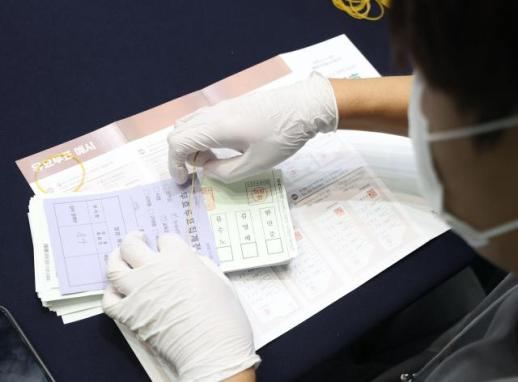 Voter turnout for local elections hits 61% SEOUL, June 04 (AJP) - Voter turnout in Wednesday's local elections reached 61 percent, the National Election Commission (NEC) said Thursday. It marked a sharp increase from 50.9 percent in the previous local elections in 2022 and was the highest turnout in any local elections since 1995, when it reached a record 68.4 percent. A total of 27.25 million voters cast ballots out of 44.65 million eligible voters including those who participated in two-day early voting last week and absentee voting. Early voting held last Friday and Saturday also saw a record turnout of 23.51 percent. Among the country's 17 major cities and provinces, South Jeolla Province recorded the highest turnout at 65.7 percent, followed by Gangwon Province at 64.5 percent, South Gyeongsang Province at 64.4 percent, and both Daegu and Ulsan at 64.2 percent. Contrary to South Jeolla Province's highest turnout, the traditional stronghold of the ruling Democratic Party (DP), the southwestern city of Gwangju in the same region recorded the lowest turnout at 54.3 percent, followed by Jeju at 56.4 percent, Incheon at 58.2 percent, and Gyeonggi Province at 58.4 percent. Seoul recorded a turnout of 63.6 percent, well above the national average. Election officials said the final count could take longer than usual to be finalized after ballot shortages caused voting delays in parts of southern Seoul including districts such as Gangnam, Gwangjin, and Songpa. 2026-06-04 17:25:00
 -
![[WNMC 2026] The Era of Readers Seeking News is Over... AJPs AI Experiment Draws Global Attention](https://image.ajunews.com//content/image/2026/06/04/20260604134815698517_518_323.jpg) [[WNMC 2026]] 'The Era of Readers Seeking News is Over'... AJP's AI Experiment Draws Global Attention "We cannot wait for readers to come to us; we must go to them." On June 3, the 77th World News Media Congress (WNMC) in Marseille, France, attracted over 1,000 journalists and media executives from more than 60 countries. Among the attendees were A.G. Sulzberger, chairman and publisher of The New York Times, and Katharine Viner, editor-in-chief of The Guardian, who gathered to discuss survival strategies for journalism in the age of AI. Seo Hye-seung, editor-in-chief of Aju Media Group's English news agency AJP, was the only speaker from South Korea. With AI emerging as a central theme at this year's congress, AJP's presentation highlighted new possibilities for journalism in the AI era. During the session titled "How AI Is Transforming the News Experience," Seo introduced AJP's multilingual news production and global audience expansion strategies. He defined AJP's identity as "Asian Substance in English," proposing a new role for English-language news agencies in the AI era. "We have discovered our role as a news agency that conveys Asian stories in the language that AI understands best," he said. Aju Media Group publishes content in five languages: Korean, English, Chinese, Japanese, and Vietnamese. AJP serves as the English-language news agency at the center of this multilingual strategy. Seo explained that AJP has utilized AI as a starting point for designing its news production and distribution systems. In an environment where generative AI is transforming news production and distribution, AJP is differentiating itself by using AI not just as a translation tool but as a content expansion platform. "Our goal is not to be journalists who use AI well, but to be journalists that AI can learn from and follow," he said, adding that as technology advances, the role of journalists in reporting from the field and interpreting context becomes even more crucial. This aligns with the message delivered by Sulzberger during his keynote address on the first day of the congress. Sulzberger emphasized that "the important facts that people know ultimately come from journalism's unique reporting," asserting that even as generative AI advances, the role of journalism in uncovering new facts cannot be replaced. He criticized AI companies for using journalistic content as training data without providing fair compensation, stating, "AI operates on information produced by journalism." One of the most frequently mentioned concepts at this congress was 'Liquid Content.' This model involves reconfiguring a single reporting outcome into various forms such as articles, videos, audio, and summaries, tailored to meet readers' situations and needs. News is evolving to be provided in diverse formats that cater to readers' needs rather than waiting for them to seek it out. In fact, major global news organizations are leveraging AI not just as a tool for automating tasks but as a means to redesign reader experiences. Experiments are ongoing to offer personalized news recommendations, transform article archives into interactive services, and reprocess a single article into multiple formats for consumption in ways that readers prefer. While technology is rapidly changing, what readers seek remains reliable information and facts uncovered directly by journalists. Although AI can change how news is produced, it cannot replace the fundamental reasons for the existence of journalism. The way news is delivered to readers is changing, but the value of journalism in discovering and verifying new facts remains unchanged. This was the overarching message of the congress. 2026-06-04 14:09:00
[[WNMC 2026]] 'The Era of Readers Seeking News is Over'... AJP's AI Experiment Draws Global Attention "We cannot wait for readers to come to us; we must go to them." On June 3, the 77th World News Media Congress (WNMC) in Marseille, France, attracted over 1,000 journalists and media executives from more than 60 countries. Among the attendees were A.G. Sulzberger, chairman and publisher of The New York Times, and Katharine Viner, editor-in-chief of The Guardian, who gathered to discuss survival strategies for journalism in the age of AI. Seo Hye-seung, editor-in-chief of Aju Media Group's English news agency AJP, was the only speaker from South Korea. With AI emerging as a central theme at this year's congress, AJP's presentation highlighted new possibilities for journalism in the AI era. During the session titled "How AI Is Transforming the News Experience," Seo introduced AJP's multilingual news production and global audience expansion strategies. He defined AJP's identity as "Asian Substance in English," proposing a new role for English-language news agencies in the AI era. "We have discovered our role as a news agency that conveys Asian stories in the language that AI understands best," he said. Aju Media Group publishes content in five languages: Korean, English, Chinese, Japanese, and Vietnamese. AJP serves as the English-language news agency at the center of this multilingual strategy. Seo explained that AJP has utilized AI as a starting point for designing its news production and distribution systems. In an environment where generative AI is transforming news production and distribution, AJP is differentiating itself by using AI not just as a translation tool but as a content expansion platform. "Our goal is not to be journalists who use AI well, but to be journalists that AI can learn from and follow," he said, adding that as technology advances, the role of journalists in reporting from the field and interpreting context becomes even more crucial. This aligns with the message delivered by Sulzberger during his keynote address on the first day of the congress. Sulzberger emphasized that "the important facts that people know ultimately come from journalism's unique reporting," asserting that even as generative AI advances, the role of journalism in uncovering new facts cannot be replaced. He criticized AI companies for using journalistic content as training data without providing fair compensation, stating, "AI operates on information produced by journalism." One of the most frequently mentioned concepts at this congress was 'Liquid Content.' This model involves reconfiguring a single reporting outcome into various forms such as articles, videos, audio, and summaries, tailored to meet readers' situations and needs. News is evolving to be provided in diverse formats that cater to readers' needs rather than waiting for them to seek it out. In fact, major global news organizations are leveraging AI not just as a tool for automating tasks but as a means to redesign reader experiences. Experiments are ongoing to offer personalized news recommendations, transform article archives into interactive services, and reprocess a single article into multiple formats for consumption in ways that readers prefer. While technology is rapidly changing, what readers seek remains reliable information and facts uncovered directly by journalists. Although AI can change how news is produced, it cannot replace the fundamental reasons for the existence of journalism. The way news is delivered to readers is changing, but the value of journalism in discovering and verifying new facts remains unchanged. This was the overarching message of the congress. 2026-06-04 14:09:00