

Journalist

Ryu Yuna and Candice Kim
Julia37@ajupress.com
-
 Oh Se-hoon reelected Seoul mayor after dramatic overnight reversal SEOUL, June 4 (AJP) - Incumbent Seoul Mayor Oh Se-hoon of the main opposition People Power Party (PPP) was re-elected on Thursday after a nail-biting overnight count, defeating Democratic Party (DP) candidate Chung Won-o in the closest and most closely watched race of this year's local elections. According to the National Election Commission, with 97.17 percent of ballots counted as of 9 a.m., Oh was leading with 48.87 percent of the vote, edging out Chung's 48.41 percent by just 23,468 votes. Speaking at his campaign office in central Seoul after declaring victory, Oh described the outcome as a "victory for ordinary, hardworking citizens." Chung, a strong contender who had been widely expected to win and was backed by President Lee Jae-myung, conceded defeat. He said, "I humbly accept the choice of Seoul citizens," adding, "I fell short." The mayoral race remained too close to call for much of the night. Chung initially held a substantial lead in the early stages of vote counting, but the margin steadily narrowed after midnight as more ballots were tallied. Oh overtook Chung after more than 93 percent of the votes had been counted and gradually widened his lead overnight, bringing a dramatic late reversal that ended one of the closest mayoral races. Meanwhile, Oh called for a thorough investigation into ballot shortages reported at about a dozen polling stations in southern Seoul, considered to be a conservative stronghold. A rare logistics failure disrupted voting at least 14 polling stations including Gangnam, Gwangjin and Songpa, where ballot papers ran out, delaying the process and angering voters. 2026-06-04 10:20:29
 -
 Songzio and Heliot Emil reunite for falconry-inspired collection SEOUL, June 02 (AJP) - South Korean designer label Songzio, whose designs recently took center stage during BTS's "ARIRANG" comeback performance in March, has collaborated once again with Copenhagen-based fashion brand Heliot Emil on a new collection inspired by falconry. Titled "Falconry," the collection will be released on Friday after the brand's first collaboration sold out shortly after its debut last year. Drawing on themes of speed and control, it reinterprets the old practice of falconry through a contemporary lens. Bringing together Songzio's sculptural silhouettes and Heliot Emil's functional aesthetic, the designs incorporate flowing lines, layered construction and sharply defined forms. Signature metallic accents inspired by falcons' beaks and talons further reinforce the collection's emphasis on form and movement. The lineup includes biker jackets, cropped outerwear, structured T-shirts, and tailored trousers, blending practicality with bold, architectural silhouettes. To mark the launch, the two brands will host an event on Friday at Galerie Noir, Songzio's flagship store in Seoul. Attendees will include Songzio ambassadors ATEEZ member Seong-hwa and actress Choi Hee-jin, along with creative directors from both labels. Founded in 1993, Songzio has presented collections at Paris Fashion Week for more than two decades and established a presence across Asia, Europe, and North America. Its recent collaboration with BTS performance at Gwanghwamun Square this year marked another step in expanding the brand's global footprint. The new collection will be available online from Wednesday and in stores from Friday, including the brand's flagship stores in Seoul and Paris, as well as major department stores across South Korea. 2026-06-02 17:40:40
 -
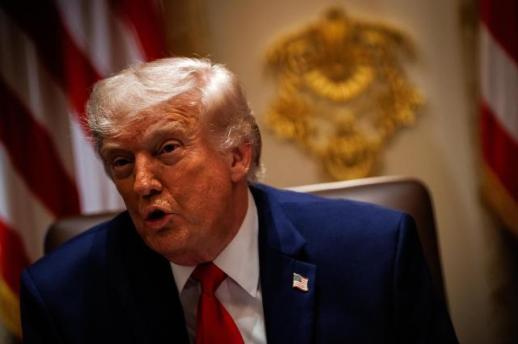 Trump says deal with Iran may be reached 'over the next week' SEOUL, June 2 (AJP) - U.S. President Donald Trump again said that Washington and Tehran are moving closer to a deal that could extend a ceasefire and ease tensions in the Strait of Hormuz, raising hopes for a possible end to the prolonged conflict in the Middle East, which began in late February. In a phone interview with ABC News on Monday, Trump said a memorandum of understanding (MOU) with Iran could be reached "over the next week," calling ongoing talks "looking good." The proposed deal would lay the groundwork for extending the ceasefire while keeping the strait open to shipping, as both sides continue negotiations over Iran's nuclear program and regional security. Trump said there had been "a little glitch" in the negotiations, although he admitted difficulties. "It's not a simple thing," he said. "So it's not an easy thing for them. It's actually not easy from our standpoint either. But we're getting what we need to get." But it still remains to be seen, as this is not the first time Trump has made similar remarks, and several key issues remain unresolved. Adding to the uncertainty, Iran said earlier in the day that it had suspended communications with the U.S. over Israel's military actions in Lebanon. 2026-06-02 16:26:04
 -
 Grocery delivery app Kurly to acquire AI startup SEOUL, June 2 (AJP) - Grocery delivery app Kurly will acquire Seoul-based artificial intelligence (AI) startup 1Z Labs in a bid to improve efficiency across its business operations, according to industrial sources on Tuesday. Kurly plans to issue around 453,518 new shares by early August in a stock-swap deal that will make the startup its wholly owned subsidiary. The two companies have already been jointly developing AI-related technologies, with plans to expand the use of AI across their business, from customer service and advertising to the development of new products and services. According to Kurly, it uses artificial intelligence to automate routine tasks such as producing advertising banners and product images, from planning and design through to final delivery. It also uses AI to handle customer service tasks like inquiries, cancellations, and returns, processing about 40 percent of requests on the same day. The upcoming acquisition comes as the company looks for new growth opportunities after postponing its initial public offering (IPO) in 2023 due to a market downturn that sharply reduced valuations. Founded in 2015, Kurly was among the frontrunners in offering overnight grocery delivery in South Korea through its signature "dawn delivery" service, which allows customers to receive fresh food orders by the next morning. The company was valued at about 4 trillion won (US$3 billion) at its peak in late 2021 after raising 250 billion won in a pre-IPO funding round led by Hong Kong-based private equity firm Anchor Equity Partners. Its valuation later dropped sharply as investor appetite weakened. Since postponing its IPO, Kurly has focused on improving profitability. It posted record first-quarter results in 2026, with revenue up 28.4 percent from a year earlier to 745.7 billion won and operating profit jumping to 24.2 billion won. "The acquisition would help the company strengthen its AI capabilities," said Kurly Chief Executive Sophie Kim. 2026-06-02 11:25:04
 -
 Generative AI's Impact on Media Discussed at Global News Conference in Marseille Leaders from newsrooms and tech companies around the world are gathering in Marseille, France, to discuss the use of generative artificial intelligence (AI) in the media industry. The 77th World News Media Conference (WNMC) kicked off on June 1 in the southern French port city of Marseille. Organized by the World Association of News Publishers (WAN-IFRA), the conference has attracted over 1,000 media professionals from more than 80 countries. This year's main topic is undoubtedly 'Generative AI.' On the first day, discussions focused on the changes generative AI could bring to news production, editing, search, content distribution, and revenue models, as well as survival strategies for media organizations in the AI era. The session titled 'AI: What the Latest Developments Mean for Publishers and Newsrooms' featured presentations on the direction of generative AI and its applications in newsrooms. Speakers included Florent Daudens, co-founder and CEO of the Canadian AI startup Mizal AI, and Christophe Israël, an AI and digital strategy consultant from Switzerland. Daudens has led AI innovations at the open-source AI platform Hugging Face and previously served as the editor-in-chief of the prominent Canadian daily Le Devoir and as the head of international, political, and reporting departments at CBC/Radio-Canada. He is currently researching the impact of AI on the media industry and continues to lecture and consult with global media organizations and universities. Israël has been involved in designing and mentoring programs such as the 'Newsroom AI Catalyst' and 'AI Frontier,' co-operated by WAN-IFRA and OpenAI. He has held positions as the digital director at France Inter and deputy editor at the daily Libération, as well as the head of digital and development at Swiss media group Tamedia. Currently, he runs OK Lab, a consulting firm focused on digital transformation and growth strategies for various companies, including media organizations. The conference will continue until June 3. On the second day, sessions will examine key technological changes surrounding generative AI and their implications for media companies' strategies and business models. Media executives are expected to discuss strategies for adapting to the AI era. 2026-06-01 16:33:00
 -
![[WNMC 2026] Media Leaders Discuss AI Strategies at World News Media Congress](https://image.ajunews.com//content/image/2026/06/01/20260601162718581718_518_323.jpg) [[WNMC 2026]] Media Leaders Discuss AI Strategies at World News Media Congress The 77th World News Media Congress, organized by the World Association of Newspapers (WAN-IFRA), is currently underway in Marseille, France, where global media leaders are focusing on new survival strategies and revenue generation methods in the age of artificial intelligence (AI). This year’s congress has highlighted the explosive growth of generative AI technology and its impact on the news ecosystem, as well as the strategic choices media organizations must make in response. A session titled "Deep Dive: What Media Companies Need to Do to Leverage the AI Content Market" drew significant attention from attendees on the morning of the event. WAN-IFRA views the emerging AI content licensing market as a new opportunity for media companies and outlined the key steps news publishers must take to successfully enter this ecosystem. The urgency for media companies to establish a market environment where they can take the lead and demand fair compensation arises from the indiscriminate use of news content in AI model training by major tech firms. Industry experts who are building the technical foundation for a new licensing market through AI models participated as speakers in the session. They shared practical approaches to protect original works produced by media companies from unauthorized scraping by external AI and to maximize revenue by establishing new licensing business models based on this protection. The session was moderated by Kevin Anderson, Director of the Digital Revenue Network at WAN-IFRA. Speakers included Birger Søiland, Head of Publisher Partnerships at TollBit, Frederick Jahn, Co-founder of Centinel Analytica, and Primavera de Filippi, Co-founder of Alien Intelligence. They led in-depth discussions on how to create a fair value exchange system between news media and AI companies, drawing on their expertise in data tracking technology and AI governance. WAN-IFRA emphasized that media companies must evolve from a passive role of merely providing content to becoming active players who establish the rules of the AI content market and share in its benefits. As more detailed remarks from the speakers and specific business cases are added, a clear blueprint for building sustainable business models for media companies in the AI era is expected to emerge. 2026-06-01 16:27:00
[[WNMC 2026]] Media Leaders Discuss AI Strategies at World News Media Congress The 77th World News Media Congress, organized by the World Association of Newspapers (WAN-IFRA), is currently underway in Marseille, France, where global media leaders are focusing on new survival strategies and revenue generation methods in the age of artificial intelligence (AI). This year’s congress has highlighted the explosive growth of generative AI technology and its impact on the news ecosystem, as well as the strategic choices media organizations must make in response. A session titled "Deep Dive: What Media Companies Need to Do to Leverage the AI Content Market" drew significant attention from attendees on the morning of the event. WAN-IFRA views the emerging AI content licensing market as a new opportunity for media companies and outlined the key steps news publishers must take to successfully enter this ecosystem. The urgency for media companies to establish a market environment where they can take the lead and demand fair compensation arises from the indiscriminate use of news content in AI model training by major tech firms. Industry experts who are building the technical foundation for a new licensing market through AI models participated as speakers in the session. They shared practical approaches to protect original works produced by media companies from unauthorized scraping by external AI and to maximize revenue by establishing new licensing business models based on this protection. The session was moderated by Kevin Anderson, Director of the Digital Revenue Network at WAN-IFRA. Speakers included Birger Søiland, Head of Publisher Partnerships at TollBit, Frederick Jahn, Co-founder of Centinel Analytica, and Primavera de Filippi, Co-founder of Alien Intelligence. They led in-depth discussions on how to create a fair value exchange system between news media and AI companies, drawing on their expertise in data tracking technology and AI governance. WAN-IFRA emphasized that media companies must evolve from a passive role of merely providing content to becoming active players who establish the rules of the AI content market and share in its benefits. As more detailed remarks from the speakers and specific business cases are added, a clear blueprint for building sustainable business models for media companies in the AI era is expected to emerge. 2026-06-01 16:27:00 -
 Record visitor arrivals drive biggest-ever April spending in Seoul SEOUL, June 01 (AJP) - Foreign visitors flocked to Seoul in record numbers in April and spent more than ever before, signaling that the city's tourism recovery is evolving into a broader consumer spending boom. The number of overseas visitors to the capital reached 1.56 million in April, up 18.8 percent from a year earlier and the highest figure ever recorded for the month, according to data released by the Seoul Metropolitan Government on Sunday. Foreign visitors spent a combined 1.1532 trillion won ($830 million) in Seoul in the same period, up 50.5 percent from a year earlier and the highest monthly total on record. It also marked the first time monthly foreign visitor spending in Seoul exceeded 1 trillion won. The growth was driven partly by strong demand for shopping and medical tourism, two sectors in which South Korea has emerged as a leading destination in Asia. Purchases at large retail complexes climbed 62.5 percent from a year earlier to 245.2 billion won, while medical tourism revenue rose 59.2 percent to 192.1 billion won. Gangnam accounted for the largest share of foreign spending at 29.1 percent, followed by Jung-gu, which includes the Myeongdong shopping district in central Seoul at 27.5 percent, and Mapo District, known for the Hongdae area, Seoul's heart of fashion and trends, at 7.4 percent. According to city officials, Myeongdong and Jamsil, a southern Seoul district where major shopping complexes are located, were the most popular shopping destinations, while the areas around Gangnam Station and Sinnonhyeon Station, famous for beauty and fashion stores, attracted large numbers of visitors seeking medical and cosmetic treatments. Chinese visitors accounted for the largest share of arrivals, with 440,000 tourists visiting, followed by 230,000 Japanese, 150,000 Taiwanese and 130,000 Americans. The cumulative number of foreign visitors to Seoul reached 5.2 million during the first four months of the year. Arrivals from China and Japan continued to strengthen in early May during Japan's Golden Week and China's Labor Day holidays. Between April 29 and May 6, 108,000 Chinese and 112,000 Japanese travelers visited South Korea, up 40.7 percent from a year earlier. Foreign visitor spending in Seoul reached 437.6 billion won during the period. The trend also highlights a shift toward higher-value tourism, with visitors increasingly combining shopping, entertainment and healthcare services in a single trip. To capitalize on the trend, Seoul plans to continue upgrading tourism content and visitor services. Kim Myung-joo, head of Seoul's Tourism and Sports Bureau, said the city aims to attract 30 million international visitors annually. 2026-06-01 10:22:22
 -
 AI becomes defining battleground at World News Media Congress MARSEILLE, France, June 1 (AJP) — Artificial intelligence has emerged as the defining battleground for the global news industry as publishers, editors and policymakers gather in southern France this week to debate the future of journalism amid one of the most disruptive technological shifts in decades. The 77th World News Media Congress, organized by the World Association of News Publishers (WAN-IFRA), will bring together more than 1,000 media executives, editors and innovators from over 60 countries in Marseille, including leaders from The New York Times, The Guardian, POLITICO and the European Commission. While the annual gathering traditionally focuses on the future of journalism and media business strategies, this year's agenda is overwhelmingly shaped by artificial intelligence, reflecting the technology's growing influence on newsroom operations, audience engagement, content distribution and revenue models. Generative AI has rapidly moved from a newsroom experiment to a strategic priority for publishers worldwide. At the same time, it has raised pressing questions about copyright, misinformation, editorial integrity and the long-term sustainability of professional journalism. Among the invited speakers is AJP, the English-language news platform of Aju Media Group, which has emerged as one of South Korea's early adopters of AI-driven newsroom innovation in one of the world's fastest-moving digital media markets. AJP Managing Editor Seo Hye-seung will participate in a session titled "How AI Is Transforming the News Experience," sharing how the organization has leveraged AI technologies to broaden its international reach, enhance content distribution and develop new audience experiences as a relatively young player in the global news industry. A.G. Sulzberger, chairman and publisher of The New York Times, will open the congress with a keynote address titled "AI, Journalism and the Uncertain Future of the Public Square." The speech is expected to explore how artificial intelligence is reshaping press freedom, public discourse and journalism's role in democratic societies at a time when AI-powered platforms are increasingly influencing how information is created, distributed and consumed. Sulzberger, a fifth-generation leader of the Ochs-Sulzberger family that has controlled the newspaper since 1896, has overseen one of the industry's most closely watched digital transformations. Since becoming publisher in 2018, he has led the Times to more than 12.8 million subscribers by the end of 2025 through a subscription bundle that spans news, games, cooking and audio products. He has also become a leading advocate for stronger copyright protections for publishers amid escalating disputes between news organizations and AI companies over the use of journalistic content to train large language models. The congress will also bring together policymakers shaping the future of artificial intelligence regulation and digital governance. Henna Virkkunen, Executive Vice-President of the European Commission for Tech Sovereignty, Security and Democracy, oversees the European Union's policies on artificial intelligence, digital regulation and cybersecurity. A former Finnish education minister and member of the European Parliament, she will deliver the closing keynote outlining Europe's vision for technological sovereignty, democratic resilience and the role of journalism in the digital age. Another prominent participant is Katharine Viner, editor-in-chief of The Guardian, who has spearheaded the publication's reader-revenue strategy while overseeing its expansion across Australia, the United States and Europe. At the plenary session "In Conversation," she will join AFP Global News Director Phil Chetwynd to discuss digital transformation, reader-supported journalism and the future of news organizations in the AI era. Goli Sheikholeslami, chief executive of POLITICO Media Group, will also address how publishers are adapting their business strategies to the AI age. Since taking the helm in 2022, Sheikholeslami has overseen POLITICO's expansion across North America and Europe. She previously held senior leadership positions at New York Public Radio, Chicago Public Media and The Washington Post. At the plenary session "Redefining Media Strategies in an AI-Transformed World," she will discuss how publishers are rethinking newsroom operations, business models and long-term growth strategies as generative AI reshapes the media landscape. As news organizations confront declining traditional revenues, changing audience habits and growing competition from AI-powered information platforms, the debates in Marseille are expected to provide an early glimpse into how journalism intends to defend its value while harnessing the opportunities of the technology transforming it. For many publishers, the question is no longer whether AI will change journalism, but whether journalism can adapt quickly enough to shape how AI changes the public's relationship with news. 2026-06-01 10:16:19
 -
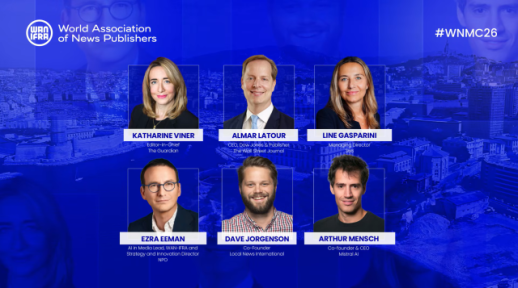 World News Media Congress 2026 Kicks Off in Marseille, Focuses on AI and Journalism The 77th World News Media Congress, organized by the World Association of Newspapers and News Publishers (WAN-IFRA), opened on June 1 in Marseille, France. The event brings together over 1,000 executives and editors from media organizations across more than 60 countries to discuss the future of journalism in the wake of the rise of generative artificial intelligence (AI). Key topics at the congress include "AI in Media," "Future of Journalism," and "Revenue & Growth." Discussions will focus on how generative AI is transforming news production and distribution, protecting media copyrights, and exploring new revenue models and innovations in newsrooms for the AI era. The event features executives from major global media outlets such as The New York Times, The Guardian, and POLITICO, along with digital policy leaders from the European Union, who will share insights on the future of journalism and the media industry in the age of AI. Notably, Seo Hye-seung, editor of AJP, the English-language news agency of the Ajou Media Group, is the only invited speaker from Korea. She will present on how AI is transforming news experiences, showcasing AJP's model of producing content in five languages and expanding its audience beyond Korea. A.G. Sulzberger, Chairman and Publisher of The New York Times, will deliver the keynote address on "AI, Journalism, and the Uncertain Future of the Public Sphere." The three-day congress will also feature prominent media leaders such as Goli Sheikholeslami, CEO of POLITICO, Katharine Viner, editor-in-chief of The Guardian, and Phil Chetwynd, Global News Director of AFP, who will discuss the role of journalism in a rapidly changing media landscape driven by AI innovation. 2026-05-31 17:51:00
 -
 AI wealth gap reaches city halls as Korea's chip hubs reap tax windfall SEOUL, May 29 (AJP) - South Korea's artificial intelligence boom is creating winners far beyond the stock market, with cities hosting semiconductor plants emerging as some of the biggest beneficiaries of a tax windfall fueled by record earnings at Samsung Electronics and SK hynix. The central government is expected to collect tens of trillions of won in additional tax revenue this year as the AI-driven semiconductor boom boosts corporate profits and equity valuations. At the local level, the gains are increasingly concentrated in a handful of cities in Gyeonggi Province that host facilities of the world's two largest memory-chip makers. For local governments that only a few years ago struggled with shrinking tax bases and relied heavily on central government transfers, the turnaround has been striking. Since the semiconductor industry's recovery began in the second half of 2025, five semiconductor cities in Gyeonggi Province have collected between 60 billion won and 200 billion won ($44 million-$147 million) more in tax revenue than initially budgeted as of April, according to local government data. The rebound marks a dramatic reversal from 2023, when corporate local income tax payments from major chipmakers nearly disappeared during one of the industry's deepest downturns. The surge reflects record profits at Samsung Electronics and SK hynix, whose earnings have been turbocharged by global demand for AI servers and high-bandwidth memory chips. As tax revenue floods into South Korea's semiconductor belt, local governments are increasingly divided over whether to spend the windfall on infrastructure and public services or save part of it for the next downturn in the notoriously cyclical chip industry. The debate is most intense in Hwaseong, one of South Korea's most important semiconductor hubs and home to major Samsung Electronics production facilities. City officials have declined to disclose detailed figures, but industry estimates suggest tax revenue linked to Samsung Electronics could exceed 1 trillion won. Under South Korea's tax-sharing system, part of corporate local income taxes is distributed to municipalities where production facilities are located. "Windfall tax revenue should be invested in infrastructure for the city's long-term growth potential rather than short-term spending," said Rep. Kwon Chil-seung of the ruling Democratic Party, who represents part of Hwaseong. Other semiconductor cities are taking different approaches. Icheon, home to SK hynix's flagship memory-chip complex and one of the largest beneficiaries of the company's earnings surge, is expected to receive nearly 200 billion won in corporate local income tax revenue. Rather than spending the proceeds immediately, city officials plan to place a substantial portion into fiscal reserve funds to cushion future economic downturns. Pyeongtaek, home to Samsung Electronics' largest semiconductor manufacturing complex, expects corporate local income tax revenue linked to Samsung to nearly triple to 155.6 billion won ($115 million) in 2026 from 51.6 billion won a year earlier. City officials plan to direct much of the increase toward construction of a new municipal government complex, one of the city's largest ongoing projects, while allocating additional funds to transportation and public services. Suwon, where Samsung Electronics maintains its headquarters, expects roughly 80 billion won in additional tax revenue. Officials say the funds will support transportation projects, electric-vehicle initiatives and other public investments. Yongin, which hosts facilities operated by both Samsung Electronics and SK hynix and is positioning itself as South Korea's next-generation semiconductor cluster, projects collecting about 64.9 billion won in corporate local income taxes from the two companies this year. Officials there remain cautious about treating the increase as a permanent revenue source. "It should ultimately be used to improve residents' quality of life," said Rep. Lee Sang-sik, who represents part of Yongin. "I hope some of the funds will be invested in cultural and sports facilities in Cheoin-gu, where related infrastructure remains underdeveloped." The discussion illustrates how the AI boom is widening economic disparities not only between companies and industries but also between local governments. While semiconductor hubs enjoy overflowing coffers, many municipalities elsewhere continue to struggle with stagnant tax revenue, aging populations and rising welfare costs. Some politicians and education officials have proposed directing a portion of the windfall toward social programs and public education, while others argue the money should be used to strengthen transportation networks and industrial infrastructure that can attract future investment. The debate has taken on added political significance ahead of local elections on June 3, with competing visions emerging over how to spend what many view as the first major local-government dividend from the global AI boom. For now, one thing is clear: the benefits of South Korea's semiconductor renaissance are no longer confined to chipmakers and investors. They are increasingly reshaping the finances—and political priorities—of the cities that host the factories powering the world's AI revolution. 2026-05-29 16:59:27