

Journalist

Ryu Yuna and Candice Kim
Julia37@ajupress.com
-
 South Korean households spend more as income gap widens in Q1 SEOUL, May 29 (AJP) - South Korean households spent more in the first quarter, but their savings declined as spending grew faster than earnings for the first time in nearly two years, the Ministry of Data and Statistics said on Friday. According to the ministry, average monthly household income rose 2.4 percent from a year earlier to 5.48 million won (US$4,000) in the first quarter of 2026. Among them, average income for salaried workers stood at 3.42 million won. Average monthly household spending rose 5.3 percent from a year earlier to 3.11 million won, marking the fastest increase since the first quarter of 2023, and spending exceeded income for the first time since the second quarter of 2024. The average propensity to consume also increased 1.7 percentage points to 71.5 percent. The income gap widened as lower-income households faced growing financial pressure, while large performance bonuses at major companies such as Samsung Electronics and SK hynix boosted earnings among higher-income households. The average propensity to consume among the bottom 20 percent reached 155.3 percent, with households earning an average of 1.17 million won per month but spending 1.46 million won. By contrast, households in the top 20 percent saw the strongest income growth, with average monthly income rising 4.2 percent to 12.38 million won. They were also the only group to see their income grow, up 2.6 percent to 4.08 million won. As a result, the income gap between the two groups widened to 6.59 times from 6.32 times a year earlier. The ministry attributed the widening gap partly to wage growth at large corporations and performance bonuses from major chipmakers such as Samsung Electronics and SK hynix, which were partly reflected in February's income data. Households in the top 20 percent of the income bracket tend to include a higher proportion of employees at large companies, where wage gains were stronger in the first quarter. 2026-05-29 16:19:02
 -
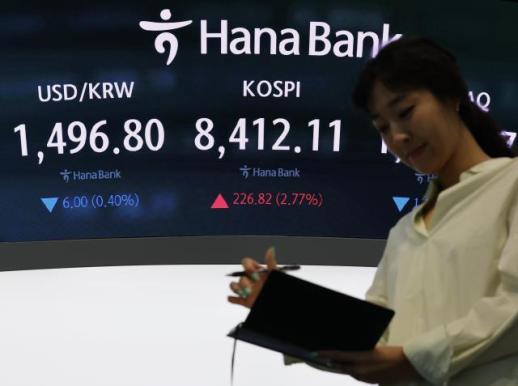 KOSPI rebounds as Middle East tensions show signs of easing SEOUL, May 29 (AJP) - South Korean stocks opened higher on Friday, recovering from a brief decline the previous day, as the benchmark KOSPI climbed back above 8,400 on hopes that the prolonged conflict in the Middle East could soon come to an end. The KOSPI rose 2.31 percent to 8,374.58 shortly after trading began, nearing its recent intraday high of 8,457.09. The junior KOSDAQ, however, fell 2.31 percent to 1,078.89 as investors shifted toward large-cap stocks. The rebound followed a volatile session the previous day, when the KOSPI closed 0.53 percent lower after briefly plunging more than 4 percent intraday, as the Bank of Korea kept its benchmark rate unchanged while hinting at future hikes. The rally was largely driven by improved investor sentiment amid signs of easing tensions in the Middle East, with reports suggesting Washington and Tehran were nearing a deal. Chipmakers led the gains, with Samsung Electronics up 4.34 percent to 312,500 won and SK Hynix up 3.23 percent to 2,363,000 won, boosting the broader market. Automakers and auto-parts makers also rallied, with Hyundai Motor climbing 6.35 percent to 720,000 won, Hyundai Mobis advancing 6.12 percent to 728,000 won and Kia adding 3.47 percent to 170,000 won. Technology and industrial shares traded higher, as Samsung Electro-Mechanics jumped 6.49 percent to 1,969,000 won, SK Square rose 1.13 percent to 1,251,000 won and HD Hyundai Heavy Industries gained 1.70 percent to 716,000 won. Financial and holding-company stocks also advanced, with Samsung Life Insurance rising 1.12 percent to 361,500 won, Samsung C&T gaining 3.38 percent to 413,000 won and Samsung Electronics preferred shares climbing 6.08 percent to 202,500 won. Defense-related shares remained firm, with Hanwha Aerospace adding 1.25 percent to 1,215,000 won. But battery, biotech and energy shares underperformed, as LG Energy Solution slipped 0.11 percent to 441,500 won, Samsung Biologics fell 0.58 percent to 1,365,000 won and Doosan Enerbility declined 2.46 percent to 103,300 won. Asian markets also opened broadly higher, with Japan's Nikkei 225 up 1.83 percent at 65,876.04, Hong Kong's Hang Seng Index rising 0.37 percent to 25,097.78 and China's Shanghai Composite adding 0.29 percent to 4,110.52. Overnight, U.S. stocks climbed to fresh record highs. The Nasdaq Composite rose 0.91 percent and the S&P 500 gained 0.58 percent, while the Philadelphia Semiconductor Index advanced about 1 percent. Investor sentiment was further boosted after Dell Technologies posted stronger-than-expected earnings and surged roughly 38 percent in after-hours trading, reinforcing optimism over AI-related spending. Lower oil prices and easing bond yields also supported risk assets. U.S. benchmark WTI crude fell to around $88 a barrel, while the yield on the 10-year U.S. Treasury note retreated to 4.44 percent. Meanwhile, the Korean won strengthened slightly against the greenback in early trading, with the dollar trading at 1,498 won, compared with the previous session's close of 1,502.80 won. 2026-05-29 10:23:59
 -
 Samsung's Bonus Disparities Spark Debate Among South Korean Firms "I should have raised ducks instead of getting a PhD," said HB Lee, a 33-year-old employee in the LSI division of a major South Korean conglomerate. Such self-deprecating remarks have recently circulated in employee communities. While some support staff in the memory division, benefiting from the AI semiconductor boom, receive bonuses in the tens of millions of won, PhD-level researchers in the loss-making system LSI and foundry divisions receive significantly lower compensation. Lee noted, "These days, there’s talk that even someone raising ducks in the semiconductor division is getting bonuses of 400 to 500 million won. It’s laughable that compensation depends more on which division you belong to than on actual performance." South Korea's export-driven economy has traditionally operated on a trickle-down economics model, where profits from large corporations flow down to subcontractors and small manufacturers. However, there are growing concerns that the current performance bonus conflicts in the AI era are creating a new form of trickle-down effect, exacerbating wage disparities, relative deprivation, and labor disputes across the industrial ecosystem. The competition for performance bonuses, which began in the memory semiconductor sector, is now shaking the distribution standards across South Korean corporate society. The compensation debate sparked by Samsung Electronics and SK Hynix is spreading to the platform, ICT, manufacturing, and bio industries, leading to polarization in the labor market, internal divisions within organizations, and conflicts throughout the supply chain. Professor Park Byeong-jin of Hanyang University’s Business School stated, "The precedent set by Samsung Electronics regarding performance bonuses is likely to have a domino effect on the entire South Korean labor market and the compensation systems of major corporations. The unlimited bonus structure of the country’s top company is becoming a benchmark that raises the compensation expectations of other corporate unions." He added, "If this trend continues, it could lead to performance bonus inflation across the industry, increasing the cost burden on companies." The demand for performance bonuses is intensifying across the industrial sector. The Hyundai Motor and Kia unions are demanding bonuses equivalent to 30% of their net profits this year, while the HD Hyundai Heavy Industries union has included a proposal for sharing 30% of operating profits in this year's negotiations. The Kakao union has raised the possibility of a strike for the first time since its founding, demanding bonuses of 13-14% of operating profits, and LG Uplus is also continuing to demand bonuses at the 30% level. The Doosan Enerbility union, benefiting from a boom in power equipment, has reportedly included a request for a revision of the bonus calculation method in this year's negotiations. SM, a 33-year-old manager at a domestic automotive company, remarked, "Ultimately, it’s a matter of how to distribute limited resources. There can’t be a win-win structure. If one person takes more, someone else has to take less. In the end, one side has to concede, but realistically, who is going to give up money?" Within Samsung Electronics, there is growing backlash over the extreme disparities in performance bonuses between divisions. The joint negotiation team of the Samsung Electronics union announced that a tentative agreement was approved with 73.7% support (46,142 votes) in a vote that closed at 10 a.m. on May 27. The turnout was 95.5%. As a result, Samsung Electronics has temporarily avoided the previously anticipated strike. The agreement includes an average wage increase of 6.2% and the establishment of a "special management performance bonus" for the DS division. This special bonus will be funded by 10.5% of business performance and will be paid in the form of restricted stock units (RSUs). The distribution ratio for the bonus fund is set at 40% for common divisions and 60% for business units. This structure is similar to the bonus system already implemented by SK Hynix, which provides bonuses equivalent to 10% of operating profits. Under the tentative agreement, employees in the memory division are expected to receive a total bonus of up to 600 million won based on an annual salary of 100 million won, combining the special management performance bonus and the existing excess profit incentive (OPI). In contrast, employees in the loss-making system LSI and foundry divisions are expected to receive around 210 million won. Some employees in the DX division, responsible for smartphones and home appliances, are reported to receive about 6 million won. The nearly 100-fold disparity has led to unprecedented "intra-company conflict" within Samsung Electronics. Internal dissent among employees in the non-memory and DX divisions continues even after the approval of the tentative agreement. The number of members in the Donghaeng union, primarily composed of DX division employees, surged from about 2,200 to around 12,800 following the announcement of the tentative agreement. This internal backlash highlights the structural dilemma faced by South Korean companies in the AI boom. They must reward successful divisions while also managing relative deprivation, distrust, and divisions within the organization. SM stated, "In the past, the company would explain that it was difficult due to public sentiment, but employees no longer accept such explanations. The disparities between divisions have become so pronounced that they begin to question the fairness of the structure itself." He added, "One side claims, 'We made money through good sales,' while the other side argues, 'If we hadn’t supported them, that business wouldn’t have operated at all.' When we start to scrutinize contributions, it ultimately leads to everyone feeling wronged." The conflict over performance bonuses has evolved beyond simple labor disputes to encompass competition between divisions, conflicts between job categories, tensions between regular employees and subcontractors, and clashes between primary and secondary contractors, as well as conflicts of interest between shareholders and employees. Particularly within platform and ICT companies, the difficulty of quantifying contributions to revenue generation among developers, marketing, sales, support teams, and management is complicating the conflict. The atmosphere is similar in booming industrial sectors. Samsung Biologics faced its first strike after negotiations broke down earlier this month, and the Doosan Enerbility union is also demanding changes to the bonus calculation method. The repercussions have already extended beyond large corporations. According to a survey on labor costs released by the Ministry of Employment and Labor in September 2025, performance bonuses have emerged as a key variable exacerbating labor market polarization in South Korea. In 2024, bonuses and performance incentives accounted for approximately 24.7% of total wages in large corporations with over 1,000 employees, while small businesses accounted for only about 8%. The widening gap is attributed to performance bonuses. While the gap in fixed salaries, such as base pay, was 4.71 million won for large corporations and 3.99 million won for small businesses, the average monthly performance bonus and incentive was 1.33 million won for large corporations, nearly four times that of small businesses (340,000 won). David Song, a 35-year-old employee at a small IT company in Gangnam, expressed, "For some, it’s tough to make ends meet for a month, while conflicts over bonuses in the tens of millions of won feel like a story from another world. Employees in small businesses can’t raise their voices like those in large corporations." The conflict is also spilling over to subcontractors. The domestic manufacturing sector relies heavily on numerous subcontractors and outsourced labor. As the scale of performance bonuses grows due to the AI boom, debates are intensifying over whether to extend bonuses to employees of subcontractors in areas such as cafeteria services, cleaning, and security. JW Kim, a 28-year-old employee in manufacturing, questioned, "Is it reasonable to pay subcontractor employees 80% of the performance bonus just because they work in the same facility?" He added, "Ultimately, this only breeds resentment toward subcontractors." Concerns are growing that the amendments to the Labor Union Act, which expanded the scope of primary contractors' responsibilities, could lead to demands for negotiations, strikes, and lawsuits from subcontractor unions throughout the supply chain. In fact, the logistics subcontractor union of SK Hynix has demanded collective bargaining to address performance bonus disparities, and the cafeteria union at Hanwha Ocean has also raised the issue of expanding bonuses. The debate over performance bonuses has also led to clashes between shareholders and employees. Some investors worry that when corporate performance declines, shareholders bear the losses, while employees may excessively allocate profits during boom periods to bonuses. In response, Professor Park suggested a realistic alternative: "Instead of simply distributing a percentage of operating profits, it would be better to first reflect the minimum capital costs and dividend resources that should go to shareholders, and then calculate the performance bonus fund based on the remaining economic value added (EVA)." He also proposed increasing the proportion of long-term stock compensation, such as RSUs, instead of excessive cash bonuses. Bonuses above a certain level should be paid in stock that can be disposed of after 3-5 years, encouraging employees to have a greater stake in the company’s value and stock price appreciation rather than focusing on short-term rewards. The conflict over compensation is beginning to change the internal atmosphere of companies. Employees are now constantly comparing compensation not only between companies but also within the same company across divisions, job categories, and organizational affiliations. Engineers in loss-making semiconductor divisions are publicly expressing dissatisfaction online, stating that support staff are receiving higher bonuses simply because they belong to the same organization. Analysts suggest that the community identity that once supported South Korean conglomerates is now being shaken. Hyun Mo, a 32-year-old employee who struggled to secure a position at a refinery, lamented, "In the past, it was considered an 'elite course' to go to a refinery or automotive company based on an electrical engineering degree, but these days, seeing the semiconductor bonus news makes many employees feel like they’re going crazy." Ultimately, South Korean companies find themselves at a crossroads between 'organizational stability' and 'performance differentiation' in the AI era. Professor Park analyzed that Samsung's current performance bonus (OPI) structure has a strong collective reward nature, where if a specific division is profitable, all members within that division receive high compensation together. He stated, "This structure imposes a tremendous burden on companies, as they have to reward 10,000 people equally to retain one key talent." He continued, "In the future, companies should reduce the proportion of collective performance bonuses and convert some of the saved resources into targeted bonuses (Retention Bonuses) directly awarded to irreplaceable key engineers and high performers to alleviate the overall cost burden and prevent the loss of key talent." This trend is partially reflected in Samsung Electronics' tentative agreement, which includes provisions for some of the special bonuses to be paid in restricted stock units (RSUs), indicating a shift from a short-term cash compensation structure to a long-term stock-linked compensation system.* This article has been translated by AI. 2026-05-29 08:02:00
 -
 Samsung's largest union adopts two-track DS-DX bargaining as membership slides SEOUL, May 28 (AJP) - Samsung Electronics’ largest labor union is rapidly losing members in the aftermath of a contentious wage agreement that exposed deepening rifts between the company’s semiconductor and device businesses, prompting the union to adopt a separate “two-track” bargaining structure for its divisions. Samsung Group Labor Union’s Samsung Electronics branch, the company’s largest and majority union, said Thursday its membership fell to 69,575 as of 10 a.m. from more than 76,000 during wage negotiations. The decline came after Samsung Electronics concluded this year’s wage negotiations with a compensation framework heavily favoring semiconductor employees in the Device Solutions (DS) division, fueling backlash among workers in the Device eXperience (DX) division, which oversees smartphones, TVs and home appliances. The outflow has raised concerns that the union could eventually lose its status as the majority union, weakening its legal bargaining authority and leverage in negotiations with management. The union initially secured majority status and legal employee representative rights from the Ministry of Employment and Labor in April. However, maintaining that status requires around 64,500 members, or roughly half of Samsung Electronics’ current workforce. If the union loses that status, its legal legitimacy and bargaining power in future negotiations could weaken sharply. The organization also risks becoming a DS-centered union as compensation tensions widen between Samsung’s semiconductor and non-semiconductor businesses. Meanwhile, rival unions have continued to gain members as the largest union’s membership declined. Membership in the National Samsung Electronics Union rose to around 20,000, while Samsung Electronics Labor Union Donghaeng grew to roughly 16,000. The voting results underscored the widening divide between Samsung’s DS and DX divisions over the wage deal. Within the majority union, 80.6 percent of members, or 44,606 workers, voted in favor of the agreement. But approval in the National Samsung Electronics Union stood at 21.1 percent, with only 1,536 members backing the deal. In response to the backlash, union chief Choi Seung-ho said “To better reflect each division’s specific conditions and pending issues, our future negotiations will operate under a ‘two-track’ system separating the DS and DX divisions within the union,” adding that the union leadership would also be split between the two divisions, with five executives assigned to DS and three to DX. For the DS division, the union said it plans to closely review the financial conditions of loss-making non-memory businesses such as System LSI and foundry operations while pressing management to present a credible turnaround vision. The union also capped executive position allowances at a maximum total of 5 million won following criticism that some executives were effectively receiving overlapping compensation alongside regular salaries. Meanwhile, the union will hold a confidence vote on Choi’s leadership on June 17 after he faced criticism over remarks seen as fueling tensions between DS and DX workers during the negotiations. Choi said he would accept responsibility for mistakes made during the negotiations. “I will humbly accept the members’ judgment,” he said. He added that the union would reorganize around preparations for the 2027 wage agreement and the new DS-DX operating structure, saying, “We will do our best to deliver a more favorable outcome in the next round of negotiations.” 2026-05-28 17:17:30
 -
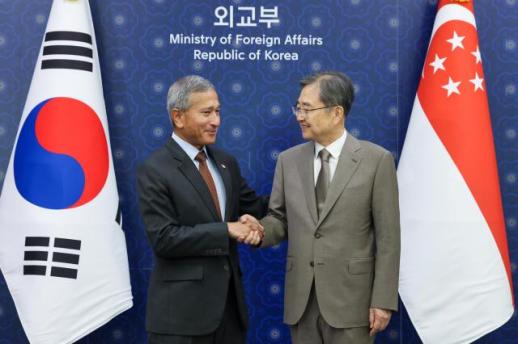 Foreign ministers of South Korea and Singapore agree to deepen cooperation SEOUL, May 28 (AJP) - Foreign Minister Cho Hyun met with his Singaporean counterpart in Seoul on Thursday to discuss bilateral cooperation, regional security issues, and broader international affairs, according to the Ministry of Foreign Affairs. Their meeting came after Singaporean Foreign Minister Vivian Balakrishnan's visit to North Korea earlier this week as part of a regional tour that also included China. During his trip to Pyongyang last Tuesday, Balakrishnan met with his North Korean counterpart Choe Son-hui. Cho was quoted as saying that it is important for Singapore and other ASEAN countries to continue engaging North Korea, as this could help build momentum for talks with Pyongyang. Balakrishnan agreed that the two countries should work closely together to support peace and stability on the Korean Peninsula, according to the ministry. Balakrishnan also said South Korea and Singapore share key values such as free trade and multilateralism, and he expressed hope for closer cooperation in areas including trade, advanced technologies, and emerging industries. The two ministers also discussed the prolonged conflict in the Middle East, stressing that keeping global shipping routes such as the Strait of Hormuz open and safe is vital for both countries' security and economic stability. Later in the day, Balakrishnan also met with Unification Minister Chung Dong-young, though details of their meeting were not disclosed. Speaking to reporters afterward, Chung said he "deeply appreciated" Singapore's constructive role in addressing issues on the Korean Peninsula. 2026-05-28 15:56:23
 -
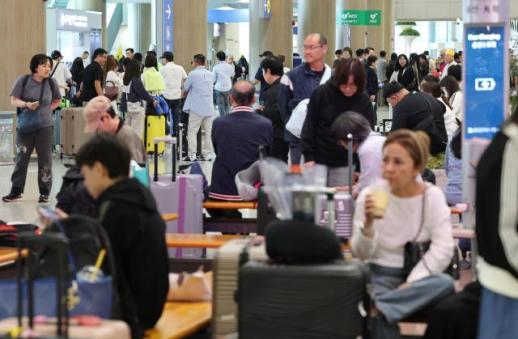 Group tourists from Indonesia allowed temporary visa-free entry until year's end SEOUL, May 28 (AJP) - Tourists from Indonesia are now allowed visa-free entry to South Korea from Thursday through the end of December. According to the Ministry of Justice, Indonesian tourists traveling in groups of three or more, whether independently or through a travel agency, are allowed to stay in South Korea for up to 15 days without a visa. The temporary measure in cooperation with the Ministry of Culture, Sports and Tourism and the Ministry of Foreign Affairs comes as Seoul seeks to boost tourism and domestic spending after Indonesian arrivals reached a record high of 365,596 visitors last year. The number of visitors from Indonesia has rebounded since the coronavirus pandemic, rising from around 250,000 in 2023 to more than 330,000 in 2024, after a pre-pandemic high of 270,000 in 2019. The measure is part of Seoul's broader push to boost tourism, aimed at attracting 30 million foreign visitors by 2030, by easing entry requirements for Southeast Asian travelers and expanding multiple-entry visas. Instead, they have to undergo stricter screening procedures to minimize illegal overstays. Travel agencies are also required to upload tourist lists to a state-run immigration portal at least 24 hours before arrival, or 36 hours in advance for travelers entering by ship. Immigration authorities will thoroughly review the lists to identify high-risk individuals including those previously involved in illegal stays or subject to entry restrictions. Such travelers are excluded from the visa-waiver program. Travel agencies could have their licenses revoked if the rate of tourists who go AWOL exceeds an average of 2 percent per quarter. 2026-05-28 14:41:02
 -
 Number of newborns in S. Korea reaches highest in seven years SEOUL, May 27 (AJP) - The number of newborns in South Korea in March rose above 25,000, marking the highest level for the month in seven years, government data showed Wednesday. The rebound in births has now extended into a second straight year, supported by a rising number of marriages and more births among women in their early and late 30s. According to South Korea’s monthly population data for March released by the Ministry of Data and Statistics, 25,200 babies were born in March, up 19.4 percent from a year earlier. It marked the sharpest year-on-year increase for the month since the agency began compiling related data in 1981. The number of births had fallen below 20,000 a month at several points in 2024, fueling concerns over the country’s shrinking population and long-term labor shortages. However, South Korea saw its total number of newborns at 75,013 in the first quarter of 2026, up 14.8 percent from a year earlier. It was the highest first-quarter increase on record and the largest number of births for the January-March period since 2019. The improvement was also reflected in the country’s fertility rate. South Korea’s total fertility rate, the average number of children a woman is expected to have in her lifetime, stood at 0.93 in March, up from 0.78 a year earlier, remaining above 0.9 for a third consecutive month. If the trend continues, the annual figure could climb toward 0.9 this year after hitting a record low of 0.80 in 2025. The rise in marriages also continued, though the pace of growth slowed from the previous year. The number of marriages during the first quarter rose 6.1 percent from a year earlier to 62,309, compared with an 8.4 percent increase a year earlier. 2026-05-27 16:10:55
 -
 South Korea's AI bonus wars set off domino effect beyond chips SEOUL, May 27 (AJP) - May is typically a labor unrest season in South Korea, but this year the epicenter of disputes is no longer traditional factories — it is high tech. The bonus bonanza at the country's two chipmakers, which rode the AI wave to become two of only three Asian companies valued at more than US$1 trillion, is spilling across industries. Employees from manufacturers to platform operators and biotech firms are demanding a greater share of record earnings, even as median wages for ordinary salary earners remain largely stagnant in Korea, exposing widening tensions over compensation, contribution and corporate inequality across the country's industrial landscape. For decades, South Korea's export-driven economy operated on a form of "trickle-down" growth, in which profits generated by large conglomerates flowed through layers of suppliers, subcontractors and smaller manufacturers. Now, workers and industry officials warn that conflicts surrounding AI-era bonuses may be creating a different kind of trickle-down effect — one driven not by shared prosperity, but by widening pay gaps, internal resentment and intensifying labor tensions. "I could have made more money feeding ducks in the memory campus," grumbled Lee HJ, a 33-year-old engineer in the system LSI division of a major Korean conglomerate. The joke has spread widely across Korean workplace forums after employees assigned to memory-chip businesses were expected to receive bonuses worth hundreds of millions of won, while Ph.D.-level engineers in loss-making system LSI and foundry units were set to receive far less. "Someone feeding ducks can receive 400 million to 500 million won just because they belong to the semiconductor division," Lee said, capturing growing frustration over widening internal pay gaps. The tensions are most visible at Samsung Electronics, where the company's representative union approved a tentative 2026 wage agreement on Wednesday, averting an immediate strike at the world's largest memory-chip maker and easing concerns over disruptions to AI supply chains and South Korea's stock market. Electronic voting held from May 22 through Wednesday morning drew participation from 95.5 percent of 65,593 eligible voters, with 73.7 percent approving the deal. The agreement — reached just one day before a planned strike deadline — includes an average 6.2 percent wage increase and a newly created special performance bonus tied to operating profit. Under the deal, Samsung will institutionalize a bonus pool linked to 10.5 percent of annual operating profit, mirroring a structure already adopted by SK hynix. Inside Samsung, compensation gaps between business divisions have widened dramatically. Workers in the company's memory semiconductor division — which benefited directly from soaring demand for high-bandwidth memory chips used in AI servers — are expected to receive compensation packages worth as much as 600 million won this year. By contrast, employees in Samsung's foundry and system LSI divisions, which remain under earnings pressure, are expected to receive around 210 million won, while some workers in the smartphone and consumer-electronics businesses may receive only around 6 million won. The nearly 100-fold disparity has fueled unusually sharp tensions inside Samsung over widening compensation inequality. The rush to carve up corporate earnings has spilled well beyond the lucrative chip segment. Park Byung-jin, a professor at Hanyang University's School of Business, said Samsung's bonus deal would have a "domino effect" across South Korea's labor market and corporate compensation systems. "A bonus structure with no clear ceiling at the country's most influential company could trigger broader 'bonus inflation' across Korea," he said. "Once it becomes a reference point, unions at other major firms will naturally push for similar payouts." Unions at Hyundai Motor and Kia have demanded bonuses equivalent to 30 percent of net profit this year. HD Hyundai Heavy Industries, whose shipbuilding business is benefiting from a supercycle driven by surging orders for high-value vessels, has included a proposal for "30 percent operating-profit sharing" in this year's wage negotiations. HD Hyundai Heavy Industries' union has included 30 percent operating-profit sharing in its bargaining proposal, while Kakao's union is pushing for bonuses worth 13 percent to 14 percent of operating profit. LG Uplus has also faced demands for bonuses tied to roughly 30 percent of operating profit. SM, a 33-year-old senior manager at a major Korean automaker, said the dispute ultimately comes down to how a limited pool of money is divided. "There is no such thing as a win-win structure," he said. "The more one side takes, the less remains for someone else. Eventually, somebody has to give something up." The conflict is no longer a simple clash between labor and management. It is spreading across multiple fault lines: business divisions, job categories, regular and subcontracted workers, primary contractors and suppliers, and even shareholders and employees. Inside platform and ICT firms, tensions are increasingly emerging between developers, marketers, sales teams and support staff over who truly creates value in AI-driven businesses and how those profits should be distributed. Similar disputes are surfacing across other industries. Samsung Biologics faced its first-ever strike earlier this month after talks collapsed over demands including profit-linked bonuses and higher compensation. The rise in profit-linked bonuses is also widening disparities between large corporations and smaller firms, intensifying feelings of relative deprivation among workers outside the AI boom. According to Labor Ministry data released in 2025, bonuses and incentives accounted for 24.7 percent of wages at companies with more than 1,000 employees in 2024, compared with about 8 percent at smaller firms. Monthly bonuses at large corporations averaged roughly 1.33 million won, nearly four times the 340,000 won average at smaller companies. According to National Tax Service data on 2024 earned-income filings, the average annual salary for Korean workers stood at roughly 45 million won, or about 3.75 million won per month. However, the median annual salary — the midpoint at which half of workers earn more and half earn less — was only 34.17 million won, or about 2.85 million won per month. The gap of more than 10 million won between the average and median underscores how high-income earners continue to skew overall wage statistics upward, while the majority of workers experience significantly lower real incomes. On a pretax basis, nearly half of Korean salary earners make less than 3 million won a month. Against that backdrop, compensation demands such as those raised by Samsung's union risk deepening the sense of inequality felt by ordinary workers. Some industry estimates suggest that if Samsung were to allocate 15 percent of operating profit to performance bonuses, as demanded by labor representatives, employees in the DS memory division could receive average bonuses totaling 2.61 billion won per person between 2026 and 2028. "Some people are barely getting through the month, while others are fighting over bonuses worth hundreds of millions of won," said David Song, a 35-year-old employee at an IT company in Seoul. "Smaller companies don't have the unions or bargaining power. It feels like we are living in a different world." The disputes are also spreading through Korea's broader contractor ecosystem. Large manufacturers depend heavily on subcontractors and outsourced workers, from logistics providers to cafeteria, cleaning and security staff operating inside the same industrial sites. "Is it reasonable to pay cleaners 80 percent of what regular employees receive?" said Kim JW, a 28-year-old employee at a major manufacturing conglomerate. "Situations like this only deepen resentment toward subcontracted workers." The issue has become more sensitive following revisions to South Korea's labor union law — often referred to as the "Yellow Envelope Act" — which expanded the responsibilities of primary contractors and increased pressure on large manufacturers to address widening bonus gaps across contractor networks. A logistics subcontractor union tied to SK hynix has demanded collective bargaining over bonus disparities, while a cafeteria-service union linked to Hanwha Ocean has also called for expanded bonus payments. The conflict is increasingly moving beyond directly employed workers into the wider subcontractor ecosystem. The debate is also colliding with shareholder concerns. Some investors argue that shareholders absorb losses during downturns while employees increasingly demand larger shares of profits during boom years. Critics warn that escalating bonus structures could weaken dividends and reduce long-term investment capacity. Park of Hanyang University said the widening bonus gap is forcing Korean companies into a difficult balancing act between preserving organizational cohesion and rewarding increasingly concentrated AI-era profits. He said Samsung's current OPI (Over Profit Incentive) structure still retains a strong "group reward" character, in which entire divisions benefit collectively when one business unit performs well. "That means companies may end up rewarding thousands of employees just to retain a handful of key engineers," he said. To address the problem, Park said Korean companies would eventually need to scale back broad group-based bonuses such as OPI and shift more resources toward targeted retention bonuses designed to prevent critical talent from leaving. "That would help reduce overall cost burdens while protecting irreplaceable engineers and top performers," he said. Park also argued that companies should first account for shareholder returns and capital costs before distributing incentives based on economic value added, or EVA — a measure of profit after deducting capital costs — in order to ease tensions between shareholders and employees. He further suggested replacing part of large cash payouts with restricted stock units, or RSUs, arguing that bonuses above a certain threshold should be paid in shares with multiyear lockup periods rather than immediate cash. Such a structure, he said, would align employees more closely with long-term shareholders. Park also warned that applying identical profit-based compensation standards to both highly profitable memory-chip divisions and future-growth businesses such as foundry and system LSI could deepen internal divisions. Instead, he said, future-oriented businesses should be evaluated using longer-term indicators such as technology milestones, customer orders and market-share growth rather than short-term profits alone. "The core shift," Park said, "is moving away from broad group bonuses toward a more targeted compensation system focused on shareholders and irreplaceable talent." Samsung's approved agreement partly reflects that transition. Under the deal, portions of special bonuses will be paid in company shares subject to lockup periods, marking an early shift away from immediate cash payouts toward longer-term stock-linked compensation. South Korea's AI-era bonus wars are no longer simply disputes over wages. They are becoming a broader test of whether Korean companies can preserve organizational and social cohesion while fairly distributing increasingly concentrated profits in the AI economy. 2026-05-27 15:20:26
 -
 KOSPI outshines as Seoul hosts 2 $1 trillion stocks, Nikkei also at record highs SEOUL, May 27 (AJP) - South Korean and Japanese equities surged Wednesday while most other Asian markets moved sideways, highlighting the widening divergence in the region’s AI-driven rally. The KOSPI emerged as the standout performer, briefly topping the 8,400 level a day after entering the new four-digit era, as South Korea became home to two $1 trillion listed companies. As of 11:08 a.m., Seoul’s benchmark index was up 4.29 percent at 8,391.53, while the junior KOSDAQ slipped 0.87 percent to 1,162.36. Japan’s Nikkei 225 climbed 1.34 percent to 65,866.82 as semiconductor and AI-related shares tracked overnight gains on Wall Street. In contrast, Chinese and Hong Kong equities were little changed. Hong Kong’s Hang Seng Index fell 0.11 percent to 25,571.09, while China’s Shanghai Composite edged down 0.03 percent to 4,144.06. Overnight in the United States, Micron Technology surged nearly 20 percent, briefly pushing its market capitalization above the $1 trillion mark, while the Philadelphia Semiconductor Index jumped 5.53 percent as gains spread broadly across chipmakers. UBS also sharply raised its target price on Micron, citing a strengthening memory-chip cycle. U.S. equities were additionally supported by easing Treasury yields and lower oil prices. The S&P 500 rose 0.61 percent and the Nasdaq advanced 1.19 percent to fresh record highs, while the Dow Jones Industrial Average slipped 0.23 percent. In Seoul, memory giants Samsung Electronics and SK hynix powered the KOSPI higher even as declining issues outnumbered gainers 803 to 97. Investor sentiment toward Samsung Electronics improved after 73.7 percent of union members voted to approve the company’s tentative wage agreement, with turnout reaching 95.5 percent. Shares in Samsung Electronics rose 7.02 percent to 320,000 won. SK hynix surged 10.38 percent to 2,265,000 won, lifting the chipmaker above the $1 trillion market-cap threshold for the first time. The company became the third Asian firm after TSMC and Samsung Electronics to join the trillion-dollar club. At current prices, SK hynix ranks 12th globally with a market capitalization of roughly 1,598 trillion won ($1.06 trillion), surpassing Berkshire Hathaway, Micron and Eli Lilly. SK hynix and Samsung Electronics are now the only two Korean firms among the world’s 14 listed companies valued above $1 trillion. SK Square also jumped 9.82 percent as investors continued pouring into AI-linked semiconductor plays. Samsung affiliates advanced broadly, with Samsung Electro-Mechanics rising 4.45 percent, Samsung C&T gaining 4.50 percent and Samsung Life Insurance adding 4.60 percent. Defense and aerospace shares were mixed. Hanwha Aerospace rose 0.80 percent, while shipbuilder HD Hyundai Heavy Industries slipped 1.74 percent. By contrast, several automaker, battery and biotech shares underperformed. Hyundai Motor fell 1.45 percent, Kia lost 1.86 percent and LG Energy Solution declined 1.50 percent. Samsung Biologics also dropped 1.75 percent. The weaker showing on the KOSDAQ reflected mixed trading across biotech, battery and semiconductor-equipment shares despite gains in select pharmaceutical names. EcoPro BM rose 1.59 percent and EcoPro gained 2.45 percent, while biotech heavyweight Alteogen surged 7.66 percent. Peptreon climbed 6.84 percent and LigaChem Biosciences jumped 10.12 percent. Other biotech and equipment shares also advanced, with Koh Young Technology rising 4.31 percent, Sam Chun Dang Pharm gaining 0.97 percent, HLB adding 0.95 percent and Abeona Bio climbing 4.68 percent. Ju Sung Engineering edged up 0.85 percent. Meanwhile, robotics and chip-equipment stocks weakened. Rainbow Robotics fell 1.94 percent, EO Technics declined 3.47 percent, Wonik IPS dropped 5.66 percent and Leeno Industrial slid 7.31 percent. The rally remained heavily concentrated in semiconductor and AI-related heavyweights, underscoring the market’s continued dependence on a narrow group of AI beneficiaries. The Korean won traded little changed in early trading, with the dollar quoted at 1,504.60 won versus the previous session’s close of 1,504.30 won. 2026-05-27 11:24:53
 -
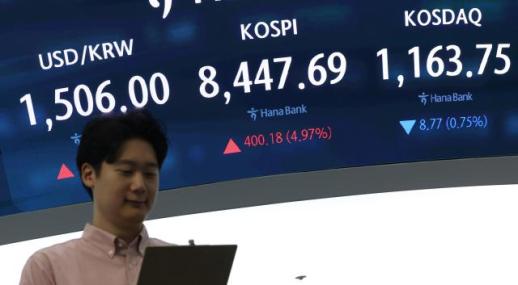 KOSPI extends record-setting rally, fueled by memory stocks SEOUL, May 27 (AJP) - South Korea’s main bourse briefly halted Wednesday after the benchmark index tracking the top 200 listed companies surged 5 percent, propelling the KOSPI past the 8,400 mark just a day after breaking into unprecedented four-digit territory. As of 9:30 a.m., the KOSPI had risen 3.63 percent to 8,355.81 after briefly testing above 8,400 shortly after the opening bell, as memory chip giants continued to shatter record highs. Samsung Electronics surged more than 6 percent to 318,000 won, while SK hynix jumped more than 9 percent to 2.24 million won on strong institutional and foreign buying. The KOSDAQ, however, fell 1.52 percent, to 1,154.68. 2026-05-27 09:47:50