

Journalist

Ryu Yuna and Candice Kim
Julia37@ajupress.com
-
 KOSPI opens lower as end-of-chip-rally fears hammer tech shares SEOUL, May 19 (AJP) - South Korean stocks opened lower Tuesday as growing concerns of a peak in the global memory-chip cycle triggered an overnight selloff in U.S. technology shares, dragging down semiconductor and artificial intelligence (AI)-related stocks. The benchmark KOSPI fell 2.47 percent to 7,330.44 about an hour into trading, while the junior KOSDAQ dropped 1.69 percent to 1,092.34. The South Korean won was largely unchanged at 1,500.10 per dollar, from 1,500.30 in the prior session. Technology heavyweights led the decline, with Samsung Electronics falling 2.49 percent to 274,000 won and SK hynix slipping 1.85 percent to 1.81 million won. Automakers and industrial shares also weakened sharply. Hyundai Motor plunged 6.64 percent to 619,000 won, Kia fell 3.75 percent to 156,400 won and Samsung C&T dropped 5.76 percent to 376,500 won. Samsung Electro-Mechanics declined 3.78 percent and Doosan Enerbility fell 3.21 percent. Defense and financial shares, however, outperformed the broader market. Hanwha Aerospace surged 7.74 percent to 1,322,000 won, HD Hyundai Heavy Industries rose 0.81 percent and Samsung Life Insurance gained 1.44 percent. KB Financial Group edged up 0.46 percent. The losses followed a volatile overnight session on Wall Street, where early gains faded and stocks finished mixed as geopolitical uncertainty and weakness in semiconductor shares weighed on investor sentiment. Stocks initially rose on indications that the U.S. could temporarily ease sanctions on Iranian oil exports and extend exemptions for Russian crude, raising hopes of improved global energy supply and lower oil prices. However, sentiment later reversed after the White House dismissed Iran's latest ceasefire proposal as largely symbolic and lacking meaningful concessions, while U.S. President Donald Trump delayed a planned military strike on Iran but warned that military action could still come at any time, reviving concerns over prolonged tensions in the Middle East. Semiconductor stocks came under additional pressure after Seagate Technology’s chief executive warned about capacity constraints in the memory-chip industry and the risk of overinvestment across the sector, fueling renewed concerns that the chip cycle may be nearing a peak. The Philadelphia Semiconductor Index fell 2.47 percent, with Micron plunging 5.95 percent and Nvidia and Sandisk also ending sharply lower. The Dow Jones Industrial Average rose 0.32 percent, while the S&P 500 and Nasdaq Composite fell 0.07 percent and 0.51 percent, respectively. Oil prices remained elevated amid persistent supply concerns. West Texas Intermediate crude traded above $106 a barrel, while Brent crude hovered near $109. The U.S. dollar index stayed in the upper 98 range. U.S. Treasury yields fluctuated during the session before ending lower, though they remained elevated as investors reassessed the outlook for inflation and interest rates. The two-year Treasury yield stood at 4.05 percent, while the benchmark 10-year yield traded at 4.58 percent. The 30-year yield remained above 5 percent at 5.13 percent. Elsewhere in Asia, Japan's Nikkei 225 fell 0.21 percent to 60,689.71, while Hong Kong's Hang Seng Index rose 0.53 percent to 25,811.11 and China's Shanghai Composite Index gained 0.13 percent to 4,136.76. 2026-05-19 10:46:43
 -
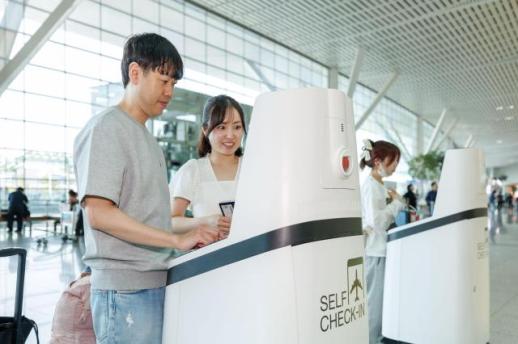 South Korea deploys more service robots amid rising labor costs SEOUL, May 18 (AJP) - South Korea’s main gateway, Incheon International Airport, has deployed autonomous service robots as the country accelerates automation across service industries amid rising wage costs and labor shortages. Incheon International Airport Corporation said Monday that it has begun full-scale operations of 31 autonomous robots, including self-check-in robots, guidance and patrol robots, and docent robots designed to assist passengers and provide cultural information across airport facilities. The rollout reflects a nationwide shift toward automation as South Korean businesses and major companies increasingly turn to service robots to offset mounting labor costs and staffing shortages. South Korea’s minimum wage rose to 10,320 won ($7.5) per hour in 2026, bringing minimum monthly pay for full-time workers to about 2.16 million won based on a 209-hour work month. As labor costs continue to climb, businesses in labor-intensive sectors such as tourism, retail and hospitality are increasingly adopting kiosks and service robots to reduce staffing burdens and maintain round-the-clock operations with fewer workers. According to pricing released by B-ROBOTICS, a robotics affiliate of Woowa Brothers, the operator of Baemin, South Korea’s largest food delivery platform, serving robots can be rented for as low as 299,000 won ($218) per month under a 36-month contract. By comparison, employing a full-time worker at a low-cost eatery such as Gimbap Cheonguk can cost restaurant owners roughly 2.4 million won to 2.8 million won ($1,750-$2,040) a month. The large cost gap is accelerating adoption among small business owners already struggling with rising wages and labor shortages. A survey conducted by part-time job portal Mediawill Networks on April 26 found that 73.7 percent of 114 small business owners said they had used unmanned devices such as kiosks, cooking robots or serving robots over the past year. 48.6 percent of respondents said kiosks helped reduce operating costs, reflecting growing interest in automation tools among small businesses facing rising labor expenses. The shift is also reshaping employment patterns in South Korea’s service sector. In a 2024 report based on surveys of 2,000 restaurants and bars in Seoul, the Korea Employment Information Service found that restaurants introducing kiosks reduced sales and serving staff by about 11.5 percent on average, while tablet ordering systems cut such jobs by roughly 7.5 percent. The report said 55 to 76 percent of businesses cited labor cost reduction as the main reason for adopting digital devices such as kiosks, tablets and service robots. The trend in service-sector automation reflects South Korea’s broader embrace of robotics across the economy. According to the International Federation of Robotics’ “World Robotics 2025” report released in April, South Korea has the highest concentration of industrial robots in the world, with 1,220 robots for every 10,000 manufacturing workers — more than six times the global average. Behind the trend is a deeper structural shift. South Korea officially became a “super-aged” society in 2025, with people aged 65 or older accounting for more than 20 percent of the population, according to the International Labour Organization. At the same time, the country’s working-age population has continued to shrink, intensifying labor shortages across service and manufacturing industries and pushing companies to accelerate investment in robotics and AI-powered automation technologies. 2026-05-18 16:27:28
 -
 KOSPI sinks as U.S. tech selloff and Samsung strike fears dampen sentiment SEOUL, May 18 (AJP) - South Korean stocks opened sharply lower on Monday, with the benchmark KOSPI falling below 7,300, after weeks of an unprecedented rally. The drop, the lowest since May 4, came as investors reacted to a global technology selloff and rising U.S. bond yields, while uncertainty over Samsung Electronics' ongoing labor dispute added further pressure. The index opened down 0.67 percent at 7,443.29 points before extending losses and falling as low as 7,142.71 in early trade, a drop steep enough to trigger a sell-side sidecar at 9:19 a.m. amid a simultaneous plunge in KOSPI 200 futures. The selloff came after the yield on the benchmark 10-year U.S. Treasury note climbed to as high as 4.60 percent on Friday, its highest level in roughly 15 months, fueling concerns that persistent inflation could keep interest rates elevated for longer than markets had expected. The junior KOSDAQ also slipped 4.29 percent to 1,081.30, while the South Korean won weakened slightly to 1,504.20 per dollar from 1,500.80 in the previous session. The decline also followed sharp losses on Wall Street late last week, where the Nasdaq fell 1.54 percent and semiconductor shares slid sharply as rising Treasury yields pressured technology stocks. Oil prices also rose sharply amid concerns over prolonged disruptions around the Strait of Hormuz, adding to worries that inflation could remain stubbornly high. Brent crude futures settled up 3.4 percent at US$109.26 a barrel, while U.S. West Texas Intermediate crude climbed 4.2 percent to $105.42. U.S. President Donald Trump's summit with Chinese President Xi Jinping also did little to calm markets, as the two leaders ended talks without concrete progress on broader geopolitical tensions involving Iran and Gulf countries including the Strait of Hormuz. The global semiconductor selloff spilled directly into Seoul, where Samsung Electronics traded at 270,000 won, down 0.18 percent, while SK hynix fell 3.13 percent to 1,762,000 won as investors pulled back from AI-linked chip stocks. Samsung Electronics has been facing growing labor tensions after its union threatened a strike later this week following a breakdown in wage negotiations. The union has been demanding higher incentives and the removal of caps on performance bonuses in proportion to the company's strong operating profits in its chip division amid an artificial intelligence (AI)-driven semiconductor supercycle. Investors worry that the electronics giant's prolonged dispute could raise labor costs or disrupt semiconductor production at a time when global AI demand remains heavily concentrated in advanced memory chips. The impending strike has added to uncertainty on the South Korean bourse, as semiconductors make up a large share of the country's exports and Samsung dominates it by market capitalization, leaving the sector especially sensitive to both global demand shocks and domestic labor risks. Losses spread broadly beyond semiconductors. Among major technology and industrial shares, Samsung SDI fell 4.95 percent to 960,000 won, LG Energy Solution dropped 5.52 percent to 394,000 won and Doosan Enerbility slid 5.96 percent to 104,200 won. Automakers also came under pressure, with Hyundai Motor falling 7.43 percent to 648,000 won and Kia declining 4.94 percent to 159,700 won. Defense and shipbuilding-related shares weakened as well, with HD Hyundai Heavy Industries dropping 7.34 percent to 593,000 won and Hanwha Aerospace slipping 1.15 percent to 1,202,000 won. Financial and biotech shares also moved lower, as KB Financial fell 3.08 percent to 150,800 won, Samsung Biologics declined 3.88 percent to 1,364,000 won and Samsung C&T dropped 5.04 percent to 376,500 won. Losses were equally broad on the KOSDAQ, where secondary-battery, biotech and robotics shares all traded sharply lower. Among battery-related stocks, EcoPro BM fell 2.57 percent to 185,600 won, while EcoPro dropped 5.26 percent to 122,400 won. Robotics firm Rainbow Robotics plunged 9.26 percent to 735,000 won, and aerospace company Korea Aerospace Industries slipped 3.76 percent to 107,400 won. Biotech shares also weakened, with Alteogen falling 5.42 percent to 349,000 won, Samchundang Pharm declining 7.47 percent to 359,000 won, HLB dropping 5.30 percent to 49,150 won and ABL Bio sliding 8.55 percent to 109,100 won. Jusung Engineering stood out as the only major gainer, surging 21.04 percent to 169,700 won. Despite the broad selloff, investors appear to remain on watch for upcoming catalysts that could shape the direction of AI-related semiconductor stocks. Nvidia is scheduled to report earnings results later this week, with markets closely watching whether the chipmaker can beat revenue forecasts of $78 billion and achieve a gross margin of 75 percent. Also in focus will be management's comments on demand from China, after Washington recently approved the sale of H200 chips to the country. Investors also remain attentive to developments in Nvidia's next-generation Blackwell chips and the timeline for its Rubin architecture, given the implications for South Korean suppliers such as Samsung Electronics and SK hynix. Elsewhere in Asia, markets moved lower as investors reacted to rising global bond yields and persistent inflation concerns. Japan's Nikkei 225 fell 1.40 percent to 60,547.46, pressured by profit-taking in semiconductor shares, Hong Kong's Hang Seng Index dropped 1.06 percent to 25,687.49 and China's Shanghai Composite Index also edged down 0.19 percent to 4,127.62. 2026-05-18 10:58:30
 -
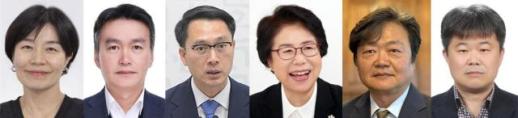 Korea's Lee replaces health and customs deputies SEOUL, May 15 (AJP) - South Korean President Lee Jae Myung replaced the country’s top health and customs officials Friday in a vice-ministerial reshuffle carried out less than a year after both incumbents took office, the presidential office said. Hyeon Su-yeop, spokesperson for the Ministry of Health and Welfare, was named first vice minister of health and welfare, while Lee Jong-wook, vice commissioner of the Korea Customs Service, was appointed customs commissioner, presidential spokesperson Lee Kyu-yeon said Friday. They replace First Vice Health Minister Lee Se-ran and Customs Commissioner Lee Myung-gu, who are stepping down less than a year after assuming office in June and July of last year, respectively. The presidential office dismissed speculation that the reshuffle amounted to disciplinary action. “It has been about a year, and the government believes new appointments are needed to move policies forward more quickly,” spokesperson Lee said, adding that the outgoing officials had helped lay the groundwork for the administration’s key initiatives during its early months in office. New Vice Health Minister Hyeon spent much of her career at the Health Ministry, serving in a broad range of healthcare and welfare policy roles. She previously handled issues involving emergency medical services, pharmaceutical policy, childcare and health technology, before later overseeing population and child policy and serving as ministry spokesperson. New Customs Commissioner Lee Jong-wook was described as a longtime customs official who held several senior posts within the Korea Customs Service, including head of planning and coordination. The presidential office said Lee played a key role in uncovering large-scale illegal export schemes designed to circumvent trade restrictions and tariffs, while also cooperating with Thai authorities to crack down on drug smuggling networks. 2026-05-15 18:00:10
 -
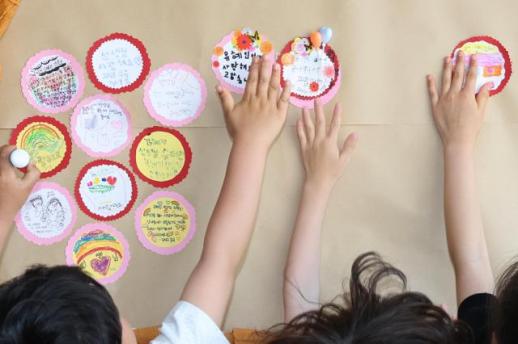 Teachers Face Restrictions on Celebrating Teacher's Day in South Korea "The grace of a teacher is like the sky, the more I look up, the higher it seems. The true teacher who teaches us to be righteous is like a parent in our hearts. Oh, thank you for the love of a teacher, oh, I will repay the grace of a teacher." This song, traditionally sung on Teacher's Day, has become increasingly rare to hear. Small classroom celebrations have also come under scrutiny. The Gyeongsangbuk-do Office of Education announced through an internal bulletin that under the Anti-Corruption Act, teachers, students, and parents are considered "direct stakeholders." They advised against giving or sharing cakes with teachers on Teacher's Day. "While making Teacher's Day cards, the children were asking, 'Can we give a gift to the teacher, or not?' I overheard some students saying, 'Even giving a carnation or a drink could get the teacher in trouble,'" said Yoon Mi-sook, a sixth-grade teacher at S Elementary School in Busan, expressing her disappointment. "The children likely had no ill intentions, but I felt a sense of shame in a classroom where it has become normal to discuss that 'even a drink could get the teacher in trouble' before Teacher's Day," she reflected. She questioned, "Is this situation really normal?" On a day meant to honor teachers, they now find themselves weighing the legal risks of accepting a piece of cake or a single carnation from students. This situation is particularly ironic in South Korea, where the term "teacher" has historically symbolized respect and moral authority. In Confucian culture, teachers are seen not just as knowledge bearers but as figures who impart character and order, and the tradition of singing "The Grace of a Teacher" and writing thank-you letters continues in schools today. Teacher's Day originated in 1958 when members of the Youth Red Cross visited sick teachers. The date was established as May 15, the birthday of King Sejong, in 1965, becoming a national holiday. However, with declining teacher authority, malicious complaints, and various legal burdens, many teachers now express that "the day has become just a name." Pride in the teaching profession has long been in decline. According to a survey released by the Teacher Labor Union Federation on May 14, more than half of teachers have considered resigning in the past year. Only about 5% of teachers feel respected by society, and only about 30% report feeling fulfilled in their teaching careers. Feelings of helplessness regarding violations of teacher rights and a breakdown of trust are also evident. A survey conducted by the Korean Federation of Teachers' Associations (KFTA) ahead of the 45th Teacher's Day, involving 8,900 teachers from various educational levels, revealed that 49.2% of respondents felt their professional pride had decreased in the past one to two years. The most significant moment of helplessness for teachers was identified as "when they are not trusted by students and parents and when their rights are violated" (67.9%). The atmosphere in local schools mirrors these sentiments. A recent survey by the Busan Teacher Labor Union, which included 7,180 teachers nationwide (383 from Busan), found that 69.2% of Busan teachers would not choose the teaching profession if they could start over. Additionally, 80.9% expressed concern about being reported for child abuse even during legitimate educational activities, and 85.1% felt that the emotional abuse clause in child abuse laws stifles educational activities. Teachers report that the school environment is increasingly becoming a "defensive classroom culture." There are also concerns that the rise of AI and smartphones is altering teachers' authority. Yoon noted, "What used to be part of student guidance is now approached with manuals and the possibility of complaints in mind. Many teachers record counseling sessions to prepare for any potential complaints or reports." She added, "I try to maintain a certain distance from students, using formal language during class and teaching them not to approach too casually," reflecting a fear that familiarity could lead to misunderstandings or disputes. A teacher named Baek from an elementary school in Gangnam remarked, "Teachers are no longer seen as the ones who know all the answers. The authority of teachers is changing in the digital environment." In recent years, South Korea has seen repeated incidents of teacher deaths and controversies over violations of teacher rights. Following the death of a teacher at Seoi Elementary School in 2023, thousands of teachers gathered in Yeouido, Seoul, demanding protection for teacher rights, yet many teachers feel that "nothing has practically changed." Violence against teachers is no longer considered rare. Last month, a student attacked a teacher with a weapon in Gyeryong, South Chungcheong Province. A survey conducted by the Teacher Labor Union Federation among 7,307 teachers revealed that 67% had experienced physical threats from students, and 32% had been physically assaulted. Experts analyze that while South Korean society still speaks of a Confucian culture of "respect for teachers," the necessary trust and discretion for teachers are not adequately supported in practice. They continue to demand guidance and emotional support for students while the authority and protection needed to uphold these responsibilities have weakened. The status of the teaching profession, once a symbol of stability and social respect, is also in decline. The decrease in the school-age population, combined with the burden of complaints and legal risks, has led to a decline in the attractiveness of teaching as a career. According to the admissions industry, the cutoff scores for major teacher training colleges for the 2025 academic year have dropped compared to the previous year. The cutoff scores for five teacher training colleges, including Seoul National University of Education, Chuncheon National University of Education, Korea National University of Education, Gwangju National University of Education, and Cheongju National University of Education, fell from 3.22 to 3.61. The gender imbalance in elementary education continues. According to the Seoul Metropolitan Office of Education, among the 210 final successful candidates for the 2026 public elementary school teacher appointment exam, only 30 were male, accounting for 14.3%. Among the total of 295 successful candidates for kindergarten, elementary, and special education schools, only 32 were male (10.9%). Among the 48 successful kindergarten teachers, only one was male, and all seven successful special education kindergarten teachers were female. In this context of gender imbalance, male teachers report feeling overwhelmed by their workloads. A male teacher in his 30s from Daejeon, named Yeon, said, "With so few male teachers, physically demanding tasks or difficult situations often fall to the few male teachers. It's not easy to express that I'm struggling in this atmosphere." Teachers emphasize that what is needed in the educational field is not just laws and systems, but trust and a sense of community. "What teachers desire is not the authority of the past, where we wouldn't dare step on the shadow of a teacher." Yoon stated, "Just as my child is precious, so is every other child. We need a basic consideration and sense of community that prevents harm to others as we protect our own children." She added, "Consideration and compromise are not losses; they are opportunities to expand a child's capacity for empathy. Education cannot be completed solely through laws and systems. When respect and consideration fill the gaps, both teachers and students, as well as parents, can feel more at ease." As another Teacher's Day approaches, what teachers hope for is not grand respect or songs of gratitude, but a classroom where they can teach without fear.* This article has been translated by AI. 2026-05-15 15:21:00
 -
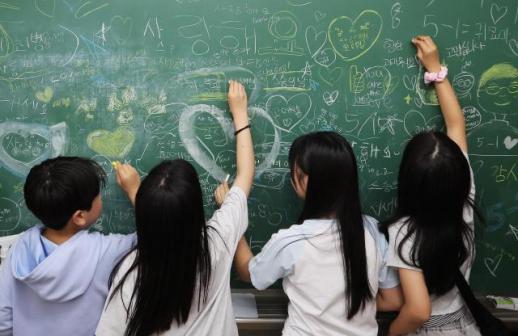 Teachers' Day in Korea without pride, gratitude and... cake SEOUL, May 15 (AJP) -South Koreans, whose Confucian roots instill deep reverence for educators, have observed Teachers' Day for more than six decades. Yet the tradition endures largely in name, as schoolteachers' authority and morale languish under the weight of compounding regulations and increasingly assertive parenting. The interference extends to the absurd: provincial education offices have issued specific directives on how cakes may be shared on Teachers' Day, lest schools and classroom teachers find themselves entangled in legal disputes. "Students casually joke that they could have a teacher arrested simply for accepting a drink or even a small bunch of flowers," said Yun Misook, a teacher at S Elementary School in Geumjeong District, Busan with 21 years in the profession. "To hear that in the days before Teachers' Day makes one question the whole profession." The remark followed a notice posted on an internal portal by the Gyeongsangbuk-do Office of Education, a provincial education authority, advising that teachers and students refrain from sharing cake together under the country's anti-graft legislation — a directive that ignited immediate debate. What was once a day of gratitude has, for many educators, curdled into bitterness and cynicism. Only three in ten teachers reported satisfaction with their work, while more than half said they had considered leaving the profession within their first year, according to a survey released Thursday by the Korean Federation of Teachers' Unions. Half reported feeling wrongfully treated by parents and students; a mere five in one hundred felt their profession commanded genuine respect in society. A separate survey by the Korean Federation of Teachers' Associations (KFTA) yielded parallel findings. Nearly half — 49.2 percent — said their sense of professional pride had eroded over the past one to two years. The most commonly cited source of disillusionment, noted by 67.9 percent of respondents, was a sense of being distrusted by students and parents, or experiencing direct violations of their professional rights. Regional data echo the national picture. In Busan, the country's second-largest city, 69.2 percent of surveyed teachers said they would not choose teaching again given the opportunity, according to a 2026 perception survey conducted by the Busan Teachers' Union. Some 80.9 percent said they lived in fear of being accused of child abuse — even in the course of legitimate educational activities. Under current regulations, teachers are formally classified as having a direct conflict-of-interest relationship with students and parents, rendering even nominal tokens such as carnations, coffee, or cake largely impermissible. Teachers' Day has been observed each May 15 since 1965, the date chosen to coincide with the birthday of King Sejong, the sovereign who devised the Korean alphabet, hangeul, to broaden access to literacy and learning. In Confucian tradition, teachers are held in high esteem as moral guides as much as instructors — which is why students still compose handwritten letters of gratitude to their teachers. Yet many educators say the reality inside classrooms has transformed beyond recognition. "In the past, much was socially accepted as part of student guidance," Yun said. "Now everything is governed by manuals, procedures and the ever-present threat of complaints." She recalled organizing monthly class events and occasionally treating students to snacks as a reward. Today, concerns over safety liability, administrative paperwork and accusations of favoritism have made such gestures increasingly untenable. Classrooms, teachers say, have grown defensive and legally guarded. "These days, I record most counseling sessions with students," Yun said. "It feels necessary as a safeguard in case a complaint or child-abuse allegation surfaces later." The shift reflects a pervasive anxiety that has spread through South Korea's education system in the wake of several high-profile teacher deaths, sustained campaigns of parent complaints, and protracted disputes over classroom discipline. The crisis came to national attention following the 2023 death of an elementary school teacher at Seoul's Seoyi Elementary School, who died after reportedly enduring relentless parent complaints and classroom confrontations. The case galvanized mass nationwide protests, with teachers demanding meaningful legislative protection. Yet many educators say the situation inside schools has remained substantively unchanged. Teachers also point to the proliferation of artificial intelligence and smartphones as forces reshaping both classroom dynamics and students' dispositions toward their teachers. Baek Y.K., an elementary school teacher in Seoul's Gangnam district, observed that the digital environment had fundamentally altered how students perceived teachers' authority. "Teachers are no longer regarded as the primary source of knowledge, and that has changed classroom dynamics in profound ways," she said. A recent survey by the Seoul Education Research and Information Institute found that more than half of Seoul's teachers believed disruptions to classroom order — and encroachments on teachers' authority by emotionally distressed students — had worsened appreciably in recent years. Experts describe the situation as a cultural collision between entrenched Confucian expectations and a contemporary, consumer-oriented approach to education. Society, teachers say, still expects them to steward students' behavior and emotional development — while stripping them of the authority and trust that once underwrote that role. The profession itself has borne the consequences. Teaching was once among South Korea's most coveted and respected careers. But years of declining school-age enrollment, incessant parental pressure, and mounting fear of legal exposure have steadily eroded its appeal. Average admission scores at several of the country's elite teachers' universities fell in the 2025 academic year, according to local admissions analysts, signaling a measurable retreat in the profession's allure. Elementary teaching has also remained heavily female-dominated. In Seoul's 2026 public elementary school teacher hiring examination, only 30 of 210 successful candidates — roughly 14.3 percent — were men, according to the Seoul Metropolitan Office of Education. "Because there are so few male teachers, physically demanding tasks or difficult situations tend to fall to us by default," said Yeon, a teacher in his thirties based in Daejeon. "And if you try to raise concerns, there's an unspoken expectation that a man shouldn't complain — so you end up absorbing the pressure in silence." He added that workplace culture could be difficult to navigate, marked by frequent gossip and diffuse social pressures among colleagues. The teacher crisis in South Korea cannot be attributed to demographic decline alone, educators insist. Even as student populations shrink, many teachers say their workload has grown substantially more demanding — emotionally, administratively and legally — owing to behavioral challenges, persistent parental complaints and heightened legal scrutiny. "What is needed is mutual respect, consideration and a genuine sense of community," Yun said. "Education cannot be sustained by laws and systems alone." As South Korea marks another Teachers' Day, many educators say words of appreciation, however warmly offered, are no longer sufficient. What they want, they say, is far simpler: to teach without fear. 2026-05-15 13:01:49
 -
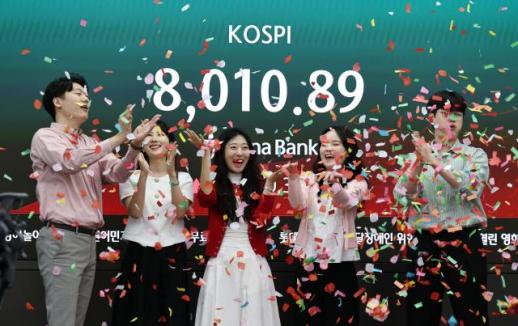 KOSPI hits 8,000-point mark as Trump-Xi summit further fuels AI rally SEOUL, May 15 (AJP) - South Korea's benchmark KOSPI rose above the 8,000-point mark for the first time on Friday, extending a powerful artificial intelligence (AI)-driven rally. Investor sentiment was further lifted by an ongoing summit between U.S. President Donald Trump and Chinese leader Xi Jinping in Beijing, while overnight gains on Wall Street, led by technology stocks, also boosted momentum. As of 9:25 a.m., the KOSPI was trading at 8,032.67, up 0.64 percent, while the junior KOSDAQ slipped 0.40 percent to 1,186.30. It took just a week to climb from the 7,000 level to the 8,000 mark, one of the fastest rallies on record. Samsung Electronics and SK hynix have been at the center of South Korea's AI-driven market rally, increasingly dominating the country's equity market amid explosive global demand for AI chips and memory semiconductors. Both stocks hit fresh intraday record highs in the previous session and remained near those levels in early Friday trading. Samsung Electronics edged down 0.17 percent to 295,500 won, while SK hynix rose 0.96 percent to 1,989,000 won. Among other major stocks, Hyundai Motor Company jumped 5.48 percent to 751,000 won, while Hyundai Mobis gained 4.31 percent to 678,000 won. Kia Corporation also rose 1.63 percent to 181,000 won. In the battery sector, LG Energy Solution climbed 3.51 percent to 457,500 won, while Samsung Electro-Mechanics surged 8.30 percent to 1,109,000 won. Industrial and shipbuilding shares traded mixed, with HD Hyundai Heavy Industries edging up 0.15 percent to 672,000 won, while Doosan Enerbility slipped 0.60 percent to 116,400 won. Defense shares weakened, with Hanwha Aerospace falling 3.45 percent to 1,261,000 won. The South Korean won remained broadly weak, trading at 1,497.50 per dollar compared with the previous close of 1,491.0 won. The momentum in Seoul followed another strong session on Wall Street overnight, where investors continued pouring into AI and semiconductor-related shares. Nvidia rose 4.39 percent after expectations grew that the company could expand sales of its H200 AI chips in China following its CEO Jensen Huang's participation in the Beijing delegation. The Dow Jones Industrial Average rose 0.75 percent to 50,063.46, reclaiming the 50,000 level for the first time since February. The S&P 500 and Nasdaq Composite gained 0.77 percent and 0.88 percent, respectively, both setting new record highs. Overall investor sentiment improved after Trump and Xi signaled that both sides would seek to stabilize relations despite continuing disagreements over Taiwan and Iran. During a state banquet, Xi said China's "great rejuvenation" and Trump's "Make America Great Again" vision could "go hand in hand," while Trump described the meetings as "very positive and productive." Markets interpreted the summit more as a sign that tensions between the world's two largest economies were unlikely to escalate immediately. 2026-05-15 09:54:45
 -
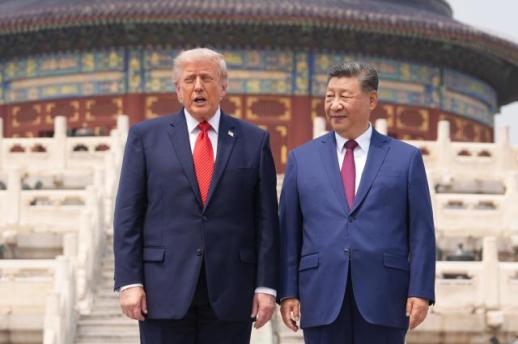 Xi warns Trump on Taiwan at Beijing summit SEOUL, May 14 (AJP) - Chinese President Xi Jinping warned U.S. President Donald Trump on Thursday that the Taiwan issue could trigger a direct clash if handled improperly, in one of Beijing's strongest warnings yet over its most sensitive geopolitical red line. The remarks came during a summit between the two leaders at the Great Hall of the People in Beijing on Thursday, where Xi and Trump held talks on trade, AI, Iran and broader regional security issues. "The Taiwan question is the most important issue in China-U.S. relations," Xi told Trump, according to Chinese state media. "If mishandled, the two nations could collide or even come into conflict," he said, warning it could push bilateral ties into "a highly perilous situation." Xi also said "'Taiwan independence' and peace in the Taiwan Strait are like water and fire," adding that maintaining stability in the Taiwan Strait represented "the greatest common denominator" between Washington and Beijing. The warning came at the opening of a two-day summit that both sides had framed as a critical attempt to stabilize relations amid mounting geopolitical tensions and the ongoing Iran conflict. Trump described the gathering as potentially the "biggest summit ever," while Xi urged both countries to avoid the so-called "Thucydides Trap" of great-power confrontation. Ahead of the meeting, Beijing reiterated four major "red lines" in relations with Washington — Taiwan, democracy and human rights, China's political system and China's development rights — with Taiwan listed first. Trump had previously said he intended to raise U.S. arms sales to Taiwan during the Beijing talks, though neither side disclosed how he responded directly to Xi's warning. 2026-05-14 17:10:18
 -
 Early Korean anatomy textbook to be registered as cultural heritage SEOUL, May 14 (AJP) - South Korea is set to designate the country's first Korean-language anatomy textbook as a state-registered cultural heritage item, highlighting the early spread of modern medicine on the Korean Peninsula more than a century ago. The Korea Heritage Service announced Thursday that Anatomy - a three-volume medical textbook published in the early 20th century at Chejungwon, Korea's first modern medical institution established by American missionaries - will be added to the national registry of cultural heritage. The book offers a glimpse into how Western scientific knowledge was translated and introduced to Koreans during the country's early modernization period. It was widely used at medical schools and missionary hospitals in the early 1900s, when Western medicine was still unfamiliar to Korean society. The work was translated into Korean by physician and later independence activist Kim Pil-soon and edited by Canadian missionary doctor Oliver Avison, who played a key role in introducing modern medicine to Korea. The three-volume series was published in 1906. Heritage officials said the book demonstrates how Western medicine was first taught in Korea and marks the beginning of the country's modern medical education system. The volumes explain the human body step by step, covering bones and muscles as well as major organs such as the heart and lungs, along with the nervous system and sensory organs. The format was designed to help Korean students better understand anatomy and modern medicine. The book is also valued for showing how modern medical terminology was adapted into everyday Korean. Rather than relying solely on Chinese characters or foreign terminology, the translators used accessible Korean expressions to make anatomy easier to understand. Heritage authorities said the work also illustrates how scientific terminology, spelling and pronunciation evolved in the early 1900s as modern ideas entered the Korean language. The designation will be finalized following a 30-day public review period and a final evaluation by the Korea Heritage Service. 2026-05-14 16:56:04
 -
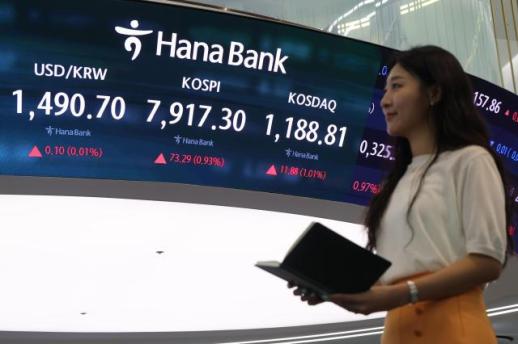 KOSPI nears 8,000 as AI frenzy shrugs off U.S. inflation shock SEOUL, May 14 (AJP) - South Korean stocks marched closer to the 8,000-point milestone on Thursday as investors brushed aside renewed U.S. inflation concerns and instead piled into artificial intelligence and semiconductor shares through the U.S.-China summit momentum. As of 10:34 a.m., the benchmark KOSPI was trading at 7,973.67, up 1.65 percent, while the tech-heavy KOSDAQ slipped 0.66 percent to 1,169.16. The rally closely followed another record-setting session on Wall Street, where the S&P 500 rose 0.58 percent to 7,444.25 and the NASDAQ Composite jumped 1.20 percent to 26,402.34, with both benchmarks closing at fresh all-time highs despite unexpectedly strong U.S. inflation data. The U.S. Department of Labor said producer prices in April climbed 1.4 percent from the previous month and 6.0 percent from a year earlier, marking the sharpest annual increase since December 2022 and reinforcing signs that inflationary pressures were broadening across the economy. Rising costs in energy, intermediate goods, wholesale margins and gasoline sales suggested inflation was spreading beyond isolated sectors, following a similarly hotter-than-expected consumer inflation report earlier this week. Yet investors largely shrugged off the inflation shock, betting that the global AI boom would continue powering earnings growth and risk appetite. Technology shares tied to AI and optimism surrounding the U.S.-China summit that opened Thursday in Beijing drove much of the advance. NVIDIA gained 2.3 percent overnight, while Micron Technology surged 4.8 percent and Tesla climbed 2.7 percent. Alphabet jumped 3.9 percent, while Meta Platforms and Amazon rose 2.26 percent and 1.62 percent, respectively. Only Microsoft finished lower among the so-called “Magnificent Seven,” slipping 0.63 percent. Mixed sector rotation emerged in Seoul trading. Among heavyweight shares, Samsung Electronics jumped 4.23 percent to 296,000 won, extending its AI-driven rally, while SK Hynix edged down 0.15 percent to 1,973,000 won. LG Energy Solution and Samsung C&T also gained more than 1 percent. Meanwhile, shipbuilding, defense and power equipment shares retreated as investors locked in profits after weeks of sharp gains linked to the Middle East conflict and global infrastructure demand. HD Hyundai Heavy Industries plunged 8.05 percent, while Doosan Enerbility fell 3.08 percent to 116,300 won and HD Hyundai Electric slipped 1.87 percent to 1,256,000 won. On the KOSDAQ, AI- and biotech-related momentum remained strong. Alteogen surged more than 5 percent to become the market’s largest stock by capitalization, while Seojin System also rose more than 5 percent. Retail investors continued to dominate trading flows, purchasing a net 1.36 trillion won worth of local equities. Foreign and institutional investors, meanwhile, sold a net 1.18 trillion won and 226 billion won, respectively. The Korean won remained broadly weak, trading at 1,491.00 per dollar compared with the previous close of 1,490.60 won. Elsewhere in Asia, Japan’s Nikkei 225 rose 0.77 percent to 63,757.71, supported by continued strength in semiconductor and technology shares, China’s Shanghai Composite Index however, edged down 0.14 percent to 4,236.45 as investors turned cautious ahead of the Trump-Xi summit, with markets awaiting signals on trade relations and U.S. semiconductor export restrictions. Hong Kong’s Hang Seng Index, gained 1.11 percent to 26,681.43. 2026-05-14 10:51:31