

Journalist

Shin Hye-an
doubletap@ajunews.com
-
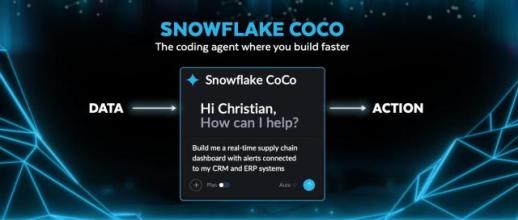 Snowflake Targets Corporate AI Agent Market Global AI data cloud company Snowflake is targeting the corporate artificial intelligence (AI) agent market. The company has enhanced its support for AI app development, knowledge worker tasks, data governance, and open data interoperability. At the 'Snowflake Summit 26' taking place in San Francisco until June 4, Snowflake unveiled new features for its coding agent 'Snowflake Coco,' personal AI agent 'Snowflake CoWork,' 'Snowflake Horizon Catalog,' and open data and AI interoperability. The announcement focuses on connecting data, development environments, and security systems within a single platform to enable the practical application of AI agents across enterprises. Snowflake addressed challenges companies face in adopting AI, such as data fragmentation, lack of governance, security control issues, and a shortage of development personnel. In the development area, Snowflake enhanced the capabilities of its AI coding agent, Coco, which supports enterprise data-based AI development and operations. Coco assists developers in automating data workflows, app development, and AI operations with simple prompts. Coco supports AI app building by integrating with existing tools such as desktop, mobile, Slack, and VS Code, and combines with DataStream, a fully managed streaming service based on Apache Kafka, to facilitate real-time data-driven AI app development. In the operational realm, Snowflake has advanced CoWork as a personal AI agent designed for knowledge workers, enhancing its functionality to help companies translate insights into actionable outcomes. CoWork supports execution tailored to roles and workflows through features like artifacts, Cortex Sense, and personalization. It also facilitates AI model training based on company-specific data through Cortex Training. Snowflake has also strengthened AI trust and security. The Horizon Catalog integrates governance, business context, and security across corporate data. Through Horizon Context, Snowflake ensures that users, tools, and AI agents operate based on the same business definitions and data standards. Security features such as agent identity and trust center allow for tracking and managing the access and activities of AI agents. On the data front, Snowflake has expanded open interoperability. The company supports Apache Iceberg v3 and storage for Iceberg tables, enabling the use of external data lakes and open system data without data movement or duplication. This strategy helps companies build an 'AI-ready' data environment with consistent governance while reducing vendor lock-in. Christian Kleinerman, Senior Vice President of Product at Snowflake, stated, "With data movement and duplication, it is difficult to keep pace with AI, and data fragmentation is a significant constraint. Snowflake provides a reliable data foundation for teams and AI agents based on interoperability and openness."* This article has been translated by AI. 2026-06-03 18:03:00
 -
 Nexon's Mintrocket Unveils 'Bancho the Chef' Expanding 'Dave the Diver' IP Nexon subsidiary Mintrocket has announced a new game titled 'Bancho the Chef,' expanding the universe of 'Dave the Diver.' According to the gaming industry, Mintrocket unveiled the trailer for 'Bancho the Chef' during Sony Interactive Entertainment's online showcase, 'State of Play,' on June 2. 'Bancho the Chef' features Bancho, a sushi master from Mintrocket's marine adventure game 'Dave the Diver,' which was released in June 2023. The game explores Bancho's story before he meets the protagonist, Dave. Nexon Mintrocket is expanding its intellectual property (IP) with multiple games centered around 'Dave the Diver.' Since its release in 2023, 'Dave the Diver' has become a hit, surpassing 8 million in global sales. On June 18, the first downloadable content (DLC) for 'Dave the Diver,' titled 'In the Jungle,' will be released. While Mintrocket has provided content updates since the game's launch, this will be the first major paid expansion DLC.* This article has been translated by AI. 2026-06-03 16:33:00
 -
 Microsoft Unveils Seven New AI Models, Including First Inference Model Microsoft (MS) has announced the launch of seven new AI models, including its first inference AI model, as part of its efforts to strengthen its independent AI ecosystem. On June 3, during its annual developer event, Microsoft Build 2026, the company unveiled updates to its platform for developing and operating AI agents and applications. Mustafa Suleyman, CEO of MS AI, introduced the new MAI model lineup, which includes the 'My Thinking-1' inference model. The newly announced MAI models cover various areas, including inference, coding, image editing, and voice, featuring: △Inference (My Thinking-1) △Coding (My Code-1 Flash) △Image Editing (My Image 2.5 & My Image 2.5 Flash) △Voice Transcription (My Transcribe 1.5) △Voice Generation (My Voice-2 & My Voice-2 Flash). The My Thinking-1 model, Microsoft's first inference model, is a mid-sized model with 35 billion active parameters. It was trained from scratch using enterprise-grade commercial license data, without a distillation process from other models. It features a 256K context window and excels in executing complex multi-step instructions, long-context inference, and code generation. The model is designed for high efficiency and performance at a low token cost. The image generation and editing model, My Image 2.5, along with its Flash version, was also revealed. My Image 2.5 is an improved version of the image generation model released by Microsoft in April, supporting both text-based image generation and image editing tasks. The voice transcription model, My Transcribe 1.5, supports 43 languages, while the voice model, My Voice-2, offers over 15 additional languages and new voice options. The coding model, My Code-1, is optimized for GitHub and can be used with Copilot and Visual Studio Code. Alongside the model announcements, Microsoft has also enhanced its agent development environment. The new context layer, 'Microsoft IQ,' integrates internal corporate knowledge with external information across GitHub Copilot, Microsoft Foundry, and Copilot Studio. The company also introduced a personal work agent called 'Microsoft Scout,' which understands user workflows and assists with meeting preparations, scheduling conflicts, and repetitive tasks using tools like Teams and Outlook. Industry analysts suggest that Microsoft is shifting its strategy to reduce reliance on external AI models while simultaneously developing its own models and platforms. Unlike its previous focus on expanding generative AI services through collaboration with OpenAI, Microsoft is now clearly moving to enhance its own model and platform capabilities. Since 2019, Microsoft has invested approximately $13 billion in OpenAI, maintaining a collaborative relationship. Microsoft has provided substantial cloud computing resources and integrated OpenAI's research outcomes into its services and cloud ecosystem. However, following the growth of ChatGPT, OpenAI has begun establishing its own infrastructure, leading to changes in the interests of both parties. In October of last year, during OpenAI's restructuring into a profit-oriented public benefit corporation (PBC), Microsoft's stake was adjusted from 32.5% to 27%. This shift indicates that Microsoft is accelerating its own AI model development while maintaining collaboration with OpenAI, but placing greater emphasis on building an independent ecosystem. Analysts expect Microsoft to focus on enhancing cost efficiency and control in enterprise environments. Satya Nadella, Microsoft CEO and Chairman, emphasized that the core of this announcement is not about a single technology but about supporting value creation and expansion on a platform that spans from edge to cloud in the AI stack.* This article has been translated by AI. 2026-06-03 15:45:00
 -
 Korean Government and Major Companies Join Anthropic's AI Security Initiative The participation of the South Korean government and major companies like Samsung Electronics and SK Hynix in Anthropic's AI cybersecurity initiative, Project Glasswing, marks a new phase in domestic infrastructure security collaboration. With the integration of semiconductor, telecommunications, and public security networks into a global AI security framework, cooperation in vulnerability detection and patching using AI is expected to expand. According to the IT industry on June 3, Anthropic announced on June 2 (local time) that it would expand the number of institutions eligible to access the Claude Mythos preview under Project Glasswing to approximately 150 new organizations across 15 countries. The new participants include key infrastructure sectors such as financial services, cybersecurity, and technology. Industries that were not initially included, such as power, water, telecommunications, healthcare, and hardware, have also been added, including the South Korean government and companies. The Ministry of Science and ICT is participating through the Korea Internet & Security Agency (KISA), and it is reported that Samsung Electronics, SK Hynix, and SK Telecom (SKT) are also involved. Project Glasswing is a closed security consortium created by Anthropic to identify and improve security vulnerabilities using the next-generation AI model, Mythos Preview. Mythos Preview is a high-performance AI model capable of understanding and analyzing complex software to detect vulnerabilities. In April, Anthropic announced the Mythos Preview, providing access only to select global tech giants like Google, Microsoft, Apple, and Amazon Web Services (AWS) due to security concerns. In response, governments of major countries, including South Korea, have raised concerns about the AI threat response capabilities related to Mythos. On May 11, South Korea's Deputy Minister of Science and ICT, Ryu Je-myung, met with Anthropic's Global Policy Head, Michael Salito, to explore the possibility of joining Project Glasswing. With the inclusion of the South Korean government and major companies in the Glasswing initiative, there is optimism that this will enhance the country's capacity to respond to AI security threats, such as cyber vulnerability detection. Samsung Electronics and SK Hynix are key players in the global AI semiconductor supply chain, and both participated as "strategic infrastructure partners" in the Series H funding round that Anthropic secured on May 28 (local time). The inclusion of KISA, a government agency, increases the likelihood of establishing a collaborative AI security network between private key companies and public security response systems. Industry experts believe that Anthropic's expansion of participating institutions and companies is related to the findings of the first report from Project Glasswing. According to the initial results released on May 22 (local time), over 10,000 security vulnerabilities classified as "High" or "Critical" were identified in major software systems worldwide, which could be immediately exposed to hacking attacks. In response, KISA issued a notice on May 25 through the Protect Korea and KrCERT websites, requesting enhanced security checks and readiness in light of concerns about the expansion of AI-based cyber threats. The agency provided guidelines for companies on how to prepare for AI-based cyber threats and recommended actions for CEOs. KISA stated, "According to Anthropic's Project Glasswing investigation, over 6,200 high-risk vulnerabilities have been found in open-source software, indicating a growing threat from AI-based security issues," and urged companies to strengthen their security monitoring systems, including external anomaly traffic detection and blocking. Previously, the Ministry of Science and ICT also formalized participation in OpenAI's trust-based access program for governments and institutions (GTAC). With the discussions surrounding Glasswing, South Korea's AI-based cybersecurity collaboration is expanding to include partnerships with global AI companies like OpenAI and Anthropic. The security industry believes that as AI models evolve, the speed of vulnerability discovery and attack execution is increasing, making traditional preemptive security systems insufficient. Therefore, there is a need to establish systems for vulnerability detection, threat analysis, patch verification, and incident response. Anthropic emphasized the necessity of preparing countermeasures, stating, "Within 6 to 12 months, other AI companies will likely have models comparable to Mythos, and these models may be released without adequate safety measures."* This article has been translated by AI. 2026-06-03 14:39:00
 -
 Netmarble Launches 'Monster Taming: Star Dive' AMD Edition Graphics Card Netmarble announced on June 1 that it has officially launched the 'PowerColor Radeon RX9060 Monster Taming: Star Dive Edition Gaming Graphics Card' in collaboration with AMD for its monster-taming action RPG, 'Monster Taming: Star Dive.' This product is based on AMD's latest architecture, 'RDNA 4,' and supports machine learning-based upscaling technology 'FSR' (Graphics Quality and Game Frame Enhancement Software) along with an easy performance setting feature called 'HYPR-RX.' Additionally, a recent driver update officially supports 'Monster Taming: Star Dive,' providing a more optimized gaming experience. The PowerColor Radeon RX9060 Monster Taming: Star Dive Edition Gaming Graphics Card will be available starting June 2 at over 30 major PC retailers in South Korea, as well as in online marketplaces and physical stores. Netmarble anticipates that the availability of the card through both online and offline channels will not only attract fans of 'Monster Taming: Star Dive' but also generate interest among general consumers considering a graphics card purchase. Meanwhile, Netmarble has previously prepared collaborations with NVIDIA's 'DLSS' and AMD's 'FSR' ahead of the launch of 'Monster Taming: Star Dive.' The company has been testing support for AMD's FSR functionality since the development phase of the game. AMD is also collaborating with various domestic games, including Pearl Abyss's 'Crimson Desert.'* This article has been translated by AI. 2026-06-01 17:09:00
 -
 Naver Enters Defense AI Market with New Initiative Naver is entering the defense artificial intelligence (AI) market. According to the IT industry on June 1, Naver Cloud has established a dedicated organization for defense AI transformation (AX) and is expanding its AI business tailored for the defense sector. This new team will be led by Kim Yoo-won, the CEO of Naver Cloud, who oversees all AI operations at Naver. Naver's move into the defense AI market is driven by the growing demand for sovereign AI and public AX solutions. The defense AI sector is sensitive to security and regulations, making it challenging to apply foreign cloud or overseas AI technologies, thus presenting opportunities for domestic companies. This shift allows Naver to establish a stable business-to-government (B2G) revenue base, moving away from consumer-focused AI services. After Naver Cloud was not selected for the Ministry of Science and ICT's 'Independent AI Foundation Model' support project, the company assessed that its infrastructure, models, and services could be effectively applied to the defense AI field. A Naver representative stated, "We believe that the defense AI sector is a suitable area for applying our capabilities across all fields from infrastructure to services, which is why we established a security organization. With our full-stack AI capabilities based on domestic cloud infrastructure, we are preparing to enter the defense sector." An industry insider noted, "It seems feasible to design cloud solutions or generative AI models specifically tailored for the defense environment. The government's increasing demand for defense AI will also positively impact Naver." However, there are cautious perspectives regarding the introduction of defense AI. The nature of defense is sensitive to security, making it difficult to approach simply by implementing high-performance AI models. Utilizing classified information for AI training or inference could lead to issues such as data leaks, misjudgments, and accountability concerns. Experts believe that AI utilization will proceed after classifying security levels and data grades, considering the defense environment. If discussions on collaboration between Naver and defense AX operations progress, a phased learning approach based on information types will be necessary. Initially, AI is expected to be used for administrative and operational improvements. Kwak Jin, a professor at Ajou University’s Cybersecurity Department, stated, "Defense AI can be utilized for both administrative and operational improvements, as well as in actual battlefield environments, so its application range is diverse. However, simply introducing AI does not solve all problems. In military contexts, caution is essential from the outset of the implementation process."* This article has been translated by AI. 2026-06-01 15:33:00
 -
 Nvidia CEO Jensen Huang to Visit Naver's Headquarters Amid AI Collaboration Talks Jensen Huang, CEO of Nvidia, is expected to visit Naver's second headquarters, known as '1784', on June 8 during his trip to South Korea this week. According to the IT industry on June 1, Huang plans to visit South Korea after attending the 'GTC Taiwan 2026' event. He is currently in discussions with Naver about visiting the 1784 building in Bundang, Seongnam, which houses advanced technologies such as robotics, cloud computing, digital twins, and 5G networks. Before his visit to Naver, Huang is set to meet with Lee Hae-jin, Chairman of Naver's board, on June 5. If the meeting occurs, it is expected that they will discuss collaboration on physical AI and Sovereign AI initiatives. Industry sources indicate that the two companies have been exploring collaboration opportunities centered around Sovereign AI. Additionally, as Naver has established a dedicated defense AI organization starting today to target the security market, there is keen interest in how far the two companies can expand and solidify their AI infrastructure partnership. In March, Lisa Su, CEO of AMD, visited Naver's 1784 headquarters to discuss AI infrastructure collaboration with Naver's CEO Choi Soo-young. At that time, Naver and AMD signed a memorandum of understanding (MOU) to expand the AI ecosystem and collaborate on next-generation infrastructure. Naver stated that it is currently difficult to confirm the specifics of Huang's visit and the potential meetings. Meanwhile, if Huang visits South Korea, there is speculation about possible meetings with prominent business leaders, including Chey Tae-won, Chairman of SK Group, Chung Eui-sun, Chairman of Hyundai Motor Group, and Koo Kwang-mo, Chairman of LG Group.* This article has been translated by AI. 2026-06-01 14:27:00
 -
 NCSoft Reports Strong Growth Driven by Legacy IP and New Ventures NCSoft is demonstrating the results of its two-year restructuring efforts through its first-quarter performance. The revival of legacy game intellectual properties (IPs) and the integration of mobile casual gaming have led to revenues and profits that significantly exceed market expectations. Industry experts view NCSoft's restructuring as the beginning of a structural transformation rather than a one-time event. According to the gaming industry on June 1, NCSoft reported its first-quarter results during a conference call held on May 13, revealing consolidated revenues of 557.4 billion won, operating profit of 113.3 billion won, and net profit of 152.4 billion won. Revenue increased by 55% year-over-year and by 38% from the previous quarter, while operating profit surged 2,070% compared to the same period last year (5.2 billion won). The primary drivers of this performance rebound are the successful launches of two PC massively multiplayer online role-playing games (MMORPGs), Aion 2 and Lineage Classic. First-quarter PC game revenue reached 318.4 billion won, marking a 210% increase year-over-year and a 69% increase from the previous quarter. This is NCSoft's highest quarterly PC revenue on record. For the first time since the launch of Lineage M in 2017, NCSoft's PC game revenue has surpassed its mobile game revenue. Launched simultaneously in South Korea and Taiwan last November, Aion 2 generated 136.8 billion won in quarterly revenue. The company noted that Aion 2's active user engagement and high-quality gameplay contributed to achieving the highest quarterly revenue among NCSoft titles. Aion 2 is also set for a global launch in North America and Europe in the third quarter, indicating significant growth potential. Lineage Classic recorded quarterly revenue of 83.5 billion won. Since its release on February 11, it has accumulated 200 billion won in revenue over 90 days. NCSoft reported that the game has attracted new users in their 20s and 30s while maintaining a solid daily active user (DAU) base among its existing older fan demographic. The mobile casual gaming segment is also noteworthy. The performance of Lihuhu (Vietnam) and Springcoms (South Korea), both acquired by NCSoft last year, is being reflected in this quarter's results for the first time. This marks the beginning of new revenue streams in NCSoft's previously MMORPG-focused revenue structure. Starting in the second quarter, results from JustPlay (Germany) will also be included, suggesting rapid expansion for NCSoft. This earnings surprise is interpreted as evidence that NCSoft's promised "predictable growth structure" is taking shape, rather than being a result of a one-off new release. The company has previously outlined three main growth pillars: enhancing legacy IPs like Lineage, Aion, and Guild Wars; securing new IPs in genres like shooters and subcultures; and expanding into mobile casual gaming. In the second half of this year, NCSoft plans to accelerate its new IP initiatives. The company is preparing for the global launch of Aion 2 in the third quarter, along with a diverse lineup of genres, including the PC console open-world tactical shooter "Cinder City," the animated action RPG "Limit Zero Breakers," and the time survival shooter "Time Takers," all set for global testing and release. Co-CEO Park Byung-moo stated, "Based on our efforts over the past two years for structural improvement, we are designating this year as the year of innovation for NCSoft. As our business structure becomes more predictable and steadily growing, we ask for your continued support for our future achievements."* This article has been translated by AI. 2026-06-01 10:30:00
 -
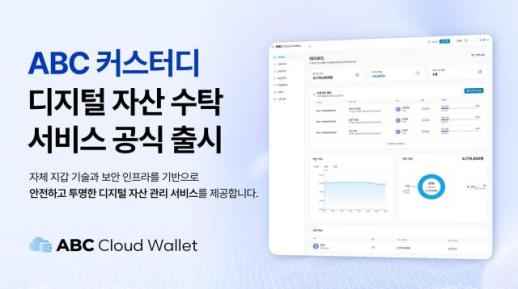 AhnLab Blockchain Company Launches Digital Asset Custody Service 'ABC Cloud Wallet' AhnLab's blockchain subsidiary, AhnLab Blockchain Company (ABC), announced the official launch of its digital asset custody service, 'ABC Cloud Wallet,' on June 1. The ABC Cloud Wallet is a digital asset custody service that can be applied for online by individual, corporate, institutional, and foundation clients. In addition to basic storage capabilities, it is designed to allow companies and institutions to systematically manage digital asset operation rights and policies according to their internal standards. Key features of the ABC Cloud Wallet include: optimized digital asset operation and rights management for corporate and institutional environments; a multi-security system based on Multi-Party Computation (MPC), cold wallets, and continuous monitoring; transaction monitoring and Web3 security intelligence supported by on-chain anti-money laundering (AML) measures and the in-house developed blockchain intelligence service 'BigScan'; and scalability for financial integration and stablecoin utilization based on WaaS. ABC plans to provide a secure digital asset custody environment, enabling companies and institutions to utilize safe storage and operational systems without the burden of managing their own infrastructure. The company also expects to flexibly support stablecoin-based payment and settlement environments. The introduction of this cloud-based custody service comes as the range of digital asset utilization for companies and institutions expands. As digital asset management evolves beyond mere storage to include payments, settlements, foundation asset management, and Web3 service operations, the need for corporate custody infrastructure that provides internal approval systems, rights management, transaction monitoring, and security oversight is growing. Kang Seok-kyun, CEO of ABC, stated, "The ABC Cloud Wallet is a service that encapsulates ABC's security and operational experience accumulated over three and a half years of providing wallet services to 2.4 million individual customers and over 100 corporate clients. As the digital asset market rapidly expands into payment, settlement, and digital financial infrastructure, ABC will leverage its security capabilities and in-house wallet development technology to provide a safer Web3 financial infrastructure."* This article has been translated by AI. 2026-06-01 08:54:00
 -
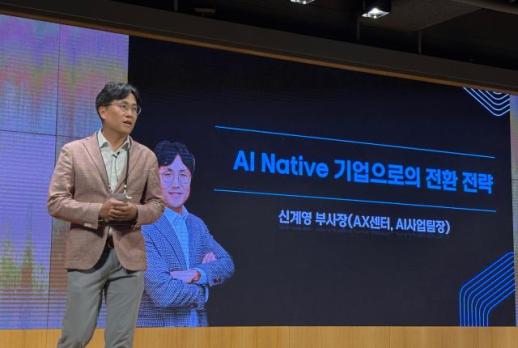 Samsung SDS Executive Advocates Redesigning Processes for AI Transition "The transition to artificial intelligence (AI) in businesses is not merely about adopting AI tools; it requires a comprehensive redesign of work processes, data management, and organizational operations," said Shin Gye-young, Vice President and head of the AI Business Team at Samsung SDS. Shin made these remarks during a presentation on 'Transitioning to AI Native Enterprises' at the Samsung SDS AX Summit held on May 29 at the company's Jamsil campus in Songpa, Seoul. The summit focused on sharing strategies and real-world applications of AI agent-based AX (AI Transformation). He noted, "There is a saying that AI does not take jobs away, but rather those who effectively utilize AI may take jobs from others. Similarly, if companies do not properly implement AX, they risk falling behind in competition." Shin defined AI native transition as the innovative redesign of overall business and IT processes based on AI. He emphasized the need for a hybrid strategy that combines both top-down and bottom-up approaches for implementing AX. The bottom-up approach involves enhancing productivity and AI literacy through the use of AI at the employee and departmental levels, although it can be challenging to measure the overall impact of investments. In contrast, the top-down approach focuses on redesigning entire workflows, allowing for clearer assessment of key performance indicators (KPIs) and return on investment (ROI). To measure the success of AX, Shin proposed three key indicators: AI performance KPIs, workflow KPIs, and business KPIs. He explained that it is essential to evaluate how much AI has improved accuracy and coverage compared to existing tasks, reduced work hours and personnel input, and ultimately led to improvements in quality and productivity. Shin identified six core pillars for AI native transition: process redesign, securing AI-ready data, developing and operating agents, governance, talent development, and fostering an organizational culture. He particularly highlighted the importance of data cleansing, metadata management, and access control. The operational framework for agents was also noted as a key challenge. Shin stressed the need for environments where general employees can create agents using natural language, as well as low-code development environments that operate according to workflows, alongside traditional coding environments for developers. He explained that created agents should be registered in an internal marketplace for reuse, with integrated management of permissions, usage, token costs, and risks associated with external tool usage. Samsung SDS shared its own organizational practices, stating that it established a structure to lead the company's AX transition through a reorganization last year, encouraging the use of AI tools across various departments. Currently, about 107 AI professionals are actively engaged, and the company has implemented systems for identifying best practices and providing training and certification. Customer examples included Woori Bank and Samsung Electronics. Woori Bank announced its transition to AX, designing over 175 agents across five major functions and 27 core tasks. Samsung SDS has built more than 300 agents based on its 'Fabrics' platform, supporting the redesign of financial operations such as customer management, credit, and asset management. To support AX, Samsung SDS is integrating its data analytics platform 'Brightics AI,' agent platform 'Fabrics,' and automation platform 'Brite Automation.' Additionally, the company is facilitating the adoption of OpenAI Enterprise to assist domestic companies in expanding their use of AI.* This article has been translated by AI. 2026-05-29 17:42:00