

Journalist

Shin Hye-an
doubletap@ajunews.com
-
 NCSOFT to Launch 'Lineage 2M' in China on June 24 with 4.95 Million Pre-Registrations NCSOFT will begin the Chinese service of its MMORPG 'Lineage 2M' on June 24. With this launch, Lineage 2M will become the only mobile game that NCSOFT currently offers in the Chinese market. The company already provides PC games such as 'Lineage,' 'Lineage 2,' and 'Blade & Soul' in China. On May 29, NCSOFT announced that its local publisher, Tencent Games, revealed the service schedule for China on its official website. The Chinese service will be titled 'Heaven 2: Pact.' Tencent Games will support cross-play between mobile and PC platforms. Before the official launch, NCSOFT and Tencent Games conducted a closed beta test (CBT) with approximately 50,000 participants. They are focusing on localization efforts based on user feedback from the test, which includes improvements to user experience (UX) and user interface (UI), enhancements to party dungeons, and the addition of a 'social appearance' feature for character profiles. Currently, over 4.95 million users have signed up for pre-registration. Leading up to the launch of Lineage 2M, NCSOFT will host events such as an offline pop-up 'Aden Throne Parade' and a 'Return of the Lord' photo-sharing campaign on TikTok.* This article has been translated by AI. 2026-05-29 17:39:00
 -
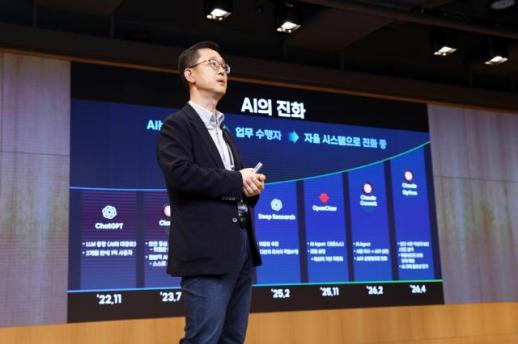 Samsung SDS Hosts AI Transformation Summit, Unveils Strategic Roadmap Samsung SDS held its "AI Transformation (AX) Summit" on May 29 at the Magellan Hall in its Jamsil campus in Seoul, where it unveiled its direction for transitioning to an AI-native company and presented a technological roadmap for AX innovation. The summit focused on practical AX implementation cases and strategies. The event attracted over 600 attendees from more than 320 companies, including clients using Samsung SDS's AI agent platform Fabricx, the work automation solution Briti Automation, and the data analytics platform Brightics AI, as well as representatives from organizations considering implementation. In his opening remarks, Kim Jong-pil, Vice President and Head of the AX Center, introduced the vision and role of the AX Center and presented offerings for work innovation based on AI agents encompassing AI infrastructure, platforms, and solutions. Following this, Kim Soo-yeon, AI leader at EY Han Young, shared key points for AI expansion and performance creation based on trends and case studies from global leading companies. During the keynote session, Shin Gye-young, Vice President and Head of the AI Business Team at Samsung SDS, discussed the "Strategy for Transitioning to an AI Native Company," outlining the direction for corporate AX initiatives. Shin introduced six key transition pillars essential for AI-driven work innovation, sharing various successful project examples. These pillars include: process redesign, securing AI-ready data, developing and operating agents, governance, talent development, and fostering organizational culture. He emphasized the importance of data refinement, metadata management, and authority management. Lee Tae-hee, Vice President and Head of the AI Development Team at Samsung SDS, presented a "Technological Roadmap for Corporate AX Innovation." He introduced an integrated AX platform for AI-native transition, focusing on advanced data integration, agent development and orchestration, and enterprise-wide sharing and management systems. Lee Dong-jae, Director of OpenAI Korea, showcased the latest features and user value of ChatGPT Enterprise, explaining how AI is transforming and redefining corporate work methods and environments. He noted that ChatGPT Enterprise is evolving to enhance corporate productivity through security, internal data integration, and user control features. Particularly, he highlighted that generative AI is advancing beyond simple Q&A chatbots to become agents capable of executing tasks, supporting work automation through custom GPTs, workspace agents, and Codex for tasks such as document creation, lead classification, email dispatch, and data updates. Additionally, Lee Yoon-ha, an AX Center professional at Samsung SDS, shared real-world application cases from industries requiring high security, such as public and financial sectors, and proposed tailored AX execution strategies and practical innovation solutions for different sectors. The hands-on session provided attendees with the opportunity to experience upcoming features and the latest version of Fabricx. Kim Jong-pil concluded, "This event was an opportunity to share insights and strategies that can be applied in real business settings. Moving forward, we will actively support our clients' transition to AI-native operations based on Samsung SDS's differentiated AX capabilities."* This article has been translated by AI. 2026-05-29 17:18:00
 -
 In the Age of AI, Com2us Platform Seizes Quantum Leap Opportunity with B2B Expansion "As game developers adapt fiercely to survive, Com2us Platform sees another opportunity. Our goal is clear: to instill strong trust in the market that 'clients will succeed with Com2us Platform.'" Iru Da, director of Com2us Platform's Technology Business Division, recently shared the company's business objectives in response to changes in the development environment, including artificial intelligence (AI), during an interview with Aju Economy. Com2us Platform, a subsidiary of Com2us Holdings, is expanding its B2B portfolio by developing new businesses in cloud, system integration (SI), and AI integrated services (MaaS), following its core business of the game backend platform, Hive. Hive began as an internal platform to support global game services for the Com2us Group. After validating common functions necessary for game services, such as login, authentication, payment, operations, and community management, Com2us Platform began external commercialization of Hive to third-party game companies in 2021. This decision was based on the belief that the global service know-how gained internally would be in demand by external game developers. Iru Da explained, "Just as Google's Gmail started as an internal product and expanded externally, Hive also began its external opening based on validated product viability." He noted that in the early days of external release, Hive's recognition was low, so they had to start by explaining the platform to clients. Despite having a data separation system, there were initial misunderstandings that game data or business information from the Com2us Group might leak. Hive experienced a turning point in growth in 2022 with the introduction of cross-play functionality, which supports both mobile and PC. Iru Da stated, "MMORPG clients, who had a high demand for PC games, chose Hive because it allows for cross-play implementation with just a few lines of code, which resonated well in the market." After five years of external commercialization, Hive's business achievements are becoming evident. According to the company, Hive is currently applied to over 250 games. This marks an increase from 112 contracted games and 86 partners at the end of the first quarter last year to 145 games and 158 partners this year. Com2us Platform is now broadening its business into infrastructure and system integration. The experience gained from Hive's external commercialization has laid the groundwork for expanding into cloud, SI, and AI businesses. Leveraging its global game service operation experience, Com2us Platform is expanding its cloud and SI business. Starting in 2024, it plans to supply customized infrastructure to domestic and international developers as a global partner of Tencent Cloud, responding to system construction and operational needs through SI and B2B consulting. The experience from Hive's external commercialization is expected to create synergies in cost reduction for developers when utilizing both Hive and cloud infrastructure. According to Com2us Holdings' first-quarter data, revenue from Com2us Platform's cloud business increased by 212% year-on-year and 13% quarter-on-quarter. Additionally, in April, the company expanded its business with the launch of AI integrated services (MaaS - Model as a Service), providing generative AI models to enterprises. Iru Da emphasized, "Companies can freely utilize the latest generative AI models from AI firms like OpenAI, Google, and Anthropic with just a single application programming interface (API) integration. This allows for immediate incorporation of AI technology into services without the substantial costs of building GPU infrastructure or navigating complex contracts with individual model providers." He identified 'efficiency' as the core of the AI business. As the development environment changes with the proliferation of AI tools, he believes that Hive can also evolve to meet the needs of developers using AI, potentially leading to a quantum leap. Iru Da stated, "In the AI era, a developer's competitiveness is not merely about using a lot of tokens. As AI tool usage becomes more common, the ability to consider cost efficiency and operational stability in development is becoming increasingly important." However, challenges remain. The downturn in the gaming industry poses variables for Hive as well. Iru Da noted, "There is a polarization phenomenon in the gaming industry. Indie and mid-sized game companies are struggling with marketing competition and cost burdens." He added, "Hive is a platform that can only thrive if the games succeed, emphasizing that 'our success is tied to our clients' success.'"* This article has been translated by AI. 2026-05-29 15:45:00
 -
 Anthropic Surpasses OpenAI with $965 Billion Valuation Following $65 Billion Funding Round Artificial intelligence (AI) company Anthropic is positioning itself for an initial public offering (IPO) this year, having achieved a valuation of $965 billion, surpassing OpenAI to become the world's highest-valued AI startup. According to the IT industry on May 29, Anthropic, the developer of 'Claude,' raised $65 billion in its Series H funding round on May 28 (local time), significantly increasing its valuation from $380 billion in February. This marks a valuation nearly reaching $1 trillion just over three years after launching its first product, Claude. Industry insiders believe this funding round will be Anthropic's final pre-IPO financing. The round included $15 billion in existing commitments, which featured a $5 billion investment from Amazon. Anthropic's valuation has now surpassed OpenAI's, which was assessed at $852 billion at the end of March. OpenAI is also projected to reach a valuation of up to $1 trillion upon its IPO, indicating a competitive landscape among global AI companies. The increase in Anthropic's valuation is largely attributed to the growing number of corporate clients utilizing Claude. Earlier this month, Anthropic's annualized revenue exceeded $47 billion. This funding round also saw participation from global memory semiconductor companies such as Samsung Electronics, SK Hynix, and Micron as 'strategic infrastructure partners,' coinciding with rising demand for high-bandwidth memory (HBM) and next-generation memory solutions. Anthropic announced that it will unveil its top-tier model, 'Claude Mythos,' in the coming weeks. This model is designed to possess expert-level capabilities in detecting cybersecurity vulnerabilities, although its release has been delayed for security reasons. On the same day, Anthropic introduced a new version of 'Opus,' called 'Opus 4.8.' Opus is a sub-model of Mythos and is the highest product among the public models. Opus 4.8 was released just 41 days after Opus 4.7, reflecting a rapid upgrade cycle, with improvements in performance benchmarks for agent coding, financial analysis, and reasoning. The fast mode (2.5 times speed) has become three times cheaper than the previous model, and the Claude code now includes a 'dynamic workflow' feature that allows multiple sub-agents to run in parallel. Krishna Rao, Anthropic's Chief Financial Officer, stated, "Claude is becoming an increasingly essential component. This investment will help us meet high demand and continue cutting-edge research."* This article has been translated by AI. 2026-05-29 11:04:00
 -
 Dev Sisters Promotes 'K-Heritage' at UNESCO World Heritage Committee Dev Sisters announced on May 29 that it will collaborate with the Cultural Heritage Administration to promote Korea's UNESCO-listed world heritage sites in conjunction with the 48th UNESCO World Heritage Committee meeting, which will be held in Busan in July. This campaign is part of a memorandum of understanding signed between Dev Sisters and the Cultural Heritage Administration in February. The initiative aims to reinterpret the unique values of Korea's cultural heritage through the lens of Cookie Run, showcasing the diverse attractions and significance of the 'K-Heritage Theme Park' concept, featuring Cookie characters. Cookie Run will be visible in both online and offline formats around Busan and other major cities in Korea before and during the UNESCO World Heritage Committee meeting. The campaign will kick off with large media walls set up in Seoul and Busan in early June. From July 20 to 29, during the main sessions of the World Heritage Committee, 17 posters of Korean world heritage sites reimagined with Cookie Run illustrations and one themed park concept piece will be displayed at the Korea Pavilion within BEXCO in Busan. Additionally, from July 18 to 26, a Cookie Run K-Heritage photo zone and pop-up store will be set up at Haeundae Beach in Busan. This area will feature some of the posters combining Korea's world heritage and Cookie Run. A 7-meter tall inflatable 'Brave Cookie' sculpture will also be installed on the beach. The campaign will include the 'Brave Cookie Tour in Busan,' linked with the Busan City Tour Bus, covering major attractions, the BEXCO exhibition, and the Haeundae photo zone and pop-up store. In July, Dev Sisters plans to conduct in-game promotions for 'Cookie Run: Kingdom,' 'Cookie Run: OvenBreak,' and 'Cookie Run Classic.' The World Heritage Committee is an international meeting that discusses the listing and preservation of world heritage sites. This year's UNESCO World Heritage Committee marks a significant cultural diplomacy event as Korea hosts the meeting for the first time in 38 years since its membership. Dev Sisters began promoting natural heritage in 2023 and previously co-hosted a special exhibition titled 'Cookie Run: In Search of Lost National Heritage' with the Cultural Heritage Administration in December.* This article has been translated by AI. 2026-05-29 08:22:00
 -
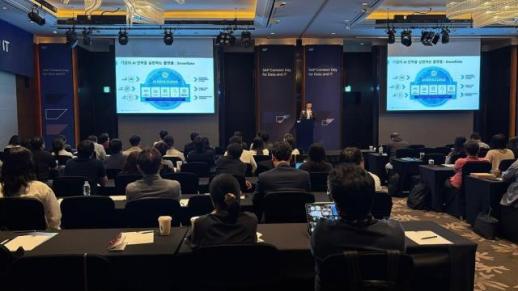 Snowflake Unveils AI Integration Solution to Eliminate Data Silos Global AI data cloud company Snowflake announced its participation in the SAP Connect Day for Data and IT Innovation, held on May 28 at the Conrad Seoul Hotel. During the event, Snowflake showcased its technological capabilities for efficiently analyzing SAP data on the Snowflake platform. Ham Jae-won, a director at Snowflake, spoke at the Data & AI track session, discussing the integration strategy with SAP Business Data Cloud (BDC) centered on autonomous business agents built with Snowflake AI under the theme "Enhancing SAP Data with Intelligence." The two companies recently launched the "SAP Snowflake" and "SAP Business Data Cloud Connect for Snowflake" solutions. SAP Snowflake enables the use of Snowflake applications within the SAP BDC environment. SAP customers can immediately access Snowflake's features, including marketplace, applications, disaster recovery, and core agent AI. SAP Business Data Cloud Connect for Snowflake allows existing Snowflake customers to access SAP data in real-time without moving or duplicating data. This integration allows for quick and efficient data consolidation and utilization, with AI models and agents operating consistently within a single governance framework that understands SAP's business context. Snowflake integrates structured and unstructured data on a single platform, providing an environment where business users can analyze data in natural language and build AI agents. The collaboration between Snowflake and SAP aims to connect Snowflake's AI capabilities directly with SAP business data, maintaining consistent security and governance in a multi-cloud environment, enabling companies to implement agent-based AI more rapidly based on core operational data. During the presentation, AI use cases applicable across various business sectors, including supply chain, finance, customer service, and HR, were also introduced. Customers can utilize these services across all business areas. For example, combining SAP inventory data with logistics and weather forecast data from the Snowflake marketplace can create integrated data that connects internal operations with external environments. The newly introduced enterprise AI integration solution also focuses on resolving companies' data silos. Many organizations have struggled to achieve enterprise-wide benefits from AI due to data being dispersed and isolated by department or system. Snowflake aims to reduce these issues through direct connections with SAP business data, supporting consistent security frameworks in multi-cloud environments. This enables companies to implement agent-based AI more quickly and expand interdepartmental collaboration and enterprise-wide AI utilization. Ham Jae-won stated, "The partnership between SAP and Snowflake presents a key strategy for companies to transition their enterprise data into a reliable AI foundation, beyond mere technological integration. Snowflake will support domestic business leaders in breaking down data silos across supply chain, finance, customer service, and other sectors, enhancing competitiveness in the era of agent-based AI."* This article has been translated by AI. 2026-05-28 17:12:00
 -
 Kakao Union Secures Right to Strike as CEO Emphasizes Unity "While we have not yet sufficiently narrowed our differences, I will work harder to unite us as one Kakao through dialogue," Jeong Shin-a, CEO of Kakao, stated in a company bulletin amid a looming strike crisis following failed wage negotiations between management and the union. Jeong expressed regret to employees, known as "crew," for not quickly resolving various concerns and uncertainties. Kakao recently reported its highest quarterly performance to date and alleviated concerns over legal risks facing founder Kim Beom-soo, seemingly addressing internal issues. However, the conclusion of a rigorous management overhaul has given way to new internal dilemmas, including labor disputes and confusion over service strategies, putting Jeong's leadership to the test. The relationship between Kakao management and the union has deteriorated significantly. Disagreements over performance bonuses and the inclusion of restricted stock units (RSUs) in bonus calculations have persisted since the declaration of an emergency management strategy on May 27, leading to the collapse of the second round of mediation by the Gyeonggi Provincial Labor Relations Commission. The union claims that despite strong performance, management is prioritizing cost-cutting at the expense of employees. With the breakdown of negotiations, all five corporate unions within the Kakao community, including the headquarters union, have secured the legal right to strike, raising the possibility of a coordinated strike for the first time in the company's history. Additionally, the challenge of "revising service strategies" has emerged. Kakao's ambitious overhaul of the KakaoTalk service, aimed at accelerating stock recovery and developing AI monetization models, has faced severe backlash. The Chief Product Officer, Hong Min-taek, who led the overhaul, recently resigned, effectively marking the initiative as a failure. The stock price, which had recovered to the 70,000 won range before the overhaul, has now plummeted to the 40,000 won range, reflecting harsh market evaluations. The KakaoTalk overhaul faced significant user backlash for introducing overly commercial features into a private communication space used by 50 million users. Excessive advertising in chat rooms, the prominent placement of commerce and payment tabs, and changes to the user interface that compromised intuitiveness drew criticism. Users expressed frustration, stating that the platform had transformed from a convenient messaging service into a tool for aggressive monetization. In response, Jeong has taken decisive steps to address labor disputes while completely restructuring the product organization. The existing product teams will be decentralized, and the previously fragmented design teams will be integrated to enhance user experience consistency across services. A new "User First Task Force" will be established within the KakaoTalk organization to strengthen communication with users and improve service quality. This move is seen as an attempt to directly confront the ongoing user backlash and internal confusion following last year's overhaul. Industry experts view Kakao's actions as a declaration of a "return to square one." Jeong's emphasis on "one Kakao" is interpreted as a commitment to restoring essential trust as a public service rather than being solely focused on commercial pursuits, echoing the founding philosophy of Kim Beom-soo, who is currently stepping back from management due to health issues. Some voices suggest that Kim's return to management may be necessary to navigate the simultaneous crises. However, a Kakao representative stated, "Kim is not involved in management due to health issues. Currently, we are focused on establishing an emergency management system led by Jeong and resolving the ongoing labor disputes and stabilizing services."* This article has been translated by AI. 2026-05-28 16:42:00
 -
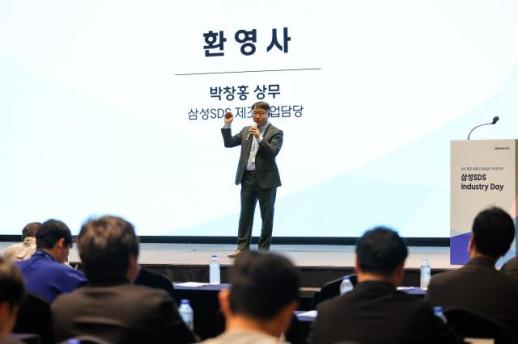 Samsung SDS Shares AI Transformation Strategies with Manufacturers in Chungcheong and Jeolla Regions Samsung SDS hosted the "Samsung SDS Industry Day" on May 28 at Lotte City Hotel in Daejeon, targeting manufacturing companies in the Chungcheong and Jeolla regions. The event focused on sharing strategies for AI transformation (AX) in the manufacturing sector and showcased innovative case studies. The Industry Day serves as a customer seminar introducing Samsung SDS's key solutions, service directions, and actual implementation cases across various industries, including public, finance, manufacturing, distribution, and defense. Since March, Samsung SDS has conducted seminars starting with the public sector, followed by sessions for manufacturing, distribution, services, and finance in April. Under the theme "AX: Accelerating the Future of the Manufacturing Industry," the seminar attracted over 100 IT professionals from manufacturing companies in the Chungcheong and Jeolla regions. The agenda included strategies for implementing AX in manufacturing and real-world examples of AI-driven business innovations and outcomes. In his welcoming remarks, Park Chang-hong, Executive Director of Samsung SDS's Manufacturing AM Team, stated, "Companies are now focusing on how to apply AI to their operations to achieve tangible results, moving beyond mere AI adoption. Samsung SDS is actively supporting our clients' successful AX transformations based on our AI full-stack strategy." Samsung SDS is enhancing its approach to the AX market by leveraging its comprehensive AI full-stack strategy, which encompasses AI infrastructure, platforms, solutions, and consulting, covering all areas from implementation to operation. This strategy aims to support not just technology adoption but also real operational innovations and outcomes. The subsequent presentation session highlighted several AX innovation cases in the manufacturing sector, including: data platforms for manufacturing AX, the Harim Group's One ERP implementation, AI-driven product lifecycle management (PLM) strategies, operational technology (OT) security strategies against ransomware, applications of 5G networks for physical AI implementation, and the use of generative AI-based collaboration solutions like Britworks. Samsung SDS noted that the OT security strategy, tailored to the unique characteristics of manufacturing environments where production halts can lead to significant losses, and the application of 5G networks for the dissemination of physical AI within factories garnered considerable interest. In domestic manufacturing settings, various robots, including automated guided vehicles (AGVs) and autonomous mobile robots (AMRs), are being utilized. The integration of AI allows for the creation of a physical AI environment that can control robots and processes with a single complex command. Samsung SDS introduced a case study on building a 5G network that supports real-time data transmission between robots and control systems. Additionally, Samsung SDS presented the One ERP implementation case for the Harim Group, which connects 18 key subsidiaries. The company shared its experience and results in standardizing ERP to enhance operational efficiency, aligning with Harim Group's integrated business structure from raw materials to distribution. Lee Jeong-heon, Vice President and Head of Strategic Marketing at Samsung SDS, remarked, "This seminar was significant in sharing AX implementation directions and actual innovation cases with manufacturing companies in the Chungcheong and Jeolla regions. Samsung SDS will continue to provide insights to clients across various industries based on our AI full-stack capabilities and industry expertise." Meanwhile, Samsung SDS is expanding its AX business across various sectors, including manufacturing, finance, and public services, leveraging its AI full-stack capabilities that encompass infrastructure, platforms, solutions, and consulting. The company's strategic collaborations with global firms allow for the flexible adoption of various AI models, tailored to client operations through consulting and system integration (SI) capabilities. Notably, Samsung SDS is rapidly expanding the application of AI in real operational environments, including customer service and manufacturing sites, through innovations driven by AI agents.* This article has been translated by AI. 2026-05-28 16:20:00
 -
 Naver Distinguishes Itself in AI Search and Shopping Against Google "Google pays 80 billion won annually to use content from the U.S. community Reddit. The era where content is a weapon will continue, and companies with high-quality data will survive in the generative AI competition," said Kim Kwang-hyun, Naver's Chief Data and Content Officer (CDO). He emphasized that Naver's 27 years of accumulated search technology and data-content ecosystem will be key competitive advantages in the AI era. The content assets built on Naver's platforms, such as Knowledge iN, blogs, and cafes, have fueled its growth in the search market and are expected to serve as differentiated strengths in the AI landscape. On May 28, Naver hosted a media roundtable at The Plaza Hotel in Seoul, focusing on its data and content strategy in the AI era. Kim Kwang-hyun, along with Lee Il-koo, head of content services, and Kim Sang-beom, head of the search platform, presented strategies to enhance the content and creator ecosystem and strengthen AI search service competitiveness. Naver appointed Kim Kwang-hyun as CDO earlier this year. He joined Naver in 2000 as a search developer and has held various roles related to search, including heading the search platform until last year. His role is expected to extend beyond improving existing search quality to connecting content and data within and outside Naver to enhance AI service competitiveness. Kim highlighted that Naver has clear differentiators compared to Google in the South Korean market. While Google's strength lies in global search data, Naver excels in lifestyle search data from Korean users and original user-generated content (UGC). He noted that Naver can secure a significant advantage in vertical areas such as shopping, local searches, and reservations, where search leads to execution. "When ChatGPT first emerged, the market's reaction was astonishing, but after the launch of Google Gemini, the usage of ChatGPT has somewhat declined. The quality of content queries based on Google's search capabilities has created this difference," Kim said, adding, "Korean users still prefer Naver search because it provides the best information for daily needs, making Naver distinctly different from Google in terms of content quality." In line with this, Naver plans to invest 1 trillion won over the next five years to develop its content ecosystem. The company believes that the competition among global AI platforms will increasingly depend on the quality of data and service competitiveness rather than just the performance of the models themselves. Naver is also launching the AI fellowship program 'Naver Mate,' which will select 3,000 creators monthly and provide approximately 20 billion won annually to support their activities, aiming to strengthen UGC. Kim pointed out the need for Naver to establish independent competitiveness to prevent high-quality Korean content from flowing to overseas platforms. He remarked, "Recently, Korean content has been accumulating on foreign platforms like YouTube and Instagram, and we need to consider whether this is a desirable direction in the long term. By striving for coexistence with creators and improving the platform to accumulate quality content domestically, Naver and South Korea can lay the groundwork for new growth not only in the current AI era but also in future technological changes." Naver also unveiled its strategy to enhance AI search service competitiveness, aiming to implement an 'AI integrated agent.' The core of this strategy is a 'product-native large language model (LLM)' designed and optimized for specific service scenarios, differing from existing general-purpose models. Kim reiterated that Naver AI has distinct advantages over Google AI in vertical search areas. Naver has accumulated vertical search data that allows for execution from product search to purchase and delivery, and the company plans to focus its capabilities in this area. He stated, "Just as OpenAI aimed for artificial general intelligence (AGI) from the start, Naver has also contemplated whether to pursue AGI. The biggest differentiator of Naver AI compared to Google AI is vertical search. Naver is likely the only company globally that can complete a service from product search to purchase and reservation within a single platform." Additionally, Naver plans to expand its AI search offerings with the upcoming launch of 'Smart Lens,' a camera-based search service, following the release of 'AI Briefing' in March and the beta version of 'AI Tab' last month. Smart Lens will enable direct connections from visual searches to purchase execution. According to Naver, AI Briefing currently has 30 million monthly users, and AI Tab surpassed 3 million cumulative users within a month of its beta launch. The officially launched AI Tab next month will expand its user base from Naver Plus membership subscribers to all users. This is expected to enhance the synergy of generative AI search across Smart Lens, AI Briefing, and AI Tab.* This article has been translated by AI. 2026-05-28 14:34:00
 -
 Naver to Invest 1 Trillion Won in AI Content and Creator Ecosystem Over Five Years Naver is accelerating its efforts to enhance its artificial intelligence (AI) search competitiveness by expanding its content and creator ecosystem. The company believes that the strength of its AI platform lies in content based on service experience. Naver plans to invest 1 trillion won over the next five years to secure quality content and strengthen its creator compensation system. Having grown as a search portal in the 2000s while creating a creator ecosystem, Naver sees this ecosystem as a crucial factor for continued growth in the AI era. On May 28, Naver held a media roundtable at The Plaza Hotel in central Seoul, focusing on its data and content strategy for the AI era. The event featured Chief Data and Content Officer (CDO) Kim Kwang-hyun, Content Service Division Head Lee Il-koo, and Search Platform Division Head Kim Sang-beom, who discussed strategies for revitalizing the content and creator ecosystem and enhancing the competitiveness of AI search services. Kim emphasized that the focus of AI platform competition is shifting from model performance to data quality and service competitiveness. “As CDO, I will work to build high-quality data that serves as the foundation for executable agents through partnerships with creators and external partners, connecting this data with AI to provide differentiated user experiences and compete more boldly,” Kim said. He also highlighted plans to expand non-technical efforts to find quality content and creators over the next five years with the same 1 trillion won investment. “In the AI era, where we need to create gaps in data and service experience in addition to technology, Naver's unique content ecosystem, built over 25 years, is our strongest asset,” Kim added. Naver aims to strengthen its competitiveness by partnering with creators as core partners and expanding the AI ecosystem together. As part of its strategy to explore content and creators, Naver is launching a new fellowship program called 'Naver Mate.' This program will spotlight around 3,000 outstanding creators who enrich the content ecosystem with expertise and diversity, based on AI briefing citation counts, each month. Creators in the Naver Mate program will have their profiles and content marked with an official emblem, making their work more visible across various Naver services, including integrated search and AI briefings. To encourage the production of quality content, Naver will provide activity funds ranging from 300,000 to 10 million won, totaling 20 billion won, based on citation counts. The Naver Mate program will begin next month, targeting creators of blogs, cafes, Knowledge iN, and premium content, with plans to expand to clip creators in the second half of the year. Naver plans to operate the program in beta until the end of this year, gradually enhancing it by incorporating AI tab response citations and expanding the support targets and scale. Lee Il-koo stated, “Even in the AI era, user-generated content (UGC) that reflects creators' real experiences and insights is a key asset that adds diversity and expertise to AI. We will focus on creating a consensus among all users about good creators and content to revitalize the content ecosystem.” Naver aims to implement an integrated AI agent that seamlessly connects various services beyond AI search. The company revealed its technological direction and core assets. Kim Sang-beom highlighted the importance of a product-native large language model (LLM) optimized for service scenarios, a vast dataset of 10 billion records, and harness engineering for stable service operation as key assets. He explained that Naver's experience in building and operating its search ecosystem with proprietary technology is a unique strength. The next-generation Hyperclova X model will also be applied soon. Naver is enhancing its AI search lineup. According to the company, the AI briefing launched in March last year has been used by 30 million people monthly, providing quick and accurate answers. The AI tab, which entered closed beta in April, has surpassed 3 million users. Additionally, Naver plans to introduce a new version of Smart Lens by the end of next month, a service that allows users to quickly capture information through their camera and connect to actions. This is expected to create strong synergy with the AI briefing and AI tab. Kim Sang-beom noted, “Starting next month, when the AI tab is officially launched, all Naver users will be able to utilize conversational search on both mobile and PC. We will implement an agentic AI service that connects search to actual execution based on Naver's unique assets that best understand the daily lives and contexts of Korean users.” 2026-05-28 11:00:00