

Journalist

Hwang Jin-hyun
jinhyun97@ajunews.com
-
 S&P 500, Nasdaq Close at Record Highs on Big Tech Earnings Optimism U.S. stocks ended higher and pushed the S&P 500 and Nasdaq to fresh record closes on expectations for strong Big Tech earnings, even as U.S.-Iran ceasefire talks remained stalled. On April 27 (local time), the S&P 500 rose 8.83 points, or 0.12%, to 7,173.91, and the Nasdaq composite gained 50.50 points, or 0.20%, to 24,887.10 on the New York Stock Exchange. Both indexes set record highs for a second straight session. The Dow Jones Industrial Average fell 62.92 points, or 0.13%, to 49,167.79. With five of the so-called “Magnificent Seven” mega-cap tech companies due to report results this week, investors kept betting on upside surprises tied to the artificial intelligence boom. Alphabet, Microsoft, Amazon and Meta are scheduled to report on April 29, and Apple is set to release results the next day, April 30. Reuters reported that of 139 S&P 500 companies that had posted first-quarter results through April 24, 81% beat market expectations. Based on LSEG data, Wall Street analysts raised their forecast for S&P 500 companies’ earnings per share growth this year to 16.1% from 14.4% earlier this month, supporting expectations the rally can continue. Oil prices, however, climbed after a second round of ceasefire talks between the United States and Iran failed to materialize and the closure of the Strait of Hormuz continued, limiting gains in equities. Brent crude settled up 2.8% at $108.23 a barrel. It neared $110 intraday, its highest level in about three weeks since April 7. Some analysts said war-related risks remain the key variable. “Until the situation in the Strait of Hormuz is more controlled, it will be difficult for the market to stabilize,” Gabriel Shahin of Falcon Wealth told CNBC. “That’s why I see the Iran issue as still the top variable.” Meanwhile, the Federal Reserve is set to hold a Federal Open Market Committee meeting April 28-29 to discuss the direction of monetary policy. Markets broadly expect the Fed to keep its benchmark rate unchanged at 3.50% to 3.75%. Investors are focused on what Fed Chair Jerome Powell signals about recent economic conditions and the policy outlook at his April 29 news conference.* This article has been translated by AI. 2026-04-28 08:27:16
 -
 AI Rally Lifts South Korea, Japan and Taiwan Stocks to Record Highs as South Asia Lags Asian stock markets moved in different directions as expectations for artificial intelligence helped lift Northeast Asia to fresh records despite the fallout from the Iran war, while South and Southeast Asia stayed under pressure from higher oil prices. Northeast Asian benchmarks have risen since the war began on Feb. 28, Bloomberg News reported. Taiwan’s Taiex gained 9.9% through April 24. Over the same period, South Korea’s Kospi rose 3.7%, Japan’s Nikkei 225 added 1.5% and China’s CSI 300 climbed 1.25%. The CSI 300 tracks the 300 largest stocks by market value listed in Shanghai and Shenzhen. By contrast, India’s Nifty 50 fell 5.8%, Indonesia’s Jakarta Composite Index dropped 10.4% and the Philippines’ PSEi slid 9.5%. The MSCI ASEAN Index was down 7.5%. Bloomberg Intelligence strategist Marvin Chen said the key difference was AI. “In terms of oil, Korea, Taiwan and Japan are all highly dependent,” he said, “but what ultimately made the difference was AI.” Bloomberg said the global semiconductor supply chain — including Taiwan Semiconductor Manufacturing Co., Samsung Electronics and SK hynix — has benefited from the AI boom, and demand tied to AI appears relatively insulated from geopolitical risks. The split was evident in Monday’s trading. South Korea’s Kospi jumped 139.40 points, or 2.15%, to 6,615.03, closing above 6,600 for the first time. Japan’s Nikkei 225 rose 1.38% to 60,537.36, ending above 60,000 for the first time. Taiwan’s Taiex gained 1.76% to 39,616.63 for a second straight record close; it also hit an intraday high of 40,194.92, topping 40,000 for the first time. The gains were attributed to renewed AI investment optimism ahead of earnings from U.S. big tech companies, along with expectations that tensions in the Middle East could ease. Semiconductor shares led: SK hynix touched 1,317,000 won intraday for a new 52-week high, Samsung Electronics rose 1.82%, and TSMC surged 3.66% to a record. In India and Southeast Asia, rising crude prices have weighed broadly on economies, stoking inflation, worsening current accounts and weakening currencies, while also limiting policymakers’ room to respond. South Korea, despite the stock rally, showed relative weakness in currency moves. Since the war began, the Chinese yuan has risen 0.5% against the dollar, while the Korean won has fallen 2.7%, one of the larger declines among major Asian currencies. Gary Tan, a portfolio manager at Allspring Global Investments, said the divergence reflects “a collision between long-term, technology-driven structural change and short-term, war-driven macroeconomic shocks,” adding that Asia has become the central stage where the opposing forces meet.* This article has been translated by AI. 2026-04-27 18:25:55
 -
 Global Military Spending Rises for 11th Year, Setting New Record Led by Europe and Asia Last year, global military spending rose for an 11th straight year, setting a new record. According to the Swedish think tank Stockholm International Peace Research Institute, or SIPRI, which released its “2025 Trends in World Military Expenditure” report on April 26 (local time), worldwide military spending totaled $2.887 trillion (about 4,250 trillion won) last year. Spending rose 2.9% from a year earlier, slowing from 2024’s 9.7% increase. Still, the share of global gross domestic product edged up to 2.5% from 2.4%. Per-capita military spending reached $352, the highest level since 1990. By region, Europe led the buildup. Total European military spending climbed 14% to $864 billion, the highest level in SIPRI’s records. SIPRI researcher Jade Giberto Ricard said the trend reflects Europe’s continued push for greater self-reliance as U.S. pressure grows to increase burden-sharing. The report noted that President Donald Trump has repeatedly urged North Atlantic Treaty Organization members to raise defense budgets, and analysts say European countries expanded spending in response. Military spending also rose sharply in Asia and Oceania. The region spent $681 billion, up 8.1% from a year earlier, the largest increase since 2009. South Korea’s defense spending totaled $47.8 billion, up 2.6% year over year on an exchange-rate basis. SIPRI attributed the increase to continued investment in the country’s “three-axis system,” including missile defense, preemptive strike and retaliation capabilities. Japan’s military spending rose 9.7% to $62.2 billion, and its share of GDP reached 1.4%, the highest since 1958. Taiwan increased spending 14% to $18.2 billion, its biggest rise since 1988; SIPRI said it reflected rising tensions in the Taiwan Strait. SIPRI researcher Diego Lopes da Silva said higher spending by U.S. allies in Asia and Oceania reflects growing doubts about whether the United States will maintain its previous level of security support. China’s military spending rose 7.4% to $336 billion, extending a 31-year run of increases. U.S. military spending, however, fell 7.5% to $954 billion. SIPRI pointed to the halt in new military aid to Ukraine after the launch of the second Trump administration as a key factor. SIPRI researcher Xiao Liang said, “Given the range of crises today and countries’ long-term military goals, this upward trend in military spending is likely to continue.” * This article has been translated by AI. 2026-04-27 17:18:18
 -
 Big Tech Earnings Week Seen as Key Test for U.S. Stock Rally U.S. markets are turning their attention to a heavy week of earnings from major technology companies, with results expected to help determine the next move for stocks. Tech shares have led gains even as tensions between the United States and Iran have added to uncertainty. MarketWatch reported April 26 that Alphabet, Microsoft, Amazon and Meta are scheduled to report results after the close April 29 (Korea time: the morning of April 30). Apple is set to report after the close the next day (Korea time: the morning of May 1). U.S. stocks have continued to rise despite instability in the Middle East. The Standard & Poor’s 500 and the Nasdaq have climbed for four straight weeks, extending runs of record highs. Analysts say Big Tech has been central to the rally. Tech stocks are widely viewed as relatively defensive. Even if growth concerns increase, solid earnings can support sentiment, and if geopolitical risks rise, the sector is seen as less exposed to the impact of higher oil prices. Garrett Melson, a portfolio strategist at Natixis Investment Managers Solutions, said tech stocks are set up to “win either way,” arguing that strong results can underpin confidence even if the U.S. economy slows. The largest technology names — Apple, Microsoft, Alphabet, Nvidia, Amazon, Tesla and Meta, often called the “Magnificent Seven” — have remained core holdings for many investors on expectations of artificial intelligence-driven growth. Related exchange-traded funds have rebounded sharply in April, recovering much of their earlier losses. Kevin Shaye, chief strategist at BNY Wealth, said April trading reflected the view that tech valuations were attractive and that the fundamentals of the AI ecosystem remained positive even as war raised questions about a cyclical recovery. He said large-cap tech has again drawn buying and led the market, adding that the sector’s growth drivers are more structural than macroeconomic. MarketWatch said whether that optimism holds may depend on this week’s earnings. Matt Weller, head of research at StoneX, said the key issue this season is not the size of AI and data center spending itself, but the profitability of that investment. With Big Tech companies having poured large sums into data centers and AI infrastructure, he said investors want evidence it is translating into returns. The Federal Reserve’s interest-rate decision, also due the same day, is another factor. Markets largely expect rates to be held at current levels, but uncertainty remains over the selection of a successor to Chair Jerome Powell and the direction of policy. MarketWatch said earnings that meet expectations could help extend the rally, while disappointing results could increase volatility.* This article has been translated by AI. 2026-04-27 16:36:53
 -
 Taiwan court sentences ex-Tokyo Electron engineer to 10 years for TSMC trade secret theft Taiwan’s court specializing in intellectual property and commercial cases has sentenced a former employee of Japanese chip-equipment maker Tokyo Electron (TEL) to 10 years in prison for stealing confidential data from Taiwan Semiconductor Manufacturing Co., the world’s largest contract chipmaker. Bloomberg News and other outlets reported on the 27th that the Taiwan Intellectual Property and Commercial Court sentenced engineer Chen Li-ming, who previously worked at Tokyo Electron, to 10 years. Four other defendants in the case received sentences of up to six years, and one woman was sentenced to 10 months in prison, suspended for three years. Applying a dual-liability provision, the court also fined Tokyo Electron’s Taiwan unit 150 million New Taiwan dollars (about 7 billion won). Prosecutors said Chen recruited two TSMC employees and obtained confidential drawings related to the company’s next-generation 2-nanometer process technology. The employees accessed the company’s internal network while working from home, photographed the materials with mobile phones and passed them along. Authorities said the leaked materials totaled about 1,000 pages. The ruling was seen as reflecting Taiwan authorities’ push to strengthen protection of semiconductor technology, a core foundation of the global artificial intelligence industry. Taiwan has maintained a high level of vigilance over intellectual property leaks, stepping up monitoring not only of activity linked to China, which is seeking to build up its own semiconductor industry, but also of existing partners. In early 2025, Taiwan authorities began investigating whether China’s largest foundry, SMIC, illegally recruited local engineers to obtain advanced technology. Last year, prosecutors also searched the home of a former TSMC executive after allegations of a technology leak surfaced following the executive’s move to Intel.* This article has been translated by AI. 2026-04-27 15:40:04
 -
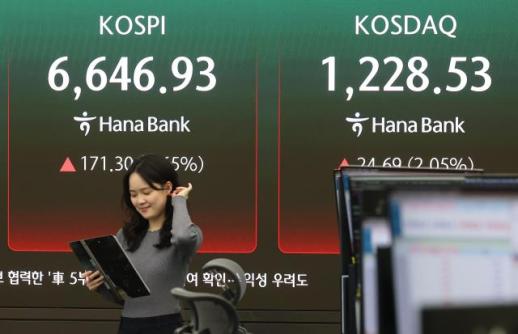 AI Boom Splits Asian Stocks: Korea, Taiwan and Japan Rise as India, Southeast Asia Fall Asian stock markets are diverging depending on who benefits from the artificial intelligence boom. Despite an energy shock triggered by the Iran war, Northeast Asian markets have rebounded on strong tech shares, while South and Southeast Asia remain weighed down by higher oil prices. Bloomberg reported on April 27 that Taiwan’s TAIEX rose 9.9% from the start of the Iran war on Feb. 28 through April 24. Over the same period, South Korea’s KOSPI gained 3.7%, Japan’s Nikkei 225 added 1.5%, and China’s CSI 300 rose 1.25%. The CSI 300 tracks the 300 largest stocks by market capitalization in Shanghai and Shenzhen. By contrast, South and Southeast Asian markets stayed weak. India’s Nifty 50 fell 5.8%, Indonesia’s Jakarta Composite Index dropped 10.4%, and the Philippine Stock Exchange index slid 9.5%. The MSCI ASEAN index declined 7.5%. Analysts pointed to AI as the key driver of the gap. Marvin Chen, a strategist at Bloomberg Intelligence, said South Korea, Taiwan and Japan all have high dependence on oil, but “AI ultimately made the difference.” Bloomberg said demand tied to the AI boom has helped the global semiconductor supply chain, including Taiwan Semiconductor Manufacturing Co., Samsung Electronics and SK hynix, and appears relatively insulated from geopolitical risks. In India and Southeast Asia, however, rising oil prices are feeding inflation, worsening current accounts and weakening currencies, while also limiting policymakers’ room to respond. Sonal Varma, an economist at Nomura Holdings, cited several factors: India and Southeast Asia are more exposed to the energy shock than Northeast Asia and have fewer buffers; Northeast Asia’s fiscal conditions are relatively solid; and the AI boom is supporting growth and markets in Northeast Asia but offering little lift to India and Southeast Asia. South Korea, meanwhile, showed relative weakness in currency markets despite gains in equities. Since the war began, China’s yuan has risen 0.5% against the dollar, while the won has fallen 2.7%, one of the larger declines among major Asian currencies. Gary Tan, a portfolio manager at Allspring Global Investments, said the divergence reflects a clash between a long-term, technology-led structural shift and a short-term, war-driven macroeconomic shock, with Asia at the center of both trends.* This article has been translated by AI. 2026-04-27 14:49:36
 -
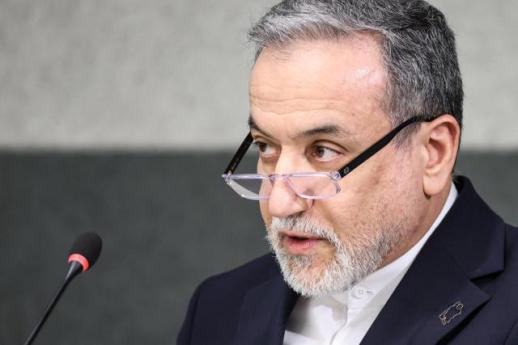 Iran floats phased ceasefire plan via mediators as Trump urges direct talks With U.S.-Iran talks on ending the war stalled, Iran has put forward both a phased framework and a separate compromise proposal through mediators in an effort to break the impasse. But sharp differences over the nuclear issue — and reported divisions inside Iran — have left the prospects for renewed negotiations uncertain. Lebanon-based pro-Hezbollah outlet Al Mayadeen reported that Iran delivered a three-step proposal to mediating countries on April 26 (local time), calling first for a guaranteed ceasefire, then maritime cooperation in the Strait of Hormuz, and only afterward talks on Iran’s nuclear program. The report said Iran indicated it could return to negotiations if the United States accepted the framework. The plan separates issues by stage. In the first phase, Iran would discuss only a halt to U.S. and Israeli military action and demands guarantees against renewed attacks on Iran and Lebanon. If that is agreed, the second phase would address management of the Strait of Hormuz, including plans to work with Oman on a new legal framework. The third phase would take up the nuclear program, but only after agreements in the earlier phases, the report said. Separately, Iran has also floated a compromise, Axios reported, citing a U.S. administration official and two sources familiar with the matter. Iran proposed, through mediators including Pakistan, opening the Strait of Hormuz and declaring an end to the war first, then continuing nuclear talks later, Axios said. The idea is to resolve Iran’s control of the strait and the U.S. maritime blockade up front, seek a long-term ceasefire or end-of-war agreement, and then move to nuclear negotiations. Axios said the approach could create negotiating space while sidestepping domestic pushback in Iran over putting the nuclear issue on the table. Iranian leaders are divided between hard-liners and moderates on how to proceed, and hard-liners are strongly opposed to making the nuclear program a negotiating agenda item, the report said. A source said Iranian Foreign Minister Abbas Araghchi told mediators there is no agreement within Iran’s leadership on how to handle U.S. demands related to uranium enrichment. It remains unclear whether Washington would accept Iran’s proposals. The maritime blockade is seen as a key tool to pressure Iran in any future nuclear talks, and lifting it early could reduce U.S. leverage. The United States is currently demanding at least a 10-year halt to uranium enrichment and the removal of existing enriched uranium from Iran, the report said. As pressure continues, President Donald Trump said he wants direct talks with Iran. In a phone interview with Fox News, Trump said he would not have U.S. negotiators travel for 18 hours and that he would handle it by phone. “So if they want, they can call us,” he said. Trump added that Iran knows what must be in an agreement and insisted it cannot have nuclear weapons. “Otherwise, there’s no reason to meet,” he said. Araghchi returned to Islamabad on April 27 and met with Pakistan’s army chief, Asim Munir, among others. Iran’s semi-official Tasnim news agency said the visit aimed to convey Iran’s demands for ending the war through mediator Pakistan. Araghchi was reported to have presented key issues including a new legal framework for the Strait of Hormuz, compensation for war damage, guarantees against renewed attacks, and lifting the maritime blockade on Iran. An Iranian official said the ongoing discussions focus on conditions to end the recent military conflict and are “not related at all” to the nuclear issue raised by some. Araghchi also arrived in Russia and plans to meet President Vladimir Putin as part of Iran’s diplomatic efforts related to the war. Trump, meanwhile, is expected to hold a Situation Room meeting at the White House on April 27 with national security and foreign policy advisers to discuss the stalled talks and next steps, U.S. administration officials told Axios. 2026-04-27 14:16:00
 -
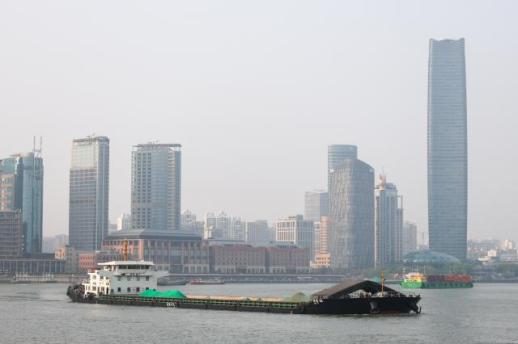 SCMP: South Koreans’ trips to China surge as visa rules ease and ties improve South Koreans are traveling to China in rapidly growing numbers, driven largely by looser visa rules and improving bilateral relations, a Hong Kong newspaper reported. The South China Morning Post reported on the 27th that the rise in visits by South Korean tourists and content creators has coincided with China’s eased visa policies and a steadier trend in South Korea-China ties. China has allowed South Koreans to stay visa-free for up to 30 days for tourism, business and family visits since 2024, the report said. The measure was extended in November last year, reducing what had been a major barrier for short trips. Geographic proximity and a calmer diplomatic climate have also supported more people-to-people exchanges. About 3.16 million South Koreans visited China last year, up 36.9% from the previous year. In January this year, more than 300,000 visited, a 48% increase from a year earlier. Destinations are also broadening beyond traditional choices, with Shanghai, Shenzhen in Guangdong province, Chengdu in Sichuan province and Zhangjiajie in Hunan province drawing attention, the report said. The increase has been especially notable among online content creators. They have highlighted China’s mobile payment systems, high-speed rail and relatively low prices, presenting scenes that differ from some existing perceptions. SCMP said creators have documented street food, advanced technology and large-scale infrastructure, while also comparing similarities and differences with South Korea. A YouTuber based in China was quoted as saying, “Since the visa waiver, visits to China by Korean creators have noticeably increased,” adding that China-related content is drawing strong interest on South Korean platforms. SCMP said the trend has also aligned with a period of more stable ties. It cited continued high-level exchanges, including President Lee Jae-myung’s visit to China in January, as helping create momentum for expanded economic and cultural cooperation. China has expanded visa-free entry policies since the COVID-19 pandemic to attract more foreign visitors. Seventy-nine countries are currently eligible for visa-free entry, including 50 granted the benefit unilaterally by China. According to China’s National Immigration Administration, 30.08 million people entered visa-free last year, accounting for 73.1% of all foreign arrivals. SCMP said the policy is not only boosting tourism but also producing a “soft power” effect by improving perceptions of China.* This article has been translated by AI. 2026-04-27 11:37:13
 -
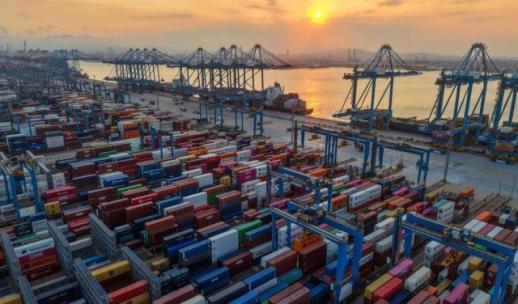 China’s 2026 Imports Seen Rising 5% on AI Investment, Biggest Gain in Five Years China’s imports are expected to rise sharply this year, supported by expanding investment in artificial intelligence, according to a forecast cited by Bloomberg News. Bloomberg reported on April 26 (local time) that a survey this month of 17 economists put China’s 2026 import growth at 5%. That is more than double the March estimate and would be the strongest increase in five years, marking a break from four years of stagnation and declines. The forecast for export growth was also revised up, to 4.9% from 3.6%. Even so, the goods trade surplus is expected to come in only slightly above about $1.2 trillion, little changed from 2025, suggesting the expansion of the surplus seen over the past two years may slow. Serena Zhou, chief economist at Mizuho Securities, said “the Chinese government recognizes that a massive trade surplus is not sustainable.” While she expects imports to rise 7.5% this year, she added that “overseas demand remains the key growth driver” and that “the recovery in domestic demand is not yet clear.” China’s trade has held up better than expected despite an energy supply shock triggered by the Iran war. In the first quarter of 2026, imports rose 23% from a year earlier and exports increased 15%, both posting double-digit gains. At the same time, the imbalance in the economy is deepening as industrial output and investment expand while consumption remains weak. The International Monetary Fund has said this structure is contributing to wider global imbalances. A surge in imports in March was driven by stronger demand for semiconductors and advanced manufacturing equipment linked to AI investment. Pantheon Macroeconomics said the value of semiconductor imports jumped 54% from a year earlier, accounting for about one-third of the overall increase. Import volumes, however, rose 14%, indicating higher prices also played a role. An expected global increase in AI investment — projected at about $2.5 trillion this year — has become a key driver of Asian trade. China has emerged as the largest supplier of AI-related products, but it still relies heavily on imports for core technologies such as advanced semiconductors. Standard Chartered said China’s AI-related imports mainly come from Taiwan and South Korea, and that exports from both economies to China have risen sharply. Other factors supporting import growth include a stronger yuan and higher commodity prices. The yuan has gained about 7% against the dollar over the past year, boosting purchasing power, while rising copper and aluminum prices have lifted the value of related imports. Global oil prices have not yet had a major impact on China’s imports, with March crude oil imports only slightly lower. Still, reduced shipping through the Strait of Hormuz could become a headwind for energy imports. Pantheon Macroeconomics forecast April import values for oil and gas will fall 14% and 18%, respectively. On the export side, analysts said some spillover benefits from the war are also supporting demand. With interest rising in electric vehicles and solar panels, Chinese companies are expanding their presence in overseas markets. Erica Tay, an economist at Maybank Securities, said China’s economy showed greater resilience to the supply shock from the Iran war than other Asian economies, adding that stronger demand for electric vehicles and solar power products is benefiting Chinese firms.* This article has been translated by AI. 2026-04-27 10:48:19
 -
 Trump Says Iran Should Call to Negotiate, Not Expect U.S. Delegation U.S. President Donald Trump is increasing pressure on Iran, saying he may pursue negotiations by phone rather than in-person talks. He also argued that maritime blockades are working and claimed Iran’s oil pipelines could soon suffer internal explosions, extending what he described as economic pressure. In a phone interview with Fox News on April 26 (local time), Trump said he would not send “people” on an 18-hour trip as a U.S. negotiating team. “We’ll do it by phone. So if they want, they can call us,” he said. Referring to a call the previous day with Pakistan, Trump said, “We’re not going to do this anymore,” adding, “We have all the cards.” He said Pakistan would continue to stay involved, underscoring that it would keep its mediating role. “They know what has to be in the (final) deal,” Trump said. “They can’t have nuclear weapons. Otherwise there’s no reason to meet.” The remarks came as Trump weighs whether to resume face-to-face talks with Iran after saying he would keep a ceasefire in place until negotiations end. The United States had planned to send a delegation to Pakistan for talks, but has held off after Iran showed what the article described as a passive stance toward negotiations. Trump’s comments about “phone negotiations” were interpreted as a message aimed at pressuring Iran while reducing reliance on the talks. On the war with Iran, Trump said, “We’ve done a great job, and we’re going to have a big victory.” He added, “I hope they act smart, but even if they don’t, we’re going to win anyway.” On blockade measures targeting Iran-linked vessels in places including the Strait of Hormuz and the Pacific, Trump called them “incredibly effective,” claiming it means Iran “can’t make a lot of money anymore.” He said that when a pipeline carrying large volumes of oil can no longer keep loading containers or ships and the line becomes blocked, “the pipe mechanically explodes internally underground.” He claimed it had happened to Iran and said the blockade left it without ships. “It just explodes,” Trump said, adding that “they say they have only three days left” before that happens. He said that once it explodes, it cannot be restored, and even if it were repaired it would reach only about 50% of its current scale. Trump also complained about the North Atlantic Treaty Organization, saying it “didn’t help us properly.” He said the United States had “poured trillions of dollars” into supporting NATO for a long time, but “when we needed a little help, they weren’t there,” adding, “So we have to remember that.” On China’s role, Trump said he did not think it had helped much. “It could help, but I don’t think there’s a lot they can do,” he said, adding that China could have acted “much worse,” but he did not think it had done so. Trump also said he had “good conversations” with Russian President Vladimir Putin and Ukrainian President Volodymyr Zelenskyy, without specifying when. “We’re trying to solve the Russia-Ukraine situation,” he said. “I hope we can do it.”* This article has been translated by AI. 2026-04-27 10:06:16