
Journalist

Amira Guirguis
-
 At least 3 dead as old overpass in Seoul partially collapses during demolition SEOUL, May 26 (AJP) - An old overpass in Seoul partially collapsed on Tuesday while workers were demolishing it, as part of the city's broader effort to remove aging infrastructure and spruce up the capital. The accident occurred at around 2:30 p.m. on the overpass in Seosomun, western Seoul, which has been gradually removed since last Summer and is scheduled to be fully demolished by early next month. At least three were dead, several were injured, and rescuers are still searching for others who may be trapped under the rubble. Fire authorities immediately deployed over 60 firefighters, a dozen vehicles, and five ambulances to the scene, accompanied by around 30 police officers. Train service between Seoul Station nearby and Sinchon Station has been suspended due to the collapse, with other services also affected. 2026-05-26 16:06:07
 -
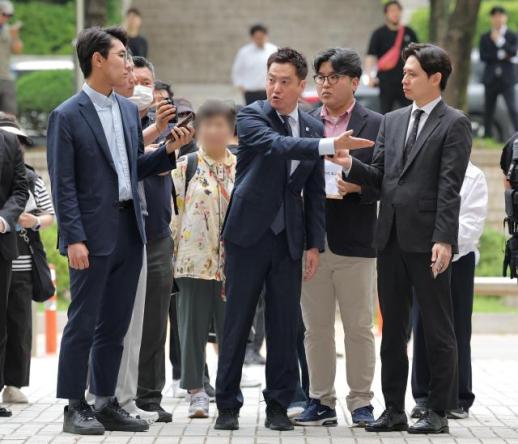 YouTuber faces arrest warrant in defamation case against Kim Soo-hyun SEOUL, May 26 (AJP) - Kim Se-eui, the head of YouTube channel Garo Sero Institute, also known as HoverLab, is facing an arrest warrant over defamation allegations and other charges involving actor Kim Soo-hyun. Kim appeared at the Seoul Central District Court at around 10:30 a.m. on Tuesday, where he denied all charges, adding that he would file a complaint against the police officers and prosecutors handling the case. "I do not admit to any of them," Kim said before entering the court. The case stems from a series of YouTube broadcasts and claims in which Kim alleged that the actor had been in an "inappropriate" romantic relationship with the late actress Kim Sae-ron while she was still a minor. Kim is also accused of falsely claiming that the actor pressured the actress over debt repayment, leading to her death. Police suspect Kim of spreading false information to defame the actor. They also believe some of the evidence lacks credibility including KakaoTalk messages suspected of being fabricated and an audio recording allegedly created or doctored using artificial intelligence. Kim said the request for an arrest warrant against him was "intentional and hastily prepared," claiming it was aimed at obstructing his business and vowing to take legal action against investigators. The court is expected to decide on Kim's arrest warrant later in the day or the following morning. Meanwhile, the actor, who has suspended activities amid the scandal, has filed a complaint against Kim and a separate civil suit seeking 12 billion won (about US$8 million) in damages. 2026-05-26 15:46:59
 -
 BOK to hold rate for yearlong this week and hike growth target SEOUL, May 26 (AJP) - The Bank of Korea is widely expected to hold the benchmark rate at 2.50 percent, unchanged for a year, while sharply raising its 2027 growth outlook to around 2.5 percent from 2 percent to lay the groundwork for eventual tightening against mounting inflationary pressures from elevated energy prices, rising wages and overheated asset markets as the AI boom cushions the economy from the prolonged Gulf crisis. An AJP poll on economists found unanimous expectations for a rate freeze at Thursday’s meeting under newly appointed Governor Shin Hyun-song and newly seated board member Kim Jin-ill. But consensus increasingly shifted toward a rate hike in July as growth and inflation forecasts move higher. “From the growth and inflation trajectory, the current situation warrants a review of a rate hike,” said Cho Yong-gu, a fixed-income analyst at Shinyoung Securities. “Rather than an actual rate hike, the upcoming meeting is highly likely to deliver messages hinting at the possibility of future increases.” Cho pointed to lingering oil-price risks stemming from the Middle East conflict, upward revisions to domestic growth and inflation forecasts, financial stability concerns tied to a weak won and overheating real estate prices in the Seoul metropolitan area as key reasons for maintaining rates while turning more hawkish. Dissenting voices within the Monetary Policy Board are also expected to grow. About 75 percent of economists surveyed projected that as many as two members could dissent in favor of tighter policy. Yoon Yeo-sam, chief analyst at Meritz Securities, likewise forecast a freeze this week but said the central bank could begin openly signaling future tightening. “The committee may address whether oil prices stabilize after the conclusion of the Middle East war and evaluate the impact of the improving semiconductor cycle on growth,” Yoon said. “A clause implying that the BOK will review the timing of a rate hike to ensure price stability could be inserted.” Analysts said South Korea’s unexpectedly strong first-quarter GDP growth of 1.7 percent — nearly double the BOK’s earlier forecast — alongside government relief spending tied to high energy prices has strengthened the case for hawkish dissents within the board. “Recently, domestic inflationary pressures have been expanding not only due to external factors like exchange rates and rising crude prices but also because consumption and domestic demand are reviving alongside economic recovery,” said Woo Hye-young, analyst at LS Securities. “Some board members may deem an additional rate hike necessary based on these factors.” Attention has also centered on Kim Jin-ill, who recently described himself as “half a click above” the BOK’s current policy outlook. Most economists, however, remained skeptical that he would immediately cast a dissenting vote during his first meeting. “Even former board member Shin Sung-hwan, who was widely considered dovish, followed the consensus during his first monetary policy meeting,” one monetary policy expert said on condition of anonymity. “If Kim voices dissent for a hike, it will likely come in the second half of the year.” Regarding the second-half rate path, economists increasingly pointed to July as the first likely window for tightening. Cho projected a 25-basis-point hike in July followed by additional increases in the fourth quarter and early next year. Yoon similarly forecast two hikes — in July and October — lifting the benchmark rate from the current 2.50 percent to 3.00 percent by year-end. The central bank’s challenge reflects an economy increasingly split between booming AI-linked sectors and mounting inflation risks. South Korea’s semiconductor-driven AI boom has powered exports, equities and growth expectations sharply higher. The KOSPI has surged 86.2 percent from end-2025 levels to 7,847.7, while the tech-heavy KOSDAQ climbed 25.5 percent, according to weekly financial market data. At the same time, financial stability concerns have intensified. The won weakened to 1,517.2 per dollar from 1,439 at the end of last year as higher oil prices and imported inflation pressures weighed on sentiment. Inflation indicators also accelerated. Producer prices jumped 6.9 percent in April from a year earlier, while consumer inflation climbed to 2.6 percent. Bond markets, however, rallied Tuesday as traders leaned toward a prolonged rate freeze despite the central bank’s increasingly hawkish tone. By midday, the benchmark 10-year government bond yield had fallen 7.1 basis points to 4.057 percent, while the three-year yield dropped 5.3 basis points to 3.683 percent on expectations that the benchmark rate would remain unchanged until at least the next policy meeting in mid-July. For now, economists expect the BOK to use Thursday’s meeting primarily to recalibrate market expectations — upgrading growth projections sharply while cautiously preparing investors and households for a gradual return to tightening as the AI boom reshapes South Korea’s economic cycle. 2026-05-26 15:38:52
 -
 AJP Focus: Asia's energy shock far from over despite Hormuz reopening talks SEOUL, May 26 (AJP) - South Korea and other Asian economies heavily dependent on Gulf energy supplies are bracing for prolonged disruptions even as diplomatic momentum builds toward a potential reopening of the Strait of Hormuz, with analysts warning that supply chains, refining operations and shipping flows could take months to normalize. Iran is expected to allow commercial shipping through the strait about 30 days after a peace agreement with Washington is finalized, Nikkei reported Monday, citing a source familiar with the negotiations. U.S. President Donald Trump said over the weekend that a deal had been "largely negotiated," while Iran's foreign ministry described the arrangement as a memorandum of understanding ahead of broader talks expected within 30 to 60 days. But the situation remains fragile. The diplomatic push intensified after U.S. forces struck missile sites and Islamic Revolutionary Guard Corps vessels in southern Iran on Monday in what Washington described as defensive operations, underscoring the volatility surrounding the conditional ceasefire in place since early April. The Strait of Hormuz has effectively remained closed since March 2. IMF PortWatch data showed only two commercial vessels transited the chokepoint on May 17, compared with a pre-crisis average of roughly 95 ships per day. Brent crude rose 2.43 percent Monday to around $116.73 per barrel, more than 60 percent above prewar levels. For South Korea, where roughly 99 percent of Middle Eastern crude imports normally pass through Hormuz, the gap between a diplomatic breakthrough and a meaningful restoration of energy flows is expected to extend far beyond the tentative 30-day reopening timeline. According to Korea International Trade Association data, South Korea's crude imports fell 22.8 percent on-year in April to about 8.46 million tons, while imports from the Middle East plunged 37.3 percent to 4.49 million tons amid the Hormuz disruption. The Middle East still accounted for the largest share of South Korea's oil imports, but its portion dropped sharply to 53.1 percent from 65.2 percent a year earlier. Imports from Saudi Arabia, Korea's largest supplier, fell 37.6 percent to roughly 2.15 million tons. Iraqi shipments dropped 42.4 percent, while imports from Kuwait nearly collapsed, plunging 98.2 percent. Imports from Qatar were halted entirely. The data underscore how rapidly Asian importers have been forced to redraw supply chains as the Hormuz crisis deepened. The United States, already South Korea's second-largest crude supplier, nearly overtook Saudi Arabia last month. Imports of U.S. crude rose 13.4 percent to about 2.145 million tons, narrowing the gap with Saudi shipments to barely 1,000 tons from more than 1.45 million tons just a month earlier. Seoul has also accelerated diversification toward North America, Oceania and Africa. Imports from Australia surged 89 percent, while Canadian shipments more than tripled. Crude purchases from African producers including Nigeria and Mozambique jumped more than fivefold. North America's share of South Korea's crude imports climbed to 28.3 percent, up 10.3 percentage points from a year earlier. Still, industry analysts caution that reopening the strait would mark only the beginning of a lengthy normalization process. Mine-clearance operations, military escort requirements and a backlog of roughly 1,500 stranded vessels are expected to delay normal shipping flows by another two to three weeks even after transit resumes. "Fully loaded tankers must first pass through, and empty vessels must then enter and drain the stockpiles before oil-producing states can resume output," said Yoon Jae-sung, analyst at Hana Securities. "Given that a voyage to Asia takes four weeks and that 30 to 40 percent of Gulf refining capacity has been damaged — with normalization expected to take at least three months — restoring the supply chain will require considerable time," Yoon said. "Crude oil and gas would take priority, pushing petrochemical products and naphtha further down the queue." Shipping costs have also surged. According to Lloyd's Joint War Committee data, war-risk insurance premiums for very large crude carriers transiting the Gulf have climbed to roughly eight times pre-crisis levels, with single-voyage coverage now costing around $2.5 million per tanker. Six major protection and indemnity insurers, including Gard, Skuld and North Standard, have withdrawn Hormuz transit coverage altogether. South Korean petrochemical firms have partially stabilized operations by increasing naphtha cracking center utilization rates to 85–90 percent of prewar levels through alternative sourcing from Russia, Kazakhstan and the United States. But officials continue warning that liquefied natural gas markets could tighten sharply in the second half as bargaining power shifts back toward suppliers. Compounding concerns, QatarEnergy's force majeure declaration on long-term LNG contracts remains in effect after damage to two production trains at Ras Laffan affected roughly 17 percent of Qatar's LNG exports. Full restoration is expected to take between three and five years. "Unless the war ends on reasonable and viable terms good enough to convince shipowners and insurance companies, it may be extremely difficult for oil prices to return to post-war levels even in the long run," said Chung Tae-hun, associate research fellow at the Korea Energy Economics Institute. "We still face competition for heavy crude supplies outside the Middle East if the conflict becomes entrenched, with China and Japan also aggressively seeking alternative sourcing," Chung added. A diplomatic breakthrough could mark a turning point in the crisis. But for South Korea and much of Asia, the broader energy shock is increasingly shifting from an emergency disruption into a structural adjustment — one likely to leave elevated shipping costs, higher energy premiums and intensified competition for non-Gulf supplies well into 2027. 2026-05-26 15:36:03
 -
 Taiwan overtakes India as world's fifth-largest stock market on TSMC-led AI rally SEOUL, May 26 (AJP) - Taiwan's stock market has edged past India to become the world's fifth-largest, propelled by a surge in Taiwan Semiconductor Manufacturing Co. that underscores how the global rally in artificial-intelligence stocks is reshaping the hierarchy of world markets. Taiwan's market capitalization reached $4.95 trillion as of Monday's close, according to a Bloomberg tally, narrowly surpassing India's $4.92 trillion — a margin of about $30 billion, or less than 1 percent, that leaves the ranking vulnerable to reversal on any sharp swing. The shift places Taiwan behind only the United States, mainland China, Japan and Hong Kong, while South Korea ranked seventh, just ahead of Canada. The two markets are moving in opposite directions for a single underlying reason: exposure to technology hardware at the center of the AI investment cycle. Taiwan has risen on the strength of TSMC, the world's largest contract chipmaker, whose shares have jumped 49 percent this year; India has fallen as foreign capital, deterred by high valuations and a weakening currency, rotates out of its market and toward the chip-heavy economies of Northeast Asia and Taiwan. TSMC's influence on its home market is difficult to overstate. The company accounts for roughly 42 percent of Taiwan's benchmark index, so its rally has lifted the entire market's standing. Bloomberg described the rise in Taiwan's value as an illustration of the AI-driven technology rally, noting that Taiwan and South Korea — both anchored in semiconductor and technology-hardware manufacturing — have benefited disproportionately. "Taiwan's rise in market capitalization fundamentally reflects its high concentration in technology hardware," said Liao Yi-ping, a fund manager at Franklin Templeton, adding that the sector "sits at the center of the current AI investment cycle." Markets with limited exposure to technology hardware, he said, are increasingly being overshadowed by hardware-heavy ones such as Taiwan and South Korea. A regulatory change has reinforced the trend. Last month, Taiwan's financial authorities raised the ceiling on how much a domestic fund may hold in a single stock to 25 percent, from 10 percent. The rule applies only to companies that exceed 10 percent of the Taiwan Stock Exchange — a threshold currently met by TSMC alone — and JPMorgan Chase estimated the change could channel more than $6 billion into the market, almost all of it toward the chipmaker. India's decline has been correspondingly steep. High valuations, a weakening rupee and inflation concerns tied to rising energy costs have driven foreign investors away, with global funds net-selling about $24 billion of Indian equities so far this year. The country's benchmark index has fallen 8 percent, and should the trend persist, India could record its first annual decline in a decade. Its weighting in the MSCI Emerging Markets Index has slipped to roughly 12 percent, from 19 percent a year earlier. The reshuffling is recent and closely contested. South Korea overtook Taiwan in market value earlier this month, on May 12, only for Taiwan to surge ahead of India by late May — a sequence that illustrates how narrowly the AI beneficiaries are now separated, and how quickly the order can change. The shift in equity rankings does not, however, reflect the relative size of the underlying economies. India's gross domestic product, estimated by the International Monetary Fund at about $4.15 trillion, is itself the world's fifth-largest and dwarfs Taiwan's roughly $977 billion. That a market one-quarter the economic size can command a larger equity value points to the same concentration driving the rally: Taiwan's listed value is bound up overwhelmingly in a single global chipmaker, whereas India's broader, more domestically oriented economy is less exposed to the AI trade lifting markets elsewhere. India's economy grew 7.8 percent last year, sustaining one of the fastest rates in the world. 2026-05-26 15:12:46
 -
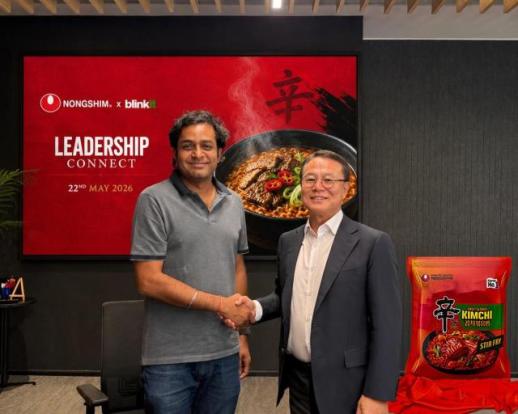 Nongshim signs deal with Indian grocery delivery app SEOUL, May 26 (AJP) - Instant noodle giant Nongshim has partnered with India's leading quick-commerce platform to expand its presence in one of the world's most populous countries. Nongshim said it held a launch event in New Delhi over the weekend for its signature "Shin Ramyun" series, after signing a deal with Blinkit to distribute its products there. Blinkit is the leading player in India's quick-commerce market, with around a 50-percent market share. The event featured a pop-up booth and photo zones where local influencers and visitors could sample products and share their experiences on social media. In particular, a highlight was stir-fried noodles, tailored to local tastes and younger consumers who frequently use quick-commerce platforms. With the latest deal, Nongshim aims to leverage Blinkit's delivery infrastructure to rapidly distribute its key products in major cities such as New Delhi and Mumbai, tapping into India's booming online commerce market. According to the Korea International Trade Association, India's e-commerce market is projected to grow from US$90 billion in 2025 to $240 billion by 2030. "By cooperating with Blinkit, we plan to promote our Shin Ramyun products throughout India, ensuring that local customers can enjoy them in their daily lives," said a Nongshim staffer. 2026-05-26 15:05:37
 -
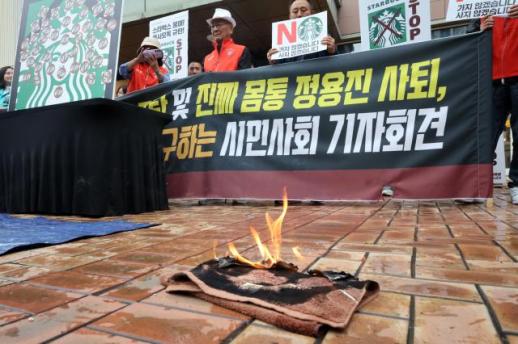 OPINION: Starbucks, memory wars and South Korea's new political taboos SEOUL, May 26 (AJP) - There are taboos in South Korea that never fully fade with time. They remain politically radioactive, emotionally unresolved and socially unforgiving. Japanese colonial rule is one. The democratization movement is another. For decades, anti-communism and North Korea defined the country’s ideological fault lines. But modern South Korea has undergone a profound political inversion. Under the dominance of liberal President Lee Jae Myung and the ruling Democratic Party of Korea — the sanctity of the democratization movement has become one of the defining moral pillars of public life. Anything perceived as mocking or distorting that legacy can trigger overwhelming public condemnation, economic retaliation and even criminal prosecution under laws such as the May 18 Distortion Punishment Act. What began as a Starbucks Korea marketing blunder therefore escalated into something far larger than a failed promotion. It became a national ideological confrontation. The controversy erupted after Starbucks Korea promoted “Tank Day” tumblers on May 18 — the anniversary of the 1980 Gwangju Democratization Movement — while another phrase, “Tak! on the desk,” evoked the infamous cover story surrounding the 1987 torture death of student activist Park Jong-chul. Critics viewed the combination as a grotesque trivialization of two defining traumas from South Korea’s authoritarian era. The backlash spread with extraordinary speed. Boycott campaigns flooded social media. Government agencies suspended cooperation projects. Police investigations expanded. President Lee himself publicly condemned the campaign in unusually emotional language, accusing the company of mocking national tragedy. Local elections that were supposed to revolve around regional administration suddenly transformed into another ideological battlefield. The ruling bloc framed the controversy as historical desecration. The conservative People Power Party, meanwhile, accused the government of orchestrating political hysteria and taming corporations through ideological intimidation. The result exposed a deeper reality about contemporary South Korea: history is no longer merely remembered here. It is actively enforced. The conservatives, already struggling to recover after the collapse of former President Yoon Suk Yeol following his failed martial law declaration in late 2024, seized on the Starbucks controversy as proof that the ruling camp had become punitive and intolerant. Opposition politicians described the government-led boycott atmosphere as “state violence,” “witch-hunting” and even a form of “cultural revolution.” They argued that liberal forces were weaponizing historical memory ahead of local elections to consolidate their political base while diverting attention from economic hardship and weak domestic consumption. But the political momentum shifted on Tuesday. At a televised press conference in Seoul, Chung Yong-jin appeared alongside his top executives and bowed repeatedly before the cameras in one of the most striking displays of corporate humiliation seen in recent years. “First, to the bereaved families of the May 18 Democratization Movement, the family of Park Jong-chul, the citizens of Gwangju and the Korean public, I sincerely bow my head in apology and ask for your forgiveness,” Chung said. “I will not make any excuses. This is my fault.” The Shinsegae chairman bowed three times during the five-minute televised apology. “Today’s apology will not be the end, but a beginning,” he said. “We will regain public trust not through words, but through actions.” His top executives followed with deep bows of their own and offered an unusually detailed account of the internal investigation, alongside blunt admissions that the company’s marketing oversight system had grown lax and overly fixated on speed and sales. Kim Su-wan, vice president and head of external affairs, described the controversy as the product of a corporate culture that prioritized rapid promotions and commercial performance over historical awareness and social sensitivity. “This case showed that speed and sales considerations had taken priority over historical awareness and social sensitivity,” Kim said. According to Kim, the promotion was handled by a small e-commerce team largely composed of younger employees, including two staff members in their early 20s. Internal reviews conducted after the backlash suggested that some employees did not fully understand the historical weight associated with May 18 or the wording used in the campaign. “The task now is to create programs that can strengthen historical awareness across generations, from younger employees to senior staff,” Kim said. In South Korea’s chaebol culture — historically associated with hierarchy, opacity and executive distance — such a public act of submission remains extraordinary. More remarkable still was Shinsegae’s decision to publicly disclose details of its internal forensic investigation, including reviews of emails, laptops and internal messenger records involving executives and marketing staff. Executives admitted the company’s internal safeguards had failed. They acknowledged that speed, sales performance and social media competitiveness had overtaken historical sensitivity inside an organization increasingly driven by ultra-fast consumer marketing cycles. The company also openly recognized a widening generational disconnect. According to executives, several younger employees involved in the promotion did not fully understand the historical implications associated with phrases tied to May 18 or Park Jong-chul. That admission touched a deeper nerve in South Korea’s evolving social landscape. Many South Koreans now in their 20s and early 30s grew up in one of the world’s wealthiest and most technologically advanced societies. They did not personally experience war, military dictatorship or democratization protests. To them, events like the Gwangju uprising or the June Democracy Movement can feel less like lived memory and more like inherited civic doctrine. That creates not necessarily malice — but detachment. And in a hyper-accelerated retail environment dominated by ultra-fast deliveries, viral marketing and algorithm-driven consumer engagement, detachment itself can become dangerous. Modern Korean retailers now compete not merely on products, but on speed, emotional resonance and social media visibility. Campaigns are designed for instant reaction. Historical awareness often struggles to survive in that environment. Yet Chung’s rapid and overwhelming humbling also demonstrated something else: how quickly South Korea’s conglomerates now yield when social outrage reaches critical mass. Within hours, the tone from the ruling Democratic Party softened noticeably. “We believe Chairman Chung’s apology was sincere,” Democratic Party chief spokesperson Kang Jun-hyun told reporters, adding that Shinsegae had “made considerable efforts” to investigate the matter and prevent recurrence. Another party spokesperson, Park Ji-hye, said the company had “spent time and effort to establish the facts” and acknowledged sympathy for frontline Starbucks employees caught in the backlash. The de-escalation was politically significant. The ruling camp appeared satisfied once the chaebol visibly surrendered, apologized and pledged reform. That will likely mute conservative counterattacks accusing the government of weaponizing historical morality for electoral advantage. The fire, at least politically, was partially extinguished. The controversy illustrated the shrinking margin for cultural miscalculation in South Korea’s hyperconnected public sphere. For corporations, historical awareness is no longer a matter of image management alone. It has become a core governance issue — one capable of triggering consumer backlash, political intervention and institutional crisis within days. *The author is the managing editor of AJP 2026-05-26 14:33:40
 -
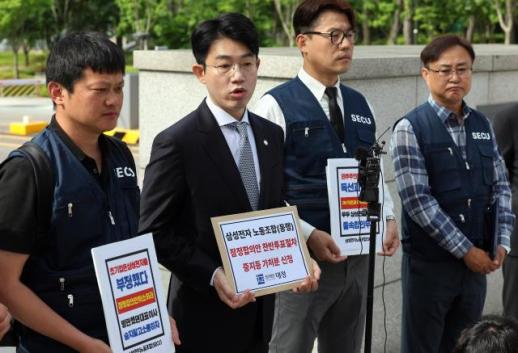 Samsung Electronics' DX union files injunction to halt wage deal vote amid internal rift SEOUL, May 26 (AJP) - A labor union representing Samsung Electronics' Device eXperience (DX) division filed a court injunction on Tuesday to halt an ongoing vote on a tentative wage agreement, highlighting a deepening internal conflict among the tech giant's labor groups. The "Donghaeng" union submitted the request to the Suwon District Court, accusing the larger "Enterprise Union" of unlawfully stripping its members of their voting rights. During a press conference ahead of the filing, Donghaeng representatives stated that the larger union abruptly revoked their voting rights on the evening of May 21, shortly after repeatedly asking them to participate in the vote. The minority union argued that excluding a participating member of the joint bargaining group is legally impermissible. Donghaeng claims the exclusion stems from the larger union's concerns over the DX division's growing influence. Membership in the Donghaeng union has recently surged from approximately 2,600 to over 13,000. The likelihood of the court intervening in time appears low, as the voting period is set to close on Wednesday. A court hearing would need to take place on Tuesday, a timeline legal observers note is practically difficult. However, Donghaeng representatives expressed hope that the court might expedite the process given the urgency of the matter. If the voting concludes before a court ruling is issued, the Donghaeng union plans to file a separate injunction to suspend the validity of the finalized agreement. The legal action underscores a growing "union-versus-union" dispute within Samsung Electronics, as non-memory and DX employees actively campaign to reject the tentative wage deal. 2026-05-26 14:00:20
 -
 Yeon Sang-ho's new zombie film draws 2 million moviegoers in less than a week since release SEOUL, May 26 (AJP) - Director Yeon Sang-ho's latest film "'Gunch'e," also known as "Colony," has drawn over 2 million moviegoers less than a week since its release last Thursday. According to the Korean Film Council, the zombie film surpassed 2 million in cumulative theater attendance as of Monday, reaching the milestone faster than any other film released this year and outpacing previous box-office hits such as "The King's Warden" and "Salmokji: Whispering Water" in opening weekend performance. Even before its release here, the film had already attracted considerable attention after being invited to this year's Cannes Film Festival, which wrapped up last week. The 122-minute film, starring Jun Ji-hyun, Koo Kyo-wan and Ji Chang-wook, revolves around survivors trapped inside a building sealed off after an unidentified outbreak as they confront infected people evolving in unpredictable ways. It is Yeon Sang-ho's latest work in the zombie genre, following "Train to Busan" (2016) and "Peninsula" (2020). 2026-05-26 13:48:54
 -
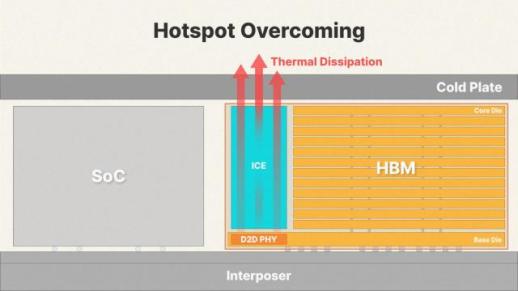 SK hynix unveils 'iHBM' cooling tech to tackle AI chip heat SEOUL, May 26 (AJP) - South Korean chipmaker SK hynix Inc. on Tuesday unveiled its "iHBM" (Integrated High Bandwidth Memory) technology, a memory solution incorporating Integrated Cooling Elements (ICE) directly into the High Bandwidth Memory (HBM) package to dramatically reduce heat and enhance the efficiency of overall AI systems.1 The company plans to apply the iHBM technology starting with its next-generation products, such as HBM5, to meet the stringent thermal management requirements of ultra-high integration and ultra-high bandwidth environments like High-Performance Computing (HPC) and AI data centers. SK hynix developed iHBM to address rising heat issues as HBM performance advances through increased stacking and faster speeds to handle soaring AI processing demands. The technology structurally resolves this issue by placing a thermal control element (ICE) in the Die-to-Die Physical Layer (D2D PHY) area—where heat is most concentrated—creating a separate, dedicated "Heat Path". This method, which contrasts with the traditional indirect approach of relying on the Core Die to expel heat, reduces thermal resistance by over 30 percent, ensuring stable operating characteristics even in high-temperature and high-load environments. ICE uses a silicon material with high thermal conductivity but no electrical conductivity to form the additional heat dissipation route inside the HBM package. "iHBM is the optimal solution for minimizing heat generation, developed by combining memory design capability and advanced packaging technology," said Lee Kang-wook, Vice President of Package Development at SK hynix. He added that the company will "further solidify its AI memory leadership by preemptively providing the value customers need in the AI environment". The solution also boasts strong advantages in manufacturability, utilizing the market-proven Advanced MR-MUF (Mass Reflow Molded Underfill) based WLP (Wafer Level Packaging) process for stable mass production. Furthermore, its high design compatibility with customers' existing SiP (System in Package) environments allows for immediate application without major design changes, substantially lowering the adoption burden for customers. 2026-05-26 13:42:49