
Journalist

Avidan Kent
-
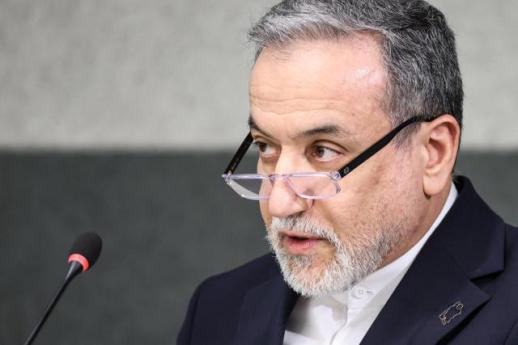 Iran floats phased ceasefire plan via mediators as Trump urges direct talks With U.S.-Iran talks on ending the war stalled, Iran has put forward both a phased framework and a separate compromise proposal through mediators in an effort to break the impasse. But sharp differences over the nuclear issue — and reported divisions inside Iran — have left the prospects for renewed negotiations uncertain. Lebanon-based pro-Hezbollah outlet Al Mayadeen reported that Iran delivered a three-step proposal to mediating countries on April 26 (local time), calling first for a guaranteed ceasefire, then maritime cooperation in the Strait of Hormuz, and only afterward talks on Iran’s nuclear program. The report said Iran indicated it could return to negotiations if the United States accepted the framework. The plan separates issues by stage. In the first phase, Iran would discuss only a halt to U.S. and Israeli military action and demands guarantees against renewed attacks on Iran and Lebanon. If that is agreed, the second phase would address management of the Strait of Hormuz, including plans to work with Oman on a new legal framework. The third phase would take up the nuclear program, but only after agreements in the earlier phases, the report said. Separately, Iran has also floated a compromise, Axios reported, citing a U.S. administration official and two sources familiar with the matter. Iran proposed, through mediators including Pakistan, opening the Strait of Hormuz and declaring an end to the war first, then continuing nuclear talks later, Axios said. The idea is to resolve Iran’s control of the strait and the U.S. maritime blockade up front, seek a long-term ceasefire or end-of-war agreement, and then move to nuclear negotiations. Axios said the approach could create negotiating space while sidestepping domestic pushback in Iran over putting the nuclear issue on the table. Iranian leaders are divided between hard-liners and moderates on how to proceed, and hard-liners are strongly opposed to making the nuclear program a negotiating agenda item, the report said. A source said Iranian Foreign Minister Abbas Araghchi told mediators there is no agreement within Iran’s leadership on how to handle U.S. demands related to uranium enrichment. It remains unclear whether Washington would accept Iran’s proposals. The maritime blockade is seen as a key tool to pressure Iran in any future nuclear talks, and lifting it early could reduce U.S. leverage. The United States is currently demanding at least a 10-year halt to uranium enrichment and the removal of existing enriched uranium from Iran, the report said. As pressure continues, President Donald Trump said he wants direct talks with Iran. In a phone interview with Fox News, Trump said he would not have U.S. negotiators travel for 18 hours and that he would handle it by phone. “So if they want, they can call us,” he said. Trump added that Iran knows what must be in an agreement and insisted it cannot have nuclear weapons. “Otherwise, there’s no reason to meet,” he said. Araghchi returned to Islamabad on April 27 and met with Pakistan’s army chief, Asim Munir, among others. Iran’s semi-official Tasnim news agency said the visit aimed to convey Iran’s demands for ending the war through mediator Pakistan. Araghchi was reported to have presented key issues including a new legal framework for the Strait of Hormuz, compensation for war damage, guarantees against renewed attacks, and lifting the maritime blockade on Iran. An Iranian official said the ongoing discussions focus on conditions to end the recent military conflict and are “not related at all” to the nuclear issue raised by some. Araghchi also arrived in Russia and plans to meet President Vladimir Putin as part of Iran’s diplomatic efforts related to the war. Trump, meanwhile, is expected to hold a Situation Room meeting at the White House on April 27 with national security and foreign policy advisers to discuss the stalled talks and next steps, U.S. administration officials told Axios. 2026-04-27 14:16:00
 -
 POSCO Steelion Hits Daily Limit After Stock Split, Australia Data Center Supply News POSCO Steelion shares surged to the daily limit as buying picked up after its stock split and investors reacted to expectations tied to supplies for an Australian data center project. As of 2 p.m. on the 27th, POSCO Steelion was trading at 7,030 won, up 1,620 won, or 29.94%, from the previous session, according to the Korea Exchange. The stock rose to the exchange’s price limit during the session, setting a new 52-week high. The stock has extended gains for three straight sessions since trading resumed after the split, rising 6.04% on the 23rd and 6.29% on the 24th. At its regular shareholders meeting on March 26, the company approved a 10-for-1 stock split. The par value per share was reduced to 500 won from 5,000 won, and the number of common shares outstanding increased to 60 million from 6 million. A stock split does not change a company’s value, but a lower per-share price can sometimes draw additional demand. Investor sentiment also appeared to be supported by news on the 24th that POSCO Steelion’s hot-dip aluminum-coated steel sheet, branded “ALCOSTA,” was selected as a key material for an Australian hyperscale data center construction project being pursued by a global information technology company. Some market participants speculated the project involves Nvidia, but that has not been confirmed. The company said it does not disclose details such as the counterparty, volume or contract value, depending on consultations with customers. * This article has been translated by AI. 2026-04-27 14:15:17
 -
 POSCO launches foundation to support families affected by industrial accidents POSCO Group said on the 27th it has launched a foundation, POSCO Hope Link, to help workers injured in industrial accidents and their families return to society more quickly. The name reflects the foundation’s goal of reconnecting people facing hardship after workplace accidents with hope for reintegration. POSCO Group plans to contribute a total of 25 billion won over the next five years to secure a stable operating base for the foundation. The foundation’s board was formed with experts in labor, medicine, law and welfare, recommended by figures from a range of outside sectors. At the inaugural general meeting, Chang In-hwa, POSCO Group chairman and the foundation’s first chair, said companies should show genuine commitment and a strong sense of social responsibility to help workers and families left in blind spots of industrial accident compensation. He said POSCO will do its best to establish the effort as “a new model social safety net.” The foundation will focus on three areas: emergency living expenses to stabilize households immediately after an accident; caregiving support to improve treatment conditions for injured workers; and “Youth Hope Self-Reliance Support” to help children continue their education. It will prioritize injured workers and families at small workplaces with fewer than 50 employees in the higher-risk construction and manufacturing sectors, and plans to work with related organizations including the Korea Workers’ Compensation and Welfare Service and the Korea Student Aid Foundation. A POSCO Group official said the company will expand fast, practical support from the perspective of victims and their families who fall outside compensation coverage, while also promoting an industrial safety culture in which workers take the lead in preventing accidents, and will work to help build “a safer South Korea.”* This article has been translated by AI. 2026-04-27 14:09:16
 -
 Hyundai Department Store Shares Jump on Profit Improvement Expectations Hyundai Department Store shares surged more than 15% intraday Monday as buying picked up on expectations of improved earnings. According to the Korea Exchange, the stock was trading at 113,500 won as of 1:53 p.m., up 15,000 won, or 15.23%, from the previous session. It rose more than 20% at one point to an intraday high of 120,100 won. The rally was widely seen as reflecting forecasts for stronger results in the company’s core department store business. Brokerages have also maintained a positive view. In a report dated April 22, Kyobo Securities said Hyundai Department Store is believed to have the largest number of Seoul stores among the three major department store operators with annual sales exceeding 1 trillion won. It added that in Gyeonggi Province, the Pangyo store is ranked No. 1 with sales that “overwhelmingly” outpace other locations. “While the weakness at Zinus is disappointing, we believe margin improvement in the core department store business is progressing significantly,” Kyobo said, maintaining its “buy” rating and 130,000-won target price. Kyobo also said it expects additional profitability gains this year as depreciation periods end at stores including The Hyundai Seoul, adding that earnings momentum remains intact on efficient cost execution and growth across all department store categories. It said there is also room for further improvement if Zinus recovers.* This article has been translated by AI. 2026-04-27 14:03:53
 -
 Naver CEO Choi Soo-yeon calls AI a social infrastructure at SusHi Tech Tokyo 2026 Naver CEO Choi Soo-yeon, speaking at the global tech conference SusHi Tech Tokyo 2026 in Tokyo, said artificial intelligence is evolving into “social infrastructure” and outlined the company’s vision for future cities. Naver said Monday that Choi joined Naver Labs CEO Seok Sang-ok and Naver Cloud Director Kim Ju-hee in a main-session discussion titled “From AI to Society: Designing AI as Social Infrastructure.” The speakers said AI is moving beyond a standalone technology to become essential infrastructure that supports daily life, and they described what they see as Naver’s role as a platform company. Choi said Naver operates large-scale services such as search and shopping while also running its own AI models and cloud infrastructure, and that those capabilities come with social responsibility. She said Naver will strengthen services and contribute to social development through “sovereign AI” that deeply understands users in each country and respects local cultures and value systems. Naver also highlighted use cases for its AI-based welfare check service, CareCall, and its collaboration platform, Line Works. CareCall, built on HyperCLOVA X, is being used in places including Izumo, Japan, to check on older residents and as part of disaster-response infrastructure, the company said. Line Works is supporting digital transformation for small business owners and frontline workers through features including AI-powered optical character recognition, it said. Kim said Line Works is lowering barriers for frontline workers through its “Roger” function, which replaces walkie-talkies, and document digitization technology. She said such connectivity is central to intelligent infrastructure that improves efficiency across society. Naver Labs presented its approach to building future cities based on digital twin and robotics technologies. Seok cited examples in Saudi Arabia and in Nagaishi, Japan, saying digital twins are taking hold as next-generation urban infrastructure. He also said robot-friendly technologies validated at Naver’s second headquarters, “1784,” are being expanded into real urban environments through global partners including NTT East and Saudi Arabia’s NHC. Choi reiterated that AI has become social infrastructure and said Naver aims to balance technological scalability with social responsibility in ways that benefit users, small business owners and countries. SusHi Tech Tokyo 2026 is a global technology conference hosted by the Tokyo Metropolitan Government, bringing together companies and institutions to discuss sustainable cities and future technologies. The event runs from April 27 to 29 at Tokyo Big Sight, and organizers expect about 60,000 visitors. 2026-04-27 14:03:16
 -
 SKC posts 28.7 billion won Q1 operating loss, narrows deficit 73% from a year earlier SKC remained in the red in the first quarter of 2026, but improved results across its battery, semiconductor and chemical materials businesses helped it return to positive EBITDA, a measure of cash-generating ability. In a regulatory filing on Sunday, SKC said it posted consolidated revenue of 496.6 billion won and an operating loss of 28.7 billion won for the quarter. The operating loss narrowed 73.3% from the previous quarter’s 107.6 billion won. EBITDA came to 10.0 billion won, marking its first quarterly EBITDA profit in 10 quarters. By business, the secondary battery materials unit reported revenue of 156.9 billion won, showing sharp growth from both the prior quarter and a year earlier. North American copper foil sales volume rose 95% from the previous quarter, while sales volume for energy storage systems, or ESS, jumped 132%, the company said. Productivity improved at its Malaysia plant, and the Malaysian unit posted positive quarterly EBITDA, signaling a broader recovery in profitability. The semiconductor materials business posted revenue of 68.3 billion won and operating profit of 23.6 billion won. SKC said a profitability-focused restructuring accelerated, lifting the operating margin to 34.5% and setting a quarterly record for operating profit. The company cited stronger demand tied to AI data centers and higher sales of memory-related products, along with a larger share of high value-added items. The chemical business recorded revenue of 270.8 billion won and operating profit of 9.6 billion won, returning to profit from the previous quarter. SKC attributed the improvement to supply-demand instability linked to geopolitical issues in the Middle East and to expanded sales of high value-added propylene glycol, or PG. In its glass substrate business, SKC said it is building out its production base step by step by improving product design completeness and upgrading manufacturing data management and operating systems. In the second quarter, it plans to produce samples for reliability testing and review new projects under discussion with multiple customers. SKC said it expects profitability improvements to accelerate in the second quarter. In battery materials, it sees revenue growth from expanded ESS sales and from major customers’ new lines moving into full operation. The company also said its Malaysia plant is entering a full-capacity operating system, targeting a production and sales share of more than 70%. In semiconductor materials, it plans investment to expand its first plant in Vietnam and build a second plant there. SKC said it is also moving ahead smoothly with a rights offering aimed at speeding up its glass substrate business and improving its financial structure. In a recent demand survey for an employee stock ownership subscription, demand reached 132% of the allocated amount, it said. “Achieving positive EBITDA in the first quarter confirms the recovery of the core competitiveness of our main businesses,” an SKC official said. The official said the company expects gradual performance improvement under a management focus on cash generation and profitability, and will complete the ongoing rights offering successfully.* This article has been translated by AI. 2026-04-27 13:58:16
 -
 KOSME, KT&G Sign Deal to Support Youth Startups and Boost Local Economies The Korea SMEs and Startups Agency and KT&G signed a business agreement on April 24 at KT&G Sangsang Planet in Seoul's Seongdong district to expand social contributions and promote shared growth with local communities. KOSME said on April 27 the two organizations agreed to cooperate in several areas, including promoting local spending and revitalizing regional economies, carrying out community-focused social contribution programs, fostering youth-led startups, and strengthening young people's capabilities through cultural events and education. The partners plan to link KOSME's Youth Startup Academy with KT&G's Sangsang Startup Camp to build a support base for young entrepreneurs from the preparation stage through commercialization. They also will jointly run market-access events, including flea markets, to help energize local communities. As part of the agreement, KOSME held a youth-focused talk concert titled "Youth, Play" on April 26 at KT&G Sangsang Planet. The event was designed to ease young people's uncertainty about career paths and the burden of starting a business, while sharing examples of career changes and encouraging new challenges. KOSME Chairman Kang Seok-jin said the agency will broaden opportunities for young people through cooperation with the private sector and will continue to support shared growth with local communities and the development of youth entrepreneurship.* This article has been translated by AI. 2026-04-27 13:45:15
 -
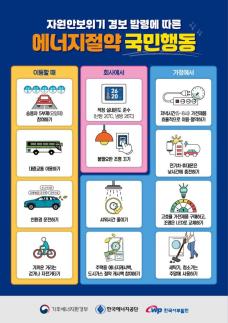 Korea Western Power Expands Campaign to Cut Evening Peak Electricity Use Korea Western Power Co. has launched an energy-saving campaign aimed at reducing electricity use during the evening hours when demand peaks, citing the need to respond to an energy security crisis linked to the Middle East. The company said on the 27th that it will continue the campaign for employees and local residents and operate a companywide task force dedicated to cutting energy use until the resource security crisis ends. The campaign is part of the Ministry of Climate, Energy and Environment and related agencies’ “Today’s Energy Saving National Action Relay” promotion. According to the Korea Energy Agency, from 5 p.m. to 8 p.m., when power demand is concentrated, higher-cost liquefied natural gas generation runs at maximum output. Simply avoiding electricity use during those hours can support the government’s energy-saving policy, the agency said. Korea Western Power is advising households to charge electric vehicles and smartphones, when possible, during daytime hours when solar power is produced, and to avoid using relatively high-consumption appliances such as electric kettles and irons between 5 p.m. and 8 p.m. The company said it has distributed promotional materials with everyday energy-saving tips around its headquarters and worksites nationwide. It also delivered reusable aprons to restaurants and other local businesses as part of efforts to encourage environmentally friendly consumption. Internally, the company has implemented stricter measures. Since March 23, it has used only half of its building lighting, turned off power-hungry electronic signboards, and tightly controlled heating and cooling settings. It is also reducing business trips, encouraging video meetings, restricting elevator use, and strengthening enforcement of an every-other-day private vehicle policy, it said. Chief Executive Officer Lee Jeong-bok said “the starting point for overcoming the energy security crisis is small actions in daily life,” adding that the company will carry out strong conservation steps and pursue a campaign that works more closely with local communities.* This article has been translated by AI. 2026-04-27 13:39:16
 -
 LG Innotek Posts Record First-Quarter Revenue of 5.53 Trillion Won LG Innotek said Monday its first-quarter operating profit was provisionally tallied at 295.3 billion won, up 136% from a year earlier. Revenue rose 11.1% to 5.5348 trillion won, the company’s highest first-quarter figure on record. The company said demand for mobile camera modules remained solid despite the seasonal off-peak period, while shipments of high value-added semiconductor substrates such as FC-BGA continued to be strong. It added that mobility components, including automotive camera and lighting modules, also posted steady growth and helped lift sales. By business line, the optical solutions unit posted revenue of 4.6106 trillion won, up 11.4% from a year earlier and a first-quarter record, as demand for mobile camera modules increased and automotive camera sales improved quickly. The package solutions unit recorded 437.1 billion won in revenue, up 16%. The company cited strong supply of high value-added communications substrates such as RF-SiP and continued expansion of FC-CSP supply into new applications, including high-performance memory. The mobility solutions unit posted revenue of 487.1 billion won, up 4.2%. The division had an order backlog of 19.2 trillion won as of the end of last year and plans to actively expand new orders this year, led by autonomous driving solutions. LG Innotek said it plans to strengthen its portfolio of high-profit businesses, focusing on expanding the package solutions business, which it described as having strong profitability and growth potential. The company said it aims to raise the package solutions unit’s contribution to operating profit to the level of the optical solutions business within five years. CEO Moon Hyuk-soo said in March that the mobility solutions business would continue to grow as revenue from automotive AP modules begins to materialize in earnest from the fourth quarter. * This article has been translated by AI. 2026-04-27 13:30:15
 -
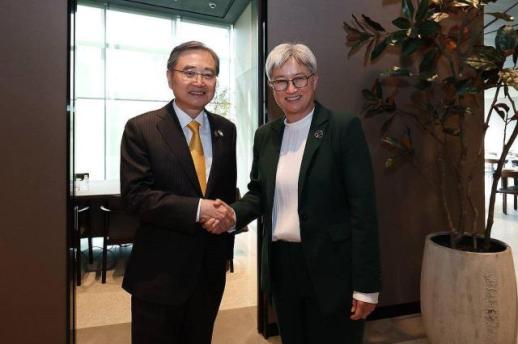 S. Korea pursues Australian energy lifeline as Middle East conflict chokes supply lanes SEOUL, April 27 (AJP) - In a bid to exit the current energy bottleneck caused by the war in the Middle East and diversify the country's energy sources, South Korea's foreign minister Cho Hyun will host his Australian counterpart, Penny Wong, in Seoul this Thursday. The April 30 summit comes as Seoul grapples with the fallout of the war in Iran and the subsequent closure of the Strait of Hormuz, a blockade that has effectively stranded the fossil fuels required to power the world's tenth-largest economy. According to February's trade data, Australia has already solidified its position as South Korea's top supplier of liquefied natural gas, providing 1,085,668 tons, representing 24.1 percent of the nation's total imports, even before the traditional supply lines from the Persian Gulf were paralyzed on February 28. The upcoming talks represent the structural component of a "Total Energy Diplomacy" offensive by the Lee Jae Myung administration to protect an economy that remains 100 percent dependent on foreign fossil fuels. By elevating Australia from a commercial provider to a primary security guarantor, Seoul is attempting to permanently decouple its industrial survival from the volatility of the Middle East. This strategic shift marks a transition from simple market diversification to the construction of a blockade-proof energy corridor within the democratic Pacific. This diplomatic push is coordinated with an emergency procurement drive led by the Presidential Chief of Staff Kang Hoon-sik. While Cho builds a long-term Pacific safety net, Kang Hoon-sik recently concluded a series of missions to the United Arab Emirates, Saudi Arabia, Kazakhstan, and Oman to secure immediate industrial lifelines. Kang's "shuttle diplomacy" focused on the urgent acquisition of crude and naphtha, successfully negotiating a priority supply of 24 million barrels from the Emirates to address critical shortages. The April 30 meeting is intended to complement these emergency measures by securing the long-term reliability of the Australian supply chain. The trade partnership between the two nations has evolved from a historical exchange of Australian iron ore and coal for South Korean heavy industry into a broader strategic alliance. As the "Hormuz Trap" threatens the national power grid, Australian gas has increasingly displaced volumes from more volatile regions, with the two nations now exploring expanded cooperation in critical minerals such as lithium and nickel. These resources are viewed as essential for the next generation of industrial growth as the government seeks to mitigate future shocks to the fossil fuel supply chain. The Ministry of Foreign Affairs confirmed on Monday that the two ministers will discuss high-level exchanges, economic security, and defense industrial cooperation. The session is expected to conclude with a joint press conference following a working dinner. 2026-04-27 13:28:12