

Journalist

CGTN
-
 NPS can stall — but hardly a joker card in Korea's FX defense SEOUL, November 26 (AJP) - Hedging maneuvers and central bank lifelines — South Korea's National Pension Service has several cards it can play to help authorities fend off pressure on the Korean won, but any relief is likely to be temporary, as the fund's core mission is safeguarding old-age coffers, not defending the currency. The NPS has been asked to join fiscal and monetary authorities in a joint response council as the won drifts toward the once-unthinkable 1,500 threshold. The world's third-largest pension fund, managing 1,322 trillion won in assets as of August, has become a critical presence in the FX market not by policy choice but because of the sheer scale of its overseas holdings. Overseas equities alone amount to 486 trillion won — already exceeding its medium-term target — compared with 196 trillion won in domestic stocks. The fund has been especially aggressive in U.S. big tech. SEC filings show the NPS held $128.8 billion worth of U.S. equities through September, booking around 33.5 trillion won in paper gains this year. It owns about 0.2 percent of Nvidia and sizable stakes in Apple, Microsoft and Broadcom, positions that have delivered hefty returns and elevated the fund's global influence. But that global tilt is a double-edged sword. To sustain its offshore investments, the NPS buys an estimated $2 billion to $3 billion in the domestic market every month, making it one of Korea's largest structural buyers of dollars and a steady source of downward pressure on the won. The currency traded at 1,465.8 won per dollar on Wednesday afternoon — slightly firmer than the Nov. 21 peak of 1,475.2 won after strong verbal intervention — but still nearly 100 won weaker over four months despite a current account surplus nearing $83 billion through September. The won has approached levels previously seen only during extreme stress, including the 2009 global financial crisis and this April's political turbulence. Stock Market Dilemma for FX This year's roaring domestic stock rally adds to the FX pressure. Korean shares returned an average 36.4 percent in the first eight months of the year, far outpacing foreign equities at 8.6 percent and positioning the NPS to rebalance by locking in domestic gains and reallocating abroad. Pension funds sold roughly 800 billion won in local stocks from September to early November as the KOSPI hit a record 4,221.87. A three-percentage-point reduction in domestic equity allocation alone would require shifting about 48 trillion won — or $32.7 billion — reinforcing the fund's role as a structural dollar demander. In the near term, the NPS still has cards it can play. The simplest is adjusting the timing of its dollar purchases. While its long-term strategy requires continued expansion overseas, it faces no obligation on when it converts won into dollars. Delaying purchases by several weeks or accelerating the repatriation of overseas returns can temporarily ease FX pressure without altering its portfolio strategy. A second lever is recalibrating hedging ratios. Under internal rules, the fund can hedge up to 10 percent of its overseas assets when the won trades significantly above its long-term average — a mechanism known as strategic currency hedging. Analysts expect the fund to return to that stance as the 1,480-won level emerges as a short-term ceiling. When the NPS adopted this posture in January, the won strengthened by 20 to 30 won within days, easing into the mid-1,300s by May. The fund can also tighten cash-flow management, temporarily holding more contributions in won or delaying scheduled FX transactions. But the most powerful institutional lever remains the currency swap line with the Bank of Korea, which allows the NPS to borrow dollars directly from foreign reserves rather than sourcing them in the spot market. The ceiling stands at $65 billion, up from $50 billion, and could be expanded or extended. Borrowed dollars must eventually be repaid, but the mechanism smooths sudden spikes in demand and reduces market volatility. Analysts note that both the swap arrangement and strategic hedging have proven to be the most effective tools in past episodes. Still, the NPS cannot be treated as Korea's joker card. The fund's mandate is to maximize long-term returns for an aging society, not to steer currency markets. "The NPS is certainly a major player in the FX market, but it operates under fundamental principles," said Park Sang-hyun of iM Securities. "Mobilizing pension funds for currency defense at the expense of those principles is a different matter entirely." Reducing its overseas investment ratio, while technically possible, contradicts its core mandate and requires multiple layers of approval — making it infeasible as a short-term defense instrument. "For short-term exchange rate adjustments, currency hedging is realistically the optimal approach," Park added. 2025-11-26 16:02:42
 -
 S-Oil foundation honors young scientists with 368 million won in research grants SEOUL, November 26 (AJP) - S-Oil Science Prodigy and Culture Foundation on Wednesday presented awards to promising researchers in basic sciences, distributing a total of 368 million won (about $250,000) in research funding at its Seoul headquarters. The foundation, chaired by Hong Suk-woo, held the 15th Dissertation of the Year Awards and the 7th Next-generation Scientist Fellowship Awards ceremony at the company's Gongdeok-dong office. The Korean Academy of Science and Technology and the Korea University President Association co-hosted the event. Twelve young scientists and their academic advisors received 168 million won for exceptional doctoral dissertations across six fields including mathematics, physics, chemistry, life sciences, chemical and materials engineering, and information technology. Five researchers were also granted 200 million won under the Next-Generation Scientist Award for work in physics, chemistry, physiology and medicine, chemical and materials engineering, and IT. "Korea's scientific future is bright, with researchers gaining global recognition for outstanding papers in basic sciences," S-Oil CEO Anwar A. Al-Hejazi said. "S-Oil will continue supporting Korean scientists so they can focus on their research with stability." The company established the independent foundation in 2011 to bolster basic science research in South Korea. Beyond its annual awards, the foundation operates various programs including international academic forums to nurture scientific talent. 2025-11-26 15:54:56
 -
 Agriculture Minister calls for strict measures after avian influenza cases detected SEOUL, November 26 (AJP) - Agriculture Minister Song Mi-ryeong on Wednesday stressed the increased risk of avian influenza, urging enhanced safety measures such as restricting access to migratory bird habitats and thorough disinfection. Song's remarks came after a series of highly pathogenic avian influenza outbreaks were reported at farms in Hwaseong and Pyeongtaek, both located in Gyeonggi Province. During a visit to an egg storage facility in neighboring South Chungcheong Province to inspect containment efforts, Song emphasized strict prevention measures including changing shoes before entering farms and banning egg transport vehicles from farm premises, citing the province's vulnerability during previous outbreaks due to its high concentration of farms. Song also urged swift action including restricted access and culling, after the first African swine fever case was detected at a pig farm in the province the previous day. She called for all available resources to be mobilized to prevent further spread. * This article, published by Aju Business Daily, was translated by AI and edited by AJP. 2025-11-26 15:39:22
 -
 North Korea could expand nuclear stockpile to over 400 warheads by 2040, expert warns SEOUL, November 26 (AJP) - North Korea is estimated to currently possess up to 150 nuclear warheads, with the potential to expand to over 400 by 2040 if its production capabilities increase, an expert said at a forum in Seoul on Wednesday. Lee Sang-kyu, a senior researcher at the Korea Institute for Defense Analyses (KIDA), pointed out that the ongoing expansion of nuclear plants and other facilities under the oversight of North Korean leader Kim Jong-un will significantly accelerate the country’s nuclear arsenal. His speculation came after the International Atomic Energy Agency (IAEA) earlier revealed its findings on new uranium enrichment facilities in Yongbyon, North Pyongan Province, suggesting increased enrichment activities there. According to his analysis, North Korea appears to have around 150 warheads, including 115 to 131 uranium-based and 15 to 19 plutonium-based ones. These figures are significantly higher than previous estimates by major international research institutions, which suggested around 50 warheads. Kim projected that the number could grow to 243 warheads by 2030 and 429 by 2040. When asked about North Korea's nuclear-powered submarines, he said their combat readiness and key equipment are not yet fully developed, requiring significant time to complete, though potential technical support from Russia cannot be ruled out. * This article, published by Economic Daily, was translated by AI and edited by AJP. 2025-11-26 15:10:25
 -
 Naver expands healthcare portfolio with acquisition of cloud EMR firm Cenacle SEOUL, November 26 (AJP) - Naver has acquired a controlling stake in cloud-based electronic medical records (EMR) company Cenacle as it accelerates its expansion into the digital healthcare sector. The acquisition price was not disclosed, and Naver said it ultimately aims for full ownership. Cenacle operates the cloud EMR platform “Orem Chart” and the patient health-management app “Clea,” serving clinics across internal medicine, pediatrics and other specialties. In September, TIME and Statista named Cenacle one of the “World’s Best Health Tech Companies 2025.” The deal marks Naver's latest move in the healthcare space. This year, the company has invested in domestic clinical trial platform JNP Medi and InBody, a global leader in body-composition analysis, as part of efforts to strengthen its healthcare platform. Naver said discussions with InBody are continuing on senior-care initiatives and data-driven personalized health services. “With Cenacle’s technical capability and scalable platform, we will drive innovation in core EMR infrastructure for medical institutions,” said Choi In-hyuk, CEO of Naver Tech Business. * This article, published by Aju Business Daily, was translated by AI and edited by AJP. 2025-11-26 14:53:45
 -
 South Korea avoids tougher contenders ahead of World Cup draw in Washington SEOUL, November 26 (AJP) - South Korea, led by coach Hong Myung-bo, has avoided strong contenders like Croatia and Uruguay in the upcoming group draw for the 2026 FIFA World Cup, which will be take place in Washington, D.C. next week. The quadrennial global extravaganza, which will be the first to feature 48 teams and three host countries -Canada, Mexico, and the United States - will be held next summer. According to the football governing body, 42 teams have been assigned to four different groups for the draw based on November's world rankings, with the remaining six to be determined after the European and intercontinental playoffs. South Korea, ranked 22nd, has been grouped with Austria, Australia, Croatia, Colombia, Ecuador, Japan, Iran, Morocco, Senegal, Switzerland, and Uruguay. This gives the country some relief as teams from the same group or the same continent, with the exception of Europe, cannot be drawn together for the group-stage matches. The top-tier group features the three host countries, along with nine football powerhouses such as Argentina, Belgium, Brazil, England, France, Germany, Spain, Portugal, and the Netherlands. The draw will take place at the John F. Kennedy Center in the U.S. capital on Dec. 5. 2025-11-26 14:34:04
 -
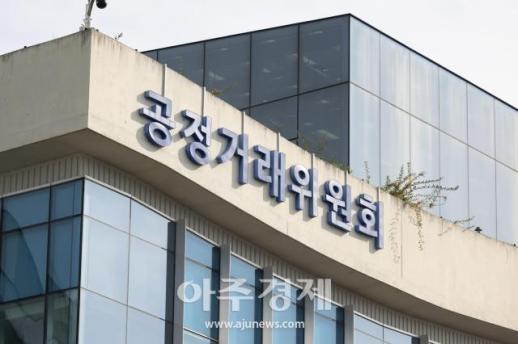 South Korean petrochemical firms seek approval for major restructuring deal SEOUL, November 26 (AJP) - Lotte Chemical and HD Hyundai Chemical have submitted a preliminary review request for their planned merger of petrochemical facilities, South Korea’s Fair Trade Commission (FTC) said on Wednesday. This marks the first restructuring case to move forward under a government-led initiative to revive the struggling petrochemical sector. Both companies operate naphtha cracking facilities within the Daesan petrochemical complex in South Chungcheong Province. The FTC’s preliminary review is intended to assess whether the deal could substantially restrict competition before the companies proceed with a formal merger filing. Under the restructuring plan, Lotte Chemical will spin off its Daesan plant and merge the unit with HD Hyundai Chemical, after which Lotte Chemical will acquire additional shares in the combined company. Lotte Chemical and HD Hyundai Oilbank — the parent company of HD Hyundai Chemical — will ultimately each hold a 50 percent stake in the merged entity. The move comes as South Korea’s petrochemical industry faces its most severe downturn in years, driven by global overcapacity, weak demand, and intensifying competition from China and the Middle East. Margins for key products such as ethylene and polyethylene have fallen sharply, and domestic firms have been under pressure to consolidate production, close inefficient facilities and scale up investments in higher-value materials. * This article, published by Aju Business Daily, was translated by AI and edited by AJP. 2025-11-26 14:24:12
 -
 Seoul wields strongest-yet rhetoric to reverse KRW slide toward historic lows SEOUL, November 26 (AJP) - South Korea must establish a new management framework for the National Pension Service (NPS) — the world’s third-largest pension fund and a market force amplified by an aging population already accounting for 20 percent of the nation — as its outsized footprint increasingly shapes both the capital market and the Korean won’s plunge to record-weak levels, the country’s top financial chief warned Wednesday. In a rare press briefing devoted largely to the foreign-exchange issue, Finance and Economy Minister Koo Yun-cheol described the NPS as the “single largest player” in Korea’s FX market. As of August, the NPS managed 1,322 trillion won in assets, roughly half of Korea’s 2024 real GDP of 2,292.2 trillion won. Its overseas holdings — 486.4 trillion won in equities and 94.3 trillion won in bonds — roughly on par with the Bank of Korea’s foreign-exchange reserves of $428.8 billion at end-September at current exchange rate. SEC filings show the fund holding $128.8 billion in U.S. equities alone. The government has held a flurry of meetings with the NPS and major brokerages this week as the dollar moved toward the unfamiliar four-digit zone of 1,500 won. Bank of Korea data show this year’s volume-weighted average dollar-won rate reaching 1,417 won as of Tuesday — surpassing the previous record of 1,398.88 won set in 1998 when the country was under international bailout. The annual average was 1,276.4 won in 2009 after the global financial crisis. The won has grown structurally weak against the greenback since the 2021–2022 pandemic years, driven by a surge in retail day-trading and overseas stock purchases — a shift amplified this year by the AI-fueled rally in U.S. tech equities. “The dollar can become structurally short in our market,” Koo said, noting NPS reserves are projected to nearly triple to 3,600 trillion won by 2071, with overseas investment rising in parallel. He warned that overshooting in the dollar-won rate — despite robust underlying fundamentals — could hurt the economy if inflation and diminished purchasing power erode real incomes. Koo stressed the need for a long-term FX-protection roadmap for NPS reserves, warning that severe two-way volatility could erupt if the fund ever had to convert large volumes of dollars into won at once. “We need a fundamental, long-term solution to operate the fund without undermining returns for pensioners,” he said. He emphatically denied speculation that the government may tap the NPS’s dollar holdings to artificially prop up the won, but cautioned against “excessive one-sided” volatility and speculative trading. The government has met with exporters as well as brokerage houses and will “meet with anyone” and “use all possible options” to stabilize the FX market — signaling interventionist intent while avoiding actions that could draw scrutiny from Washington. On hedging, Koo said the decision remains with the NPS, which is permitted to hedge up to 10 percent of overseas assets with investment-committee approval. But he added the finance ministry will raise its voice as a committee member to better balance the fund’s safety and profitability. He added that the government may consider incentives for exporters to convert part of their dollar revenue into won if necessary. Korea is not currently reviewing taxes to curb foreign stock investment, he said, but left the door open, noting policy “can change depending on circumstances.” The market took a wait-and-see attitude to gauge how serious Seoul's resolve can be, with the dollar edging up 0.4 won to 1,466.8 won as of 2:00 p.m. 2025-11-26 14:20:48
 -
 LS Electric secures largest-ever power equipment deal in US SEOUL, November 26 (AJP) - South Korea’s LS Electric said on Wednesday it has secured a $315 million contract to supply high-voltage transformers in North America, the largest deal in the company’s history. The agreement, signed with a major U.S. private utility, covers the delivery of 525-kilovolt transformers to renewable energy facilities across the southeastern U.S. through 2029. The equipment will serve as critical power sources for large data centers in the region, the company said. The contract marks a significant expansion of LS Electric’s product portfolio, extending its transformer offerings from 115kV and 354kV units to the 525kV segment. The company said the deal underscores international confidence in its transmission and distribution technology and is expected to strengthen its position in the fast-growing data center power infrastructure market. LS Electric reported an order backlog of 4.1 trillion won as of the third quarter, including more than 2 trillion won in high-voltage transformer orders. “This contract reaffirms global recognition of our technology and positions us as a long-term, sustainable partner,” LS Electric said in a press release. “We plan to expand our presence in North America’s hyperscale data center, renewable energy and utility sectors to secure leadership in the high-voltage market.” * This article, published by Aju Business Daily, was translated by AI and edited by AJP. 2025-11-26 13:43:15
 -
 Asian stocks reinvigorated by Google's AI fuel SEOUL, November 26 (AJP) - Asian stocks snapped out of their correction phase Wednesday as renewed euphoria over Alphabet’s “Gemini 3.0” reignited AI-driven appetite and lifted sentiment across the region. The benchmark KOSPI gained 1.9 percent to close in on the 4,000 mark in the morning earnings session. Institutions returned in force, with domestic institutions buying 702 billion won and foreign institutions 1.223 trillion won. Confidence also improved after FX authorities took coordinated action to defend the weakening Korean won, with the finance ministry rounding up the National Pension Service and major brokerages. The dollar fell sharply by 5.9 won to 1,460.9 won as a result. Tech shares were mixed. Samsung Electronics rose 1.2 percent to 100,500 won, reclaiming the hard-won 100,000-won threshold on expectations tied to its partnership with Broadcom, a key Alphabet ally in developing Gemini 3.0. SK hynix fell 1.8 percent to 500,900 won on worries that Alphabet’s breakthrough in creating its own inference chips could chip away at Nvidia’s halo—an unease reflected in Nvidia being the only Magnificent 7 stock to decline overnight, losing 2.6 percent. Defense and reconstruction themes were strong following U.S. President Donald Trump’s claim that the end of the Russia–Ukraine war is imminent. Infrastructure and nuclear-related stocks rallied sharply. Hyundai Engineering & Construction jumped 7.7 percent to 65,500 won, and Samsung C&T climbed 4.8 percent to 239,500 won. Doosan Enerbility advanced 6 percent to 78,000 won on renewed expectations for Ukraine’s nuclear-power rebuilding. Defense stocks extended gains. Hanwha Aerospace added 2.4 percent to 880,000 won ahead of the imminent launch of its KSLV-II rocket, known as “Nuri.” Hyundai Rotem rose 1.75 percent on expectations of winning rolling-stock contracts tied to Ukraine’s reconstruction. LIG Nex1 gained 1.17 percent to 389,000 won, and Poongsan rose 2.2 percent to 96,400 won. Japan’s Nikkei 225 traded 1.8 percent higher at 49,549 as of 10:30 a.m., mirroring Seoul’s rebound. But semiconductor stocks were sharply divided. Advantest, a chip-testing equipment maker, rose 1.7 percent to 19,410 yen ($124.5), while Ibiden, a major Nvidia partner, plunged 5.6 percent to 10,700 yen. Taiwan’s TAIEX was up 1.54 percent at 27,327. TSMC rose 1.4 percent to 1,435 Taiwan dollars ($45.7), supported by expectations around producing AI chips for Alphabet and Broadcom, though upside momentum has been capped by reports that Alphabet may source future packaging from Intel. MediaTek surged 9.7 percent to 1,300 Taiwan dollars after Alphabet’s earlier signal that it would entrust the company with next-generation AI chip design. Chinese markets were mixed. The SZSE Component rose 0.69 percent to 12,868 and Hong Kong’s Hang Seng Index climbed 0.76 percent to 26,098, showing a characteristically sharper rebound for tech-heavy markets. The Shanghai Composite was flat at 3,872, up just 0.06 percent. 2025-11-26 11:30:57