
Journalist

Elizabeth Englezos
-
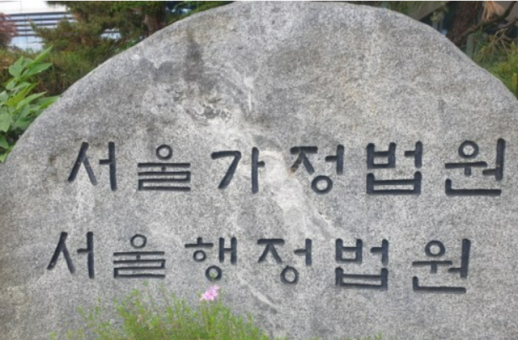 Court Upholds Tax on Ericsson Network Software Sales as Royalty Income A Seoul court has ruled that software for telecommunications network equipment bought from a foreign corporation and sold in South Korea is not a “product” but technical know-how, making it lawful to tax the payments as royalty income. According to the legal community on the 26th, the Seoul Administrative Court’s Administrative Division 6, led by Presiding Judge Na Jin-i, ruled against Ericsson Korea Partners in its lawsuit seeking to overturn a corporate tax assessment imposed by the head of the Yeoksam Tax Office. Ericsson Korea Partners, whose shareholders include Sweden-based telecom equipment maker Ericsson and LG Electronics, has purchased wireless network equipment and related software for 3G, LTE and 5G from Ericsson AB (EAB), an Ericsson Group entity, and sold them to South Korean telecom operators. Based on an audit completed in August 2021, the Seoul Regional Tax Office treated the software sales and distribution payments Ericsson Korea Partners made to EAB from 2016 through that year as “royalty income” and notified the company of tax using the 10% withholding cap. Ericsson Korea Partners sued, arguing the software should be classified as a “product” and the payments to EAB as “business income” for goods purchases. Business income paid to a foreign corporation without a permanent establishment in South Korea is not subject to domestic taxation. The court disagreed, finding the transactions amounted to introducing “know-how or technology,” not importing a general product, and said taxing the payments as royalty income was appropriate. “The software at issue is the result of accumulated technology, experience and information,” the panel said, citing the time and technical capability required to develop and supply telecom equipment, the dominance of the global market by a small number of firms, and the fact that the equipment cannot operate without the software. The court also said the software requires substantial technical expertise and training to use, and that Ericsson Korea Partners is responsible for maintenance, management and error correction, making it difficult to view the software as a widely usable, off-the-shelf product.* This article has been translated by AI. 2026-04-26 15:40:49
 -
 How to File South Korea’s May Comprehensive Income Tax Return, and Who Must File May is South Korea’s annual filing and payment period for comprehensive income tax. Individuals with comprehensive income in 2025 must file and pay from May 1 to June 1, 2026. Comprehensive income tax combines interest, dividends, business income, wages, pensions and other income. Even salaried workers may need to file if they also earned side income such as freelance pay, financial income or rental income. Those who may need to file include workers who received wages from two or more employers last year but did not complete a combined year-end tax settlement, employees who left a job midyear and did not complete year-end settlement, and the self-employed and freelancers with business income. Other income such as one-time lecture fees or manuscript fees must be reported if the annual amount exceeds 3 million won. Financial income can also trigger a filing requirement. If annual financial income, including interest and dividends, exceeds 20 million won, a comprehensive income tax return is required. Private pension income may require a choice between comprehensive taxation and separate taxation depending on whether it exceeds 15 million won a year. In general, people with only wage income who completed year-end settlement through their employer do not have to file. Also excluded are insurance solicitors, door-to-door salespeople and contract delivery sellers whose prior-year revenue was under 75 million won and who have no other income, if their affiliated company completed year-end settlement. Taxpayers with only retirement income and business income subject to year-end settlement, only tax-exempt or separately taxed income, or other income of 3 million won or less who choose separate taxation also are not required to file a final return. Returns can be filed through the National Tax Service’s Hometax website or its mobile app, Sontax. During the May filing period, Hometax provides a dedicated filing screen and, after login, guides users to a tailored process based on their filing type. For taxpayers eligible for the agency’s pre-filled “Modu Chaeum” service, the process is simpler. They can review the pre-calculated tax due or refund based on income data held by the tax agency and submit the return. Eligible taxpayers can also file by phone through an automated response system, and the agency provides instructions for phone filing with its notices. If tax is due after filing, payment can be made through Hometax or Sontax by bank transfer, credit card or simple payment services. Taxpayers can also transfer to a designated virtual account or print a payment slip and pay at a financial institution. Failing to file or pay by the deadline may result in penalties, including for nonfiling and late payment. The National Tax Service said taxpayers must file on time if they have income subject to reporting, even if they did not receive a filing notice. The comprehensive income tax return is used to settle multiple types of income earned in the previous year. Taxpayers with income beyond wages — including midyear job changes, side work, financial income or rental income — should confirm whether they must file during the May period. 2026-04-26 15:36:47
 -
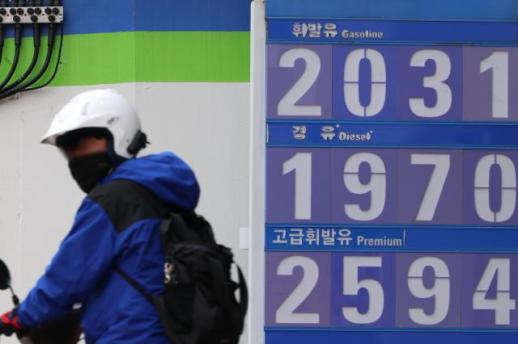 As Up to 6 Trillion Won in Fuel-Price Relief Nears, Financial Firms Keep Marketing Quiet High fuel-price relief payments are set to be distributed soon, but marketing across South Korea’s financial sector is quieter than in past years. Banks and card issuers are posting application instructions, yet few are offering customer promotions, citing concerns that marketing costs would deepen losses under a low-fee structure. Financial firms are using their websites and mobile apps to explain how to apply and outline the schedule ahead of the first round of applications, the industry said April 26. The first round begins with vulnerable groups, and eligibility expands from May 18 to the bottom 70% of income earners. Payments will range from 100,000 won to 600,000 won per person. Recipients can choose to receive the money through local gift certificates, credit or debit cards, or prepaid cards. Applications can be submitted through card company websites and apps, as well as automated phone systems. Spending will be limited to merchants with annual sales of 3 billion won or less, and use at big-box retailers, department stores and online shopping malls will be restricted. The financial industry expects many recipients to choose the card option again. With about 70% of last year’s consumer coupons delivered via credit and debit cards, the volume of card payments this time is estimated to reach as much as 6 trillion won. Even so, beyond basic guidance, customer acquisition events remain scarce. Only a few card issuers, including KB Kookmin Card and Shinhan Card, have launched promotions, while most have limited their efforts to application notices. The same is true for the four major banks—KB Kookmin, Shinhan, Hana and Woori—as well as online banks such as Toss, Kakao and K Bank. That contrasts with last year, when card companies ran a joint campaign and spent about 2.5 billion won on marketing, including distributing consumer coupons to a total of 310,000 people. This time, similar industrywide efforts have largely not materialized. Industry officials point to thin margins. Because spending is concentrated at small merchants, card fees are expected to remain in the 0.4% to 1.45% range. With added server operations and system-building costs, turning a profit is difficult. During the 2020 emergency relief program, card companies posted losses of about 8 billion won, the report said. A card industry official said some sectors, including gas stations, already face low fee rates, and that costs can rise further once card benefits such as discounts and reward points are included. “Relief payments are structurally a business where it is hard to expect profitability,” the official said. * This article has been translated by AI. 2026-04-26 15:34:33
 -
 Suspect in WHCA dinner shooting said he targeted Trump administration officials, CBS reports A suspect in the shooting at the White House Correspondents' Association dinner told investigators he intended to fire at Trump administration officials, CBS News reported. CBS News, citing multiple sources, reported that suspect Cole Allen made the statement to law enforcement shortly after his arrest on April 25 local time. Another law enforcement official said the suspect did not single out President Donald Trump, but instead targeted administration officials. The shooting occurred during the correspondents' dinner at the Washington Hilton in Washington, D.C. After the gunfire, President Trump and senior administration and congressional officials were evacuated under Secret Service protection, and the suspect was subdued and arrested at the scene. No dinner attendees were reported shot, but one Secret Service agent was injured, according to the report. Acting Attorney General Todd Blanche said the suspect would be charged soon on multiple counts, including illegal gun possession. FBI Director Kash Patel said investigators were working to determine the suspect's background and whether there were any accomplices.* This article has been translated by AI. 2026-04-26 15:19:06
 -
 Reform Party floor leader vows to stop complaints driving school soccer bans in Busan Cheon Ha-ram, floor leader of the Reform Party, visited Yeonje Futsal Stadium in Busan’s Yeonje District on April 26 and said, “A city where children don’t run and play has no future. We will fix, through institutions, the reality of education being damaged by malicious complaints.” Cheon made the remarks while visiting the venue with Busan mayoral candidate Jeong Yi-han, pointing to what he said was a widespread practice of elementary schools banning soccer during lunch breaks. “When I first heard that elementary schools were banning soccer at lunchtime, I thought it would be extremely rare,” Cheon said. “But after looking into it, it amounts to 312 schools nationwide.” He claimed Busan was the worst case, saying 105 schools — 34.6% of the city’s 303 elementary schools — prohibit soccer. Cheon said the bans reflect a lack of systems to deal with malicious complaints, calling it a “failure of politics” to prevent a loud minority from disrupting schools. “We will correct the reality in which the education of the majority is harmed by malicious complaints,” he said. “Schoolyards should not be sterile rooms where only the dust of complaints piles up; they should be a ‘huge growth plate’ where children grow.” Jeong proposed overhauling complaint-handling so teachers do not have to shoulder it directly. He also pledged stronger institutional support to protect teachers from disputes or lawsuits arising during educational activities. Jeong said he would work with the Busan Metropolitan Office of Education to create conditions that guarantee children’s physical activity and experiential learning. “We will answer not with politics that waits, but with politics that solves problems on the ground,” he said. “We will return Busan’s education to normal.”* This article has been translated by AI. 2026-04-26 15:13:07
 -
 Peugeot CEO Eyes Korea Growth as Brand Expands Into Larger Electric Concepts "I want to see more Peugeot vehicles on the roads in Korea. That's why we are doing this (Beijing) motor show," Alain Favey, CEO of the Peugeot brand, said. Favey made the remarks April 24 at a briefing with the Korea Automobile Journalists Association on the sidelines of the Beijing Motor Show (Auto China 2026), signaling that Peugeot is open to bringing its large concept cars to South Korea. Peugeot unveiled two large concept vehicles at the show, including one about 8.2 meters (about 26.9 feet) long. The Concept 6 is a sedan and the Concept 8 is a sport utility vehicle. The display underscored Peugeot's push to expand beyond its small-car image into larger models. "The concept cars we revealed today were built with the future in mind," Favey said. "The Korean market has high barriers to entry, but if there is an opportunity, we want to enter." He also raised the possibility of electrified versions. Working with its local partner in China, Dongfeng, Peugeot plans to broaden its powertrain offerings, including electric vehicles, plug-in hybrids and mild hybrids. "These two concept cars can meet the needs of different markets," he said, adding that Peugeot will also introduce two additional EVs. Asked how to introduce the appeal of Peugeot and other French cars to Korean consumers, Favey cited three points: "First is Peugeot's design, second is the joy of driving, and third is meeting the needs of each local market." He said the biggest takeaway from the exhibition was "diversity," while noting that some uniformity was also visible. He said Peugeot aims to stand out with French-based design and an "e-DNA" sensibility. Favey also detailed Peugeot's approach to China, saying the brand will keep "the joy of driving" as a core value while pursuing electrification and differentiated design and technology. "In China, new energy vehicles already account for 64%, so it is important to respond to local customer expectations," he said. He added that Peugeot wants to differentiate itself in design, suspension and driving feel, and will pursue competitiveness by combining smart-solution technology with design.* This article has been translated by AI. 2026-04-26 15:07:30
 -
 Record Q1 Results Lift Targets for Samsung Electronics and SK Hynix Samsung Electronics and SK Hynix, the top two stocks by market value in South Korea, posted record first-quarter results, prompting brokerages to lift price targets and fueling talk of “Samsung at 300,000 won” and “Hynix at 2 million won.” Their share moves diverged after earnings, but analysts largely pointed to continued momentum. According to the Korea Exchange on the 26th, Samsung Electronics shares rose 13.67% from 193,100 won on April 7, when it reported earnings, to 219,500 won on April 24. The stock gained 1.76% on the day it disclosed first-quarter revenue of 133 trillion won and operating profit of 57.2 trillion won. It then jumped 7.12% the next day after news of a two-week ceasefire agreement between the United States and Iran. SK Hynix, however, saw a mismatch between results and the stock’s immediate reaction. The company reported consolidated first-quarter operating profit of 37.6103 trillion won, up 405.5% from a year earlier, on revenue of 52.5763 trillion won, up 198.1%. Yet the shares edged down 0.08% over two sessions through April 24, slipping from 1,223,000 won to 1,222,000 won. The move was attributed to expectations for a semiconductor upturn having been priced in. SK Hynix shares had already surged 38.04% from April 7 to April 22, the day before its earnings release, far outpacing Samsung Electronics and the Kospi. With optimism reflected in the price, profit-taking emerged after the announcement, producing a “sell on the news” pattern. Despite the short-term split, brokerages broadly shared a positive medium- to long-term view. With investors divided between adding to holdings and taking profits, major firms said they were watching whether the earnings momentum can be sustained and raised their assessments of further upside. Yuanta Securities raised its target price for Samsung Electronics to 330,000 won, saying it expects the company to reduce volatility in the memory chip business and expand shareholder-friendly actions supported by stable cash flow. Shinhan Investment Corp., Hanwha Investment & Securities and iM Securities also lifted their targets to 300,000 won and maintained “buy” ratings. Optimism also continued for SK Hynix. Daol Investment & Securities raised its target to 2.1 million won, saying that given the sector’s tendency to move about six months ahead, signs are growing that the boom will persist six months from now. Korea Investment & Securities set a target of 2.05 million won, citing sustained earnings momentum from changes in the demand structure. KB Securities and Meritz Securities also raised their targets to 2 million won. 2026-04-26 15:06:40
 -
 Financial Services Commission Chair Lee Eok-won Pushes QR Payment Links in India, Vietnam Lee Eok-won, chair of South Korea’s Financial Services Commission, carried out financial diplomacy in India and Vietnam from the 19th to the 25th, joining President Lee Jae-myung’s trip and promoting projects including linking QR-code payment networks, the commission said on the 26th. It was the first visit to India by an FSC chair, the commission said, as the two sides sought to upgrade financial cooperation. The FSC said Lee agreed with counterparts in both countries to pursue QR-code payment interoperability, which would allow people to pay in the other country using their domestic apps without exchanging currency. The service is expected to apply lower fees than overseas credit card payments, with an estimated savings of about 2 percentage points per transaction. Indonesia launched a QR-code payment linkage service on the 1st, and similar arrangements are under discussion with Singapore and Thailand, the FSC said. During the trip, Lee also agreed to broaden cooperation on financial hub development, capital market infrastructure and financing support for small and midsize businesses. The FSC and the Financial Supervisory Service signed a memorandum of understanding with India’s International Financial Services Centres Authority, or IFSCA, to support financial hub development and to build a cooperation framework between Seoul and Busan and India’s GIFT City. Through a Korea-India financial cooperation forum, the two sides detailed tasks including modernizing cross-border payment infrastructure, building capital market infrastructure and fostering financial hubs. The FSC said they also discussed expanding investment using India’s National Investment and Infrastructure Fund, or NIIF, and ways to cooperate with startups. In Vietnam, the FSC highlighted licensing progress for Korean financial firms and expanded infrastructure cooperation. IBK Industrial Bank of Korea obtained final approval to establish a local subsidiary in Vietnam for the first time in about nine years. In January, Korea Development Bank’s Hanoi branch received approval for the first time in seven years. The FSC said South Korea has emerged as the country with the most local subsidiaries in Vietnam and the second-largest number of foreign bank branches there. The Korea Asset Management Corp. and the Vietnam Asset Management Co. also specified the scope of cooperation under a 2019 MOU related to a platform for resolving nonperforming loans. The Korean agency is working on a project to share Korea’s system for handling bad loans with Vietnam, the FSC said.* This article has been translated by AI. 2026-04-26 15:05:59
 -
 South Korea Diversifies Energy Imports as Hormuz Closure Risk Grows The prolonged war in the Middle East has heightened fears of a possible closure of the Strait of Hormuz, accelerating a reshaping of South Korea’s energy supply chain. Reliance on Middle Eastern crude is falling, while imports of U.S. crude and naphtha are surging as companies diversify supply sources. According to Korea International Trade Association data released Saturday, South Korea’s crude oil import bill totaled $5.95 billion last month, down 5.3% from a year earlier. Even as overall imports declined, sourcing shifted. Imports of non-Middle Eastern crude rose 30.1% to $2.2047 billion. U.S. crude jumped 75.8% to $1.37804 billion, the highest in 20 months. The article said U.S. crude, a light grade, is easier for domestic refiners to blend with the heavy Middle Eastern crude they commonly process, making it a practical substitute. Crude imports from Australia and Malaysia also increased, up 44.7% and 140.5%, respectively. By contrast, imports from major Middle Eastern suppliers fell: Saudi Arabia was down 13.4%, the United Arab Emirates 7.7%, Iraq 19.0% and Kuwait 46.4%. As a result, the Middle East share of South Korea’s crude imports dropped to 62.9% in March from 73% a year earlier, a decline of about 10 percentage points. Changes were also seen in naphtha, a key feedstock for petrochemicals. South Korea’s naphtha import bill fell 23.8% to $1.99 billion last month. Naphtha imports from the UAE dropped 57.5% and from Kuwait 48.1%. U.S. naphtha imports, however, surged 57-fold over the same period, emerging as an alternative to Middle Eastern supply. Companies have also moved quickly to adjust sourcing to places outside the Strait of Hormuz risk zone, including Oman, Greece and the United States, with import values rising 28.5%, 193.5% and 5,652.8%, respectively. Supply concerns extend beyond energy. Helium used by the semiconductor and display industries has also become less stable. South Korea’s helium import bill fell 23.5% from a year earlier to $12.98 million last month. Imports from Qatar, South Korea’s largest supplier, declined 30.1%. The article said Iran’s drone attack halted operations at Qatar’s largest helium industrial complex, and global helium prices have already jumped by nearly 50%. South Korea depends on Qatar for 64% of its helium imports, raising concerns that prolonged Middle East risks could lead to supply disruptions. The government said domestic supply remains stable for now. A Ministry of Trade, Industry and Energy official said there have been no disruptions so far in supplies of crude oil, major petrochemical feedstocks or helium, adding that authorities will move quickly to secure alternative import sources if supply chains show signs of strain.* This article has been translated by AI. 2026-04-26 14:59:38
 -
 Democratic Party’s Seo Young-kyo Says She Won’t Run for Floor Leader, Will Focus on Committee Roles Seo Young-kyo, a lawmaker from the Democratic Party, said April 26 that she will not run in the party’s upcoming election for floor leader, saying she will focus on her duties as chair of a parliamentary investigation panel and as head of the National Assembly’s Legislation and Judiciary Committee. In a Facebook post, Seo noted that the party has begun formal procedures for the floor leader race, including forming an election management committee. She said she had considered running as someone who sought the post in 2025. “But this time, I will concentrate and do my best” in her current roles, she wrote, referring to her chairmanship of a special parliamentary committee investigating allegations involving what the panel calls politically motivated, fabricated indictments by prosecutors under the Yoon Suk Yeol administration, and her post as chair of the Legislation and Judiciary Committee. Seo said her work has focused on uncovering what she described as the reality behind alleged fabrication by the Yoon administration, while also pursuing prosecutorial reform and legislation related to people’s livelihoods. “As chair of the parliamentary investigation, many of the wrongdoings committed by the Yoon Suk Yeol administration to eliminate political opponents, including President Lee Jae-myung, have come to light,” Seo wrote. She added that as judiciary committee chair she is carrying out “important tasks” including prosecutorial and judicial reform and legislation on livelihoods and the economy. Seo ran in the Democratic Party’s 2025 floor leader election, competing against Rep. Kim Byung-kee, but lost. With Seo opting out of the next race, Reps. Park Jeong and Baek Hye-ryeon are expected to compete for the post against Rep. Han Byung-do, who has already declared his candidacy.* This article has been translated by AI. 2026-04-26 14:58:52