
Journalist

Elizabeth Englezos
-
 Hyundai Motor Group’s Vision Pulse safety campaign wins at The One Show and Spikes Asia Hyundai and Kia said April 26 that their “Vision Pulse technology campaign” won two top prizes at The One Show and a bronze award at Spikes Asia, two major international advertising competitions. At The One Show, the campaign received top honors in the Intellectual Property & Product Design category and the Experimental & Research and Development category. At Spikes Asia, it won bronze in the Innovation category. Vision Pulse is an advanced driving safety technology that uses ultra-wideband, or UWB, signals to detect the location of nearby obstacles in real time to assist drivers. When a vehicle, driver or pedestrian carries a UWB device, the system exchanges signals and issues warnings to both sides if a collision is expected. Because it uses ultra-wideband signals in the gigahertz range, the company said interference is low and diffraction and penetration performance are strong. That allows the system to identify an object’s precise location within about 10 centimeters, within a radius of about 100 meters, even in obstacle-heavy areas such as urban intersections. Hyundai and Kia piloted the technology with kindergarten children and buses as part of a campaign aimed at improving school commute safety, and released a video of the project in January. To make the device easy for children to carry, the companies produced the UWB module as a guardian-character key ring. The key ring also functions as a sleep mood light, designed so children naturally connect it to power at bedtime, enabling charging. Judges at The One Show and Spikes Asia cited the campaign’s cost efficiency and scalability through integration with an existing digital key ecosystem, and its use of technology to address a real-world safety issue. Hyundai Motor Group has also expanded UWB applications to industrial settings. It is running a demonstration project to help prevent collisions between forklifts and workers by applying Vision Pulse to a production line at Kia’s PBV Conversion Center in Hwaseong, Gyeonggi Province, last year. Hyundai Motor said it signed a memorandum of understanding with the Busan Port Authority in October last year and plans to verify the technology through demonstration projects aimed at preventing collisions between industrial mobility equipment and workers at Busan Port terminals and nearby logistics areas. A Hyundai and Kia official said the back-to-back wins at The One Show and Spikes Asia reflected recognition of the companies’ commitment to solving social problems by combining advanced technology with creativity.* This article has been translated by AI. 2026-04-26 10:10:01
 -
 Samsung’s ‘Coral in Focus’ wins international awards for reef restoration using Galaxy cameras Samsung Electronics said its coral-reef restoration project, 'Coral in Focus,' which uses Galaxy smartphone camera technology, has received a series of international awards in global social contribution and marine-related categories. Samsung said April 26 that the project won a gold award in the sustainability and environmental conservation category at the 2026 Halo Awards, a global corporate social responsibility awards program. A documentary on the project also received the Coastal and Island Culture Award at the 23rd International Ocean Film Festival, a North American marine-focused film festival, Samsung said. Samsung has been running the reef restoration project since 2024, using a Galaxy camera feature called Ocean Mode. The mode is designed to reduce excessive blue tones in underwater shots and better reproduce the natural colors of coral reefs. It also aims to minimize camera shake and motion blur underwater through optimized shutter speed and multi-frame processing, the company said. Coral-reef images captured by local activists using Galaxy AI phones are sent to research institutions, where they are used to build 3D reef restoration models and support marine research. Samsung said more than 80 3D coral-reef models have been created so far, helping restore more than 20,000 corals. Samsung said it plans to make Ocean Mode available to general users through its Expert RAW app starting with the Galaxy S26 series, and to expand the feature to some additional products later.* This article has been translated by AI. 2026-04-26 10:09:16
 -
 Talks with Iran fall through again as US cancels planned trip to Pakistan SEOUL, April 26 (AJP) - Anticipated talks to end the conflict between the United States and Iran fell through again after Washington abruptly canceled a planned trip by U.S. officials to Pakistan. Another round of negotiations, following the collapse of the first meeting earlier this month, was expected to take place this week in Islamabad, but U.S. President Donald Trump said on Saturday that the trip was called off at the last minute. In a post on his social media platform Truth Social, Donald Trump said U.S. special envoy Steve Witkoff and his son-in-law Jared Kushner would be wasting "too much time" traveling. He added, "There is tremendous infighting and confusion within their 'leadership.' Nobody knows who is in charge, including them. Also, we have all the cards, they have none! If they want to talk, all they have to do is call!!!" It comes after Iranian Foreign Minister Abbas Araghchi, who arrived in Islamabad a day earlier for talks, said Tehran was not planning to meet with U.S. negotiators. "No meeting is planned to take place between Iran and the U.S. Iran's observations would be conveyed to Pakistan," Iranian Foreign Ministry spokesman Esmaeil Baqaei wrote on X, formerly Twitter. After meeting with Pakistan's Prime Minister Shehbaz Sharif and other senior Pakistani officials, Araghchi praised Pakistan's "brotherly efforts" to help "bring peace back to the region," describing his trip as "very fruitful," but expressed skepticism about Washington's intentions, saying Iran has "yet to see if the U.S. is truly serious about diplomacy." But Trump said he received a new proposal from Iran "within 10 minutes" after the U.S. delegation's trip to Islamabad was canceled. "They gave us a paper that should have been better. And interestingly, immediately, when I canceled it, within 10 minutes, we got a new paper that was much better," Trump told reporters before boarding Air Force One in Florida. He said Iran "offered a lot, but not enough," and added that the deal could be "simple," saying, "That whole deal is not complicated. Iran cannot have a nuclear weapon." Despite immediate progress being unlikely, neither side has fully closed the door to talks. The conflict is already approaching two months, with lingering uncertainty and rising tensions across the Middle East increasing pressure on Trump to find a way out. Time is also ticking for Trump, as it would be difficult for him to continue military operations against Iran beyond May 1 without congressional approval under the 1973 War Powers Resolution, which limits the use of force to 60 days unless approved by Congress. 2026-04-26 10:04:46
 -
 Lotte Chairman Shin Dong-bin Visits Vietnam, Urges Push Into New Businesses Lotte Group Chairman Shin Dong-bin chose Vietnam for his first overseas on-site management trip of the year, checking major operations and calling for expansion into new businesses while meeting local officials to discuss future growth. Lotte Group said on the 26th that Shin visited Hanoi from the 21st to the 24th and toured key sites including Lotte Mall West Lake Hanoi and Lotte Center Hanoi. On the 23rd, he visited Lotte Mall West Lake, received briefings on the performance of major Lotte affiliates operating in Vietnam — including Lotte Department Store, Lotte Mart and Lotte Hotel — and inspected the facilities. Lotte Mall West Lake, which officially opened in September 2023, is a large-scale mixed-use mall that brings together the group’s core capabilities. Cumulative visitors topped 30 million through last month, and cumulative sales reached 600 billion won as of the end of last year. The group expects it to enter the “1 trillion won sales club” within the year. After touring the site, Shin said Vietnam is a key country for the group’s global business and called the continued growth of its core businesses, including food and retail, “very encouraging.” He urged the company to further strengthen competitiveness in existing businesses while also focusing on new areas such as advanced urban development, eco-friendly materials and advanced logistics. Shin also visited a promotional zone at the mall for “Cau Thu Nhi,” a youth soccer entertainment program Lotte has co-produced with Vietnam’s state broadcaster VTV since 2011. The show, which focuses on discovering and developing young soccer talent, has been popular locally. Shin met Kim Sang-sik, head coach of Vietnam’s national soccer team, wished the team success and expressed support for developing prospects. During the trip, Shin also stepped up engagement with senior Vietnamese figures. On the 22nd, he held a series of meetings with Vu Dai Thang, chairman of the Hanoi People’s Committee, and To An Xo, a party secretary and aide to the state president, among others. Shin shared Lotte’s investment results over more than 30 years since entering Vietnam and said the group would pursue various urban development plans centered on its strengths to contribute to Hanoi’s development. Shin also attended official events tied to President Lee Jae-myung’s state visit to Vietnam, including a state banquet and a business forum. He previously led an economic delegation to Indonesia in April last year to seek expanded cooperation between companies in the two countries, and in March he took part in an economic delegation to the Philippines. 2026-04-26 09:57:20
 -
 Academics warn Samsung strike could drive customers away and disrupt supply chain With a Samsung Electronics union warning it may strike next month, an academic has cautioned that the bigger risk may be not the immediate production hit but the possibility that global customers shift orders and reshape supply chains. According to industry officials on the 26th, Song Heon-jae, a professor in the economics department at the University of Seoul, presented the analysis in a recent seminar held by the Anmin Policy Forum under the topic “The ripple effects of a Samsung Electronics union strike.” The Anmin Policy Forum is a private policy research forum chaired by Yoo Il-ho. Song estimated that if semiconductor fabs stop running, losses could reach tens of billions of won per minute, or about 1 trillion won per day. If a strike drags on, he said, the decline in operating profit in the semiconductor business could widen to as much as 10 trillion won. He said the more serious issue is weakened customer confidence and the risk of losing clients. Global big tech companies could diversify supply to competitors such as TSMC to reduce supply-chain risk, he said. “The semiconductor industry is structured so that process qualification requires enormous time and cost,” Song said. “Once a customer leaves the supply chain, it is not easy to bring them back.” Major global companies, he said, treat supply stability as a core evaluation standard. AMD reflects supply-chain resilience in ESG assessments, and NVIDIA is known to use supplier evaluation results when allocating volumes. Song divided strike-related costs into “visible costs,” such as halted production and lost sales, and “invisible costs,” such as eroded trust, delayed investment and shocks to the industrial ecosystem. He said the latter could weaken market standing and undermine industrial competitiveness. He listed key risks as weakened customer trust, permanent loss of market share, delays in AI semiconductor competition, an outflow of key talent and a deepening “Korea discount.” He also said a strike could ripple through suppliers and local economies. About 1,700 materials, parts and equipment suppliers that do business with Samsung Electronics could be affected directly or indirectly, and a production halt at the Pyeongtaek campus could add pressure on jobs and nearby businesses. Song pointed to opaque performance-bonus criteria and information asymmetry as factors behind the dispute. He recommended overhauling compensation based on objective management indicators, adding external verification mechanisms and institutionalizing pre-strike mediation procedures. “With competition in AI semiconductors intensifying, a prolonged internal conflict itself can be a significant opportunity cost,” he said. 2026-04-26 09:39:19
 -
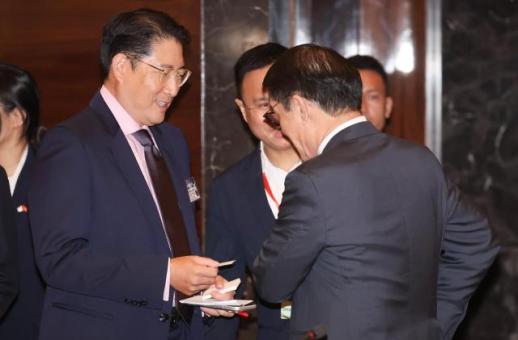 Hyosung’s Vietnam Bet Shows How Supply Chains Shift From China to Regional Hubs The global economy’s center of gravity is shifting. For years, multinational companies clustered production where it was cheapest, fastest and biggest, with China at the core. After U.S.-China tensions intensified, that model began to wobble. Companies increasingly face a different question: not where to depend, but how to spread risk. That approach is often called the “China plus one” strategy — splitting production bases and dividing exposure. Yet it has produced a paradox: while companies talk about diversification, they also concentrate heavily in a new place. A clear example is Cho Hyun-joon and Hyosung Group’s expansion in Vietnam. Since entering Vietnam in 2007, Hyosung has invested $5 billion, built nine local units and hired 10,000 workers. It has developed a production chain spanning spandex, tire cord, polypropylene and electric motors. With newer investments in advanced sectors such as bio-butanediol and high-voltage motors, cumulative investment is nearing $6 billion. On its face, that looks less like diversification than concentration. The explanation is that companies diversify one thing and concentrate another. What they seek to diversify is country risk — reducing heavy dependence on a single nation, especially China. What they concentrate is function. Building a cluster that combines production, logistics, labor and technology often requires focus. In today’s supply chains, the pattern is increasingly: diversify globally, concentrate regionally. Hyosung’s Vietnam strategy fits that structure. As it moves away from a China-centered axis, it has consolidated production functions around Vietnam. The shift is not simply relocating factories; it is building a new pillar of its supply chain — closer to a redesign than a transfer. That redesign is reflected in what Hyosung makes there. Vietnam was long seen mainly as a low-wage manufacturing base, but Hyosung’s portfolio goes beyond basic labor-intensive work. Spandex requires stable, high-precision processes, and tire cord is tied directly to global automaker supply chains. With chemicals such as polypropylene and PDH, and with electric motors, Vietnam functions as a production hub rather than a single factory site. As industries become more advanced, research and technical infrastructure matter more. Why, then, does Vietnam remain the stage for expansion? The answer again lies in separating functions. Even in advanced industries, not every step must happen in one place. Research and development can be done in South Korea or other advanced economies, while manufacturing is carried out at efficient bases. Vietnam is positioned for production, combining established infrastructure, accumulated labor capacity, a stable policy environment and multiple free trade agreements that support exports. The core issue is structure, not technology. Technology can move; the environment that makes it work is harder to replicate. What Hyosung has built in Vietnam is not just know-how, but the conditions for that know-how to operate — making the base difficult to replace quickly. The company’s role, the column argues, now extends beyond economics. It cites Hyosung Chairman Cho’s participation as part of an economic delegation accompanying President Lee Jae-myung on a Vietnam trip. In the past, diplomacy was led by governments: states signed agreements and companies followed. Now, the sequence is often reversed, with companies entering first to build relationships and governments layering cooperation on top. That does not mean business becomes diplomacy. Companies pursue profit. But the networks they create can serve as leverage for state-to-state cooperation. Trust with local authorities, industrial infrastructure, and ties built through jobs and investment can provide a practical foundation for bilateral collaboration. Hyosung’s Vietnam footprint illustrates that leverage, the column says. Its production base and local network have become a tangible link between South Korea and Vietnam — a relationship built through long-term investment rather than a single visit. The structure is not risk-free. Concentration in one country can bring exposure to political change, labor conditions and swings in global demand. With cumulative investment nearing $6 billion and key production functions clustered in Vietnam, the burden is real. Still, the column argues the risk should not be viewed only as something to endure. Global companies increasingly pair concentration with contingency plans: spreading parts of production to other countries, diversifying suppliers, and keeping core technology and decision-making at home. The result is a flexible structure — neither fully dispersed nor fully concentrated. Hyosung, it says, is centered on Vietnam while leaving room to expand elsewhere. The key is not a fixed answer but a design that can respond to change. Supply-chain competitiveness comes from architecture, not just location. The column concludes that Cho’s Vietnam strategy raises a broader question: where should a company put down roots, and what kind of structure should it build from those roots? In global competition, it argues, outcomes are no longer decided by the number of factories, but by how companies connect operations, allocate functions and share risk.* This article has been translated by AI. 2026-04-26 09:16:09
 -
 HD Hyundai Wins First U.S. Navy Research Office Project Awarded to a South Korean Firm HD Hyundai has won two core research projects from the U.S. Office of Naval Research, becoming the first South Korean company to secure such work and expanding cooperation with the U.S. Navy. The company said April 26 that it recently held a contract-signing ceremony with the Office of Naval Research, or ONR, for two projects related to improving naval vessel performance. ONR, part of the U.S. Department of the Navy, oversees science and technology research and development for the U.S. Navy and Marine Corps. The ceremony was held at ONR headquarters in Arlington, Virginia, with Jang Kwang-pil, vice president and head of the Future Technology Research Institute at HD Korea Shipbuilding & Offshore Engineering, and ONR Director Rachel Riley among those attending. Under the contracts, HD Hyundai will work on a project to improve naval vessel performance using artificial intelligence. Based on its digital ship technologies, HD Hyundai Heavy Industries and Seoul National University’s Department of Naval Architecture and Ocean Engineering, led by Professor Kim Yong-hwan, will jointly develop the technology. HD Hyundai also won a project to develop technologies to raise productivity in naval vessel construction, drawing on its advanced manufacturing capabilities. That research will be carried out by the Future Technology Research Institute at HD Korea Shipbuilding & Offshore Engineering. HD Hyundai said the ONR awards position it as a key partner for joint research with the U.S. Navy spanning naval vessel development through construction, and reflect U.S. recognition of its advanced technologies in the naval sector. Joo Won-ho, president of HD Hyundai Heavy Industries and head of its naval vessels and medium-sized ship business, said, “With this ONR project award as a turning point, we will further expand cooperation with the United States in the naval vessel field.” He added, “With pride as a national representative of South Korea, we will devote our full efforts to expanding the reach of K-marine defense industry.”* This article has been translated by AI. 2026-04-26 09:15:14
 -
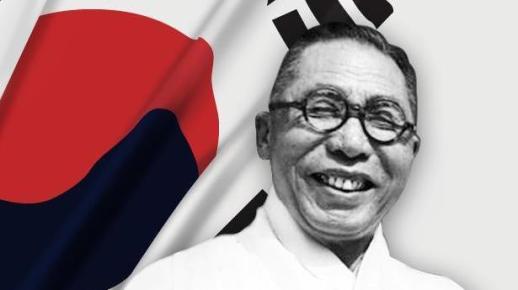 Commemorating the 150th Anniversary of Baekbeom Kim Gu: A UNESCO Recognized Figure 2026 marks the 150th anniversary of the birth of Baekbeom Kim Gu. June 26 also serves as a reminder of the day he was assassinated at the Gyeonggyeong Hall. While the death of one individual signifies an end, for some, it marks the beginning of an era. This is true for Baekbeom Kim Gu.This year, UNESCO designated Kim Gu as a '2026 World Commemorative Figure.' He is the third Korean to receive this honor, following Jeong Yak-yong and Father Kim Dae-geon, and the fourth global independence activist recognized after Gandhi, Ho Chi Minh, and Mandela. This recognition is not merely ceremonial; it indicates that the world is once again calling upon Kim Gu. While we have often expressed our respect for him, how well do we truly understand his life?This question is at the heart of Im Soon-man's novel, 'Lying Down in the Baekbeom Mountains.' This work is not just a historical novel; it seeks to restore the conscience of an era and poses an ethical inquiry to us today.Im Soon-man, a former journalist who served as an editor at the Kukmin Ilbo, dedicated nearly ten years to this project, spending five years on research and interviews and three years on writing. As a result, the novel features no fictional characters; all figures are real, and events are meticulously based on historical records. Although it is a novel, it approaches history with greater depth.The narrative does not dazzle readers with ornate language. Instead, its simplicity creates a deeper resonance. The stripped-down prose brings into sharper focus Baekbeom's solitude and resolve. It does not glorify failure or excuse defeat, allowing readers to see not a hero, but an unyielding human being.The novel consists of 24 chapters, beginning with the suffering of Kim Chang-soo, who was born into a lowly status, and covering his failures in past examinations, the Cheeha Incident, Donghak activities, exile, the struggles of the Shanghai provisional government, the actions of Lee Bong-chang and Yun Bong-gil, the founding of the Korean Liberation Army, the division of the nation after liberation, and culminating in his final moments at Gyeonggyeong Hall. While it flows chronologically, it essentially traces the trajectory of human ethical choices.Notably, the titles of the first two chapters are symbolic: 'I Offer My Life' and 'I Receive Your Life.' These are not merely records of armed struggle; they signify that the independence movement is, at its core, an ethical responsibility where one person sacrifices their life, and another bears the weight of that sacrifice.In the scene leading up to Yun Bong-gil's act of resistance, Kim Gu is not just a leader; he is a person sending others to their deaths, fully aware that they may not return. Thus, the independence movement is framed not as a strategy but as an ethical imperative.Im Soon-man does not portray this scene merely as a heroic tale; instead, he reveals the weight of human emotion. Baekbeom does not guarantee victory; he simply does what must be done.One of the most memorable scenes in the novel involves his time with Zhu Aibo, a Chinese woman who sheltered him after Yun Bong-gil's act of resistance. They live together as if they were a couple.The author writes: 'Spending the night on the boat with the teacher, Zhu Aibo falls into thought. She senses that behind his few words and stoic demeanor lies the weary past of someone who has crossed great mountains. Though outwardly dry, she feels a shared flow of time that brings them together, like water flowing into the sea.'This scene humanizes Baekbeom, reminding us that before he was a revolutionary, he was simply a man.The greater the person, the deeper their loneliness.Another significant moment in the novel is the description of 'rice.' 'Rice is food given by heaven. Made from the earth's strength and human sweat, rice resembles the life-giving nature of heaven. It is a blessing because it follows the natural order.'This statement encapsulates the essence of Baekbeom's philosophy. Before grand ideologies, the fundamental human act of feeding the hungry and maintaining one's humanity takes precedence. The quest for a nation must ultimately be about preserving life.Thus, Baekbeom stood not as a politician but as a guardian of ethics.He resolved to travel to Pyongyang to prevent the division of the nation, despite widespread predictions of failure, which ultimately came true. Yet he stated, 'If I go to North Korea and fail, a record of that failure will remain, and if such attempts continue, someone will eventually surpass that failure.'This statement reflects the dignity that today's politicians have lost. He prioritized what needed to be done over the likelihood of success, focusing on responsibility rather than self-interest. Baekbeom was that kind of leader.He viewed division not as an ideological issue but as a temporal one. He understood that without communication, war would ensue, and over time, hatred would become entrenched. Therefore, he went, fully aware of the potential for failure.This is Baekbeom.And finally, Gyeonggyeong Hall.On June 26, 1949, Baekbeom was shot by Army Second Lieutenant Ahn Du-hee at Gyeonggyeong Hall in Seoul. He was killed in the very heart of the nation he had longed for in a liberated Korea. It was one of history's cruelest ironies.The novel does not exaggerate this moment; it presents it with a calm demeanor, making it even more chilling. 'The assailants took the life of Kim Gu with a gun, but they could not steal the tears of the villagers who gathered outside, weeping in droves beyond the shattered glass.'This single sentence encapsulates everything. Guns can kill people, but they cannot kill history.At that time, Seoul's population was 1.4 million, and records indicate that 1.24 million came to pay their respects. This is not just a number; it is a testament to public sentiment. The people knew who truly lived for the nation.Politically, Baekbeom failed. He could not prevent division, did not seize power, and was ultimately assassinated. However, history remembers those who, despite failing, did not compromise, more than those who succeeded.He was defeated but unbroken.The cultural power he envisioned is more urgent today than ever.'The only thing I desire for our country is the power of high culture.'Baekbeom did not wish for a nation that suppressed others through military might. He envisioned a dignified nation where no one is oppressed and no one oppresses others. In an era where BTS and K-culture are shaping the world, we are beginning to understand his words.Culture is not an ornament but a way of existence. It is not about being a strong nation but a beautiful one. That was Baekbeom's dream.Now, one question remains: How will we honor Baekbeom?Building memorial halls is necessary. Erecting statues is also important. However, the more crucial task is to keep his spirit alive in our lives today.Restoring politics as an ethics of responsibility rather than a technique of power. Rebuilding the economy not as a victory of greed but as a community of dignity. Returning education from a tool of competition to a training ground for humanity. This is true commemoration.East Asia remains unstable. The division of the Korean Peninsula, the U.S.-China power struggle, historical conflicts with Japan, and wars in the Middle East and Ukraine are shaking the world once again with a power order. Yet Baekbeom asks:Will we dominate through power or coexist through culture?The Bible states, 'Blessed are the peacemakers, for they shall be called the children of God.'Baekbeom's life was the historical embodiment of this statement. He fought for peace, endured loneliness for justice, and dedicated his life to freedom.Thus, Baekbeom is not a figure of the past. He is an unfinished sentence.Im Soon-man's 'Lying Down in the Baekbeom Mountains' asks what we should write on that unfinished sentence today. On which side will we stand? What will we live for? Can we do what must be done, even knowing the potential for failure?Baekbeom continues to ask quietly.And the Baekbeom Mountains are still waiting for that answer. 2026-04-26 09:12:18
 -
 Hyundai’s Jose Munoz Targets 500,000 Annual Sales in China by 2030 "At Beijing Hyundai, we will sell 500,000 vehicles a year by 2030, including domestic sales and exports." Hyundai Motor President Jose Munoz said at a meeting with reporters on April 24 at the China International Exhibition Center Convention Center in Beijing that the company will make this year the starting point for accelerating a turnaround in China. He said Hyundai plans to launch 20 new energy vehicles, or NEVs, by 2030 and show annual growth of 9%. Hyundai on Thursday opened the 2026 Beijing Motor Show (Auto China 2026) by unveiling the China mass-production model Ioniq V for the first time in the world. The Ioniq V features a localized interior and exterior design, a naming strategy based on planet names, a battery from China’s CATL, and Momenta’s Level 2+ driver-assistance technology, including highway driving assistance and memory parking. "China is the most important EV market, and Hyundai is one of the best-performing companies in EVs globally," Munoz said. He said Hyundai will strengthen its positioning in China by combining products, features, design, service and pricing proven in global markets with thorough localization. China is often called a tough market for foreign brands because consumers strongly prefer domestic vehicles. With the economy weakening, global automakers including Mercedes-Benz, Volkswagen Group and BMW have also stepped up moves to reduce their exposure to China. Munoz said Hyundai’s Ioniq brand has been central to the company’s push to become a technology company, not just an automaker. He said Hyundai will combine Ioniq technology with localization efforts and the founder chairman’s “challenge DNA” to sustain Hyundai’s momentum in China. Munoz also pledged to deepen partnerships in China. He said that with China’s NEV tax incentives being reduced, companies cannot build fundamental competitiveness simply by importing functions and technology, and that Hyundai will work with local partners to strengthen its core capabilities. He also offered a blunt assessment of Hyundai’s struggles in China over the past decade. "We became overconfident and settled for the status quo," Munoz said, adding that the company learned humility in China and analyzed the causes of its failures through dialogue with partners and customers. He said China’s market and technology are changing faster than in the past, and that Hyundai will execute its strategy step by step with a learning mindset not only in autos but also in hydrogen and physical artificial intelligence. The Ioniq V shown Thursday includes smart AI features, distinctive exterior and interior design, and advanced electronics aimed at Chinese consumers. Heo Jae-ho, Hyundai’s chief technology officer in China, said the vehicle will include a digital ecosystem centered on a smart cabin and autonomous driving, as well as LLM-based voice recognition and personalized services from Doubao, a ByteDance subsidiary. He said Hyundai will also reflect local preferences with Chinese apps such as Baidu, Amap and WeChat, along with Dolby sound and karaoke features. Hyundai plans to build out the Ioniq V lineup to six models by 2028, using two platforms for compact and mid-to-large vehicles and offering both EV and extended-range electric vehicle, or EREV, variants. It will then expand sequentially to 20 models by 2030, depending on market conditions and China’s policies. Munoz said Hyundai’s ability to survive amid variables such as tariffs, the repeal of the Inflation Reduction Act and war in the Middle East has been driven by offering customers a wide range of choices. He said Hyundai will provide Chinese customers with flexible options including the Ioniq V, Ioniq E, a future D-segment SUV, a multipurpose vehicle and EREV models. Munoz said Hyundai can apply its global playbook in China, citing the company’s position as No. 3 in global vehicle volume and No. 2 in profitability. He said growth in China is an important opportunity, including as a hedge against risks in other regions.* This article has been translated by AI. 2026-04-26 09:03:20
 -
 SBS ‘Unanswered Questions’ Probes Tip Claiming Body Was Not Dumped at Dumulmeori SBS investigative program ‘Unanswered Questions’ is examining a case in which a body has not been found for 100 days after a reported dumping near Dumulmeori in Yangpyeong. The episode airing April 25 focuses on unanswered questions surrounding the killing and alleged disposal of the body of a delivery driver identified as Lee Jun-woo, a pseudonym. The case surfaced after a 112 emergency call on Jan. 21 reporting that Lee, 34, had been unreachable for several days. The caller, a fellow delivery driver, said he became concerned after recalling that Lee had appeared badly injured days before he vanished. “He had a broken tooth, his face was bruised beyond recognition, and his lip was split badly enough to need stitches,” the colleague told the program’s producers. Co-workers suspected a man surnamed Seong, Lee’s same-age roommate. Witnesses said Seong had been seen assaulting Lee, though Lee had brushed off questions about abuse by saying he was “just hurt.” Seong also claimed he did not know Lee’s whereabouts, saying he thought Lee had gone gambling. Police later reviewed apartment CCTV footage from the night of Jan. 14 that appeared to show Seong dragging Lee, who looked to be dead. Police then arrested Seong on an emergency basis, the program said. In questioning, Seong told police he killed Lee and put the body in a rental car, then drove to Yangpyeong and dumped it. He said the killing happened around 3:30 p.m. Jan. 14 during an argument over gas money, and that he disposed of the body later that night near Yongdam Bridge, close to Dumulmeori. Despite extensive searches by police and fire authorities, Lee’s body has not been found for 100 days, leaving the family unable to hold a funeral, the program said. Relatives suspect the location Seong provided may not be the real site because no body, shoes or clothing have been recovered. The time Seong gave for the killing and details of the disposal have also not been clearly verified, according to the broadcast. The producers said they received a new tip claiming, “It’s Yangpyeong, but not Dumulmeori — I heard it was buried somewhere else.” The tipster also alleged Seong gave a false statement out of fear that, if the body were found, it would reveal he used tools. The tipster said Seong also made remarks that seemed to hint at an accomplice. ‘Unanswered Questions’ airs at 11:10 p.m. on April 25.* This article has been translated by AI. 2026-04-25 22:33:19