
Journalist

Elizabeth Englezos
-
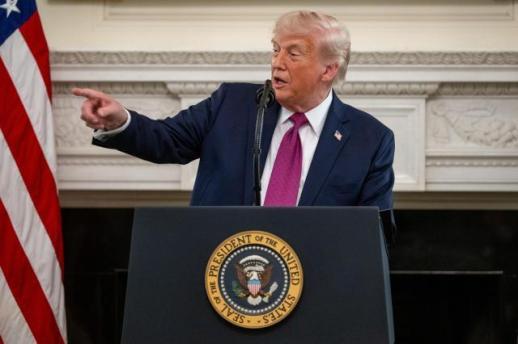 Beyond the Abraham Accords: A Call for a Noah Accord to Achieve Peace in the Middle East Wars often begin with justifications, but they ultimately leave behind devastation, bloodshed, and bills to pay. The current war in Iran, initiated by the United States and Israel, follows this pattern. It started under the banners of 'security' and 'deterrence,' but as time passes, the rapid depletion of military supplies, declining national economies, and a contracting global economy have become evident. What runs out first are not victory flags but missile stockpiles and public patience.Recent analyses from U.S. media and think tanks starkly illustrate this reality. Following the 'Grand Fury' operation, the U.S. military has used over 1,100 long-range stealth cruise missiles (JASSM-ER), leaving approximately 1,500 in stock. Each missile costs around 16 million won, originally prepared for a potential full-scale conflict with China. Nearly half of these have been expended in the Iranian theater. More than 1,000 Tomahawk missiles have also been launched, costing about 53 million won each, which is ten times the annual procurement amount. Additionally, over 1,200 Patriot interceptor missiles have been used, exceeding last year's total production by double.The war speaks not only through gunfire but also through numbers. The cost of ammunition used in the first two days alone reached $5.6 billion, with total war expenses already surpassing $28 billion to $35 billion. Daily costs are nearing $1 billion. This is not merely military spending; that money could have funded healthcare for the American middle class, student loans for young people, or the restoration of aging urban infrastructure.Ultimately, the burden of war falls on the citizens.However, the more fundamental issue of this war is not just the depletion of U.S. military supplies. Israel is also no longer in a position to maintain 'unlimited defense.' The Iron Dome, regarded as the world's most advanced air defense system, has shown clear limitations in this prolonged conflict. In a scenario where short-range rockets, drones, ballistic missiles, and cruise missiles are launched simultaneously, the Iron Dome must prioritize interception, leading to saturation in some critical areas. The cost of a single interceptor missile exceeds the price of dozens of attack drones. When defense becomes more expensive than offense, sustainable warfare becomes impossible.Israel, in particular, has had to manage simultaneous threats from the northern Hezbollah front, the Gaza Strip, and long-range threats from Iran. Air defense is not merely a technical issue but a matter of inventory depth, ultimately determining national security. No matter how sophisticated the system, if interceptor missiles are in short supply, the skies will be vulnerable. In fact, some strategic facilities and industrial infrastructure are under threat, and citizens' psychological fatigue is rapidly increasing. The myth of a 'perfect shield' has cracked in this war.Iran's situation is no different; it is even more structural. Iran has maintained a 'resistance axis' centered around the Revolutionary Guard, but in this prolonged conflict, missile production facilities, underground storage sites, drone assembly plants, air defense radar networks, and command and control systems have been heavily targeted. The loss of long-range ballistic missile production lines and key air defense bases is difficult to recover in the short term. While missile launches may continue superficially, if sustainable production capacity collapses, the ability to conduct war will rapidly weaken.Sanctions, foreign exchange depletion, difficulties in procuring industrial components, and restrictions on importing precision guidance systems are already pressuring the Iranian economy. Missiles cannot be produced by will alone; semiconductors, special metals, precision machinery, and supply chains are necessary. The longer the war drags on, the greater the likelihood that Iran's economy will collapse before its military.Ultimately, both Israel and Iran have entered a phase where they must avoid mutual destruction rather than calculate victory. One side's defense is dwindling, while the other side's production base is collapsing. The United States is depleting its ammunition stockpiles, and the alliance front in Europe and Asia is weakening. This is no longer a question of 'who will win.' The key fact is that continued fighting will weaken everyone.More seriously, the justification for the war itself is rapidly running out. The U.S. has spoken of eliminating nuclear threats, while Israel has claimed self-defense for survival. Iran has shouted resistance, dignity, and anti-imperialism. However, as time passes, each side's justification loses its persuasiveness. Civilian fatigue, international fatigue, and ally fatigue accumulate, leaving no one with a clear answer to the question of 'why are we fighting.'Wars are inherently more political when they are short. The longer they last, the more commercial they become. The military-industrial complex thrives while citizens' lives crumble. Oil prices rise, exchange rates fluctuate, and supply chains become unstable again. For a trade-dependent country like South Korea, this is a matter of survival. A surge in oil prices creates a chain reaction of shocks across petrochemicals, aviation, logistics, and food. Exchange rate instability dampens corporate investment sentiment and raises the cost of living for households. A war without justification ultimately holds the entire global economy hostage.The question is now clear: Will we continue to fight, or will we choose to survive?The difficulty of negotiations for both sides is evident. First is the issue of regime. For Iran, nuclear capability is not just a technology but an insurance for regime survival. Iran has seen what happened to Libya's Gaddafi after he gave up his nuclear program. Conversely, for Israel, Iran's nuclear capability is an existential threat. The insecurity of one side becomes the fear of the other.Second is domestic politics. The Israeli leadership's political foundation shakes the moment they lose their hardline stance. Iran's revolutionary regime also cannot easily choose retreat. The United States, facing an upcoming election, finds it politically difficult to withdraw from the Middle East. While peace is necessary, politicians often prioritize approval ratings over peace.Third is the regional order. Saudi Arabia, the UAE, Turkey, Qatar, Egypt, and even Russia and China all have vested interests. The Middle East is not a chessboard but a multi-layered Go board, where one move can shake multiple directions. Therefore, a structural agreement is needed, not just a simple ceasefire.Here, we need new imagination. It is time for a Noah Accord that goes beyond the Abraham Accords. The Abraham Accords marked a turning point in Middle Eastern diplomacy in 2020 when Israel, the UAE, and Bahrain first agreed to normalize relations under U.S. mediation, followed by Sudan and Morocco. The key point is that the previous official stance of 'no normalization with Israel before resolving the Palestinian issue' has been shaken in the face of reality. The U.S. provided security guarantees, arms sales, and economic support, while Arab nations chose to contain Iran and secure their interests. The process involved strong diplomatic coordination from Washington, confidential working-level negotiations, and official signing at the White House. Reality took precedence over ideals, and national interests over emotions.However, this was primarily an adjustment of interests between states. What is now needed is a deeper civilizational agreement. We must return to a more fundamental common ancestor than 'the father of faith' Abraham. That ancestor is Noah, 'the new ancestor of humanity.' According to Genesis 10, Elam, understood as the ancestor of Iran, is placed in the lineage of Shem, Noah's son. Israel is also a descendant of Shem, and Abraham is above that lineage. Among Shem's descendants is Eber, from which the term 'Hebrew' is derived. Ultimately, Iran and Israel are not distant civilizations but brother nations that have diverged from the same root.AJP, the English news agency of AJU News Corporation, has always been uncomfortable with the media's simplistic interpretation of the Middle East as 'Arab versus Israel.' The Middle East is not solely an Arab world. There are Persians, Turks, Kurds, and Jews. Iran is not an Arab nation. The 5,000-year-old civilization of Persia is independent. Any so-called Middle East expert should at least be aware of this historical structure.Jeremiah records the judgment of Elam's pride but also states, 'In the latter days, I will bring back the captives of Elam' (Jeremiah 49:39). Judgment and restoration coexist. This is not just religious comfort but also insight into international politics. Complete destruction does not create a sustainable order. Only recoverable peace can forge the future.The Noah Accord must start here. First, the nuclear issue must be addressed within the framework of regime guarantees. Second, a multilateral security guarantee system for the region, including Iran and Israel, must be redesigned. Third, economic cooperation, supply chain stability, and joint energy management systems must be integrated. Peace does not come from declarations; it arises from creating structures for survival together.If the Abraham Accords were a diplomatic agreement, the Noah Accord must become an agreement for survival. In a reality where no one can achieve complete victory and no one can completely disappear, coexistence and mutual prosperity are the only exit.The Art of War states, 'The best victory is to win without fighting' (上兵伐謀), and the Tao Te Ching says, 'The strong are broken, and the soft survive' (柔弱勝剛强). The Bible also states, 'Blessed are the peacemakers' (Matthew 5:9). Civilization is ultimately built on order, not the edge of a sword.What Iran and Israel need now is not more missiles but more imagination. Not more military supplies, but more trust. The reconciliation in the Middle East that began in the name of Abraham must now expand in the name of Noah.Military supplies have been depleted, and the justification for war is running out. Now, only the choice remains: Will we continue to fight and collapse together, or will we remember our shared roots and live together?Peace in the Middle East is no longer just a regional issue. It is a matter of global economic stability, South Korea's national interests, and the next chapter of human civilization. It is time for agreements, not gunfire, to change history. 2026-04-25 13:47:04
 -
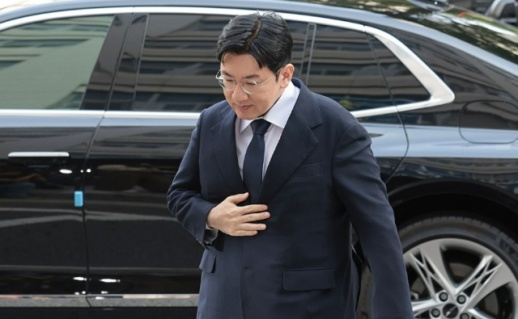 BTS Founder Bang Si-hyuk Faces Legal Scrutiny Amid K-Series Growth The law must apply equally to all, including individuals. The integrity of the capital market relies on trust, which is built on fair information and transparent processes. Therefore, allegations of violations of capital market laws surrounding Bang Si-hyuk, chairman of HYBE, cannot be taken lightly. If it is true that he misled existing shareholders about the company's public offering plans before its listing and transferred shares to a specific private equity fund, only to realize substantial profits through the IPO, he must face the full force of the law. Markets do not operate on emotion or reputation; they function based on contracts, disclosures, and facts. The recent decision by prosecutors to reject a warrant for Bang's arrest and request further investigation is significant. This indicates that there is insufficient evidence to justify an arrest at this stage, not a declaration of innocence. The fundamental principle of criminal justice is to conduct investigations without detention. Economic crimes often leave behind documentation, contracts, accounting records, and internal reports. Unless there is clear evidence of flight risk or potential destruction of evidence, arrest should be a last resort. Moreover, Bang is already a globally recognized businessman. His domestic and international activities are public, and he has cooperated diligently with repeated summons for questioning. While equality before the law is essential, the proportionality and rationality of law enforcement are also components of justice. Arrest is a means of investigation, not punishment. Symbolic arrests to appease public sentiment lean more toward emotional politics than the rule of law. We should pursue justice without resorting to preemptively detaining individuals. However, this case cannot simply be viewed as a judicial risk for one businessman; it reflects a broader historical context. The name Bang Si-hyuk has transcended individual identity to symbolize the founder of BTS, a global cultural asset. BTS is no longer just an idol group; they represent South Korea's cultural sovereignty on the world stage and are the epitome of K-culture. The year 2026 is significant. With members returning from military service, the world is once again anticipating BTS. The fanbase, known as ARMY, is not merely a fan club but a vast cultural community that transcends borders. The competition to host BTS concerts spans from Seoul to Mexico, Vietnam, the United States, Europe, the Middle East, and Latin America, entering the realm of diplomacy. In Mexico, the president has expressed hopes of hosting a BTS concert. This request goes beyond mere entertainment; it represents a massive economic event that can enhance national image, boost tourism revenue, and invigorate youth culture and consumption. Similarly, Vietnam is seeking a BTS concert as part of its cultural aspirations and national branding strategy. The desire of a nation's highest authority for a specific group's performance underscores the idea that culture is a form of national power. BTS's world tours cannot be evaluated solely by ticket sales. They trigger a chain reaction across various industries, including aviation, hospitality, retail, cosmetics, fashion, food, and platforms. A single concert in Seoul can generate billions in economic impact, with international tours amplifying this effect. The spending around concert venues, along with the global exposure of Korean brands, enhances national image and attracts tourism, creating a vast economic ecosystem. As K-food opens dining opportunities, K-beauty transforms lifestyles, K-defense builds national trust, and K-semiconductors lay the industrial foundation, BTS serves as the heart connecting all these K-series elements to global sentiments. Additionally, K-dramas and K-cinema must be included in this narrative. The global impact of "Squid Game" and the prestige of "Parasite" have demonstrated that the Korean cultural industry is not merely a commodity for export but a force capable of reshaping global civilization. K-dramas have transformed Korean narratives into universally relatable stories, while K-cinema poses fundamental questions about humanity, class, family, and desire in uniquely Korean ways. If K-pop shakes the world with rhythm, K-dramas captivate hearts with storytelling, and K-cinema provokes thought, this is not just cultural export; it is about instilling the spirit and sensibility of South Korea in the world. Culture transcends borders and languages, leaving a lasting imprint in memory. This is true soft power. Thus, the president's global diplomacy cannot be the sole responsibility of the foreign and industry ministries. Discussions at summits should include not just semiconductors and defense but also K-pop, K-dramas, and K-cinema. Diplomatic relations between heads of state do not end with contracts; they also involve emotions, trust, image, and goodwill. Many world leaders are familiar with BTS, watch Korean dramas, and discuss Korean films. Culture is often the first to open hearts. This is why culture must accompany the president on international trips. Industry creates interests, while culture fosters goodwill. Interests may change, but goodwill endures. We are no longer in an era where diplomacy is solely about tanks and treaties. It is a time for a comprehensive national strategy that includes concerts, films, dramas, and food. In light of increasing global economic uncertainty, we need a new narrative for growth. Amid U.S.-China tensions, supply chain restructuring, instability in the Middle East, and soaring energy prices, the South Korean economy is once again called to combine strategic and cultural industries. Manufacturing alone is insufficient, nor is culture alone enough. Technology and emotion, industry and narrative must go hand in hand. At the intersection of these lies BTS and the K-series. Of course, this does not mean we should halt legal proceedings for the sake of national interest; that would be more dangerous. The law must be fair to everyone. However, enforcing the law without considering national interest is also unwise. A state is not merely a machine for punishment. The purpose of law is the stability and sustainability of the community. If the truth can be sufficiently uncovered without detention, we must carefully consider whether it is necessary to damage a national asset in this manner. We often place justice and national interest at opposing ends. However, true national interest does not come from abandoning justice, and genuine justice does not ignore the future of the entire community. The rigor of the law and national strategy should not be conflicting concepts but harmonized values. Confucius advised that a gentleman should prioritize righteousness, and the I Ching speaks of carrying all things with deep virtue. A leader's path is to benefit all with profound virtue. The Tao Te Ching states that a great nation should lower itself to gather all waters. The same applies to governance. Laws should be established while considering the nation, and principles should be upheld while looking to the future. South Korea stands at a crucial crossroads. Beyond the question of Bang Si-hyuk's guilt or innocence, we must ask how to protect national assets and realize justice. The return of the full BTS lineup is not just a comeback; it signifies the resurgence of K-pop and the entire K-series, including K-dramas, K-cinema, K-food, and K-defense, moving back to the center of the world stage. In court, guilt must be contested until the end. However, detention is not synonymous with justice. What is needed now is not showy severity but a calm legal approach and mature national judgment. This is not just about one individual, but about how South Korea will handle its own future. The judgment of the law and the completion of the K-series. At this crossroads, we must prioritize principles over emotions and consider national interest within those principles. That is the true essence of truth, justice, and freedom. 2026-04-25 12:36:36
 -
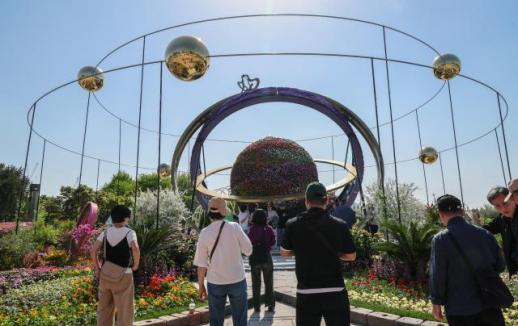 Sea of colorful bloom at Goyang flower festival SEOUL, April 24 (AJP) -Spring arrives in full and assorted colors at Ilsan Lake Park as the 2026 Goyang International Flower Festival opens, drawing visitors into a vast landscape of blooms just northwest of Seoul. Under the theme “Flowers Color Time,” the 17-day festival unfolds across a 250,000-square-meter venue, where more than 100 million flowers shape gardens, installations and winding paths along the lakeside. Large-scale floral sculptures rise against the water, while walking gardens and shaded rest areas offer a slower pace for visitors taking in the season. Families gather around themed spaces featuring Pengsoo, adding a playful touch to the spring outing. Inside, exhibition halls shift the mood from open-air spectacle to curated artistry. Floral designers from around the world present intricate arrangements, while an international flower exhibition brings together participants from some 30 countries, showcasing rare species and diverse plant life. Now in its 18th year, the festival has grown into one of the country’s best-known spring events, attracting more than 9 million visitors over time and cementing its place as a seasonal escape near the capital. 2026-04-25 12:14:46
 -
 U.S. Envoys Head to Pakistan for Possible Iran Peace Talks; Tehran Denies Meeting Planned As the United States and Iran issue conflicting messages about whether peace talks will resume, reports say delegations from both sides could make contact in Pakistan as soon as this weekend. Yonhap News Agency reported that The New York Times, citing two senior Iranian officials, said Iranian Foreign Minister Abbas Araghchi is expected to meet U.S. Middle East envoy Steve Witkoff and President Donald Trump’s eldest son-in-law, Jared Kushner, in Pakistan this weekend. The officials said Araghchi traveled to Islamabad carrying a written response to a U.S. proposal for peace talks. They said Iran has publicly maintained it would not hold talks until the U.S. blockade of the Strait of Hormuz is lifted, but has privately explored ways to restart negotiations through intermediaries including Pakistan. Araghchi arrived in Islamabad on April 25 local time. The Washington Post also reported the talks would resume this weekend. A U.S. official told the newspaper that Witkoff and Kushner had received confirmation from Iran about restarting talks, saying, “Otherwise they wouldn’t be going.” The U.S. government also officially confirmed plans to send Witkoff and Kushner to Pakistan. The White House said it “expects positive progress” from the visit. Trump suggested talks could advance, saying Iran “will come up with a proposal.” Reports differ on timing. The Associated Press said a meeting was set for Saturday, April 25, while Axios, citing multiple sources, reported it could be held Monday, April 27. Iran’s official position, however, diverged from the U.S. account. Iranian Foreign Ministry spokesman Esmail Baghaei wrote on X that “no meeting between Iran and the United States is planned.” He said Araghchi’s Islamabad trip was to meet senior Pakistani leaders and to support Pakistan’s continuing efforts to end the U.S.-led war and restore regional stability. * This article has been translated by AI. 2026-04-25 10:57:17
 -
 Microsoft, Meta Layoffs Highlight Paradox of Massive AI Spending Microsoft is moving ahead with a large voluntary separation program for some U.S. employees. The plan primarily targets workers whose age and years of service add up to 70 or more. Some estimates put the eligible group at about 7% of Microsoft’s roughly 125,000 U.S. employees, or about 8,700 people. On the same day, Meta also announced plans for major job cuts and reduced roles. As the race to invest in artificial intelligence intensifies, the paradox of cutting people while spending heavily on technology is becoming more visible. Microsoft recently announced cloud and AI investment plans totaling $18 billion in Australia and $10 billion in Japan. Building data centers, semiconductors and large-scale computing infrastructure requires enormous capital. Companies fear that falling behind in generative AI could cost them market leadership. As money flows to machines and servers, pressure to cut costs often lands on workers. From a management perspective, reallocating resources to future growth areas during a technology shift is not unusual. Reducing overlapping organizations and raising productivity are standard goals, and publicly traded companies face constant pressure from earnings and stock prices. The key questions are the method, the pace and the level of social responsibility. Microsoft’s approach also raises a broader issue: how companies value experience. Using a combined age-and-tenure threshold can be defended as an efficiency measure, but it can also signal that skill and institutional knowledge are being treated mainly as costs. Corporate competitiveness is not built only on younger talent and new technology. Crisis-management experience, operational know-how, customer networks and the ability to mentor colleagues are assets that are hard to quantify. The moves also risk clashing with the values big tech companies have promoted, including diversity, inclusion, sustainability and people-centered innovation. If priorities shift and the response is large-scale layoffs, trust can erode. A technology company’s brand is shaped not only by products but also by culture and stated principles. A deeper concern is that AI may reshape jobs faster than society can prepare. Restructuring is increasingly reaching high-paid office workers, developers and middle managers. Where earlier automation first disrupted factory labor, today’s AI is directly affecting white-collar roles. That makes the issue more than a corporate staffing decision; it points to a broader shift in labor markets. South Korea is not immune. Domestic companies are also weighing bigger AI spending alongside leaner organizations. Pressure to improve workforce efficiency could grow across semiconductors, finance, platform businesses and manufacturing. Without early preparation — including retraining systems, job-transition support, measures for older workers and wage structures linked to productivity — the shock could be larger. Companies need to invest in the future. But they should not treat today’s workers as disposable in the name of progress. Voluntary separation programs are not just a way to reduce headcount; they can change a person’s livelihood, career and direction in life. Adequate compensation, re-employment support and respectful procedures should follow. Competitiveness in the AI era will not be decided by server capacity alone. Companies that adopt new technology while protecting people, and that pursue efficiency without abandoning community responsibility, are more likely to endure. Big tech companies should answer whether cutting workers first while spending tens of trillions of won on AI is truly innovation.* This article has been translated by AI. 2026-04-25 10:33:18
 -
 US Sanctions China’s Hengli Group Over Purchases of Iranian Oil The United States has added China’s major refining company Hengli Group to its sanctions list over imports of Iranian oil. According to Yonhap, the U.S. Treasury and State departments said on April 24 (local time) they were sanctioning Hengli Group for buying Iranian oil. The Treasury Department’s Office of Foreign Assets Control said Hengli is among the largest customers, purchasing Iranian oil worth tens of billions of dollars. Treasury said it determined that Hengli and other Chinese refiners, by importing sanctioned Iranian oil, were providing economic support to Iran’s government, including Iran’s military. Hengli is known to have refining facilities in the northeastern port city of Dalian with capacity to process about 400,000 barrels of crude oil a day. Treasury also targeted a shipping network involved in transporting Iranian oil. It added about 40 shipping companies and vessels to the sanctions list for operating a “shadow fleet” that moves Iranian oil while evading sanctions. Under the measures, U.S.-based assets of the designated companies and vessels will be frozen and property interests blocked. Entities in which they directly or indirectly own 50% or more are also covered. Sanctions may also be imposed on institutions that conduct transactions involving funds, goods or services with them. Separately, Treasury said it froze $344 million worth of cryptocurrency believed to be linked to Iran. Treasury Secretary Scott Bessent said on X that OFAC is imposing sanctions on “multiple wallets” tied to Iran, adding the action would “systematically degrade Tehran’s ability to generate and move funds back home.” He also said the department would track funds Tehran is “desperately” trying to move abroad and target all financial lifelines connected to the government. CNN reported that the cryptocurrency freeze was carried out through Tether, the issuer of the world’s largest stablecoin, USDT, based on information provided by Treasury. * This article has been translated by AI. 2026-04-25 09:57:16
 -
 Sunday Forecast: Mostly Sunny Nationwide; Showers for Jeju and Parts of the South Sunday the 26th is expected to be mostly sunny nationwide. The Korea Meteorological Administration said Jeollanam-do, the Gyeongsang region and Jeju Island will see more clouds at times. Jeju is forecast to get 5 to 10 millimeters (0.2 to 0.4 inches) of rain from dawn through daytime hours. Showers are also expected from afternoon into evening in southern Jeollanam-do; inland areas of Busan, Ulsan and South Gyeongsang; and the southern East Sea coast of North Gyeongsang. Forecast rainfall is 5 to 10 millimeters in southern Jeollanam-do and inland areas of Busan, Ulsan and South Gyeongsang, and around 5 millimeters along the southern East Sea coast of North Gyeongsang. Morning lows will range from 6 to 15 C (43 to 59 F), similar to or slightly higher than usual. Daytime highs will be 20 to 26 C (68 to 79 F). With day-to-night temperature swings near 20 C (36 F), the agency urged caution for health. Dry weather advisories are in effect for central regions, North Gyeongsang and parts of North Jeolla, and could expand to other areas. Authorities urged caution to prevent wildfires. Fine dust levels are expected to range from good to moderate nationwide due to favorable atmospheric dispersion. Waves are forecast at 0.5 to 1.0 meters (1.6 to 3.3 feet) in nearshore waters of the East and South seas and 0.5 meters (1.6 feet) in the West Sea. In offshore waters about 200 kilometers (124 miles) from the coast, wave heights are expected at 0.5 to 1.5 meters (1.6 to 4.9 feet) in the East and South seas and 0.5 to 1.0 meters (1.6 to 3.3 feet) in the West Sea. * This article has been translated by AI. 2026-04-25 09:36:17
 -
 Iran’s Revolutionary Guard Seizes Ship It Says Visited U.S. Ports, Citing Maritime Violations Iran’s Islamic Revolutionary Guard Corps Navy has seized a vessel it said was suspected of cooperating with the U.S. military. According to Yonhap News Agency, Iran’s Tasnim news agency reported that the Guard on Thursday (local time) seized the EPAMINODES, citing violations of maritime regulations. The Guard’s navy said it had monitored the ship for the past six months and confirmed it had visited U.S. ports several times. It said the vessel was seized after it ignored repeated warnings and continued to violate maritime rules. The seizure comes as tensions rise amid Iran’s threat to block the Strait of Hormuz and what the report described as a U.S. maritime blockade of Iran. The Revolutionary Guard seized three vessels on April 22, saying they tried to transit the Strait of Hormuz without authorization from Iran’s military. The United States previously seized two ships in the Indo-Pacific that were part of what the report called Iran’s “dark fleet” — vessels such as tankers involved in illegal shipments of crude oil and other cargo to evade international sanctions — after they departed Iranian ports and before the maritime blockade began. * This article has been translated by AI. 2026-04-25 09:04:20
 -
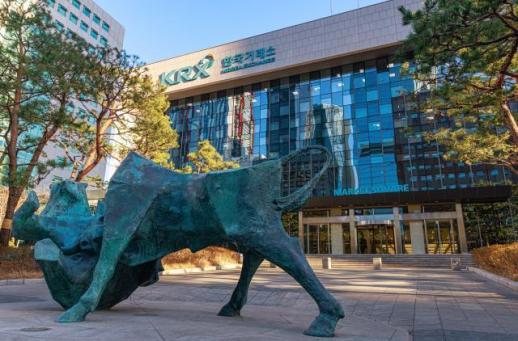 Debate Grows Over Extending Korea Exchange Stock Trading Hours Disagreement is widening inside South Korea’s market over the Korea Exchange plan to extend stock trading hours. The exchange says longer hours would boost global competitiveness and investor convenience, but securities firms and some retail investors question the benefits and warn of confusion. Even if change is needed, a revamp that fails to win market trust is unlikely to succeed. The exchange had pushed to add a premarket and after-hours session, expanding the trading day from the current 6 hours 30 minutes to about 12 hours. After brokerages raised concerns about the burden of systems development, a lack of testing time and staffing needs, the exchange delayed implementation from late June to Sept. 14. It also adjusted the premarket closing time and decided participation would be voluntary for brokerages. The schedule change may ease tensions on the surface, but core issues remain. The exchange argues that as overseas markets such as the United States move toward longer trading, South Korea must follow to stay competitive. It says both foreign and domestic investors want more opportunities to trade. In the United States, some markets have active off-exchange trading, and debate continues over 24-hour trading. Critics say South Korea’s market conditions differ. With liquidity not always sufficient, simply extending hours could spread trading thinner and distort price formation. Thinly traded periods could bring bigger swings, and there are concerns about an increase in spoof orders or short-term speculative trading. Institutions and foreign investors may be able to staff and equip overnight operations, but retail investors could be disadvantaged in access to information and ability to respond. Brokerages also face added costs. Longer hours would require expanded IT infrastructure, more customer-service staffing and stronger risk-management systems. Large firms may absorb the expense, but smaller and midsize firms could struggle. The cost of a market overhaul could ultimately be passed on to investors through fees or reduced services. Retail investors are divided as well. Office workers and those seeking trades linked to overseas markets could gain more options. Others warn of fatigue from monitoring prices for longer periods, encouragement of excessive day trading and disruption to daily routines. Longer trading hours, they argue, do not automatically mean greater investor benefit. The key issue is not speed but sequence. Extending trading hours is not a simple change in business hours; it reshapes market structure. The exchange must first ensure a unified order system, stable technology, safeguards to curb volatility, stronger surveillance against unfair trading and investor-protection measures. Rushing implementation without preparation could leave confusion rather than modernization. With the exchange now reviewing the plan, it should move away from a one-way push. The article calls for an open verification process involving retail investors, brokerages, academia and financial authorities to assess demand and costs objectively. It also warns against treating the demands of some investors as the needs of the entire market, while cautioning that innovation should not be halted solely because of industry burdens. The article argues that capital-market competitiveness comes from trust, not trading hours. Markets grow when investors believe trading is fair, systems are stable and prices are formed transparently. Extended hours should come later. If the exchange is acting for the market, it should broaden trust before lengthening the clock. * This article has been translated by AI. 2026-04-25 09:03:24
 -
 South Korea Forecast: Clear Skies Nationwide, Highs Up to 27C Saturday will be sunny nationwide, with daytime highs rising to as much as 27 degrees Celsius. The Korea Meteorological Administration said daytime temperatures will range from 20 to 27C, higher than usual. In inland areas, the day-to-night temperature gap will be around 20 degrees, and people should take care with their health. Dry weather advisories are in effect for the central region, North Gyeongsang Province and parts of North Jeolla Province, and the advisories could expand to other areas. Authorities urged caution to prevent fires. Fine dust levels are expected to be "good" to "moderate" nationwide due to smooth atmospheric circulation. Waves are forecast at 0.5 to 1.5 meters in the East and South seas and about 0.5 meters in the West Sea. In offshore waters (within about 200 kilometers of the coastline), wave heights are expected at 0.5 to 2.0 meters in the East and South seas and 0.5 to 1.0 meters in the West Sea.* This article has been translated by AI. 2026-04-25 08:33:17