
Journalist

Jeon Woon
-
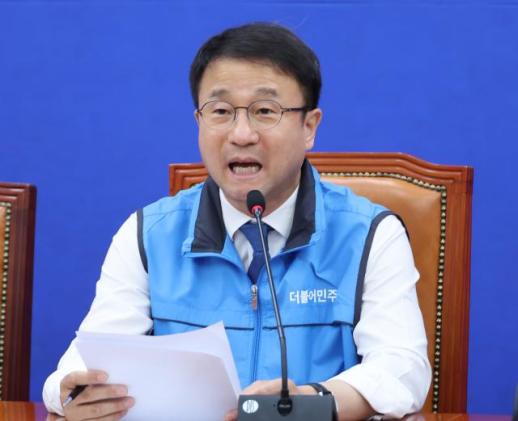 Han Byeong-do Appeals for Support in Local Elections, Urges Voters to Choose Government Aligned with Lee Jae-myung Han Byeong-do, the floor leader of the Democratic Party, called for public support on May 21, the official start of the election campaign, urging voters to choose local governments that will work in tandem with the Lee Jae-myung administration. He also warned of severe consequences for actions that mock democracy, referencing recent controversies involving Starbucks and Musinsa. During a policy coordination meeting at the National Assembly, Han stated, "This local election will determine whether we will move towards national normalization with the capable Lee Jae-myung government or allow insurrectionist forces to gain ground." He recalled the events of December 3, 2024, when President Yoon Suk-yeol declared an illegal state of emergency, nearly undermining the remarkable achievements of South Korea. He emphasized that the Lee Jae-myung government was born from the sacrifices and dedication of citizens who voluntarily gathered in the National Assembly, proving its worth through results and capabilities that meet public expectations and trust. Han criticized the local governments formed by the People Power Party during Yoon's administration, describing them as epitomes of incompetence and irresponsibility. He asserted, "We must end the regression of the past four years in this election. A victory in the local elections is the path to national normalization and a great leap forward for South Korea." He also pointed out provocations from far-right groups, including Starbucks Korea's 'Tank Day' and performances mocking the late former President Roh Moo-hyun, as well as past insults to martyr Park Jong-cheol by Musinsa. Han remarked, "What distinguishes these actions from the insurrectionist forces of Yoon Suk-yeol, which committed crimes against the state and attempted to overthrow our democratic republic?" He concluded by announcing that the Democratic Party would swiftly establish relevant laws and systems to punish acts that mock and undermine the values of the Gwangju Democratization Movement and the democratic republic.* This article has been translated by AI. 2026-05-21 12:31:03
 -
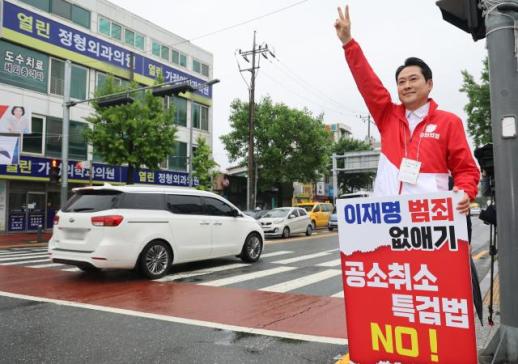 Jang Dong-hyuk Calls for Victory to Prevent Lee Jae-myung's Rule Jang Dong-hyuk, the leader of the People Power Party, urged supporters on May 21, the first day of the official campaign for the June 3 local elections and parliamentary by-elections, to secure victory to prevent Lee Jae-myung and the Democratic Party from gaining unchecked power.In a post on Facebook, Jang stated, "This election is about protecting the freedom and democratic order of South Korea."He expressed concern that President Lee would seek to erase his trial through a special investigation and amend the constitution to pave the way for long-term rule. Jang warned that after the local elections, policies such as raising property taxes and eliminating special deductions for long-term holdings could lead to a housing crisis where citizens are forced out of their homes.Jang also criticized potential tax increases on sugar, tobacco, and alcohol, asserting that the People Power Party would protect citizens from what he termed Lee's plundering of the public's resources and property.He emphasized that this election is also about ensuring national security, claiming that Lee is inciting the public under the guise of "self-reliance" and "sovereignty," with the ultimate goal of withdrawing U.S. troops from South Korea and dismantling the U.S.-South Korea alliance.Jang pointed out that while remaining silent on drone attacks from Iran, an ally of North Korea, Lee has directed fake news and criticism towards Israel, a U.S. ally. He affirmed that the People Power Party would work alongside the public to ensure the survival of South Korea."This is a challenging election. However, more citizens are awakening," Jang remarked. He noted that the reality of Lee and the Democratic Party's threats to citizens' freedoms, livelihoods, and national security is becoming clearer. He encouraged supporters to run tirelessly and speak out, believing that more citizens would recognize the truth and support the People Power Party.He concluded, "We will win if we run together. June 3 will be the day we rebuild South Korea."* This article has been translated by AI. 2026-05-21 12:28:21
 -
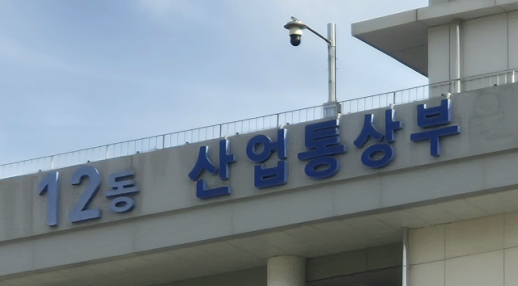 South Korea and EU Hold Supply Chain Policy Dialogue Amid Global Instability The South Korean government is resuming supply chain policy discussions with the European Union (EU) for the first time in over two years. This initiative comes as geopolitical tensions in the Middle East have heightened supply chain vulnerabilities. On May 21, the Ministry of Trade, Industry and Energy held the "2nd Korea-EU Supply Chain Policy Dialogue" in Seoul with the EU's Directorate-General for Growth. South Korea was represented by Deputy Minister Moon Shin-hak, while the EU delegation was led by Director-General Kirsten Jorna. The Korea-EU supply chain policy dialogue was established to expand existing industrial policy discussions to include supply chains, launching its first meeting in December 2023 following a summit between the two sides. This meeting, which resumed after two years and five months, aimed to assess the current state of cooperation in supply chain and industrial policy and discuss subsequent measures. Global supply chains have been significantly impacted by geopolitical risks, including the prolonged Russia-Ukraine conflict, rising tensions in the Middle East, and intensified U.S.-China strategic competition, leading to increased uncertainty in the supply of raw materials, energy, and critical components. Particularly concerning is the recent blockage of the Strait of Hormuz, a strategic chokepoint through which a significant portion of the world's oil maritime traffic passes, contributing to volatility in the international energy market. In response, both sides shared their policies for stabilizing supply chains amid ongoing disruptions caused by geopolitical conflicts and the closure of the Strait of Hormuz. The South Korean delegation introduced a supply chain bill aimed at establishing a multi-agency support system and an early warning system to quickly detect signs of supply crises for critical items such as materials, components, and equipment. They also exchanged views on the EU's current status and plans for building a supply chain monitoring system. Discussions also covered trends in industrial policy and key legislative directions. The South Korean side emphasized the need for the EU's industrial acceleration law and other major policies to be designed and implemented in a way that strengthens the close linkage of supply chains between the two regions. Cooperation in strategic industries, including critical minerals and batteries, as well as investment collaboration between companies, were also key agenda items. The Ministry of Trade, Industry and Energy plans to continue expanding cooperation in supply chains for strategic industries such as critical minerals and batteries, while strengthening economic security and industrial policy collaboration with the EU. Deputy Minister Moon stated, "Korea and the EU are strategic partners that share universal values of freedom, human rights, and the rule of law, and we have significant potential for complementary cooperation in advanced industries and supply chains. I hope this dialogue leads to tangible outcomes and becomes a key channel for solidifying supply chain stabilization and industrial cooperation between Korea and the EU."* This article has been translated by AI. 2026-05-21 12:27:00
 -
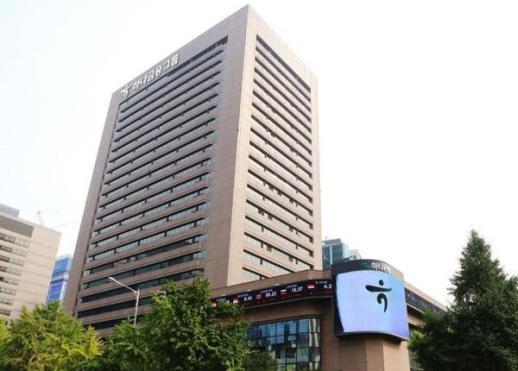 Hana Financial Group Launches Consumer Protection Committee Hana Financial Group has established a Consumer Protection Committee, marking the launch of a comprehensive consumer protection system at the group level. All major affiliates, including Hana Bank, will participate in the initiative to proactively address consumer inconveniences and risks associated with financial product sales.On May 21, Hana Financial announced that it is the first financial holding company in South Korea to convene a Consumer Protection Committee within its board of directors.Earlier, in March, Hana Financial amended its articles of incorporation during the regular shareholders' meeting, transforming the existing Consumer Risk Management Committee into the Consumer Protection Committee. Subsequently, it appointed Professor Choi Hyun-ja as an outside director and consumer protection committee member, and elevated the rank of the executive responsible for consumer protection from managing director to vice president.During the meeting, Yoon Shim was elected as the inaugural chairperson of the committee. The committee also focused on discussing the group's consumer protection activities planned for the second half of last year and the implementation status of the 'Best Practices for Financial Consumer Protection Governance' announced by the Financial Supervisory Service in September.Hana Financial aims to activate a unified consumer management system involving key affiliates such as Hana Bank, Hana Securities, Hana Card, and Hana Capital through this committee. Future core tasks will include establishing group consumer protection policies, defining the roles and authority of the Chief Consumer Protection Officer (CCO), and reviewing and supporting internal controls for consumer protection at subsidiaries. A group consumer protection council will also be established to share best practices for consumer protection activities and complaint prevention among affiliates.Hana Financial Chairman Ham Young-joo stated, "This is a proactive measure to establish a consumer protection system focused on prevention. We will continue to concentrate our efforts on enhancing the integrated consumer protection governance at the group level."* This article has been translated by AI. 2026-05-21 12:24:18
 -
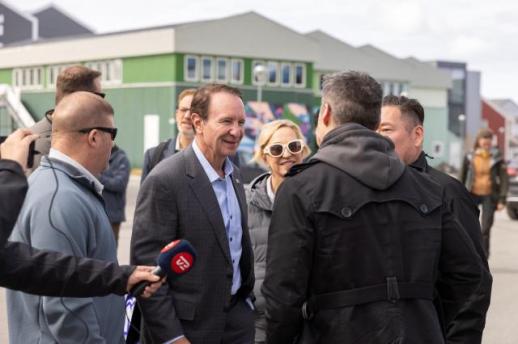 Trump Envoy Says U.S. Needs to Expand Influence in Greenland Donald Trump’s envoy to Greenland, Jeff Landry, the governor of Louisiana, emphasized the need for the United States to expand its influence in Greenland during a recent visit. In an interview with AFP on May 20, Landry stated, "Greenland needs the United States," adding, "I believe it is time for the U.S. to leave its footprint in Greenland again." He noted that he is aware the president has mentioned expanding national security operations in Greenland and redeploying personnel to certain bases. Landry visited Nuuk to attend an economic forum held on May 19-20. However, his unilateral visit, without an official invitation from the event's organizer, Business Greenland, sparked controversy locally. Appointed as the U.S. envoy to Greenland in December 2025, this was Landry's first visit to the territory. He had previously attempted to attend a dog sled race in Greenland in March but had to cancel due to opposition from the Greenland Dog Sled Association (KNQK). During his visit, Landry met with Greenland's Prime Minister Jens Frederik Nielsen and Foreign Minister Múte Egede, conveying that there has been no change in President Trump’s stance on the desire to annex Greenland. Trump has argued for the necessity of securing Greenland for national security reasons. However, in January, he stepped back from the idea of using force and has since engaged in diplomatic discussions with Greenland. Regarding the national security concerns raised by Trump, both sides are reportedly discussing the expansion of U.S. military presence. Recently, the BBC reported that the U.S. is considering establishing three new military bases in southern Greenland and designating these facilities as U.S. territory. Currently, the only U.S. military base in Greenland is the Pituffik Space Base in the northwest.* This article has been translated by AI. 2026-05-21 12:21:21
 -
 Alibaba Unveils In-House AI Chip 'Zhenwu M890' to Reduce Dependence on Nvidia Alibaba has unveiled its in-house artificial intelligence (AI) chip, the 'Zhenwu (젠우) M890,' as part of a strategy to reduce reliance on foreign high-performance AI semiconductors like those from Nvidia amid ongoing U.S. export restrictions on advanced semiconductors to China. On May 20, during the Alibaba Cloud Summit held in Hangzhou, the company showcased the next-generation AI chip, which was developed by its semiconductor design subsidiary, T-Head. According to the company, the performance of the Zhenwu M890 is three times greater than that of its predecessor, the Zhenwu 810E. The Wall Street Journal reported that this chip features 144GB of GPU memory and supports both AI training and inference tasks, unlike previous models. Alibaba stated, "The new chip is suitable for agent-type AI tasks that require processing multiple stages and utilizing various AI models simultaneously." Alongside the chip, Alibaba also introduced a new server and a large language model (LLM). The 'Panjiu (판지우) AL128' server is a high-performance system that combines 128 Zhenwu M890 chips. Reuters reported that this system will be offered to corporate clients through Alibaba Cloud's AI model platform in China. The next-generation LLM, 'Qwen3.7-Max,' was also launched. This model is designed for complex coding, intricate reasoning, and multi-stage tasks that require extended processing time. The company noted that the Qwen3.7-Max and the infrastructure based on the Zhenwu M890 can handle complex AI tasks for up to 35 hours without performance degradation. Alibaba also presented its AI chip roadmap, planning to release a follow-up product, the V900, in the third quarter of 2027, and the J900 in the third quarter of 2028. The V900 is expected to achieve approximately three times the performance of the Zhenwu M890. T-Head has reportedly shipped over 560,000 units of the Zhenwu product line, with more than 400 clients across 20 industries, including automotive and finance, adopting the technology. This announcement aligns with the trend of China's big tech companies striving for semiconductor independence. As the U.S. continues to limit exports of high-performance AI chips to China, companies like Alibaba and Huawei are accelerating their in-house chip development. Previously, Alibaba announced plans to invest 380 billion yuan (approximately $53 billion) over three years in cloud and AI infrastructure.* This article has been translated by AI. 2026-05-21 12:18:52
 -
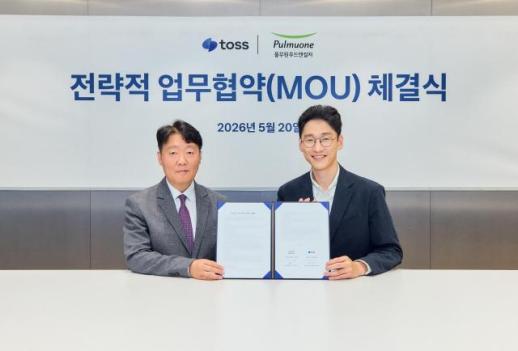 Toss Introduces FacePay at Major Rest Areas in Partnership with Pulmuone Food & Culture Toss announced on May 21 that it will introduce its facial recognition payment service, FacePay, at over 20 major rest areas across the country in partnership with Pulmuone Food & Culture. This marks the first implementation of FacePay at rest areas in South Korea. The two companies signed a memorandum of understanding (MOU) on May 20 at Toss headquarters in Yeoksam-dong, Gangnam, Seoul. Key executives from both companies, including Toss Vice President Oh Gyu-in and Pulmuone Food & Culture Vice President Kim Kyung-soon, attended the ceremony. Under the agreement, FacePay will first be implemented at the Gyeonggi Gwangju Rest Area (toward Gwangju) before expanding to more than 20 additional locations. Toss will install its payment terminals, known as Toss Front, at open stores in the rest areas, while existing kiosks will be equipped with the Toss Front Cam, which enables facial recognition. Users will be able to make payments using only facial recognition, without the need for a card or mobile phone. A Toss representative stated, "FacePay is expanding its application in various offline environments where quick payments are needed. We will continue to collaborate to provide a more natural and convenient payment experience in high-traffic areas like rest stops."* This article has been translated by AI. 2026-05-21 12:16:19
 -
 Samsung Electronics Shares Surge After Labor Agreement Samsung Electronics' stock has risen more than 6%. This surge follows a tentative wage agreement reached between management and labor unions, alleviating fears of a total strike and boosting investor sentiment. According to the Korea Exchange, as of 10:29 a.m. on May 20, Samsung's shares were trading at 293,000 won, up 6.16% from the previous day. During pre-market trading, the stock even touched 300,000 won. The sharp increase in Samsung's stock price is attributed to the tentative wage agreement reached late on May 21, after final negotiations mediated by Minister of Labor Kim Young-hoon. Previously, on May 14, Samsung's stock had approached the 300,000 won mark but dropped 6.76% due to prolonged disputes over performance bonuses and macroeconomic uncertainties. Notably, foreign investors sold off 7.8621 trillion won worth of Samsung shares between May 15 and 20. Han Ji-young, a researcher at Kiwoom Securities, stated, "The news of the tentative agreement in labor negotiations has eased strike risks, creating a positive supply-demand environment, particularly for semiconductor stocks." Analysts are optimistic about Samsung's performance, raising their target prices based on anticipated improvements in earnings and favorable memory market conditions. Shinhan Investment Corp. raised its target price by 83.3% to 550,000 won. Analyst Kim Hyung-tae noted, "The expected rise in memory prices, stable earnings visibility from long-term contracts, and expectations for enhanced shareholder returns have all contributed to this outlook, alongside the resolution of labor-related concerns." Mirae Asset Securities also increased its target price from 400,000 won to 480,000 won. Analyst Kim Young-gun highlighted that the growth rates for server and enterprise solid-state drives (SSDs) in May were 22.3% and 41.5%, respectively, showing additional growth compared to the previous month. On the same day, Korea Investment & Securities raised its target price to 570,000 won, the highest among brokerages, in light of expectations for a significant increase in memory prices in the second quarter. Chae Min-sook, a researcher at Korea Investment & Securities, stated, "We have revised our forecast for the average selling price increase of general-purpose DRAM from 30% to 60% for the second quarter, leading us to raise our operating profit estimates for Samsung Electronics to 377 trillion won and 573 trillion won for this year and next year, respectively."* This article has been translated by AI. 2026-05-21 12:15:00
 -
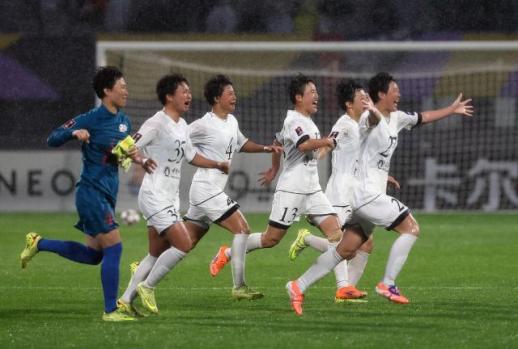 North Korea's 'My Hometown Women's Football Team' Advances to Finals North Korean state media reported that the 'My Hometown Women's Football Team' has advanced to the finals after a match held in South Korea. The Korean Central News Agency announced on May 21 that the team won 2-1 against Suwon FC Women in the semifinals of the 2025-26 Asian Football Confederation (AFC) Women's Champions League (AWCL) held the previous day. This marks the first time in nearly eight years that North Korean athletes have participated in a sports event in South Korea, with the last instance being in December 2018 during the International Table Tennis Federation (ITTF) World Tour Grand Finals in Incheon. In football, it is the first visit by North Korean players to South Korea since the 2014 Incheon Asian Games. This is also the first time a North Korean women's football club has traveled to the South. The Central News Agency noted, "The semifinal match between our My Hometown team and the South Korean Suwon team took place on May 20 in South Korea. Despite conceding a goal in the second half, our players intensified their cooperation and launched a strong offensive." The report mentioned that players Choi Geum-ok and Kim Kyung-young scored goals, and the finals are scheduled for May 23. However, the Central News Agency did not provide details about the atmosphere at the match, including the support from a joint cheering squad organized by civilian groups from both Koreas. The name 'Suwon FC Women' was abbreviated to 'Suwon team,' and the venue was referred to simply as 'South Korea.' The Rodong Sinmun, which is read by North Korean citizens, also published the Central News Agency's article on its third page, featuring photos of My Hometown players celebrating in the rain and competing in the wet conditions.* This article has been translated by AI. 2026-05-21 12:12:18
 -
 AJP Focus: Samsung's bonus war and the price of AI prosperity "Money often costs too much." Ralph Waldo Emerson wrote that line in the 19th century, but it reads today almost like a warning for the age of artificial intelligence. The real cost of the AI boom is no longer measured only in capital expenditures, GPU prices or trillion-dollar market valuations. It is increasingly measured in resentment, polarization, labor conflict and the quiet erosion of social cohesion — socially, politically, psychologically. South Korea's recent labor showdown at Samsung Electronics exposed that reality more sharply than perhaps any other event in Asia so far. What appeared on the surface to be a dispute over bonuses inside the world's largest memory-chip maker was in fact something far larger: a collision between industrial-era labor systems and the new economics of AI wealth. Under a provisional agreement reached after marathon negotiations, Samsung semiconductor employees stand to receive stock-based bonuses approaching 600 million won this year if profit targets are met. The framework allocates 10.5 percent of agreed business performance to a new special semiconductor incentive pool with effectively no upper ceiling — mirroring, and in some respects exceeding, the uncapped compensation model introduced by rival SK hynix. The numbers themselves explain why the dispute became a national issue. The AI boom is producing concentrations of profit unprecedented in modern industrial history. Nvidia on Wednesday posted quarterly net income of $58.3 billion as AI demand exploded globally, with CEO Jensen Huang describing demand as "parabolic." The problem is that modern democratic societies were never designed to absorb wealth concentration occurring at this speed. And that is where the costs begin. The first cost is individual and psychological. At the center of the Samsung conflict was not merely money, but the perception of fairness. The union argued that semiconductor workers who helped restore Samsung's competitiveness in the AI memory race deserved transparent participation in the profits they generated. Workers increasingly rejected opaque bonus formulas whose standards appeared to shift year by year, subject to management discretion. In the AI era, employees no longer want merely stable salaries. They want ownership of upside. From the workers' perspective, that demand is rational. Semiconductor profits can now surge by tens of trillions of won within a single cycle. When AI transforms a company into a strategic global bottleneck, employees inevitably begin asking why their compensation systems still resemble those of the manufacturing era. First-quarter profit from chip operations at Samsung Electronics and SK hynix combined reached $63 billion, with operating margins topping 70 percent. The same phenomenon creates a second cost: social fragmentation. According to National Tax Service data for 2024, the average annual salary of Korean workers stood at around 45 million won. But the median — the point at which half of workers earn less — was only 34.17 million won, or roughly 2.85 million won a month before tax. In practical terms, nearly half of Korean workers take home less than 3 million won a month before tax. That reality inevitably deepens feelings of relative deprivation when semiconductor employees are potentially pocketing bonus payouts worth double-digit multiples of an ordinary annual salary in a single cycle. Estimates that Samsung memory-chip employees could theoretically receive more than 2.6 billion won in cumulative bonuses over three years under the union's preferred formula triggers immediate public sensitivity. Even if such projections rely on optimistic assumptions about sustained AI demand, the psychological effect is already real. To many ordinary Koreans struggling with inflation, housing costs and stagnant wages, the dispute increasingly resembled not a labor negotiation but a symbol of how unevenly the gains of the AI revolution are being distributed. That perception matters politically. Because the third cost is institutional and democratic. The administration of President Lee Jae-myung understood that a strike involving tens of thousands of semiconductor workers at a company responsible for roughly one-fifth of Korea's exports could rapidly evolve into a national crisis. A prolonged disruption at Samsung would not merely have delayed memory-chip shipments. It could have affected AI server production, hyperscaler expansion plans, semiconductor pricing and broader investor confidence across Asia. That is why the government treated the dispute not as a routine wage conflict but as a matter of national strategic stability — and notably, it chose to manage that crisis democratically rather than coercively. The National Labor Relations Commission exhausted the formal mediation procedures required under Korean labor law. When talks stalled, Labor Minister Kim Young-hoon personally stepped in for nonbinding negotiations, seeking voluntary compromise rather than imposing state authority. In many countries, governments confronting strategic industrial unrest instinctively choose either suppression or populist escalation. Korea attempted something more difficult: preserving labor rights while preventing economic self-destruction. The labor ministry repeatedly emphasized dialogue "until the very end," in hopes of establishing a democratic precedent for managing AI-era labor conflict through institutional legitimacy rather than raw confrontation. The symbolism mattered — because the fourth cost is economic and structural. Once SK hynix removed bonus caps, compensation expectations spread rapidly across corporate Korea. Unions at Hyundai Motor Company demanded bonuses tied to 30 percent of net profit. Workers at LG Uplus pushed for operating-profit-linked pay. Unions across Kakao affiliates approved simultaneous strike votes in what could become the company's first group-wide walkout. Large conglomerates possess pricing power, strategic leverage and global market dominance. Smaller firms do not. Samsung alone operates through hundreds of suppliers and tens of thousands of subcontracted workers who are entirely outside the semiconductor bonus framework. Smaller manufacturers, suppliers and nonunion workers watch from the outside as AI profits accumulate within a narrow circle of strategic firms and organized labor. That widens Korea's already severe labor-market dualism. Samsung and SK hynix may stand at the summit, but the mountain beneath them was collectively built — through decades of state-backed tax incentives, national talent cultivation, university research, supplier ecosystems and the cooperation of equipment, materials and logistics firms across the broader economy. Which brings us to the final cost: the erosion of the old social contract itself. Korean conglomerates historically functioned not merely as employers but as quasi-familial institutions, promising stability in exchange for loyalty. Compensation systems emphasized organizational harmony and relative equality over radical differentiation. The AI economy destabilizes that model at its foundation. In Silicon Valley, superstar engineers increasingly resemble elite athletes, their compensation reflecting strategic scarcity. American firms aggressively deploy stock options, equity incentives and individualized rewards to compete for AI talent. Korea's labor culture still largely belongs to the industrial era. That mismatch is becoming unsustainable. Industrial-era labor laws were designed around fixed factories, predictable productivity and long employment cycles. AI economies behave differently. Profits surge unevenly. Strategic talent shifts rapidly. Compensation increasingly depends on intangible contribution rather than standardized hierarchy. The labor market itself is growing more fluid, asymmetric and psychologically transactional. Rigid compensation systems cannot survive indefinitely under such conditions. But neither can purely winner-take-all systems imported wholesale from Silicon Valley. The United States offers extraordinary upside — and extraordinary instability: layoffs, collapsing valuations, brutal volatility. Korea's collective model emerged partly to guard against precisely that insecurity. The challenge now is not choosing between American-style capitalism and old industrial paternalism. It is finding a new equilibrium capable of preserving legitimacy. Korea must build compensation systems transparent enough to feel fair, flexible enough to reward strategic talent and broad enough to prevent AI prosperity from deepening social fracture. The Samsung negotiations, for all their tension, offered at least one encouraging sign: the system bent without breaking. The government resisted both anti-labor crackdowns and populist escalation. Institutional mediation processes were exhausted before they were abandoned. Management eventually acknowledged that AI-era competition is now fought not only through technology but through compensation structures. And unions ultimately chose negotiated compromise over industrial paralysis. That democratic process may ultimately matter more than the size of the bonuses themselves. Because the defining question of the AI era is no longer whether extraordinary wealth will be created. The real question is how much social, political and human cost societies are willing to pay for it. 2026-05-21 11:35:42