
Journalist

Joseph Kwak
-
 Retailers Expand Quick Commerce Services Across Convenience Stores and Supermarkets The competition among retailers to penetrate consumers' daily lives with quick commerce (instant delivery) is intensifying. Convenience store giants CU and GS25 have announced a 24-hour delivery system, filling the delivery gap from 3 a.m. to 6 a.m. Meanwhile, grocery platforms like Curly, Homeplus, and SSG.com are also entering the local instant delivery market. According to industry sources, CU and GS25 began their 24-hour delivery service in partnership with the delivery platform Coupang Eats on May 19. To capture the surging demand for late-night deliveries due to changing nighttime lifestyles, they have completely filled the previously limited delivery hours during the night and early morning. CU has started deliveries during the previously unavailable hours of 3 a.m. to 6 a.m. through Coupang Eats, achieving a 24-hour service across over 7,500 stores nationwide. CU reported that from January to April this year, late-night delivery sales grew by 120.0%, significantly outpacing the overall delivery sales growth rate of 91.6%. GS25 has also initiated 24-hour delivery at around 1,000 stores in Seoul, Gyeonggi Province, and six major metropolitan cities. Since November of last year, late-night delivery sales have increased by 42.7%, indicating that this time frame has become a new growth driver. GS25 plans to gradually expand its delivery range to all areas where Coupang Eats operates 24 hours. Seven Eleven is set to launch 24-hour delivery through Coupang Eats next month, while Emart24 is considering extending its delivery hours. E-commerce and large supermarkets are also focusing on expanding their local logistics networks to deliver fresh produce and essential goods within an hour. SSG.com’s quick commerce service, 'Baro Quick,' saw its average daily orders triple in April compared to January. Notably, small-sized ingredients like individual zucchini, a pack of green onions, and a block of tofu topped the sales charts. The rise in demand for instant delivery aligns with a shift in consumer behavior towards purchasing only what is necessary for immediate meals, rather than bulk buying due to high inflation. Curly opened its 'Curly Now' quick commerce service in Seocho in March and is preparing to open its fourth location, 'Songpa Store,' near Songpa Station in the second half of this year. Curly has already opened its second location, Dogok Store, following the first location, DMC Store, in Bukgajwa-dong, Seodaemun-gu, in 2024. By concentrating its operations in affluent areas with dense office and residential complexes in Gangnam, Curly delivers over 6,000 products, ranging from fresh food to luxury beauty items, within an hour to meet premium quick commerce demand. Homeplus is strengthening its collaboration with Coupang Eats, expanding its quick commerce stores to 47 nationwide. The company is applying its instant delivery expertise gained from its existing Homeplus Express (SSM) 'Magic Now' service to its larger supermarkets. Homeplus offers free delivery for Coupang Wow members on orders over 15,000 won and is expanding its delivery lineup to include fresh produce, large-volume items, and deli options, enhancing its competitiveness. The quick commerce market is rapidly growing. According to global market research firm Statista, the domestic quick commerce market was estimated at 4.4 trillion won last year and is projected to grow to 5.9 trillion won by 2030. This represents an increase of about 14 times compared to 350 billion won in 2020. An industry insider noted, “As prolonged high prices lead to a trend of purchasing only essential items in small quantities, quick commerce has become a core survival strategy for retailers. The competition to optimize logistics networks will accelerate in the second half of the year, overcoming the spatial limitations of offline stores and driving additional sales.”* This article has been translated by AI. 2026-05-23 19:51:31
 -
 Starbucks Apologizes Again Over Controversial 5·18 Slogan, Urges Restraint on Staff Criticism Starbucks Korea has issued another apology following backlash over promotional slogans related to the May 18 Democratic Movement. On May 22, the company released a statement to all its stores nationwide, expressing, "We deeply apologize for the significant hurt caused to the spirits of the May 18 Democratic Movement, the bereaved families, and the public." Starbucks Korea clarified that the controversy stemmed from a mistake made during the operation of its online business and emphasized that it was unrelated to store partners. The company urged the public to refrain from criticizing its employees, stating, "We sincerely ask for your restraint in directing blame toward our partners, who strive to do their best every moment." Additionally, they expressed gratitude for any warm consideration shown to employees, allowing them to work in a safe environment. The controversy arose on May 18, the anniversary of the May 18 Democratic Movement, when Starbucks Korea used slogans such as 'Tank Day' and 'Bang on the Desk!' during a tumbler promotion. Following complaints and criticism directed at store employees, the company issued a further apology aimed at protecting its staff. Internal measures are also underway. On May 20, Starbucks Korea held a town hall meeting at its headquarters in Gangnam, Seoul, to discuss the controversy and response strategies with employees. Reports indicate that about 150 out of 600 employees attended the meeting. During the meeting, executives addressed the disarray within the organization caused by the recent controversy and the dismissal of the CEO, urging employees to continue their work without distraction.* This article has been translated by AI. 2026-05-23 19:48:45
 -
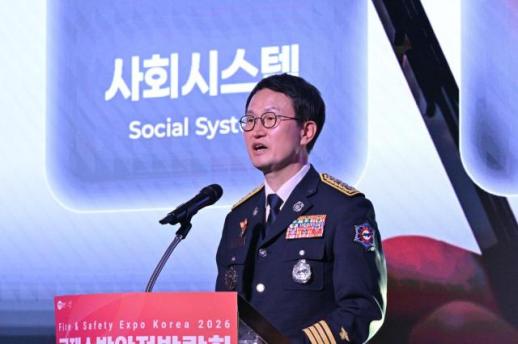 Presidential Office Launches Investigation into Fire Chief Kim Seung-ryong The Presidential Office initiated an investigation into Fire Chief Kim Seung-ryong on May 22. Chief Spokesperson Kang Yu-jeong announced to reporters that President Lee Jae-myung has ordered an immediate inquiry into the fire chief. The investigation is reportedly related to personal misconduct, although the Presidential Office has not disclosed specific details. Kim has been acting in the role since last September, following the dismissal of former Fire Chief Heo Seok-gon over allegations of involvement in a state of emergency. He was promoted to Fire Chief in March.* This article has been translated by AI. 2026-05-23 19:46:18
 -
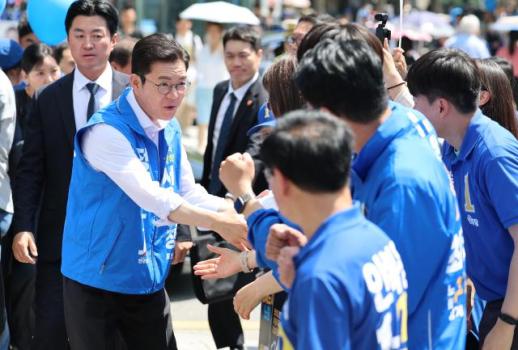 Jung Won-oh Criticizes Oh Se-hoon on Safety Issues at Guui Station Jung Won-oh, the Democratic Party's candidate for Seoul mayor, intensified his criticism of Oh Se-hoon, the candidate from the People Power Party, on safety issues during his campaign on May 22. He highlighted the recent construction flaws at Samsung Station on the GTX-A line as a key concern. Jung began his day by attending a memorial event for the 10th anniversary of the Guui Station industrial accident in Gwangjin-gu, Seoul. He referenced the recently passed Life Safety Basic Act in the National Assembly, stating, "We will establish a Seoul City Life Safety Committee to protect citizens' fundamental right to safety." He also questioned Oh's absence from the memorial, asking, "I wonder why you did not participate in such an important agreement." Continuing his attack on Oh, Jung raised concerns about the ongoing issues during Oh's tenure as mayor, saying, "Don’t you wonder why there have been major safety incidents and fatalities during Oh Se-hoon's administration? This is not a coincidence; it is a structural problem created by a lack of safety awareness." In response to Oh's proposal for a public debate, Jung remarked, "It seems that Oh tries to deflect responsibility for his mistakes by politicizing them. He should visit the Samsung Station site to see the issues firsthand and devise solutions." Throughout the day, Jung campaigned in northern districts like Jungnang and Nowon, emphasizing his real estate policies and local pledges. He stated, "If there have been housing difficulties during your five years as mayor, you should apologize instead of blaming your predecessor. You are unqualified; we need change." He also criticized the decline in Seoul's gross regional domestic product (GRDP), asserting, "Shouldn’t we replace a mayor who cannot stimulate economic vitality?" He promised that if elected, he would transform Seoul into a vibrant economic city like Seongdong-gu. Jung pledged to issue 100 billion won in local currency, the Jungnang Love Gift Certificate, expedite the construction of the Myeonmok Line, and ensure timely completion of the GTX-B line. In Nowon-gu, he promised to support the timely opening of the Dongbuk Line and the bio-industry belt at Changdong Station. Regarding reconstruction and redevelopment, he stated, "We will assist associations in making swift decisions and streamline administrative procedures to ensure that reconstruction and redevelopment proceed quickly and safely."* This article has been translated by AI. 2026-05-23 19:44:13
 -
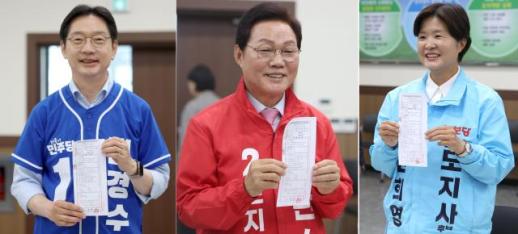 Candidates Present Plans for Gyeongnam Governor in TV Debate In a televised debate ahead of the June 3 local elections, Gyeongnam Governor candidates Kim Kyung-soo of the Democratic Party, Park Wan-soo of the People Power Party, and Jeon Hee-young of the Progressive Party outlined their visions for the region's development while also engaging in negative campaigning over military service and hiring favoritism allegations. The candidates participated in the debate held at Gyeongnam MBC on May 22, emphasizing the need for cooperation with the central government, consistent policies, and the dismantling of factional politics to garner support. Kim stated, "The current crisis cannot be overcome by Gyeongnam alone. We must work together with the central government," challenging Park by asking, "How can a governor who fights against the central government overcome a crisis?" Park responded, "I was born and raised in Gyeongnam and know it better than anyone. I have worked solely for the residents of Gyeongnam. Currently, Gyeongnam leads in all economic, population, and living indicators." Jeon added, "Labor rights must be guaranteed, and the rights to life and survival must be protected. I will end the era of impoverished residents. Gyeongnam needs new figures for new politics." When asked how they would share benefits from the Jinhae New Port and the Gadeok New Airport with Busan, the candidates provided differing responses. Jeon emphasized the need for careful examination of whether these projects would genuinely improve residents' lives, citing the climate crisis and marine ecosystem as critical issues. Park outlined his vision for maximizing Gyeongnam's development, which includes expanding transportation infrastructure, increasing industrial institutions, broadening free economic zones to attract businesses, and fostering international business. Kim asserted, "The new port should be developed into a core of high-value-added logistics integrated with manufacturing, which also requires cooperation with the central government." In response to another common question about securing stable water resources, all three candidates agreed on the need to improve the Nakdong River's water quality. The debate saw intense exchanges, particularly between Kim and Park. Park criticized Kim for the 'Druking incident,' stating, "As a result of stepping down during his term, Gyeongnam's economic growth rate fell to the lowest. His pledge fulfillment rate is also the lowest." In defense, Kim countered, "I facilitated the exemption of the KTX preliminary feasibility study, passed the special law for Gadeok New Airport, advanced the national project for smart industrial complexes, and established the current defense industry framework. During your term, the delinquency rate of corporate loans tripled, and industrial household income ranked 15th out of 17 cities and provinces." Park then raised concerns about Kim's alleged increase in assets amounting to approximately 1.1 billion won during his imprisonment and questioned his military service. Kim responded, "That property was inherited after my father-in-law's passing, and the military service issue was handled according to regulations." Kim also challenged Park regarding allegations of hiring favoritism involving his nephew during his tenure as CEO of Incheon International Airport. He noted that the Board of Audit and Inspection stated there was 'reasonable suspicion' regarding Park's involvement in hiring during his time as mayor of Changwon and as Gyeongnam governor. In response, Park maintained, "All hiring was conducted through legal and proper procedures, and investigations concluded there were no issues."* This article has been translated by AI. 2026-05-23 19:42:00
 -
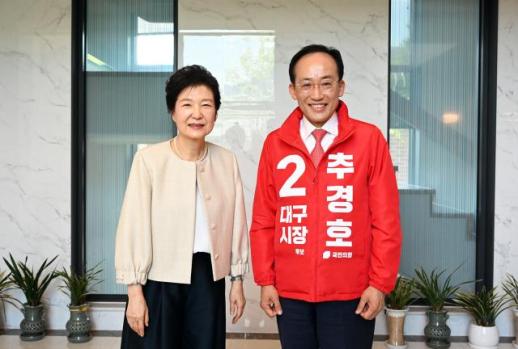 Park Geun-hye to Support Daegu Mayor Candidate Choo Kyung-ho Former President Park Geun-hye is set to support Choo Kyung-ho, the People Power Party candidate for mayor of Daegu, ahead of the June 3 local elections. With recent polls showing a tight race against Democratic Party candidate Kim Boo-kyum, Park's public appearances are expected to rally conservative voters. According to the People Power Party, Park will visit Chilseong Market in northern Daegu with Choo on May 23 at 2 p.m. They plan to campaign together for about 30 minutes, aiming to bolster support. Dalseong County, where Park's residence is located, is also where she served as a four-term lawmaker, while Choo has represented the area as a three-term lawmaker. Choo previously visited Park's residence on May 4 to seek her assistance. Although there was no mention of campaign support at that time, it is believed that the recent close polling has prompted efforts to consolidate conservative backing. A political insider noted, "I understand that former President Park's health does not pose significant issues for her to engage in public activities. If she appears at campaign events, it could greatly enhance conservative unity and have a ripple effect on her supporters." Meanwhile, Kim Boo-kyum has expressed a desire to meet with Park on several occasions, but no meeting has yet taken place.* This article has been translated by AI. 2026-05-23 19:39:20
 -
 U.S. SM-6 Long-Range Naval Missile to Be Deployed by 2034 The Defense Acquisition Program Administration (DAPA) announced on May 22 that it has finalized plans to purchase the U.S.-made SM-6 long-range naval surface-to-air missile for deployment on Aegis destroyers (KDX-III). On the same day, DAPA held the 175th Defense Acquisition Promotion Committee meeting in Yongsan, Seoul, where it reviewed and approved the decision on the SM-6 missile procurement. The SM-6 missile project aims to acquire these missiles through the Foreign Military Sales (FMS) program for installation on the second batch of KDX-III Aegis destroyers, known as the Jeongjo Daewang class. DAPA stated, "We expect that the Aegis destroyers will enhance their air defense capabilities against anti-ship ballistic missiles, aircraft, and cruise missiles, as well as their response capabilities against ballistic missiles." The total project cost is approximately 530 billion won, with the project timeline extending from 2023 to 2034. A DAPA official noted, "The deployment is expected to be completed by 2034." The SM-6, often referred to as the 'Sea Patriot,' boasts a range of over 400 kilometers and features an active guidance system that allows the missile to track targets using its own radar, significantly enhancing the ship's ability to engage multiple threats simultaneously. Classified as a terminal-phase intercept missile with an interception altitude below 36 kilometers, the SM-6 can target aircraft, ballistic missiles, and cruise missiles. Additionally, the committee approved the basic development plan for the Military Satellite Communication System III. This initiative aims to secure military-exclusive geostationary communication satellites and ground control and terminal equipment through research and development led by the Agency for Defense Development, ensuring stable military satellite communication capabilities. By operationalizing the Military Satellite Communication System III satellites before the existing satellites reach the end of their missions and replacing aging ground systems, the project aims to improve communication capacity and domestic production of key components, thereby enhancing military operational capabilities and ensuring reliable command and control. The project is set to run until 2032, with a total budget of approximately 1.27 trillion won.* This article has been translated by AI. 2026-05-23 19:36:58
 -
 Why the Seoul Election Race is Tightening Again Assessing public sentiment in Seoul is always challenging. The city serves as a microcosm of South Korean politics, yet it does not always follow national trends. While it can be a barometer for presidential elections, local elections tend to be surprisingly pragmatic. Voters prioritize practical governance over ideology and administrative promises over slogans. This makes predicting the outcome of the Seoul mayoral election particularly difficult. A poll released on May 22, just 18 days before the June 3 local elections, highlights this characteristic of Seoul. Conducted by ResearchWell for New Daily from May 20 to 21, the survey of 977 adult residents in Seoul showed that Oh Se-hoon of the People Power Party garnered 44.8% support, while Jung Won-o of the Democratic Party received 42.0%. The margin of just 2.8 percentage points falls within the margin of error of ±3.1 percentage points, indicating a very tight race. However, in politics, the shift in momentum can be more significant than the numbers themselves. What factors are influencing public sentiment in Seoul? First, central political dynamics play a crucial role. Seoul is more affected by national politics than any other city in the country. Expectations for the president and government often reflect in local elections, but political controversies and fatigue can also quickly sway public opinion. Since the new administration took office, ongoing political issues and disputes may have led some voters to believe that the next mayor should be someone capable of effectively managing the city. While it is difficult to pinpoint a single issue that has shifted the race, the tension in national politics undeniably casts a shadow over the mayoral election. Second, evaluations of the candidates themselves are significant. Jung Won-o remains strong among voters in their 40s and 50s, maintaining the Democratic Party's traditional support base. However, recent surveys indicate that a notable number of respondents feel he needs to provide further clarification regarding past allegations of violence, a signal that cannot be easily dismissed politically. In elections, moderate voters often react more sensitively to unresolved questions than to policy proposals. Regardless of the truth, how convincingly candidates address these concerns can significantly impact voter decisions. Conversely, Oh Se-hoon benefits from the advantages of being the incumbent mayor and his administrative experience. Seoul is a vast urban center where issues such as transportation, housing, redevelopment, safety, and welfare directly affect citizens' lives. In such a city, the question of who can manage the administration most effectively often outweighs ideological considerations. The relative strength of Oh among voters in their 20s and 30s, as well as those over 70, appears to reflect this trend. Nevertheless, the most critical factor remains that it is still too early to determine the outcome. The final week of the Seoul mayoral election is always decisive. There are more undecided voters than anticipated, and a single televised debate can shift the atmosphere. As fatigue from negative campaigning grows, there is a possibility that quiet voters may become more active. What is clear is that this election does not favor any single candidate. The public sentiment in Seoul is carefully weighing the options presented by the candidates. Historically, Seoul voters have chosen practical governance over ideology and competence over rhetoric. In the end, citizens will ask themselves, "Who can be entrusted with the future of Seoul for the next four years?" as they cast their votes. Thus, the Seoul election is not over until it is officially concluded.* This article has been translated by AI. 2026-05-23 19:34:19
 -
 LG to Burn All Remaining Treasury Shares Worth 350 Billion Won LG has announced plans to burn all of its remaining treasury shares to enhance shareholder value. This follows the company’s decision last year to burn half of its treasury shares, as it accelerates its shareholder return initiatives. On May 22, LG disclosed that it will burn 3,029,581 common shares, which represents 1.96% of its total issued shares. Based on the closing price on that day, the total value of the shares is approximately 350 billion won. The book value, calculated at an average acquisition price of 82,520 won per share, amounts to about 250 billion won. The scheduled date for the share burn is May 28. Previously, LG had burned half of its treasury shares (6,059,161 shares) last year. As one of South Korea's major conglomerates, LG is proactively reinforcing its shareholder return policy. At its regular shareholders' meeting in March, the company announced it would maintain a dividend of 3,100 won per common share. Looking ahead, LG plans to actively use a portion of excess funds, excluding dividends and investment resources from temporary large profits or regular earnings, for share buybacks. Last year, LG raised the lower limit of its dividend payout ratio from 50% to 60% based on adjusted net income. Consequently, the dividend payout ratio for 2025 reached 68%, meeting the criteria for high-dividend corporate tax separation. As a result, the average dividend payout ratio over the past five years has remained high at around 69%. In the long term, LG aims to increase its return on equity (ROE) to between 8% and 10% by 2027.* This article has been translated by AI. 2026-05-23 19:31:39
 -
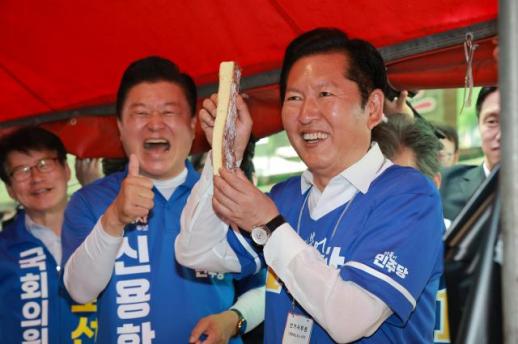 Democratic Party Targets Voter Support in Chungbuk and Gangwon Regions The Democratic Party intensified its campaign efforts in Chungbuk and Gangwon provinces on May 22, the second day of the official election period for the June 3 local elections. This push comes after the opposition People Power Party won control of local governments in these regions during the last election. Jung Cheong-rae, the party's chief election strategist, is focusing on regaining voter support. The campaign kicked off in the morning with greetings at the SK Hynix Cheongju campus, where Jung, along with Shin Yong-han, the candidate for Chungbuk governor, and Lee Jang-seop, the candidate for Cheongju mayor, shook hands and took photos with commuters. Later, Jung visited Chungju Public Market, where he promised full support for Shin and Maeng Jeong-seop, the candidate for Chungju mayor, alongside former Chungbuk governor Lee Si-jong, who is now a campaign committee member. "For Chungbuk to develop, we need a Democratic president, a Democratic governor, and Democratic lawmakers," Jung stated. He added that a pledge implementation team would be formed around Chungbuk lawmakers to ensure that candidates' promises serve the public interest. Jung emphasized that Shin and Maeng are the best candidates to significantly advance Chungbuk and Chungju, pledging that the Democratic Party would fully support their efforts. He highlighted key promises, including the swift establishment of a civilian runway at Cheongju International Airport and the development of a national railway network along the Gangho axis. After concluding the campaign in Chungbuk, Jung traveled to Gangwon in the afternoon to support Woo Sang-ho, the candidate for Gangwon governor. In Gangneung, Jung urged support for Woo and Kim Jung-nam, the candidate for Gangneung mayor, stating, "The Democratic Party and the Lee Jae-myung administration have focused heavily on Gangwon. We will lead the necessary laws and budgets to ensure that your needs are met promptly." Jung also praised Woo's background as the first chief of staff under the Lee Jae-myung administration, saying, "He is someone who can communicate directly with the president. He is not just a well-known name; he is a capable candidate who can truly make a difference." Additionally, Jung and Woo visited Donghae and Samcheok to support candidates Lee Jeong-hak and Lee Jeong-hoon, wrapping up the second day of their campaign activities.* This article has been translated by AI. 2026-05-23 19:30:00