
Journalist

Joseph Kwak
-
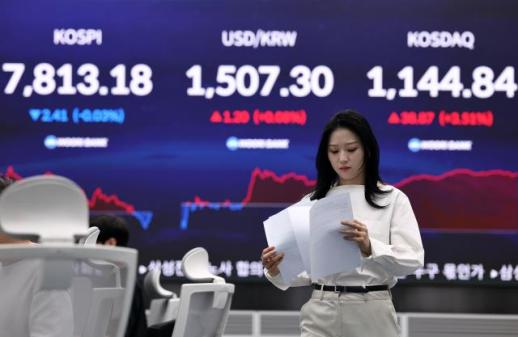 KOSDAQ Surges Over 5%, Trading Halts Triggered for Second Consecutive Day The KOSDAQ market experienced a second consecutive day of trading halts due to a temporary suspension of buy orders, known as a sidecar. According to the Korea Exchange, the buy sidecar was triggered at 9:33:06 AM on May 22. At the time of the halt, the KOSDAQ 150 futures price had risen by 114.20 points (6.12%) to 1979.20, while the KOSDAQ 150 index was up 103.72 points (5.53%) at 1979.24. The buy sidecar is activated when the KOSPI 150 futures price increases by 6% or the KOSDAQ 150 index rises by more than 3% and sustains that level for one minute. During a buy sidecar activation, all program buy orders are suspended for five minutes. The recent surge in the KOSDAQ is attributed to the launch of a public participation growth fund, which is expected to enhance capital inflow into the KOSDAQ. As of 9:57 AM, the KOSDAQ index was trading at 1162.55, up 56.58 points (5.12%) from the previous day. The index opened at 1119.43, up 13.46 points (1.22%), and continued to rise due to strong buying from foreign investors. Foreign and institutional investors were net buyers, purchasing 410.1 billion won and 181.4 billion won, respectively, while individual investors sold a net 563.5 billion won. Among the top market capitalization stocks, EcoProBM (up 11.03%), Alteogen (up 8.96%), and EcoPro (up 14.64%) showed strong performance.* This article has been translated by AI. 2026-05-23 15:18:00
 -
 Samsung Electronics Confirms Schedule for SAFE Forum 2026 in South Korea Samsung Electronics has confirmed the schedule for the 'SAFE (Samsung Advanced Foundry Ecosystem) Forum 2026' in South Korea, aimed at strengthening the global semiconductor collaboration ecosystem. According to Samsung Electronics on May 22, this year's domestic SAFE Forum will take place on July 1 at the multipurpose hall of Samsung's Seocho headquarters. The SAFE Forum is an annual technology event hosted by Samsung's foundry division since 2019, where it shares the latest semiconductor technology trends and collaboration strategies with foundry partners and industry experts. This year's event is expected to highlight Samsung's advanced technology and stable mass production capabilities in its 4-nanometer (nm) process, reinforcing trust among domestic and international clients while accelerating the expansion of the ecosystem into next-generation fine processes. Before the event in South Korea, Samsung will kick off the global SAFE Forum in the United States, specifically in San Jose, California, on May 28. This U.S. event will focus on the role of foundries in the age of artificial intelligence (AI). Notably, the U.S. forum will showcase the second-generation 2-nm (SF2P) process technology, along with the current mass production yields and process achievements, drawing significant attention from global tech companies. Additionally, plans for the third-generation process (SF2P+), set to begin mass production next year, are expected to be revealed, unveiling a roadmap targeting the AI and high-performance computing (HPC) markets. The SAFE Forums in both the U.S. and South Korea are anticipated to serve as key platforms for strengthening ties with domestic semiconductor startups and design house partners. An industry insider stated, "By solidifying the next-generation fine process roadmap and fabless customer support system, we aim to gain an edge in the fine process competition against global rivals and further strengthen our leadership in the foundry ecosystem."* This article has been translated by AI. 2026-05-23 15:15:21
 -
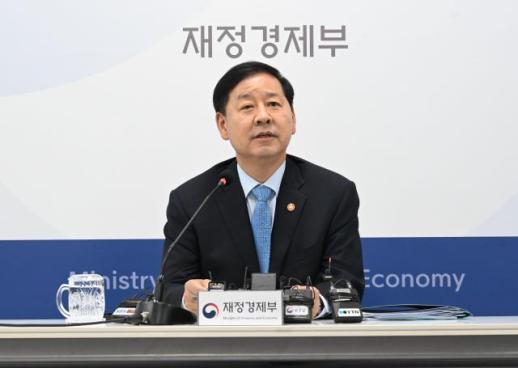 Government to Supply 90,000 Rental Homes in Greater Seoul Over Two Years The South Korean government is exploring various measures to increase the supply of non-apartment housing in response to rising apartment prices in Seoul and instability in the housing market. Non-apartment options, such as officetels, can be supplied more quickly than apartments, providing a rapid response to housing needs. On May 22, Deputy Prime Minister and Minister of Finance Koo Yun-cheol stated during a meeting of real estate ministers at the Government Complex in Seoul, "Today’s meeting will review housing market trends and discuss plans for a crackdown on illegal real estate activities." The government plans to supply 90,000 rental homes in the greater Seoul area over the next two years, from 2026 to 2027, with 66,000 of those units concentrated in regulated areas. This initiative aims to alleviate housing difficulties for young people and stabilize the market in the short term. Koo noted that the increase in apartment sale prices in Seoul has accelerated for two consecutive weeks. He explained that the number of properties for sale has significantly decreased and that rental listings have shown slight recovery. The government is committed to closely monitoring price fluctuations and property availability. Koo emphasized, "We will keep a vigilant eye on price changes and property trends to ensure market stability." The immediate focus is on expanding the supply of non-apartment housing. With rising prices primarily affecting apartments, the government aims to increase the availability of housing that can be occupied quickly to distribute demand more evenly. Koo stated, "The government is exploring various ways to expand the supply of non-apartment housing, which is a crucial part of the housing ladder." He added that non-apartment options like officetels can be supplied relatively quickly, with visible increases expected within one to two years. Expanding non-apartment housing supply is also linked to stabilizing housing for young people. As the burden of apartment prices and rental costs increases, options for young people and newlyweds become limited. The government plans to use non-apartment housing to alleviate these challenges. To facilitate this, the government will focus on increasing the supply of rental non-apartment units in regulated areas. Rental housing involves the government purchasing existing or newly built homes and leasing them, which is faster than direct construction and serves as a short-term supply solution. Koo confirmed, "We plan to supply 90,000 rental homes in the greater Seoul area from 2026 to 2027, with 66,000 units designated for regulated areas." The government is also implementing measures to accelerate the supply process. By applying modular construction methods, it aims to shorten construction time and reduce costs for developers, encouraging early project commencement. Modular construction involves pre-fabricating major structural components in factories and assembling them on-site, which can significantly reduce construction time. For housing projects that have received permits but have not yet started construction, the government will provide close management on a project-by-project basis. This includes promptly addressing on-site challenges and ensuring that financially viable projects do not encounter funding issues. Koo stated, "We will thoroughly manage housing projects that have received permits but have not yet begun construction, addressing on-site challenges immediately and ensuring that financially sound projects do not face funding difficulties." The government also reaffirmed its strict stance against market disruption. It believes that alongside increasing supply, blocking speculative demand and illegal transactions is essential for achieving market stability. Koo emphasized, "We will not tolerate any actions that disrupt market order."* This article has been translated by AI. 2026-05-23 15:13:08
 -
 Election Commission Faces Trust Issues Amid Surge in Leave Requests The National Election Commission (NEC) is once again at the center of public distrust. With the upcoming 9th nationwide local elections scheduled for June 3, it has been revealed that 176 employees are currently on leave, marking the second-highest number in the past decade. This surge in leave requests, particularly before major elections such as presidential and general elections, raises concerns beyond mere personnel issues, pointing to a broader crisis of confidence in the election management system. Elections are the foundation of democracy, and the organization responsible for managing them is expected to uphold a high level of accountability and public service. However, the recurring pattern of large-scale leaves during peak election periods leads to questions about how the public perceives the NEC. It is difficult to comprehend that an organization tasked with conducting elections is consistently facing staffing shortages during critical times. While parental and medical leaves are legally protected rights that cannot be arbitrarily restricted, the issue lies in the concentrated timing of these requests. Data shows that during non-election years, the number of employees on leave decreases, only to spike again ahead of major elections. For instance, during the 2022 presidential and local elections, the number of leave requests rose to 218, and a similar trend is evident this year as local elections approach. This phenomenon cannot simply be attributed to coincidence or individual choices. There are suspicions that a culture of avoiding work during election periods has taken root within the organization. In fact, the NEC issued a directive last year urging local election commissions to refrain from unnecessary leaves. This year, they even hinted at the possibility of transfers after returning from leave, yet the trend of increasing leave requests has not been curtailed. This indicates that the organization itself acknowledges the seriousness of the issue. More concerning is the link between this trend and the declining trust in the NEC as a whole. The commission has faced scrutiny over allegations of preferential hiring and mismanagement. During audits, issues regarding the hiring of some executives' children were uncovered, leading to calls for the introduction of a special auditor. In this context, the public is left questioning whether the NEC is truly committed to effective election management when large-scale leaves recur during election seasons. Trust in the election management organization is not merely an issue of institutional image; it is directly connected to public acceptance of election results and the stability of democracy. When voters begin to distrust the electoral process itself, the repercussions ultimately affect democracy as a whole. In times of heightened political polarization, even minor mistakes by the NEC can escalate into significant political controversies. Therefore, the NEC must maintain a level of morality and accountability that is stricter than any other organization. The NEC has stated its intention to fill staffing gaps through expanded public recruitment, and the scale of such hiring has indeed increased in recent years. However, the complexities of election operations cannot be resolved simply by deploying temporary staff. Experience and expertise are crucial for managing election systems and responding to on-the-ground challenges. Conducting elections with key personnel absent inherently carries structural risks. Now is the time for fundamental solutions. The recurring issue of leave requests during election seasons should not be viewed solely as individual circumstances but as a systemic problem within organizational operations and personnel management. A comprehensive review is needed to assess whether there is an excessive concentration of workload during specific periods, whether staffing practices are reasonable, and whether accountability and reward systems are functioning properly. Elections are the last bastion of trust in the national system. If the NEC falters, democracy itself is at risk. The recurring surge in leave requests during election seasons is no longer a trivial matter. The NEC must seriously consider that what the public sees is not just the number 176, but the level of accountability and trust in South Korea's electoral system. * This article has been translated by AI. 2026-05-23 15:10:24
 -
 Doosan Fuel Cell Shares Surge to Record High Following $529 Million Supply Contract Doosan Fuel Cell saw its shares soar more than 25% during trading, reaching an all-time high, following the announcement of a 529 billion won ($429 million) supply contract for fuel cell systems. The surge in stock price is attributed to growing expectations for increased power demand from artificial intelligence (AI) data centers, coupled with the re-emergence of previously postponed large-scale orders, which has boosted investor sentiment. According to the Korea Exchange, at 9:46 a.m. on May 22, Doosan Fuel Cell's shares rose by 29,000 won (25.03%) to 104,400 won, marking a new record high. The strong performance in the stock market appears to reflect the impact of the recently disclosed 529 billion won supply contract. According to the Financial Supervisory Service's electronic disclosure system, Doosan Fuel Cell confirmed it has signed a supply contract for fuel cell systems with Samchully ES. The contract amount represents approximately 20.28% of its recent revenue of 260.9 billion won. This contract involves supplying approximately 17 megawatts (MW) of fuel cell systems to domestic fuel cell power plants, with the contract period extending until June 8, 2026. Previously, when the contract was first announced in November 2024, the amount was not disclosed due to business confidentiality. The release of this information has now clarified the scale of the order. Market analysts believe that this announcement has contributed to the rising stock price, coinciding with increasing optimism regarding fuel cells for data centers. Doosan Fuel Cell has previously supplied products for a 39.6 MW fuel cell project in Incheon, in which Samchully ES participated. Analysts are also focusing on the potential for expansion in the U.S. market. Jeong Yeon-seung, a researcher at NH Investment & Securities, noted in a report that discussions are underway for orders of phosphoric acid fuel cells (PAFC) through Hy-Axiom, Doosan's U.S. fuel cell subsidiary. Expectations are building that production capacity could expand to around 300 MW annually. The increasing power demand from AI data centers is seen as a significant factor driving growth in the fuel cell market, as hydrogen fuel cells are gaining attention as an alternative power source due to the need for stable power supply in data centers. However, concerns about valuation pressures and intensified competition are considered variables. Jeong raised the target price from 36,000 won to 80,000 won but maintained a 'hold' investment rating. He stated, "Even with optimistic assumptions, the current stock price already reflects a valuation on par with the average of global fuel cell companies. For further increases, substantial and continuous orders that exceed market expectations are necessary." He added that not only solid oxide fuel cells (SOFC) but also competing technologies such as medium-speed engines for ships are entering the data center power generation market, emphasizing the importance of securing meaningful market share and track record in the U.S.* This article has been translated by AI. 2026-05-23 15:07:31
 -
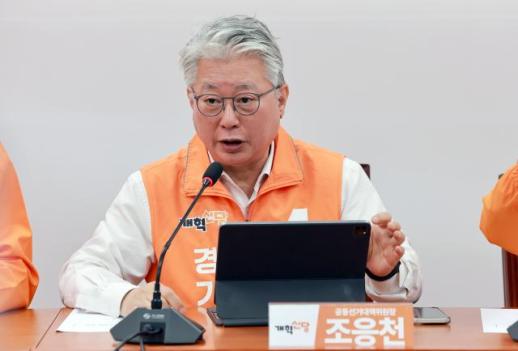 Jo Eung-cheon Criticizes Jang Dong-hyuk's Leadership as a Disaster for South Korea Jo Eung-cheon, the Reform Party candidate for Gyeonggi governor, strongly criticized the leadership of Jang Dong-hyuk, stating that its continuation would be a disaster for South Korea. During an appearance on CBS Radio's "Park Seong-tae's News Show" on May 22, Jo responded to a question about whether the opposition party's leadership should change to effectively check the ruling party. He remarked, "Jang will try to hold onto power in any way possible." He added that if Yang Hyang-ja, the People Power Party's candidate for Gyeonggi governor, achieves her goals, it could be a factor that allows Jang to maintain his position, stating, "If you vote for Yang, Jang will survive." Jo characterized the relationship between Jang and Yang as a "symbiotic relationship," noting, "Last fall, when Jang met former President Yoon Suk-yeol in prison and cried, Yang said, 'Jang kept his promise.' They are mutually supportive, like each other's lifeline." He criticized the People Power Party for failing to check the ruling Democratic Party and the Lee Jae-myung administration, which he accused of monopolizing all power, including local authority. He emphasized the importance of the first opposition party functioning effectively. Finally, regarding the possibility of conservative unification, Jo stated, "I am someone who is struggling to break the two-party cartel," and clarified, "I will not move toward solidifying the two-party cartel."* This article has been translated by AI. 2026-05-23 15:06:00
 -
 Namyang Dairy Reports 10% Increase in Formula Sales in Q1, Accelerates Southeast Asia Expansion Namyang Dairy is achieving success with its premium formula strategy, focusing on ingredient competitiveness. The company reported a 10% increase in formula sales in the first quarter of this year, with exports soaring by 54%, indicating a rapid expansion of its global business. On May 22, Namyang Dairy announced that its formula sales in Q1 rose by 10% compared to the same period last year. Domestic sales increased by 4%, while exports experienced a remarkable 54% surge. The company explained that the growing consumer trend in the infant food market is shifting from brand recognition to prioritizing product competitiveness, such as ingredients and nutritional design, which has contributed to the success of its premium product strategy. Namyang Dairy currently exports formula to major Asian countries, including China, Vietnam, Cambodia, Taiwan, and Mongolia. In Cambodia, the company holds about 90% market share in the Korean formula segment, while in Vietnam, it is expanding local distribution partnerships. Recently, at the Korea-Vietnam Business Forum, Namyang Dairy signed a memorandum of understanding (MOU) worth 70 billion won with Vietnam's largest distribution company, Phu Thai Holdings, for a three-year collaboration. A Namyang Dairy representative stated, "The competitive landscape in the formula market is rapidly shifting from price-based to ingredient-based. We plan to continue expanding our market presence in Asia, including Southeast Asia, based on our quality competitiveness from domestic raw milk and premium nutritional design." Meanwhile, Namyang Dairy has been recovering from poor performance during a legal dispute between former chairman Hong Won-sik, the second-generation founder, and private equity firm Hahn & Company. The company's profitability has improved since last year. In Q1 of this year, operating profit reached 500 million won, a 572% increase compared to the same period last year. Revenue for the same period was 225.2 billion won, up 4.4%.* This article has been translated by AI. 2026-05-23 15:03:24
 -
 Kakao Pay Waives Transaction Fees for New Small Business Merchants Kakao Pay announced on May 22 that it will fully waive transaction fees for Kakao Pay Money payments made by newly registered small and micro merchants until the end of this year. From May 18 to June 30, small businesses with annual sales of 500 million won or less can apply for this benefit. The fee waiver applies to Kakao Pay Money barcode and QR code payment transactions. Merchants who record their first payment will receive a "Success Kit for Business Owners," which includes fee reductions, promotional materials, discount coupons, and advertising support through the Kakao Pay app and Kakao Map. A free payment kit that does not require complex, high-cost systems like terminals or barcode scanners will also be provided. Foreign tourists can make payments using their home payment services without needing to exchange currency. Kakao Pay stated, "Our goal is to alleviate the management burden on small business owners facing high prices and fuel costs while connecting them with regular customers without additional costs or complicated procedures. We aim to create and grow a payment ecosystem that benefits both users and merchants." As of now, Kakao Pay has surpassed 6 million monthly offline payment users, with a cumulative transaction count reaching 500 million.* This article has been translated by AI. 2026-05-23 15:00:34
 -
 Yoon Bo-mi Exits 'Nasol Saga,' Thanks Viewers for Support Yoon Bo-mi of the girl group Apink has exited the reality show 'Nasol Saga.' During the May 21 broadcast of SBS Plus and ENA's entertainment program 'I Am SOLO, Love Continues' (also known as 'Nasol Saga'), the final selection of solo participants was featured in a special episode. At the end of the episode, host Defconn announced, "I have some disappointing news to share. Today is Yoon Bo-mi's last recording day." In response, Yoon Bo-mi expressed her gratitude, saying, "I feel I have not done enough over the past year and a half, but I appreciate the viewers for their kind support. I was so happy to be part of a program I really wanted to join. I will return as a viewer and cheer for 'Nasol Saga' with enthusiasm." On May 18, the production team of 'Nasol Saga' announced that actress Jung Hye-seung would be joining as Yoon Bo-mi's replacement. Meanwhile, Yoon Bo-mi married composer Rado (real name Song Joo-young) on May 16 in a hotel in Seoul, surrounded by family and fellow entertainers. According to the music industry, the ceremony was hosted by broadcaster Kim Gi-ri, and members of Apink performed a congratulatory song. The girl group STAYC and the duo Unchild, both under Rado's agency High Up Entertainment, also performed to celebrate the couple's future together. Rado is the main producer for STAYC and is a well-known composer who has created hit songs for groups like TWICE and Chungha.* This article has been translated by AI. 2026-05-23 14:58:04
 -
 Bodyfriend Unveils New Color 'Daiadenim' for Healthcare Robot 'New Falcon' Bodyfriend has expanded its color lineup for the compact healthcare robot 'New Falcon' with the introduction of a new color, 'Daiadenim.' According to Bodyfriend, the 'New Falcon' is the flagship model of the company's Falcon series of compact healthcare robots, which has sold a total of 100,000 units and generated 300 billion won in revenue. The series includes popular models such as 'Falcon S,' 'Falcon i,' and 'Falcon N.' The new 'Daiadenim' color is the second addition to the lineup, following the initial beige option. This color features a denim material combined with a diamond quilting pattern, appealing to luxury brands. The bright sky-blue denim used on the front of the product lightens the typical weightiness associated with healthcare appliances and enhances its appeal as an interior design object. The 'New Falcon' is designed specifically for sleep and relaxation-focused massages. It features a 'Flexible SL Frame' that can be adjusted up to 155 degrees and an XD Air massage module that provides a close massage tailored to the body's contours. It supports 28 massage modes, including 'Deep Sleep,' 'Mini Nap,' and 'Quiet Night.' Additionally, it includes a heating function adjustable in three levels up to 60 degrees and 14 anti-pinch sensors. A Bodyfriend representative stated, "The New Falcon is a steady seller, loved for its compact size and healthcare robot technology. We will continue to expand the product experience by considering not only functionality but also design elements as an interior focal point."* This article has been translated by AI. 2026-05-23 14:55:17