
Journalist

Joseph Kwak
-
 Gunfire Erupts Near White House; Trump Safe, Suspect Shot Dead On May 23, gunfire erupted near the White House, prompting reporters to evacuate as a gunman was shot dead by security personnel. According to the U.S. Secret Service (SS), the incident occurred shortly after 6 p.m. at the intersection of 17th Street and Pennsylvania Avenue, where an individual began firing a weapon pulled from a bag. The SS stated, "SS officers returned fire, striking the suspect, who was later pronounced dead at a nearby hospital." The shooting took place adjacent to the Eisenhower Executive Office Building, just 200 meters from the White House. Reporters on the North Lawn of the White House were quickly directed to take cover inside the briefing room as the SS secured the area and ordered an evacuation. The White House was temporarily closed. At the time of the incident, President Donald Trump was present at the White House, but he was reported to be unharmed.One bystander was shot during the incident, but it remains unclear whether the injury was caused by the assailant's gunfire or the return fire from SS officers.* This article has been translated by AI. 2026-05-24 10:39:29
 -
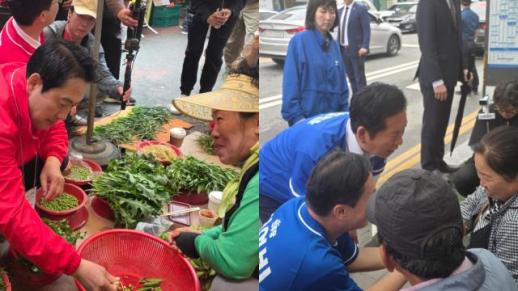 Intense Competition Ahead of Local Elections in South Korea As the June 3 local elections and by-elections for the National Assembly approach in ten days, the Democratic Party and the People Power Party are engaged in fierce competition. Initially, the Democratic Party appeared to have the upper hand, promising to create effective local governments alongside the Lee Jae-myung administration. However, with a consolidation of conservative support in key battlegrounds, the People Power Party is also gaining ground. According to political analysts on May 24, the Democratic Party is favored in most of the 16 regional governor races. However, the gap is narrowing in key districts, prompting both parties to intensify their efforts in Seoul, Busan, and Daegu to secure voter support. In the Seoul mayoral race, recent polls show a mere 0.1 percentage point difference between candidates. A survey conducted by Ace Research for Newsis from May 19 to 20 among 1,002 adults aged 18 and older in Seoul revealed that Jeong Won-o of the Democratic Party garnered 41.7%, while Oh Se-hoon of the People Power Party received 41.6%. Although Jeong initially led in the early stages of the campaign, support for Oh has been rising as the election date approaches. In this tight race, both candidates have launched attacks against each other. On the first weekend following the official campaign kickoff, Jeong targeted Oh over issues related to missing rebar at the Samsung Station construction site, while Oh retaliated by raising allegations of corruption in the redevelopment of the Seongdong-gu area. Daegu is also witnessing a heated contest. While Kim Boo-kyum of the Democratic Party is reportedly performing well in this conservative stronghold, the People Power Party's Choo Kyung-ho is working to rally conservative voters, having visited Chilseong Market with former President Park Geun-hye the previous day, creating an unpredictable electoral landscape. In Busan, the incumbent mayor Park Hyung-jun of the People Power Party and Jeon Jae-soo of the Democratic Party are engaged in a fierce back-and-forth. In Ulsan, Kim Sang-wook of the Democratic Party and Kim Du-gyeom of the People Power Party are in a close race, while in Gyeongnam, Kim Kyung-soo of the Democratic Party and Park Wan-soo of the People Power Party are also competing intensely. The Democratic Party is expected to maintain an advantage in eight regions, including Incheon, Gyeonggi, Sejong, Daejeon, Chungbuk, Gangwon, Jeonnam/Gwangju, and Jeju, while the People Power Party is projected to lead in the Gyeongbuk area. In the 14 by-elections taking place simultaneously, the Democratic Party is anticipated to secure a majority of seats. They are expected to perform well in eight districts, including Ansan Gap in Gyeonggi, Incheon Gyeyang, and Jeju Seogwipo. Conversely, the People Power Party is likely to lead in Daegu Dalseong-gun, the constituency of the late Choo, and in Ulsan Nam-gap, where candidate Kim is running. Some districts are showing extremely close races. Pyeongtaek and Busan Buk-gap are among those with multiple candidates competing fiercely. In Pyeongtaek, Kim Yong-nam of the Democratic Party, Yoo Ui-dong of the People Power Party, and Jo Guk of the Justice Party are in a tight contest, while in Busan Buk-gap, independent candidate Han Dong-hoon, Hah Jung-woo of the Democratic Party, and Park Min-sik of the People Power Party are also vying for votes. Meanwhile, the opinion poll related to the Seoul mayoral race was conducted using a 100% automated response system with virtual numbers provided by the three major telecommunications companies. The response rate was 5.5%, with a margin of error of ±3.1 percentage points at a 95% confidence level. For more details, please refer to the Central Election Survey Deliberation Commission's website.* This article has been translated by AI. 2026-05-24 10:18:51
 -
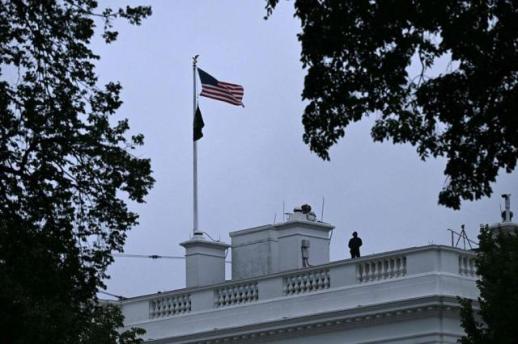 Suspect dead after shooting outside White House SEOUL, May 24 (AJP) - A suspect who allegedly opened fire near a security checkpoint outside the White House was shot and killed by U.S. Secret Service officers Saturday evening. The incident occurred at around 6 p.m. local time when an individual approached a checkpoint near the White House grounds and began firing at officers. Secret Service personnel returned fire, fatally wounding the suspect, who later died at a nearby hospital, according to multiple U.S. media reports. No Secret Service personnel were injured, but a bystander was critically injured during the exchange of gunfire, though authorities said it remains unclear whether the person was struck by the suspect or by Secret Service officers. Witnesses said they heard multiple gunshots near the White House, while reporters and photographers at the scene were hurriedly evacuated to a secure area as the press compound was cordoned off for roughly 40 minutes. U.S. President Donald Trump, who had canceled a planned trip to his golf club in New Jersey, was reportedly inside the White House at the time and was not harmed, a White House official said, adding that he had been briefed on the incident. Authorities said an investigation into the shooting is underway, adding that the suspect is believed to have had a history of mental illness, according to initial reports. The incident comes just less than a month after gunshots were fired at the annual White House Correspondents' Association dinner, forcing journalists and senior White House officials to evacuate. It is the latest in a series of security scares involving Trump, who has repeatedly been the target of assassination attempts. During his presidential campaign in July 2024, he narrowly survived a shooting while delivering a speech in Pennsylvania. Two months later, a gunman was discovered lying in wait at a golf course in Florida. 2026-05-24 10:18:08
 -
 The Rise of AI Semiconductor Dominance: How South Korea and Taiwan Became Global Leaders The global economy in 2026 revolves around three semiconductor giants: South Korea's Samsung Electronics and SK Hynix, and Taiwan's TSMC. While oil, automobiles, steel, and finance shaped the 20th century, the core drivers of civilization are now shifting towards artificial intelligence (AI) and semiconductors as we move toward the mid-21st century. AI is not just an industry; it is a new civilizational infrastructure that reshapes military, diplomatic, economic, educational, medical, cultural, financial, administrative, and energy systems. At the heart of this AI civilization are GPUs (graphics processing units), HBM (high bandwidth memory), advanced foundries, and cutting-edge processes. While U.S. tech giants are developing AI platforms, the essential hardware that powers these AIs is supplied by South Korea and Taiwan. If the U.S. controls the design and operating systems of AI, South Korea and Taiwan hold the memory and production heart of this new civilization. Today, semiconductors are the strongest pillar of the South Korean economy, with Samsung Electronics and SK Hynix at the center. Together, their market capitalizations account for about 45% of the entire South Korean stock market. This indicates not just the size of these two companies but also their deep connection to the structure of the South Korean capital market, the returns of the national pension, retirement funds, ETFs, individual investors' assets, exchange rates, exports, tax revenues, employment, and even national growth rates. Samsung Electronics is a representative national stock with approximately 5 million individual shareholders. Considering family units, a significant portion of the South Korean population is directly or indirectly linked to Samsung Electronics. SK Hynix has also emerged as a leader in HBM for the AI era, transforming from a memory company into a key player in the global AI supply chain. Taiwan's TSMC has reached the top in a different way. TSMC is the world's strongest foundry, not a memory producer. Most advanced chips from major global AI and IT companies like NVIDIA, Apple, AMD, Broadcom, and Qualcomm rely on TSMC's production capabilities. TSMC is not just a manufacturing company; it is the central hub of the world's cutting-edge technology production system. TSMC accounts for about 35-40% of the Taiwanese stock market, and it is difficult to explain Taiwan's exports, investments, exchange rates, growth rates, and national security without referencing TSMC. Thus, the Taiwan Strait issue is not merely a territorial conflict; it is underpinned by the strategic value of TSMC, often referred to as the 'Silicon Shield.' If TSMC falters, the entire global AI industry and advanced supply chain could be at risk. However, the true competition for dominance in AI semiconductors is not determined solely by market capitalization or technological prowess. More crucial is how profits are distributed, reinvested, how talent is retained, and how the balance between shareholders, employees, and the national economy is designed. Recently, the controversy over performance bonuses at Samsung Electronics and SK Hynix has gained attention for this reason. In a tentative wage negotiation agreement for 2026, Samsung proposed allocating 10.5% of its operating profit for special management performance bonuses. SK Hynix also agreed to allocate 10% of its operating profit for employee performance bonuses after union pushback. Employees may justifiably demand to share in the profits when the company performs well. The semiconductor industry operates under extreme pressure, with relentless research and development and production. It is undeniable that engineers, researchers, and production workers are the core of the company's competitiveness. The challenge lies in the nature of the semiconductor industry as a long-term investment sector. Profits earned during boom periods must be used to endure downturns and prepare for next-generation processes. Missing an investment cycle can lead to a widening technology gap, which is not easily closed. Both memory and foundry sectors require tens of trillions of won in capital investment, long-term research and development, yield assurance, and customer trust to survive. Allocating a fixed percentage of operating profit to performance bonuses may enhance short-term predictability of compensation but could weaken long-term investment capacity. Particularly concerning is the forecast that if the AI semiconductor supercycle materializes, Samsung Electronics and SK Hynix could face performance bonus burdens in the tens of trillions of won or more. Meanwhile, competitors are currently channeling cash into investments. U.S. Micron is significantly increasing its capital expenditures this year and is constructing large production facilities, including the Clay mega-fab in New York. TSMC is also expanding its capital investments to as much as $56 billion, approximately 85 trillion won, broadening its production bases not only in Taiwan but also in the U.S. and Europe. If Samsung and SK Hynix distribute tens of trillions of won in bonuses while competitors use that money to build factories and acquire equipment for next-generation production capabilities, immediate labor peace could lead to long-term competitive weakness. In semiconductors, investment equates to future market share. Today's cash distribution influences tomorrow's technological dominance. However, performance bonuses should not be dismissed. The key is to share performance while establishing more refined and transparent criteria. In the past, Samsung Electronics and SK Hynix based their bonuses on economic value added (EVA), but there was significant dissatisfaction with the opaque calculation methods, leading to suspicions that the companies could arbitrarily adjust variables. Consequently, employees began demanding simpler and more intuitive operating profit-based criteria. The companies share responsibility here; if compensation criteria are not transparent, employees will not trust them. However, simplicity does not always equate to a good system. Basing bonuses solely on operating profit could overlook essential factors such as investment, cash flow, shareholder returns, future competitiveness, and contributions to research and development. Global tech giants and semiconductor companies generally reflect company performance, individual contributions, long-term stock performance, and strategic contributions in their compensation structures. TSMC has a guideline to allocate at least 1% of operating profit for performance bonuses, but the specific amount is determined by a committee of outside directors reviewing the year's performance. Last year, TSMC reportedly distributed performance bonuses totaling approximately 206.1 billion Taiwanese dollars, around 9.6 trillion won, to over 90,000 employees. This amount corresponds to about 10% of operating profit, but it is not a fixed formula; rather, it combines the board's and committee's judgments. U.S. companies also utilize not only cash bonuses but also restricted stock units, stock options, and long-term incentives. By granting shares to key talent over several years, they link employee compensation to the company's long-term stock performance. This is not merely compensation but a system that combines talent retention, shareholder value, and long-term strategy. Samsung's decision to offer performance bonuses in the form of company stock rather than cash, with some sale restrictions, represents a significant change. SK Hynix is also operating a shareholder participation program that allows employees to receive part of their bonuses in company stock. However, this alone is not sufficient. For stock-based compensation to become a true long-term reward system, it must reflect sale restrictions, long-term performance criteria, research and development outcomes, shareholder returns, investment capacity, and cash flow. While it is desirable for employees to become owners of the company, if it weakens the company's future investment capacity, it risks becoming a short-term distribution logic rather than a genuine ownership mentality. It is noteworthy that this controversy has expanded into discussions about shareholder loyalty obligations. Operating profit is not solely the employees' share; it encompasses the risks of shareholders' capital, taxes for the state, the ecosystem of partner companies, future investment resources, and funds for downturns. A company is a product of labor and a combination of capital, technology, and market trust. Therefore, the issue of allocating a fixed percentage of operating profit ahead of taxes, investments, dividends, and research and development cannot be resolved solely through labor-management agreements. At a minimum, transparent procedures and explanations that the board, shareholders, and market can accept are necessary. This is not an argument to neglect labor; rather, it is a necessary mechanism for sustainable performance sharing. If Samsung Electronics and SK Hynix are the heart of the South Korean economy, that heart must not only beat strongly but also endure over time. If profits are shared during boom periods but investment capacity diminishes during downturns, the competitive edge cannot be maintained. The semiconductor industry is not one that ends with a single boom. The future battlefield will be much broader, encompassing AI servers, HBM, next-generation DRAM, NAND, foundry, packaging, glass substrates, power semiconductors, and on-device AI. What is needed now is a national strategic compensation system that transcends labor-management conflicts. A balance is required that provides fair compensation to employees, predictable returns to shareholders, sufficient investment capacity for the company, and a sustainable industrial foundation for the nation. The United States is well aware of this structure. That is why the CHIPS Act aims to attract Samsung and TSMC to American soil. The U.S. strategy is not merely about attraction; it seeks to incorporate advanced semiconductor production capabilities into its national security framework to maintain AI dominance. China is pursuing a similar path, attempting to achieve self-sufficiency in AI chips centered around Huawei and pouring massive funds into domestic production of memory and foundry. Japan is also dreaming of reviving advanced foundry capabilities led by Rapidus and turning its strengths in materials, equipment, and precision chemicals back into strategic assets. The U.S. is organizing alliances, China is pursuing self-sufficiency, and Japan aims to dominate the supply chain. In this vast landscape, South Korea holds two jewels: Samsung Electronics and SK Hynix. Therefore, South Korea's tasks are clear. First, it must maintain a competitive edge in HBM and next-generation memory. Second, it must continue to challenge in foundry and advanced packaging. Third, it must transparently and long-term adjust labor-management compensation systems to global standards. Fourth, it must establish governance that is acceptable to the national pension, individual shareholders, employees, and partner companies. Fifth, it must treat semiconductors not merely as an export industry but as a national security industry. The 19th century was the era of Britain, and the 20th century was the era of the United States. The world in the mid-21st century stands before a new question: Where is the core production base of AI civilization? The answer is becoming increasingly clear. It is Northeast Asia, where South Korea, Taiwan, Japan, and China converge. While military power remains overwhelmingly in the hands of the United States and finance is still dominated by the dollar, the key axis of AI semiconductor production is pulsing in East Asia. Samsung Electronics and SK Hynix supply the memory for AI, while TSMC produces its brain. These three companies are not just private enterprises; they are strategic assets supporting the foundation of the global digital economy. If oil moved the 20th century, semiconductors are driving the 21st-century civilization. The heart of that semiconductor industry is now beating in South Korea and Taiwan. However, no matter how strong the heart, if it misuses its resources, the body cannot endure for long. The performance bonus controversy at Samsung Electronics and SK Hynix is thus not merely a wage issue; it is a national question about how South Korea will share, invest, and preserve the wealth generated in the AI era for future generations. The answer does not lie on one side. There is no technology without labor, no competitive edge without investment, and no capital market without shareholder trust. Now, South Korea's semiconductor industry must answer a larger question: How to share today's achievements without losing tomorrow's dominance. This must become the new common sense of South Korea in the AI semiconductor era.* This article has been translated by AI. 2026-05-24 10:13:50
 -
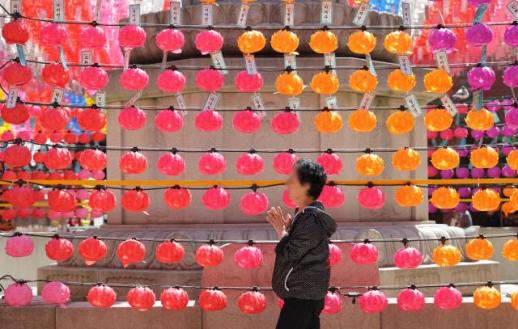 President Lee Emphasizes Unity on Buddha's Birthday President Lee Jae-myung stated on May 24 that on Buddha's Birthday, he aims to closely observe the lives of each citizen, guided by the Buddha's teachings. In a post on his Facebook page, President Lee remarked, "The teachings of the Buddha, who was born on the road, have accompanied us through the joys and sorrows of life for many years." He noted that during times of national crisis and sorrow, the Buddha's teachings have provided healing and comfort to the suffering and marginalized. President Lee emphasized the importance of understanding and harmony in the Buddha's teachings, stating, "The Buddha's message encourages all beings to understand one another rather than reject each other, and to unite rather than oppose, serving as a strong foundation for our society to become a more resilient community." He added, "The government of the people will use the Buddha's precious words as a guiding light to carefully attend to the lives of each citizen and listen to the voices from the lowest levels of society." President Lee also referenced the Buddhist principle of 'won-yung-hwa-tong' (원융회통), which signifies harmony and unity. He expressed his commitment to deeply engrave this spirit in his heart, stating, "Together, we will overcome the crises facing our nation with united strength." Furthermore, he expressed hope that the lotus lanterns illuminating the nation today would serve as a light of hope connecting hearts, and he extended his congratulations on Buddha's Birthday in the year 2570.* This article has been translated by AI. 2026-05-24 09:39:32
 -
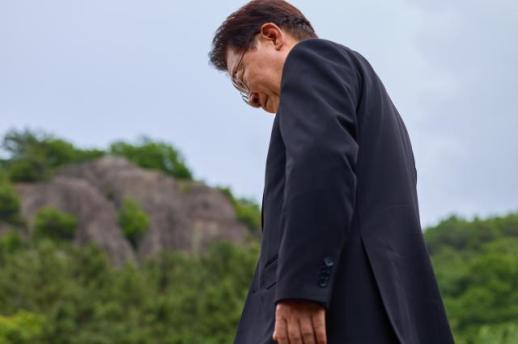 President Lee Considers Closing Hate Speech Sites Like Ilbe President Lee Jae-myung announced on May 24 that he is considering measures such as closing the website Ilbe (Ilgan Best) and implementing punitive damages. The president made this statement while sharing an article on social media that reported comments from Jo Soo-jin, a director at the Roh Moo-hyun Foundation. Jo claimed that a visitor, appearing to be an Ilbe user, wore an Ilbe T-shirt and made a hand gesture associated with the site during the memorial service for the late President Roh Moo-hyun, which took place the previous day. President Lee stated, "There are arguments that freedom of expression should protect actions that incite social division and conflict, like those seen on Ilbe, as well as calls for punishment and sanctions." He acknowledged the ongoing debate regarding the closure of Ilbe. He continued, "It seems necessary to publicly discuss allowing punitive damages and the closure of sites that promote mockery and hate speech, under strict conditions, as well as other necessary measures such as fines." The president added, "I will also instruct the Cabinet to address this issue." * This article has been translated by AI. 2026-05-24 09:30:33
 -
 Trump says peace deal with Iran 'largely negotiated,' hinting at possible end to conflict SEOUL, May 24 (AJP) - U.S. President Donald Trump said Saturday that a peace agreement with Iran has been "largely negotiated," raising hopes of easing tensions in the Middle East. "Final aspects and details of the Deal are currently being discussed and will be announced shortly," he said in a post on his social media platform Truth Social. He added that the deal would include reopening the Strait of Hormuz, a critical maritime chokepoint through which roughly one-fifth of the world's oil supply passes. Trump also confirmed that he had a "very good call" with the leaders of several Middle Eastern countries, including Bahrain, Egypt, Jordan, Pakistan, Saudi Arabia and the United Arab Emirates (UAE), as well as talks with Israeli Prime Minister Benjamin Netanyahu, which he said "went very well." But the comments came after Iranian Foreign Ministry spokesman Esmail Baghaei earlier said peace negotiations were not yet close to reaching a final deal, although Tehran and Washington were working to "finalize" a deal, referring to a previously proposed one-page, 14-point memorandum of understanding (MOU) that would "declare an end to the war in the region." "We cannot necessarily say that we have reached a point where an agreement is close," he said. The conflicting statements suggest lingering uncertainty despite signs of diplomatic progress, coming just a day after Trump threatened a fresh round of military strikes against Iran. Contrary to Trump's remarks that the strait "will be opened," Iran's semi-official Fars News Agency also reported that Tehran had not agreed to fully reopen the strait. "In the event of a possible agreement, the Strait of Hormuz will still be under Iranian management," it added. The narrow waterway has become a focal point of the prolonged regional conflict, severely disrupting shipping traffic and sending global oil and gas prices sharply higher. The developments are also being closely watched in South Korea, one of the world's largest energy importers and a country heavily dependent on crude oil shipments from the Middle East, as rising energy costs have already hit South Korean refiners, shipping firms and manufacturers. But it remains to be seen whether any breakthrough in negotiations between Washington and Tehran will bring an end to a conflict that began with U.S. and Israeli joint airstrikes against Iran in late February. 2026-05-24 09:27:25
 -
 Crisis Management: President Criticizes Shinsegae's Jeong Yong-jin Over Marketing Misstep The severity of a crisis often escalates when mistakes are repeated. This was evident in the controversy surrounding Starbucks Korea's 'Tank Day.' Initially perceived as a minor social media marketing blunder, the situation intensified as police investigations began and political figures launched widespread criticism, transforming the issue into a societal debate. President Lee Jae-myung referenced Starbucks Korea's release of the 'Siren Classic Mug' during the 10th anniversary of the Sewol ferry disaster on May 23, amplifying the situation. The President described the incident as the 'immoral behavior of a ruthless businessman,' indicating that it was not merely a practical error but a reflection of a lack of historical awareness. He specifically connected the 'Tank Day' controversy with the marketing during the Sewol memorial period, asserting that it was difficult to view it as an accidental occurrence. This situation raises uncomfortable questions for corporations. To what extent should a corporate leader be held accountable for all marketing incidents that occur within the organization? This question transcends Jeong Yong-jin's individual responsibility and reflects a structural issue faced by all large corporations in the social media era. In the past, corporate crises often stemmed from factory-related issues such as product defects, safety accidents, and accounting fraud. However, today’s crises emerge on digital platforms, where a single phrase, image, or event name can shake an entire corporation. The fast-paced nature of social media marketing is driven by operational teams, making organizations sensitive to clicks, virality, and engagement time. The problem is that social context and historical sensitivity can easily be overlooked in this process. It is essential to approach this matter with a level-headed perspective. Based on the facts available so far, there is no evidence that Chairman Jeong directly instructed the controversial wording. In a large organization with thousands of employees, it is unrealistic to expect the leader to approve every digital marketing phrase. However, it cannot simply end with 'I didn’t know.' Ultimately, the corporate leader must take responsibility for what occurs within the organization. It is crucial to distinguish between accountability and punishment. In South Korea, these two concepts are often conflated. Accountability refers to being the final manager of organizational operations, while punishment pertains to discussions of direct illegal actions or proven intent. For instance, during a major recall crisis, Akio Toyoda, the chairman from the founding family of Toyota, appeared before the U.S. Congress. Although he did not design every defect, he demonstrated accountability as the CEO. Legal and criminal responsibilities were assessed separately. The Tylenol crisis at Johnson & Johnson, often cited as a textbook case in crisis management, illustrates a similar principle. Despite the high likelihood of external criminal involvement in the tampering, the company initiated a full recall and engaged in open communication, refusing to evade responsibility. A corporate leader cannot prevent every mistake within the organization. However, they must bear ultimate responsibility for how the organization operates. The core of this controversy lies in understanding why such wording was allowed to pass without checks. Why did internal voices warning that 'this is risky' fail to resonate? Why was there a lack of systems to review historical and social contexts? Those who must answer these questions are ultimately the top executives. It is also important to avoid interpreting this incident solely through a political lens. Jeong Yong-jin has previously been associated with strong political imagery due to past controversies, such as the 'anti-communism' debate, which has drawn this incident into a larger political narrative. However, a clear-eyed view reveals that the core issue is organizational culture rather than politics. German philosopher Hannah Arendt stated, 'Evil arises not from monstrous intentions but from a failure to think.' This suggests that organizational insensitivity and complacency can be more dangerous than grand conspiracies. The modern platform economy is an 'attention economy.' Companies sell not just products but also interest. Clicks, trends, fandoms, and endorsements drive sales. Starbucks Korea has evolved beyond a simple coffee brand to a platform centered on merchandise and events. The challenge arises when speed begins to overshadow philosophy. Originally, Starbucks founder Howard Schultz described Starbucks as a 'third place,' a space for people to relax and connect between home and work. However, today, Starbucks has become a brand where fandom, scarcity, and merchandise consumption are central to its revenue structure. While this is not inherently wrong, modern consumer capitalism operates this way, with Nike and Apple also leveraging fandom and emotional marketing. Yet, when the speed of events and trends takes precedence over brand philosophy, organizations become increasingly sensitive to 'what is trending' rather than 'what is right.' This controversy serves as a warning. What Jeong Yong-jin needs to focus on now is not expressing grievances or crafting political defenses. The critical issue is how to transform the organization. Why have these incidents recurred? How did the review systems function? Was there a framework for assessing historical and social sensitivity? What are the ethical standards for digital marketing? What changes will be implemented moving forward? These are the questions that must be addressed. This incident underscores that 'businesses exist within society.' Corporations do not only engage with the market; they are also connected to history, culture, and social memory, especially large corporations. However, society must also maintain a level of rationality. It is dangerous to immediately equate every organizational failure with the personal crimes or malice of the leader. This conflates accountability with punishment. While corporate criticism is necessary, it should not devolve into a witch hunt. Friedrich Nietzsche said, 'He who fights with monsters should be careful lest he thereby become a monster.' This is a sentiment needed in South Korean society today. Corporate insensitivity must be criticized, but a society that seeks to resolve every issue through political retribution is also unhealthy. Ultimately, the key is the ability to manage crises. Great companies return to their essence in times of crisis, and great leaders do not shy away from those moments. What Jeong Yong-jin must do now is not merely repeat apologies but acknowledge the organizational failures, rectify the systems, and rebuild social trust. That is the responsibility of a corporate leader.* This article has been translated by AI. 2026-05-24 09:22:29
 -
 Gunfire Erupts Near White House, Journalists Evacuated On May 23, gunfire was reported near the White House, prompting an emergency evacuation of journalists. According to Yonhap News and CNN, shots were heard around 6 p.m. local time in the vicinity of 17th Street and Pennsylvania Avenue Northwest, and authorities are currently investigating the incident. CNN reported that journalists, who were on the north lawn of the White House at the time, quickly took shelter inside the briefing room. One reporter noted that the gunfire seemed to originate near the Eisenhower Executive Office Building within the White House complex. The Secret Service subsequently secured the White House briefing room and instructed reporters to evacuate. The White House was temporarily closed as a precaution. At the time of the incident, President Donald Trump was present at the White House, but he was reported to be unharmed. One civilian was transported to a nearby hospital after being shot, but their condition remains unconfirmed. * This article has been translated by AI. 2026-05-24 09:00:31
 -
 Starbucks Faces Backlash Over 'Tank Day'; Government Considers Revoking Award The South Korean government is reviewing whether to revoke an award previously given to Starbucks Korea. According to Yonhap News on May 24, the Ministry of SMEs and Startups recently discussed this matter. The review follows the company's use of the phrases 'Tank Day' and 'Tap on the Desk' during a tumbler promotion on the anniversary of the May 18 Democratic Movement.Last November, Starbucks received a Prime Minister's Award in the category of cooperative growth for its contributions, which included supporting the development of beverages using local specialties, aiding small businesses affected by floods, and supporting local farmers.The award law stipulates that honors can be revoked if the recipient's achievements are found to be false, if they have committed crimes against national security, or if they have been sentenced to death, life imprisonment, or a prison term of one year or more that has been finalized.However, the Ministry of SMEs and Startups reportedly analyzed the records submitted by Starbucks at the time and determined that they did not meet the criteria for revocation in connection with the current controversy.Despite this, there are ongoing calls for a boycott of Starbucks products, indicating that the social backlash remains significant, and some observers believe the possibility of revoking the government award still exists.According to the 'Government Award Guidelines' published by the Ministry of the Interior and Safety earlier this year, the government regularly checks and manages the occurrence of revocation criteria and states that if social controversies arise, it may consider revocation as necessary.If a department overseeing an award requests the revocation of a recipient, the Ministry of the Interior and Safety will review it and present it as an agenda item to the Cabinet meeting.* This article has been translated by AI. 2026-05-24 08:39:44