

Journalist

Jung Sung-chun
-
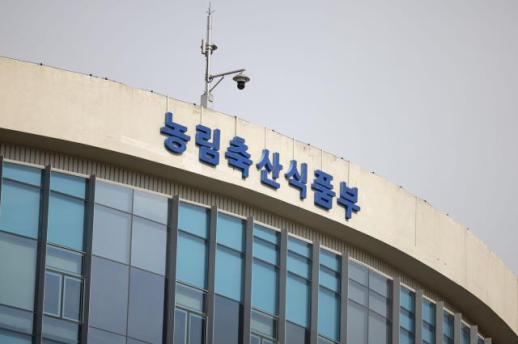 Agriculture Ministry to Offer Discounts on Rice, Eggs, and Cabbage Until July 1 In recognition of the month dedicated to national defense and veterans, the Ministry of Agriculture, Food and Rural Affairs has announced an extension of discounts on agricultural products. Discounts on rice, eggs, and cabbage will continue until July 1, with melons set to be added to the discount list starting mid-June.On June 8, the ministry held its 19th supply and demand situation meeting, chaired by Park Jeong-hoon, Director of Food Policy, to review the supply and price trends of various items.The review indicated that retail prices for outdoor vegetables are currently lower than last year. However, with recent temperatures rising faster than usual, wholesale prices for some items are beginning to increase, which may eventually affect retail prices.Onions, which had seen significant price drops, are now stabilizing at levels similar to last year, thanks to supply management efforts by the government and producer organizations. In contrast, spring vegetables like cabbage and radishes have maintained stable prices so far, but concerns about poor yields due to prolonged high temperatures have emerged.In response, the ministry plans to continuously monitor weather and growth conditions, ready to take proactive measures if supply instability arises.As summer approaches, concerns about livestock supply stability are also rising. The impact of livestock diseases has led to overall price increases for key animal products. According to the Livestock Quality Assessment Institute, the consumer prices for eggs (30-count carton) and chicken (1 kg) are currently 7,588 won and 6,657 won, respectively, marking increases of 7.8% and 17.7% compared to the same period last year.The ministry anticipates that the supply of eggs will stabilize after July, following a significant increase in the number of chicks raised from January to April. However, it plans to extend the discount support period until July 1. To address concerns about rising chicken prices, the ministry will import and supply 17 million hatching eggs and implement a tariff quota for processed chicken to help distribute dining demand.The government will continue discounts on rice, eggs, and cabbage until July 1. Additionally, the discount event for onions, cucumbers, zucchini, romaine lettuce, green onions, beef, and pork, which began on June 4, will run until June 17, with melons included in the discount list from June 11 to June 17.Director Park stated, "To prepare for potential supply instability of agricultural products due to summer heat waves and heavy rainfall, we will activate a joint public-private task force for agricultural supply stability and respond proactively."* This article has been translated by AI. 2026-06-08 18:00:00
 -
 Israel-Iran Conflict Escalates with Attacks on Air Defense and Petrochemical Facilities Israel and Iran are engaged in a military conflict marked by reciprocal attacks on air defense and petrochemical facilities. Additionally, Yemen's Iran-aligned Houthi rebels have announced plans to block Israeli vessels from navigating the Red Sea, raising concerns that the conflict could extend beyond the Persian Gulf and the Strait of Hormuz. On June 8, the Israeli military announced via social media platform X (formerly Twitter) that it had completed a large-scale strike against Iran's strategic air defense systems. The military stated that these systems had been deployed across Iran during the "Roaring Lion Operation" to restore the capabilities of a weakened regime, and claimed that the recent airstrikes had dismantled these defenses. The conflict has also escalated to include energy-related facilities. The Islamic Revolutionary Guard Corps (IRGC) of Iran reported that Israel had attacked its petrochemical facilities, prompting a retaliatory strike against similar Israeli facilities. According to the semi-official Fars News Agency, the IRGC stated, "In response to the U.S.-Israeli attacks, we targeted a similar factory in the northern Israeli city of Haifa with missile strikes." The IRGC further asserted, "The Zionist regime (Israel) has initiated a dangerous game by attacking the oil industry and civilian facilities. The scope of this conflict will expand to all energy targets in the region, and the consequences for the global economy will be the responsibility of the United States, a major arsonist in this field." The escalation followed Israeli airstrikes on Beirut, Lebanon, which prompted Iran to retaliate by launching 11 ballistic missiles at northern Israel the previous evening. In response, Israel conducted airstrikes on major cities in Iran, including Tehran, early that morning. Concerns about maritime logistics are also growing. The Houthi rebels issued a statement declaring a total ban on Israeli shipping in the Red Sea, stating, "We prohibit all Israeli maritime operations in the Red Sea, and any movement by the enemy will be considered a legitimate military target." The Houthis, part of Iran's so-called "Axis of Resistance," have been attacking commercial vessels passing through the Bab-el-Mandeb Strait since the outbreak of the Gaza conflict in 2023, citing support for the Palestinian militant group Hamas. Their attacks have led to a more than 40% decrease in shipping traffic through the Red Sea. With Iran blocking the Strait of Hormuz, there are fears that instability could extend to the Bab-el-Mandeb Strait, potentially delivering a devastating blow to global energy transport and logistics.* This article has been translated by AI. 2026-06-08 17:42:00
 -
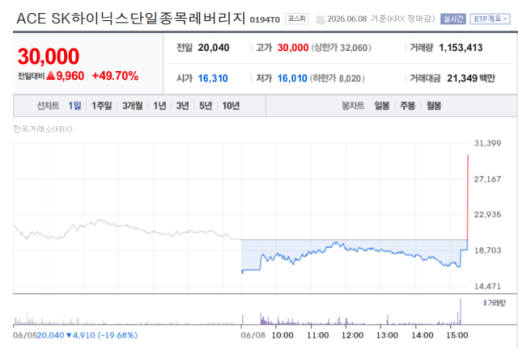 SK Hynix Shares Drop 7.68% While Leveraged ETF Surges Nearly 50% On a day when SK Hynix shares plummeted by 7.68%, a leveraged exchange-traded fund (ETF) based on the company’s stock experienced an unusual surge of nearly 50% during the closing auction. According to the Korea Exchange, the ACE SK Hynix Single Stock Leverage ETF closed at 30,000 won, up 49.70% from the previous trading day. This ETF is designed to track SK Hynix's daily returns at double the rate. On the same day, SK Hynix shares fell by 159,000 won (7.68%) to close at 1,911,000 won. Typically, when the underlying asset declines by 7-8%, a leveraged ETF would see a drop of around 15%. In fact, other leveraged ETFs tracking SK Hynix also fell sharply that day, with KODEX SK Hynix Single Stock Leverage down 15.31%, TIGER SK Hynix Single Stock Leverage down 16.73%, and SOL SK Hynix Single Stock Leverage down 16.11%. In contrast, the ACE SK Hynix Single Stock Leverage ETF, which had been declining during the day, surged during the closing auction, resulting in a price discrepancy of 85.59%. Market analysts believe that specific high-priced buy orders executed during the closing auction distorted the price. Approximately 46,813 shares were traded at 30,000 won during this time. ETFs generally rely on liquidity providers (LPs) to present buy and sell orders to minimize discrepancies between market prices and net asset values (NAV). However, during the closing auction, LPs are exempt from submitting quotes, which can lead to temporary price distortions. Market participants do not view this occurrence as a result of a technical error or an issue with the product structure. A securities industry official stated, "During the closing auction, the price is determined based on the aggregate buy and sell orders to facilitate the highest volume of trades. It appears that the anticipated execution price was influenced by specific buy orders." He added, "Market orders prioritize execution over price, meaning investors may end up buying at higher prices. This is not an issue limited to ETFs but represents a general market risk that can occur during the closing auction period."* This article has been translated by AI. 2026-06-08 17:42:00
 -
 Government Faces Challenges in Real Estate Market Amid Election Losses The real estate market is difficult to read, and so is the path to homeownership. The government's policies are equally challenging. This is where the 'difficult' view of real estate begins. The ruling party won most of the regional leadership positions in the June 3 local elections but lost in Seoul. The margin of defeat was narrow, but the significance lies in the distribution of votes. Candidate Jeong Won-o lost significantly in four districts, including Gangnam's three areas and Yongsan, which overshadowed his victories in the rest of the city. Despite winning in most of Seoul, he effectively surrendered all victories in the four districts in the south. A notable trend extends beyond those four areas. Neighborhoods like Apgujeong, Yeouido, Mokdong, and Seongsu, which are banking on redevelopment, leaned in one direction. Mayor Oh Se-hoon secured 84.8% in Apgujeong along the Han River and 72.3% in Yeouido. Even in Mokdong New Town, which is not directly on the river, he garnered 62.7%. The trend was not limited to riverside areas; Seongsu-dong, part of Jeong Won-o's stronghold in Seongdong-gu, also tilted towards Oh Se-hoon. What binds these areas together is not ideology but assets. Apgujeong is waiting for redevelopment, Mokdong New Town is set for revitalization, and Seongsu includes strategic redevelopment zones. While the neighborhoods and demographics vary, they share a common concern: the future value of their homes is tied to government policy. Voter sentiment is more sensitive to asset movement than political leanings. This signals that the Seoul elections are now interpreted through a 'real estate belt' rather than an 'ideological belt.' If this trend solidifies, the next mayoral election in Seoul could be uncertain. The government now faces a two-year period without elections. With high approval ratings and a majority in the National Assembly, it has the greatest flexibility to push through its desired policies. In this context, the president directly addressed the direction of real estate during a press conference on June 8, marking his first anniversary in office. The key message was 'both.' He promised to expedite supply measures and redevelopment while stating, "Escaping from being a republic of real estate speculation is the way for this country to survive," emphasizing the need to curb demand as well. He indicated that tax reforms would be addressed alongside the July budget proposal. The government's objectives have effectively doubled. First Goal — Curbing Speculation One goal is to suppress speculative demand. The government has reinstated the heavy taxation on multiple homeowners, continued the adjustment of official property values, and tightened housing loan regulations last year. This direction has a clear rationale: to reclaim windfall profits, narrow the wealth gap, and discourage multiple homeownership, aligning with the values the government has promoted since its inception. This approach also consolidates support from the young and non-homeowners. However, the market reacts to these measures. By increasing the burden of ownership while limiting the ability to sell, multiple homes are not entering the market. Remaining assets are consolidating into the safest option: a single property, typically a new apartment in Seoul. Even last year, when regulations were reintroduced, apartment prices in Seoul recorded double-digit increases. Supply is also dwindling. In a city with no vacant land, new apartments are primarily emerging from redevelopment, and stifling these projects closes off new construction. This year, the number of completed apartments in Seoul has dropped by over 40% compared to last year, and new construction has also declined. Yet, unsold inventory is virtually nonexistent—not due to lack of demand, but because there is insufficient supply. As demand is suppressed, supply is drying up first. Moreover, this neighborhood is not solely inhabited by investors; middle-class residents looking to upgrade their homes are also present. The longer the suppression lasts, the more likely these residents will shift from temporary indecision to firm opposition. Second Goal — Increasing Supply The other goal is to increase supply. However, the shape of the supply envisioned by the president is crucial. He stated that instead of green belts or new towns, "there is tremendous supply potential if homes held for investment or speculation are released to the market," indicating an intention to pressure multiple homeowners to sell their properties. Indeed, ahead of the reinstatement of heavy taxation, some urgent sales have emerged this spring. However, these properties are not newly built homes but rather existing ones changing hands. The total amount of housing in urban areas remains unchanged. Increasing the number of new homes, which involves starting construction and facilitating occupancy, is a different matter. This government has not shied away from this path. Last fall, it promised large-scale housing supply and measures to promote redevelopment. Yet just months earlier, it effectively cut off relocation loans for multiple homeowners, causing many members of redevelopment associations in Seoul to halt their projects. The same government that promised supply also imposed restrictions on that supply. The June 8 declaration to "accelerate" is more a reaffirmation of last year's commitment than a new announcement. Real supply ultimately hinges on construction starts. In a city with no vacant land, new apartments arise from redevelopment, and if project viability collapses, that path is blocked. Under the current conditions of tightened taxes, loans, and regulatory measures, both associations and construction companies are hesitant to act. To discuss supply, it is essential to determine where transactions, ownership, finance, and permits can be reactivated. This is a design that runs counter to the suppression of demand. Of course, any shift in direction comes with costs. Adjusting ownership burdens may spark controversy over tax relief for multiple homeowners, while lowering transaction taxes could immediately impact revenue. Easing regulatory measures may invite accusations of favoritism, and it could take several years for new homes to be completed, preventing an immediate cooling of current prices. Most importantly, easing regulations may give the impression that the government is retreating in the face of real estate challenges. This could be interpreted as a retreat by its support base and as an opportunity for the opposition. The fact that these two goals pull in opposite directions has already been demonstrated over the past year. Promised redevelopment projects stalled as loans tightened. The card intended to suppress demand has obstructed supply. Thus, the June 8 declaration of "both" is not merely a matter of will but a question of design. If the government promises to accelerate redevelopment while simultaneously tightening property taxes and regulatory measures, supply may remain only on paper. Neither goal is without justification. Curbing speculation aligns with the government's beliefs, while increasing supply addresses the urgent demands of the market. The two-year period without elections provides an opportunity to balance both without concern for voter sentiment. However, once that period ends, the real estate belt will once again face the electorate. Whether the government's promised supply leads to the release of existing properties or results in new construction will determine the outcome of future votes. 2026-06-08 17:39:00
 -
 Weather Forecast: Afternoon Showers Expected as Early Summer Heat Eases On June 9, some eastern regions are expected to experience afternoon showers, temporarily easing the early summer heat. According to the Korea Meteorological Administration, showers are likely in southern inland areas of Gangwon and northeastern regions of North Gyeongsang Province. The expected rainfall is around 5mm, which is not significant; however, areas experiencing showers may face gusty winds, thunder, and lightning, necessitating caution against safety hazards. Additionally, hail may fall in some areas, requiring careful management of facilities. This rain is anticipated to alleviate the early heat. Morning low temperatures are forecasted to range from 11 to 18 degrees Celsius, while afternoon highs are expected to be between 21 and 29 degrees. Key morning low temperatures in major cities include: △Seoul 16 degrees △Incheon 16 degrees △Suwon 15 degrees △Chuncheon 13 degrees △Gangneung 14 degrees △Cheongju 15 degrees △Daejeon 14 degrees △Jeonju 14 degrees △Gwangju 15 degrees △Daegu 15 degrees △Busan 18 degrees △Jeju 16 degrees. Afternoon high temperatures are predicted to be: △Seoul 27 degrees △Incheon 26 degrees △Suwon 27 degrees △Chuncheon 27 degrees △Gangneung 24 degrees △Cheongju 28 degrees △Daejeon 28 degrees △Jeonju 28 degrees △Gwangju 29 degrees △Daegu 29 degrees △Busan 24 degrees △Jeju 24 degrees. Meanwhile, due to favorable atmospheric dispersion, fine dust levels are expected to remain at 'good' or 'moderate' levels across all regions, indicating clean air conditions.* This article has been translated by AI. 2026-06-08 17:39:00
 -
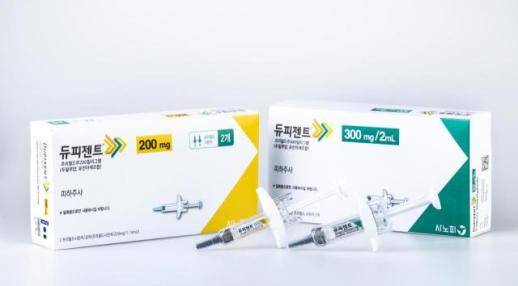 Competition Heats Up for Dupixent, a $27 Billion Blockbuster Drug The competition among South Korea's pharmaceutical and biotech industries is intensifying over Dupixent, a blockbuster drug with annual global sales reaching $17.8 billion (approximately 27 trillion won). Following Jongkundang's entry into European clinical trials, Daewoong Pharmaceutical and Samsung Bioepis are also vying for market dominance, positioning themselves in the emerging biosimilar battleground. As of June 8, industry sources indicate that Dupixent, a dual interleukin inhibitor co-developed by Sanofi and Regeneron, is approaching its patent expiration in 2029. It has established a dominant market share of 90% in South Korea's severe atopic dermatitis treatment sector. The industry's interest in Dupixent extends beyond its market share; it also reflects significant growth potential. Sanofi highlighted in its earnings report last year that the drug's growth is supported by "steady growth across eight indications." In a recent earnings call for the first quarter of this year, the company noted, "Dupixent continues to show robust growth across all indications." Initially approved for treating severe atopic dermatitis in adults, Dupixent has expanded its indications to include asthma, eosinophilic esophagitis, chronic rhinosinusitis, and chronic obstructive pulmonary disease (COPD). An industry insider remarked, "The potential for market growth remains high even at the time of patent expiration, given the diverse indications. This makes it a commercially viable product that traditional pharmaceutical companies are considering as a new growth driver." In South Korea, Jongkundang is leading the charge. Earlier this year, the company received clinical trial phase 1 approval from the European Medicines Agency (EMA) and the UK Medicines and Healthcare products Regulatory Agency (MHRA) for its candidate drug CKD-706. This trial will assess pharmacokinetic equivalence, safety, and immunogenicity against the original drug in healthy adults. Jongkundang is the first to enter European clinical trials for a Dupixent biosimilar, giving it a competitive edge in the global market. Daewoong Pharmaceutical, which established a biosimilar division last year, has chosen Dupixent as its first development product. The company has recruited Dr. Hong Seung-seo, a biosimilar expert from Celltrion, to lead the division. Recently, Daewoong signed a development, production, and commercialization partnership with the China-based global contract development and manufacturing organization, Chime Biologics. This collaboration aims to accelerate development and target future global market entry. Samsung Bioepis is also eyeing the follow-up market. Its parent company, Samsung Epics Holdings, unveiled six new biosimilar candidates, including dupilumab, at this year's JP Morgan Healthcare Conference, announcing plans to expand its entire biosimilar portfolio to 20 products by 2030. An industry expert noted, "Dupixent is expected to continue its growth trajectory even after patent expiration. As the indications expand, the competition among biosimilar companies will become increasingly fierce."* This article has been translated by AI. 2026-06-08 17:36:00
 -
 Medytox Accelerates Global Distribution of 'Newraderm' in Europe and Asia Medytox's neurodermal cosmetic brand, Newraderm, is accelerating its global expansion by securing distribution networks in Europe following its success in Asia.On June 8, Medytox announced that it has signed an exclusive supply agreement with Greece's Asklipios Medical Group (AMG), a medical device and cosmetics distribution company.With this agreement, Newraderm will expand its reach to seven European countries, including Greece, Italy, Spain, and France, in addition to its existing presence in Japan, Vietnam, Indonesia, and Hong Kong.Medytox plans to leverage AMG's distribution network to establish various online and offline sales channels, gradually increasing its market presence in Europe.A Medytox representative expressed optimism, stating, "This exclusive supply agreement with AMG will serve as a strategic foundation for Newraderm's global business expansion." The representative added, "We will focus our efforts on establishing Newraderm as a leading global brand representing K-derma cosmetics."Meanwhile, Medytox is actively working to expand its distribution networks in global markets, including Europe and Asia. Following last year's distribution agreements in Japan, Vietnam, and Indonesia, the company selected Hong Kong as its fourth overseas market through a contract with ColorMix in April.This agreement allows Newraderm to be exclusively supplied and distributed through ColorMix's extensive network, which includes over 60 stores across Hong Kong and Macau.Additionally, Medytox has been diversifying its business by targeting the cosmetics market with Newraderm in 2023. Newraderm is a neurodermal cosmetic brand developed based on Medytox's over 20 years of research in botulinum toxin formulations, combining its expertise in neuroscience and dermatology with its proprietary technology, M.Biome.* This article has been translated by AI. 2026-06-08 17:36:00
 -
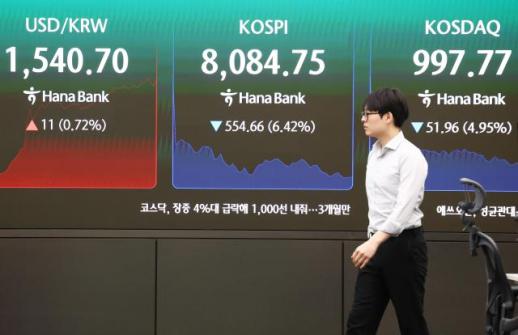 Won recovers after verbal intervention while bond sell-off deepens SEOUL, June 8 (AJP) - The South Korean won slightly recovered on Monday after a series of verbal warnings from financial authorities, which prompted traders to pull back from their dollar bets. There was also speculation that authorities may have directly intervened in the market. In Seoul, the won closed at 1,548.2 per dollar after opening at 1,555.2 and briefly rising to 1,560 before reversing sharply in morning trade. The turnaround was largely attributed to policy intervention. Yun Kyung-soo, director general of the international department at the Bank of Korea (BOK), and Lee Hyung-ryul, director general of the international finance bureau at the Ministry of Economy and Finance, issued a joint statement, warning that authorities will "never tolerate excessive volatility and one-way herd behavior decoupled from economic fundamentals and will respond strongly." The statement followed two emergency meetings held on last Thursday and Sunday by top economic and financial policymakers including Deputy Prime Minister and Minister of Economy and Finance Koo Yun-cheol and BOK governor Shin Hyun-song. The Sunday meeting marked the first weekend market-monitoring meeting in about a year and a half since Dec. 8, 2024, when authorities met in the aftermath of disgraced ex-President Yoon Suk Yeol's botched martial law debacle. The unusually strong warning appeared to gain traction after earlier verbal interventions failed to calm the volatile currency market. Market participants also raised the possibility that authorities may have supplied dollar liquidity through smoothing operations, noting that the exchange rate had already started to retreat from its intraday high about an hour before the official statement was released. "Direct smoothing operations cannot be officially confirmed, but we are seeing tangible moves to cushion the won," an FX trader said on condition of anonymity. Despite the won's recovery, the bond market extended its selloff, as investors grew more convinced that persistent currency pressure could force BOK to keep a hawkish policy stance. The debt market came under heavier pressure as the benchmark three-year government bond yield rose 5.8 basis points to 3.940 percent, while the 10-year yield jumped 9.4 basis points to 4.348 percent, with both reaching their highest levels in about two years and seven months since November 2023. The bond selloff deepened as investors interpreted the authorities' defense of the won as a sign that currency weakness has become a more urgent policy concern. That added to expectations that the BOK will maintain a hawkish stance, or even raise rates, if exchange-rate volatility continues to threaten inflation and financial stability. Analysts said downward pressure on bond prices is likely to persist until the market sees a clearer policy response from the central bank. "Expectations that the BOK will raise the benchmark rate to around 3 percent, or possibly as high as 3.25 percent this year, are now being treated almost as a foregone conclusion," said Park Ju-noo, an analyst at Hana Securities. "Investors need to prepare for a scenario in which the three-year yield breaks above the 4 percent threshold." 2026-06-08 17:34:56
 -
 JTI Korea Aims for 10% Market Share by 2028 with New 'Plume Aura' Release JTI Korea is accelerating its market share ambitions with the launch of a limited edition 'Glacier White' version of its heated tobacco device, 'Plume Aura.' On June 8, JTI Korea announced the online release of the 'Plume Aura Glacier White.' This limited edition features a bright white color with a subtle glossy finish, evoking a clean and fresh image. The product is available not only as a standalone device but also in a package that includes a premium front panel, a white back cover, and various accessories. The Plume Aura, officially launched on April 14, is JTI Korea's next-generation heated tobacco device, equipped with 'Smart Heatflow' technology and four heating modes. According to JTI Korea, the device has been designed to be slimmer and lighter than previous models, enhancing user convenience. The limited quantity package 'Plume Aura First Edition,' introduced just before the launch, sold out quickly. Since its release, Plume Aura has rapidly expanded its sales territory. As of May 12, it has extended its offline sales network across Seoul, Incheon, and Gyeonggi Province. Starting May 1, sales also began at major duty-free shops in Incheon International Airport and Gimpo International Airport, marking a swift expansion from its initial limited distribution in the metropolitan area. Globally, JTI has set a goal to increase its market share in the heated tobacco sector to the mid-10% range by 2028. To achieve this, JTI plans to invest 800 billion yen (approximately $7.63 billion) in reduced-risk products (RRP), including heated tobacco sticks, from 2026 to 2028. A JTI Korea representative stated, "We will continue to introduce a diverse range of device colors and accessory lineups that reflect consumers' individuality and preferences." 2026-06-08 17:33:00
 -
 Medical Association Discusses Key Healthcare Issues at 2026 Conference Amid ongoing turmoil in the medical community due to conflicts between physicians and the government over the past two years, a forum is set to discuss the future direction and key policy issues in healthcare. The Korean Medical Association announced on June 8 that it will hold the "2026 Korean Medical Association Conference" on June 12 at the Plenty Convention Center, outlining the main agenda and session structure for the event. The conference, themed "Communication and Empathy: Opening a New 60 Years," will address critical healthcare policy issues, including residency training for medical professionals, physician workforce projections, the sustainability of academic medicine in South Korea, and patient safety related to drug side effects. Lee Jin-woo, President of the Korean Medical Association, stated, "Although the conference is taking place amid difficulties due to the conflicts over the past two years, this year marks the first conference since some resolutions have been reached. We have created a platform to discuss the direction the medical community should take and various unresolved issues, including regional and essential healthcare." The keynote address will be delivered by Song Ho-geun, a distinguished professor at Hallym University, who will discuss "The Calling of Physicians and Healthcare Policy: The Curse of Success?" He will diagnose the institutional contradictions that have accumulated behind the achievements of South Korean healthcare and suggest future directions for the medical field. The conference will feature eight session programs consisting of presentations and panel discussions. The Korean Medical Association will host sessions on "The Future Direction of Residency Training in Korea" and "What Regional Healthcare Policies Can Deliver Immediate Results?" Additionally, the Korean Medical Association's Medical Policy Research Institute will explore "Seeking Desirable Physician Workforce Projections," while the Korean Association of Basic Medical Sciences will discuss "New Horizons in Basic Medicine: Utilizing National Integrated Bio Big Data and AI." The Korean Academy of Medical Sciences will address "How to Sustain Academic Medicine in South Korea?" Other joint sessions will include topics such as "Regional Physician System and Medical Education Accreditation" by the Korean Institute of Medical Education and Evaluation, "Drug Side Effects and Compensation: The Role of Healthcare in Ensuring Patient Safety" by the Ministry of Food and Drug Safety, and "HTA Paradigm Shift: Balancing Innovation and Sustainability in Medical Technology Assessment" by the Korea Health and Medical Research Institute. The Korean Medical Association plans to link the discussions from the conference to forums, public hearings, and white paper publications to facilitate actual policy discussions and institutional improvements.* This article has been translated by AI. 2026-06-08 17:33:00