

Journalist

Jung Sung-chun
-
 Shinsegae Chairman Jung Yong-jin to Lead E-Mart and Shinsegae Property Jung Yong-jin, Chairman of Shinsegae Group, will take on leadership roles at two key subsidiaries: E-Mart and Shinsegae Property. This move is seen as a step to strengthen accountability in management following recent controversies surrounding Starbucks Korea's marketing practices. On June 8, Shinsegae Group announced that Jung has been appointed as the co-CEO of Shinsegae Property. The company stated that this decision represents a commitment to full accountability in management by participating as a legally registered executive in the board of directors that represents the current and future of the group. Shinsegae Property plans to hold a board meeting soon to recommend Jung as a registered director. Following this, the proposal will be presented at a shareholders' meeting, and another board meeting will be held to officially appoint Jung as co-CEO. For E-Mart, Jung is expected to be named co-CEO after the regular executive appointments this year, with final approval at next year's shareholders' meeting. Jung stated, "I take the market's demand for clear accountability in management very seriously. As CEO, I will be evaluated by the board and shareholders moving forward." This decision aligns with Jung's announced plans for group reform following the recent 'Tank Day' marketing controversy at Starbucks Korea. E-Mart is the largest shareholder of Starbucks Korea, and the CEO of E-Mart is responsible for the board composition and operations of Starbucks Korea. With Jung's appointments as CEO of E-Mart and Shinsegae Property, the number of subsidiaries represented on the board will increase to three. Jung was previously appointed as the inaugural chairman of the board for AG Global Holdings, a joint venture established by Shinsegae Group and Alibaba International last year. Shinsegae Property is particularly significant as it is linked to the group's future growth initiatives. In March, the company signed a partnership agreement with the U.S.-based Reflection AI to oversee the establishment of an artificial intelligence (AI) data center, including site acquisition. This indicates that Jung will directly oversee both the core retail business centered around E-Mart and future projects like the AI data center. Alongside Jung, Lee Hyung-cheon, former head of the development division, has been appointed as co-CEO to lead Shinsegae Property. Lee has previously spearheaded projects such as the construction of Starfield Cheongna. A Shinsegae Group official stated, "Lee will focus on current issues and organizational management to improve profitability, while Jung will oversee the establishment of long-term vision and enhancement of corporate value, creating synergy in management." Starbucks Korea will also see a change in leadership. The company has appointed Shin Dong-woo, head of support at Shinsegae Property, as the new CEO of Starbucks Korea. Shin previously served as the head of strategic planning at Starbucks Korea and has recently managed strategy formulation and financial oversight as head of support at Shinsegae Property. A company official noted, "Shin will concentrate on strengthening the operational framework and internal controls at Starbucks Korea, making the development of a reform plan for restoring trust a top priority." Additionally, in March, Jung visited the construction site of Starfield Cheongna, which is being developed by Shinsegae Property, to inspect the progress and layout of key facilities. At that time, he emphasized the need for meticulous oversight during construction, urging, "Please ensure there are no gaps in the work and deliver the highest quality in the world."* This article has been translated by AI. 2026-06-08 15:18:00
 -
 Despite Market Decline, SpaceX Attracts Investment; Mirae Asset's IPO Fully Subscribed Amid a sharp decline in the domestic stock market that has dampened investor sentiment, there is a strong interest in investing in the American aerospace company SpaceX. Mirae Asset Securities reported that its second round of SpaceX IPO subscriptions closed in less than two minutes after opening, with significant funds also flowing into related exchange-traded funds (ETFs).According to the financial investment industry on June 8, Mirae Asset Securities began the second round of SpaceX IPO subscriptions at 8:30 a.m. and sold out the available shares in under two minutes.This final subscription round targeted individual and institutional professional investors, with a planned fundraising amount of $500 million. The minimum investment was set at $100,000, while the maximum was $3 million. The first round of subscriptions held on June 5 also saw $300 million worth of shares sell out in about a minute.The final allocation of shares to investors is expected to be confirmed around June 12, when SpaceX is scheduled to go public on NASDAQ. Refunds for any unallocated amounts will also be processed at that time.SpaceX, led by Elon Musk, is the world's largest private aerospace company and plans to raise approximately $75 billion through this IPO. Market analysts predict that the company's valuation could reach $1.75 trillion after its listing, placing it among the highest echelons of global publicly traded companies.Mirae Asset Group is participating in the underwriting syndicate for the SpaceX IPO alongside over 20 global investment banks, with the final allocation for Mirae Asset expected to be confirmed on June 11.The enthusiasm for investing in SpaceX extends beyond the IPO market. According to Korea Investment Trust Management, individual net purchases of the 'ACE U.S. Space Tech Active ETF' reached 61.2 billion won in the past month as of June 5. This fund is structured around companies involved in new space (private space development). The influx of funds is attributed to the recent announcement by Korea Investment Trust Management regarding its participation in the SpaceX IPO, drawing in investors who find direct subscription challenging.Korea Investment Trust Management plans to incorporate the SpaceX shares allocated through the IPO into the ACE U.S. Space Tech Active ETF and the Korea Investment Global Space Technology & Defense Fund.Despite recent volatility in global markets and significant corrections in the domestic stock market, the securities industry reports that demand for investments in future growth sectors such as AI and the space industry remains robust.Nam Yong-soo, head of the ETF division at Korea Investment Trust Management, stated, "Through the ACE U.S. Space Tech Active ETF, which leverages the strengths of active management, investors can indirectly participate in the SpaceX IPO. There is a clear distinction between participating in the IPO and holding SpaceX shares after the listing."* This article has been translated by AI. 2026-06-08 15:18:00
 -
 Discussions Intensify on Expanding Emergency Auto Insurance Services in Remote Areas Major property and casualty insurers are set to engage in follow-up discussions aimed at expanding emergency auto insurance services for residents in island and mountainous regions. This initiative comes in response to concerns raised during last year's National Assembly audit, where it was highlighted that subscribers in these areas pay the same premiums as urban residents but are excluded from emergency service coverage. According to reports from the National Assembly on June 8, a forum is scheduled for July to discuss the expansion of emergency services in remote areas. Participants will include representatives from insurance companies, the Korea Insurance Association, relevant government agencies, and towing and repair firms to explore specific operational plans. Initial discussions were intended to occur before the local elections, but were delayed due to the election schedule. Previously, five major insurers—Samsung Fire & Marine Insurance, Hyundai Marine & Fire Insurance, Hanwha General Insurance, KB Insurance, and DB Insurance—expressed their intention to revise their policies to include coverage for island and mountainous regions. During the National Assembly audit, it was pointed out that vehicle breakdowns, such as battery failures, flat tires, and emergency refueling, can occur regardless of location, yet some insurers classify remote areas as service exclusion zones, causing inconvenience for subscribers. However, challenges remain before implementation. Emergency services are not provided directly by insurers but are operated through partnerships with local towing and repair companies. The lack of infrastructure in mountainous areas and the need for ferry transport in island regions complicate the application of existing operational models. The National Assembly and the insurance industry have completed preliminary data collection through the Ministry of the Interior and Safety and the Ministry of Oceans and Fisheries, and are currently reviewing potential service areas, operational methods, and cost-sharing structures. Key issues include the transportation of tow trucks by ferry, response systems after passenger ferry operations cease, and additional cost-sharing measures. Ultimately, the focus of these discussions is not merely on whether to introduce the service, but on establishing a sustainable operational framework. Alongside policy revisions, discussions will also cover rate calculations, securing partner companies, and cost-sharing strategies. An industry representative stated, "We agree on the need to address the issue of neglect faced by subscribers in island and mountainous regions," but emphasized that practical reviews considering infrastructure, transportation, and cost issues are necessary. 2026-06-08 15:15:00
 -
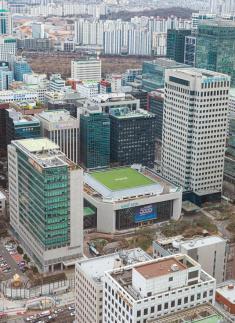 Fear of rate hikes drives corporate lending surge in Q1 SEOUL, June 8 (AJP) - Corporate loans in South Korea grew the most since the third quarter of 2022, as companies increased borrowing in the first three months of this year, according to data released by the Bank of Korea (BOK) on Monday. Outstanding industrial loans by deposit-taking institutions stood at 2,061.8 trillion won (US$1.33 trillion) at the end of March, up 35.6 trillion won from the previous quarter. The increase widened sharply from an 8.5 trillion won gain in the fourth quarter. The central bank cited seasonal factors, productive finance, and renewed credit-line borrowing all contributed to the increase, but the widespread rise suggested stronger demand for funds ahead of a potential interest rate hike by the BOK. By industry, loans to manufacturers rose 11.1 trillion won, compared with a 1.2 trillion won increase in the previous quarter. Loans to service companies increased by 24 trillion won, up from a 9.2 trillion won gain, while construction loans rose by 400 billion won, turning positive for the first time in seven quarters. In particular, working-capital loans showed the sharpest increase as they jumped by 26.2 trillion won in the first quarter, far above the previous quarter's 1.9 trillion won increase. Facility loans also rose by 9.4 trillion won. "The expansion in working-capital loans was driven partly by the re-extension of credit lines that companies had temporarily repaid at the end of last year to manage financial ratios," said Lee Hye-young, an BOK official. "Facility loans in both manufacturing and services also saw faster growth," she added. Lee also said increased corporate lending by financial institutions under the government's productive finance drive contributed to the rise. Since late last year, the government has promoted productive finance as a key policy goal, seeking to redirect capital away from real estate and household lending toward corporate investment and regional development. By lender type, loans by deposit banks increased by 25 trillion won, compared with a 9.6 trillion won gain in the previous quarter. Loans by non-bank deposit-taking institutions rose by 10.6 trillion won, reversing a 1.1 trillion won decline. Among deposit bank loans, lending to large companies increased by 12.7 trillion won, while loans to small and medium-sized enterprises rose by 11.6 trillion won. Within the service sector, loans to financial and insurance companies increased by 9.8 trillion won, while loans to wholesale and retail businesses rose by 4.9 trillion won. Faster loan growth could become a burden if it overlaps with monetary tightening. With companies already increasing debt, higher benchmark and market rates could quickly lift interest expenses. The pressure would be especially direct for working capital, or short-term funds used for wages, interest payments and raw material purchases. Construction and non-bank lending also remain risk points. Higher rates could add refinancing pressure on weaker developers and prompt non-bank lenders to tighten standards if bad-loan risks rise. The BOK said the latest loan increase remains manageable. "There have been much larger increases in the past, so in absolute terms, the current level does not appear excessively large," Lee said, asked whether it could raise credit risks. 2026-06-08 15:14:15
 -
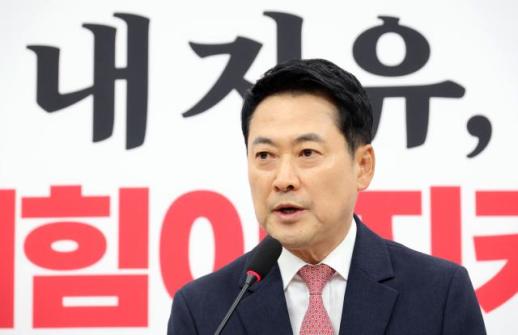 Jang Dong-hyuk Criticizes President Lee's First-Year Press Conference Jang Dong-hyuk, leader of the People Power Party, criticized President Lee Jae-myung on June 8 for lacking concern for citizens during his first-year press conference. Jang stated, "There is no one in Lee Jae-myung's world. It is truly devastating." During a press conference at the National Assembly, Jang remarked, "Watching the president's first anniversary press conference today, I was reminded once again that there is a separate universe of Lee Jae-myung." He expressed disappointment, saying, "There was not a hint of remorse for the citizens suffering in the real estate hell. Instead of acknowledging the skyrocketing prices, he insisted it was normalization and mentioned raising property taxes while claiming to have controlled housing prices in Seoul. This is a sound of despair for the people." Jang also noted, "He did not convey a single word of hope to the youth who are frustrated from not finding jobs. There was not a word of apology to the citizens who are angry about having their voting rights taken away. Lee is clearly living in a different world from the people." He criticized Lee's claims of making South Korea an irreplaceable industrial powerhouse, stating that the core issues of industrial structure reform and labor reform were never addressed. "An irreplaceable South Korea is not a goal that can be achieved through slogans. While growth for all can be a campaign slogan, it cannot be the keyword for South Korea's economic policy," Jang said. He pointed out that most of the country's key industries, except for semiconductors, are becoming replaceable due to neglect of structural reform and regression in labor reform. Jang emphasized, "Holding the Yellow Envelope Act while shouting about being irreplaceable shows the contradictions of the Lee administration. To truly achieve irreplaceability, we must sever ties with the Korean Confederation of Trade Unions, lift regulations, and accelerate reforms to dramatically enhance industrial competitiveness." Regarding the shortage of ballots in local elections, he remarked, "Lee Jae-myung, who used to demand accountability from the president during his time in opposition, has committed this significant national error without offering a proper apology. Is this issue solely the responsibility of the Election Commission? Does the president, as the head of state, bear no responsibility?" He added, "He must provide a proper response to the citizens' calls for a re-election." Additionally, in response to calls within his party for him to clarify his position regarding the local election results, Jang asked, "Given the objective data, how do you evaluate the results of this local election?"* This article has been translated by AI. 2026-06-08 15:09:00
 -
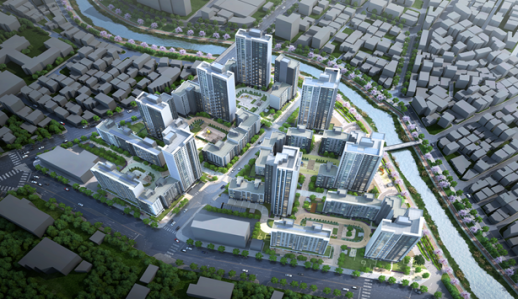 Oh Se-hoon Wins Fifth Term, Boosting Demand for Urban Renewal Projects in Seoul Oh Se-hoon, the mayor of Seoul, has successfully secured a fifth term in the June 3 local elections, raising expectations for continuity in the city's urban renewal policies. Mayor Oh is expected to continue the private-led urban renewal initiatives, including the rapid integrated planning and Moa Town projects, aiming to start construction on 310,000 housing units by 2031. According to industry sources on June 8, mid-sized construction companies are expanding their foothold in Moa Town projects, focusing on aging low-rise residential areas in districts such as Gangbuk, Jungnang, Guro, and Geumcheon. While the scale of contracts for these projects is smaller than large-scale redevelopment efforts, the limited availability of new supply sites in Seoul makes securing stable order backlogs attractive. Moa Town is a specialized initiative by the Seoul government that aims to revitalize aging low-rise residential areas by consolidating them into units of less than 100,000 square meters. Individual projects are pursued as small-scale urban renewal efforts, such as street housing maintenance projects, but if adjacent areas are secured consecutively, it is possible to create brand towns with hundreds to thousands of housing units. Key players gaining traction in the Moa Town bidding process include Kolon Global, DL Construction, Dongbu Construction, Ssangyong Construction, and BS Hanyang. These companies are not only focusing on single project bids but are also adopting strategies to enhance brand recognition by bundling adjacent areas. Kolon Global is recognized as an active player in the Seoul Moa Town market. The company has secured projects in the Bondon area of Gangbuk-gu, one of the initial Moa Town sites, and is reportedly pursuing related urban renewal projects in areas like Myeonmok-dong in Jungnang-gu and Cheonho-dong in Gangdong-gu. DL Construction has been winning consecutive bids for street housing maintenance projects related to Moa Town in Myeonmok-dong and Seongbuk-gu's Seokgwan-dong, aiming to create a brand town under the 'e-Pyeonhansaeng' label. According to DL Construction, the Myeonmok Station Zone 6 project will consist of 253 units, and plans are in place to supply 792 units by combining Zones 2, 4, and 6. Following this, the Myeonmok Station Zone 1, with 435 units, has also been confirmed for construction, aiming for a continuous order effect in the Myeonmok-dong area. Dongbu Construction is also establishing its presence in the Moa Town-related street housing maintenance project in Guro-gu's Gocheok-dong. DL Construction had previously secured the construction rights for the Gocheok-dong street housing maintenance project in 2022, indicating a growing competitive atmosphere among mid-sized construction companies focusing on aging low-rise residential areas in Guro, Jungnang, and Seongbuk. Ssangyong Construction has achieved success in the Moa Town project in the Shiheung-dong area of Geumcheon-gu. This area is known for its concentration of aging low-rise residential buildings, highlighting significant demand for residential environment improvements through Moa Town initiatives. Ssangyong Construction expects to enhance its brand recognition in the southwestern part of Seoul through this project. BS Hanyang has reportedly secured contracts in small-scale urban renewal projects in Myeonmok-dong, which is a focal point for multiple Moa Town initiatives attracting the interest of mid-sized construction companies. BS Hanyang is leveraging its 'Sujin' brand to expand its presence in Seoul's urban renewal market. Industry insiders believe that Moa Town could become a significant entry point for mid-sized construction companies into Seoul's urban renewal market. Competing in the large-scale reconstruction and redevelopment market against major construction firms is challenging, but Moa Town projects are relatively smaller in scale, allowing for brand town effects through consecutive orders in specific regions. An industry source stated, "In a situation where new supply sites in Seoul are scarce, Moa Town provides a market where mid-sized construction companies can securely establish their order backlogs. With Mayor Oh's fifth term ensuring policy continuity, competition for orders will likely intensify, particularly in aging low-rise residential areas outside Gangnam."* This article has been translated by AI. 2026-06-08 15:09:00
 -
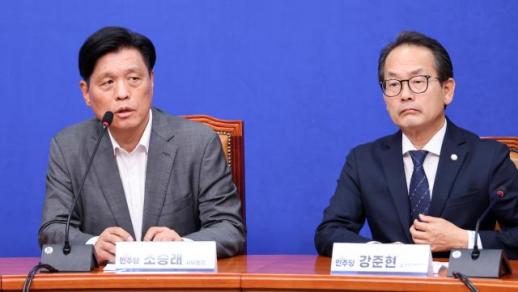 Democratic Party to Hold Leadership Election on August 17 The Democratic Party announced on June 8 that it has reached a consensus to hold its leadership election on August 17. However, regarding the potential resignation of party leader Jeong Cheong-rae, who is expected to seek re-election, the party stated that there are no specific regulations in its rules concerning a resignation deadline. During a press conference at the National Assembly, Secretary General Jo Seung-rae remarked, "President Lee Jae-myung resigned before the formation of the election preparation committee during his tenure as party leader to seek re-election. It is likely that a similar process will occur this time." Jo also confirmed that there will be no by-election for Supreme Council member Lee Un-joo, who expressed her intention to resign following the party's poor performance in the June 3 local elections. He explained, "Since there are only two months left in her term, the position will remain vacant." In response to criticism within the party regarding Lee's resignation, Jo stated, "The election process revealed that various voices could not unify, leading to disappointing results." He emphasized the importance of accurately diagnosing the factors behind the election defeat rather than assigning blame to Jeong Cheong-rae's leadership, saying, "It is much more important to identify the various causes of defeat and develop alternatives." Jo added that the party will establish an evaluation committee for the recent election and will engage in a thorough discussion to formulate alternatives during the remaining two months leading up to the leadership election. Meanwhile, potential candidates for the next party leader include Jeong Cheong-rae, Prime Minister Kim Min-seok, and former leader Song Young-gil.* This article has been translated by AI. 2026-06-08 15:09:00
 -
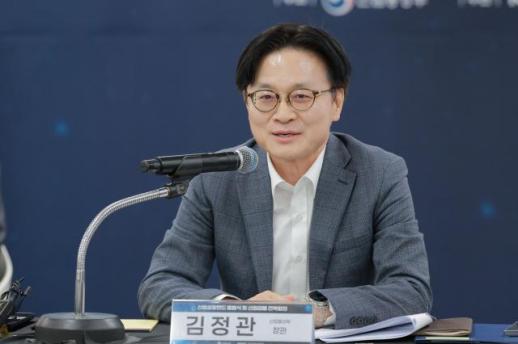 South Korea and Kazakhstan Strengthen Energy Cooperation Amid Middle East Instability Amid ongoing instability in the Middle East, South Korea is enhancing its cooperation with Kazakhstan, the largest oil producer in Central Asia. The two countries focused on signing a Comprehensive Economic Partnership Agreement (CEPA) and securing plant contracts during discussions. The Ministry of Trade, Industry and Energy announced that Minister Kim Jeong-kwan met with Yerlan Nagaspaev, Kazakhstan's Minister of Industry and Infrastructure Development, on June 8 in Astana for the 11th Korea-Kazakhstan Joint Committee on Trade, Economic, and Scientific and Technological Cooperation. This joint committee, a high-level consultative body established under the bilateral trade agreement, convened for the first time in two years since the 10th meeting in May 2024. The ministers from both countries serve as chief representatives, with participation from relevant ministries and agencies. In light of the increased uncertainty in energy supply due to the ongoing conflict in the Middle East, the two nations agreed to collaborate on ensuring stable oil imports. They also committed to expanding cooperation in the development of Kazakhstan's power infrastructure and the modernization of aging power plants. Previously, special envoys for strategic economic cooperation visited Kazakhstan to discuss energy collaboration, recognizing that South Korea's oil imports are heavily reliant on the Middle East. Geopolitical conflicts, such as blockades in the Strait of Hormuz, could directly impact energy supply. Minister Kim also met separately with Energy Minister Yeralan Akhmetzhanov to review the status of oil import initiatives. The South Korean government aims to reduce its dependence on the Middle East by strengthening ties with Kazakhstan, the largest oil producer in Central Asia. Additionally, they discussed plans to advance the CEPA between South Korea and Kazakhstan to elevate the level of economic cooperation. CEPA, a type of free trade agreement (FTA), addresses tariff reductions, the removal of non-tariff barriers, and a wide range of economic cooperation areas. The two sides agreed to work together to resolve challenges faced by local companies in sectors such as electronics, automotive, and plant operations. In the construction sector, discussions were held regarding Kazakhstan's key Alatau New City development project. Both countries will share experiences in smart city development and enhance communication on urban air mobility within the new city project. They also discussed digital and intellectual property rights, as well as environmental issues. Notably, they agreed to support the smooth progress of the Karachaganak gas processing plant project, which is a major gas and condensate production site in Kazakhstan. Additionally, they committed to facilitating the timely advancement of the Ekibastuz power plant modernization project. Minister Kim stated, "The two countries are broadening their cooperation beyond traditional areas such as resources and energy, and plants, to include digital and eco-friendly sectors. We will continue to follow up on the discussions from the joint committee." He added, "We will strive to further strengthen economic cooperation between the two countries in conjunction with the upcoming first Korea-Central Asia Summit scheduled for September."* This article has been translated by AI. 2026-06-08 15:03:00
 -
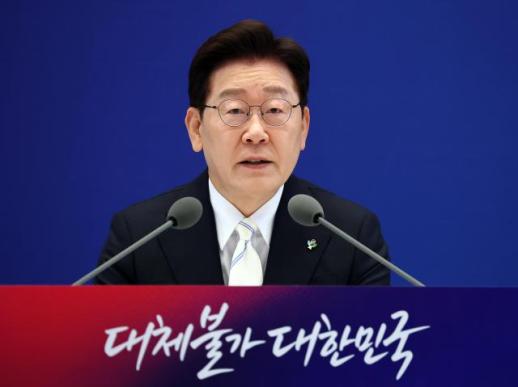 Reactions Split as President Lee Jae-myung Marks One Year in Office President Lee Jae-myung held a press conference on June 8 to mark his first anniversary in office, drawing sharply contrasting reactions from political parties. The Democratic Party praised Lee's communication skills and extensive knowledge, while the People Power Party criticized the event as "the worst self-praise." Some also raised the possibility of impeachment following Lee's comments about dropping charges against him. Democratic Party leader Jeong Cheong-rae lauded Lee's press conference on Facebook, stating, "He accurately presented the vision for South Korea's future and recognized the structural issues facing the country. In short, he is irreplaceable." Jeong also expressed gratitude when Lee indicated he would leave the decision on the prosecution's supplementary investigation to the National Assembly, saying, "I will achieve good results." Senior spokesperson Kang Jun-hyun noted in a written briefing that "President Lee's exceptional communication skills shone through. He demonstrated profound knowledge and a keen awareness of essential issues throughout the conference." Conversely, People Power Party leader Jang Dong-hyuk remarked, "There was no sign of remorse for the citizens suffering in the housing crisis," adding, "There was not a single word of apology to the youth who feel their voting rights have been stripped away." He further criticized Lee, stating, "While he declares a dictatorship to do as he pleases, he demands that the public adhere to norms and rules." Senior spokesperson Park Seong-hoon also commented, describing the press conference as "the worst self-praise and a comprehensive blame-shifting exercise, lacking reflection on government failures, accountability, or solutions." Additionally, Han Dong-hoon, an independent lawmaker elected in the June 3 by-elections, warned on Facebook regarding Lee's statement that "charges should be dropped according to law and common sense. If they are wrong, they should be canceled," calling it "a shameless and low-level crime that does not align with law and common sense," and threatened to pursue impeachment if Lee cancels charges related to his own case. 2026-06-08 15:00:00
 -
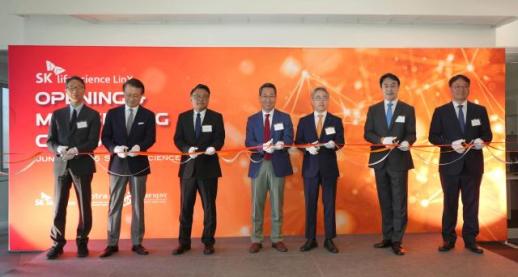 SK Biopharm Establishes Open Innovation Hub in the U.S. "We will solidify a sustainable ecosystem by organically combining innovative technologies and resources through diverse open innovation with promising domestic biotech companies." SK Biopharm opened its 'SK Life Science LinX' hub within its subsidiary in New Jersey on June 5, where CEO Lee Dong-hoon expressed the company's commitment to strengthening collaboration with biotech firms. He described LinX as "a base for co-growth that will drive the growth of promising Korean biotech companies on the global stage, going beyond just a shared office space."According to SK Biopharm, LinX serves as an open innovation hub in the U.S., covering a total area of 160 pyeong (approximately 5,300 square feet), which includes 120 pyeong of shared space, 10 private offices, and meeting rooms. The facility aims to provide infrastructure optimized for local business, supporting domestic companies in entering the U.S. market and securing local networks.LinX will connect research and development capabilities from Asia with experiences from advanced markets like North America.During the opening ceremony, a tripartite memorandum of understanding (MOU) was signed between SK Biopharm, KOTRA, and KASBP New Jersey and New York Chapter. As part of this agreement, the 'K-Bio Global Innovation LinX' program, led by KOTRA, will be operated at LinX.SK Biopharm plans to establish a co-prosperity platform that assists domestic biotech companies in global commercialization and network expansion, based on its local hub and public-private collaboration programs.Additionally, the company will begin recruiting resident companies this month, targeting domestic biotech firms and startups looking to enter the U.S. market.Meanwhile, SK Biopharm reported strong first-quarter results driven by the growth of its epilepsy treatment drug, Cenobamate, which is currently sold in the U.S. For the first quarter, the company recorded sales of 227.9 billion won and an operating profit of 89.8 billion won, marking increases of 58% and 250%, respectively, compared to the same period last year. Notably, U.S. sales of Cenobamate rose by 48.4% to reach 197.7 billion won.* This article has been translated by AI. 2026-06-08 14:57:00