
Journalist

Kang So Young
-
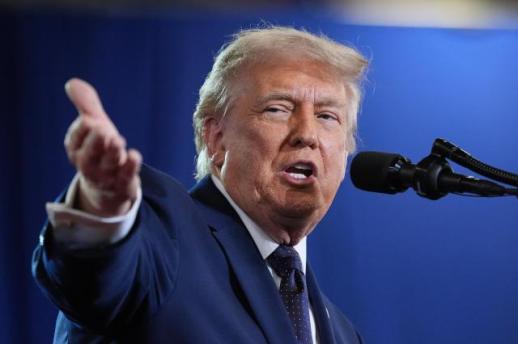 Trump Administration Tightens U.S. Green Card Application Rules The Trump administration has significantly tightened the procedures for applying for U.S. green cards, mandating that applicants generally submit their applications from their home countries. The previous practice of adjusting status while remaining in the U.S. will now only be allowed in exceptional circumstances. According to Yonhap News on May 23, the U.S. Citizenship and Immigration Services (USCIS) announced a new policy requiring foreign nationals to apply for green cards from outside the United States. Previously, foreign nationals in the U.S. on student, tourist, or work visas could adjust their status and apply for a green card based on marriage to a U.S. citizen or employment. However, under the new rules, unless there are special circumstances, applicants must return to their home country to apply through a local U.S. consulate. Citing the Washington Post, Yonhap reported that this measure is part of a hardline immigration policy aimed at preventing cases where individuals enter the U.S. on short-term visas and then remain long-term. USCIS spokesperson Jack Carler stated, "Individuals on non-immigrant visas, such as students, temporary workers, and tourists, are visiting the U.S. for specific short-term purposes. Their visit should not be the first step toward obtaining a green card." He added, "In the future, foreign nationals temporarily in the U.S. will need to return to their home countries to apply for a green card unless there are exceptional circumstances. This approach will help reduce issues related to illegal stays after status denials." The impact of this policy change is expected to be substantial. The New York Times reported that approximately 1.4 million people obtained green cards in the U.S. last year, with 820,000 of them adjusting their status while in the country. Under the new regulations, many of these individuals may need to return home to restart the application process. A significant concern is the potential for lengthy processing times for green card applications. Even if applicants have U.S. citizen spouses or family members, they may face months or years of waiting in their home countries, leading to prolonged separations from their families. The Wall Street Journal noted that appointments at U.S. consulates are already backlogged for months or even years, suggesting that the implementation of the new rules could exacerbate these delays. It also estimated that millions could be directly or indirectly affected by this policy change. * This article has been translated by AI. 2026-05-23 21:25:28
 -
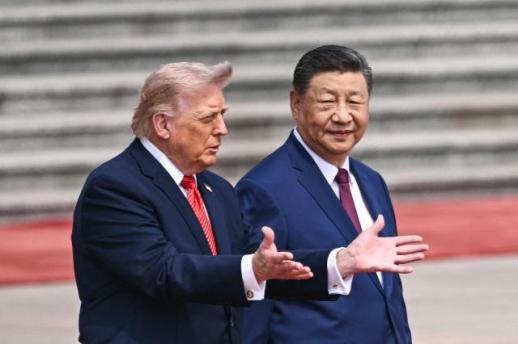 Beijing Becomes a Hub of Global Diplomacy as Leaders Converge in May 2026 May 2026 in Beijing is not just about being the capital of China; it has transformed into a vast meeting room for global power dynamics and a strategic stage testing the direction of a new international order. In just a few days, U.S. President Donald Trump and Russian President Vladimir Putin visited Beijing in succession. Leaders from major European nations, Middle Eastern countries, and Central Asian states are also strengthening their ties with China. The world is once again turning its attention to Beijing. This scene is more than a mere diplomatic event; it signals a shift in the global order that has persisted for centuries since the Industrial Revolution. Once, the center of the world was London, followed by New York and Washington, which became the hubs of finance, military, industry, and civilization. However, as we move toward the mid-21st century, the weight of the global economy and geopolitics is shifting back to Northeast Asia, the easternmost part of the Eurasian continent. At the center of this shift is China. It is now the world's largest manufacturing country and exporter, as well as one of the largest importers of crude oil. China's influence is rapidly expanding across various sectors, including electric vehicles, batteries, rare earths, solar energy, drones, and AI infrastructure. The reason world leaders are flocking to Beijing is simple: it has become impossible to address supply chain, energy, market, and investment issues without considering China. A key moment in Beijing's diplomacy this May was Putin's visit shortly after Trump's trip. The fact that the leaders of the two major military powers, the U.S. and Russia, visited China in quick succession symbolically illustrates the current changes in the international order. Chinese President Xi Jinping is employing a complex diplomatic strategy, managing relations with the U.S. while competing, and closely aligning with Russia without becoming dependent. While engaging in a power struggle with the U.S. over tariffs, semiconductors, AI dominance, and Taiwan, he seeks to avoid a complete economic rupture. With Russia, he is expanding cooperation in energy, finance, and security to counter the U.S.-centric order. This is the emergence of what is being called the 'New Beijing System.' The war in Ukraine has accelerated this trend. Russia, having lost a significant portion of its European market due to Western sanctions, is rapidly shifting toward dependence on China. Russian oil and gas are being directed to China in large quantities, and the share of transactions in yuan is increasing rapidly. Notably, the 'Power of Siberia' gas pipeline project is not just an energy initiative; it symbolizes the formation of a new economic axis between Russia and China within the Eurasian continent. However, this shift also reveals Russia's structural weaknesses. President Putin maintains the image of a strong leader, but the prolonged war in Ukraine is quickly depleting Russia's national power. Population decline, weakened industrial competitiveness, and international financial sanctions and technological blockades are gradually undermining the development of Russia's Far East. Regions like Vladivostok, Khabarovsk, and Sakhalin are becoming more closely aligned with the Northeast Asian economic sphere than with Europe. In contrast, China's influence continues to grow. Chinese capital, logistics, consumer markets, and manufacturing supply chains are permeating various parts of the Russian Far East. Even if nominally Russian territory, many areas are already functioning as part of the Northeast Asian supply chain. In effect, the Russian Far East is increasingly being absorbed into the periphery of the Northeast Asian economic sphere, rather than remaining a 'paper tiger' Russia. The situation is similar in the Middle East. Countries like Iran, Saudi Arabia, and the UAE are now looking to China as their largest customer. While the U.S. still exerts military influence over the Middle Eastern order, China is establishing new influence through its vast purchasing power. Particularly, amid tensions with the U.S., Iran is increasing its dependence on China for oil sales. Russia finds itself in a similar situation, having fewer markets for oil and gas, ultimately relying on China as a massive consumer market. This represents a significant change. In the past, the U.S. controlled the global energy order with the dollar and aircraft carriers. Now, China is shaping geopolitics through its purchasing power. As the world's largest manufacturing country and consumer market, China has become a key player in the international order simply by being a major buyer of oil. This is where the strategic value of South Korea and Japan comes back into focus. The only countries capable of creating an economic and technological axis that can stand up to China in Northeast Asia are South Korea and Japan. Japan still possesses world-class technology in materials, components, and equipment, along with financial competitiveness. South Korea boasts strengths in semiconductors, batteries, AI servers, shipbuilding, cultural industries, and advanced manufacturing. If South Korea and Japan can strengthen strategic cooperation beyond historical conflicts, the situation could change. The U.S. strongly desires this, as it faces significant costs and burdens in countering China alone. If South Korea-Japan cooperation expands into supply chains, AI, aerospace, nuclear energy, defense, and bio-industries, there is ample potential for a new balance of power to emerge in Northeast Asia. The AI era presents new opportunities for South Korea and Japan. While China pushes ahead with scale and speed, South Korea and Japan can respond with ultra-precision technology, AI semiconductors, advanced manufacturing, and robotics. In a structure where the three Northeast Asian countries compete yet cooperate, the core stage of the world's advanced industries is increasingly shifting to the Pacific coast. This is not a coincidence. Before the Industrial Revolution, the center of the global economy was essentially Asia. China and India accounted for a significant portion of global GDP, and the Silk Road and maritime trade centered on Asia. However, after the British Industrial Revolution, global hegemony shifted to Europe and the U.S. Now, that direction is changing again. China is the world's largest manufacturing country. South Korea is the leading producer of high-quality semiconductor memory. Japan excels in precision manufacturing and robotics technology. Ultimately, the core axes of global industry, supply chains, AI, and semiconductors are converging back to the three Northeast Asian countries. History does not flow in a straight line; it circulates in cycles. The global hegemony that shifted to the West after the Industrial Revolution is now returning to the East. However, the reality is far from simple. The U.S. remains the world's strongest military and financial power. China dominates manufacturing, supply chains, and consumer markets. Russia, though weakened, is still a military power with nuclear weapons and resources, while Europe maintains a massive technology and financial market despite stagnation. In this context, South Korea can no longer survive solely through 'middle power diplomacy.' South Korea must now recognize itself as a strategic nation with strengths in semiconductors, AI, batteries, shipbuilding, nuclear energy, and cultural industries. At the same time, it should expand cooperation in supply chains, defense, energy, and cultural sectors with third strategic nations like India, Brazil, Saudi Arabia, the UAE, and Turkey. India is poised to become the world's most populous country, Brazil is rich in resources and food, and Turkey serves as a geopolitical gateway connecting Europe, the Middle East, and Central Asia. Saudi Arabia and the UAE are pushing for new industrial transitions in AI, smart cities, hydrogen economies, and nuclear energy. The world is now moving beyond a simple U.S.-China bipolar system to a multipolar system, with Northeast Asia at its center. Seoul, Tokyo, and Beijing are likely to become the key stages for the future of the global economy, supply chains, and technological hegemony. May 2026 in Beijing was heated by this massive flow. And now the world is watching another potential scene: the possibility of President Xi Jinping visiting North Korea. Following the war in Ukraine, the closeness between North Korea and Russia is rapidly advancing, with discussions of military cooperation, arms trading, and technology exchanges. However, China will not allow North Korea to become too close to Russia. For China, North Korea is not just a neighboring country; it is a strategic buffer zone adjacent to the U.S. alliance network and a key axis of Chinese influence in the Northeast Asian order. Therefore, a future visit by President Xi to North Korea is likely to hold more significance than a mere friendly visit. It signals that China will not relinquish its leadership over the Korean Peninsula issue and may be a strategic move to draw the North Korean issue back into a China-centered order. Ultimately, all the scenes unfolding in Beijing converge on one question. What kind of order will the 21st century Asian era open under? And in this era of significant civilizational transformation, what kind of nation will South Korea become?* This article has been translated by AI. 2026-05-23 21:16:13
 -
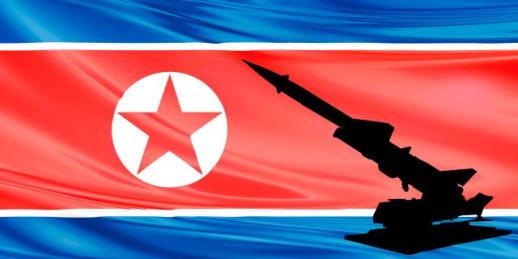 UN NPT Conference Fails to Reach Agreement on North Korea and Iran Nuclear Issues The Nuclear Non-Proliferation Treaty (NPT) review conference held at the United Nations headquarters in New York has ended without reaching a final agreement, primarily due to disagreements among member states over North Korea and Iran's nuclear issues. According to Yonhap News on May 23, the NPT review conference concluded its four-week schedule the previous day, aiming to adopt a document to strengthen the NPT framework. However, differences in positions between nuclear and non-nuclear states, along with conflicts surrounding North Korea and Iran's nuclear matters, prevented any consensus. This marks the third consecutive failure to adopt a final agreement at the NPT review conferences, following similar outcomes in 2015 and 2022. Concerns are growing over the prolonged stalemate in international nuclear disarmament discussions. The conference was held against a backdrop of deteriorating international relations, including heightened tensions between the U.S. and Iran and a deepening new Cold War. During the proceedings, the U.S. criticized Iran for violating its NPT obligations, while Iran retaliated by accusing the U.S. and Israel of violating international law through attacks on its nuclear facilities. While there was some agreement among member states on the need to adopt at least a lower-level amendment, they ultimately failed to overcome the differences in key issues. Notably, the final draft circulated during the conference reportedly omitted any references to concerns regarding North Korea's nuclear program and denuclearization on the Korean Peninsula. The content related to Iran was limited to a vague expression that nuclear weapons should 'never' be developed. According to AFP, language urging the commencement of follow-up negotiations on the New START treaty, which expired in February without extension, was also removed from the draft. Kim Sang-jin, the Deputy Permanent Representative of South Korea to the UN, expressed deep regret during the closing meeting, stating, "It is disappointing that not a single line addressing the North Korean issue was included. The principle of complete denuclearization of the Korean Peninsula should have been reaffirmed." He emphasized that North Korea cannot hold nuclear weapons status under the NPT framework and that this issue must be resolved through negotiation and diplomacy. * This article has been translated by AI. 2026-05-23 21:12:43
 -
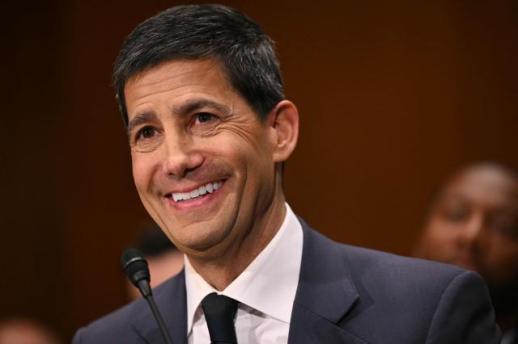 Kevin Warsh Sworn in as New Fed Chair, Emphasizes Independence and Reform Kevin Warsh was officially sworn in as the new chair of the U.S. Federal Reserve on May 22. Following his inauguration, he emphasized the importance of the Fed's independence and the need for reform, drawing attention to how he will navigate monetary policy amid pressure from President Donald Trump for interest rate cuts. According to Yonhap News, during the swearing-in ceremony held at the White House, Warsh stated, "The mission of the Fed is to promote price stability and maximum employment." He added, "When we pursue these goals with wisdom, clarity, independence, and determination, inflation will decrease and growth will strengthen." Warsh expressed his intention to lead a reform-oriented Fed to further enhance America's prosperity and international standing, stating, "I will learn from past successes and failures and break free from rigid frameworks and models." While he underscored the importance of the Fed's independence, his comments also suggested a willingness to align with the reform agenda sought by President Trump. During the ceremony, President Trump remarked, "There is no one better prepared to lead the Fed than Warsh," and expressed his hope that Warsh would work completely independently. He added, "Do not look at me or be conscious of anyone else. Just do what needs to be done." Warsh's term will last four years, and he will preside over his first Federal Open Market Committee (FOMC) meeting next month. Market observers are keenly interested in how Warsh will approach interest rate policy amid rising inflation concerns due to instability in the Middle East and the prolonged conflict in Iran. Meanwhile, Jerome Powell, the former chair who frequently clashed with President Trump during his tenure, has stepped down from the chair position but remains on the Fed's board.* This article has been translated by AI. 2026-05-23 21:11:14
 -
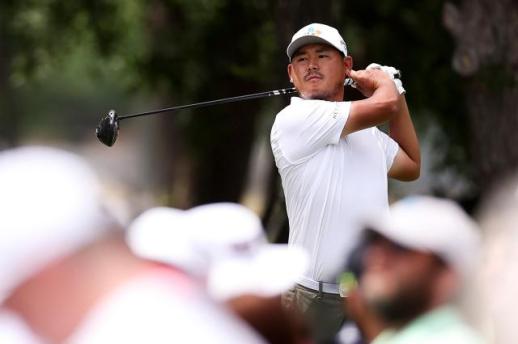 Kim Si-woo Takes Lead in CJ Cup; Im Sung-jae Records Hole-in-One Kim Si-woo and Im Sung-jae both delivered impressive performances on the second day of the CJ Cup Byron Nelson, a PGA Tour event with a total purse of $10.3 million, placing them at the top of the leaderboard. On May 23, during the second round at TPC Craig Ranch in McKinney, Texas, Kim Si-woo recorded 12 birdies and only one bogey, finishing with an 11-under 60. This score ties his personal best on the PGA Tour, which he set during the first round of the 2016 Wyndham Championship. With a total of 18-under 124, Kim moved from a tie for fourth place to sole possession of the lead, five strokes ahead of Im Sung-jae, Hirata Kensei (Japan), Scottie Scheffler, Wyndham Clark, and Jackson Suber (all from the U.S.), who are tied for second at 13-under 129. Kim started strong with a birdie on the first hole (par 4) and added birdies on the third (par 4), fifth (par 5), sixth (par 4), seventh (par 3), and ninth (par 5) holes. His momentum continued into the back nine, where he made three consecutive birdies from the tenth (par 4) to the twelfth (par 5) holes, followed by two more on the fourteenth (par 4) and fifteenth (par 3) holes. He added another birdie on the seventeenth (par 3) but ended with a bogey on the eighteenth (par 4). After the round, Kim said, "I feel good overall, even though the last hole was disappointing. I putted well, just like I practiced. With two rounds left, I will strive to continue playing well." Kim is aiming for his fifth PGA Tour victory, his first since the 2023 Sony Open. He stated, "I plan to approach the course the same way as in previous rounds. Although I have a six-shot lead, all players are performing well. I will focus on making as many birdies as possible." Im Sung-jae achieved his third career hole-in-one on the PGA Tour and set a personal best with a 10-under 61, which included one hole-in-one, one eagle, and seven birdies, with just one bogey. His score of 61 marks a new personal best on the PGA Tour, surpassing his previous record of 62 set at the 2019 Wyndham Championship. Im made his hole-in-one on the seventh hole (par 3). This is his third hole-in-one in a PGA Tour event, following his achievements in the second round of the 2019 Players Championship and the first round of the Military Tribute that same year. After adding an eagle on the ninth hole (par 5), Im finished the day with a total of 10-under 61, bringing his overall score to 13-under 129, placing him in a tie for second. Im expressed satisfaction after the round, saying, "It was a satisfying day overall. My tee shots, iron shots, and putting were all good. I was surprised by the hole-in-one, as I thought it was a good shot but didn’t expect it to go in. I’ll keep the lucky ball in my bag." With this momentum, Im is seeking his third career victory, his first since the Shriners Children's Open in October 2021. He remarked, "When my shots are good, I feel like I can compete for the win. This week feels like my third opportunity. If the weather is good this weekend, I think I can play aggressively on this course. If the greens cooperate, I can create many birdie opportunities. I want to take advantage of this momentum." Im also expressed confidence in his ability to compete for the title, stating, "It’s been about 4-5 years since I last won. However, I have been in contention twice this year. These experiences are definitely helpful. Competing for the win brings some tension and pressure, but having already experienced it this year, I plan to manage my emotions and focus on my play." World No. 1 and defending champion Scottie Scheffler moved up from a tie for sixteenth to a tie for second, recording one eagle and eight birdies without any bogeys. Among other Korean players, Noh Seung-yul is tied for twenty-third with a total of 9-under 133, Bae Yong-joon is tied for thirty-eighth at 8-under 134, and Kim Joo-hyung is tied for fifty-first at 7-under 135. Lee Kyung-hoon missed the cut.* This article has been translated by AI. 2026-05-23 21:09:00
 -
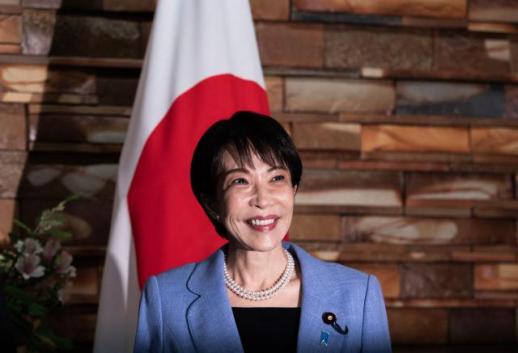 Takaichi Strengthens Party Ties to Advance Constitutional Revisions and Security Issues Reports indicate that Prime Minister Sanae Takaichi is increasing face-to-face interactions with Liberal Democratic Party (LDP) officials to solidify her support within the party. On May 22, Takaichi hosted a dinner at the Prime Minister's official residence for LDP executives, including Matsuyama Masashi, the chair of the LDP's House of Councillors, and Ishii Junichi, the secretary-general of the House of Councillors. During the gathering, Takaichi acknowledged the challenges faced by the ruling party in the upper house, stating, "It has been very tough." According to the Yomiuri Shimbun, Takaichi had previously shown signs of distrust during the budget discussions for the 2026 fiscal year due to opposition from some LDP members. However, her demeanor at this meeting was reportedly more conciliatory. Matsuyama commented after the meeting that he sensed Takaichi's strong commitment to constitutional amendments. This has led to speculation that she is seeking cooperation from the upper house to advance key issues, including drafting a constitutional amendment proposal and revising security documents aimed at enhancing defense capabilities by early next year. Takaichi also mentioned potential locations for the upcoming Japan-South Korea summit, referring to a hot spring area previously discussed with South Korean President Lee Jae-myung, stating, "I am looking for an inn with hot springs and karaoke." This marks the fourth occasion this month that Takaichi has dined with party executives, both during the day and at night. Unlike her political mentor, former Prime Minister Shinzo Abe, who frequently attended social gatherings and party meetings, Takaichi has been known for her focus on policy research and minimal participation in such events. However, analysts suggest that she may have recognized the limitations of her previous "reclusive governance" approach in pushing sensitive issues like constitutional reform, defense enhancement, and the establishment of a national intelligence agency. Within the LDP, there are signs of a movement to consolidate support around Takaichi. According to the Asahi Shimbun, her support group, the National Power Research Association (JiB), reportedly includes 347 of the 417 LDP members, representing approximately 83% of the party's total membership.* This article has been translated by AI. 2026-05-23 21:06:00
 -
 AI Digital Twins: Transforming Work and Leadership 21st-century industrial revolution is undeniably centered around artificial intelligence (AI). However, AI has now progressed beyond the role of a mere assistant to the stage of replicating human beings. A digital counterpart, which has learned human speech patterns, thoughts, experiences, judgments, and even leadership styles, has begun to operate in the digital realm. The recent report by The Wall Street Journal on the phenomenon of "AI Digital Twins" signals a significant shift that could redefine labor, management, and the very concept of human existence in the AI era. Just a few years ago, AI was limited to tasks like summarizing documents or drafting meeting notes. Now, executives at some global companies in the U.S. are training AI on their emails, speeches, interviews, lectures, podcasts, and management philosophies to create digital avatars that closely resemble themselves. These AI digital twins are not mere chatbots; they can answer questions from team members, provide leadership coaching, assist with performance evaluations, and even deliver speeches at international conferences. A notable example is Reid Hoffman, co-founder of LinkedIn, who operates an AI called "Reid AI" that has been trained on his writings and speeches from the past 22 years. This digital twin has conducted over 75 lectures and presentations since 2024, introducing itself in 74 languages, including French, Chinese, and Hindi, and engaging in real-time Q&A sessions with audiences at the Dubai International Conference. This scenario is not just a technological event; it signifies a fundamental change in the concept of human productivity. In the past, an individual’s labor and knowledge were confined by physical and temporal limitations. No matter how exceptional a CEO might be, they could not work more than 24 hours a day. However, in the era of AI digital twins, one person's experiences and knowledge can be infinitely replicated and operate simultaneously in numerous locations. This could represent one of the most significant changes in the concept of labor since the industrial revolution. Just as the steam engine expanded human muscle, AI digital twins extend human intellect and judgment. While personal computers revolutionized document processing and calculations, digital twins are entering a phase where they replicate human thought and decision-making itself. Bala Sathyanarayanan, Chief Human Resources Officer at U.S. industrial packaging company Greif, reports that his AI twin, "BalaBot," has already interacted with over 3,300 employees. Workers consult the AI on sensitive issues like managing underperformers and career development. Some employees credit AI-recommended coaching strategies for their growth into leadership roles within the organization. This marks a highly symbolic change. In the past, a company’s core assets were factories and capital. Later, data and platforms became key assets. Now, the experiences and know-how within organizations—essentially, the humans themselves—are being transformed into digital assets. Ultimately, the competitive edge in the AI era may hinge on "who has successfully digitized superior human knowledge assets." However, this raises complex ethical and philosophical questions. Who owns the digital twin? If an employee leaves the company, does their AI counterpart leave as well, or does the company retain ownership? Moreover, what happens if a company decides to lay off human employees and retain only the AI counterparts? In fact, intense debates are already underway within U.S. companies. Some employees express discomfort, stating, "I don’t like that my emails and thought processes are all being fed into AI." There are also potential legal issues if AI conveys incorrect hiring guidelines or makes distorted decisions. The phenomenon of AI "hallucination," where AI generates inaccurate information, remains unresolved. For instance, Reid AI provided a different answer to a question about favorite ice cream than the actual Reid Hoffman would have given. Ultimately, AI digital twins are likely to be used as tools for human enhancement rather than complete replacements. In other words, AI does not eliminate humans; it reallocates their time. Routine tasks and everyday interactions can be handled by AI, allowing humans to focus on more creative and strategic areas. AI digital twins could also be a crucial solution in aging societies. In countries like South Korea, where rapid low birth rates and aging populations are prevalent, the loss of experienced veteran workers upon retirement poses a significant challenge. However, AI twins can preserve decades of on-the-job experience as digital assets. The skills of manufacturing artisans, the reporting expertise of journalists, the clinical experiences of doctors, and the educational philosophies of teachers can be passed down to future generations in digital form. The potential for utilizing digital twins is particularly significant in the media and broadcasting sectors. If AI learns the writing style, logical structure, interviewing techniques, and reporting philosophies of veteran journalists, it could lead to groundbreaking changes in training junior reporters and improving article quality. If AI can replicate the speaking style and analytical approach of economic anchors and the logical frameworks of international affairs commentators, the media industry could enter an entirely new phase. Application Potential and Future Directions for Korean Companies Korean companies are already beginning to prepare for the era of AI digital twins. Samsung Electronics is enhancing personalized AI assistants through AI semiconductors and on-device AI technology, while SK Hynix is entering the next-generation AI infrastructure competition based on AI servers and HBM memory. Additionally, platform companies like Naver and Kakao are attempting to expand the corporate AI agent market based on Korean-language specialized super-large AI. In the future, we can expect the emergence of AI digital twin services that learn the expertise of corporate CEOs, executives, sales professionals, financial analysts, journalists, and legal experts, moving beyond simple AI chatbot capabilities. For instance, in manufacturing, AI could learn the know-how of skilled technicians to diagnose production line issues in real-time. In finance, AI could learn the consultation patterns of veteran private bankers to provide customized asset management services to clients. In healthcare, AI twins could accumulate the diagnostic experiences of renowned doctors to reduce disparities in medical services. The same applies to the media sector. AI trained on the analytical styles of international relations experts could analyze significant trends such as the U.S.-China power struggle, Middle Eastern geopolitics, and the AI industrial revolution in real-time, providing readers with deeper insights. Ultimately, future competitiveness will depend not on the quantity of articles produced but on how effectively human insights and experiences can be digitized. However, Korean companies must adhere to three essential principles. First, the human-centered principle: AI should be used as a means to enhance human capabilities, not replace them. Second, the data sovereignty principle: ownership and compensation structures for individual employees' knowledge and experiences must be clearly defined. Third, the ethics and accountability principle: humans must bear ultimate responsibility for AI's decision-making errors. Digital twins are poised to become the norm. AI is now entering a stage where it creates a "second self" for humans, moving beyond being a mere search tool or automation device. When combined with agentic AI, which can make decisions, plan, and act independently, the pace of change will accelerate. As AI takes over repetitive tasks, humans will likely be liberated from many of these duties. As a result, humans will have more time for strategic thinking, creative activities, and living fulfilling lives. Physical fatigue will decrease, and mental stress may also be alleviated. AI digital twins could serve as tools for a civilizational shift, returning to humans the time for "rest" and "reflection" beyond mere productivity innovations. Ultimately, the key issue is not the technology itself but what kind of civilization humans will create through AI. The true winners in the AI era will not be the countries with the fastest machines but those that deeply understand the harmony between humans and technology.* This article has been translated by AI. 2026-05-23 21:01:12
 -
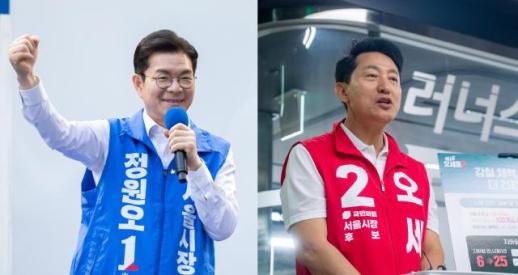 Tight Race for Seoul Mayor: Candidates Go All Out in Weekend Campaigns The race for Seoul Mayor has tightened to a mere 0.1 percentage points between Jung Won-o of the Democratic Party and Oh Se-hoon of the People Power Party. On May 23, the candidates are actively campaigning across the city as the first weekend of official election activities unfolds. Jung began his day at 9:30 a.m. in Dobong District, promising infrastructure improvements and better living conditions to garner support. He will also meet with citizens around Yeonsinnae Station in Eunpyeong District later in the day. In observance of the 17th anniversary of the late President Roh Moo-hyun's passing, Jung plans to attend a memorial service at the Roh Moo-hyun Citizen Center in Jongno District and will watch a live stream of the ceremony in Bongha Village. Following this, he will move to Seodaemun District for street campaigning near Hongje Station and meet residents in Hyunhyeon-dong to promise swift progress on local redevelopment projects. He will conclude his day with a focused campaign in Hongdae, Mapo District, engaging with citizens celebrating Buddha's Birthday. Oh kicked off his weekend campaign with a running event. At 7 a.m., he delivered a public message at the Yeouinaru Station runner's station, then ran approximately 3 kilometers along the popular 'Sweet Potato Run' route to connect with voters. He will then head to the southwestern region, where housing innovation and development issues are prominent. His schedule includes campaigning at Sinjeongnegeori Station in Yangcheon District, touring the Sinyeong Market, walking with citizens at the Seoul Botanical Garden, and conducting focused campaigning at Gakchisann Market and Balsan Station Plaza. He will also visit Byeollitnamun Market in Geumcheon District and Samseong Market in Gwanak District to meet shoppers during the holiday. After his southwestern campaign, Oh will revisit the Seoul International Garden Expo site in Seongdong District. He will wrap up his campaign at the Seoul Express Bus Terminal in Seocho District and make appearances at Seokchon Lake in Songpa District. The Seoul mayoral election is highly competitive, with the latest polls showing a narrow margin of just 0.1 percentage points. According to a survey conducted by Ace Research from May 19 to 20, which sampled 1,002 adults aged 18 and older living in Seoul, Jung received 41.7% support while Oh garnered 41.6%. The survey utilized a 100% automated response system with virtual numbers provided by three mobile carriers. The response rate was 5.5%, and the margin of error is ±3.1 percentage points at a 95% confidence level. For more details, visit the Central Election Survey Deliberation Commission's website.* This article has been translated by AI. 2026-05-23 20:57:43
 -
 SpaceX Successfully Tests Next-Gen Starship V3 Ahead of IPO SpaceX has successfully conducted a test launch of its next-generation spacecraft, Starship V3, ahead of its upcoming initial public offering (IPO). The mission, which included key objectives such as spaceflight and ocean landing, is expected to positively influence investor sentiment as the company prepares to go public. On May 22, SpaceX broadcasted the launch and flight of its 12th Starship rocket, Starship V3, via its official social media platform X. Launched from SpaceX's Starbase in Texas, the rocket completed a suborbital flight and successfully landed in the Indian Ocean. During the flight, it successfully deployed 22 model satellites and streamed the entire process live. This successful test is seen as a significant achievement for SpaceX ahead of its planned Nasdaq listing next month. Market analysts predict that the company's valuation could reach approximately $1.75 trillion (about 2,658 trillion won) following the IPO. Starship V3 is a next-generation launch vehicle developed to support NASA's lunar exploration project. In its recent IPO filing, SpaceX stated, "Starship is the most powerful launch system ever developed, capable of carrying up to 100 tons of cargo, with plans to double its payload capacity in future models." However, some technical challenges were noted. The first-stage booster, Super Heavy, successfully separated but failed to land upright in the ocean due to ignition issues with some engines. Additionally, one of the six engines on the Starship experienced an ignition failure, but the flight continued thanks to adjustments made to the remaining engines. SpaceX had initially planned to attempt the launch a day earlier but postponed it by a day due to issues detected in the hydraulic system of the launch tower.* This article has been translated by AI. 2026-05-23 20:55:29
 -
 Sunny and Mild Weather Expected for Buddha's Birthday On Buddha's Birthday, Sunday, May 24, clear and mild weather is expected across the country. Rain that fell in various regions the previous day is forecast to mostly cease by morning, making it a suitable day for outings during the holiday.According to the Korea Meteorological Administration, the weather will start cloudy but gradually clear up by the morning. However, Jeju Island will remain overcast throughout the day. Morning low temperatures are predicted to range from 11 to 16 degrees Celsius, while daytime highs are expected to reach between 21 and 28 degrees. The temperature difference between day and night, particularly in inland areas, may reach around 15 degrees, so residents are advised to take care of their health. Fine dust levels will be at 'good' to 'moderate' levels nationwide, indicating fair air quality. Waves in the coastal waters are expected to be 0.5 to 1.5 meters in the East and South Seas, and around 0.5 meters in the West Sea. Offshore wave heights are forecasted to be between 0.5 to 2.0 meters in the East and South Seas, and 0.5 to 1.0 meters in the West Sea. Looking ahead to early next week, rain is again expected nationwide. The Korea Meteorological Administration predicts that rain will begin in Jeju Island on the afternoon of May 25, spreading to the Jeolla region and western South Gyeongsang Province by night. Expected precipitation amounts are 5 to 30 millimeters in Jeju, 5 to 20 millimeters in Gwangju and South Jeolla, and 5 to 10 millimeters in North Jeolla and western South Gyeongsang. The rain is expected to expand nationwide on May 26 and mostly cease by May 27, although some areas in Gangwon Province, Gyeongsang regions, and Jeju may continue to see rain into the morning. Temperatures next week are expected to remain around normal levels. On May 25, morning lows are forecasted to be between 12 and 18 degrees, with daytime highs ranging from 22 to 29 degrees. On May 26, when rain is expected, morning temperatures will be between 16 and 20 degrees, and daytime highs will be between 20 and 26 degrees. Following this, early summer-like weather with morning lows of 13 to 20 degrees and daytime highs of 21 to 29 degrees is anticipated.* This article has been translated by AI. 2026-05-23 20:54:00