
Journalist

Kang So Young
-
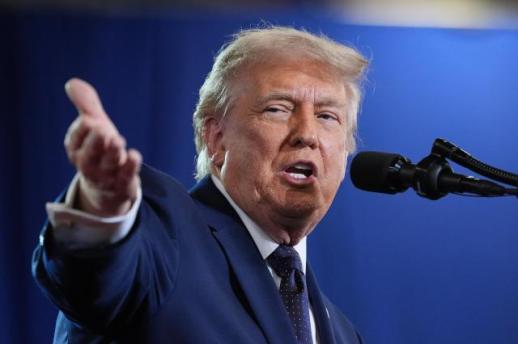 U.S. Deploys Dozens of Refueling Aircraft at Israeli Airport Amid Iran Strike Concerns The United States has reportedly stationed dozens of refueling aircraft at Israel's Ben Gurion Airport, raising speculation about preparations for a potential resumption of strikes against Iran. According to a report by Yonhap News on May 23, citing the Financial Times (FT), satellite imagery analysis revealed that at least 50 U.S. military refueling aircraft have been observed at Ben Gurion Airport this month. The number of refueling aircraft at the airport has steadily increased since late February, just before the U.S. and Israel were poised to launch attacks on Iran. The count rose from about 36 in early March to 47 by early April, coinciding with the onset of a ceasefire, and has now reached 52 this week. Ben Gurion Airport, located near Tel Aviv, serves as Israel's primary civilian aviation hub. The FT noted, "Gray military aircraft belonging to the U.S. Air Force, particularly refueling planes, are filling the airport's tarmac, making them easily visible to both civilian passengers and motorists on nearby highways." Refueling aircraft are considered essential for long-range strike operations, as they enable fighter jets to receive fuel in midair, significantly extending their operational range and flight time. During the previous U.S. operation against Iran, known as 'Operation Grand Fury,' KC-135 and KC-46 refueling aircraft were deployed throughout the Middle East to support long-range missions by U.S. and Israeli fighter jets. This increase in refueling aircraft may also indicate preparations for a renewed campaign against Iran. While negotiations for a ceasefire between the U.S. and Iran are ongoing, President Donald Trump has maintained that military options remain on the table. Recently, there has been a growing sentiment that if negotiations remain stalled, the U.S. and Israel could resume strikes against Iran within days. The FT also reported concerns within Israel that Ben Gurion Airport is effectively being used as a U.S. military base. The influx of military aircraft has led to space shortages for Israeli airlines, with some flights reportedly being redirected to foreign airports.* This article has been translated by AI. 2026-05-23 20:51:21
 -
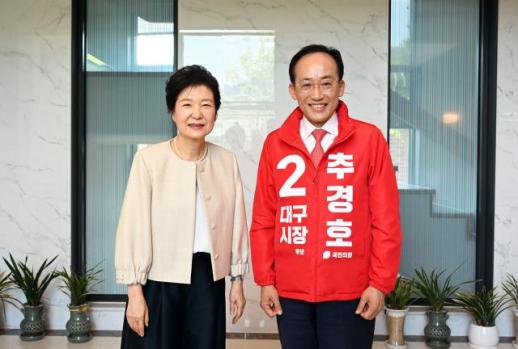 Park Geun-hye Supports Choo Kyung-ho in Daegu Market Visit Former President Park Geun-hye, often referred to as the "queen of elections," visited the traditional Chilseong Market in Daegu on May 23 to rally support for Choo Kyung-ho, the People Power Party candidate for mayor. According to Choo's campaign committee, Park and Choo toured the market together at 2 p.m., where Park engaged with local merchants and shoppers, urging them to support Choo. Earlier, on May 4, Choo visited Park's residence in Daegu's Dalseong County for a 40-minute conversation. During that meeting, Park encouraged Choo, saying, "Work hard in this election and make sure to win. Our citizens will make a wise decision," as reported by Choo. Meanwhile, Choo is in a tight race with Kim Boo-kyum, the Democratic Party candidate. A recent poll conducted by KBS Daegu and commissioned by Korea Research from May 16 to 20 showed Kim with 40% support and Choo with 39% among 800 Daegu voters. The poll utilized a telephone interview method with virtual numbers, achieving a response rate of 19.2%. The margin of error is ±3.5 percentage points at a 95% confidence level. For more details, please refer to the website of the National Election Survey Deliberation Commission.* This article has been translated by AI. 2026-05-23 20:49:27
 -
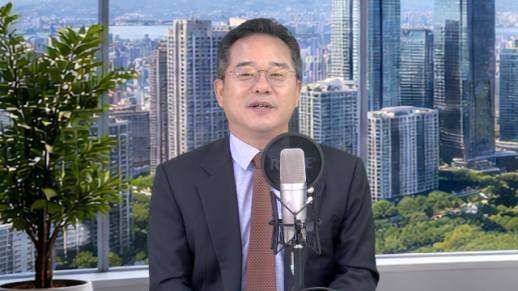 Rep. Min Byung-deok: 'Won Stablecoin is a Strategic Asset for South Korea's Economy' The debate surrounding the digital asset market is intensifying. Once viewed as symbols of 'speculation' and 'gambling,' virtual assets are now being discussed as strategic industries related to national financial order, monetary sovereignty, and payment infrastructure in the AI era. The United States, Europe, Japan, and Hong Kong are already accelerating the establishment of regulations related to stablecoins and digital assets, and voices in South Korea are growing louder, urging that action can no longer be delayed. At the center of this movement is Min Byung-deok, a member of the Democratic Party of Korea. Recently, he has garnered attention both inside and outside the political arena by introducing the 'Digital Asset Basic Law.' Min defines digital assets not merely as investment products but as a 'future financial infrastructure.' He emphasizes the need to develop the won stablecoin as a new growth engine for the South Korean economy. Throughout the interview, Min stressed the importance of 'leadership that understands the pace of change.' He stated, 'Payments in the AI era will inevitably move toward digital assets,' adding that 'sovereign AI and the won stablecoin are key components of South Korea's future security and economic strategy.' 'Transforming Coins from Speculation to Industry... Regulation is Key' — You graduated with a degree in political science and worked as a lawyer before entering politics. What motivated your recent active involvement in the digital asset sector? 'During my university years, I was involved in poverty movements in demolition zones and hillside neighborhoods. We advocated for permanent rental housing for tenants in redevelopment areas. That experience highlighted the importance of regulation. Without a system, the public suffers. The same applies to digital assets today. The phenomenon is already massive, but the lack of regulation is causing confusion.' — Were you initially positive about digital assets? 'Honestly, I used to think of coins as akin to gambling. However, upon closer examination, I realized that with regulation, this could become an industry. It has the potential to create significant jobs and economic opportunities, yet we had been neglecting it.' — You often refer to yourself as a 'people's politician.' 'Ultimately, politics is about taking responsibility for people's lives. During the COVID-19 pandemic, self-employed individuals suffered immense losses due to gathering bans, yet no one discussed compensation. I protested in front of the Blue House and pushed for loss compensation laws. I believe that addressing people's livelihoods is not just talk; it requires commitment until solutions are found.' — Do you view digital assets as a livelihood issue as well? 'Absolutely. It represents a future economic opportunity, and neglecting it will harm the public. We risk missing out on the chance for industrial growth.' 'The Digital Asset Basic Law is a Blueprint for Financial Infrastructure' — What is the core of the Digital Asset Basic Law? 'In short, it aims to shift coins from the realm of speculation to that of regulation. Until now, they have been left unattended. However, if regulated as stablecoins, they can become payment methods and financial infrastructure. I believe it serves as the foundational law for designing South Korea's future financial system.' — Why do you believe now is the right time for legislation? 'The world is already moving forward. Hong Kong, Singapore, and the United States are all tokenizing real-world assets (RWA). Payment and remittance infrastructures are being restructured around digital assets. Meanwhile, we are still deliberating whether to proceed. The technology is already sufficient, but the regulation is lagging.' 'Assessing South Korea's Digital Asset Competitiveness' — How do you evaluate South Korea's competitiveness in digital assets? 'South Korea ranks as the third-largest market globally, following the United States and China. We are certainly not lagging behind. The issue lies in regulation. The U.S., Japan, and Hong Kong are all advancing, yet we still lack rules. Despite this, we maintain our position as the third-largest market.' — Is there significant interest from foreign companies? 'Absolutely. Once regulations are established, many companies are eager to operate in South Korea. The country has a high level of acceptance for digital assets.' 'Changing the Perception from 'Virtual Assets' to 'Digital Assets' — You emphasize the term 'digital assets' instead of 'virtual assets.' 'Referring to them as virtual assets makes them seem non-existent and unrealistic. However, these are actual assets functioning in the digital space. Think of them as digital gold. It's not just a matter of terminology; it's about changing perceptions.' — The public perception still leans heavily toward speculation. 'That's because many haven't tried it. Once people use it, they find it convenient and low-cost. Ultimately, as regulations are established and various use cases emerge, perceptions will naturally shift.' — The bill also includes provisions for fully allowing ICOs. 'Until now, we have been caught between prohibition and neglect. I advocate for orderly permission. We should allow participation in line with global standards while clearly regulating activities.' — This will significantly impact the startup ecosystem. 'Absolutely. Fundraising will become much easier. It's akin to laying down the tracks for a railway. We are establishing the rails for the future financial payment system.' 'The Core of Stablecoins is Reserve Assets' — You have set the capital for issuing won stablecoins at 500 million won. 'Setting it too low or too high poses problems. The key is not the capital size but how securely we can manage and redeem the reserve assets.' — Can you explain the concept of reserve assets simply? 'For example, to issue one coin, you would need to hold 1,000 won in actual reserves. If cash is needed again, it can be exchanged for 1,000 won at any time. Ultimately, stability comes from managing reserve assets and the redemption system.' — Are there concerns about a bank run? 'There can be no bank run if we hold 100% of the reserve assets. While banks keep only a portion as reserves, stablecoins are structured to hold the full amount.' — You proposed establishing a Digital Asset Committee directly under the President rather than under the Financial Services Commission. 'This is not an issue that the Financial Services Commission can handle alone. It connects with the Bank of Korea, the Ministry of Science and ICT, tax, and trade issues. Given that this is a national strategic industry that will shape the future financial order, it should be under the President's direct oversight.' 'The Bank of Korea as a Defender... Innovation Should Be Led by the Private Sector' — The Bank of Korea and financial authorities are somewhat conservative. 'I understand the conservatism of central banks. However, in the field of innovation, we need an approach that manages risks rather than eliminates them. We cannot ban cars just because they are dangerous.' — Why do you oppose a bank-centered structure? 'Officials from Hong Kong's financial authorities have expressed similar sentiments. Banks are defenders, not attackers. Innovation should be led by the private sector, while banks can play a role in ensuring stability.' — What changes do you anticipate if the bill passes? 'Talent and technology that have gone overseas will return. There is a high likelihood that global companies will flock to South Korea. Nearly 30% of the population has experienced digital assets. We have one of the highest levels of acceptance in the world.' — Ultimately, this is a strategy for becoming a financial hub. 'Exactly. While the U.S. will continue with a dollar-based system, we can pursue a won stablecoin strategy based on content and platforms. The country that dominates the payment system will control the future.' 'Sovereign AI and the Won Stablecoin as a Unified Strategy' — You have defined digital assets as a national strategic industry. 'Payments in the AI era will inevitably transition to digital assets. Therefore, I view sovereign AI and the won stablecoin as a unified strategy. This is not just about finance; it is a matter of national security strategy.' — What kind of leadership does South Korea need? 'Leadership that understands the direction and pace of change. We must boldly foster areas that need growth and listen and coordinate to address areas requiring distribution. Future industries like digital assets should be nurtured, while existing industries must establish fair distribution structures.' Min Byung-deok is a member of the Democratic Party of Korea, having graduated from Seoul National University with a degree in political science. After passing the 40th National Bar Examination, he worked as a lawyer. He has been active in the field of economic justice through the Lawyers for a Democratic Society and later entered politics, currently serving as a two-term representative for Anyang Dong-nan. He has focused on financial and livelihood policies in the National Assembly's Political Affairs Committee, actively pursuing legislation related to loss compensation during the COVID-19 pandemic and consumer protection in finance. Recently, he has taken the lead in policies regarding digital finance and stablecoins by introducing the Digital Asset Basic Law. He defines digital assets not merely as investment products but as 'the future financial infrastructure of South Korea,' emphasizing the need to develop the won stablecoin as a strategic asset for national security in the AI era.* This article has been translated by AI. 2026-05-23 20:39:40
 -
 President Lee: Excessive Collection of Management Fees is Illegal President Lee Jae-myung stated on May 23 that the excessive collection of management fees in shared buildings such as apartments, officetels, and commercial properties is now illegal. In a post shared early that day on X (formerly Twitter), President Lee emphasized that "everyone has the right to request details of management fees." He added, "From now on, all irregularities in South Korea will be normalized." Earlier, on May 21, the Ministry of Land, Infrastructure and Transport announced measures to eradicate corruption related to management fees. The proposed reforms include increasing criminal penalties and abolishing exceptions that allowed audits to be waived with tenant consent. During a Cabinet meeting in February, President Lee criticized the practice of raising management fees to evade rent regulations, stating that concealing management fee details is akin to fraud and embezzlement.* This article has been translated by AI. 2026-05-23 20:37:00
 -
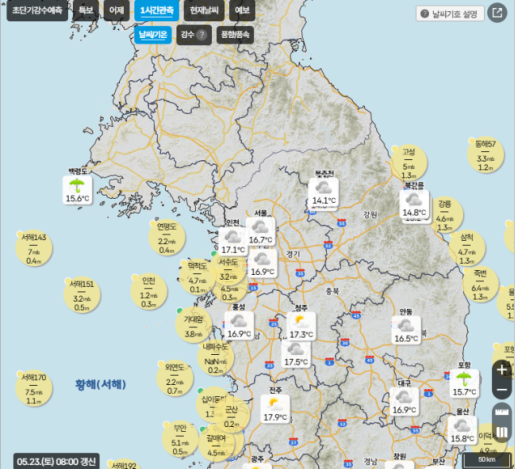 Weather Forecast: Cloudy Saturday with Light Rain Expected On Saturday, May 23, the weather across the country is expected to be mostly cloudy, with light rain in some areas during the day. Temperatures are forecasted to return to seasonal averages, easing the early summer heat. According to the Korea Meteorological Administration, light rain of less than 5mm is anticipated in most regions from morning into the afternoon. While the rainfall is not expected to be significant, it may temporarily make roads slippery in some areas, necessitating caution for drivers. After the rain, skies will gradually clear, leading to generally sunny weather across the country starting Sunday morning, May 24. However, Jeju Island is expected to remain mostly cloudy. The highest temperatures on May 23 are predicted to range from 17 to 24 degrees Celsius. Major cities are forecasted to see temperatures of 23 degrees in Seoul, Incheon, and Daejeon, 24 degrees in Gwangju, 22 degrees in Daegu, and 20 degrees in Busan and Ulsan. On May 24, morning lows are expected to be between 11 and 16 degrees, with daytime highs ranging from 21 to 28 degrees. While it may feel warm during the day, temperatures are expected to be cooler in the mornings and evenings, leading to a temperature difference of around 15 degrees in inland areas. On May 25, a public holiday for Buddha's Birthday, the weather is expected to start off mostly clear but will gradually become cloudy by the morning. Temperatures are projected to rise slightly compared to the weekend, with daytime highs reaching between 22 and 29 degrees, slightly above seasonal averages. Rain is expected to begin in Jeju on the afternoon of May 25, spreading to the Jeolla region and western South Gyeongsang Province by night. Rainfall is anticipated to continue across most of the country on May 26. * This article has been translated by AI. 2026-05-23 20:36:00
 -
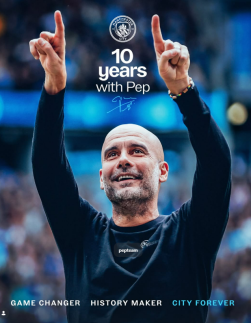 Pep Guardiola Steps Down as Manchester City Manager After 10 Years Pep Guardiola has announced his departure from Manchester City after a decade at the helm. Leading the team through a golden era, he cited "exhaustion" as the reason for his decision to part ways. On May 23, Manchester City confirmed that Guardiola's final match will be against Aston Villa on May 25, marking the end of the 2025-2026 season. The game will take place at the Etihad Stadium. This announcement comes as a surprise, especially since Guardiola had signed a contract extension with the club last November, committing to the 2026-2027 season. However, it is reported that he has expressed a need for a long break. Guardiola joined Manchester City in 2016, succeeding Manuel Pellegrini, and has since rewritten the club's history. He achieved a record 100 points in the Premier League during the 2017-2018 season and completed a historic treble in the 2022-2023 season by winning the Premier League, FA Cup, and UEFA Champions League. Notably, he led the team to four consecutive league titles in the 2023-2024 season, a first in English top-flight history. During his tenure, Guardiola secured six Premier League titles, three FA Cups, five League Cups, and one UEFA Champions League title, totaling 17 major trophies. This season, however, the team finished as runners-up to Arsenal in the league.To honor his achievements, Manchester City plans to name a stand after Guardiola and erect a statue in his likeness. Enzo Maresca, a former Chelsea manager and past City coach, is considered a leading candidate to succeed him. Guardiola will take a break from coaching before assuming the role of global ambassador for City Football Group (CFG), where he will assist with the operations and technical advice of its affiliated clubs. According to the BBC, Guardiola stated at a press conference, "Ten years is a very long time," and emphasized that the team needs a new manager and fresh energy. He added, "I felt I could no longer maintain the drive to stand in front of the players and compete for victory in every match."* This article has been translated by AI. 2026-05-23 20:33:28
 -
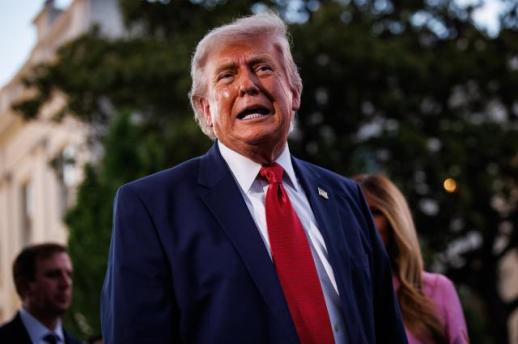 U.S. and Israel Prepare for Possible Strikes on Iran Amid Stalled Negotiations Reports indicate that the United States and Israel are preparing to resume strikes on Iran within days if negotiations show no progress. In response, mediating countries such as Qatar and Pakistan are reportedly intensifying efforts to extend a ceasefire and establish a framework for further negotiations. According to a report by Yonhap News on May 23, citing the Wall Street Journal, the current goal of the negotiations is to extend the unstable ceasefire that has been in place since May 8, rather than to reach a formal peace agreement. The aim is to sign a Letter of Intent (LOI) or a Memorandum of Understanding (MOU) to facilitate future discussions. The Trump administration insists that any agreement must include restrictions on Iran's nuclear program. Conversely, Iran argues that the focus should first be on ending the war, lifting restrictions in the Strait of Hormuz, and easing financial sanctions. The two sides have reportedly been unable to narrow their differences on which issues should be included in an immediate agreement and which should be deferred to future negotiations. If even a limited agreement fails, there is a possibility that the U.S. and Israel will conduct short-term strikes targeting Iran's energy infrastructure and other economic facilities. This would be a measure to increase pressure on the Iranian regime, but Iran has warned that it would respond with extensive retaliation if new attacks occur. Mediators are also acting swiftly. General Asim Munir, Chief of Army Staff of Pakistan, visited Tehran on May 22, and a Qatari negotiating team is reportedly staying in the region to continue mediation efforts. Saudi Arabia has also warned Iran that failing to reach an agreement could escalate the situation further. The U.S. maintains that Iran must agree to a long-term halt of its uranium enrichment program and the transfer of nuclear materials close to weapons-grade levels. Secretary of State Marco Rubio stated on May 22 in Brussels that while there has been “some progress,” the U.S. position remains unchanged: it cannot accept Iran possessing nuclear weapons. Reports suggest that President Trump has repeatedly warned of the possibility of resuming attacks on Iran if negotiations break down, and if military action is taken, Israel is likely to join. Concerns have also been raised within Israel that President Trump might agree to a deal that does not sufficiently curb Iran's nuclear program and missile capabilities.* This article has been translated by AI. 2026-05-23 20:31:13
 -
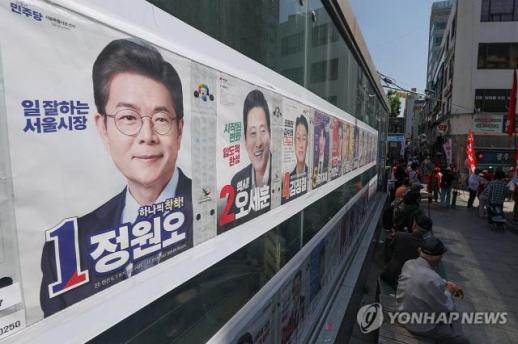 Voter Common Sense Needed Amid AI Misinformation in Local Elections The local elections on June 3 are approaching their final stages. However, the dominant issues in the election are not visions for regional development or livelihood policies. Instead, AI-generated misinformation, extreme political attacks, historical controversies, and smear campaigns are only increasing voter fatigue. Concerns are growing that the local elections are becoming a battleground for central politics, rather than a forum for discussing the future of the region. This election marks a significant entry into the 'AI political era' for South Korea. Authorities have recently launched investigations into AI-manipulated posts and false articles that distort and demean the May 18 Democratic Uprising. Fake articles, misleading images, and distorted videos generated by AI are spreading through social media and YouTube, exacerbating social confusion. This is not merely a case of misinformation; it undermines the very foundation of democracy, which relies on a 'shared reality.' More concerning is that this phenomenon is increasingly being used as a tool for political mobilization. Past elections relied on organization, funding, broadcasting, and street campaigning. Now, the competition has shifted to algorithms and view counts. YouTube Shorts, sensational videos, extreme claims, and conspiracy theories spread much faster than policy discussions. This is due to the profit structure of platform companies, which favors anger and sensationalism. Short, emotionally charged content generates more clicks and increases advertising revenue. From an economic perspective, this is a typical example of 'attention economy.' The core asset of platform companies is not factories but human time. The problem is that the content that captures human attention the longest is not always truthful or balanced. Ultimately, democracy is being pushed out of the deliberative process and into a race fueled by emotions. Similar phenomena are occurring globally. In the United States, ahead of last year's elections, AI robocalls mimicking President Joe Biden's voice spread messages urging people not to vote. Early in the Ukraine war, deepfake videos circulated showing Ukrainian President Volodymyr Zelensky declaring surrender. In India and the Philippines, AI avatars and voice replication of politicians have been used in campaigns. While technological advancements can make democracy more open, they can also serve as far more dangerous tools for incitement. The safety debates surrounding this local election also prompt a reflection on the essence of politics. Democratic Party candidate Jeong Won-oh visited the site of the 10th anniversary of the Guui Station disaster and criticized his opponent, Oh Se-hoon, for creating a "structural problem born from safety indifference." He connected this to the controversy over missing rebar in the GTX-A Samsung Station project, placing safety issues at the forefront. In contrast, Oh's camp has countered that this is a political attack. Safety should not be a tool for political conflict but a fundamental responsibility of administration. South Korean society has repeatedly paid the price for a safety indifference that assumes, "It will be fine." Yet, during election seasons, accidents are consumed as political fodder for attacks against one another. What matters is not who can criticize the other more forcefully, but what systems can be put in place to prevent accidents and improve conditions. The moral issues within politics are also fueling voter disappointment. TV Chosun reported allegations that Democratic Party candidate Kim Yong-nam operated a loan business under a proxy name. While Kim's camp has categorically denied these allegations, it is hard to deny that this incident highlights a broader crisis of trust in politics. A politician discussing the economy and high interest rates while embroiled in a high-yield loan controversy leaves voters feeling deeply cynical. The greatest crisis in South Korean politics today is not the ideological divide itself but the collapse of 'trust capital.' Citizens are increasingly finding it difficult to discern what is true and whom to trust. Politicians attack each other with accusations of falsehood, YouTube thrives on sensational videos for clicks, and AI endlessly produces fake images and false articles. In such a structure, only extremes and hatred survive. Democracy was originally a system that trusted human reason and common sense. However, in the age of AI and platforms, instincts are stimulated faster than human emotions. When politics shifts from policy competition to a competition of anger, the ultimate victims are the citizens. Real issues such as local economies, jobs, transportation, safety, housing, and welfare are pushed aside. Therefore, what is most needed in this local election is ultimately voter common sense. Voters must calmly assess what policies benefit the region without being swept away by AI misinformation, conspiracy theories, and extreme political attacks. The political sphere must also move away from election strategies that rely on clicks and sensational messages. Local elections should not be proxy battles for central politics but a stage for civic life that determines the lives of citizens. Technology will continue to advance. AI is likely to become more sophisticated, and the influence of platforms will grow. The issue is not the technology itself but what rules, ethics, and democratic principles will be established on top of it. This local election is not merely about who will be elected. It serves as a test of whether South Korean democracy will follow a path of common sense and deliberation or sink deeper into algorithm-driven and anger-fueled politics.* This article has been translated by AI. 2026-05-23 20:28:52
 -
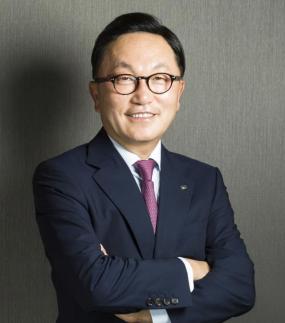 Park Hyun-joo Transforms Mirae Asset into a Global Investment Platform Park Hyun-joo, chairman of Mirae Asset Group, has a clear vision for financial leadership: to expand finance beyond the domestic market and direct capital globally. While the Korean securities industry has remained focused on a brokerage-centered revenue model, he recognized its limitations early on and sought to change the structure. The phrase "global investment platform" encapsulates his strategy. His network spans the United States, India, and Hong Kong, with expansions in global ETFs and alternative investments, all aimed at shifting finance from trading to investment and from domestic to global. Investments in SpaceX and the success of global ETFs validate his approach. However, this strategy raises questions about how to manage aggressive investments and volatility risks. Park's leadership is ongoing, as he continues to broaden the boundaries of finance. Overcoming Brokerage Limitations with a Global Investment Platform Park does not view securities firms merely as trading entities; he sees them as platforms designed for capital movement. The Korean securities industry has long relied on a brokerage-centered revenue model, which fluctuates based on commissions and trading volumes. Park believes this structure is not sustainable in the long term, prompting a shift in direction. He argues that the domestic market is small, competition is excessive, and performance is heavily influenced by interest rates and stock market fluctuations, limiting financial companies' growth potential. Thus, he reframed the question from "How can we increase trading?" to "Where should capital be directed?" This question is the starting point for his global investment platform strategy. Expanding overseas networks centered on the U.S., India, and Hong Kong, enhancing global ETF operations, and strengthening alternative investments are interconnected initiatives. Investment targets are broadening globally, and the means of investment are diversifying, creating a cohesive platform. In this process, Mirae Asset is transforming from a domestic securities firm into a global investment infrastructure. This is not merely an expansion; it is a redefinition of finance's role. Park is shifting finance from merely facilitating transactions to designing investment opportunities, and while this change is gradual, the direction is clear. Ultimately, overcoming the limitations of securities firms means not just expanding business areas but redefining finance itself, and Park's strategy is at that intersection. Risky Choices and Embracing Uncertainty Park's decision-making often sparks debate, yet a consistent pattern emerges: he moves when the majority is uncertain rather than when they are confident. His acquisition of Daewoo Securities was deemed an excessive gamble at the time, and the purchase of Global X was seen as a puzzling choice by the market. Similarly, his investment in SpaceX faced criticism for being overly risky for a financial company. However, over time, these choices have revealed a pattern. He does not shy away from risk; instead, he alters its nature, converting short-term risks into long-term structural advantages. The valuation gains from the SpaceX investment and the rapid growth of the global ETF business demonstrate that his decisions are based on structural insights rather than mere speculation. His investment philosophy is clear: the market always reacts late, and opportunities favor those who act first. This philosophy aligns closely with the essence of financial entrepreneurship: embracing uncertainty and taking responsibility for the outcomes. He performs both simultaneously. Of course, not every choice succeeds; there have been instances of volatility and losses in some overseas real estate and alternative investments. However, the crucial factor is direction. He does not stop due to the possibility of failure; instead, he creates structural performance across the entire portfolio, making his leadership more about judgment than management. This judgment stems not from personal intuition but from accumulated experience and understanding of global markets. Capital Movement as a Catalyst for Change Park's approach to finance does not conclude within the financial sector. He believes that capital creates industries, positioning finance at the forefront rather than behind. A look at his investment portfolio reveals a clear direction: internet, biotechnology, electric vehicles, space, and recently, digital assets—all aligned with future industries. This is not merely about seeking profits; it is about reading industrial structures and proactively allocating capital. Finance plays a role beyond supplying capital; it determines the pace of industries. The direction of growth and the competitive gap widen based on where capital flows. He understands this mechanism better than anyone, especially as global investment expansion seeks to overcome the structural limitations of Korean finance. Remaining in the domestic market restricts the scope of capital utilization and growth. Therefore, capital must venture abroad, necessitating the integration of global networks and investment platforms. He is making this structure a reality, not just by investing overseas but by creating a financial structure connected to international markets. In this sense, his strategy is about connection rather than mere expansion, linking finance and industry, domestic and international, capital and technology into a unified flow, with Mirae Asset at the center. This is not just a corporate strategy; it exemplifies the evolutionary direction of Korean finance. Redefining the Future of Finance in the Platform Era The competitive landscape of finance is already changing. It is no longer about products but platforms; the focus has shifted from individual services to interconnected structures. Park is among the first to recognize this shift. He aims to integrate investment, asset management, global investment, and digital assets into a single platform. With a foundation built on global ETFs, asset management, and overseas networks, the structure is already in place, and the integration of AI and data enhances the platform's sophistication. Data-driven investment analysis, automated asset management, and personalized portfolio construction are transforming financial services into entirely new forms. Customers no longer choose products; they select systems. And that system is the platform. He aims to seize this structure, which is not merely a digital transformation but a dismantling of financial boundaries. The distinctions between securities and asset management, investment and technology are disappearing, creating a unified investment infrastructure. In this process, Mirae Asset evolves from a financial company into a platform enterprise. Of course, this strategy carries risks, including global market volatility, regulatory changes, and intensified technological competition. However, the direction is clear: finance is no longer a domestic industry; it is a global platform industry, and Park is at the forefront of this transition. SWOT Analysis Strength: Park's strengths lie in his global investment judgment and execution. His strategic choices, such as the global ETF business and SpaceX investment, were ahead of the market. Additionally, his ability to transition into an investment platform is a key competitive advantage that differentiates him from traditional securities firms.Weakness: Aggressive investment strategies come with volatility. Instances of losses in overseas real estate and alternative investments highlight the importance of risk management. Furthermore, high dependence on global markets makes him vulnerable to external variables.Opportunity: The expansion of the global investment market, growth of ETFs, AI in finance, and the transition to asset platforms present favorable conditions for Mirae Asset. Particularly, the increase in individual investors provides a long-term growth foundation.Threat: Global financial market volatility, regulatory tightening, and competition from big tech companies pose significant threats. Additionally, major investment failures could lead to trust risks.* This article has been translated by AI. 2026-05-23 20:27:00
 -
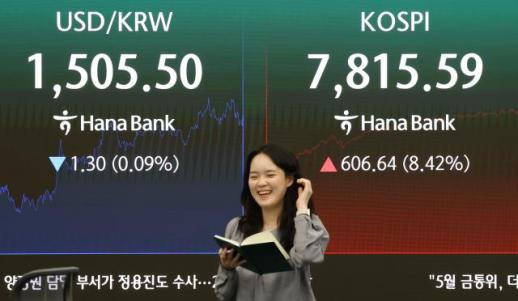 Single-Stock Leveraged ETFs Set to Launch, Potential for 60% Daily Loss As exchange-traded funds (ETFs) become a popular investment tool in South Korea, interest is growing in the upcoming launch of single-stock leveraged ETFs. While the introduction of various investment options centered around major semiconductor stocks like Samsung Electronics and SK Hynix is welcomed, investors should be cautious of the potential for daily losses of up to 60%. According to financial industry sources, leveraged and inverse products based on single stocks will be listed on the domestic stock market starting May 27. This includes ETFs that aim to double the returns of stocks like Samsung Electronics and SK Hynix. Some asset management firms are also set to introduce inverse products that bet on stock price declines. Single-stock leveraged products follow the daily returns of individual stocks, meaning if the ETF rises, the returns are doubled. However, if the stock moves contrary to investor expectations, significant losses can occur in a short period. Given that domestic stock prices can fluctuate by ±30%, losses of up to 60% in a single day are possible. Investors should also be aware that even if a single stock's price fluctuates without a net change, the value of leveraged products can steadily decline. For instance, if stock A drops from 100 won to 80 won (-20%) and then recovers to 100 won (+25%), a leveraged product starting at 100 won could fall to 60 won (-40%) and then rise to 90 won (+50%), resulting in a loss of 10 won. In fact, a comparison of specific stocks in the U.S. market last year showed that while individual stocks yielded an 18% return, a double-leveraged product recorded a 20% loss instead of the expected double return. Unlike general ETFs that track indices, single-stock leveraged ETFs expose investors directly to risks associated with individual companies, such as poor performance or negative news. Due to the high-risk nature of these products, investors must deposit a minimum of 10 million won and complete two hours of training through the Financial Investment Association's learning system—one hour of general education and one hour of advanced education. Previously, only one hour of training was required to invest in overseas leveraged ETFs. Yoon Jae-hong, a researcher at Mirae Asset Securities, noted, "Considering the size of the domestic ETF market and the trading patterns of individual investors, the inflow of funds into the 14 leveraged ETFs is estimated to be around 1.7 trillion won conservatively, and up to 5.3 trillion won aggressively. Given that initial capital tends to concentrate in the first five trading days, investors should be cautious of potential spikes in short-term volatility during this period."* This article has been translated by AI. 2026-05-23 20:20:16