

Journalist

Kim Dong-young and Candice Kim
-
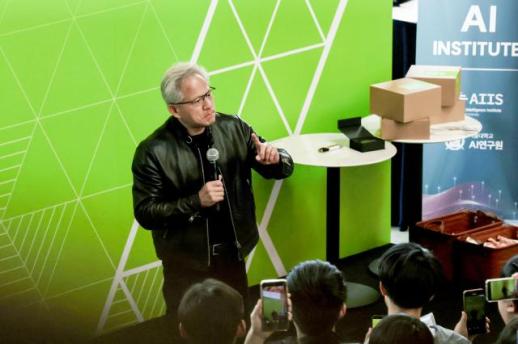 From chicken to K-pop: why Jensen Huang fell for Korea's soft power SEOUL, June 09 (AJP) — Nvidia CEO Jensen Huang surely knew how to mix business with pleasure. He returned home Tuesday with deals on not just memory chips for Nvidia's next-generation Rubin and Vera platforms, but also bags of HBM chip snacks to munch on and the lingering aftertaste of chicken, soju and Korean hospitality. Since his arrival last Friday, Huang dominated headlines and social media feeds, shuttling between beer and soju gatherings with Korean tech giants, a baseball stadium appearance complete with a ceremonial first pitch, meetings with esports icon Faker and ordinary pedestrians, a brief dance to a K-pop hit and an enthusiastic discussion of singer Hwasa. While his meetings with business leaders focused on the future of artificial intelligence and multibillion-dollar partnerships, many of the moments that resonated most with the public reflected his enthusiasm for Korean culture and soft power. Food topped the list. "I love to eat," Huang told reporters. "I thought my favorite food in Korea was fried chicken, but I was wrong." He had discovered samgyetang, Korea's traditional ginseng chicken soup, and samgyeopsal, the country's ubiquitous pork barbecue. The food tour began almost immediately after his arrival. On his first evening, Huang was joined by SK Group Chairman Chey Tae-won, LG Group Chairman Koo Kwang-mo and Naver founder Lee Hae-jin for a barbecue dinner in Seoul's Hongdae district, with hundreds of fans and reporters closely following and livestreaming what was being served. Reflecting on the meal during his appearance on tvN's popular talk show "You Quiz on the Block," Huang joked, "I ate most of it, because I'm the oldest." Afterward, he greeted citizens outside the restaurant, signing autographs and handing out HBM Chip snacks. The images quickly went viral. Convenience store chain Seven Eleven said sales of the snack jumped 704 percent during June 6-7 compared with a week earlier. The following day, he was photographed enjoying samgyetang with family members at a well-known restaurant in central Seoul. Korean media soon noticed a pattern: wherever Huang went, chicken seemed to follow. During a previous visit to Seoul in October 2025, he attended a chimaek gathering with Samsung Electronics Chairman Lee Jae-yong and Hyundai Motor Group Executive Chair Chung Eui-sun at a chicken restaurant in Gangnam. That theme resurfaced at Jamsil Baseball Stadium, where Huang threw out the ceremonial first pitch before a Korea Baseball Organization game. "Nothing is better than chimaek," he said, using the popular Korean term for fried chicken and beer. Even after a schedule dominated by AI, semiconductors and business meetings, food remained on his mind. Speaking at the Shilla Hotel after a private meeting with Samsung Electronics DS Division Vice Chairman Jun Young-hyun at the Guest House, Huang enthusiastically revisited his first meal in Korea. "A little sesame oil, a little bit of salt. Come on, that's incredible," he said, smacking his lips at the memory. Food, however, was only one part of the story. Later on "You Quiz on the Block," Huang surprised viewers by dancing to "Golden," the hit soundtrack from Netflix's animated film "KPop Demon Hunters." "Who doesn't love Golden?" Huang said with a smile. He also expressed admiration for singer Hwasa. "I do also love Hwasa," Huang said. "She's a very good dancer, a good singer." He even referenced her songs "Good Goodbye" and the newer "So Cute," surprising host Yoo Jae-suk with his familiarity with her music. He was pleased with an observation from fortune teller Park Sung-jun, who interpreted his facial features on the show — saying his high forehead signified extraordinary intelligence and his nose indicated lifelong prosperity. Huang responded with characteristic humor. "Your nose is not big enough," he told the host. "My nose is extraordinary tycoon - "New Korea fashion: Jensen nose," he joked. His up-close show appearance was notable for another reason. Despite being one of the world's most recognizable technology executives, Huang chose a Korean variety show for his first appearance on an entertainment program. His interest in Korean culture extended beyond food and K-pop. Shortly after arriving in Seoul, Huang visited T1 Base Camp and met legendary esports player Lee Sang-hyeok, better known as Faker. Days later, he appeared at Jamsil Stadium wearing a Doosan Bears jersey bearing the number 93, a tribute to Nvidia's founding year. Taken together, the images formed a striking contrast to Huang's public image as the face of the global AI boom. Rather than appearing only in boardrooms and conference halls, he spent much of his visit engaging with the cultural experiences that millions of people around the world increasingly associate with South Korea. For Huang, those experiences were not separate from the country's technology ambitions. He told reporters what he had told Korea's deputy prime minister for science and ICT Bae Kyung-hoon - that Korea's cultural strengths are one reason the country is uniquely positioned for the AI era. "I told the deputy prime minister that this is Korea's moment and that this moment must take advantage of Korea's culture," Huang said. "Korea's culture is very, very adaptable to technology. The culture is very accepting of new technology. In the last 25 years, so much technology came into Korean culture and it was adapted so easily." "The culture is perfect for new technology, artificial intelligence." He also pointed to Korea's geopolitical position and openness to global partnerships. "If there's a country that represents lovers, not fighters, it would be Korea," Huang said. The comment drew laughter, but it also reflected a recurring theme throughout his visit: that Korea's appeal extends beyond manufacturing and technology. For Huang, the country's competitive advantage lies equally in its people. "There's a culture of Korea that is about knowledge and wisdom and dedication and suffering. You have to protect that," he said. As artificial intelligence makes computing power and even intelligence itself increasingly accessible, Huang argued that character becomes the true differentiator. "Intelligence is now a commodity because of artificial intelligence. Running fast is a commodity." "Intelligence plus character is not a commodity." "The character is suffering, the ability to suffer. I have a deep ability to suffer. Nobody can suffer better than I can." Then he turned the observation toward Korea itself. "No country can suffer better than Korea." "The grandparents, your parents created everything that we see today from their suffering, from their resilience, from their incredible desire to create this future for you." "This is the national character of Korea." "If you combine that with AI, incredible things can happen." 2026-06-09 17:52:57
 -
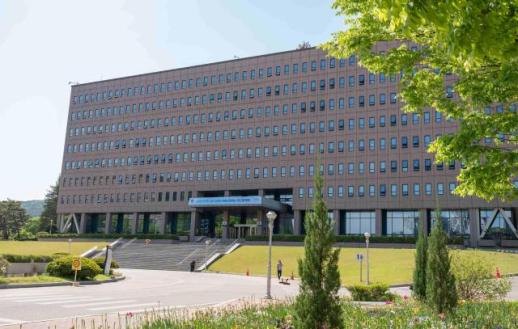 South Korea's Justice Ministry Establishes New Agency to Address Juvenile Crime The South Korean government is restructuring and elevating its agency dedicated to reducing the recidivism rate among juvenile offenders, which is higher than that of adults.On June 9, the Justice Ministry, led by Minister Jeong Seong-ho, announced a new strategy aimed at decreasing recidivism rates among juvenile offenders, including those under protective supervision.The ministry plans to establish a new decision-making body focused on juvenile crime prevention, replacing the temporary Juvenile Crime Prevention Team currently in operation. Additionally, the department responsible for practical implementation will be upgraded to a headquarters-level organization.To eliminate negative effects such as criminal learning that arise from the existing adult-centered probation system, improvements will be made to on-site treatment. The pilot program for the so-called Integrated Juvenile Justice Agency, currently running in Seoul, Gwangju, and Ansan, separates adults and juveniles to provide treatment tailored to the characteristics of youth through community multi-agency collaboration. Based on the results of this pilot, the program is set to expand nationwide next year.To fundamentally address juvenile offenses, which are influenced by personal factors such as mental illness and family environment, as well as social and environmental factors, the Justice Ministry will implement a customized recidivism prevention process known as the K-Youth Crime Prevention Policy. This will include diagnosis, intervention, rehabilitation, and aftercare, with a focus on closely managing chronically delinquent youth through community multi-agency cooperation.Recognizing that delinquent behavior often occurs at night, the ministry is developing a supervisory device in the form of a smartwatch to limit nighttime outings for juveniles. Long-term plans also include the development of a comprehensive analysis system for juvenile crime that utilizes AI-based data analysis to assess risk levels and suggest intervention measures.According to the Justice Ministry, the number of juvenile offenders under probation increased from 703 (5.2%) out of 13,489 in 2020 to 1,535 (10.6%) out of 14,474 in 2024. Similarly, the proportion of juvenile offenders in correctional facilities rose from 51 (3.1%) out of 1,637 in 2020 to 148 (6.1%) out of 2,430 in 2024.As of last year, the recidivism rate for juveniles on probation was 12.3%, nearly three times higher than the 3.9% rate for adults.Minister Jeong Seong-ho stated, "There has been a lack of infrastructure for policy implementation compared to the attention given to juvenile crime. We will establish a professional system capable of effectively preventing juvenile crime and implement the K-Youth Crime Prevention Policy to address the complex factors behind youth offending."* This article has been translated by AI. 2026-06-09 17:51:00
 -
 Goldman Sachs and JP Morgan Consider Launching GPU Rental Futures Amid Soaring Prices As the global artificial intelligence (AI) boom drives graphic processing unit (GPU) prices to unprecedented levels, Goldman Sachs and JP Morgan are reportedly exploring the launch of GPU-linked futures products. On June 9, U.S. fintech publication PYMNTS cited The Information, an American IT media outlet, stating that the two banks are considering futures contracts tied to GPU rental prices. According to the report, the banks are examining various ways to trade not only GPU rental costs but also computing expenses. However, discussions are still in the early stages, and there is a possibility that they may not lead to actual product launches or market openings. The competition to develop AI models has intensified recently, making the computing costs associated with high-performance GPUs, such as Nvidia's Blackwell, a significant expense for major tech and AI companies. As a result, interest in financial products that can help manage the volatility of GPU purchase and rental prices is growing. While Nvidia's GPU prices are not officially disclosed, the H100 is estimated to range from $25,000 to $40,000, and the B200 is reported to be between $30,000 and $50,000. Additionally, GPU rental brokerage site VAST.AI indicates that the average rental price per hour for the H100 SXM is $2.33, while the B200 averages $4.22. PYMNTS noted that if an official market based on GPU rental prices is established, companies could manage computing cost volatility more systematically. However, challenges remain regarding how to establish reliable price benchmarks and whether related financial products can pass regulatory scrutiny. This concept is already showing early trading examples. PYMNTS reported that inter-institutional trades have occurred based on the Ornn Compute Price Index, which tracks Nvidia's H100 GPU rental rates. This is seen as an initial attempt to index AI computing costs for actual trading purposes. However, experts point out that for computing power to be traded as a financial product like oil or electricity, a reliable price index and sufficient trading volume must be established. PYMNTS believes that the emergence of additional price indices, participation from exchanges and clearinghouses, and regulatory decisions will be crucial in the future.* This article has been translated by AI. 2026-06-09 17:51:00
 -
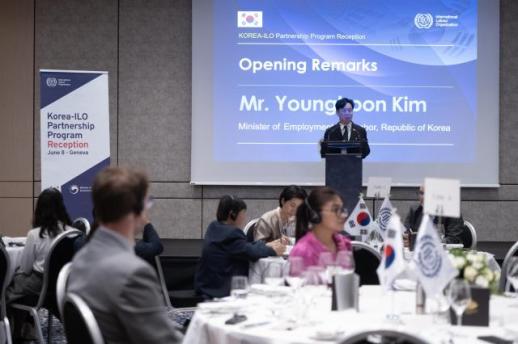 South Korea to Support Employment Improvements in Developing Countries with $166 Million The South Korean government has announced plans to enhance cooperation with the International Labour Organization (ILO) to expand quality jobs in developing countries. On June 8, during a reception at the Mandarin Hotel in Geneva, Switzerland, the Ministry of Employment and Labor hosted the "Korea-ILO Partnership Reception" in conjunction with the 114th ILO General Conference. The event aimed to share the achievements of the ministry, the ILO, and beneficiary countries from their collaborative projects. Initiated in 2004, the Korea-ILO partnership focuses on international development cooperation by leveraging South Korea's expertise in employment and labor policy. The initiative supports improvements in labor standards and the capacity to implement international labor standards in developing nations. From 2024 to 2026, a total of $11.95 million (approximately 166 billion won) will be allocated to this effort, placing South Korea as the 13th largest contributor among ILO member countries. The funding will support ten projects, five each in the ILO headquarters and the Asia-Pacific region, targeting countries such as Cambodia, Paraguay, Vietnam, and Mongolia. The projects will focus on integrating older workers into the labor market, enhancing youth employment, improving industrial safety, and fostering social dialogue. South Korea's experience in labor market development is highly regarded internationally. The country has successfully reduced industrial accidents, expanded vocational training, and established a robust employment service system during its industrialization. Recently, it has also developed policies to address digital transformation and an aging population. Many labor market challenges faced by developing countries mirror those that South Korea encountered in the past, including youth unemployment, the expansion of informal labor markets, industrial accidents, and insufficient vocational training systems. As a result, there is growing interest in South Korea's employment services and vocational training models. The Ministry of Employment and Labor plans to strengthen the tripartite partnership among South Korea, the ILO, and beneficiary countries to enhance the effectiveness of the cooperation projects and better reflect the needs of the recipient nations. Laura Thompson, Deputy Director-General of the ILO, stated, "South Korea has been a vital and consistent development cooperation partner through the Korea-ILO partnership over the past 22 years. We have been able to achieve tangible results that respond to policy needs in areas such as youth employment, industrial safety, and skills development." Cambodia's Minister of Labor and Vocational Training, Heng Sour, remarked, "The Korea-ILO partnership has brought meaningful changes to the lives of Cambodian workers and has significantly contributed to strengthening our social protection system, enhancing occupational safety and health, and improving social dialogue and labor administration capabilities." Minister Kim Young-hoon emphasized, "The South Korean government will continue to strengthen practical cooperation in various areas needed by beneficiary countries, including expanding quality youth jobs, creating safe workplaces, and enhancing employment service capabilities, in collaboration with the ILO and recipient nations."* This article has been translated by AI. 2026-06-09 17:48:00
 -
 Eunma Apartment Reconstruction Project Seeks Approval for Relocation Next Summer Eunma Apartment, a symbol of reconstruction in Gangnam, Seoul, has completed its application for project approval and is accelerating plans for relocation next year. The association is considering starting the relocation as early as next summer break, following the swift progression of the management approval process after receiving project approval. According to the construction industry on June 9, the Eunma Apartment reconstruction association recently submitted its project approval application to the Gangnam District Office. Eunma Apartment, which passed the integrated review by the Seoul city government in February, is now entering the project approval phase, marking a significant step forward. Located in Daechi-dong, the complex consists of 4,424 units and is set to transform into a large-scale development of up to 5,893 units across 49 floors. A representative from the association stated in a phone interview, "We have submitted the project approval application and are waiting for the Gangnam District Office's approval." They added, "Once we receive project approval, our goal is to obtain management approval as quickly as possible, as delays often occur during this stage of the reconstruction process. We plan to push for relocation next year." The association is particularly considering the academic calendar in its relocation plans. The representative explained, "Our tentative goal is to start relocation during summer break and complete it by winter break, minimizing the impact on students in the Daechi-dong area, which has a high concentration of families with children." The scale of the project is also expected to exceed initial estimates. The association anticipates the total project cost will surpass the previously discussed range of 4 trillion to 5 trillion won, likely exceeding 5 trillion won. The possibility of changing the construction company, which had garnered significant attention, currently appears low. The representative noted, "While there have been discussions about changing the construction company, many association members believe it is better to maintain the existing system to ensure the speed of the project. Concerns about potential delays due to additional procedures and lawsuits if we change the contractor are significant." He added, "Given that discussions about reconstruction have been ongoing for nearly 30 years, the members are now focused on quickly advancing the project rather than creating unnecessary conflicts. Currently, association members are actively participating in the process, strengthening internal cohesion." Eunma Apartment, completed in 1979, is a representative aging apartment complex in the Gangnam area. Discussions about its reconstruction began in the late 1990s but have faced delays due to various regulations and changes in project methods. Go Jun-seok, a professor at Yonsei University's Sangnam Business School, stated, "Daechi-dong has a high demand for housing and is one of the most preferred areas for school districts in Gangnam. Eunma Apartment is particularly considered a key site for reconstruction in Daechi-dong, being a large complex with a significant proportion of medium to large unit sizes, which enhances its viability as a project."* This article has been translated by AI. 2026-06-09 17:42:00
 -
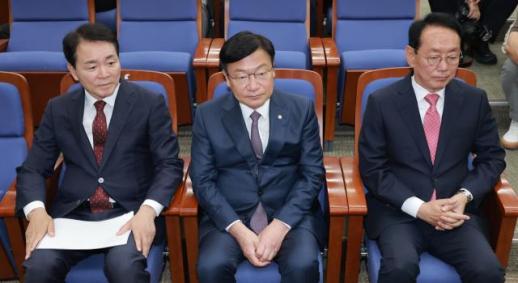 Three Candidates for People Power Party Floor Leader Call for Change Kim Do-eup, Jung Jeom-sik, and Sung Il-jong, candidates for the next floor leader of the People Power Party, expressed a shared belief in the need for change and innovation within the party during a meeting on June 9. However, they also emphasized the importance of being cautious regarding the potential replacement of party leader Jang Dong-hyuk and the entry of independent candidate Han Dong-hoon into the party. The three candidates participated in a discussion hosted by first-term and re-elected lawmakers, where they shared their evaluations of the June 3 local elections and their visions for the party, while also responding to questions from lawmakers. In their remarks, both Kim and Sung advocated for a shift in the party's direction, while Jung, who is aligned with the party establishment, stressed the need for unity. Kim stated, "I will make this a party that no longer hears the term 'pro-Yoon party' (referring to President Yoon Suk-yeol)." Sung added, "Now is not the time for factional battles between pro-Han (referring to Han Dong-hoon) and pro-Yoon groups; they need to disappear." Jung remarked, "Restoring public trust in the party and uniting our fragmented strength is a historical task that the People Power Party and the floor leader must accomplish. The intense deliberation over whether to resign or stabilize the leadership should not lead to further division among us." The candidates took a cautious stance regarding calls for Jang's resignation. After the discussion, Representative Park Sang-woong, a first-term lawmaker, told reporters that the candidates agreed on the need for a thoughtful approach to leadership change, stating, "We have decided not to make hasty demands that seem forced or urgent, but rather to reach a dignified decision over a longer period." Park noted, "The decision regarding leadership resignation should be made by the highest committee, and it would not be appropriate for the newly elected floor leader to determine the direction, as it contradicts party rules and the political environment." The cautious approach regarding Jang's potential resignation appears to be influenced by the ongoing issue of a shortage of ballots. He stated, "Isn't Jang's term ending in August next year? There has been no discussion about shortening his term. The nationwide unrest over the ballot shortage is not a simple issue, and we need to focus on correcting this rather than getting caught up in various power struggles within the party." Representative Eom Tae-young, representing the re-elected lawmakers, explained, "Given the limitations on enforcing a leadership change, the common opinion among the candidates is to take time and pursue a dignified and rational method for leadership transition and party renewal." Eom added that one candidate referenced the past case of former leader Lee Jun-seok, suggesting that while accountability for the party leadership is necessary, it is important to learn from that experience and proceed with caution regarding procedural matters. The three candidates also agreed that ample time should be taken to assess Han Dong-hoon's potential entry into the party. Park stated, "None of the candidates expressed a desire to hastily demand Han's entry or create an environment for it. We believe it is best to take sufficient time to evaluate after he has adapted to the National Assembly over the next one to two years."* This article has been translated by AI. 2026-06-09 17:39:00
 -
 Xi Jinping Concludes Visit to North Korea, Emphasizing Strategic Cooperation Over Denuclearization Chinese President Xi Jinping returned to Beijing on the afternoon of June 9 after completing a state visit to North Korea, his first in seven years. During the two-day visit, Xi reaffirmed the traditional friendship between China and North Korea alongside North Korean leader Kim Jong Un. Notably, while Xi's first visit in 2019 focused on denuclearization and peace on the Korean Peninsula, this trip emphasized strategic cooperation and socialist solidarity between the two nations. According to China's state-run Xinhua News Agency, on the second day of his visit, Xi toured the China-North Korea Friendship Tower and the Central Party School of the Workers' Party of Korea in Pyongyang with Kim. Established in 1959, the Friendship Tower commemorates the Chinese People's Volunteer Army soldiers who fought in the Korean War and symbolizes the alliance between China and North Korea. Xi laid a wreath inscribed with the phrase "The martyrs of the Chinese People's Volunteer Army will be immortal" and observed a moment of silence. Xinhua reported that Xi and Kim shared a mutual understanding that the history of the 1950s, when the two nations fought together, is a lasting collective memory. They agreed to inherit and develop the spirit of the Korean War and continue the traditional friendship between China and North Korea across generations. In China, the Korean War is referred to as the "War to Resist America and Aid Korea." The two leaders then visited the Central Party School, where they observed classes and participated in a tree-planting ceremony. A plaque inscribed with the phrase "The friendship between China and North Korea is everlasting" was placed in front of the fir tree they planted together. Xinhua noted that the evergreen fir symbolizes the unchanging friendship between the two nations. The tribute at the Friendship Tower and the tree-planting ceremony are seen as symbolic gestures reflecting the commitment of both leaders to uphold the historical alliance formed during the Korean War and pass it on to future generations. Chinese state media extensively covered Xi's visit, promoting a friendly atmosphere between China and North Korea. The People's Daily, the official newspaper of the Communist Party of China, filled its front and second pages with articles and photos related to Xi's visit, emphasizing the significance of expanding strategic cooperation between the two countries. Yang Shiyu, a researcher at the China Institute of International Studies, predicted that the Communist Parties of China and North Korea will enhance exchanges and cooperation across various fields to promote joint development in socialist construction. Dong Xiangrong, a researcher at the Chinese Academy of Social Sciences, also noted that expanding practical cooperation between the two countries is a crucial direction for deepening China-North Korea relations. This visit comes amid significant changes in the international landscape compared to Xi's first visit in 2019. At that time, North Korea was in a state of international isolation following the collapse of the Hanoi summit between North Korea and the United States, and the two leaders focused on denuclearization and peace as key agenda items. However, with North Korea recently enhancing military and economic cooperation with Russia, this summit has shifted the focus from nuclear issues to strategic cooperation between China and North Korea. Indeed, a commentary by Xi published in the Rodong Sinmun just before his visit reflects this shift. While the 2019 commentary emphasized "peace on the Korean Peninsula" and mentioned the "Korean Peninsula" six times, the latest piece focused on "opposition to hegemony" and "strategic cooperation," with no mention of the "Korean Peninsula." The Hong Kong newspaper Ming Pao noted that this clearly indicates that the nuclear issue is no longer a core agenda item in China-North Korea relations. There are also concerns that by not prioritizing the North Korean nuclear issue, China may be tacitly endorsing North Korea's nuclear buildup. The Hong Kong South China Morning Post cited experts who suggested that the restored China-North Korea relationship could indirectly promote North Korea's military capabilities. 2026-06-09 17:27:00
 -
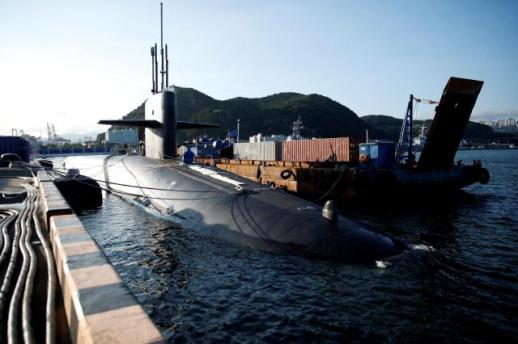 Seoul sees no rift with Washington over nuclear subs despite U.S. bill SEOUL, June 09 (AJP) - South Korea said Tuesday there is no disagreement with the United States over its ambition to build nuclear-powered submarines domestically, despite a move in the U.S. Congress to bar Navy combat vessels from being built at foreign shipyards. The government said Washington understands Seoul's plans and that the two sides remain in "close consultations" following the launch of follow-up talks on security agreements earlier this month. "As you know, South Korea and the United States held a launch meeting on June 2 and 3 for follow-up consultations on security agreements included in the joint fact sheet," a Foreign Ministry official told AJP during a regular briefing. "During the meeting, our side explained in detail our basic plan for developing nuclear-powered submarines," the official said. "The two sides share an understanding on the importance of such cooperation, and the government will continue close consultations with the U.S. side to produce substantive results based on that understanding." The remarks came after the House Armed Services Committee last Friday approved amendments to the National Defense Authorization Act sponsored by Rep. Jared Golden (D-Maine), including a provision prohibiting the use of Navy funds to procure battle-force ships built in foreign shipyards. The measure is aimed at preventing the U.S. Navy from outsourcing warship construction overseas amid debate in Washington over whether allied shipbuilders in South Korea and Japan should help address chronic delays and capacity shortages in the U.S. shipbuilding industry. "American military spending should support American jobs," Golden said after the committee vote. "The idea that we would build any portion of our surface fleet on foreign soil with foreign labor is unconscionable." The amendment represents a setback for proposals associated with the "Make American Shipbuilding Great Again" initiative, which envisioned a larger role for Korean capital and shipbuilders in revitalizing U.S. shipbuilding capacity. Still, Seoul does not appear to view the congressional move as directly targeting its own nuclear-powered submarine program. According to government officials, South Korea's plan centers on building the submarines domestically using South Korean shipyards and technology while seeking cooperation from the United States on low-enriched uranium fuel. The proposal has become a key element of Seoul's effort to strengthen deterrence against North Korea's expanding submarine-launched ballistic missile and nuclear capabilities. The House provision specifically targets U.S. Navy combat vessels rather than allied naval programs. The NDAA amendment is also far from becoming law. The House bill must still pass the full chamber before being reconciled with the Senate's version of the defense authorization legislation. Nevertheless, the debate has highlighted growing resistance within parts of Washington to expanding foreign participation in sensitive naval programs. Sen. Angus King of Maine was quoted by Breaking Defense as saying that building ships and destroyers in South Korea or Japan would be "the worst idea since the Red Sox traded Babe Ruth to the Yankees." "It doesn't make sense to be handing over that level of technology, even to our allies," he said. Golden has similarly argued that U.S. shipbuilding jobs should remain in the United States. "In the same year that American shipbuilders might get laid off, the U.S. Navy wants to employ foreign workers," he said, according to Breaking Defense. Industry officials say divisions remain inside the U.S. government over how much participation foreign shipbuilders should be allowed in future naval programs. A senior industry official familiar with the matter said there remains strong resistance within parts of the U.S. Navy toward relying on foreign shipyards, while skepticism persists inside the Pentagon over transferring sensitive naval technologies. The State Department appears more open to discussions, the official said, but lacks the authority to move forward without broader consensus across the U.S. national security establishment. South Korean and U.S. officials agreed after the June 2-3 launch meeting to move as quickly as possible toward tangible outcomes and establish a mechanism to review progress throughout the year. No timetable has been announced for the next round of consultations. 2026-06-09 17:24:09
 -
 South Korea Chooses Private Oil Release Over Strategic Reserves Amid Supply Concerns The deadline for the International Energy Agency's (IEA) joint resolution to release strategic oil reserves in response to global supply concerns stemming from the Middle East conflict has concluded. The South Korean government opted for a private release instead of directly tapping into its reserves, as alternative supplies and a strategic oil swap system have stabilized crude oil availability, while the burden of replenishing reserves remains significant. According to relevant authorities, the IEA resolved on March 11 to release a record 400 million barrels of oil following the outbreak of the Middle East war. South Korea's share of this release amounts to 22.46 million barrels, or 5.6% of the total, which must be completed by today. The IEA's conditions for the oil release include government-led physical releases from storage facilities and a reduction in the mandatory private stockpiling days. The Ministry of Trade, Industry and Energy decided to participate in the resolution by reducing the private stockpiling requirement from 40 days to 20 days. This approach is expected to result in an estimated release of 12 million barrels. This method differs from previous releases. The IEA has previously resolved to release strategic oil reserves six times, including during the Gulf War in 1991, Hurricane Katrina in 2005, the Libyan Civil War in 2011, and the Russia-Ukraine conflict in March and April 2022. In all but this year’s instance, the government had opted for direct releases. The government's choice to utilize private releases reflects the assessment that the current supply situation is not at its worst. Moon Sin-hak, the Deputy Minister of Trade, Industry and Energy, stated at a Cabinet meeting, "We have secured 86% of our crude oil needs for June and July," adding that private oil stockpiles are recovering to pre-war levels due to increased supply. Additionally, the strategic oil swap system is proving effective. This system allows the government to lend out reserves in emergencies when private entities secure alternative supplies. A ministry official noted, "I understand that the IEA views the oil swap as a new method for the government to release its reserves into the market." The burden of replenishing reserves after the release is another reason for the government's cautious approach. Following the release during the Russia-Ukraine conflict, international oil prices stabilized in the short term. However, the subsequent efforts by countries to refill their diminished reserves have been assessed as limiting downward pressure on prices. Concerns about a potential crisis in August are also being considered. Previously, limited increases in international oil prices were attributed to U.S. crude exports and a slowdown in Chinese demand. However, ongoing supply shortages have led to declining oil inventories, raising worries about increased global oil demand due to rising electricity needs for cooling in summer and increased travel during vacation periods. In light of these factors, the government is holding back on utilizing its strategic oil release option for now. A ministry official stated, "Given the uncertainty surrounding navigation through the Strait of Hormuz, we plan to release government reserves only when absolutely necessary in the future," adding that there would be no significant issues even if they do not release the quantities specified in the IEA resolution, as there are no penalties involved.* This article has been translated by AI. 2026-06-09 17:24:00
 -
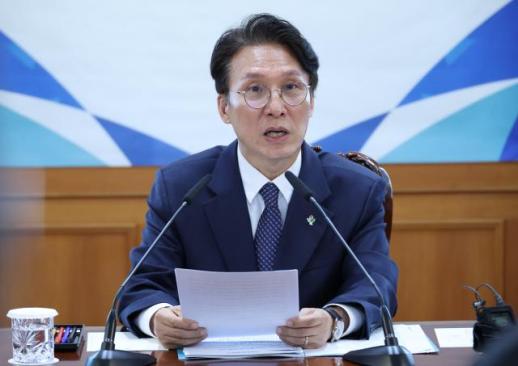 Prime Minister Kim Calls for Urgent Attention to Youth Voting Rights Prime Minister Kim Min-seok stated on June 9 that he recently met with representatives of university students who expressed concerns about the shortage of voting papers. He emphasized that voting rights are fundamental to democracy and urged the National Assembly, political parties, and relevant agencies to take the youth's concerns seriously. During his opening remarks at a meeting on youth policy held at the Government Seoul Complex, Kim called for the entire government to approach this issue with heightened awareness and urgency. Reflecting on his meeting with student representatives on June 7, Kim expressed his embarrassment over the situation, stating, "It is regrettable that we have not been more sensitive and responsive to such issues. We must act more swiftly to find solutions, and this has strengthened my sense of responsibility." Additionally, Kim proposed exploring various measures to address the challenges faced by young people, particularly in housing, finance, and taxation, which often disadvantage them when starting families. He also highlighted the importance of providing incentives to companies that create jobs, especially in a context where youth unemployment and job shortages in small and medium-sized enterprises coexist. He noted that linking youth employment to sectors vulnerable to artificial intelligence transitions is significant for alleviating industrial polarization. Furthermore, Kim pointed out that while young people receive free medical treatment for injuries sustained during military service, they may suffer from lingering effects after discharge. He called for an expansion of military service-related injury insurance.* This article has been translated by AI. 2026-06-09 17:18:00