

Journalist

Kim Dong-young and Candice Kim
-
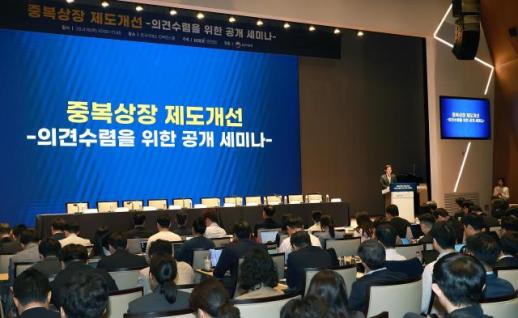 Final Adjustments Underway for Dual Listing Guidelines Ahead of July Implementation As the implementation of a principle-based ban on dual listings approaches in July, the Korea Exchange is delaying the announcement of its listing review guidelines. While the framework of the system has been revealed through three public seminars, final adjustments are ongoing regarding investor protection methods and the process for reflecting the opinions of common shareholders. According to the financial investment industry on June 9, the Financial Services Commission and the Korea Exchange are finalizing the details of the guidelines for exceptions to the dual listing ban. Although the overall direction has been established, discussions are still underway on how to institutionalize investor protection methods. Initially, the industry expected the exchange to announce regulatory amendments last week. To implement the guidelines in July, the exchange must announce the regulatory changes, gather public opinions for seven days, finalize the proposal, and complete the decision-making process with the Securities and Futures Commission and the Financial Services Commission. Given that the Securities and Futures Commission and the Financial Services Commission typically meet every two weeks, the timeline is tight. The delay in the announcement is attributed to the final design work on investor protection measures and listing review criteria. The dual listing system is expected to significantly impact the domestic IPO market, necessitating both effectiveness and legal stability in the new regulations. The overarching guideline has already been established as "principle-based ban on dual listings, with exceptions allowed." For a listed company to list a subsidiary or a company under vertical control, it must meet three criteria: operational independence, managerial independence, and investor protection. Among these, the most significant concern is the investor protection standard. While operational and managerial independence can be assessed relatively objectively through financial statements and disclosures, quantifying the level of protection for common shareholders is expected to be a key factor in the exchange's review process. The exchange has indicated in several public seminars that it will closely examine whether the parent company's common shareholders were adequately persuaded and whether their opinions were genuinely reflected in the decision-making process. In the industry, the method of obtaining consent from common shareholders is likely to favor the "3% rule" applied to general resolutions over the minority shareholder majority (MoM) approach. This method involves conducting general resolutions while limiting the voting rights of the largest shareholders and related parties, similar to the process for appointing audit committee members. Given the high ownership stakes of controlling shareholders in domestic companies, this approach is seen as more effective in protecting common shareholders and ensuring legal stability. Conversely, academics and institutional investors are advocating for the introduction of MoM, where only common shareholders excluding controlling shareholders vote separately. However, the Ministry of Justice has expressed concerns that this could conflict with the principle of shareholder equality, as outlined in the guidelines released in February regarding the amended Commercial Act, making the actual implementation of this system unlikely. While the announcement of regulatory amendments has been delayed, it remains uncertain whether the implementation schedule will be postponed. Financial authorities have stated that they can hold extraordinary meetings if necessary to meet the original target of implementing the guidelines in July.* This article has been translated by AI. 2026-06-09 18:54:00
 -
 Weather Forecast: Rain Expected in Northern Gyeonggi and Gangwon, Highs Reaching 30°C On Wednesday, June 10, rain is expected in the northern Gyeonggi and parts of Gangwon provinces, with daytime temperatures reaching a high of 30 degrees Celsius. According to the Korea Meteorological Administration, intermittent rain is forecasted from morning to evening in the northern inland areas of Gyeonggi and northern and central inland regions of Gangwon. Light rain may begin in the early morning hours, particularly in northern Gyeonggi and northern Gangwon. The expected rainfall amounts are between 5 to 20 millimeters in the northern inland areas of Gyeonggi and northern and central Gangwon, while the five islands in the Yellow Sea may see around 5 millimeters. Morning low temperatures are predicted to range from 13 to 17 degrees Celsius, with daytime highs between 24 and 30 degrees Celsius. Forecasted temperatures for major regions include: Seoul 17-26°C, Incheon 17-24°C, Suwon 15-26°C, Chuncheon 14-26°C, Gangneung 17-26°C, Cheongju 16-28°C, Daejeon 15-28°C, Gwangju 15-29°C, Daegu 16-30°C, and Busan 17-26°C. Sea conditions will see waves of 0.5 to 1.0 meters in the East and South Seas, and around 0.5 meters in the Yellow Sea. Offshore wave heights are expected to be 0.5 to 1.5 meters in the East and South Seas, and 0.5 to 1.0 meters in the Yellow Sea.* This article has been translated by AI. 2026-06-09 18:15:00
 -
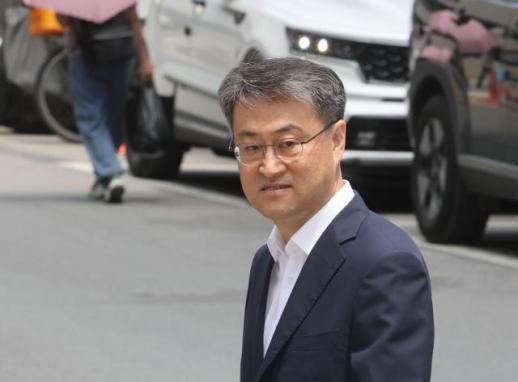 Special Prosecutors Investigate Former Gangwon Police Chief Over Unification Church Case The Special Prosecutors' team, led by Kwon Chang-young, is investigating former Gangwon Police Chief Kim Do-hyung in connection with allegations of covering up the Unification Church investigation.According to legal sources on June 9, the Special Prosecutors are questioning Kim as a suspect in a case involving breach of official secrecy and other charges.During his appearance, Kim declined to answer questions about whether he disclosed investigation information to outsiders or his relationship with Representative Kwon Seong-dong of the People Power Party, before entering the office for questioning.Kim is accused of failing to investigate reports that Unification Church officials, including Chairman Han Hak-ja, engaged in gambling worth approximately 60 billion won at a casino in Las Vegas, and of leaking this information to Kwon and others to obstruct the investigation.The Special Prosecutors believe that the cover-up occurred around July 2022, shortly after former President Yoon Suk-yeol appointed Yoon Hee-keun as the first police chief.In connection with this case, the Special Prosecutors conducted searches of the National Police Agency, Gangwon Provincial Police Agency, and Chuncheon Police Station on April 20, followed by searches of Yoon's residence and mobile phone on May 28.After analyzing the results of Kim's questioning, the Special Prosecutors plan to schedule a date for Yoon to appear as a suspect.Previously, the Kim Geon-hee Special Prosecutors' team, led by Min Jung-ki, indicted Kwon and Chairman Han for exchanging information, but did not complete the investigation into the leak of police internal information and the cover-up process.* This article has been translated by AI. 2026-06-09 18:12:00
 -
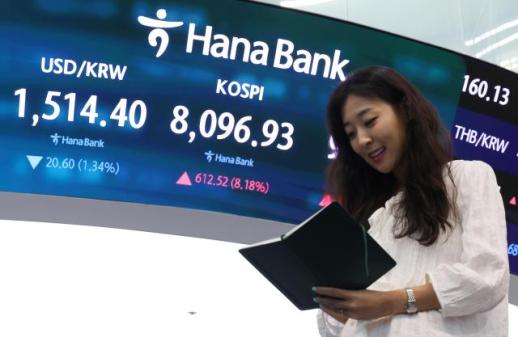 Won gains on NPS hedge; bonds rebound SEOUL, June 09 (AJP) - The South Korean won extended its gains for a second straight day Tuesday after foreign exchange authorities formalized currency hedging measures for the National Pension Service (NPS). The bond market also rebounded for the first time in four sessions, helped by bargain-hunting and reports that the Bank of Japan (BOJ) may keep its government bond purchases at current levels. In the Seoul foreign exchange market, the won closed at 1,512.1 per dollar, up 22.9 won from the previous session. The currency continued to strengthen after turning sharply higher Monday afternoon. The main driver was policy intervention. Foreign exchange authorities said the NPS began currency hedging procedures Monday, a move seen as helping support the won. Expectations of a faster hawkish response from the Bank of Korea (BOK) also aided the rally. Kim Jin-wook, an economist at Citigroup, said Monday that "the BOK could respond faster than expected if market instability expands," raising the possibility of an extraordinary Monetary Policy Committee meeting in June. A strong rebound in stocks further eased risk aversion. The benchmark KOSPI jumped 8.18 percent to close at 8,096.93, recovering most of Monday’s losses. The bond market also snapped a three-session losing streak. The benchmark three-year government bond yield fell 8.4 basis points to 3.856 percent, while the 10-year yield dropped 7.5 basis points to 4.273 percent. Sentiment improved after Japanese media reported that the BOJ may pause its plan to reduce Japanese government bond purchases. The reports raised hopes that the recent slide in global bond prices could ease. Japanese government bond yields are closely watched in Korea because they serve as a key reference point for Asian long-term rates, prompting global investors to adjust Korean Treasury positions in tandem. Market participants also pointed to a shift in foreign investor positioning. "Foreign investors, who had remained net sellers in the morning, turned net buyers of both three-year and 10-year bond futures in the afternoon," a fixed-income market source said on condition of anonymity. The source said the shift likely gave additional support to both bonds and the won. 2026-06-09 18:07:36
 -
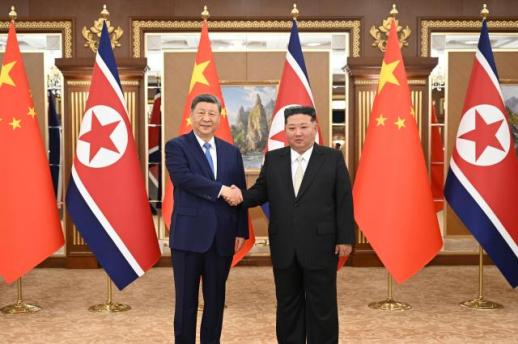 North Korea returns to international headlines amid renewed China-Russia rivalry SEOUL, June 09 (AJP) - North Korea's young ruler Kim Jong-un, who once dominated international headlines through his unprecedented courtship with U.S. President Donald Trump during the latter's first term, is back on front pages – this time under the arms of the elder strongmen of a resurgent authoritarian axis. During his latest visit to Pyongyang — his first in seven years — Chinese President Xi Jinping called for expanded exchanges with North Korea in diplomacy, law enforcement and, notably, defense, reflecting Beijing's growing concern over Pyongyang's rapidly deepening military ties with Moscow. Xi arrived in Pyongyang shortly after hosting both U.S. President Donald Trump and Russian President Vladimir Putin in Beijing, highlighting North Korea's rising strategic value as U.S.-China competition intensifies and Russia's war in Ukraine reshapes global alignments. According to China's state-run Xinhua News Agency, Xi urged deeper cooperation across a wide range of sectors, including military exchanges — a rare public reference that underscored Beijing's determination to remain North Korea's primary strategic partner. Chinese Defense Minister Dong Jun accompanied Xi on the trip, unlike Xi's previous visit to Pyongyang in 2019, when China's defense chief was absent from the delegation. Xi's visit, his first overseas trip of the year, came less than three weeks after his summit with Putin in Beijing. The timing suggested that China was seeking not merely to celebrate traditional friendship with North Korea but to recalibrate the evolving triangular relationship among Beijing, Pyongyang and Moscow following the Ukraine war. The summit also comes ahead of the 65th anniversary next month of the China-North Korea Treaty of Friendship, Cooperation and Mutual Assistance, signed in 1961. The treaty, which includes a mutual defense clause often described as an "automatic intervention" provision, had largely faded into irrelevance after the Cold War. Despite their deep-seated alliance between Pyongyang and Beijing, North Korea's growing military partnership with Moscow has reshaped regional dynamics. Since Pyongyang signed a comprehensive strategic partnership treaty with Moscow in 2024, North Korea has emerged as one of Russia's most important wartime partners, supplying artillery shells, missiles and troops for the war in Ukraine in exchange for military technology, energy and economic support. For the first time since the Soviet collapse, North Korea is no longer reliant on a single benefactor. Russia needs Pyongyang for its war effort, while China increasingly sees strategic value in preventing North Korea from drifting too far into Moscow's orbit. The result is a rare geopolitical moment in which Kim enjoys greater diplomatic leverage than at any point in recent decades. That shift helps explain the significance of Xi's visit. While Beijing welcomes closer Russia-North Korea ties insofar as they complicate U.S.-led security cooperation among Washington, Seoul and Tokyo, it has little interest in seeing Moscow emerge as Pyongyang's dominant strategic patron. Analysts say Xi's decision to visit Pyongyang shortly before the treaty anniversary reflects Beijing's anxiety. Chinese analyst Deng Yuwen recently wrote in Foreign Policy that if Beijing distances itself from North Korea, it risks pushing Pyongyang entirely toward Russia and weakening China's influence on the Korean Peninsula. North Korea's strategic importance has risen significantly since the outbreak of the Ukraine war, allowing Kim to strengthen his diplomatic leverage between Beijing and Moscow. Russia is eager to preserve its hard-won partnership with North Korea, while China is moving to reaffirm its own influence over Pyongyang. The three countries publicly displayed their growing alignment during China's military parade marking the 80th anniversary of victory in World War II last September, when Putin and Kim stood alongside Xi atop Beijing's Tiananmen Gate. Yet despite its closer ties with Russia, North Korea remains economically dependent on China. More than 90 percent of North Korea's external trade is believed to involve China, making Beijing the country's indispensable economic lifeline. Still, North Korea's expanding relationship with Moscow has given Kim greater room to maneuver diplomatically than at any time in recent years. Xi's delegation included Commerce Minister Wang Wentao, who oversees sanctions-related trade issues, and Zheng Shanjie, head of China's National Development and Reform Commission, signaling that economic cooperation was a major topic of discussion. China had long adopted a cautious approach toward economic engagement with North Korea because of international sanctions, refraining from large-scale direct investment even before the COVID-19 pandemic largely shut down cross-border trade in 2020. But the geopolitical environment has changed dramatically. When Xi made his first state visit to North Korea seven years ago, Pyongyang was heavily dependent on Beijing and largely in the position of seeking Chinese support. Today, China also sees growing strategic value in maintaining close ties with North Korea as competition with the United States intensifies. North Korea, meanwhile, has broadened its diplomatic options through its wartime alignment with Russia and no longer relies exclusively on Beijing. During Kim's visit to China last September, he called for deeper economic and trade cooperation between the two countries. Analysts say Xi's remarks during this week's summit suggest Beijing may now be prepared to restore bilateral economic cooperation to levels exceeding those seen before the pandemic. Xi also directly mentioned fully reopening border trade ports between the two countries, signaling a likely expansion of cross-border commerce through more than 10 major crossing points, including Dandong-Sinuiju and Hunchun-Rason. The message was clear. Beijing is not merely reaffirming a traditional alliance; it is re-engaging North Korea at a moment when Pyongyang has acquired new strategic options. As strategic competition deepens across Eurasia, North Korea has regained something every small state seeks in international politics — leverage. The greatest beneficiary of the renewed China-Russia rivalry may ultimately be Kim Jong-un himself. 2026-06-09 18:07:22
 -
 KOSPI recoups most of Black Monday losses with volatility at all-time high SEOUL, June 09 (AJP) -South Korean stocks recouped most of Monday's historic losses in a dramatic rebound Tuesday, underscoring the extreme volatility that has made the local market one of Asia's most turbulent trading venues. The benchmark KOSPI surged 8.18 percent to close at 8,096.93, recovering nearly all of the previous session's 8.29 percent plunge. The tech-heavy KOSDAQ also rebounded sharply, rising 6.19 percent to 967.81. The violent swing pushed South Korea's market fear gauge to a record high, reflecting investor anxiety despite the recovery. According to the Korea Exchange, the KOSPI 200 Volatility Index (VKOSPI) jumped 14.60 points, or 19.05 percent, to 91.23 on Tuesday, the highest level since the index was introduced in April 2009. The VKOSPI measures expected future volatility using KOSPI 200 options prices. Often referred to as the market's "fear gauge," it rises when investors anticipate large swings in stock prices and typically spikes during periods of market stress. The latest reading surpassed levels seen immediately after the outbreak of the U.S.-Iran conflict in March, highlighting the scale of uncertainty gripping investors despite Tuesday's rebound. Semiconductor heavyweights led the roller-coaster ride. SK hynix soared 15.91 percent to 2,215,000 won, while Samsung Electronics jumped 8.97 percent to 322,000 won as investors rushed back into artificial intelligence and memory-chip plays that had been at the center of Monday's selloff. Gains were broad-based across large-cap stocks as buying extended beyond technology into financial and industrial names. Among Samsung affiliates, Samsung Electro-Mechanics surged 18.39 percent to 1,970,000 won, while Samsung Electronics preferred shares rose 5.71 percent to 203,500 won. Samsung Life Insurance gained 4.66 percent to 393,000 won, Samsung C&T advanced 5.02 percent to 429,000 won and Samsung Biologics added 4.26 percent to 1,296,000 won. Automakers delivered mixed performances. Kia climbed 8.52 percent to 164,300 won, while Hyundai Motor finished unchanged at 639,000 won and Hyundai Mobis fell 2.78 percent to 595,000 won. Doosan Enerbility rose 7.58 percent to 92,300 won, KB Financial Group increased 2.18 percent to 154,800 won and LG Energy Solution edged up 2.06 percent to 396,500 won. On the downside, HD Hyundai Heavy Industries slipped 1.45 percent to 612,000 won, joining Hyundai Mobis as one of the few large-cap stocks to end lower. Tuesday's rebound was essentially Monday in reverse. The artificial-intelligence chip trade that collapsed a day earlier came roaring back, with gains concentrated in the market's most volatile names rather than spread evenly across sectors. NAVER, which had served as a refuge during Monday's crash, fell 7.89 percent as investors rotated out of defensive positions and back into semiconductor shares, effectively unwinding the previous session's flight to safety. The sharp recovery also reinforced South Korea's status as the region's most volatile major equity market, where gains and losses have increasingly been amplified by the dominant influence of memory-chip makers and AI-related stocks. Yet the rally carried the same warning that has shadowed the market all week. Foreign investors remained net sellers despite the sharp advance, extending an exodus that has persisted through recent sessions amid concerns that the memory-chip cycle driving the rally may be approaching its peak. Domestic institutions accounted for much of the buying, providing the fuel for Tuesday's rebound. A recovery of this magnitude, built largely on local money while overseas funds continue to head for the exit, rests on a narrower foundation than the headline gain suggests. In the currency market, the won also strengthened as panic subsided, firming toward 1,517 against the U.S. dollar. Across Asia, markets rebounded broadly, largely in proportion to how far they had fallen the previous day. In Tokyo, the Nikkei 225 rose more than 2 percent, recovering part of Monday's near-4 percent drop, with gains concentrated in semiconductor-equipment makers. The notable exception was SoftBank Group, the market's main proxy for speculative AI investment, which finished little changed even as chip-equipment shares rallied. The divergence suggested investors were willing to buy back into the physical semiconductor supply chain while remaining cautious on the broader AI-investment story. China moved the least, just as it had during the selloff. The Shanghai Composite gained about 1 percent, reinforcing its position as the region's steadiest major market in both directions. With less exposure to the global AI hardware cycle, it neither suffered the sharp declines seen elsewhere nor required a dramatic rebound. Chinese chip-related shares posted only modest gains, underscoring how heavily the recent volatility has been concentrated in South Korea's semiconductor-driven market. 2026-06-09 18:06:55
 -
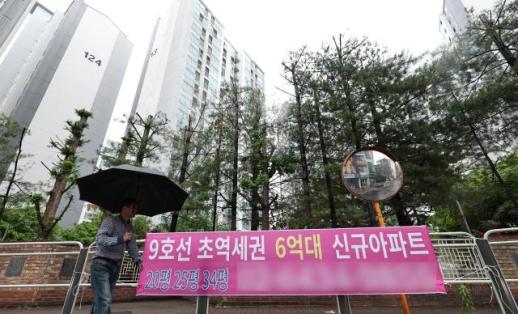 Housing Market Outlook Dims Amid Unsold Inventory and Financial Regulations The housing market outlook has significantly weakened as concerns grow over unsold inventory in regional areas and tightening financial regulations. In contrast, Seoul's housing market remains buoyed by rising property prices, maintaining a benchmark outlook index of 100, highlighting a stark divide between the capital and other regions. On June 9, the Korea Housing Industry Research Institute reported that the national apartment housing outlook index for June is 69.4, a drop of 10.6 points from the previous month’s 80.0. The housing outlook index is based on a scale where a score above 100 indicates a positive outlook among developers, while a score below 100 reflects a prevailing negative sentiment. Regionally, the Seoul metropolitan area saw a slight decline from 85.6 to 84.3, a decrease of 1.3 points, while non-metropolitan areas plummeted from 78.8 to 66.2, a drop of 12.6 points. Seoul has recorded a score of 100.0 for two consecutive months, attributed to a shift in demand from rental to purchase amid ongoing price increases. According to the Korea Real Estate Agency, apartment prices in Seoul rose by 0.31% in the third week of May, marking the largest increase in 16 weeks, followed by an additional rise of 0.25% thereafter. However, the research institute noted that government policies aimed at curbing speculation, stricter lending regulations, and rising construction costs have not significantly boosted market expectations. In the metropolitan area, Incheon fell from 75.0 to 72.4, a decrease of 2.6 points, while Gyeonggi Province dropped from 81.8 to 80.6, down 1.2 points. In non-metropolitan areas, all regions except Jeonbuk (81.8) experienced declines in their outlook indices. Gwangju saw the largest drop, falling from 80.0 to 55.6, a decrease of 24.4 points. Other notable declines included Daegu (-19.7 points), Daejeon (-18.9 points), Busan (-16.6 points), Chungnam (-15.6 points), and Gyeongbuk (-13.2 points). The Korea Housing Industry Research Institute stated, "The ongoing polarization between the metropolitan and non-metropolitan markets, along with concerns over unsold inventory, rising construction costs, and tightening financial regulations, has led to a general decline in developers' expectations for the housing market." Meanwhile, according to Real Estate 114, the total number of apartments scheduled for sale nationwide in June is expected to reach 39,202 units, the highest monthly figure this year. Construction companies, having postponed their schedules ahead of local elections, are now ramping up supply in both metropolitan and non-metropolitan areas, which is more than six times the amount compared to the same month last year.* This article has been translated by AI. 2026-06-09 18:06:00
 -
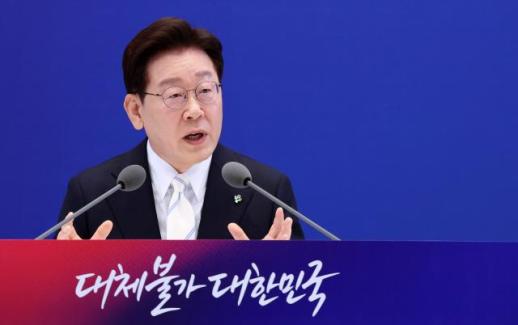 AI Transformation Accelerates in South Korea Post Local Elections The local elections held on June 3, 2026, signify more than just a reshuffling of local power. This election was the first nationwide political event since the inauguration of President Lee Jae-myung's administration and serves as a critical juncture for the future direction of national governance and the political landscape in South Korea. A notable shift in voter interests was observed, with issues such as the economy, industry, job creation, housing, artificial intelligence (AI), and regional development taking center stage, contrasting with past elections that were heavily influenced by regime judgment and regionalism. This article explores the transformative challenges facing the second term of the Lee Jae-myung administration in the political, economic, and industrial sectors. "I will make 2026 the year when the bold dream of an 'irreplaceable South Korea' begins, a country that no other nation can substitute," President Lee Jae-myung stated during a press conference on June 8, 2026, marking his first year in office. He emphasized that South Korea would leverage its experiences, capabilities, values, and the national energy to overcome crises to usher in a new era of the 'K-Initiative.' While the 1980s were characterized by democratization and the 2000s by the information and internet revolution, the 2020s are poised to be defined by advanced industries, particularly those represented by AI. President Lee articulated a clear vision, declaring, "We will be the first country to fully integrate AI into industry and daily life." To achieve this, he outlined four national goals: 1) to become a 'super-gap industrial powerhouse' where all citizens and regions share growth opportunities; 2) to establish a global diplomatic and security powerhouse that safeguards peace and national pride; 3) to ensure a society governed by agreed norms and rules; and 4) to create a government that saves lives. Focusing on the first goal of becoming a super-gap industrial powerhouse, President Lee pledged to continuously discover and nurture 'global super-gap growth engines' beyond just the semiconductor sector. In the recent local elections, various regions presented distinct future strategies. Chungcheong proposed a semiconductor and advanced industry belt, Busan aimed to become a global financial hub, Ulsan focused on future mobility industries, Daegu highlighted robotics, and Gwangju identified future mobility and AI as strategic industries. Notably, North Jeolla is emerging as a significant area, exploring new growth strategies centered around physical AI and renewable energy. Physical AI requires extensive industrial land, abundant power, and a foundation in advanced manufacturing, conditions that Saemangeum largely meets. The region also boasts a competitive cost structure compared to the capital area. If the national AI strategy aligns with regional balanced development efforts, North Jeolla could become a testing ground and forward base for South Korea's physical AI industry. This issue extends beyond North Jeolla; it involves reshaping the industrial map of South Korea. While the Gyeongbu axis was the center of industrialization in the past, a new industrial axis may emerge in the AI era, with North Jeolla connecting Saemangeum, Gunsan, Iksan, and Jeonju as a new national growth hub. The governance of the Lee Jae-myung administration is expected to evolve into a 'national strategic project' rather than merely economic policy. While the Park Chung-hee administration laid the groundwork for an industrial nation through heavy and chemical industries, the Kim Dae-jung administration established the foundation for a digital powerhouse through the IT revolution. The Roh Moo-hyun administration promoted innovation cities and balanced development policies, and the Moon Jae-in administration attempted a digital New Deal. President Lee stated that he is making strides toward 'growth for all.' He emphasized that the achievements and opportunities generated by the collective capabilities of the community should flow to small and medium-sized enterprises and be evenly distributed across all sectors, leading to tangible changes in the lives of all citizens. The nomination of Han Seung-sook, Minister of Small and Medium Enterprises and Startups, as the new Prime Minister candidate on June 7 reflects this philosophy. Han stated on June 8, "In the face of an industrial restructuring accelerated by AI and a global complex crisis, I will focus on driving the AI transformation and accelerating innovation, ensuring that the benefits lead to opportunities and growth for all South Korean citizens. I will approach this with a sense of mission and dedication." With the foundation laid over the past year, the administration aims to deliver substantial results in its second year, prioritizing the ability to swiftly implement key policies over political considerations. Han's background in the IT sector, including her tenure as CEO of Naver, is expected to enhance her understanding of the significant national goal of 'AI transformation.' 2026-06-09 18:06:00
 -
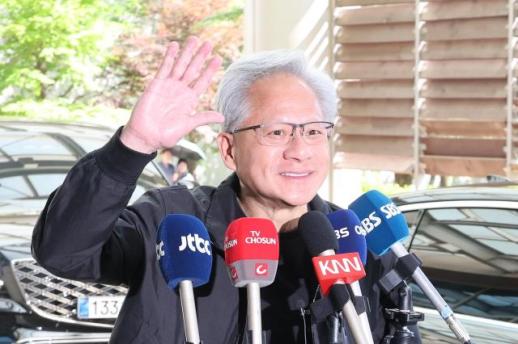 Jensen Huang Completes 5-Day Visit to South Korea, Highlighting AI Collaboration Jensen Huang, CEO of NVIDIA, has completed a five-day visit to South Korea, signaling the country's potential to evolve from a mere memory supplier to a strategic hub for AI infrastructure and physical AI testing. According to industry sources, Huang departed from the Gimpo Business Aviation Center in Gangseo-gu, Seoul, on the morning of June 9. He expressed his satisfaction with the visit, stating, "It was really great," and added, "I look forward to coming back to Korea." During his stay, which began on June 5, he met with major domestic companies including Samsung Electronics, SK, Hyundai Motor, LG, Doosan, and Naver. Huang's extended stay in South Korea was unprecedented. Throughout his visit, he engaged in business meetings and public events, including gatherings over Korean barbecue and fried chicken, as well as a visit to a baseball stadium, enhancing his presence among local consumers and the general public. His previous meeting with Lee Jae-Yong, chairman of Samsung Electronics, and Chung Eui-sun, chairman of Hyundai Motor Group, known as the "Kkanbu meeting," had a significant impact, reflecting his intention to strengthen ties in Korea. The scope of business discussions has also broadened. NVIDIA and SK have agreed to expand their collaboration on high-bandwidth memory (HBM) supply to include next-generation memory and AI factory infrastructure. SK Hynix is a key supplier of memory for NVIDIA's AI accelerators. The two companies plan to extend their cooperation to memory for AI supercomputers, central processing units (CPUs), AI PCs, and robotics platforms. With Samsung Electronics, NVIDIA is currently collaborating on the production of autonomous driving chips and AI accelerators, with discussions on long-term cooperation for next-generation HBM technologies like HBM4E and HBM5. This indicates NVIDIA's intention to strengthen its HBM partnership with SK Hynix while keeping options open for collaboration with Samsung on foundry and next-generation memory. Collaboration with LG Group has emerged as a key agenda, focusing on robotics and data center partnerships. The plan aims to connect NVIDIA's robotics platform with LG's robots, LG CNS's industrial platforms, and LG Innotek's sensing components. Discussions with Hyundai Motor Group revolved around autonomous driving, robotics, and smart manufacturing. Potential collaborations with Doosan were also mentioned, focusing on collaborative robots, energy, and data center infrastructure. Industry analysts suggest that NVIDIA, headquartered in Taiwan, views South Korea as a central axis for its production ecosystem. The strategy appears to involve leveraging memory, foundry, manufacturing, robotics, and platform companies to establish a testing ground for AI infrastructure and physical AI. Experts believe that South Korean companies are now positioned as serious contenders in the AI landscape. While integration into NVIDIA's AI ecosystem presents opportunities, it also carries dependency risks. If South Korea remains focused solely on expanding HBM supply and securing AI infrastructure contracts, it may only serve as a supporting partner for NVIDIA's platform. Conversely, if it develops capabilities in manufacturing AI, robotics, and data center operations, South Korea could emerge as a testing ground and strategic partner in the AI era. Professor Hwang Yong-sik of Sejong University stated, "Our country is unique in having both an AI memory supply chain and a foundation in manufacturing and robotics, making it a highly attractive partner for NVIDIA as it expands AI into industrial settings. South Korea is being elevated to a global AI testing ground."* This article has been translated by AI. 2026-06-09 18:03:00
 -
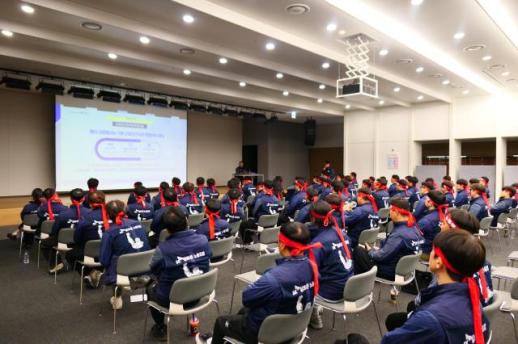 SK Siltron Union Demands Employment Security, Increasing Burden on Doosan Acquisition SK Siltron's labor union is set to intensify pressure on Doosan amid ongoing acquisition efforts by prioritizing employment security in this year's wage and collective bargaining negotiations. According to industry sources, the union plans to present demands for formal employment guarantees and special incentive payments during negotiations starting June 10. The union aims to focus on job security and the protection of workers' rights, regardless of the sale's outcome. To this end, they convened an expanded executive meeting and delegate conference at the Gumi regional office of the Korean Confederation of Trade Unions on May 29, where they established key demands for this year's negotiations, including guarantees for job security, full succession of existing working conditions, and fair compensation measures for members. Choi Moo-hwan, chairman of the SK Siltron union, stated, "Last year's negotiations resulted in a declarative agreement on job retention, but we failed to formalize it into effective institutional measures like collective agreements. This year, we are making job retention assurances a core issue in our negotiations." The demand for special incentive payments is also expected to be on the negotiation table. The union argues that members need compensation due to prolonged uncertainty during the sale process. However, they have not specified the scale or criteria for the incentive payments, considering the sale's uncertain status. These demands come as the sale of SK Siltron has faced delays. SK Group selected Doosan Group as the preferred bidder at the end of last year, intending to finalize the deal early this year. However, the recent semiconductor market boom has complicated negotiations for both parties, leading to speculation about the possibility of the sale falling through. The union has expressed its commitment to exploring all possible responses to secure job stability during the upcoming negotiations. Chairman Choi emphasized, "Job security is not a matter of choice but a fundamental responsibility to protect our members' lives and the local economy. We will review all means available to the union, including negotiations, to ensure job security and respond responsibly." The union's demands are seen as a factor that could increase the burden on Doosan Group regarding the acquisition. Formalizing employment guarantees in a collective agreement could limit flexibility in future workforce management and organizational restructuring. An industry insider noted, "With the improvement in the semiconductor market, there are expectations within SK Siltron for a reassessment of the sale. The union's demand for job security reflects not just a collective bargaining issue but also the uncertainties surrounding the sale."* This article has been translated by AI. 2026-06-09 18:03:00