

Journalist

Kim Dong-young and Candice Kim
-
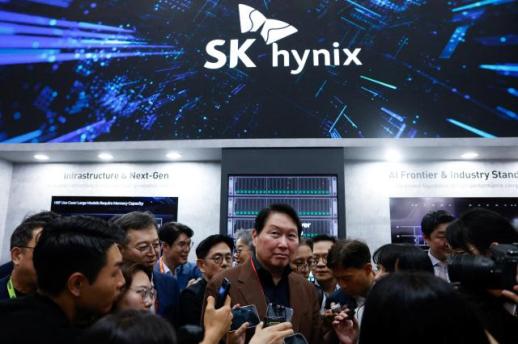 Chipmakers emerge as best companies to work for among job seekers as tech firms lose ground SEOUL, June 9 (AJP) - South Korea's two major chipmakers SK Hynix and Samsung Electronics were voted the best companies to work for by job seekers, recruitment portal Job Korea said on Tuesday. In a recent survey of about 3,287 job seekers conducted by Job Korea, SK hynix ranked first among companies for which respondents said they would "start work immediately," followed by Samsung Electronics. Internet, IT and platform companies that once dominated such rankings have slipped behind semiconductor and manufacturing firms, as companies like Naver, Toss, Hyundai Motor, AmorePacific, Google, Kakao, Nexon, and Hybe rounded out the top 10. In a similar survey about five years ago, Kakao ranked as the most preferred employer but fell to eighth place this year. SK hynix, which stood at fifth place in 2022, rose to the top spot, while Samsung Electronics has steadily remained within the top two. The changes in the rankings appear to be driven by skyrocketing salaries and benefits amid the recent artificial intelligence (AI)-driven chip boom. Respondents, in fact, cited high salaries and bonuses as their biggest reason when choosing a company to work for, accounting for 32 percent. Perks and other benefits accounted for 15 percent, followed by opportunities for career growth at 13 percent. Meanwhile, a separate survey by the portal revealed the growing financial burden facing university graduates preparing for jobs. A survey of some 485 young job seekers found that they spent an average of 4.55 million won (US$3,000) last year on prep courses to land a job. The amount rose sharply from an annual average of 2.27 million won in 2022, up 2.28 million won over the past three years, meaning spending increased by roughly 200,000 won per month. The largest portion of their spending went to obtaining certifications related to their field of study, followed by English proficiency tests, IT and computer-related skills, and other consulting services. Many respondents also said they were forced to take part-time jobs while preparing for employment in order to make ends meet. 2026-06-09 15:34:15
 -
 NongHyup Bank Transitions to AI-Driven Operations NH NongHyup Bank is accelerating its transition to artificial intelligence (AI) operations. The bank aims to go beyond simple efficiency improvements by enabling employees to create AI agents and applying AI across all customer financial services to transform its operational framework.On June 9, NH NongHyup Bank held its 'NH Agentic AI Bank Vision Day' at its headquarters in Jung-gu, Seoul, attended by employees and representatives from partner companies in the AI ecosystem.Agentic AI refers to technology that understands goals and makes independent judgments and actions, moving beyond traditional generative AI that merely responds to human commands. It is gaining attention as a next-generation competitive advantage in the financial sector.During the event, Kang Tae-young presented a holographic vision speech, outlining the future vision of an 'Agentic AI Bank that realizes customer desires' and revealing three key strategies to achieve this.The three strategies include: 1) Building an AI agent system using the AI platform 'NHAIS'; 2) Implementing full banking services powered by AI; and 3) Creating a future AI financial ecosystem through acquisitions and partnerships with AI companies.The event also marked the launch of the AX Frontier, an organization dedicated to executing the AI transition. The AX Frontier consists of 77 members tasked with identifying internal AI transition projects and leading their practical application in operations. Additionally, a ceremony was held to commemorate the acquisition of the AI technology company Agile Soda and to select collaboration partners for the 2026 'NH Open Business Hub'.Kang Tae-young stated, "The competitiveness of finance lies not in the technology itself but in how deeply we can connect with and execute for our customers. We will set a new standard for finance in South Korea through AI innovation." 2026-06-09 15:33:00
 -
 Huang finds the whole AI cake in Korea, every layer of it SEOUL, June 09 (AJP) - Artificial intelligence is a five-layer cake, Nvidia preaches, and its chairman Jensen Huang appears to have found the full cake in South Korea. In Nvidia's telling, AI is a composite stack: energy at the bottom, then chips, then the infrastructure that houses and serves them, then the models, and finally the applications where economic value is harvested. Every application, Huang argues, draws demand all the way down to the power plant, and supremacy in the AI era hinges on strength across all five layers. Few nations hold more than a slice or two. China currently controls much of the stack through vertically integrated energy, infrastructure and applications. The United States remains ahead in frontier chips and models. Korea, on the other hand, has the potential to deliver the full cake, judging from the enthusiasm Huang displayed during his tightly packed four-day visit. "This is your time. You must take advantage of it," Huang pronounced before wrapping up his five-day visit in Korea Tuesday. "Korea is in a unique place in a very special moment." He began, as the cake does, at the bottom. Energy and the physical infrastructure above it dominated the visit's largest commitments, but the headline deals were as much about the cloud — the service tier where raw computing power is rented out — as about the buildings that house it. SK Telecom will build a gigawatt-scale AI cloud on Nvidia's DSX platform, with its first AI factory due online in 2027 to serve sovereign, physical and agentic AI services across Korea. Naver mapped a parallel AI cloud ascent, starting with a 55-megawatt facility in the first half of 2027, expanding to 100 megawatts within the year and 200 megawatts by 2028 before eventually reaching gigawatt scale. LG joined the same race through LG Uplus, which plans to build large-scale AI data centers on Nvidia's DSX platform to house the latest GPUs and support future AI cloud and GPU services. Sister company LG Energy Solution is developing 800-volt direct-current power systems to run them. These are not data centers in the traditional sense but what Nvidia calls "AI factories" — facilities that convert power and data into tokens, the elemental output of modern intelligence. The geography of that buildout stretched to the west coast, where Huang signaled Nvidia's intention to participate in an AI data center project Hyundai Motor Group plans to develop in Saemangeum, the vast reclaimed industrial zone on Korea's western shore. It was the infrastructure layer made literal: land, power and cooling poured into concrete, forming the physical foundation beneath the cloud services SK Telecom, Naver and LG intend to sell. One layer down sits the chips, and here Korea's grip is firmest of all. Nvidia and SK hynix unveiled a multiyear technology partnership to co-develop memory across four Nvidia platforms spanning AI infrastructure, personal AI and physical AI — memory engineered alongside Nvidia's compute roadmap rather than purchased off the shelf. "SK is our largest memory partner," Huang told reporters after meeting SK Group executives in Seoul, adding that the relationship was expanding into many new markets. Samsung Electronics anchored the other end of his calendar. Huang capped his visit Monday evening with a private meeting with Samsung Electronics DS Division Vice Chairman Jun Young-hyun at the Guest House of the Shilla Hotel. The two sides reportedly discussed broader cooperation spanning next-generation high-bandwidth memory, advanced packaging and foundry manufacturing. Speaking to reporters afterward, Huang returned to a theme that had run through the entire visit. "The next wave of AI is physical AI where AI can interact with the physical world," Huang said. "Korea is very unique in the world because of the galvanization of the Korean society and culture. Today Korea is a world leader in heavy industry and manufacturing." "Korea is also world class in electronics and it's very interesting that Korea is also among the world's leaders in software and AI." "Countries that are excellent at manufacturing and heavy industry are not good at software. Countries that are very good at software are not good at heavy industry. Korea is great at all of it. This is a unique situation." The next layer, the models, is the one many often assume Korea must import. The visit suggested otherwise. Nvidia and LG AI Research are jointly advancing EXAONE, one of the country's leading sovereign AI models, with LG drawing on Nvidia's Blackwell GPUs and NeMo framework to train it — a Korean-built model sharpened on Korean-tuned computing infrastructure. It does not stand alone. Naver fields HyperCLOVA X, a model deeply rooted in the Korean language. NCSoft, whose technologies Huang highlighted during visits to gaming venues, developed its own VARCO family of models. Korea's leading AI models are increasingly home-grown, even if many of the accelerators powering them are not. Atop them all sits the application layer, where Huang says the real economic value accrues and where his enthusiasm appeared strongest. "Korea is extraordinary at manufacturing, mechatronics and AI, and the fusion of these strengths will make robotics and physical AI a major growth sector for the country," Huang said. Robotics — physical AI in Nvidia's vocabulary — drew some of the broadest commitments during the visit. LG Electronics is exploring Nvidia's Isaac GR00T reasoning model for future home robots, while LG CNS is integrating Nvidia technologies into industrial automation and logistics systems. Doosan emerged as one of the trip's surprise beneficiaries. The industrial group now supplies advanced electronic materials used in AI accelerators while simultaneously adopting Nvidia platforms to develop and train its own robotic systems — a two-way relationship Huang underscored by throwing the ceremonial first pitch for the Doosan Bears at Jamsil Stadium. The tour itself reflected the breadth of the ecosystem Nvidia sees emerging in Korea. It began with an informal samgyeopsal-and-soju gathering in Hongdae attended by SK Group Chairman Chey Tae-won, LG Group Chairman Koo Kwang-mo and Naver founder Lee Hae-jin. It moved through autonomous-driving discussions with Hyundai Motor Group Chairman Chung Eui-sun, memory negotiations at SK hynix, cloud infrastructure agreements with Naver and ended with Samsung's chip division at the Shilla Hotel. By the time Huang left Seoul, the five-layer cake had become more than a presentation slide. Energy came through Korea's nuclear ambitions and AI-factory buildout. Chips came from SK hynix and Samsung. Infrastructure emerged through SK Telecom, Naver and LG. Models were represented by EXAONE, HyperCLOVA X and other sovereign AI efforts. Applications were visible everywhere from autonomous vehicles to factory robots. "Korea partners with Nvidia at every layer of the AI ecosystem — from energy to chips to infrastructure to robotics and applications," Huang said. For a country long known primarily as a semiconductor powerhouse, Huang's message was broader. Korea's advantage may no longer lie in any single layer of the AI stack, but in the rare ability to build nearly all of them. 2026-06-09 15:32:34
 -
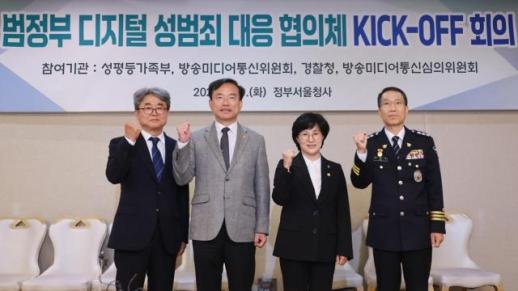 Government Launches Task Force to Combat Digital Sexual Crimes The Ministry of Gender Equality and Family, in collaboration with the Korea Communications Commission, the National Police Agency, and the Broadcast Media Review Committee, discussed measures to address illegal harmful websites and improve support systems for victims of digital sexual crimes. On June 9, the ministry announced that it held the first meeting of the government task force on digital sexual crimes, where officials shared operational plans and updates on the integrated support system for victims. They also discussed tasks related to responding to illegal harmful websites. The task force aims to facilitate swift decision-making on key policies and improvements, enhancing accountability and collaboration among agencies. The four agencies have been jointly addressing digital sexual crimes since signing a memorandum of understanding in November 2019, meeting quarterly to tackle these issues. Last month, they launched the 'Government Joint Integrated Support Team for Victims of Digital Sexual Crimes.' This team consists of eight members, including a head who also serves as the Safety and Human Rights Policy Director of the Ministry of Gender Equality and Family, one deputy head, and six additional members. The existing quarterly meetings have been expanded to monthly discussions, and a new high-level government task force has been established to strengthen the response system. This initiative comes in response to the ongoing suffering of victims due to non-compliance with removal requests and the persistent circulation of illegal content, as well as the evolving tactics of digital sexual crimes, including deepfake technology. Minister Won Min-kyung emphasized the need for a comprehensive approach to fundamentally resolve digital sexual crimes, stating, "It is crucial to expand the role of the government integrated support team and secure additional personnel and budget for victim support, sanctions, investigations, and blocking measures." Kim Jong-cheol, Chairman of the Korea Communications Commission, noted, "As the methods and distribution structures of digital sexual crimes become more sophisticated, the Commission will actively collaborate with relevant agencies under a 'zero tolerance principle' to eradicate digital sexual crimes and create a safer digital environment." Acting Chief Yoo Jae-sung of the National Police Agency stated, "The police will focus on thoroughly investigating all stages of crimes related to the production, distribution, purchase, possession, and viewing of digital sexual exploitation materials to prevent further victimization and disrupt supply chains." Goh Kwang-hun, Chairman of the Broadcast Media Review Committee, remarked, "We will concentrate all our review capabilities to eradicate the distribution of illegal filming materials until the day digital sexual crime victims can regain their normal lives."* This article has been translated by AI. 2026-06-09 15:24:00
 -
 Lab Genomics Shares Surge 28% Following Stick Investment's $200 Million Investment Lab Genomics is experiencing a significant surge in its stock price following news of a substantial investment from Stick Investment. According to the Korea Exchange, as of 2:58 PM on June 9, Lab Genomics shares rose by 257 won (28.88%) to 1,147 won. The stock began the day with a rise of over 10% and continued to gain momentum as buying interest increased. The surge in stock price is attributed to Stick Investment, a domestic private equity firm, announcing a 20 billion won investment in Lab Genomics. Investment banking sources indicate that Stick Investment recently acquired the fifth series of non-guaranteed convertible bonds (CB) issued by Lab Genomics, amounting to 20 billion won. The investment is being made through Stick Litmus LLC, which can convert the acquired CB into 13,642,564 common shares at a conversion price of 1,466 won per share, securing an 18.38% stake upon exercising the conversion rights. This investment is part of the 430 billion won 'Stick Credit No. 1 Blind Fund' established at the end of last year. It is known to be led by the credit division and focuses on mezzanine investments in listed companies. The investment in Lab Genomics is the fourth case for this fund, following investments in Interojo, Kolon TissueGene, and Ecosolution. Market observers note that Stick Investment's decision to invest reflects a high assessment of Lab Genomics' growth potential. The company specializes in non-invasive prenatal testing (NIPT) and genetic analysis services, and it is expanding its molecular diagnostics business, which includes PCR (polymerase chain reaction), molecular diagnostics (MDx), immunoassays, and next-generation sequencing (NGS). Notably, Lab Genomics is set to complete the acquisition of a CLIA Lab in the United States in 2024, marking its entry into the U.S. market. This investment is expected to accelerate the company's expansion in the global diagnostics sector.* This article has been translated by AI. 2026-06-09 15:21:00
 -
 US Expands Technology Sanctions Against China, Calls for Huawei Equipment Replacement The United States is intensifying its technology pressure on China. The US Department of Defense has excluded major Chinese tech companies from its procurement network and has demanded NATO member countries replace Huawei equipment still in their communications networks. In China, discussions are emerging about the need to manage key domestic technologies at the national level, indicating that the US-China technology conflict is evolving into a long-term security competition. On June 9, Reuters, Bloomberg, and the South China Morning Post reported that the US Department of Defense has added Alibaba, Baidu, BYD, Changxin Memory Technologies (CXMT), Yangtze Memory Technologies (YMTC), Wuxi Apptec, Unitree, and Robosense to its list of 'Chinese military companies.' This list includes companies deemed to contribute to the modernization of the People's Liberation Army, known under US law as the 1260H list. While this action is not an official sanction, it imposes significant practical restrictions. The listed companies will be unable to enter into direct contracts with the Department of Defense starting at the end of June, and by 2027, their ability to supply products and services through third parties will also be limited. This effectively phases out major Chinese tech companies from the US Department of Defense procurement network. Notably, the scope of this action has expanded. Previous regulations focused primarily on semiconductors and telecommunications equipment, but now include companies in e-commerce, search and artificial intelligence (AI), electric vehicles, robotics, and biotechnology. This suggests that the US views Chinese private tech firms as linked to military and industrial capabilities. Pressure on allied nations has also increased. Bloomberg reported that the Trump administration had urged NATO member countries to use part of their defense budgets to replace Huawei equipment in their communications networks and critical infrastructure. The US believes that replacing Huawei equipment is a matter of network security and should be included in NATO's defense spending goals. The US is framing the issue of Chinese telecommunications equipment not as a trade concern but as an alliance security issue. While it has not publicly named specific countries, foreign media suggest that Germany is a primary target. Germany and Spain have previously expressed caution, stating that EU-level restrictions on related equipment could provoke retaliation from China. In China, discussions are emerging about limiting the overseas transfer of technologies where the country holds an advantage. According to the South China Morning Post, Chinese researchers have identified 63 strategically sensitive sectors that are competitive in the global market. They have also proposed criteria for determining which sectors might be subject to future export restrictions. Potential candidates include satellite quantum communication, electromagnetic propulsion systems, space robotics, quantum device manufacturing, ultra-small AI edge computing, perovskite solar cells, and BeiDou satellite autonomous positioning technology. This reflects a recognition that not only areas where China needs to catch up but also those where it already has strengths should be managed at the national level. However, this list has not been formalized as official policy. Researchers have clarified that their study is still under academic review and has not yet reached the stage of being adopted as an actual export control system. Nonetheless, it is evident that China is beginning to discuss its own technology protection measures, drawing inspiration from the US export control framework.* This article has been translated by AI. 2026-06-09 15:21:00
 -
 Korea's Small and Medium Business Technology Agency Establishes New Privacy Policy The Small and Medium Business Technology Agency (SMBTA) has established and formalized a new "Privacy Protection Management Policy" to enhance data privacy. According to the SMBTA, the key components of the policy include compliance with laws and guidelines, prohibition of use beyond intended purposes, measures to ensure safety, protection of the rights of data subjects, promotion of responsible management and culture, and prevention of harm with prompt responses. With the announcement of this policy, the SMBTA aims to upgrade its information security infrastructure and ensure that employees adhere to security protocols, even in changing work environments such as cloud settings and remote work. Recently, Director Kim Young-shin emphasized the importance of information security in a letter to all employees. This letter was intended to raise awareness about the significance of privacy protection and to foster a preventive security culture within the organization. Director Kim stated, "The data and technological information managed by the SMBTA represent the valuable efforts of our small and medium-sized enterprises and are core assets that determine the future of our nation. Information security and privacy protection are not merely about compliance; they are essential values that our agency must uphold as a leader in innovation." Additionally, the SMBTA was recognized as an excellent institution in the '2025 Public Data Provision Operation Status Inspection Evaluation' conducted by the Ministry of the Interior and Safety in April. The agency received high marks for establishing a data quality management system and laying the groundwork for the use of artificial intelligence (AI).* This article has been translated by AI. 2026-06-09 15:21:00
 -
 KB Financial Group Begins Search for Next Chairman Amid Internal Competition KB Financial Group is officially starting the process to select its next chairman, drawing significant attention from the financial sector. With Yang Jong-hee's potential reappointment gaining traction due to the company's record performance and proactive shareholder return policies, internal competition and governance reforms from financial authorities are seen as key variables.According to the financial sector on June 9, the KB Financial Chairman Candidate Recommendation Committee has narrowed the initial list of candidates to 12 as of June 2 and has begun the verification process. The final candidates will be selected on September 11. Yang's term is set to end on November 20.Insiders suggest that Yang is the frontrunner for reappointment, as he has been praised for effectively managing key business challenges since taking office.Last year, KB Financial achieved a record net profit of 5.843 trillion won, marking its highest performance to date. This year, the company continues to show strong profit trends, with projections indicating an annual net profit of 6 trillion won.The company's shareholder return achievements are also considered a strong point. In the past year, KB Financial conducted a total shareholder return of 3.6 trillion won, including cash dividends and share buybacks, making it the first domestic financial institution to exceed 3 trillion won in annual shareholder returns. Since Yang's appointment, the stock price has surged from the 50,000 won range to 150,000 won. In February, it also became the first financial holding company to surpass a market capitalization of 60 trillion won.However, competition among internal candidates is significant. Current division heads are being considered for the next chairman position. In the 2023 chairman selection, three of the four internal candidates were current vice presidents. Yang himself was selected over Heo In, the then-vice president of KB Financial, who was also a strong candidate. Currently, key division heads include Lee Chang-kwon, head of the Future Strategy Division; Lee Jae-geun, head of the Global Division; and Kim Sung-hyun, head of the CIB & Market Division.The actions of Lee Hwan-joo, president of KB Kookmin Bank, are also under scrutiny. As a core affiliate of KB Financial, his experience as a bank president is viewed as a significant qualification for group management.Recent emphasis by financial authorities on improving governance is another factor to consider. Authorities have consistently called for greater transparency in succession processes and enhanced board independence to prevent long-term reappointments and self-reappointment controversies. As a result, the verification process for the next chairman selection is expected to be more rigorous.A financial sector insider noted, "Based on the current management performance, Chairman Yang is in the most advantageous position for the next chairman competition, but changes in governance systems and discussions could be variables." 2026-06-09 15:21:00
 -
 Frieze Seoul to Feature 125 Galleries from 30 Countries in September This year, Frieze Seoul will feature over 125 galleries from 30 countries. The event is scheduled to take place from September 2 to 5 at COEX in Gangnam, Seoul, according to organizers on June 9. Frieze Seoul will be held in conjunction with KIAF Seoul, organized by the Korea Galleries Association, with more than 70% of participating galleries based in the Asia-Pacific region. Additionally, over 50 galleries currently operate permanent spaces in Seoul, highlighting the robust network of the Asian art market. Top-tier galleries from around the world will participate, with the main section, 'Galleries,' featuring more than 85 leading galleries. Notable participants include Commonwealth and Council, Esther Schipper, Gallery Lelong, Gladstone, Hauser & Wirth, Lehmann Maupin, Lisson Gallery, Meyer Riegger, Pace Gallery, Sprüth Magers, Thaddaeus Ropac, Tina Kim Gallery, White Cube, and David Zwirner. Axel Vervoordt Gallery, David Kordansky, and Mendes Wood DM will also return to Frieze Seoul. Galleries based in the Asia-Pacific region, such as Asia Art Center, Drawing Room, and Gallery Vacancy, will showcase a broad spectrum of contemporary Asian art. Major Korean galleries will also be prominently featured. Arario Gallery, Gallery Baton, Gallery Hyundai, Gana Art, Hakgojae, Jason Haam, Johyun Gallery, International Gallery, Rian Gallery, P21, and PKM Gallery will present a wide range of contemporary Korean art. Anomaly, Maho Kubota, and Nanjuka Japanese Gallery will also participate. Additionally, galleries from Europe, Asia, the Middle East, and Africa will join Frieze Seoul for the first time this year. Frieze Seoul will present a multifaceted perspective on contemporary art through a curatorial section led by three independent curators. A new section called Material Practice, led by independent curator Cho Hye-young, will explore the boundaries between fine art and materiality, focusing on the intersection of contemporary art and material expression. The 'Spotlight' section, which focuses on solo exhibitions of 20th-century artists, will be introduced at Frieze Seoul for the first time this year. Curated by Go Won-seok, director of the Line Cultural Foundation, this section will highlight lesser-known artists from the existing Eurocentric art history and works that need to be reexamined today. Now in its fourth year, the 'Focus' section will be operated under the guidance of curator Lee Seol-hee, featuring solo presentations from 16 young galleries established since 2014. This year, participation will expand beyond Asia to include galleries from Europe and the Americas. During Frieze Week in September, a variety of exhibitions and programs will take place. Highlights include solo exhibitions by Koo Jeong-a at the Leeum Museum, Seo Do-ho at the National Museum of Modern and Contemporary Art, Seoul, Lee Bae at Museum SAN, Hamyang A at Art Sonje Center, Kim Mu-young, Sol LeWitt: Open Structure at the Amorepacific Museum of Art, and Art Spectrum 2026 at Hoam Art Museum. Frieze House Seoul will feature a solo exhibition by Tanabe Chikuunsai IV, known for his large bamboo installations, presented by the Japanese gallery Yumekobo. Neighborhood Nights, taking place during Frieze Week, will continue in major areas of Seoul, including Euljiro, Hannam, Cheongdam, and Samcheong, from August 31 to September 3. Patrick Lee, director of Frieze Seoul, stated, "This will be a space that enriches the cultural landscape of Seoul and Korea, fostering deeper connections with artists and galleries, as well as Korea's unique cultural heritage." Meanwhile, the 2026 Frieze Seoul Artist Award, sponsored by Bulgari, has been awarded to the artist collective Yagwang. The visual arts duo, consisting of Kim Tae-ri and Jeon In, has explored social structures surrounding gender, body, and labor through their work, which spans sculpture, video, installation, and performance.* This article has been translated by AI. 2026-06-09 15:15:00
 -
 ETRI Launches Development of 6G 'AI-RAN' Technology with Telecom Giants and Universities South Korean researchers are embarking on the development of next-generation 'AI-RAN' technology, which integrates artificial intelligence with telecommunications networks. This initiative aims to secure a leading position in the global 6G network landscape through a collaborative effort involving industry, academia, and research institutions. The Electronics and Telecommunications Research Institute (ETRI) announced on June 9 that it will actively pursue the 'AI-RAN Global Leading Project,' led by the Ministry of Science and ICT and the Institute for Information & Communications Technology Planning & Evaluation (IITP). The project will run from April 2026 to December 2030, with a total research and development budget of 47 billion won (approximately $39 million). AI-RAN represents a next-generation network technology that combines AI capabilities with existing mobile communication radio access networks. The project aims to create an 'AI-native' structure that incorporates network resource optimization, fault prediction, and AI learning and inference functions within the network itself. Major global players, including NVIDIA, Samsung Electronics, Ericsson, Nokia, and SoftBank, are currently intensifying their technological competition in this field. The government has designated ETRI as the 'National AI-RAN Global Leading Project Research Institute.' The project boasts a robust lineup of participants, including the three major telecom companies—SK Telecom, KT, and LG Uplus—along with communication equipment and software firms such as HFR, Ucast, and CleverLogic, as well as universities like Sungkyunkwan University, Yonsei University, Seoul National University, and Ajou University, and organizations like the Next-Generation Mobile Research Association and the Korea Telecommunications Technology Association (TTA). Researchers plan to establish a virtual network platform based on AI-RAN software for actual base stations and develop software based on international standards, specifically 3GPP Release 19 and 21. They will validate AI model performance and optimization technologies in a digital twin-based virtual network reflecting massive MIMO environments, and apply these findings in real base station testing environments to ensure operational stability. Additionally, international collaborative research with the United States will focus on AI-based energy-saving technologies for base stations and digital twin-based wireless environment technologies. The project will also promote global standardization through activities with the AI-RAN Alliance, 3GPP, and the O-RAN Alliance. Kim Il-kyu, head of ETRI's Mobile Communication Research Division, stated, "AI-RAN is a key technology that will determine national competitiveness in the 6G era. We will secure the foundational technology and verification systems for next-generation wireless networks based on AI, ensuring that South Korea leads the global AI-native network market."* This article has been translated by AI. 2026-06-09 15:15:00