

Journalist

Kim Dong-young and Candice Kim
-
 Frieze Seoul to Feature 125 Galleries from 30 Countries in September This year, Frieze Seoul will feature over 125 galleries from 30 countries. The event is scheduled to take place from September 2 to 5 at COEX in Gangnam, Seoul, according to organizers on June 9. Frieze Seoul will be held in conjunction with KIAF Seoul, organized by the Korea Galleries Association, with more than 70% of participating galleries based in the Asia-Pacific region. Additionally, over 50 galleries currently operate permanent spaces in Seoul, highlighting the robust network of the Asian art market. Top-tier galleries from around the world will participate, with the main section, 'Galleries,' featuring more than 85 leading galleries. Notable participants include Commonwealth and Council, Esther Schipper, Gallery Lelong, Gladstone, Hauser & Wirth, Lehmann Maupin, Lisson Gallery, Meyer Riegger, Pace Gallery, Sprüth Magers, Thaddaeus Ropac, Tina Kim Gallery, White Cube, and David Zwirner. Axel Vervoordt Gallery, David Kordansky, and Mendes Wood DM will also return to Frieze Seoul. Galleries based in the Asia-Pacific region, such as Asia Art Center, Drawing Room, and Gallery Vacancy, will showcase a broad spectrum of contemporary Asian art. Major Korean galleries will also be prominently featured. Arario Gallery, Gallery Baton, Gallery Hyundai, Gana Art, Hakgojae, Jason Haam, Johyun Gallery, International Gallery, Rian Gallery, P21, and PKM Gallery will present a wide range of contemporary Korean art. Anomaly, Maho Kubota, and Nanjuka Japanese Gallery will also participate. Additionally, galleries from Europe, Asia, the Middle East, and Africa will join Frieze Seoul for the first time this year. Frieze Seoul will present a multifaceted perspective on contemporary art through a curatorial section led by three independent curators. A new section called Material Practice, led by independent curator Cho Hye-young, will explore the boundaries between fine art and materiality, focusing on the intersection of contemporary art and material expression. The 'Spotlight' section, which focuses on solo exhibitions of 20th-century artists, will be introduced at Frieze Seoul for the first time this year. Curated by Go Won-seok, director of the Line Cultural Foundation, this section will highlight lesser-known artists from the existing Eurocentric art history and works that need to be reexamined today. Now in its fourth year, the 'Focus' section will be operated under the guidance of curator Lee Seol-hee, featuring solo presentations from 16 young galleries established since 2014. This year, participation will expand beyond Asia to include galleries from Europe and the Americas. During Frieze Week in September, a variety of exhibitions and programs will take place. Highlights include solo exhibitions by Koo Jeong-a at the Leeum Museum, Seo Do-ho at the National Museum of Modern and Contemporary Art, Seoul, Lee Bae at Museum SAN, Hamyang A at Art Sonje Center, Kim Mu-young, Sol LeWitt: Open Structure at the Amorepacific Museum of Art, and Art Spectrum 2026 at Hoam Art Museum. Frieze House Seoul will feature a solo exhibition by Tanabe Chikuunsai IV, known for his large bamboo installations, presented by the Japanese gallery Yumekobo. Neighborhood Nights, taking place during Frieze Week, will continue in major areas of Seoul, including Euljiro, Hannam, Cheongdam, and Samcheong, from August 31 to September 3. Patrick Lee, director of Frieze Seoul, stated, "This will be a space that enriches the cultural landscape of Seoul and Korea, fostering deeper connections with artists and galleries, as well as Korea's unique cultural heritage." Meanwhile, the 2026 Frieze Seoul Artist Award, sponsored by Bulgari, has been awarded to the artist collective Yagwang. The visual arts duo, consisting of Kim Tae-ri and Jeon In, has explored social structures surrounding gender, body, and labor through their work, which spans sculpture, video, installation, and performance.* This article has been translated by AI. 2026-06-09 15:15:00
 -
 ETRI Launches Development of 6G 'AI-RAN' Technology with Telecom Giants and Universities South Korean researchers are embarking on the development of next-generation 'AI-RAN' technology, which integrates artificial intelligence with telecommunications networks. This initiative aims to secure a leading position in the global 6G network landscape through a collaborative effort involving industry, academia, and research institutions. The Electronics and Telecommunications Research Institute (ETRI) announced on June 9 that it will actively pursue the 'AI-RAN Global Leading Project,' led by the Ministry of Science and ICT and the Institute for Information & Communications Technology Planning & Evaluation (IITP). The project will run from April 2026 to December 2030, with a total research and development budget of 47 billion won (approximately $39 million). AI-RAN represents a next-generation network technology that combines AI capabilities with existing mobile communication radio access networks. The project aims to create an 'AI-native' structure that incorporates network resource optimization, fault prediction, and AI learning and inference functions within the network itself. Major global players, including NVIDIA, Samsung Electronics, Ericsson, Nokia, and SoftBank, are currently intensifying their technological competition in this field. The government has designated ETRI as the 'National AI-RAN Global Leading Project Research Institute.' The project boasts a robust lineup of participants, including the three major telecom companies—SK Telecom, KT, and LG Uplus—along with communication equipment and software firms such as HFR, Ucast, and CleverLogic, as well as universities like Sungkyunkwan University, Yonsei University, Seoul National University, and Ajou University, and organizations like the Next-Generation Mobile Research Association and the Korea Telecommunications Technology Association (TTA). Researchers plan to establish a virtual network platform based on AI-RAN software for actual base stations and develop software based on international standards, specifically 3GPP Release 19 and 21. They will validate AI model performance and optimization technologies in a digital twin-based virtual network reflecting massive MIMO environments, and apply these findings in real base station testing environments to ensure operational stability. Additionally, international collaborative research with the United States will focus on AI-based energy-saving technologies for base stations and digital twin-based wireless environment technologies. The project will also promote global standardization through activities with the AI-RAN Alliance, 3GPP, and the O-RAN Alliance. Kim Il-kyu, head of ETRI's Mobile Communication Research Division, stated, "AI-RAN is a key technology that will determine national competitiveness in the 6G era. We will secure the foundational technology and verification systems for next-generation wireless networks based on AI, ensuring that South Korea leads the global AI-native network market."* This article has been translated by AI. 2026-06-09 15:15:00
 -
 KT Deploys Intelligent Network for World Cup Street Support KT is set to implement an intelligent network control system in major street cheering areas, including Gwanghwamun and City Hall, ahead of South Korea's first World Cup match on June 12. This proactive measure aims to maintain communication quality despite the expected surge in traffic due to large crowds. On June 9, KT announced that it has completed pre-checks of communication quality and developed network operation plans focused on Gwanghwamun Square, City Hall Plaza, and the Gangnam Yeongdong-daero area. The key component of this system is the W-SDN technology. W-SDN is an intelligent network control system that analyzes real-time traffic from a central location, automatically selecting and managing base stations at risk of overload. It reallocates network resources immediately based on crowd density and changes in service usage. The effectiveness of this technology has already been validated. KT successfully operated a W-SDN-based network during large-scale performances and major sporting events in the Gwanghwamun area in March, confirming stable communication quality. KT has also established a multi-tiered on-site response system, which includes: additional deployment of mobile base stations in advance, 24-hour special monitoring from the Gyeonggi Network Control Center before and after the match, and immediate deployment of recovery personnel in case of unusual situations. Looking ahead, KT plans to expand the application of AI analysis and control functions to continuously enhance network quality. Jung Seon-il, head of KT's Network Operation Innovation Division, stated, "We plan to provide seamless communication services at Gwanghwamun Square, where the hopes of the entire nation converge, through W-SDN technology. We will continue to enhance intelligent automatic control technology to improve perceived network quality even in high-traffic environments."* This article has been translated by AI. 2026-06-09 15:12:00
 -
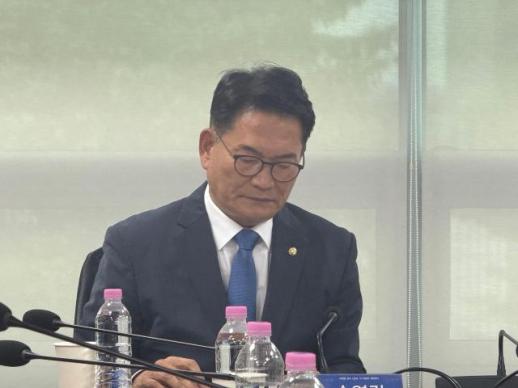 Song Young-gil: Next Democratic Party Leadership Must Collaborate with President Lee Song Young-gil, a member of the Democratic Party, asserted on June 9 that the next party leadership must closely collaborate with President Lee Jae-myung to support his administration's reforms. His comments come as he is expected to run for party leadership in the upcoming convention in August, marking the beginning of his campaign activities. Speaking at a forum titled 'More Bold Reforms in the Second Year of the Lee Jae-myung Administration,' hosted by Rep. Jeon Hyun-hee, Song emphasized the importance of addressing remaining national tasks, including the advancement of the capital market to resolve the Korea discount and effectively expanding tax revenues concentrated in companies like Samsung Electronics and SK Hynix. He highlighted that the newly elected leadership after the party convention will face a critical moment in addressing these reform tasks and must actively support President Lee. His remarks suggest a strategy to broaden the party's appeal ahead of the convention. "The Democratic Party is responsible for making all reforms sustainable. The ruling party must lead these reforms," Song stated, adding that if the National Assembly committees do not take the initiative to organize reform bills, it would be impossible for President Lee to lead these reforms alone. He further noted, "The next party leadership is crucial. We are at a significant juncture where we should collaborate with trust rather than waste energy on unnecessary conflicts with the president to pursue reforms."* This article has been translated by AI. 2026-06-09 15:12:00
 -
 Apple Unveils Revamped Siri AI Powered by Google's Gemini at WWDC 2026 Apple's WWDC 2026 Features Major Siri AI Overhaul with Google Gemini Apple kicked off its annual Worldwide Developers Conference (WWDC) 2026 on June 8 in Cupertino, California, marking CEO Tim Cook's final keynote address. The company unveiled a significantly revamped Siri AI, which operates on Google's Gemini model. This year's WWDC served as a platform for Apple to overhaul its AI strategy, which has lagged behind competitors. The updated Siri AI features a 3D visualization interface that activates with user gaze and automates tasks across multiple apps, representing the largest update since its launch. However, regulatory risks remain apparent. Due to the EU's Digital Markets Act (DMA), Siri AI will not be available in the European Union and China at the time of the iOS 27 release. Additionally, full functionality will only be supported on iPhone 17 Pro, Pro Max, and Air models, which could impact its broader adoption. Google Signs $920 Million Monthly AI Compute Deal with SpaceX Google has entered into a $920 million monthly AI compute leasing agreement with SpaceX. Under the terms, Google will have access to approximately 110,000 NVIDIA GPUs and CPUs, along with memory resources, from October 2026 through June 2029, totaling around $30 billion. Google described the deal as a short-term contract to secure bridge capacity due to unexpectedly high customer demand for its GemAI Enterprise Agent platform. This agreement follows SpaceX's previous $1.25 billion contract with Anthropic for the Colossus1 data center, marking the second major AI compute deal for SpaceX. Combined, these contracts position SpaceX to secure approximately $75 billion in future contract revenue as it prepares for a Nasdaq IPO roadshow on June 12. The irony of Google, one of the largest AI infrastructure providers, leasing GPUs from a rocket company underscores the current surge in global AI compute demand. SpaceX Aims for Record IPO, Reassessing Value as an AI Cloud Company As SpaceX prepares for its Nasdaq listing on June 12, its value as an AI infrastructure company is being reevaluated. According to IPO documents, xAI spent $12.7 billion on AI infrastructure in 2025 and invested $7.7 billion in the first quarter of 2026 alone. SpaceX plans to raise approximately $75 billion by offering shares at $135 each, which, if successful, would surpass the IPO record set by Saudi Aramco. On June 8, SpaceX also unveiled its first-generation satellite for orbital AI compute, named 'AI1,' which features a computing payload of up to 150 kilowatts and a design that allows for the replacement of compute providers. Following its merger with xAI, SpaceX is effectively transitioning into an AI cloud service provider, presenting a new investment rationale that vertically integrates rockets, satellites, and AI. Colorado's AI Law Overhauled, Changing State-Level AI Regulation Landscape Colorado's comprehensive AI consumer protection law has been effectively repealed and restructured. On May 14, the governor signed a new bill (SB26-189) that resets the implementation date to January 1, 2027. The new law abolishes the previous framework prohibiting algorithmic discrimination in 'high-risk AI systems' and redefines the regulation of automated decision-making technologies (ADMT) used in employment, healthcare, and finance as those that impact 'outcome-affecting decisions.' It also includes new provisions ensuring 'meaningful human review' for decisions unfavorable to consumers. Analysts suggest that the lawsuit involving xAI and the federal court's stay decision expedited these amendments, signaling a shift in the leading model for state-level AI regulation in the U.S. Model Competition Intensifies with Upcoming Releases of GPT-5.6 and Claude Sonnet 4.8 June is expected to be the most active month for model releases this year. Following the unveiling of Google Gemini 3.5 Flash at Google I/O, GPT-5.6 and Claude Sonnet 4.8 are set to launch simultaneously in mid-June. If both models are released around the same time, it could significantly reshape the token pricing competition in the agent-based production workload market. Attention is also focused on developments from China, as Alibaba's Qwen 3.7 Max has demonstrated performance on par with Claude Opus 4.7 in agent benchmarks, while offering a cost structure that is half the input price and one-quarter the output price, attracting interest from developers.* This article has been translated by AI. 2026-06-09 15:09:00
 -
 Government to Inspect Speculative Trading and Market Disruption in Forex The government is set to conduct inspections of speculative trading and market disruption in the foreign exchange market following a recent surge in the won-dollar exchange rate. On June 9, the Ministry of Economy and Finance held a meeting with market experts from the Bank of Korea and the foreign exchange, securities, and macroeconomic sectors to discuss recent trends in the foreign exchange market and potential responses. During the meeting, participants noted that the fundamentals of the South Korean economy remain strong, citing the upward revision of the first-quarter GDP estimate, a sustained current account surplus, and the activation of the National Pension Service's new framework. They expressed the view that the recent concentration in the foreign exchange market is temporary and that volatility is expected to ease in the future. The discussion also covered the status of non-deliverable forward (NDF) transactions and strategies to absorb NDF demand into the domestic foreign exchange market. Director Moon Ji-sung emphasized the need to attract foreign investors' NDF demand to the domestic market through 24-hour foreign exchange market operations and an offshore won payment system, thereby enhancing the competitiveness and efficiency of the domestic foreign exchange market. The government has expressed serious concern about the current market situation and reaffirmed its commitment to respond sternly to speculative trading that undermines market order or encourages one-sided movements in the exchange rate. As part of this effort, the government has begun preparations for inspections to determine whether speculative trading and market disruption are occurring in the foreign exchange market. Relevant agencies are set to conduct on-site inspections and examinations this week. The inspections will focus on transactions aimed at disrupting market functions or hindering the price discovery process, as well as large-scale one-sided trades executed at specific times to disadvantage customers. The government plans to closely monitor major trading flows in collaboration with relevant agencies, including the Bank of Korea. Director Moon stated, "It is crucial for market participants to play a responsible role in ensuring the stable operation of the foreign exchange market and establishing a sound trading order," and urged each institution to strengthen internal controls and risk management to prevent speculative trading or actions that could disrupt market order.* This article has been translated by AI. 2026-06-09 15:03:00
 -
 Middle East Crisis Disrupts Japanese Airlines; ANA and JAL Pursue Code-Share Agreements The ongoing crisis in the Middle East is shaking the global airline industry once again. Disruptions in the Strait of Hormuz have caused a surge in jet fuel prices, leading to projections that global airline profits will drop by nearly half this year compared to last year. In Japan, All Nippon Airways (ANA) and Japan Airlines (JAL) are moving towards code-sharing agreements on low-profit regional routes as a response to rising costs. The Nikkei reported on June 9 that the International Air Transport Association (IATA) forecasts the total net profit for the global airline industry to be $23 billion (approximately 35 trillion won) this year, down from $45 billion last year. After a brief recovery in travel demand following the COVID-19 pandemic, the airline sector now faces a new challenge due to skyrocketing fuel costs stemming from the Middle East crisis. Fuel costs are the primary factor pressuring airline profitability. IATA estimates that total fuel expenses for the airline industry will reach $350 billion this year, a 40% increase from last year, amounting to an additional $100 billion. Typically, fuel costs account for about 25-30% of airline operating expenses. When fuel prices rise sharply, airlines have no choice but to respond with fare increases or capacity reductions; however, it is challenging to pass these costs onto passengers on less popular regional routes. The increase in ticket prices is also directly impacting demand for flights to the Middle East. IATA predicts that air travel demand in the region will decrease by 11% this year, measured in revenue passenger kilometers (RPK). As geopolitical tensions have dampened passenger demand for flights to and from the Middle East, major airlines such as Qatar Airways, which operates out of Doha, are reducing flight frequencies or suspending certain routes. Similarly, Lufthansa and Air India are cutting back on less profitable routes. The Japanese airline industry is not immune to these trends. According to the Nikkei, ANA and JAL are expected to pursue code-sharing agreements for domestic regional routes, particularly those that are difficult to replace with rail services but have low profitability. Discussions about collaboration between the two companies have been ongoing since before the Middle East crisis, but the recent spike in fuel prices has heightened the need for such partnerships. Japan's regional airline routes have already been weakened by declining populations and reduced business travel demand. With fuel costs rising, even major airlines are finding it increasingly difficult to maintain routes independently. This context explains why ANA and JAL are considering code-sharing on certain routes while still remaining competitors. Accelerating Global Restructuring in the Airline Industry This crisis differs from that of the COVID-19 pandemic. During the pandemic, airline demand plummeted, forcing carriers to rely on capital infusions and government support. In contrast, demand for air travel remains relatively strong outside the Middle East. IATA projects that global passenger numbers will increase by 2.4% this year, reaching 5.1 billion. While demand holds steady, the burden of soaring fuel costs is eroding airline profits. In response to these cost pressures, the global airline industry is experiencing accelerated restructuring following the escalation of the Middle East crisis. Larger airlines can benefit from economies of scale in fuel procurement and absorb stable passenger demand. Recently, Lufthansa invested in Italy's ITA Airways, and the merger of Korean Air and Asiana Airlines was confirmed. Additionally, U.S. investment fund Castlelake is reportedly supporting Air France-KLM's acquisition of Scandinavian Airlines (SAS) and is considering a takeover of the British low-cost carrier easyJet. In the U.S., discussions about a merger between United Airlines and American Airlines emerged in April. Historical instances, such as the 2008 merger of Delta Air Lines and Northwest Airlines, show that surging fuel prices have often triggered restructuring in the U.S. airline industry. Conditions for restructuring are also developing in Japan's airline sector. The Ministry of Land, Infrastructure, Transport and Tourism recently lifted restrictions on large airlines investing in medium-sized carriers, lowering the barriers for acquisition and investment proposals for domestic airlines. IATA Director General Willie Walsh noted, "The increase in fuel costs could threaten the very existence of many airlines." As the airline industry emerges from the shock of COVID-19, it now faces the challenge of soaring fuel prices due to the Middle East crisis. With increasing pressures for restructuring in the global airline sector, discussions on code-sharing for regional routes and the restructuring of medium-sized airlines in Japan are likely to gain momentum.* This article has been translated by AI. 2026-06-09 15:03:00
 -
 HUG Lowers Guarantee Fees and Eases PF Loan Requirements to Support Housing Developers The Housing and Urban Guarantee Corporation (HUG) is taking steps to lower guarantee fees and expand PF loan guarantees to stimulate the construction market and enhance housing supply. On June 9, HUG announced it will implement reforms including a reduction in guarantee fees, the introduction of new guarantees, and an expansion of PF guarantees to support housing developers facing liquidity challenges due to a sluggish real estate market and tightened PF loans. HUG will temporarily lower the guarantee fees for housing sale guarantees and loans for maintenance projects until May 31, 2027. The fees for four types of guarantees, including housing sale guarantees, mixed-use development guarantees, officetel sale guarantees, and pre-occupancy rental deposit guarantees, will be reduced by 30%. The pre-occupancy rental deposit guarantee was included in the fee reduction following feedback from registered rental business operators during a visit to the Gwangju and Jeonnam chapter of the Korea Housing Association in April. For projects with PF loan guarantees, the discount on guarantee fees can increase up to 60%. HUG believes that by reducing the guarantee fee burden for housing developers who secure funding at lower interest rates through PF loans, it will help improve project viability. The guarantee fees for loans supporting construction and project costs in redevelopment and reconstruction projects will also be reduced by 30% until May 31, 2027. This fee reduction applies not only to new guarantee approvals but also to the remaining project costs for projects that have already received guarantee approval. The adjustments will be applied automatically without a separate application process. HUG estimates that approximately 400 projects and 140,000 households will benefit from a total reduction of about 138 billion won in guarantee fees due to this initiative. The scope and requirements for PF loan guarantees will also be relaxed. HUG has extended the special application period for PF loan guarantees from June 30, 2026, to June 30, 2027. New special provisions will also apply to rental PF projects that were previously ineligible. The guarantee limit for sale PF guarantees will be increased from 50% to 70% of the total project cost. The requirements for upfront investment in land and total project costs will be eased. The rental PF guarantees will maintain a 70% guarantee limit while lowering upfront investment requirements. The ranking requirements for contractors will be eliminated for both sale and rental PF guarantees. For housing developers looking to use HUG PF loan guarantees to repay already executed PF loans, the occupancy rate requirement will be relaxed from over 60% to over 50%. HUG expects that this measure, combined with the unsold housing buyback program, will help improve the financial stability of housing developers struggling with unsold units. The application period for PF loan guarantees has also been expanded. Previously, applications could only be made before construction began, but now they can be submitted until the approval of the recruitment announcement for residents. This change allows projects that have already started construction to apply for guarantees. The guarantee scope for market maintenance projects will also be expanded. HUG plans to include not only projects implemented by existing associations but also those carried out by market maintenance project corporations under special laws aimed at promoting traditional markets and shopping districts. Industry experts believe that as the role of public guarantees increases, it will become increasingly important to monitor the financial conditions of individual projects and the actual construction circumstances. Choi In-ho, President of HUG, stated, "The strengthening of guarantee support and regulatory revisions will provide substantial financial relief to housing developers facing liquidity crises. We will fulfill our role in ensuring smooth housing supply and the recovery of the construction market while preventing guarantee accidents through thorough risk management."* This article has been translated by AI. 2026-06-09 15:00:00
 -
 Misconceptions About Air Conditioning Costs Can Lead to Higher Bills As summer approaches, interest in air conditioning electricity costs is rising due to increased demand for cooling. Many people frequently turn their air conditioners on and off or use dehumidifier mode to save on electricity bills. However, the actual savings can vary depending on the type of unit and usage conditions, so caution is advised. A common misconception is that frequently turning an air conditioner on and off reduces electricity costs. Many modern home air conditioners are inverter models, which adjust power output once the set temperature is reached. In situations where one is briefly away or the indoor temperature does not rise significantly, it is more efficient to maintain the set temperature rather than repeatedly turning the unit off and on. Older fixed-speed air conditioners operate differently. These units run at a constant output and cannot adjust power as finely as inverter models. In such cases, running the unit for a set period before turning it off can help reduce electricity usage. Another prevalent misunderstanding is that using dehumidifier mode incurs significantly lower electricity costs than cooling mode. While dehumidification can enhance comfort by lowering humidity, both modes in typical home air conditioners utilize a compressor and refrigerant cycle. Although there may be variations depending on the environment, it is not accurate to consider dehumidifier mode as an energy-saving mode. The most fundamental way to enhance cooling efficiency is to quickly lower the warm air indoors and ensure even distribution of cool air. Using a fan or circulator alongside the air conditioner can aid in circulating indoor air. The Korea Energy Agency also recommends using a fan while operating the air conditioner and adjusting airflow direction to help distribute cool air throughout the room. Blocking sunlight is another effective method to reduce electricity usage. During the day, closing curtains or blinds can help prevent direct sunlight from raising indoor temperatures. It is also important to minimize opening and closing windows and doors while cooling, as allowing hot outside air to enter forces the air conditioner to work harder to lower the indoor temperature, consuming more electricity. Filter maintenance is also crucial. Dust accumulation on filters can impede airflow and reduce cooling efficiency. Manufacturers recommend regular filter cleaning and removing obstacles around the outdoor unit. Proper ventilation around the outdoor unit is essential for effective heat dissipation and maintaining cooling efficiency.* This article has been translated by AI. 2026-06-09 14:57:00
 -
 Card Companies Scale Back Marketing as Exchange Rate Hits 1560 Won As the won-dollar exchange rate surpassed 1560 won, reaching its highest level in 17 years, card companies are reducing their marketing efforts related to overseas direct purchases. The high exchange rate has dampened demand for these purchases, and increased volatility has raised the costs of related promotions.According to the financial sector and the Bank of Korea, the amount of online shopping overseas direct purchases by domestic residents in the first quarter of this year totaled $1.35 billion. This marks a 13.1% decrease from the previous quarter's $1.55 billion. Even when considering seasonal factors that typically boost shopping demand at year-end, the figure remains unchanged compared to the same period last year, which also saw $1.35 billion.This decline is attributed to the soaring exchange rate, which has reduced demand for overseas direct purchases. The average monthly exchange rate for the dollar against the won rose steadily from 1456.51 won in January to 1490.11 won in May, with a peak of 1561.5 won recorded on June 6, the highest since the global financial crisis in 2009. Although the rate has since decreased to around 1530 won following verbal interventions from authorities, it remains elevated.Consumers engaged in overseas direct purchases are now facing higher costs for the same products compared to the past. Many online communities and social media platforms have seen posts from individuals postponing their purchases due to the high exchange rate. One individual considering buying an e-reader expressed, "Even with discounts, it's hard to commit to a purchase because of the exchange rate."In response to these trends, card companies are scaling back their marketing efforts. Previously, they competed to attract customers by offering various benefits such as exchange rate discounts, overseas transaction discounts, and shipping fee waivers, leveraging the fact that overseas direct purchases were primarily made through credit card payments. The overseas direct purchase market surged during the COVID-19 pandemic, making these transactions a significant revenue source for card companies. However, as the exchange rate rises, the costs of related promotions have also increased, making aggressive marketing less feasible.Currently, major card companies are not launching new marketing initiatives for overseas direct purchases. KB Kookmin Card is the only exception, having introduced the 'KB NEED Global Card' on June 1, which offers a 3.5% discount on charges for transactions at overseas merchants. A representative from the card industry stated, "With the exchange rate exceeding 1500 won, demand for overseas direct purchases is bound to decline. Given the expectation of continued high exchange rates, it will be challenging for card companies to engage in marketing related to overseas direct purchases for the foreseeable future." 2026-06-09 14:54:00