

Journalist

Kim Dong-young and Candice Kim
-
 Jensen Huang and Xi Jinping Deliver Key Messages on the Korean Peninsula This week, two global figures made significant visits to the Korean Peninsula. Jensen Huang, the CEO of NVIDIA, returned to South Korea after seven months, while Chinese President Xi Jinping visited North Korea for the first time in seven years. The two leaders discussed AI collaboration and China-North Korea cooperation, respectively, just 200 kilometers apart in Seoul and Pyongyang. This striking contrast encapsulates the current situation on the Korean Peninsula. Huang's visit carries deeper significance than typical visits from foreign business leaders. As the AI revolution accelerates, NVIDIA has established itself at the center of the global AI ecosystem, dominating the GPU market. NVIDIA's GPUs are integral to generative AI, large data centers, and the robotics industry. In this context, South Korea has emerged as a key player in the AI era, boasting a diverse industrial portfolio that includes semiconductors, robotics, automotive, energy, and data. South Korean companies hold a unique competitive edge in high-bandwidth memory (HBM), essential for AI servers. It has become increasingly difficult to discuss the AI revolution without acknowledging South Korea's semiconductor industry. This is why Huang frequently visits South Korea; collaboration with the country is essential for discussing the future of AI. In contrast, Xi's visit to Pyongyang reveals another reality. North Korea continues to view its nuclear arsenal as a core means of regime maintenance, and China seeks to maintain its strategic relationship with North Korea. Amid increasing military cooperation between Russia and North Korea, China's reaffirmation of its ties with North Korea complicates the security environment in Northeast Asia. The topics discussed in Seoul and Pyongyang starkly differ. In Seoul, the focus was on AI, semiconductors, and future industries, while in Pyongyang, discussions centered on security and military cooperation. The two locations within the Korean Peninsula appear to be living in entirely different eras. However, a closer examination reveals that AI and nuclear issues are not entirely separate. AI is increasingly utilized in military contexts, and the competition between the U.S. and China regarding AI is viewed through the lens of national security. Nuclear issues are also not merely military concerns. The North Korean nuclear situation impacts South Korea's investment environment, diplomacy, and overall economic strategy. Regardless of technological prowess, increased security anxiety can undermine national competitiveness. We have entered an era where economics and security can no longer be separated. Realistically, South Korea faces competition on two fronts: one is the global technological hegemony competition surrounding AI and advanced technologies, and the other is the geopolitical competition intertwined with the North Korean nuclear issue and U.S.-China strategic rivalry. While threats from reality exist, the pace of technological revolution is too rapid to focus solely on security. Ultimately, South Korea's task is clear. It must secure future growth drivers through AI and semiconductors while maintaining unwavering security capabilities to ensure peace on the Korean Peninsula. Relying solely on one aspect will not guarantee the nation's future. Jensen Huang and Xi Jinping are on different paths, yet they pose the same question to South Korea: Are you prepared to lead the future from the center of the AI revolution? And do you possess the capability to manage the North Korean nuclear issue and geopolitical instability in the process? The simultaneous presence of these two figures on the Korean Peninsula this week symbolically highlights the dual challenges South Korea must address in the coming decades. On one side lies AI and semiconductors; on the other, nuclear weapons and missiles. Ultimately, South Korea's future hinges on how wisely it manages these two challenges.* This article has been translated by AI. 2026-06-09 14:36:00
 -
 Special Prosecutor's Office to Deploy Two Prosecutors for Ongoing Investigation The second comprehensive special prosecutor team plans to deploy two prosecutors to assist with the ongoing investigation.On June 9, the special prosecutor's office announced it has received confirmation from the Ministry of Justice regarding the dispatch of Lee Sang-don, a prosecutor from the Daegu District Prosecutors' Office, and Park Dal-jae, a prosecutor from the Ansan branch of the Suwon District Prosecutors' Office. The timing of their deployment has not yet been determined.Lee has previously participated in the investigation into the accountability for the Itaewon tragedy that occurred on October 29, 2023, while working in the Criminal Division 3 of the Seoul Western District Prosecutors' Office.Since its establishment on February 25, the special prosecutor's office has faced challenges in maintaining its full complement of 15 prosecutors, which has affected its investigation and prosecution efforts.On May 26, Kang Nam-soo, head of the Major Economic Crimes Investigation Unit at the Seoul Western District Prosecutors' Office, was appointed as an inspector at the Ministry of Justice, reducing the number of dispatched prosecutors to 12.In response, the special prosecutor's office requested the Ministry of Justice to send three additional prosecutors. Unable to find volunteers internally, the Ministry of Justice publicly recruited prosecutors for dispatch through its internal network, 'Epros,' from June 2 to June 8.* This article has been translated by AI. 2026-06-09 14:36:00
 -
 Fair Negotiation Environment for Franchise Owners and Headquarters, Says Fair Trade Commission Chair Joo Byeong-ki, chairman of the Fair Trade Commission, stated on June 9 that the commission will do its utmost to ensure a healthy market order in the franchise sector, which serves as a crucial pillar for domestic consumption and income distribution. During a meeting with representatives from the Korea Franchise Industry Association, the Korea Convenience Store Industry Association, and the National Franchisee Council, Joo emphasized that "fair distribution and a virtuous cycle of innovation are essential conditions for sustained economic growth in advanced countries." The Fair Trade Commission gathered industry opinions to prepare detailed operational guidelines for the franchisee association registration system, which is set to be implemented by the end of the year. This registration system is designed to enhance the negotiating power of franchisees, allowing associations that meet certain criteria to register with the commission and officially request negotiations on transaction terms with franchisors. Joo stressed the importance of ensuring that franchisees can negotiate fairly with franchisors to prevent unfair practices in the franchise business and to ensure that transaction terms are determined reasonably. He added, "The newly revised Franchise Business Act must effectively empower franchisees to request negotiations, and we will operate the registration system to guarantee the public representation and rational decision-making of franchisee associations." While there are expectations for enhanced negotiating power among franchisees, concerns have also been raised about potential side effects during the implementation of the system. The Korea Franchise Industry Association and the Korea Convenience Store Industry Association mentioned the possibility of weakened representation due to the establishment of multiple franchisee associations, while the National Franchisee Council pointed out that overly stringent registration requirements could hinder the guarantee of negotiation rights. Joo assured that the system will be designed and implemented to provide franchisees with substantial negotiation opportunities without excessively increasing the burden on franchisors. The Fair Trade Commission plans to review the opinions raised by the industry and finalize the amendments to the enforcement decree within the year.* This article has been translated by AI. 2026-06-09 14:33:00
 -
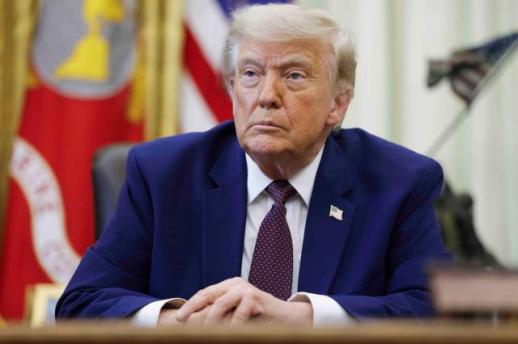 U.S. Court Rules Trump's $100,000 H-1B Visa Fee Illegal, Easing Burden on Korean Firms A U.S. federal court has ruled that the Trump administration's increase of the application fee for the H-1B professional visa to $100,000 is illegal. This decision may alleviate the financial burden on South Korean companies operating in the United States. On June 8, U.S. District Judge Leo Sorokin of the Massachusetts federal court invalidated the $100,000 fee imposed by the Trump administration in a lawsuit filed by attorneys general from 20 Democratic-led states, including California. Judge Sorokin determined that the fee is not a fine that the administration can impose but rather a tax that requires congressional approval. He stated in his ruling, "The nature and application of the $100,000 payment reveal that, regardless of its name, it is a tax." The H-1B visa is issued to foreign workers in specialized fields such as science, technology, engineering, and mathematics (STEM). The annual cap is set at 65,000 for general applicants and an additional 20,000 for those with master's degrees or higher, totaling 85,000. The initial stay is for three years, with options for extension and permanent residency. President Trump announced in September of the previous year that a $100,000 fee would be imposed on new H-1B visa applications. Previously, employers typically paid fees ranging from $2,000 to $5,000, but the new measure significantly increased costs, leading to widespread backlash from the tech industry. The Trump administration has argued that companies have been using H-1B visas to bring in low-wage foreign workers, thereby displacing American jobs. In contrast, businesses contend that the H-1B visa is essential for filling labor shortages in specific sectors. Following the fee increase, applications for H-1B visas have reportedly declined sharply. According to data submitted to the court during the lawsuit, as of February 15, only 85 applications had been received by the U.S. Citizenship and Immigration Services (USCIS) with the $100,000 fee. The White House has indicated plans to appeal the ruling. White House spokesperson Taylor Rogers stated in a statement that President Trump has the legal authority to restrict foreign entry that does not align with U.S. interests and expressed confidence that the decision would be overturned on appeal. South Korean companies operating in the U.S. have also utilized H-1B visas to hire skilled workers. According to USCIS data, as of the current fiscal year, Samsung Electronics and Samsung Semiconductor have received 24 new approvals, SK Hynix and SK On have received 16, LG Electronics and LG Energy Solution have received 10, and Hyundai Motor Group affiliates have received 9. If the visa fee is ultimately ruled illegal, it is expected to reduce the financial burden on South Korean companies in the U.S. However, it remains unclear how many of these cases were subject to the $100,000 fee.* This article has been translated by AI. 2026-06-09 14:27:00
 -
 Naver Shares Plummet 10% After Initial Surge on Nvidia Partnership News Naver's stock, which surged on news of a partnership with Nvidia for artificial intelligence (AI) infrastructure, reversed course and fell sharply the following day. As of 2:04 PM on June 9, Naver shares were trading at 255,000 won, down 24,000 won (8.60%) from the previous trading day. The stock opened at 290,000 won and briefly climbed to 308,500 won before selling pressure caused a decline. On June 8, Naver announced plans to collaborate with Nvidia on a global AI factory, capturing investor interest. The two companies plan to gradually expand their AI infrastructure, starting with a 55-megawatt (MW) operation in 2027. The excitement surrounding the partnership was heightened by Jensen Huang's visit to South Korea, leading to a 9.02% increase in Naver's stock the previous day. However, the significant short-term rise prompted profit-taking, resulting in the stock's downturn. Naver and Nvidia aim to jointly undertake a massive AI factory project that could expand to a capacity of up to 1 gigawatt (GW), sharing both the potential rewards and risks. Analysts believe this collaboration will enhance Naver's competitiveness in the AI sector. DS Investment & Securities stated, "Naver has announced plans to build a global AI factory (data center) that can expand to a maximum of 1 GW in partnership with Nvidia. This is expected to establish Naver as a leader in Asia's AI capabilities," raising its target price to 450,000 won.* This article has been translated by AI. 2026-06-09 14:21:00
 -
 Jensen Huang Boosts Sales by 1024% Amid Retail Challenges As Jensen Huang, CEO of NVIDIA, concluded his five-day visit to South Korea, products associated with him, ranging from convenience store snacks to chicken and beverages, have gained significant attention online, benefiting related brands.On June 9, Seven-Eleven reported that sales of its private brand product, the "Seven Select Honey Banana HBM Chips," surged by 1024% from the same days the previous week, between June 6 and June 8.This spike in sales was largely attributed to a gathering known as the "pork belly meeting" held on June 5 at a restaurant near Hongdae Station in Seoul. During this event, Huang dined with Chey Tae-won, chairman of SK Group; Koo Kwang-mo, chairman of LG Group; and Lee Hae-jin, chairman of Naver. After the meal, Huang distributed boxes of the snacks to passersby, and images of him opening the snack bags and encouraging citizens to try them quickly spread on social media.The Honey Banana HBM Chips were launched in November 2022 as a collaboration between Seven-Eleven and SK Hynix, featuring a playful name derived from SK Hynix's high-bandwidth memory (HBM) chips. A Seven-Eleven representative stated, "This product is a limited edition, and we are currently selling remaining stock in stores. Once the inventory is depleted, sales will end, but we are considering additional production." The representative added that the company has requested stores with remaining stock to prominently display the product, taking into account the promotional effect of Huang's appearance.The beverage industry also benefited from Huang's influence. The table during the pork belly gathering featured products from Hite Jinro, including Terra and Chamisul, as well as OB Beer’s Cass, which were naturally promoted to consumers.Sales at the BBQ Hongdae location, which Huang visited afterward, also increased. According to BBQ, the restaurant's sales from June 5 to June 6 rose by 20% compared to the same period the previous week.BBQ received further exposure at the Jamsil Baseball Stadium, where Huang threw the first pitch on June 7. He was seen ordering BBQ's "Crunchy Boneless Chicken Crackers" during the event. NVIDIA ordered 113 boxes of this menu item to distribute to invited NVIDIA Korea employees and their families. BBQ staff were also present to assist with food preparation.BBQ plans to leverage this opportunity for marketing. The company is reportedly developing set menus and promotions related to Huang.Industry experts suggest that Huang's visit created a real-time marketing effect. Last year, after Huang visited Kkanbu Chicken, that brand became the top trending search on delivery apps, leading to increased orders. Similarly, it is likely that related brands will pursue follow-up marketing efforts this time. An industry insider noted, "The fact that Huang personally consumed or distributed these products has rapidly spread on social media, translating consumer interest into sales. Related companies are expected to utilize this exposure for promotions and product planning."* This article has been translated by AI. 2026-06-09 14:21:00
 -
 Daejeon Aims to Become South Korea's Silicon Valley for AI Innovation "Mayor, do you believe that Daejeon can give birth to a world-class AI company within the next decade?"Daejeon is a unique city in South Korea. Unlike Seoul, where political power is concentrated, or Ulsan, known for its massive manufacturing plants, Daejeon is home to KAIST, the Daedeok Research and Development Special Zone, and 27 government-funded research institutes with over 40,000 researchers. It is the heart of South Korea's science and technology. However, Daejeon has long grappled with a persistent question: Why has the country’s top research city failed to produce its leading tech companies?In the recent local elections, newly elected Mayor Heo Tae-jeong pledged to transform Daejeon into a leading AI city, nurture 1,000 young venture companies, and establish a large GPU data center, aiming to shift the city from a research hub to an industrial powerhouse. He emphasized the need to connect research with business rather than ending it at academic papers.Daejeon now stands at a crossroads. Will it remain a city known for its research achievements, or will it leap forward to become Asia's Silicon Valley in the AI era?Why has Daejeon failed to produce global companies despite its abundant research?Daejeon symbolizes the advancement of South Korea's science and technology. For decades, national research and development budgets have been concentrated here, giving birth to numerous foundational technologies. Researchers have published world-class papers, and government-funded research institutes have supported the nation’s technological competitiveness. As a result, Daejeon has earned the title of the science capital and has become a symbol of South Korea's innovation capabilities.However, it must be said that research achievements have not necessarily translated into industrial success. While there has been a wealth of research, relatively few companies have disrupted the global market. There are many patents, but their conversion into jobs has been limited, and while technology exists, platform companies that dominate the market are rare. Technologies born in research labs often stall before reaching the market, and ideas from universities frequently fail to lead to startups.Mayor Heo emphasized this point during his campaign. He diagnosed that the research capabilities of the Daedeok Special Zone have not translated into citizens' income and jobs, and he aims to create a virtuous cycle connecting research to industry, jobs, and citizen income. His initiatives to nurture 1,000 young venture companies, expand technology commercialization, and establish a citizen growth fund stem from this awareness.Ultimately, Daejeon's future does not hinge on how much more research funding it can secure but on how many research outcomes can be connected to businesses. The era has come where the number of unicorn companies, not the number of papers, matters. The title of science capital alone is insufficient. The city must evolve into one where research becomes industry, and industry fosters further innovation.Competitiveness in the AI era relies on entrepreneurship, not just research.Many people think of Stanford University when discussing Silicon Valley's success. However, it was not the university itself that made Silicon Valley the capital of global innovation. It was the entrepreneurs who turned ideas from the university into companies and grew those companies into industries. Google, NVIDIA, and Apple all started as small startups.In the AI era, this principle is becoming even more pronounced. In the past, creating a company required massive factories and capital, but now, outstanding technology, computing resources, and entrepreneurial spirit are enough to challenge the global market. Generative AI is lowering barriers to capital and talent, shifting the center of innovation from manufacturing to knowledge and entrepreneurship.Daejeon is one of the cities most favorable for this change. It is home to KAIST, the Korea Electronics and Telecommunications Research Institute, and the Agency for Defense Development. While other regions compete to attract talent, Daejeon already possesses top-tier researchers. The challenge lies in connectivity. The extent to which research institutes, universities, entrepreneurs, investors, technology, and markets are closely linked is crucial.Mayor Heo's promises to establish a large GPU data center, create AI testing infrastructure, and set up a market-oriented AI strategy organization are rooted in this understanding. He aims to secure computing resources and data, which are key assets in the AI era, and create an environment where researchers can venture into entrepreneurship. Additionally, he proposed a 1 trillion won citizen growth fund to ensure that the benefits of technological innovation translate into citizens' assets.For Daejeon to truly become an AI capital, it must evolve from a research city to an entrepreneurial city. Researchers need to become entrepreneurs, universities must become incubators for innovative companies, and technology must connect to the market. It is essential to remember that the essence of Silicon Valley is not technology but entrepreneurship.Daejeon's competition is not with Sejong but with Silicon Valley.Historically, Daejeon has often been discussed within the framework of being the central city of the Chungcheong region. Strategies for the future have typically involved cooperation with Sejong and connections with South Chungcheong Province. However, competition in the AI era transcends such levels. Cities are no longer competing with others within the same country but with global innovation cities.In the United States, there is Silicon Valley and Boston. In China, there is Shenzhen, and in the UK, there is Cambridge. The commonality among these cities is that their research capabilities are linked to industry, creating a virtuous cycle where industry fosters further innovation. Universities, research institutes, venture capital, and entrepreneurs form a cohesive ecosystem.Daejeon also possesses sufficient potential for such a structure. Its assets, including KAIST, the Daedeok Special Zone, and government-funded research institutes, are comparable to those of any city in the world. What is lacking is ambition. Why has Daejeon not produced companies like NVIDIA? Why must world-class AI platform companies only emerge from the metropolitan area? Why are there abundant research outcomes but few companies that shake the global market?The success or failure of Mayor Heo's four-year term will ultimately be determined by the answers to these questions. More important than how much research funding has increased is how many AI companies have been born. More significant than the number of additional papers published is how many young people have stayed in Daejeon to start their own businesses. If research outcomes can translate into citizens' income, Daejeon can become an industrial capital beyond just a science capital.South Korea already has the science capital of Daejeon.What is now needed is an AI Silicon Valley in Daejeon. 2026-06-09 14:18:00
 -
 PSK Shares Surge on Semiconductor Investment Expansion Hopes PSK, a semiconductor equipment manufacturer, is experiencing a strong surge in its stock price due to growing expectations for increased investment in the semiconductor sector. According to the Korea Exchange, as of 2:06 PM on June 9, PSK shares rose by 30,100 won (27.07%) to 141,300 won. The company has been on a steep upward trajectory, reflecting optimism about improvements in the semiconductor equipment market. Following a 26.27% jump on June 4, the stock rose another 10.58% on June 5, bringing its cumulative increase over the past four trading days to over 55%. Brokerages are also expressing positive forecasts. Hana Securities maintained a 'Buy' rating on PSK on June 5, citing expected benefits from increased investments by domestic and international memory companies. The firm raised its target price from 128,000 won to 160,000 won. Kim Rok-ho, an analyst at Hana Securities, noted that major clients such as Samsung Electronics, Micron, and Intel are actively pursuing new investments and process transitions, while investments from clients in China are exceeding expectations. Hana Securities projects that PSK will report second-quarter revenues and operating profits of 162.2 billion won and 50.2 billion won, respectively, marking increases of 50% and 144% compared to the same period last year. For the full year, the firm anticipates revenues and operating profits of 660.9 billion won and 183.6 billion won, representing growth of 45% and 107% year-on-year. Kim added, "By 2027, new fab operations from three domestic and international memory companies, along with new factory investments from Samsung Electronics and Intel, are expected to kickstart a semiconductor equipment investment cycle, making it possible to exceed current performance estimates." * This article has been translated by AI. 2026-06-09 14:15:00
 -
 Trust in Election Commission Eroded by Voting Issues in Local Elections A week after the June 3 local elections, the fallout is intensifying. What initially appeared to be a ballot shortage issue in certain areas of Seoul has now expanded to 140 polling stations nationwide. Additionally, it has come to light that nearly 1,300 names were omitted from the voter registration list at a polling station in Cheongju, North Chungcheong Province. Allegations and controversies continue to swirl even after the election has concluded. Elections are the cornerstone of democracy. Political interpretations of election results may vary, and the perspectives of winners and losers can differ. However, it is unacceptable for voters to face delays due to a shortage of ballots or to be unable to exercise their voting rights because their names are missing from the voter registration list. This is not merely a political issue; it is a fundamental matter of democracy. The current situation cannot simply be dismissed as a minor administrative error. Initially, the problem was reported at 14 polling stations in Seoul. This number later grew to 67 and has now reached 140. Each announcement from the election commission has revealed a larger scale of the issue. For the public, it is increasingly difficult to discern what is true. Instead of clarifying the controversy, the election management body seems to be exacerbating doubts. The ballot shortage is not a natural disaster nor an unpredictable event. The number of voters and expected turnout can be adequately assessed in advance. Furthermore, the explanation that the commission underestimated the number of ballots needed, despite high early voting turnout, lacks credibility. Ensuring an adequate supply of ballots should be the top priority for the agency responsible for overseeing elections. If they cannot manage even this basic requirement, they cannot escape criticism for failing in their duties. The omission of names from the voter registration list in Cheongju is even more serious. In cases of ballot shortages, voting can still proceed with additional supplies, albeit with delays. However, if names are missing from the voter registration list, voters cannot verify their eligibility. The voter registration list is the most fundamental administrative document for elections. The large-scale omission of names inevitably fosters distrust in the entire election commission system. The issue lies not just in the incidents themselves but in the response that follows. The public does not expect perfection from organizations; mistakes can happen. However, when errors occur, it is essential to clearly identify the causes, assign responsibility, and implement measures to prevent recurrence. This is the basic expectation of public institutions. Yet, the election commission continues to assert that the situation does not warrant a re-election. While the determination of whether a re-election is necessary is a legal matter governed by laws and precedents, restoring public trust should take precedence. The commission's priority should not be to engage in political disputes over the possibility of a re-election, but rather to transparently disclose what issues occurred, why they happened, and who is accountable. This situation also prompts a reevaluation of the structural issues within the election commission. Various controversies arise during elections, yet those responsible seem to remain invisible. It is necessary to critically assess whether the current system of appointing non-full-time and part-time commissioners is appropriate and whether the structure centered around full-time commissioners effectively implements accountable governance. Democracy relies on trust in the electoral process. The most crucial aspect of an election is not the victory or defeat of a particular candidate but whether the public can trust the election results. If there are shortages of ballots and omissions from the voter registration list, and no one is held accountable, what can the public trust? The election commission must step out from behind legal provisions and face its fundamental responsibility of restoring trust. A crisis in democracy begins not with the election results but at the moment the public loses faith in the electoral process. 2026-06-09 14:15:00
 -
 South Korea's Per Capita GNI Falls Behind Japan and Taiwan Again, But $40,000 Goal Is Closer Last year, South Korea's per capita Gross National Income (GNI) stood at $36,963, remaining in the $36,000 range for the third consecutive year. Although the country fell behind Japan and Taiwan again, a significant increase in national income during the first quarter of this year has raised the possibility of reaching the $40,000 milestone sooner than previously expected. According to the Bank of Korea's report released on June 9, the per capita GNI for last year increased by 0.3% compared to the previous year, amounting to $36,963. In Korean won, this translates to 52.57 million won, reflecting a 4.6% increase. While this figure is slightly higher than the per capita GNI of $36,855 reported in March for the fourth quarter of 2025, the growth rate remained unchanged at 0.3%. Per capita GNI is calculated by dividing the total income earned by the population, both domestically and internationally, by the number of people. It serves as a key economic indicator of national purchasing power and living standards. South Korea's per capita GNI has remained above the $30,000 mark for 12 years. After first surpassing this threshold in 2014 with $30,798, it peaked at $37,898 in 2021 before declining to the $35,000 range due to the depreciation of the won, and has since stabilized in the $36,000 range since 2023. In 2023 and 2024, South Korea outperformed both Japan and Taiwan. By 2024, it ranked sixth among countries with populations over 50 million, following the United States, Germany, the United Kingdom, France, and Italy. However, by 2025, it was projected to be surpassed by Japan and Taiwan, with Taiwan's GNI estimated at $40,626 and Japan's at $38,000 last year. Nevertheless, the strong growth in GNI during the first quarter of this year has heightened expectations for surpassing the $40,000 mark. The real GNI growth rate for the first quarter was 9.2%, marking the highest level on record. In March, the Bank of Korea had projected that the $40,000 target would be reached by 2028. Kim Hwa-yong, head of the Bank of Korea's National Income Division, stated, "If the current nominal growth trend continues, per capita GNI is expected to approach $40,000 this year. It is clear that the possibility of reaching this goal sooner than 2028 has increased, and it will ultimately depend on future corporate performance and the direction of the won-dollar exchange rate."* This article has been translated by AI. 2026-06-09 14:12:00