

Journalist

Kim Dong-young and Candice Kim
-
 SOOP Unveils AI Manager to Replace Streamers with Persona-Based Technology SOOP has introduced a persona-based artificial intelligence (AI) manager capable of continuing broadcasts in place of streamers. On June 9, SOOP announced the beta version of its AI manager service, 'SARSA 2.0,' with a full launch scheduled for June 26. SARSA 2.0 features new capabilities that allow the AI to engage directly with users during broadcasts, in addition to existing functions for summarizing AI broadcasts and managing chats. Notably, the AI can maintain the flow of a broadcast even if the streamer temporarily steps away. This AI manager is tailored to reflect the unique characteristics of individual streamers. It learns from the streamer's video-on-demand (VOD) content and broadcast data to replicate their speaking style and atmosphere, enabling real-time interaction based on user chats and the broadcast context. Furthermore, it adapts to the themes and content preferences typically addressed by the streamer. Streamer Murdock demonstrated SARSA 2.0 during a broadcast on June 6. While Murdock was away, a virtual avatar named 'Murdock SARSA' engaged with viewers using Murdock's voice and mannerisms. SOOP plans to initially implement SARSA 2.0 with a select group of streamers and will expand the service based on usage patterns and user feedback. The company also aims to continuously enhance the AI manager's features and broaden its application across various broadcasting environments by incorporating input from both streamers and users. 2026-06-09 14:12:00
 -
 SeeDevice Initiates Defamation Lawsuit Against KBS and KBS America SeeDevice Inc., a California-based venture specializing in quantum image sensors, announced on June 9 that its defamation lawsuit against KBS and its U.S. subsidiary, KBS America, has entered the court proceedings. In a press release, SeeDevice stated, "This case is being heard in the U.S. District Court for the Central District of California, stemming from a false report in August 2024 by KBS and KBS America, which claimed that SeeDevice's technology was fraudulent and that government funding was being reclaimed. We have suffered significant business losses, including the cancellation of deals worth hundreds of millions of dollars, due to this report." * This article has been translated by AI. 2026-06-09 14:09:00
 -
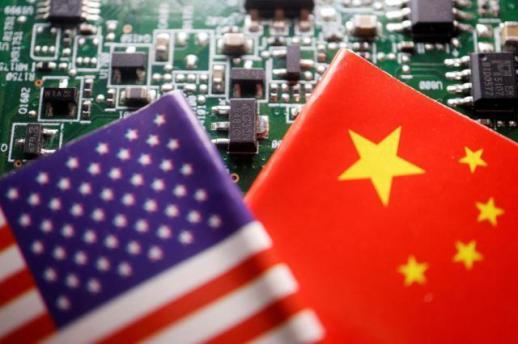 U.S. Expands Sanctions List Against Chinese Tech Firms, Including Alibaba and Baidu The United States has broadened its scope of technology restrictions against China. The U.S. government has now included companies in e-commerce, search, electric vehicles, biotechnology, robotics, and telecommunications equipment as security risks. On June 8, the Wall Street Journal reported that the U.S. Department of Defense updated its list of Chinese companies deemed to support the military, adding about 24 new firms. Among those included are Alibaba, Baidu, BYD, Wuxi AppTec, Unitree, and TP-Link Technologies. This list is revised annually by the U.S. Defense Department. The U.S. government believes that Chinese private tech companies could be utilized for the development of military technology and enhancement of military capabilities. Companies on the list are prohibited from engaging in transactions with the U.S. military. Alibaba is known for e-commerce and cloud services, Baidu for search and AI, BYD for electric vehicles, Wuxi AppTec for contract development and manufacturing of biopharmaceuticals, and Unitree for humanoid robotics. China has expressed strong opposition to the sanctions. A spokesperson for the Chinese Embassy in the U.S. stated, "The U.S. Department of Defense is excessively expanding the concept of national security and targeting Chinese companies with a discriminatory list." Alibaba, Baidu, and Wuxi AppTec have also asserted that they are not related to the Chinese military and are considering responses to seek removal from the list. This announcement comes amid a trend of easing trade tensions between the U.S. and China. The Wall Street Journal noted that the Trump administration has adjusted some sanctions and high tariffs on Chinese companies, as well as investigations into Chinese-linked hackers, since last fall. An initial list released earlier this year was also withdrawn ahead of a summit between President Donald Trump and Chinese President Xi Jinping. However, the assessment linking Chinese private tech firms to military risks remains intact. Chinese memory semiconductor companies Yangtze Memory Technologies Co. (YMTC) and Changxin Memory Technologies (CXMT), which were omitted from an earlier draft in February, have now been included.* This article has been translated by AI. 2026-06-09 14:06:00
 -
 Samsung to Fully Integrate AI Across All Operations Samsung has taken its first step toward becoming an 'AI-native company' by integrating artificial intelligence (AI) into all business processes, from research and development (R&D) to production, marketing, and support.On June 9, Samsung announced the official introduction of generative AI across all its subsidiaries, launching a comprehensive transformation called 'AI Transformation (AX)' aimed at reshaping the company's work culture and operational methods around AI. This strategy seeks to enhance operational efficiency and position AI as a core tool for management innovation to secure future growth drivers.The impetus for this change stems from the crisis awareness of Samsung Electronics Chairman Lee Jae-Yong. In his New Year’s address, he emphasized the need to fundamentally change the way of working and the organizational DNA, stating, "AI must be integrated into every value chain, from R&D to production, marketing, and support functions."This month, Samsung plans to officially adopt external generative AI services, including Google Gemini, OpenAI's ChatGPT, and Anthropic's Claude, across all subsidiaries. Notably, the company aims to use AI not just as a work assistance tool but as a means to fundamentally transform its management structure. Each subsidiary will develop specific utilization policies tailored to their business characteristics, and the company will continuously enhance related systems to allow employees to freely access optimal AI services.An 'AX Bootcamp' will also be conducted for the leadership of all subsidiaries. This training, set to take place later this month at Samsung's Human Resources Development Center, will involve approximately 50 executives who will engage in hands-on learning about generative AI applications and work innovation strategies.Under the belief that "the CEO's AI literacy will determine the success of AX," the company is committed to ensuring that executives directly experience AI. Alongside the training for executives, a program for over 2,300 executives will be rolled out sequentially by August, with the goal of completing AI training for all employees by the end of the year.One executive who recently completed the training remarked, "I was honestly surprised at how much work can be accomplished so easily when learning AI systematically," adding that he felt a sense of urgency and crisis about the need to fundamentally change work methods.A dedicated AI organization will also be established. This organization will be responsible for developing AI strategies, managing data and models, and nurturing AI talent within each subsidiary. Through this initiative, Samsung aims to systematically advance AI innovation projects at the subsidiary level and maximize synergies across the group.Building a security framework to address the expanded use of external generative AI is essential. Samsung plans to allow the use of external AI services while implementing sophisticated security systems to protect data and prevent information leaks, ensuring both usability and safety.A Samsung representative stated, "AX is the starting point for innovation to leap into an AI-native company," adding that the CEO will lead the transformation of key business processes to seize opportunities in the AI era and drive industrial change. 2026-06-09 14:03:00
 -
 KG Group to Return Half of Profits to Shareholders Over Next Five Years KG Group announced that it will return half of its net profits to shareholders over the next five years, focusing on a robust shareholder return policy while presenting long-term growth strategies. The company aims to prioritize the normalization of its undervalued corporate worth as a key management task.On June 9, KG Group held a press conference in Yeouido to unveil its long-term management plan.The event featured CEOs from six major listed subsidiaries, including KG Chemical, KG Eco Solutions, KG Mobility (KGM), KG Steel, KG Inicis, and KG Financial, who each shared their future development strategies.The subsidiaries plan to increase their total shareholder return rate to 50% over the next five years. This decision stems from the belief that the market value does not adequately reflect the companies' solid performance and financial health. Chairman Kwak Jae-sun stated, "We have decided to return 50% of our net profits to shareholders, and we promise that all six listed companies and K Car will maintain this commitment for five years."To achieve this, KGM will focus on two tracks: eco-friendly vehicles and the KD (knock-down) assembly business, aiming to sell 200,000 units and generate over 10 trillion won in revenue by 2030. The company plans to sequentially launch seven types of eco-friendly SUVs, including pure electric vehicles (EVs), hybrids (HEVs), and plug-in hybrids (PHEVs). Additionally, KGM will target the Middle East and Southeast Asia as key markets for its KD business.KGM CEO Hwang Gi-young announced, "We will start operations at our KD factory in Vietnam this September," adding that plans for Bangladesh, Myanmar, and Cambodia are still under consideration. Chairman Kwak also mentioned, "We recently launched the Musso in Chile, and our executive is currently in Brazil and Colombia, working with various partners to begin certification processes for our KD business in Latin America."Furthermore, KG Group is pursuing synergy strategies with K Car, the largest direct-used car platform company in South Korea, which is set to join the group. In April, KG Steel agreed to acquire a 400 billion won stake in K Car from Han & Co Auto Service. K Car will be fully integrated into KG Group as of June 30.This integration will allow KGM to enhance its certified used car business by leveraging K Car's capabilities, expanding its offerings to a wider range of vehicle brands. Additionally, K Car, which absorbed Joy Rent-a-Car in 2020, is expected to incorporate KGM vehicles into its corporate leasing and rental sectors. Chairman Kwak emphasized, "KGM must continue to invest, and in that sense, K Car is a financially stable company, so investing in it will create synergies."* This article has been translated by AI. 2026-06-09 14:03:00
 -
 Korean markets quickly recoup Black Monday losses, key indexes up over 7% SEOUL, June 09 (AJP) - Korea's stock bourses roared back more than 7 percent Tuesday afternoon to retrace most of the circuit-breaker crash that had gutted it a day earlier, as a chip rally quickly resumed after the upgraded first-quarter GDP data confirmed chip-related activities more than fended the economy from external shocks. The KOSPI surged 7.4 percent to climb back above 8,000. while smaller KOSDAQ also jumped 7 percent to 977.57 as of 2:00 p.m. SK hynix led the charge, rising to 2,175,000 won and again outrunning Samsung Electronics, which climbed to 320,0000 won, the same split that has defined the two through the week's turmoil. The KOSDAQ kept pace at 976.4, up more than 7 percent, leaving Seoul's main board on course to recover almost everything it had lost. SK hynix clawed back most of its Monday fall while Samsung, which had been hit harder in the crash, recovered far less, a sign investors were sorting between the names rather than buying the sector wholesale. SK hynix carries a tailwind Samsung lacks, the expectation that its memory partnerships could widen beyond high-bandwidth memory, the stacked chips that feed AI servers, into next-generation products and the data centers being built to house them. Samsung's case rests on the broader memory market, an argument for stronger earnings but without the company-specific catalyst driving its rival. Yet the rally carried a warning beneath it. Foreign investors were heavy net sellers even as the index surged, while domestic institutions did the buying. For SK hynix, the selling marked a 21st straight session of foreign outflows, a streak running alongside growing concern that the memory cycle behind the chipmakers may be near its peak. A recovery this steep, built on domestic money while overseas funds head the other way, rests on a narrower base than the headline number suggests. The bounce reached across the region. In Tokyo, the Nikkei 225 rose 2.1 percent to 65,396.0, while in China the Shanghai Composite managed a more muted 0.5 percent to 3,979.7. The split tracked exposure to the global chip trade: Korea and Japan, home to the region's largest semiconductor names, rebounded hardest, while China, less tied to the AI memory cycle, moved least. The rebound followed an overnight steadying in global chip shares after the previous week's collapse, which lifted the memory names that anchor both the Korean and Japanese markets. A broader easing in risk sentiment added to the steadier mood, helping the regional indices claw back ground lost in Monday's rout. The won strengthened, slipping toward 1,517 against the U.S. dollar by early afternoon, extending a move that has run counter to the equity panic all week. A firming won would normally signal returning foreign confidence, which makes its divergence from the foreign selling in equities one of the day's harder puzzles. 2026-06-09 14:02:09
 -
 NICE Credit Rating Agency Receives Top Marks in Evaluation The Financial Investment Association announced on June 9 that NICE Credit Rating Agency received the highest evaluation in its "2026 Credit Rating Agency Capability Assessment" conducted among three domestic credit rating agencies: Korea Corporate Rating, Korea Credit Rating, and NICE Credit Rating. The assessment was divided into two categories: "Accuracy of Credit Ratings," which evaluates the accuracy of credit ratings, and "Stability of Credit Ratings and Usefulness of Predictive Indicators," which assesses the stability of ratings and the usefulness of predictive indicators such as rating outlooks and monitoring. The evaluation combined quantitative assessments (50%) using metrics like default rates and rating maintenance rates with qualitative assessments (50%) based on surveys of market experts. In the accuracy category, NICE Credit Rating received the highest scores in both quantitative and qualitative evaluations. According to the Financial Investment Association, there were no defaults among investment-grade companies last year, and NICE Credit Rating recorded the lowest average cumulative default rate and annual default rate. In the qualitative assessment, NICE Credit Rating scored 3.89 out of 5, surpassing Korea Corporate Rating (3.80) and Korea Credit Rating (3.76). NICE Credit Rating also ranked first in the overall evaluation for the stability of credit ratings and the usefulness of predictive indicators. In the stability category, NICE Credit Rating received the highest ratings in both quantitative and qualitative evaluations. In the quantitative assessment of usefulness, Korea Corporate Rating and Korea Credit Rating achieved a 100% alignment rate between their rating outlooks and actual credit rating changes over the past three and five years. However, in the overall results, including qualitative assessments, NICE Credit Rating received the highest evaluation. The overall trust in credit rating capabilities among market participants, including credit analysts and bond managers, remained steady at an average score of 3.82 out of 5, the same as last year. However, satisfaction regarding stability slightly decreased compared to the previous year due to increased volatility in rating assessments. In a separate survey regarding investor concerns, NICE Credit Rating was highly rated for the appropriateness and diversity of the information provided, market communication efforts, and overall market contribution. Conversely, Korea Corporate Rating received the highest score for the usefulness of its credit rating reports. Kang Kyung-hoon, the evaluation committee chair, stated, "In the current situation of heightened external uncertainties due to global interest rate fluctuations and conflicts in the Middle East, it is crucial to protect investors through accurate information. I hope credit rating agencies contribute to the stability of the capital market by providing transparent and timely evaluations."* This article has been translated by AI. 2026-06-09 14:00:00
 -
 Singer Kim Yoon-seol from 'Singer Gain 4' Dies at 28 Singer Kim Yoon-seol, known for her participation in the JTBC audition program 'Singer Gain 4', has passed away at the age of 28. According to the music industry, Kim Yoon-seol died on June 7. Her funeral was held on the morning of June 9 at a funeral home, with her final resting place at Seongnam Youngsaengwon. Kim Jae-guk, the vocalist of the band Tapafee, expressed his condolences on social media the following day, stating, "Kim Yoon-seol, who appeared as singer number 6 on 'Singer Gain 4', has gone to heaven. I offer my deepest sympathies to the bereaved family." The cause of Kim Yoon-seol's death has not been disclosed. Born in 1998, Kim Yoon-seol gained recognition after winning the Mnet children's audition 'Voice Kids' in 2013. She made her debut later that year with Yang Yo-seob in the song 'Man and Woman 2013'. She continued to make a name for herself through appearances on shows such as 'The Voice Korea 2020' and 'Singer Gain 4'.* This article has been translated by AI. 2026-06-09 14:00:00
 -
 Aekyung Industry Donates $6 Million Worth of Oral Care Products for Oral Health Day Aekyung Industry launched a large-scale charitable initiative on June 9 in honor of Oral Health Day, aimed at supporting vulnerable communities. The company donated approximately $6 million worth of oral health products from its flagship oral care brand, '2080,' during a ceremony held at the Love Sharing Hall in Jung-gu, Seoul. This donation was organized to honor veterans and individuals eligible for benefits during the month of June, which is dedicated to national defense and remembrance, while also supporting the healthy growth and independence of children in group homes and local child centers. The initiative reflects the company's philosophy of 'love and respect,' aiming to foster emotional connections across generations. The donated items included 2,080 tubes of 2080 toothpaste and 2,080 toothbrushes, as well as children's oral health products. These items will be distributed to veterans and children in need through the Love Sharing Foundation, the Korea Disabled Veterans Association's Gyeonggi branch, and the Crumbs of Love Sharing Association. Aekyung Industry has consistently engaged in oral health product support activities on Oral Health Day, leading efforts to enhance community oral health and promote a culture of giving. Last year, the company held a similar donation ceremony in June at the Gumi Fire Station in North Gyeongsang Province, collaborating with the Babo's Sharing Foundation and local volunteer fire brigades to donate $3.4 million worth of oral hygiene products, including portable toothpaste and toothbrush sets and bi-color mouth sprays. An Aekyung Industry representative stated, "We will continue to engage in community-centered social contribution activities to maintain warm connections with those in need."* This article has been translated by AI. 2026-06-09 13:57:00
 -
 Kwangdong Pharmaceutical Introduces 'Ethics Day' to Strengthen Compliance Management Kwangdong Pharmaceutical has established an 'Ethics Day' and elevated its Compliance Committee to strengthen its compliance management system. On June 2, Kwangdong announced the appointment of compliance officers and held a ceremony to award the Compliance Committee's charter. The company also conducted training for internal auditors and compliance culture establishment as part of the committee's initiatives. The previous anti-corruption internal audit organization, known as the Anti-Corruption Subcommittee, has been upgraded to the Compliance Committee. The committee plans to enhance internal control functions through compliance monitoring, ISO internal audits, and risk assessment management training. Kwangdong has consistently strengthened its compliance management system by upgrading its Compliance Division to a departmental organization and placing it directly under the CEO. In 2023, the company obtained integrated certification for its Anti-Corruption Management System (ISO 37001) and Compliance Management System (ISO 37301). ISO 37001 and ISO 37301 are standards established by the International Organization for Standardization (ISO) that are awarded to organizations with systems capable of identifying and controlling corruption and compliance risks in advance. A Kwangdong representative stated, "We will emphasize the importance of responsible work performance and spread a culture of compliance throughout the company." * This article has been translated by AI. 2026-06-09 13:57:00