

Journalist

Kim Dong-young and Candice Kim
-
 Mirae Asset Securities Gains Ground in AI IPO Market Previously Dominated by Samsung Securities Mirae Asset Securities is increasingly asserting its presence in the advanced technology IPO market, which has traditionally been dominated by Samsung Securities. Several promising AI companies that had previously partnered with Samsung Securities are now switching to Mirae Asset Securities or opting for joint underwriting arrangements, indicating a shift in the market landscape. According to investment banking sources on June 9, there has been a notable trend among domestic AI tech companies to change their lead underwriter from Samsung Securities to Mirae Asset Securities. Recently, Superb AI, a company specializing in vision AI, appointed Mirae Asset Securities as its sole underwriter as it began the listing process on the KOSDAQ. Superb AI had initially selected Samsung Securities as its lead underwriter in the first half of 2024 but decided to switch to Mirae Asset Securities. The company is currently preparing for a preliminary listing review, aiming to submit its application within the year using the technology exception listing method. Another example is MakinaRax, an industrial AI solutions provider that successfully listed on the stock market after changing its underwriter to Mirae Asset Securities. Initially, MakinaRax had chosen Samsung Securities but faced setbacks during the preliminary review. After switching to Mirae Asset Securities, the firm successfully navigated the listing process, with Mirae Asset highlighting the company's growth potential in its equity story. Mirae Asset Securities has also facilitated the listing of Nota, an AI technology company, on the stock market. Following Upstage and Furiosa AI, Superb AI is now among the major AI firms whose IPOs are being managed predominantly by Mirae Asset, solidifying its dominance in the AI IPO market. This success is attributed to Mirae Asset's extensive capital investment leveraging its affiliate infrastructure. For instance, while Mirae Asset Securities was not included in the final underwriting group for Rebellion, a leading AI semiconductor unicorn, Mirae Asset Ventures has made multiple investments, positioning itself as a major institutional shareholder. A representative from Mirae Asset Securities stated, "Our differentiated one-stop financial capabilities and platform, from early-stage equity investments to issuance loans, pre-IPO, and final IPO underwriting, are our competitive advantages." In contrast, Samsung Securities maintains a strong foothold in the biotechnology sector, successfully completing significant technology exception deals, including the preliminary listing review for Ingenia, a major biotech firm, this year, following successful listings for Algenomics and Theraview last year. Its ability to identify and list promising companies continues to be highly regarded in the industry. However, after failing a technology evaluation, Adel, a developer of Alzheimer's treatments that had been exclusively underwritten by Samsung Securities, has now added Mirae Asset Securities as a joint underwriter for its re-evaluation efforts. This marks a shift as Mirae Asset Securities enters into deals that were previously led by Samsung Securities. Samsung Securities commented on the changes in underwriters for some AI companies, stating, "There are cases where issuers change underwriters based on their circumstances during the deal process. We have successfully managed numerous AI-related IPOs last year and this year and still have a robust pipeline." The firm expressed confidence in maintaining its performance, noting, "Currently, we are ranked among the top in the league table for deals in the first half of the year. Last year, we ranked second in KOSDAQ underwriting and fourth overall, and we are committed to improving our rankings further based on significant achievements expected in the second half of this year." A capital market analyst remarked, "While Samsung Securities has established a solid defense in the biotech sector with impressive results, the recent trend in the AI sector, highlighted by the MakinaRax case, indicates a shift in leadership toward Mirae Asset Securities. The competition for underwriting in the technology exception IPO market is expected to intensify between the two firms in the second half of the year."* This article has been translated by AI. 2026-06-09 16:42:00
 -
 Pearl Abyss Introduces First Dividend and Plans 100 Billion Won Share Buyback Pearl Abyss is set to implement its first dividend policy and initiate a share buyback program worth 100 billion won as part of its commitment to returning value to shareholders. On June 9, Pearl Abyss announced its plans to enhance corporate value, which include the introduction of dividends and the retirement and buyback of treasury shares. This follows the shareholder return policy outlined during the regular shareholders' meeting in March. The company plans to distribute either 10 billion won annually or 10% of its net profit, whichever is greater, as cash dividends. This marks Pearl Abyss's inaugural dividend initiative. Of the 2,803,945 treasury shares it holds, approximately half, or 1,403,945 shares, will be retired. The value of the share retirement is estimated at about 54 billion won based on the closing price as of June 8, and approximately 17.3 billion won based on book value. The retirement is scheduled for June 12. Additionally, the company plans to buy back an additional 100 billion won worth of treasury shares in the second half of 2026. This dual approach of share retirement and buyback aims to enhance shareholder value and improve corporate worth. During the March shareholders' meeting, Pearl Abyss stated, "With the successful launch of Crimson Desert, we have secured the capacity for shareholder returns and will announce our dividend plans within this year."* This article has been translated by AI. 2026-06-09 16:36:00
 -
 Choi Soo-young and Jung Kyung-ho End 14-Year Relationship Actors Jung Kyung-ho and Choi Soo-young have ended their public relationship of 14 years, drawing attention to the reasons behind their breakup. A representative from Choi Soo-young's agency, Saram Entertainment, confirmed to Sports Seoul on June 9, "It is true that Choi Soo-young recently broke up with Jung Kyung-ho. They have decided to remain good colleagues." Similarly, a source from Jung Kyung-ho's side mentioned to Sportivi News on the same day, "Jung Kyung-ho and Choi Soo-young have recently separated. They have grown distant and decided to end their relationship." The couple first met as seniors and juniors in the Theater and Film Department at Chung-Ang University and publicly acknowledged their relationship in 2012. Given their long-term relationship, the news of their breakup has come as a shock to many fans. Born in 1983, Jung Kyung-ho debuted as a KBS talent in 2003 and has received consistent acclaim for his roles in dramas such as "I'm Sorry, I Love You," "Prison Playbook," "Life on Mars," and "Crash Course in Romance." He is currently filming a new romantic comedy for ENA titled "Romance in the Moonlight." Choi Soo-young, born in 1990, debuted as a member of Girls' Generation in 2007 and has since expanded her career into acting. She has appeared in dramas like "38 Task Force," "The Man Who Sets the Table," "Run On," and "Nam Nam," and recently announced her participation in the new KBS2 weekend drama "I Went to School." Jung Kyung-ho and Choi Soo-young have been regarded as a prominent couple in the entertainment industry, often expressing their affection for each other publicly. The news of their transition from a romantic relationship to colleagues has left many fans feeling disappointed. 2026-06-09 16:36:00
 -
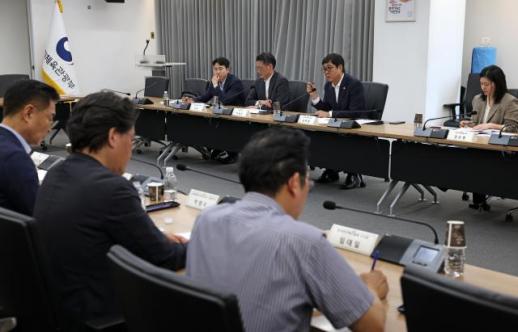 Theater Faces Crisis as Talented Artists Leave the Industry "There are no suitable works to perform. The economic challenges in the theater industry are driving talented writers away," said industry experts during the 3rd meeting of the Theater Subcommittee of the Cultural Arts Policy Advisory Committee, held on June 9 at the National Museum of Modern and Contemporary Art in Seoul. The subcommittee, which operates under the Ministry of Culture, Sports and Tourism, consists of creators, producers, actors, and association representatives who convey the voices of the field. Actor Lee Gi-young emphasized the need to break the cycle of relying on classic works due to the lack of new plays. "Finding new works is incredibly difficult," he stated, adding that even when performances occur, securing payment for writers is challenging, leading many talented individuals to leave the theater scene. He urged for the activation of playwriting competitions to allow selected works to be performed, criticizing the continued focus on classics that are often outdated and unengaging. There were also calls for the simultaneous promotion of production company competitions alongside playwriting contests. Committee member Kim Soo-ro suggested that publicly recruiting teams to produce selected works from competitions could open new avenues for production. Voices advocating for a redefined role for public theaters, such as the National Theater Company, were also heard. Park Jeong-mi, CEO of Park Company, argued that public theaters should avoid the same production methods as private companies, which often focus on foreign classics and star marketing. She stressed the importance of using public theater productions to inspire new ideas and discover talented staff and actors. Participants also highlighted the necessity of integrated policies that connect support for creation, production, theaters, and audiences, ensuring that new initiatives do not overlap with existing support programs. Concerns were raised about the outflow of talented individuals to countries like Japan and Singapore. Lee Gi-young noted that Japan has committed to funding 50% of film production costs, up to 15 billion won, warning that the trend of talent leaving the content industry for overseas opportunities is accelerating. He mentioned that current drama projects are collaborating with the Singapore government for support, which could lead to the loss of outstanding directors to foreign markets. The Ministry of Culture plans to foster excellent works that can be performed for extended periods to broaden the audience base for theater. Additionally, preparations are underway for the 2027 ASSITEJ World Congress, which will be held in South Korea for the first time in 25 years. This prestigious international event in the field of children's and youth theater was confirmed to be hosted by South Korea during the 2024 congress in Cuba. Furthermore, from July 24 to August 1, 2027, the International Performing Arts Festival will feature 35 domestic and international productions in Suwon, with the Ministry supporting the event in collaboration with the ASSITEJ Korean headquarters and Suwon City. Minister Choi Hwi-young acknowledged that the biggest burden for the theater industry is venue rental fees. He stated that efforts are being made to expand theater infrastructure and prioritize support for these fees, aiming to encourage more active use of the Arko stage by private entities. 2026-06-09 16:36:00
 -
 Insurance Companies Face Triple Challenges Amid Loan Regulations The South Korean government's tightening of household loan management is increasingly impacting the insurance sector. As the economy slows, insurance policy cancellations are rising while new contracts are declining. This situation is compounded by concerns over reduced interest income due to lower loan limits, placing insurance companies in a so-called "triple bind." According to the insurance industry on June 9, the total payout refunds from 22 life insurance companies reached 17.84 trillion won at the end of the first quarter, a 29.7% increase from 13.76 trillion won during the same period last year. Analysts attribute this rise to consumers seeking cash through refunds rather than maintaining coverage amid high inflation and economic downturn. New contracts are also on the decline. The total number of new individual insurance contracts at the end of the first quarter fell to 3,094,295, a decrease of 3.9% compared to the previous year. The total value of new contracts dropped from 51.9 trillion won to 46.21 trillion won, a decline of 11.0%. Life insurers reported an insurance profit of 1.07 trillion won in the first quarter, down 7.5% from 1.16 trillion won in the same period last year, largely due to losses from investment performance. Facing challenges in their core business, insurers are also experiencing restrictions in their lending operations. The government's stringent household loan management policies have extended beyond banks to include the second financial sector, affecting insurance companies as well. Major insurers have reduced the loan limits on products that previously allowed borrowing up to 90% of the payout refund to a 10 percentage point decrease since April. This change primarily affects whole life insurance, endowment insurance, and savings insurance. Insurance policy loans allow policyholders to borrow against their accumulated payout refunds without credit checks or income verification, making them a popular source of emergency funds. As of the end of the first quarter, the outstanding balance of insurance policy loans stood at 71.4 trillion won, accounting for 53.1% of total household loans from insurers. However, financial authorities have expressed concerns that insurance policy loans could be used as a means for "debt investment" in stocks or virtual assets, prompting calls for enhanced internal controls. While insurance policy loans do not constitute a large portion of overall insurer revenue, the combination of declining new contracts and increasing cancellations is worsening the operating environment for insurers. The contraction in lending operations further diminishes their ability to defend profitability. An industry insider stated, "The government's tightening of household loan management is extending beyond banks to the insurance sector, slowing growth in lending operations. With declining new contracts and increasing cancellations weakening core profitability, restrictions on lending could further increase the operational burden for some insurers."* This article has been translated by AI. 2026-06-09 16:36:00
 -
 Retail Investors Shift Strategies Amid Market Volatility As South Korea's stock market experiences significant fluctuations, individual investors have recently focused on buying shares of Samsung Electronics and SK Hynix, with some taking profits during the market rebound. According to the Korea Exchange, individual investors net purchased a total of 589.6 billion won ($440 million) in the stock and KOSDAQ markets over two days, on June 5 and June 8. In contrast, institutional investors sold a net 309.3 billion won, while foreign investors sold 300.7 billion won. The buying spree was concentrated on large-cap semiconductor stocks. On June 5, individual investors net bought 203.2 billion won in SK Hynix and 179.5 billion won in Samsung Electronics, followed by additional purchases of 145.1 billion won in Samsung Electronics and 41.3 billion won in SK Hynix on June 8. As a result, individuals net bought 324.6 billion won in Samsung Electronics and 244.5 billion won in SK Hynix over the two days, with a total of 569.1 billion won directed toward these semiconductor stocks, accounting for the majority of net purchases. However, the trading pattern shifted on June 9, when individuals net sold 112.8 billion won. In contrast, institutional investors returned to a buying position with a net purchase of 270.3 billion won, while foreign investors recorded a net sale of 167.5 billion won. The top net purchases by individuals also changed, with Hyundai Motor leading at 22.4 billion won, followed by LG Electronics (12.7 billion won), Samsung Electronics preferred shares (10.5 billion won), NAVER (9.6 billion won), and Hyundai Mobis (8.7 billion won). This indicates a shift in buying interest from semiconductor stocks to automotive, platform, and dividend stocks. Market analysts suggest that individual investors are adopting a strategy of "buying during market declines and selling during rallies." Indeed, individuals engaged in substantial net buying on June 5 and June 8, when the market was down, but switched to net selling during the rebound on June 9. Over the three trading days, individuals recorded a cumulative net purchase of 476.8 billion won, while institutions and foreign investors had net sales of 39.0 billion won and 468.2 billion won, respectively. This indicates that while institutions and foreign investors were net sellers, individuals actively sought to buy undervalued stocks. On June 9, the domestic stock market rebounded sharply after the previous day's steep decline. The market had plummeted due to rising U.S. Treasury yields, a drop in U.S. semiconductor stocks, and concerns over military conflicts in the Middle East, triggering a circuit breaker. However, a significant influx of buying on June 9 led to a rise in both the KOSPI and KOSDAQ indices. Lee Kyung-min, a researcher at Daishin Securities, explained, "The previous day's sharp decline in the domestic stock market was the result of a combination of rising U.S. Treasury yields, falling U.S. semiconductor stocks, and escalating military tensions in the Middle East. However, as buying interest in semiconductor stocks returned in the U.S. market and Middle East risks eased, investor sentiment quickly recovered."* This article has been translated by AI. 2026-06-09 16:33:00
 -
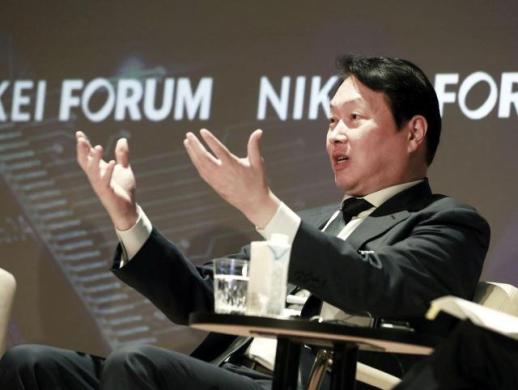 SK Group Chairman Choi Tae-won Advocates for Korea-Japan Economic Cooperation “Korea-Japan cooperation is not a one-time event. It is a path toward building a sustainable and actionable community based on deep trust.”Choi Tae-won, Chairman of SK Group and Director of the Choi Jong-hyun Academy, reiterated the necessity of economic cooperation between South Korea and Japan to survive in a rapidly changing global order. He made these remarks during the special session on Korea-Japan economic cooperation at the Nikkei Forum held at the Imperial Hotel in Tokyo on June 9, where he discussed strategies with political and business leaders from both countries.The event, hosted by the influential Japanese economic daily Nihon Keizai Shimbun (Nikkei) and organized by SK and the Choi Jong-hyun Academy, gathered over 300 attendees under the theme of “Multifaceted Economic Cooperation Supporting Strong Korea-Japan Relations.”The Nikkei Forum, which began in 1995 to explore coexistence and development in the Asian community under the theme “The Future of Asia,” introduced the special session for the first time this year to align with Choi's vision for Korea-Japan economic cooperation.Former Japanese Prime Minister Fumio Kishida and former National Assembly Speaker Kim Jin-pyo emphasized the importance of friendly cooperation between the two nations in their keynote speeches. Choi engaged in discussions with Masakazu Tokura, advisor at Sumitomo Chemical and former chairman of Keidanren (Japan Business Federation), and Masahiko Kato, president of Mizuho Bank, on the theme of “Korea-Japan Directions Amid Complex International Circumstances.”Choi highlighted that the Korea-Japan economic partnership could serve as a stepping stone for both nations to become “rule makers” in creating a new international order. He specifically identified energy, artificial intelligence (AI), and addressing low birth rates as concrete areas for collaboration between the two countries.Regarding energy, he proposed joint development of energy resources outside the Middle East, collaborative research on advanced materials and alternative batteries, and leading the formation of international standards in future energy sectors, including small modular reactors (SMRs).In the AI sector, he noted the need for Korea and Japan to secure economies of scale and negotiating power amid the technological hegemony of the U.S. and China. He suggested that data sharing, joint infrastructure development, and standardization of norms could enhance their independent competitiveness and reduce reliance on specific countries.Finally, Choi urged that spontaneous Korea-Japan cooperation occurring in various sectors should not be swayed by external factors such as regulatory and standard differences, short-term political situations, or uncertainties. He proposed the establishment of a “Big Tent” permanent platform where both governments could consolidate cooperation agendas across various sectors, including businesses, academia, and youth.Choi emphasized, “Let’s create a permanent platform where the governments of both countries can gather diverse cooperation agendas and proactively discuss the challenges of advancing Korea-Japan cooperation. We can then work on refining related systems to address the obstacles to collaboration.”Choi's repeated emphasis on Korea-Japan economic cooperation is rooted in the intensifying U.S.-China technological rivalry and the restructuring of global supply chains. As competition in strategic industries such as semiconductors, AI, and energy unfolds in a manner that promotes national block formation, he believes that Korea and Japan should enhance their negotiating power and market influence through collaboration rather than responding individually. 2026-06-09 16:33:00
 -
 Major Reconstruction Projects in Daechi-dong Estimated at $10 Billion The reconstruction market in Daechi-dong, including the iconic Eunma Apartment, is gaining momentum, with total estimated project costs reaching 10 trillion won (approximately $10 billion). Experts predict it will become the largest redevelopment battleground in the Gangnam area, following Mokdong and Yeouido. As of June 9, the reconstruction projects in Daechi-dong, located in Seoul's Gangnam district, are officially underway. Industry insiders expect intense competition for construction rights, particularly focusing on Eunma Apartment and the so-called "Priority Mi" complexes, which include Gaepo Woosung 1 and 2, Daechi Sun Kyung 1 and 2, and Hanbo Daechi Mido Mansion 1 and 2. Eunma Apartment is set to be redeveloped from its current 3,021 units to a maximum of 5,893 units in a 49-story building. The project passed the integrated review by the Seoul city government in February and is currently seeking project approval. A representative from the Eunma Apartment association stated, "We have submitted the project approval application and are awaiting approval from the Gangnam District Office. Considering the rising construction costs, we expect the project scale to exceed 5 trillion won." They added, "Once we receive project approval, we plan to expedite the management approval process and are considering starting relocations as early as next summer vacation." The representative noted that among the members, there is a prevailing opinion to push the project forward quickly rather than change the construction company. Discussions about the reconstruction of Eunma Apartment began in the late 1990s, and it has now entered a significant phase of development after nearly 30 years. The industry views the successful launch of the Eunma project as a symbolic turning point for the entire Daechi-dong redevelopment market. The Daechi Mido Apartment is also accelerating its plans. The Daechi Mido Reconstruction Promotion Committee recently concluded its bidding process for design firms, with 11 companies participating. The committee plans to finalize the selection of a design firm at a residents' meeting scheduled for July 18. Built in 1983, Daechi Mido Apartment is expected to be redeveloped from its current 2,436 units to a maximum of 3,914 units in a 49-story building. Daechi Sun Kyung Apartment received a modified approval for its reconstruction plan from the Seoul City Urban Planning Committee last month. The redevelopment will transform the complex into a 49-story building with 1,571 units. Daechi Woosung 1 and Daechi Ssangyong 2 will be developed through a combined reconstruction project, also reaching a maximum of 49 stories with 1,324 units. Daechi Ssangyong 1 has already received project approval and selected Samsung C&T as its construction company, naming the complex "Raemian Renaissance Daechi." Industry estimates suggest that the total projected construction costs for major Daechi-dong complexes could reach around 10 trillion won. The Eunma project is expected to exceed 5 trillion won, while the Mido project is estimated at 2.5 to 3 trillion won. The combined reconstruction of Woosung 1 and Ssangyong 2 is projected at about 900 billion won, and Daechi Sun Kyung is estimated at around 1 trillion won. The construction cost for Daechi Ssangyong 1, which has already been awarded, is approximately 689.2 billion won. As major complexes in Daechi-dong gain momentum, attention is turning to the competition for construction rights. Samsung C&T, having secured the Daechi Ssangyong 1 project, is closely monitoring other key projects in the area. A Samsung C&T representative stated, "We are keeping an eye on major reconstruction sites in Daechi-dong and plan to review them according to the construction company selection schedule." Hyundai Engineering & Construction is also reported to be watching the developments closely. Go Jun-seok, a professor at Yonsei University's Sangnam Business School, noted, "Daechi-dong is a highly sought-after area in Gangnam due to its educational reputation and housing demand. Following the bidding wars in Mokdong and Yeouido, the Daechi-dong reconstruction market is likely to emerge as a new battleground for the construction industry."* This article has been translated by AI. 2026-06-09 16:33:00
 -
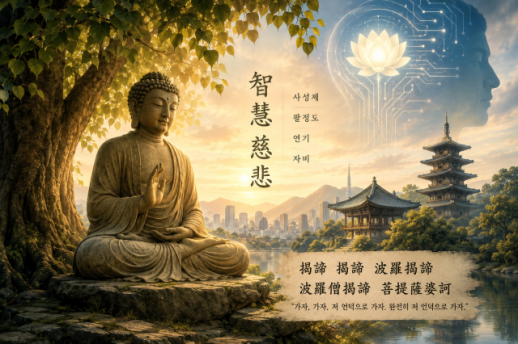 Spiritual Asia: Beyond suffering to freedom - Buddhism as Asia's spiritual pillar This is the eighth installment of AJP’s “Spiritual Asia” series exploring the religious traditions and philosophical foundations that have shaped Asia’s spiritual consciousness. This chapter turns to the ancient texts of Hinduism — the Vedas and Upanishads — and their enduring ideas on cosmos, consciousness and the nature of existence in the emerging AI era. Humanity in the 21st century is passing through the greatest civilization shift in history. Artificial intelligence (AI) learns human languages, robots replace human labor, and algorithms have even begun to predict our choices. We are enjoying more material wealth than any generation before us, but ironically, our anxiety, loneliness, conflicts, and feelings of emptiness are only growing deeper. Technology has advanced brilliantly, yet the fundamental questions about our existence remain. Why do we live? What are we here for? And how can we find true freedom and peace? Facing these questions, humanity is looking toward Asia once again. At the center of this attention is Buddhism, which has explored human suffering and the meaning of life for over 2,600 years. Buddhism is not merely a religion. It is an intense reflection on human existence and a great spiritual revolution that analyzed the causes of our pain and offered clear answers. Today, hundreds of millions of people around the world find their life's direction within Buddhist teachings, and it is no exaggeration to say that much of East and Southeast Asian civilization was built upon the massive spiritual foundation of Buddhism. Buddhism began with a human being, not a god. Siddhartha Gautama, the founder of Buddhism, was born around the 6th century BC in the Lumbini region of modern-day southern Nepal. He lived a comfortable life as a prince, but one day outside his palace, he saw an old person, a sick person, and a corpse. In that moment, he realized that no human being can escape aging, illness, and death. At the time, Indian society was ruled by a caste system and a culture of rituals centered on the Vedas. People believed their fate was decided entirely by the class they were born into, and religion focused heavily on ceremonies. However, the young Siddhartha felt that a religion or philosophy that couldn't solve the core problem of human suffering was not the true answer. Ultimately, at the age of 29, he left his royal life behind and chose the path of an ascetic seeker. The six years of training that followed were a challenge to human limits. He sought out the best spiritual teachers of his time and endured extreme hardships. Yet, he eventually realized that physically torturing the body was not the way to end human suffering. Finally, he sat beneath the Bodhi tree, entered deep meditation, and achieved enlightenment at the age of 35. From that moment on, he became the Buddha, meaning "the awakened one." And the core of his realization became the central teaching of Buddhism: the Four Noble Truths. The Four Noble Truths are the most concise yet profound insights into human life. First is the truth of suffering. This is the reality that suffering exists in life. Birth is suffering, aging is suffering, and illness and death are suffering. Parting with someone you love is painful, and meeting someone you dislike is painful. Failing to get what you want is also a form of suffering. Buddhism does not ignore the harsh realities of life. Instead, it faces them with absolute honesty. Second is the truth of the cause of suffering. This is the teaching that every suffering has a root cause. This cause does not come from the outside world, but from human greed, attachment, and ignorance. The desire to have more, the urge to climb higher, and the clinging wish for things to never change are what ultimately make us suffer. This is not much different when we look at the lives of modern people today. Endless competition, comparison, excessive consumption, and an obsession with success are only making humans more anxious. Third is the truth of the end of suffering. This is the teaching that suffering can be overcome. If we let go of our greed, attachment, and ignorance, we can break free from our pain. Buddhism does not leave humans in despair. Rather, it sees that we hold the potential to change ourselves from within. Fourth is the truth of the path. This is the teaching that there is a practical path to overcome suffering. That path is the Eightfold Path: right view, right resolve, right speech, right action, right livelihood, right effort, right mindfulness, and right concentration. Buddhism does not simply tell us what to believe. It teaches us how to live. The Eightfold Path is a practice that aligns our thoughts, words, actions, and minds in the right direction. To understand Buddhism, you must ultimately understand the Four Noble Truths and the Eightfold Path. These are not merely religious doctrines. They serve as a form of spiritual medicine and a life philosophy that diagnoses and treats the problems of human life. In fact, this is why many scholars call Buddhism the world’s very first psychology. The Buddha observed the human mind, analyzed the roots of pain, and offered a clear path to healing. Another great insight of Buddhism is the concept of dependent origination. This is the teaching that everything in the world is connected, and nothing exists entirely on its own. A single flower cannot exist without sunlight, rain, soil, and wind, and humans, too, live within families, societies, nature, and the universe. In this way, all beings depend on and connect to one another. In today’s era of climate and ecological crises, this thought carries even greater meaning. The realization that humans are not the masters of nature, but a part of it, is the very wisdom that modern civilization desperately needs to relearn. Buddhism also views compassion as its highest virtue. Compassion is more than just feeling pity. It is the heart that feels another person's pain as its own and seeks to ease that pain together. After achieving enlightenment, the Buddha did not stay hidden away in the mountains. He walked across India for 45 years, sharing his truth with the people. Buddhism never tried to change the world with swords or force. It sought to change the world by changing the human heart. This is the greatest power that Buddhism holds. One of the most beautiful summaries of the Buddhist spirit is the final mantra of the Heart Sutra. "Gate, gate, pāragate, pārasaṃgate, bodhi, svāhā." In traditional characters, it is written as: 揭諦 揭諦 波羅揭諦 波羅僧揭諦 菩提薩婆訶. Its meaning is, "Let us go, let us go. Let us go to that other shore. Let us completely go to that other shore. Let us go to the world of enlightenment." Buddhism does not want humans to stay trapped in worldly desires and attachments. It teaches us to cross over from this shore of greed, anger, and ignorance to the other shore of wisdom, compassion, and freedom. This is not just talking about the afterlife. It means that even right now, in this very moment, we can cross over from ignorance to wisdom, from hatred to love, and from desire to freedom. This single verse from the Heart Sutra captures the pure essence of the spirit Buddhism pursues. From there, Buddhism spread beyond India and across all of Asia. It traveled along the Silk Road into Central Asia, reaching China, Korea, Japan, and Vietnam, becoming the spiritual pillar of East Asian civilization. In China, it met Confucianism and Taoism to develop into Zen Buddhism. In Tibet, it formed the esoteric tradition, and in Japan, Zen combined with the samurai spirit. Korea, too, was deeply influenced by Buddhism from the Three Kingdoms period straight through the Goryeo and Joseon dynasties. Bulguksa Temple, Seokguram Grotto, and the Tripitaka Koreana at Haeinsa Temple are not just cultural relics. They are magnificent spiritual legacies left behind by Buddhist civilization. In particular, Korean Buddhism produced outstanding thinkers like Wonhyo, Uisang, and Jinul. Wonhyo introduced the philosophy of hwajaeng, offering the wisdom to harmonize different ideas. This provides a profound lesson for modern South Korean society today, where conflict and division are deepening. It reminds us that true wisdom lies not in defeating opponents, but in harmoniously integrating different truths. Today, Western society is also turning its attention back to Buddhism. Meditation and mindfulness have become a global lifestyle, and leading institutions like Harvard, Stanford, Oxford, and Cambridge are actively researching the intersections of Buddhism, brain science, and psychology. Tech companies in Silicon Valley are also bringing meditation into their corporate cultures. They have begun to realize that technological innovation alone cannot make human beings happy. The age of AI is throwing new questions at humanity. Machines can calculate faster and store more information than humans. But machines cannot feel compassion. They do not hold pity in their hearts. They do not seek enlightenment. Ultimately, Buddhism reminds us that what makes us truly human is not our ability to calculate, but our capacity for self-reflection. It is compassion, not competition, and freedom, not possession. The awakening of a single seeker under a Bodhi tree 2,600 years ago remains perfectly valid today. Human greatness does not come from owning more things. It comes from understanding more deeply, loving more widely, and living more freely. That is the greatest legacy Buddhism has left for humanity, reaching far beyond Asia, and it is a voice of wisdom that all of us living in the AI era must listen to once again. 2026-06-09 16:28:51
 -
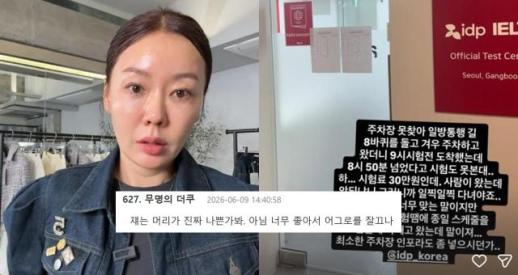 An Sun-young Faces Backlash After Missing IELTS Exam Television personality An Sun-young is facing backlash online after revealing that she missed her appointment for the International English Language Testing System (IELTS) exam due to arriving late. On June 9, An shared her frustration on social media, explaining that she was unable to enter the exam venue because she could not find the parking lot. She stated, "I drove around a one-way street multiple times looking for parking. I arrived before the exam started, but after 8:50 a.m., I was informed that I could not enter." She added, "The exam fee is 300,000 won, and even though I was there, they wouldn’t let me in. I had cleared my schedule for the day for this exam, and I felt so deflated." An also tagged the exam's organizing body, expressing disappointment that they did not provide any parking information. Later, she posted a photo from a café, reflecting, "I should have taken a taxi," and mentioned that venting to the parking staff helped ease her frustration. According to IELTS regulations, entry is restricted after 8:50 a.m. Due to identity verification and security procedures on exam day, most candidates arrive well in advance of the start time. As a result, criticism of An has spread across various online communities. Internet users pointed out, "If it's an important exam, one should consider staying nearby," and "Why expect exceptions when there are rules?" Others noted that her difficulty finding parking was not the responsibility of the exam organizers but rather a lack of preparation on her part. Another commenter argued, "If some people are turned away for being a few minutes late, it creates a bigger issue if a celebrity is allowed in. Exams should be conducted according to the established rules." Additional reactions included, "It's common sense to arrive early for important exams," and "By posting this on social media, she only invited criticism," as well as, "It's hard to understand why the exam organizers are being criticized for enforcing the rules rather than the person who broke them." The IELTS exam is an internationally recognized English proficiency test administered in over 140 countries, known for its strict security and identity verification procedures.* This article has been translated by AI. 2026-06-09 16:27:00