

Journalist

Michael Head
-
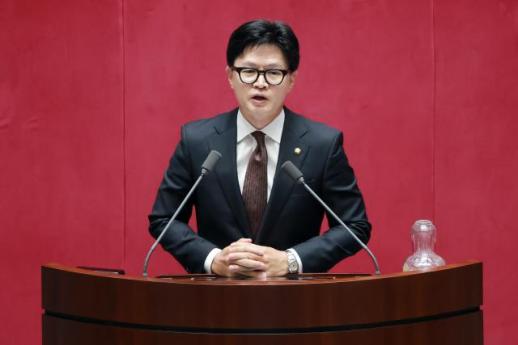 Han Dong-hoon Plans Bill to Make Election Commission Chair a Full-Time Position Independent lawmaker Han Dong-hoon announced plans on June 8 to propose a bill that would convert the position of the Chair of the National Election Commission (NEC) into a full-time role. In a post on his Facebook page, Han stated, "I will introduce a bill to change the NEC Chair from a part-time honorary position held by a Supreme Court Justice to a full-time, responsible role. We need to ensure that the organization and system are continuously monitored, and that accountability is directly taken before the public when issues arise, even during non-election periods." He pointed out that there is often no one held accountable when illegal or inadequate situations occur within the NEC, attributing this to the unclear leadership structure at the top of the commission. He criticized the current system, where an independent constitutional body is managed by a leader in a part-time capacity. Han noted, "The structure has solidified around a Secretary General, typically from within the NEC, who oversees operations without any internal checks on their authority. The fact that a judge holds the leadership position means the NEC has the 'backing' of the judiciary, making it difficult for anyone to challenge the commission." Previously, Han had also indicated plans to propose legislation that would enable the Board of Audit and Inspection to conduct audits of the NEC and to restrict the indiscriminate use of leave and vacation by NEC employees during election periods.* This article has been translated by AI. 2026-06-08 12:06:00
 -
 Vietnam's Youth Return to Agriculture, Transforming Rural Landscapes Urban Vietnamese youth are returning to their rural roots, armed with smartphones and digital technology. This trend includes not only local young people but also those who have studied and worked abroad, leaving behind stable urban and overseas lives to introduce various systems to their family farms. They are transforming agriculture, which traditionally focused on production, into a market-oriented, brand-conscious, and sustainable industry through social media sales and live broadcasts. According to reports from Vietnamese media outlets like Tuoi Tre, a farmer with 40 years of experience recalled how the return of young farmers changed his perspective. "I grew up working in the fields with my parents and continued to live off the land left by my grandparents. Terms like digital transformation, e-commerce, traceability, and sustainable development seemed distant and unfamiliar to me." His mindset shifted not due to catchy slogans but through tangible changes. "The answers we couldn't find in the soil, the youth brought back" Traditionally, Vietnamese farmers focused solely on production. While they were accustomed to planting, nurturing, and harvesting, the sales and consumer engagement aspects were foreign to them. Most agricultural products were sold to middlemen at fluctuating market prices, meaning that even in years of abundant harvests, income remained stagnant if prices fell. The return of young farmers is beginning to change this structure. Through local digital transformation training programs, they taught farmers how to record production logs using smartphones. They also showed them how to create social media accounts to communicate directly with consumers and conduct live sales broadcasts. Farmers learned effective photography techniques for their products and how to document the production process through videos to reach a wider audience. One young farmer noted, "At first, many were hesitant, saying it was difficult to learn technology at their age, but as the youth patiently assisted them, they gradually became more comfortable." As a result, products that were once sold only locally began reaching other provinces, cities, and major export partners, significantly increasing farmers' incomes. The youth have not only expanded market access but also shifted the perspective on agricultural products. They emphasize the 'story' behind the products, advocating for the importance of conveying the organic cultivation process, local culture, and the producer's philosophy. This focus on transparent origin information and traceability enhances trust and becomes a key factor in price competitiveness. Environmental changes have also emerged. Burning rice straw after harvest has long been a common practice in rural Vietnam, seen as a quick way to clear fields. Young farmers have educated their communities about the potential for rice straw to contribute to air pollution and greenhouse gas emissions, teaching them how to create organic fertilizers from agricultural byproducts like rice straw and fallen leaves. What was once waste has now become a resource. As the use of chemical fertilizers decreases and organic fertilizers and eco-friendly products increase, production costs have been reduced, contributing to soil and water resource protection. A farmer with 40 years of experience stated, "What the youth bring back to their hometown is not just technology or large projects, but the belief that farmers can handle technology effectively." He added, "If we invest properly, Vietnamese agricultural products can achieve higher value." He emphasized that true sustainable value is created when the knowledge and skills of the youth combine with the production experience and love for the land held by farmers. There are even cases of young people who studied abroad returning to lead the digital transformation of agriculture. Dang Zuong Minh Hoang, a graduate of the prestigious Grenoble Institute of Technology in France, returned to his hometown in Dong Nai province, leaving behind a stable life overseas. He introduced solar power, IoT-based automatic irrigation, drone pest control, and a QR code traceability system to his family farm. Hoang established electronic farming logs for each crop, allowing consumers to verify the production, management, harvesting, and transportation processes. His organic pepper and avocados meet U.S. and European market standards and have entered international distribution networks. Hoang asserted, "If we learn technology properly and apply it meticulously, Vietnamese farmers can compete effectively in the global market." Seminar in Vinh Long Province: "The era of selling what we produce is over" Recently, a large seminar focused on transforming agricultural mindsets was held in Vinh Long province. The Vinh Long Farmers' Association hosted the seminar on June 3 at the Long Ho Yong An Orchard, gathering over 300 representatives from local businesses and farmers' cooperatives, along with officials from relevant departments. The seminar discussed the development of specialized agricultural personnel linked to cooperatives, the promotion of agricultural tourism, the establishment of agricultural value chains, and the future directions for agricultural development in Vinh Long province. In this context, former Vice Chairman of the National Assembly Le Minh Hoan emphasized that farmers must be the main agents in the agricultural transformation process. He pointed out that agriculture needs to move away from a simple production focus, stating, "We should not just produce what we have, but rather what the market needs." Hoan urged a shift in thinking from producing what farmers possess to producing what the market desires, highlighting quality control, traceability, brand building, and enhancing the added value of agricultural products through cooperative connections as key tasks. He also suggested creating a multi-value agricultural model that combines production with tourism, experience, education, and services to generate additional income and enhance competitiveness. Netizens: "Youth is Hope"... Calls for Support In response, netizens have expressed positive reactions. One user noted, "Sustainable development requires not only the efforts of the youth but also capital, technology, and market support." Another commented, "When the energy of youth combines with science and technology, along with field experience, tremendous value can be created." Others remarked, "It's inspiring to see young people returning to contribute to their hometowns," and "Technology is essential for cost reduction and quality improvement." There are also analyses suggesting that modern agriculture cannot rely solely on traditional experience, emphasizing the necessity of data and automation technology. Meanwhile, Vietnam's rural areas are entering a new phase of agriculture where the skills of youth meet the experience of farmers. In an era where the boundaries between urban and rural are blurring, the future of agriculture depends on intergenerational collaboration and a shift in mindset, a message gaining traction locally.* This article has been translated by AI. 2026-06-08 12:03:00
 -
 Taiwan's Economy Thrives Amid AI Semiconductor Boom A global investment boom in artificial intelligence (AI) is driving Taiwan's economy to unprecedented heights. Centered around TSMC, the world's largest semiconductor foundry, the stock market, exports, and economic growth rates are all rising, positioning Taiwan as a major beneficiary of the global AI surge. However, concerns are growing that the benefits of this semiconductor-driven growth are not spreading across the economy, leading to increased polarization between industries and social classes. On May 26, thanks to TSMC's soaring stock prices, Taiwan's stock market surpassed India to become the fifth largest in the world, following the United States, mainland China, Japan, and Hong Kong. TSMC accounts for over 40% of Taiwan's total market capitalization, with more than 70% of listed companies being semiconductor-related. The Taiwanese stock market has risen nearly 50% this year alone. Economic indicators are also impressive. Taiwan's GDP growth rate for the first quarter of this year reached 13.69% compared to the same period last year, and its per capita GDP has surpassed that of South Korea. The Taiwanese statistical authority raised its GDP growth forecast from 7.71% to 9.64%, an increase of 1.93 percentage points. The per capita GDP estimate was also adjusted upward from $44,000 to $45,610 (approximately 71.13 million won), with exports expected to reach about $900 billion, marking a 39.77% annual growth rate and the highest level in 50 years. However, behind these impressive figures lies a serious imbalance stemming from an over-reliance on the semiconductor industry. According to a report by Hong Kong's Asia Weekly, the average wage increase for employees of over 1,800 companies listed on the Taiwanese stock market last year was only 5.64%, significantly below the GDP growth rate of 8.63%. Only the semiconductor, electronic components, and automotive parts sectors exceeded the average, while other traditional industries experienced stagnation or decline. In reality, Taiwan's stock market is driven primarily by a few large AI and semiconductor companies. This is why the Taiwan Stock Exchange is often referred to as the 'TSMC Index.' The overall market tends to rise and fall with TSMC's stock price. While the recent surge in TSMC's stock has created an appearance of a bullish market, many small and mid-sized companies, as well as traditional industries, have struggled for years. Concerns are emerging in Taiwan that the economy may be falling into a state of 'Dutch disease.' This phenomenon occurs when rapid growth in a specific industry undermines the competitiveness of other sectors, hindering long-term balanced economic development. The AI semiconductor boom is creating a typical 'K-shaped growth' structure in Taiwan's economy, where the semiconductor industry and asset markets are expanding rapidly, while traditional industries and the lower-income economy are relatively stagnant. Wealth inequality is also widening quickly. According to a survey by Taiwan's National Statistics Office, the asset gap between the top 20% of households and the bottom 20% has increased from 16.8 times 30 years ago to 66.9 times today, indicating that wealth accumulation is rapidly concentrating among a small elite. As of the end of March this year, the Financial Supervisory Commission reported that the number of high-net-worth individuals with net assets exceeding NT$100 million (approximately $4.8 million) surpassed 20,000, a more than 70% increase from the previous year. Their total assets approached NT$2.4 trillion, reaching an all-time high. In contrast, the economic outlook for ordinary citizens is deteriorating. Economic uncertainty, skyrocketing housing prices, and tensions across the Taiwan Strait are causing more workers to tighten their belts. A recent trend in Taiwan has given rise to the term 'Beggar Superman,' which satirizes the behavior of consumers who only seek out discounted products nearing their expiration dates at convenience stores.* This article has been translated by AI. 2026-06-08 12:03:00
 -
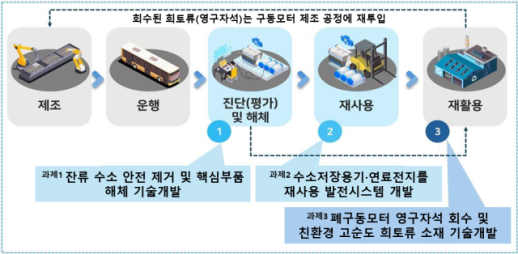 Government Launches R&D for Recycling Hydrogen Cars into Future Resources As the adoption of eco-friendly vehicles increases, the government is launching a national research and development (R&D) initiative aimed at repurposing waste hydrogen cars into future resources. The plan focuses on safely dismantling these vehicles to recover and recycle key components such as fuel cells, hydrogen storage tanks, and rare earth elements, establishing a circular economy system.On June 8, the Ministry of Climate, Energy and Environment and the Korea Environmental Industry and Technology Institute announced the official start of the project to develop technology for reusing and recycling essential parts of waste hydrogen vehicles.Hydrogen cars are recognized for their low carbon emissions, but they contain specialized components like high-pressure hydrogen storage tanks and fuel cell stacks, which require higher safety management and technical expertise during the dismantling process compared to conventional internal combustion engine vehicles.In particular, fuel cell stacks and drive motors contain high-value minerals such as platinum and rare earth elements, highlighting the need for resource recovery and recycling rather than simple disposal. With the expected increase in the number of hydrogen vehicles reaching the end of their life, the government aims to proactively secure related technologies.To this end, the ministry plans to invest a total of 40.8 billion won from 2026 to 2029 in developing circular utilization technologies for waste hydrogen vehicles.The project will focus on three main areas. First, it will develop technology to safely remove residual hydrogen from storage tanks and assess the condition of fuel cell stacks, hydrogen storage tanks, and drive motors.Additionally, the project aims to establish technology for recycling usable fuel cell stacks and hydrogen storage tanks into power generation systems, which can be utilized in construction sites, remote areas, and ships requiring power supply.The development of technology for recovering key minerals will also be pursued. The government plans to create technology for the automatic disassembly of rare earth permanent magnets within electric and hydrogen vehicle drive motors, which have complex structures that make separation difficult. An environmentally friendly process will be established to extract high-purity rare earth elements from the recovered magnets.With recent export controls on rare earth elements from China increasing uncertainty in the supply chain, the importance of utilizing waste vehicles as a new resource source, referred to as 'urban mining,' is growing. The government believes this initiative will help reduce reliance on foreign sources of rare earth elements and enhance resource security.Kim Go-eung, director of the Resource Circulation Bureau at the Ministry of Climate, stated, "Waste hydrogen vehicles contain various key resources such as fuel cells and rare earth permanent magnets, making them a future resource. We will actively support the application of the research and development outcomes to the industrial field, leading to the reuse and recycling industry."* This article has been translated by AI. 2026-06-08 12:03:00
 -
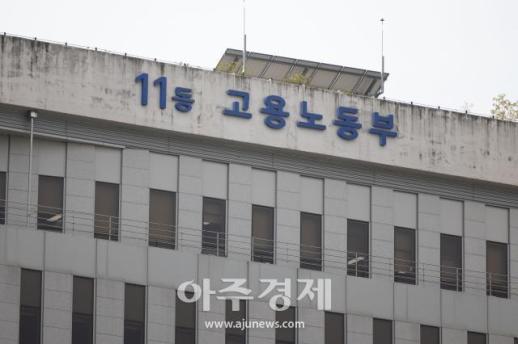 Controversy Over Embezzlement by Part-Time Worker at Cheongju Cafe A well-known franchise cafe in Cheongju has come under scrutiny following allegations of coercion and intimidation against a young part-time worker. Investigations revealed that the business was operating under a "business fragmentation" model. The Ministry of Employment and Labor conducted a focused inspection of 30 franchise coffee and food establishments in the area after a part-time worker, identified as A, was accused of embezzlement for taking three drinks, valued at 12,800 won, when leaving work. A stated that the drinks were to be discarded, and the owner later withdrew the complaint. The inspection found that the same business owner registered two separate establishments—a coffee shop and a dessert store—thus violating labor laws that require overtime, night, and holiday pay for businesses with five or more employees. The ministry identified approximately 3 million won in unpaid wages affecting 49 workers and issued corrective orders. Additionally, the cafe was found to have contracts that imposed penalties for non-compliance, including a clause requiring 90% of wages to be paid if an employee resigned within three months, which also contravened labor regulations. These violations have led to criminal charges against the owner. Further inspections of over 30 cafes and restaurants in Cheongju revealed widespread deficiencies in labor contract management and wage documentation. Many establishments were found to be non-compliant with basic labor standards, including failure to observe break times, prompting corrective directives and fines. In response to this incident, the government is enhancing its efforts to strengthen on-site responses, improve labor management guidance for industries employing many young workers, promote awareness among young laborers, and provide labor education for franchise and small business owners. Kim Young-hoon, Minister of Labor, stated, "Franchise cafes and restaurants often employ young workers entering the job market, but many lack proper labor management. We will respond strictly to illegal activities that infringe on the rights of young workers and enhance educational and promotional activities for business owners to prevent conflicts between small businesses and young employees."* This article has been translated by AI. 2026-06-08 12:03:00
 -
 LG Strengthens Next-Generation AI Alliance with NVIDIA LG Group is expanding its collaboration with NVIDIA across various sectors of the future AI industry, including physical AI, AI data centers (AIDC), and mobility.On June 8, LG Group held a top management meeting at LG Twin Tower in Yeouido, Seoul, attended by Chairman Koo Kwang-mo and NVIDIA founder and CEO Jensen Huang.This meeting followed a dinner on June 5, where Koo and Huang met with leaders of major domestic companies.The two companies agreed to build a next-generation physical AI ecosystem that connects the entire process from AI model development to robotic learning and operation, as well as digital twin construction. They plan to strengthen their collaboration particularly in the areas of AI factories, robotics, and mobility.In the field of physical AI, LG will combine its manufacturing competitiveness with NVIDIA's AI platform technology. LG Electronics aims to expand its collaboration in developing humanoid and logistics robots based on NVIDIA's robotics platforms, including Isaac, GR00T, and Cosmos. They plan to work together throughout the entire process, from data construction to simulation, learning, and behavior implementation, to enhance next-generation robotic competitiveness.LG Innotek will develop high-performance sensing modules and optical components that serve as the eyes of the robots. They will apply optical technology optimized for NVIDIA's AI chip architecture to strengthen the competitiveness of core components in physical AI. LG CNS plans to integrate NVIDIA's robotics technology into its industrial robot platform, PhysicalWorks, to accelerate the AI transformation in manufacturing and logistics.The two companies will also expand their cooperation in the manufacturing AI sector. By combining LG's accumulated production technology data and manufacturing know-how with NVIDIA's AI computing and digital twin technology, they aim to establish an autonomous manufacturing system that connects the entire process from raw material procurement to production, logistics, and customer delivery in real-time. They envision this as a new standard for global smart factories.Collaboration in the data center sector, a key infrastructure for the AI era, will also be strengthened. LG Electronics will work with NVIDIA on the certification of cooling solutions for data centers, including cooling distribution units (CDUs) and cold plates. Additionally, they plan to jointly develop prefabricated modular data center design technology that aligns with NVIDIA's Digital Twin Supercomputing Matrix (DSX) AI factory reference design.LG Uplus and LG CNS will pursue the construction of next-generation AI factories based on NVIDIA's DSX AI factory reference design. This initiative aims to enhance the scalability and energy efficiency of AI infrastructure and respond to the growing demand for large-scale AI services.LG Energy Solution is targeting the AI data center power market. The two companies are discussing collaboration on 800V direct current (DC) power solutions based on NVIDIA's Battery Energy Storage System (BESS) verification guidelines. This strategy aims to address the increasing power demand of AI data centers while seizing opportunities in the next-generation energy market.Collaboration in the mobility sector will also be expanded. LG Electronics plans to enhance its advanced driver-assistance systems (ADAS) and software-defined vehicle (SDV) competitiveness by combining its in-vehicle infotainment (IVI) technology with NVIDIA's autonomous driving platform, Drive Hyperion. LG Innotek also plans to optimize and supply vehicle communication modules, sensing solutions, and lighting systems for the NVIDIA Drive platform.Efforts to strengthen AI competitiveness in South Korea will also be pursued. LG AI Research will utilize NVIDIA's latest graphics processing unit (GPU), Blackwell, along with the NeMo framework and TensorRT-LLM, to improve learning efficiency and inference performance during the development of the next-generation AI model, EXAONE. They also plan to enhance the quality of AI training data using the Nemotron open dataset.Koo Kwang-mo stated, "The blueprint for the AI ecosystem envisioned by NVIDIA aligns with LG's future vision of creating innovations in customers' daily lives and industrial sites. We will solidify our partnership for the future by combining our differentiated capabilities."Jensen Huang emphasized, "Korea possesses global competitiveness in manufacturing, mechatronics, and AI. LG can extend its leadership beyond home appliances and vehicles to factories and AI infrastructure based on NVIDIA's AI platform."* This article has been translated by AI. 2026-06-08 12:00:00
 -
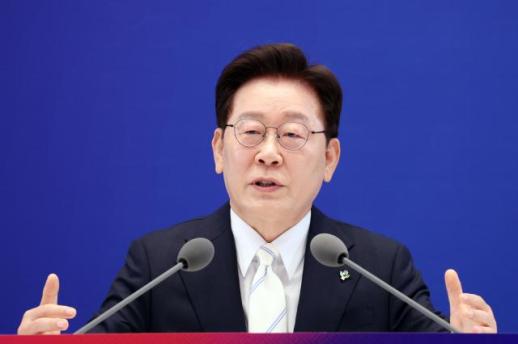 President Yoon Plans Overhaul of Real Estate Tax System in July President Lee Jae-myung announced plans to reform the real estate tax system in July. During a press conference at the Blue House on his first anniversary in office, President Lee responded to questions about future real estate policies, stating, "We plan to address tax, finance, regulation, and supply issues all at once soon. The tax reform will be possible in July." He noted that property taxes in South Korea are generally low, saying, "Even if people accumulate a lot of properties, the burden is minimal. If homeowners put their speculative properties on the market, there would be a significant increase in supply." President Lee also pointed out the high prices of unused rural land, questioning, "Isn't it strange? This prevents those who need it from using it. We need to fix this and fundamentally lower the expected return rates." Regarding the recent decrease in rental properties, which has led to a rental crisis, he remarked, "Renting is a unique form of private finance that exists only in South Korea, and it is currently on the decline. A normalization process is necessary. It is natural that the supply of rental properties has decreased." He explained that the government's decision to end the special taxation on capital gains has encouraged multiple homeowners to list their properties, resulting in a natural reduction in rental inventory, as first-time buyers have moved in, decreasing rental demand. "In the past, the extensive provision of rental loans was a major cause of rising home prices," he added. "That has distorted the market. Ultimately, I believe it will gradually disappear." Reflecting on his first year in office, President Lee stated, "We have managed to contain upward pressure on housing prices fairly well. I think the positive impacts on the election were greater than the negative ones. If we hadn't intervened verbally since January, prices would have skyrocketed." On supply measures, he said, "We aim to provide affordable, high-quality housing in good locations that middle-class families can comfortably live in. We will accelerate this process and announce our plans soon."* This article has been translated by AI. 2026-06-08 11:54:00
 -
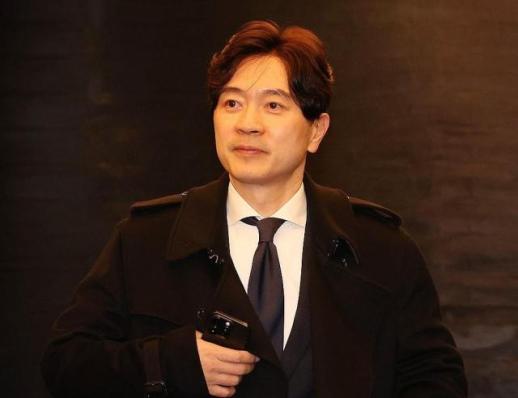 People Power Party Criticizes Han Sung-sook's Candidacy for Prime Minister The People Power Party criticized Han Sung-sook, the newly nominated Prime Minister, on June 8, stating that according to the standards set by President Lee Jae-myung, she is unqualified to participate in real estate policy discussions. Park Seong-hoon, the party's chief spokesperson, remarked in a statement that President Lee has effectively categorized multiple property owners as unsuitable for discussions on real estate policy. He questioned why this principle does not apply to the candidate for Prime Minister. He noted that Han owns properties worth approximately 9.7 billion won, including an apartment in the Asian Games Village in Songpa, two officetels in Gangnam, and a house in Jongno, asserting that if the President's standards are still valid, Han should be deemed unqualified. Park further characterized the government's push for real estate control policies while nominating a wealthy property owner for Prime Minister as a case of hypocrisy. Critics have also suggested that the sudden nomination of a new Prime Minister is an attempt to divert attention from the ongoing shortage of ballots. Park emphasized that the confirmation hearing would reveal Han's qualifications, morality, and the hypocrisy of the Lee Jae-myung administration to the public. Choi Bo-yun, another spokesperson, expressed concerns in a statement the previous day, questioning whether this is the right time to prioritize a Prime Minister change. She criticized the government for attempting to shift the narrative away from the thorough investigation and resolution of the ballot shortage issue by using personnel changes, which she believes is disconnected from public sentiment. Choi stated that the President's immediate focus should be on thoroughly investigating the ballot shortage, issuing a public apology, and restoring trust in the election administration system, emphasizing that the situation surrounding the ballot shortage must be transparently addressed alongside the new Prime Minister's nomination.* This article has been translated by AI. 2026-06-08 11:54:00
 -
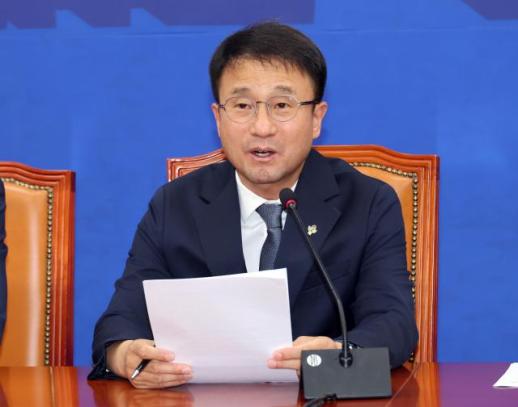 Calls for Selective Re-elections Emerge Within Democratic Party Amid Voting Issues Within the Democratic Party, discussions are emerging about the possibility of selective re-elections in response to the ballot shortage controversy from the June 3 local elections. However, this approach differs from the comprehensive re-election demanded by the People Power Party. On June 7, lawmaker Park Sun-won stated on Facebook, "The areas affected by the ballot shortage should undergo re-elections," emphasizing that the National Election Commission (NEC) must take responsibility and ensure re-elections, given that the need for ballots could have been anticipated 2 to 3 days in advance of the early voting. Park further asserted, "Citizens deprived of their voting rights due to the ballot shortage will not remain silent. It is fundamental to question why the NEC allowed this situation to disrupt public sentiment. Can Noh Tae-ak and Cheon Dae-yeob be unaware of this?" Similarly, lawmaker Choi Min-hee criticized the call for a full re-election by Jang Dong-hyuk as unreasonable, advocating instead for re-elections only in the regions where ballot issues occurred. Kim Hyung-nam, a former spokesperson for Democratic Party mayoral candidate Jung Won-o and former director of the Military Human Rights Center, officially requested the party to file an election appeal, stating, "We need to clarify the targets for re-election according to legal procedures and resolve the confusion." An election appeal is a preliminary step in election litigation under the Public Election Act, allowing for challenges to the validity of an election. Kim noted, "If a decision of 'partial invalidity' is made, the elections at the affected polling stations will be nullified, and re-elections will only be held at those specific locations." In response, Han Byeong-do acknowledged during a press conference that he was aware of these discussions, urging caution and stating, "We must wait for a swift decision from the courts in accordance with the law and principles."* This article has been translated by AI. 2026-06-08 11:51:00
 -
 Naver Shares Surge Ahead of Jensen Huang and Lee Hae-jin Live Broadcast Naver's stock has turned upward, showing a strong gain of over 12% ahead of a special live broadcast featuring Jensen Huang, CEO of NVIDIA, and Lee Hae-jin, chairman of Naver's board. As of 11:42 a.m. on June 8, Naver shares were trading at 287,500 won, up 32,000 won (12.52%) from the previous trading day, according to the Korea Exchange. The anticipation surrounding Huang's visit to South Korea has sparked optimism about a significant collaboration between Naver and NVIDIA in the field of artificial intelligence (AI). According to Naver, the special live broadcast, featuring both Huang and Lee, will begin at 3:30 p.m. and last approximately 15 minutes, starting at 3:50 p.m. Users can watch the broadcast for free via the Chijijik app and on PC. The event will take place at the 'Vision Stage' in Naver's second headquarters, 1784. The Vision Stage is a virtual studio designed for video content production and live streaming, showcasing Naver's technological capabilities in AI, cloud computing, robotics, and digital twins. Previously, Naver announced a strategic partnership with NVIDIA to build a global AI infrastructure. This initiative will begin with the Sejong Data Center, known as 'Gak Sejong,' and aims to expand AI infrastructure, enhance Naver's large language model, HyperCLOVA X, and promote collaboration in the field of physical AI. Market observers are keenly watching for potential announcements regarding additional collaboration between the two companies in AI infrastructure, robotics, and physical AI during the public discussion between their CEOs.* This article has been translated by AI. 2026-06-08 11:48:00