

Journalist

Michael Head
-
 Kakao recovers after hitting one-year low, but investors remain skeptical of AI push SEOUL, June 8 (AJP) - Kakao fell to 37,600 won on Monday morning, hitting a fresh 52-week low before recovering much of the decline. The sharp swings suggested that investors remain unconvinced that the messaging giant's push into artificial intelligence is driving the user engagement needed to support a recovery. Roughly 96,700 retail investors holding the stock remain deep in the red, sitting on an average loss of more than 50 percent against an average purchase price of 83,068 won. As of 11:30 a.m., Kakao traded at 39,050 won (US$25.1), down 1,200 won or 3.0 percent, having clawed back more than half of an early slide that briefly took it 6 percent lower. The stock opened at 40,000 won, matching the day's high, then sank to 37,600 won in mid-morning trade, a fresh 52-week low, before buyers stepped back in. The shares are down roughly 41 percent this year and sit far below their 52-week high of 71,600 won. The doubt centers on a single metric the company has yet to move. Kakao has built its recovery case on expanding AI features within KakaoTalk and reviving its advertising and commerce businesses, but the market wants proof that AI adoption is lifting the time users spend on the platform and feeding through to ad revenue. For a platform company, engagement and traffic are the core indicators, and without their recovery, analysts argue, expectations of improved profitability alone will not be enough to lift the shares. Brokerages have been trimming their expectations accordingly. Recent target prices include 58,000 won from Mirae Asset Securities, 60,000 won from Daol Investment & Securities and 69,000 won from KB Securities. While the cleanup of subsidiaries and cost efficiencies are viewed positively, persistent questions about growth in the core business have blocked a re-rating of the stock. Kakao trades at 35 times earnings, a multiple that leaves little room for disappointment on growth. Lim Hee-seok, an analyst at Mirae Asset Securities, captured the tension. He noted that improving profitability through the restructuring of subsidiaries is a positive, but judged that a re-rating would be difficult until a visible result emerges, specifically an acceleration in KakaoTalk engagement driven by the AI adoption the market is counting on. That the stock found buyers at its low, even on a day when the broader market sold off sharply, suggests some investors see value below 38,000 won. But the rebound rests on price, not proof. Until engagement data turns, the floor Kakao tested Monday is unlikely to be the last. 2026-06-08 14:01:04
 -
 LF's Hazzys 'K-Heritage' Collection Attracts 63% First-Time Buyers LF's casual brand Hazzys has partnered with lifestyle brand Hoho-dang to launch the 'K-Heritage Collection,' which is drawing interest from both new customers and foreign tourists.According to LF, following the release of the collaborative collection, 63% of the purchasing customers were first-time buyers. This indicates that more than six out of ten customers were making their initial purchase from Hazzys, suggesting that the collection has effectively attracted new clientele.Online sales have also seen an increase. A representative from LF stated, "The response has expanded, particularly around easy pickup goods available online," adding that sales through Hazzys.com accounted for approximately 67% of total sales.In the Myeongdong area, known for its high influx of foreign tourists, the collection has also gained traction. Hazzys operates a dedicated collaboration zone at its flagship store 'Space H Seoul,' where purchases and engagement have been particularly strong among Southeast Asian customers.Notably, content related to the collection shared by a global ambassador on TikTok has garnered over 140,000 views. As a result, foreign sales at Space H Seoul increased by 170% compared to the same period last year, with the number of foreign customers rising by 175%. A Hazzys representative stated, "We plan to continue expanding our global customer base through K-premium content and products that modernize Korean sensibilities."Meanwhile, LF reported an operating profit of 44.4 billion won in the first quarter of this year, a 47.52% increase from the same period last year. Revenue rose by 7.35% to 461.9 billion won, while net profit increased by 38.32% to 31.6 billion won.* This article has been translated by AI. 2026-06-08 13:57:00
 -
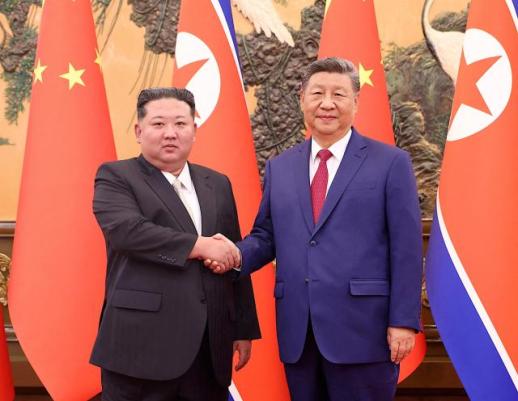 Japanese Media Focuses on Xi Jinping's Visit to North Korea Amid Trump Variables Japanese media are closely examining the complex strategic calculations behind Chinese President Xi Jinping's first visit to North Korea in seven years. As North Korea strengthens its ties with Russia, China is looking to regain influence over the Korean Peninsula, while North Korea aims to assess the potential for renewed dialogue with U.S. President Donald Trump. The Nihon Keizai Shimbun (Nikkei) reported that Xi will visit North Korea on June 8-9 as a state guest to meet with Kim Jong-un. The paper analyzed that North Korea's interest in gauging Trump's stance on the Korean Peninsula coincides with China's desire to assert control over the North Korean nuclear issue. Nikkei noted that each time Xi and Kim have met, the presence of Trump has been a significant factor. Xi's last visit to North Korea was in June 2019, shortly before Trump visited South Korea and held a third summit with Kim at Panmunjom. Nikkei interpreted that North Korea is particularly interested in Trump's views on its nuclear development. In an April press conference, Trump indicated that Kim possesses a significant number of nuclear weapons. While the official U.S. stance remains focused on North Korea's denuclearization, North Korea may view Trump's acknowledgment of its nuclear capabilities as a notable advancement. The ongoing tensions surrounding denuclearization are also a key factor in this meeting. Following a May summit between the U.S. and China, the U.S. announced that both countries reaffirmed their shared goal of North Korean denuclearization, but the Chinese side did not mention denuclearization in its statement. The Asahi Shimbun reported that Xi did not use the term 'denuclearization' in public remarks during last September's North Korea-China meeting or the May U.S.-China summit. Just before Xi's visit, Kim Yo-jong, the deputy director of the Workers' Party, emphasized North Korea's status as a nuclear power, raising questions about whether Xi might act as a bridge between the U.S. and North Korea. From China's perspective, North Korea's growing alignment with Russia poses a challenge. Following Russia's invasion of Ukraine, North Korea has reportedly received military and technical support from Russia in exchange for weapons and troops. Nikkei analyzed that China values stability on the Korean Peninsula but does not want to see Russia's influence over North Korea increase through military cooperation. There is also a calculation to take the lead on the nuclear issue and use it as leverage in negotiations with Trump. Asahi Shimbun echoed concerns that China is wary of North Korea's tilt toward Russia and may seek to strengthen economic support to keep North Korea within its sphere of influence. Will China Use North Korea to Access the East Sea? The Yomiuri Shimbun suggested that discussions during this meeting may include securing a maritime route for Chinese vessels to access the East Sea via the Tumen River. The lower Tumen River, about 15 kilometers long, runs between Russian and North Korean territory, making it difficult for Chinese ships to navigate freely into the East Sea. In China, the right to access the East Sea is referred to as 'chuhaiquan,' and there are hopes to connect this with development in northeastern Jilin Province. Yomiuri reported that if China can operate small military vessels through this route, it could gain military and security advantages aimed at South Korea and Japan. If Xi secures North Korea's consent during this visit, it could be seen as a diplomatic success for China and potentially lead to practical trilateral discussions among North Korea, China, and Russia. However, Yomiuri noted that the bridges over the Tumen River are only about 10 meters above the water, posing challenges for larger Chinese vessels. On the civilian front, signs of recovery and limitations are mixed. According to Asahi Shimbun, trade between North Korea and China from January to April this year reached approximately $990 million, about 30% higher than the same period in 2019, and the international train service between Beijing and Pyongyang resumed in March after nearly six years. However, exchanges involving workers and tourism have not returned to previous levels. Asahi reported that Russia's offers of wages approximately double those in China have led to a trend of North Korean workers being prioritized for placement in Russia, resulting in labor shortages in North Korean restaurants and factories in northeastern China. A North Korean restaurant in Shenyang, which had over ten female workers before the COVID-19 pandemic, now has only four, and performances have reportedly been suspended due to the lack of staff. The critical question of this meeting is whether China will treat North Korea as a de facto nuclear power. Asahi warned that if China does not clearly pressure for denuclearization, North Korea may accelerate its nuclear and missile development, potentially worsening the security environment for South Korea and Japan. Ahead of his visit, Xi published an article in the Rodong Sinmun advocating opposition to the 'revival of militarism,' which Asahi interpreted as a message aimed at Japan. The South Korean government, which is promoting dialogue between the two Koreas, is also closely monitoring the outcomes of this meeting.* This article has been translated by AI. 2026-06-08 13:57:00
 -
 The Future of Travel: AI's Role and the Importance of Human Experience Artificial intelligence (AI) is transforming the travel industry. The era of manually searching for travel information and comparing flights and hotels is quickly fading. Now, by simply entering travel dates, budget, and preferences into generative AI, customized itineraries can be created almost instantly. During trips, AI takes over real-time translation, navigation, and restaurant recommendations. What once seemed like science fiction is now a reality. The pace of change is much faster than anticipated. Global online travel platforms are already positioning AI as a core competitive advantage. They analyze users' search histories, booking records, and preferences to recommend personalized travel products, while also developing services that automate the entire process from planning to booking and providing local information. The competitive standards in the travel industry are shifting from price and product offerings to data and technological capabilities. For instance, the global travel platform Trip.com supports itinerary planning and flight and hotel bookings through its generative AI-based travel assistant service. When users ask questions in natural language, the AI provides comprehensive suggestions on destination information, travel routes, and tourist attractions. Major overseas travel agencies and hotel chains are also rapidly adopting AI chatbots and predictive analytics systems to innovate customer service. This demonstrates that AI is no longer a future technology but a current industrial competitive asset. The domestic travel industry is no exception. Travel agencies have begun utilizing AI for customer consultations and product recommendations, while the hotel sector is applying AI technology for reservation management, customer interactions, and demand forecasting. Various initiatives are underway in tourism, including multilingual guidance services, personalized travel information, and analysis of tourist behavior data. The era where a company's ability to utilize AI determines its survival is fast approaching. However, technological advancement does not automatically lead to improved tourism competitiveness. The essence of travel ultimately lies in human experiences and emotions. While AI can quickly analyze vast amounts of information, it struggles to replace the hidden stories of destinations, the unique sentiments of local areas, and the empathy required in unexpected situations. Travelers often remember not the optimized itineraries but the encounters with locals, warm services, and unexpected moments of joy. Thus, approaching AI merely as a means to cut costs or replace human labor is risky. While repetitive and simple tasks can be delegated to AI, humans should focus on designing customer experiences and providing high-quality services. This means creating a structure where technology and people complement each other's strengths, rather than competing against one another. While AI can assist in consultation tasks, it cannot read customers' emotions or build trust. The government also needs a more strategic approach. If the digital transformation of the tourism industry is concentrated solely among a few large corporations and global platforms, small travel agencies and local tourism businesses will inevitably lose their competitiveness. By providing AI training, building data infrastructure, and supporting digital infrastructure, the overall competitiveness of the industry must be enhanced. The future of the tourism industry depends not on how many cutting-edge technologies are adopted, but on how effectively those technologies can be utilized. The government aims to achieve an early target of 30 million foreign tourists. However, the standards of advanced tourism countries are not solely based on visitor numbers. What matters more is how convenient and satisfying the experiences provided are, and how much added value is created. AI is undoubtedly a new growth engine for the tourism industry. However, we must avoid falling into the trap of technological omnipotence. Ultimately, travel is an industry where people meet people and create memories through those interactions. While AI can change the way we travel, it cannot replace the value of travel.* This article has been translated by AI. 2026-06-08 13:51:00
 -
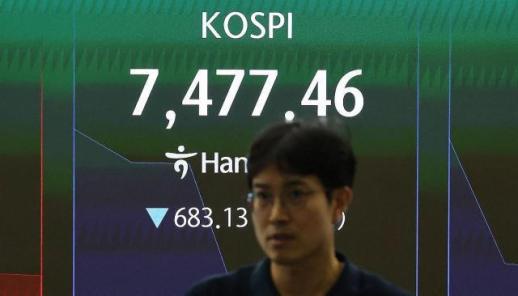 Goldman Sachs: KOSPI Decline is Temporary Adjustment Amid AI Earnings Optimism Goldman Sachs has characterized the recent sharp decline in the South Korean stock market as a temporary adjustment. The drop was exacerbated by the unwinding of leveraged investments, particularly in semiconductor and technology stocks driven by optimism surrounding artificial intelligence (AI). However, the firm believes there is potential for a rebound when considering corporate earnings and stock price levels. In an interview with Bloomberg TV on June 8, Timothy Moe, Goldman Sachs' Asia-Pacific equity strategist, stated, "In the long run, this decline will be seen as a technical adjustment within a long-term bull market." He explained that a technical adjustment refers to a decline in stock prices due to short-term selling or the resolution of overheating, rather than a deterioration in corporate performance. He added, "It is a frightening adjustment, but the underlying strength remains very robust." On the same day, the KOSPI index fell by as much as 8.8% during trading. This sharp drop triggered a circuit breaker, temporarily halting stock trading, and contributed to a broader decline in technology stocks across Asia. Recently, the South Korean market had shown strong gains, fueled by optimism about AI, particularly in the semiconductor and technology sectors. Moe identified leveraged investment as a key factor in the market's decline, noting, "There were clear signs of increased speculative trading, particularly among individual investors in South Korea." He mentioned that funds had shifted into leveraged exchange-traded funds (ETFs), stating, "The process of unwinding accumulated investment volumes is occurring, and leverage has amplified this effect." Goldman Sachs had raised its outlook for the South Korean and Taiwanese markets last week, asserting that the AI boom would boost profits for companies heavily weighted in technology. Moe remarked, "The current price levels of South Korean stocks are very reasonable," predicting that corporate profit growth will continue to drive stock market gains. He concluded, "After the market experiences this turbulence, it will regain its footing and move toward higher peaks." 2026-06-08 13:51:00
 -
 Building a Physical AI Hub in Saemangeum: A Last Chance for Transformation The Saemangeum reclamation project, which began in 1991, was named with hopes of prosperity, combining the fertile lands of the Mangyeong Plain and the Gimje Plain. Ultimately, the project created new land equivalent to two-thirds of Seoul's area, but numerous development initiatives, including tourism and renewable energy, have largely failed. Now, Saemangeum is once again positioned as a testing ground for South Korea's future industries, this time focusing on physical artificial intelligence (AI). The government and industry are working to develop Saemangeum into a global physical AI hub that integrates AI data centers, robotics, and future mobility industries, with Hyundai Motor Group playing a key role. The government's commitment is significantly stronger than in the past. A government-wide task force led by Prime Minister Kim Min-seok has reportedly resolved or initiated the process for around 50 of the 60 regulations that previously hindered the establishment of an AI city, exceeding 80% of the total. Remaining regulations are expected to be addressed within the year, and policy financing support, such as through the National Growth Fund, is also being considered. However, the history of Saemangeum development is marked by painful memories. Major plans for an international business district, tourism complex, free economic zone, and renewable energy cluster have mostly ended in disappointment, with development directions shifting with each change in administration. Nonetheless, the current AI hub project is generating optimism in line with global industrial trends. The AI industry is entering an era of physical AI that drives the real world, encompassing robotics, autonomous vehicles, smart factories, and future mobility. Hyundai Motor Group is also nurturing robotics and software-defined vehicles (SDVs) and autonomous driving technology as future growth engines. Recently, NVIDIA CEO Jensen Huang expressed significant interest in South Korea's manufacturing and robotics sectors, highlighting that the future of the AI industry cannot rely solely on semiconductor chips. For AI to operate in real-world environments, a foundation in manufacturing, robotics technology, and a mobility ecosystem is essential. This is why South Korea, with its world-class manufacturing competitiveness, is viewed as a key hub in the physical AI era. The core of the Saemangeum project is to consolidate AI data centers, manufacturing, and robotics industries in one location, aiming to create a base for the demonstration and commercialization of physical AI. A critical factor for success is power supply. The operation of massive AI models and data centers requires substantial electricity. This is why countries like the United States and those in the Middle East are competing to attract data centers, as they offer stable power supply capabilities. South Korea possesses the necessary infrastructure, including nuclear power, transmission networks, energy storage systems (ESS), and data center construction capabilities. A package export model combining AI data centers with power infrastructure is also feasible. The Saemangeum project is crucial for Hyundai Motor Group as it aligns with the company's strategy to transform from an automotive manufacturer to a mobility and robotics enterprise. To secure leadership in the physical AI era, establishing a large-scale demonstration space and industrial ecosystem is essential. The remaining challenge is execution. Numerous plans and visions related to Saemangeum have been announced, but results have been minimal. The development history of Saemangeum is approaching 40 years. This initiative is not merely a regional development project; it is a national project aimed at creating a new growth engine for South Korea following semiconductors. There is hope that the renewed opportunity in Saemangeum will be proven by tangible results. 2026-06-08 13:51:00
 -
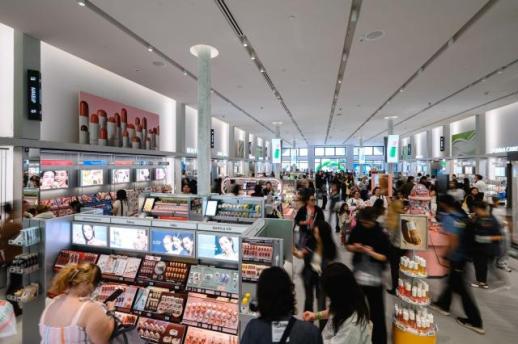 K-Beauty's Rise: From Trend to National Strategic Industry The influence of the Korean Wave is reshaping the status of Korean consumer goods globally, with cosmetics standing out as a leading sector. K-Beauty has evolved beyond a fleeting trend or cultural phenomenon, establishing itself as a key export industry that showcases Korea's technological prowess and brand competitiveness in the global market. According to the Ministry of Trade, Industry and Energy, cosmetic exports reached $1.18 billion in May, marking the highest figure for that month on record. Cumulative exports from January to May exceeded $5.6 billion, reflecting a more than 20% increase compared to the same period last year. Notably, cosmetics have surpassed agricultural and fishery products, which have long been the mainstay of domestic consumer goods exports, becoming the top export item. This shift indicates that the Korean economy is diversifying its export structure, moving away from a reliance on semiconductors and automobiles towards consumer goods and cultural content as new growth drivers. A significant change in the export market is noteworthy. Previously, K-Beauty was heavily reliant on the Chinese market, experiencing rapid growth fueled by Chinese consumer preferences. However, this dependence also exposed structural vulnerabilities, leading to significant fluctuations in performance due to changes in the Chinese market. Recently, exports to the U.S. and European markets have surged, demonstrating successful market diversification. Exports to the U.S. increased by over 40%, while countries like the UK, Netherlands, and Germany recorded triple-digit growth rates. Mexico also saw a remarkable 116% growth compared to the previous year. This trend of reducing reliance on specific countries and expanding into the global market is a positive development. The success of K-Beauty is no coincidence. It results from a combination of high quality, reasonable pricing, rapid product development, and the global spread of the Korean Wave, particularly through K-pop and K-dramas. Additionally, continuous innovation from small and medium-sized cosmetic companies and effective global marketing strategies utilizing online platforms have played a crucial role. Whereas the industry once followed foreign brands, it is now the global market that looks to Korean cosmetic trends. However, complacency with current achievements is not an option. The global market can become fiercely competitive at any moment. Chinese companies are already pursuing price competitiveness, and global corporations are studying K-Beauty's successful model. Today's success does not guarantee tomorrow's victories. As the government has recently emphasized, K-Beauty is evolving into a future industry intertwined with artificial intelligence (AI), big data, biotechnology, and digital healthcare. Technologies that analyze skin conditions, personalized cosmetics, and smart beauty devices are becoming a reality. There is significant potential for K-Beauty to develop into a high-value industry that connects manufacturing, services, and tourism. To achieve this, the government's role is crucial. Systematic support is needed for research and development, assistance with overseas certifications and regulatory compliance, expansion of export financing, and nurturing beauty tech startups. In particular, enhancing smart manufacturing infrastructure, as demanded by companies, is essential for securing global competitiveness. Reducing regulatory uncertainties and creating an environment conducive to the growth of new industries is also a responsibility of the government. While semiconductors and automobiles have been the main drivers of Korea's economic growth, K-Beauty has the potential to become a new key industry responsible for the future. To ensure that K-Beauty does not remain a temporary trend but instead establishes itself as a leading industry in the global market, both private innovation and government support must work in tandem. A more strategic and consistent effort is required to cultivate K-Beauty as a national strategic industry, ensuring that products made in Korea continue to set global trends. 2026-06-08 13:51:00
 -
 Actor Eom Tae-goo Discusses His Role in 'Wild Thing' Actor Eom Tae-goo reveals a surprising new side in his latest film, "Wild Thing." The comedy follows the fictional three-member mixed dance group "Triangle," which once dominated the music scene but disbanded due to unforeseen circumstances. Now, 20 years later, they attempt a comeback. Eom plays Sang-goo, the youngest rapper who dreams of being a true hip-hop warrior but struggles with limited screen time and a sense of inferiority. Known for his intense roles in noir films like "Night in Paradise," "The Age of Shadows," and "Chinatown," Eom showcases a refreshing transformation through rapid rapping, idol performances, and fearless comedic acting."The script was incredibly fun. Even if I hadn't participated, it would have been an enjoyable read. The director was fantastic as well. I was excited to work alongside senior actor Gang Dong-won, who was cast as Hyun-woo. I wanted to challenge myself and felt a strong desire to do well, so I prepared diligently, focusing on both rap and choreography," Eom said.He dedicated nearly five months to preparation, starting rap and dance practice before filming began. During breaks in shooting, he frequently visited the practice studio, feeling that the training provided by the production company was insufficient."Overall, I think it was about five months. I started practicing before filming and continued to go to the studio during breaks. I wanted to push myself further than what the production company had arranged because I felt it wasn't enough," he explained.Sang-goo is the main rapper of "Triangle," but ironically, he is not very skilled at rapping. Eom embraced this aspect as it aligned with his character. Sang-goo genuinely tries hard but remains somewhat clumsy, which adds both humor and poignancy to the role."For the rap, I relied almost entirely on my instructor. I followed their guidance. Since Sang-goo isn't portrayed as a great rapper, I thought that if I worked hard for five months, even if I wasn't exceptional, it would fit the character well. I wasn't a complete novice, but I felt that my effort would convey the sense of someone who is trying hard but not quite succeeding," Eom said.He learned everything from vocalization to rhythm and gestures. Initially awkward, he eventually found himself unconsciously mimicking his instructor's mannerisms and gestures. The training was open-ended, so he knew he had to keep practicing."I started with vocal exercises and learned how to find the rhythm. At first, it felt strange, but I kept at it. Eventually, I noticed I was unconsciously adopting my instructor's gestures and speech patterns, which felt good when it came out naturally. Since there was no defined endpoint, I just kept pushing myself to improve," he said.Some aspects of Sang-goo's performance changed spontaneously on set. With the addition of costumes and wigs, the character's cuter side emerged, prompting Eom to deliver expressions and gestures he had never practiced before. In those moments, his mindset was simple: he was determined to be cute at all costs."There were sudden changes on set. With the wigs and costumes, it was suggested that Sang-goo should be portrayed a bit cuter. But since I hadn't practiced those expressions, I felt terrified when the camera was rolling. It would be odd for a character who had never shown such expressions to suddenly do so. So, I thought, 'If I can't be cute, I might as well die.' I ended up doing all the cute moves I could think of, and I think winking was one of them. I had no prepared actions; they were just things I had seen somewhere," he recalled.On stage, Eom believed that what mattered was not feeling embarrassed but rather the determination to perform. He thought that when the camera was rolling, he had to give it his all. However, he also recognized that preparation was essential to avoid appearing forced."Rather than saying I'm suited for the stage, I think when I'm on stage or performing, embarrassment isn't necessary; I just need to get it done. I have to give it my all, but it shouldn't come off as forced. Since I had prepared a lot, I aimed to make it come out naturally. I wanted to play freely, like when I was a child playing after a shower. Of course, that process wasn't easy," he said.Working alongside Gang Dong-won and Park Ji-hyun was also a crucial aspect of the project. Eom reflected that even without much dialogue, their chemistry on set was strong. He noted that moments of laughter in comedy often stem from the rhythm shared with fellow actors."There wasn't a lot of dialogue, but I felt a good connection with senior actor Gang Dong-won and everyone else. They say chemistry is important in comedy, and if there are moments that make people laugh, it's likely due to that rhythm. I think the senior actors led us well," he said.The film evokes the emotions of the late 1990s and early 2000s music scene, but Eom did not overly focus on a specific era while portraying Sang-goo. Instead, he felt that the costumes, makeup, and stage design helped create the atmosphere of that time, allowing him to concentrate on Sang-goo's reality and emotions."I liked the duo during that time. However, while acting, I didn't think too much about that aspect; I relied heavily on the costumes, makeup, and stage to help me. It was fascinating and fun to see that era recreated, but for Sang-goo, that time is his reality. Rather than being conscious of that era, I focused more on what Sang-goo might feel," he explained.While portraying both the past and present versions of Sang-goo, Eom did not aim to create a stark contrast. He wanted to ensure that even when Sang-goo used harsh language, he did not come across as threatening. Instead, he aimed for the character to be perceived as somewhat cute and pitiable."I didn't try to create a huge difference. There are moments when Sang-goo curses, but I didn't want it to feel threatening. I don't know if I removed something, but I tried to make the cursing sound somewhat cute. I didn't want it to come off as scary, even though I wasn't trying to make it easy," he said.Eom Tae-goo is often described as an introverted actor. However, he has a different perspective on being viewed solely as introverted. He noted that he has become more vocal on set, joking around, and engaging with others compared to the past."I want to say I'm not that introverted. Haha. While there are various aspects to me, I do have an extroverted side. I might be less extroverted than before, but as I continue in this profession, I find myself joking more, talking more, and sharing my opinions more. I couldn't do that as much before. So, I don't think I'm entirely introverted, but I feel like people see me that way, so I often say I'm 'somewhere in the middle' during interviews," he said.Eom has also been participating in fan meetings and showcases, where he directly interacts with fans. Given that the film centers on idols, he finds the fans' requests and reactions particularly meaningful. Eom expressed a desire to fulfill fans' wishes as much as possible."When fans ask me to do something, I feel I should do it. I want to give back as much as I can. I'm not sure how far I can go, but I will try my best," he said.* This article has been translated by AI. 2026-06-08 13:48:00
 -
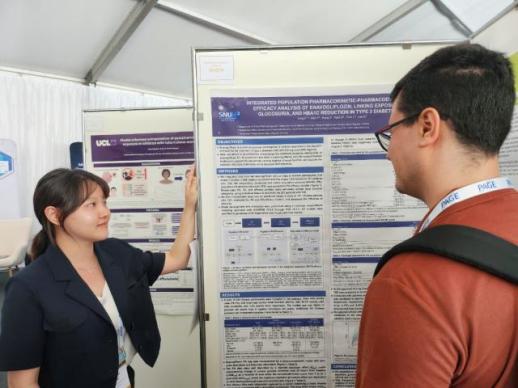 Daewoong Pharmaceutical's Enblo Shows Consistent Blood Sugar-Lowering Effects in Korean and Chinese Patients Daewoong Pharmaceutical has strengthened its case for global expansion by quantitatively establishing the relationship between the drug action of its Type 2 diabetes treatment, Enblo (ingredient name: Inavogliflozin), and its blood sugar-lowering effects. The company announced on June 8 that it presented research findings on the correlation between drug exposure and blood sugar reduction for Enblo at the European 2026 PAGE conference held from June 2 to 4. Enblo, a member of the SGLT-2 inhibitor class, works by inhibiting glucose reabsorption in the kidneys, leading to increased glucose excretion in urine. The study integrated data from 10 clinical trials involving 224 Korean participants and Phase 3 clinical data from 151 Chinese patients with Type 2 diabetes. It analyzed the quantitative relationship between increased glucose excretion in urine and decreased hemoglobin A1c (HbA1c) levels following Enblo administration, uniquely connecting drug absorption to changes in blood sugar indicators within a single integrated model. The analysis confirmed a correlation between increased glucose excretion and greater reductions in HbA1c levels following Enblo treatment. Notably, the blood sugar-lowering effects were predicted to remain stable even in patients with impaired kidney function. Additionally, no significant pharmacokinetic differences were observed between Korean and Chinese patients, confirming the potential for administering the same dosage. Daewoong Pharmaceutical plans to use these research results as a basis for its global approval and indication expansion strategies. The company is actively pursuing the expansion of Enblo into global markets. In May, it received approvals in seven out of twelve Latin American countries, including Mexico, for product registration. Na Jae-jin, head of Daewoong Pharmaceutical, stated, "The confirmation of consistent pharmacokinetic characteristics in Chinese patients strengthens our scientific basis for entering the global market. We will solidify the competitiveness of our domestic diabetes new drug, Enblo."* This article has been translated by AI. 2026-06-08 13:48:00
 -
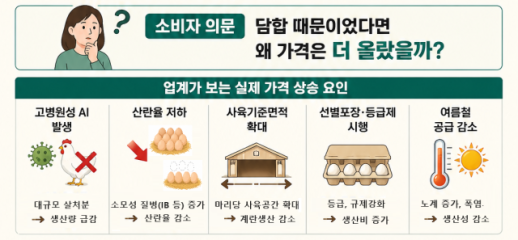 Egg Association Challenges Fair Trade Commission's Collusion Sanction The Egg Association has contested the Fair Trade Commission's (FTC) sanctions for alleged collusion. The association claims that the recent surge in egg prices is due to a decrease in production caused by disease outbreaks, not the association's price notifications. The association has announced plans to file an administrative lawsuit against the FTC's fine of 594 million won. In a statement on June 8, the Egg Association pointed out that "it has been over a year since the association stopped providing price reference information, yet egg prices have reached record highs." This statement was made in response to the FTC's assertion last month that the association's benchmark prices had led to increased farm gate prices, resulting in the fine. According to the association, some small to medium-sized supermarkets are selling 30-egg cartons for over 9,000 won, and there are even purchase limits in place. Additionally, the food service industry is reportedly reducing egg usage, indicating ongoing supply instability. The association cited several factors contributing to the price increase, including culling due to highly pathogenic avian influenza (AI), decreased laying rates from diseases, expanded farming area policies, and increased costs from grading systems. They also argued that the cessation of price reference information has made it difficult to gauge farm transaction prices, leading to greater market uncertainty. The association also expressed opposition to the Ministry of Agriculture's review of the potential cancellation of its establishment license based on Article 38 of the Civil Act. This article states that a government authority can revoke a license if an organization conducts business outside its purpose, violates licensing conditions, or engages in actions detrimental to the public interest. Kim Kyung-doo, executive director of the Egg Association, stated, "Price notifications served as a barometer for understanding the breakeven point for eggs by considering feed costs and trends in egg imports. The transparent disclosure of farm prices also prevented the distribution sector from arbitrarily raising prices." He added, "I understand that the FTC's decision will be released this month, and we plan to respond with an administrative lawsuit." In contrast, the Ministry of Agriculture maintains that the price notifications themselves violate the conditions of the association's approval. A ministry official stated, "The Egg Association was granted its establishment license on the condition that it would not issue price notifications, and the association has continued to do so. Our stance on reviewing the cancellation of the establishment license remains unchanged."* This article has been translated by AI. 2026-06-08 13:45:00