

Journalist

Michael Head
-
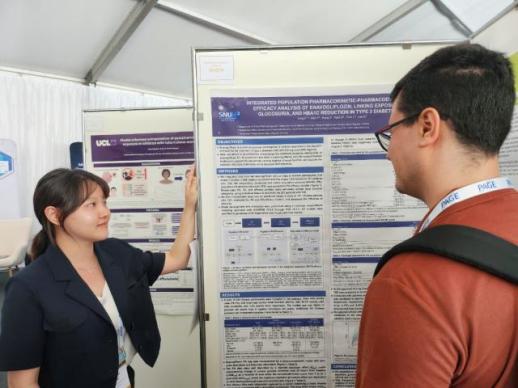 Daewoong Pharmaceutical's Enblo Shows Consistent Blood Sugar-Lowering Effects in Korean and Chinese Patients Daewoong Pharmaceutical has strengthened its case for global expansion by quantitatively establishing the relationship between the drug action of its Type 2 diabetes treatment, Enblo (ingredient name: Inavogliflozin), and its blood sugar-lowering effects. The company announced on June 8 that it presented research findings on the correlation between drug exposure and blood sugar reduction for Enblo at the European 2026 PAGE conference held from June 2 to 4. Enblo, a member of the SGLT-2 inhibitor class, works by inhibiting glucose reabsorption in the kidneys, leading to increased glucose excretion in urine. The study integrated data from 10 clinical trials involving 224 Korean participants and Phase 3 clinical data from 151 Chinese patients with Type 2 diabetes. It analyzed the quantitative relationship between increased glucose excretion in urine and decreased hemoglobin A1c (HbA1c) levels following Enblo administration, uniquely connecting drug absorption to changes in blood sugar indicators within a single integrated model. The analysis confirmed a correlation between increased glucose excretion and greater reductions in HbA1c levels following Enblo treatment. Notably, the blood sugar-lowering effects were predicted to remain stable even in patients with impaired kidney function. Additionally, no significant pharmacokinetic differences were observed between Korean and Chinese patients, confirming the potential for administering the same dosage. Daewoong Pharmaceutical plans to use these research results as a basis for its global approval and indication expansion strategies. The company is actively pursuing the expansion of Enblo into global markets. In May, it received approvals in seven out of twelve Latin American countries, including Mexico, for product registration. Na Jae-jin, head of Daewoong Pharmaceutical, stated, "The confirmation of consistent pharmacokinetic characteristics in Chinese patients strengthens our scientific basis for entering the global market. We will solidify the competitiveness of our domestic diabetes new drug, Enblo."* This article has been translated by AI. 2026-06-08 13:48:00
 -
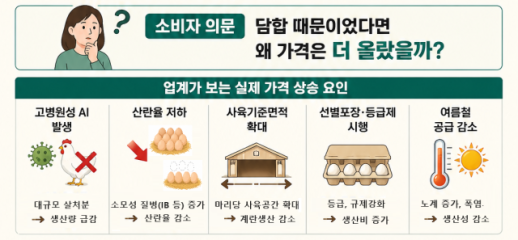 Egg Association Challenges Fair Trade Commission's Collusion Sanction The Egg Association has contested the Fair Trade Commission's (FTC) sanctions for alleged collusion. The association claims that the recent surge in egg prices is due to a decrease in production caused by disease outbreaks, not the association's price notifications. The association has announced plans to file an administrative lawsuit against the FTC's fine of 594 million won. In a statement on June 8, the Egg Association pointed out that "it has been over a year since the association stopped providing price reference information, yet egg prices have reached record highs." This statement was made in response to the FTC's assertion last month that the association's benchmark prices had led to increased farm gate prices, resulting in the fine. According to the association, some small to medium-sized supermarkets are selling 30-egg cartons for over 9,000 won, and there are even purchase limits in place. Additionally, the food service industry is reportedly reducing egg usage, indicating ongoing supply instability. The association cited several factors contributing to the price increase, including culling due to highly pathogenic avian influenza (AI), decreased laying rates from diseases, expanded farming area policies, and increased costs from grading systems. They also argued that the cessation of price reference information has made it difficult to gauge farm transaction prices, leading to greater market uncertainty. The association also expressed opposition to the Ministry of Agriculture's review of the potential cancellation of its establishment license based on Article 38 of the Civil Act. This article states that a government authority can revoke a license if an organization conducts business outside its purpose, violates licensing conditions, or engages in actions detrimental to the public interest. Kim Kyung-doo, executive director of the Egg Association, stated, "Price notifications served as a barometer for understanding the breakeven point for eggs by considering feed costs and trends in egg imports. The transparent disclosure of farm prices also prevented the distribution sector from arbitrarily raising prices." He added, "I understand that the FTC's decision will be released this month, and we plan to respond with an administrative lawsuit." In contrast, the Ministry of Agriculture maintains that the price notifications themselves violate the conditions of the association's approval. A ministry official stated, "The Egg Association was granted its establishment license on the condition that it would not issue price notifications, and the association has continued to do so. Our stance on reviewing the cancellation of the establishment license remains unchanged."* This article has been translated by AI. 2026-06-08 13:45:00
 -
 Kakao Faces Crisis: Breaking the Cycle of Distrust is Essential for Survival "For a platform with market dominance, making money is straightforward. By adding profitable services, revenue and operating profit can increase immediately. The challenge lies in addressing the dissatisfaction of existing users caused by excessive commercialization," said a senior executive at Kakao during a meeting in the spring of 2020. At that time, he expressed little concern about revenue but was worried about user retention, emphasizing that losing users due to aggressive commercialization would lead to a loss of market dominance. As he predicted, the addition of a few profitable services led to a surge in revenue and operating profit. The external environment was also favorable, with KakaoTalk users showing high loyalty during the COVID-19 pandemic and the online advertising market experiencing explosive growth. It seemed that nothing could halt Kakao's growth. In June 2021, Kakao's stock price surpassed 170,000 won, earning it the labels of a national stock and a royal stock. That marked the peak, and the decline has continued for five years. Three significant events contributed to this downturn. First, Kakao faced controversy over its decision to spin off Kakao Bank and Kakao Pay for public listing, leading to accusations of 'chop-up listing.' Additionally, the expansion into businesses like flower delivery, hair salons, and taxi services sparked debates over encroachment on local markets. Critics believed that Kakao's management chose an easy path to profit, neglecting the issues arising from this approach. There were claims that they lost sight of their original intentions. The final blow came with the 'stock option cash-out' scandal involving Kakao Pay's executives. Just a month after its listing, eight executives, including the CEO, sold 440,000 shares simultaneously, pocketing approximately 90 billion won in profits. This led to a sharp decline in stock prices and prompted the government to introduce a 'stock market cash-out prevention law,' causing significant public outrage. The executives involved had already made hundreds of millions of won and left the company without hesitation. This departure sparked extreme distrust among employees, who felt that only the executives benefited while the staff was left behind. Despite promoting a culture of horizontal communication and 'crew' dynamics, there was an underlying sense of discord and cynicism. The accumulated structural contradictions have now manifested as labor-management conflicts. The resignation of the Chief Product Officer, who led a major overhaul of KakaoTalk, further deepened this distrust. After initiating a significant redesign that faced strong user backlash, he left without addressing the concerns. While the circumstances differed, it bore similarities to the previous stock option scandal. The labor union criticized the executives for abandoning their responsibilities, stating, "They left behind problems and fled again," highlighting the burden now placed solely on the remaining employees to resolve the fallout from management's mistakes. This perspective illustrates the profound depth of the labor-management conflict at Kakao. CEO Jeong Shin-a apologized and initiated organizational restructuring to mend relations, but restoring the shattered trust will require far more than superficial fixes. Rebuilding lost trust demands a time investment several times greater than what was initially lost. The issues created by past management must be addressed by the current leadership, as they are responsible for the company. As Kakao enters the AI era, its competitors are forming alliances with global tech giants to enhance their competitiveness. Each is finding its own direction. If Kakao ultimately falls behind in the AI race, the consequences will again fall on the employees left behind. Once more, the executives may depart, deepening the distrust among staff. The only solution is to break the cycle. It will be difficult to resolve issues through forced concessions where both sides take a step back. The management must provide assurance that they are completely severing ties with the past, where short-term results took precedence over employee welfare. Continuous understanding and responsible management are the only ways to eliminate the distrust that has built up over the past five years. 2026-06-08 13:42:00
 -
 Naver's '1784' Building Emerges as AI Infrastructure Hub, Attracting Global Leaders Jensen Huang, CEO of NVIDIA, is scheduled to visit Naver's '1784' building on the afternoon of June 8. This meeting marks his second engagement with Naver during his visit to South Korea, following a meeting with SK Group Chairman Chey Tae-won and LG Group Chairman Koo Kwang-mo on the evening of June 5. The Naver '1784' building serves as a space where the company's robotics, autonomous driving, artificial intelligence (AI), 5G, and cloud technologies are implemented in a real work environment. It has been utilized by global leaders and foreign dignitaries to assess Naver's AI infrastructure capabilities. Notably, it has been a focal point for discussions on smart city and digital twin collaborations in the Middle East from 2022 to 2023, and this year it is expanding its role to encompass AI semiconductor, data center, and cloud collaborations. According to the IT industry on June 8, Jensen Huang and Naver's Board Chairman Lee Hae-jin are expected to discuss the roadmap for a global AI factory business and detailed plans for joint market entry at the Naver '1784' building. Through this collaboration, Naver aims to integrate its cloud operations and data center expertise with NVIDIA's GPU and AI infrastructure technologies to target the business-to-business (B2B) AI infrastructure market. The '1784' building is designed as a robot-friendly facility, incorporating robotics, AI, cloud, and 5G specialized network technologies into its operations. Naver is using the building as a reference and testbed for smart buildings. In practice, autonomous robots like 'Rookie,' a robot-only elevator called 'Roboport,' and robotic arms like 'Ambidex' are operational in the work environment. This year, the '1784' building has also expanded its role to discussions on AI semiconductors, data centers, and cloud collaborations. In March, AMD CEO Lisa Su visited '1784' as her first schedule in South Korea, where she met with Naver CEO Choi Soo-young. Naver and AMD signed a memorandum of understanding (MOU) to expand the AI ecosystem and collaborate on next-generation infrastructure. With Jensen Huang's visit, '1784' is emerging as a venue for global AI infrastructure collaboration discussions. Previously, '1784' was used as a venue for high-ranking officials from the Middle East to observe Naver's digital twin and smart city technologies. In November 2022, the visit of Majed Al Hogail, Saudi Arabia's Minister of Municipal and Rural Affairs, marked the beginning of cooperation between Naver and Saudi Arabia. The following October, Naver secured a project to build a digital twin platform for five cities, including Riyadh, from the Saudi Ministry of Municipal and Rural Affairs. The capabilities demonstrated at '1784' in robotics, AI, cloud, and digital twin technologies have translated into actual overseas projects. In 2023, a high-level delegation from the Sharjah royal family in the United Arab Emirates, along with Abdullah bin Touk Al Mari, UAE Minister of Economy, and officials from the Dubai Future Foundation, visited the '1784' building to explore Naver's robotics, digital twin, and AI technologies and discuss potential cooperation in smart city and digital infrastructure. Visits from international organizations and foreign government officials have continued. Ngozi Okonjo-Iweala, Director-General of the World Trade Organization (WTO), visited '1784' during her trip to South Korea in 2023 to explore possibilities for digital transformation and technological cooperation. High-ranking officials from the U.S. Department of State, Singapore's Ministry of Communications and Information, and the Austrian Parliament have also visited '1784.' The ability to observe Naver's robotics, AI, and cloud technologies in one location has been a key reason for these visits. Naver stated, "The '1784' building is not just an office but a space for demonstrating robot services and smart building technologies in a real work environment. The data generated by over 3,000 users daily serves as the foundation for technological advancement. The technologies and solutions validated at '1784' are being expanded into collaborations with Japan's NTT Group and global smart city projects in Saudi Arabia and beyond."* This article has been translated by AI. 2026-06-08 13:42:00
 -
 Musinsa Expands into China with Tmall Global Launch Musinsa is expanding its reach in the Chinese market by opening an official online store on Tmall Global, the largest overseas direct purchase platform in China.According to Musinsa, the Tmall Global store will serve as a gateway for Chinese consumers to quickly access the latest K-fashion trends. Last year, Musinsa opened a flagship store on Tmall, and with this new entry into Tmall Global, the company aims to target both the domestic market and overseas direct purchase demand simultaneously.This launch focuses on lowering the barriers for domestic designer brands entering the Chinese market. Musinsa stated, "It is significant that small and medium-sized fashion brands, which have found it difficult to enter the Chinese market, can now meet more Chinese customers through simplified procedures."Musinsa plans to provide a one-stop overseas expansion solution that integrates support for technology linkage, logistics, marketing, and customer service. Partner brands can connect their products registered on the domestic Musinsa store to sales on the Musinsa Global store and Tmall Global.Additionally, Musinsa will conduct large-scale marketing activities, including campaigns linked to Tmall Global, customer benefit promotions, and live broadcasts, to enhance brand recognition and support local sales growth.A Musinsa representative said, "We will lead the global growth of emerging brands and the expansion of K-fashion based on the platform's strengths in curation, distribution, and marketing."Meanwhile, Musinsa's overseas business performance is rapidly growing. In the first quarter of this year, the combined export performance from the global store and offline sales in China reached approximately 15.3 billion won, an increase of 11.9 times compared to the same period last year. The proportion of exports in total sales also rose from 0.44% in the first quarter of last year to 4.2% this year.* This article has been translated by AI. 2026-06-08 13:39:00
 -
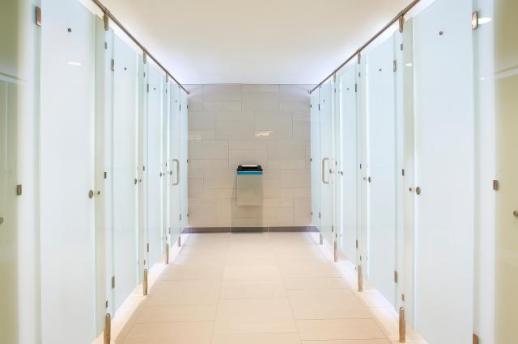 Man Charged for Sprinkling Capsaicin on Toilet Paper in Women's Restroom A 21-year-old man has been charged for sprinkling a harmful substance on toilet paper in a women's restroom at a commercial building in Seoul. On June 2, the Seoul Central District Prosecutors' Office announced that Kim, a social service worker, was indicted on charges of injury and violating the Sexual Violence Punishment Act. According to prosecutors, Kim is accused of spraying capsaicin on toilet paper in a women's restroom in the Sillim-dong area of Gwanak-gu on April 26, causing injury to one woman. Around 9 p.m. that day, a woman reported experiencing pain after using the contaminated toilet paper. Police responded to the call, collected the tainted paper, and arrested Kim two days later after he turned himself in. Investigations revealed that Kim had entered the restroom more than seven times since January to install a miniature camera, capturing images of four women using the facilities. Initially, Kim claimed during police questioning that the substance on the toilet paper was adhesive used for camera installation. However, tests conducted by the National Forensic Service confirmed it was capsaicin. Capsaicin is the active component that gives chili peppers their heat, and contact with skin can cause burning, stinging, and severe pain. High concentrations can lead to symptoms such as hyperventilation and increased blood pressure. If capsaicin comes into contact with skin, it is recommended to wash the area with soap and lukewarm water or wipe it with fatty substances like milk or yogurt, as capsaicin dissolves better in oil than in water. If inhaled, individuals should move to an area with fresh air, and if symptoms worsen, seek immediate medical attention. 2026-06-08 13:36:00
 -
 Concerns Rise Over Market Volatility Ahead of SpaceX IPO As SpaceX prepares for its record-breaking initial public offering (IPO), concerns are growing about potential volatility in global stock markets. Fortune reported on June 7 that while there is increasing enthusiasm on Wall Street for buying shares ahead of the SpaceX IPO, significant buying demand could lead to the sale of other assets, thereby increasing overall market volatility. SpaceX plans to sell over 555 million shares at $135 each, aiming to raise at least $75 billion. This would push the company's valuation beyond $1.75 trillion. If underwriters exercise additional allocation options due to high demand, the total amount raised could increase to $85.7 billion. The final offering price is expected to be set on June 12, with trading on Nasdaq anticipated to begin on June 13 under the ticker symbol 'SPCX.' Greg Boutle, head of U.S. equity derivatives strategy at BNP Paribas, noted in a report that while the market can likely absorb much of the capital flow related to SpaceX, the issue lies in the potential for these flows to accumulate in the same direction. He estimated that the available shares during the SpaceX IPO could reach around $75 billion, and if $30 billion in passive buying, retail investor chasing, leveraged ETFs, and options flows converge simultaneously, it could strain the liquidity of the stock. This could lead to a heightened risk of price distortion if everyone attempts to buy or sell at once. Market observers are noting that the SpaceX IPO could disrupt existing capital flows in the stock market. Although S&P Dow Jones has decided not to change its rules for early inclusion of SpaceX in the S&P 500, Nasdaq 100 regulations have been adjusted. This is expected to generate buying demand from passive funds linked to tech-focused indices. Such buying demand is likely to be offset by sales of other stocks. Boutle estimated that retail and passive investors might sell around $50 billion worth of other stocks to fund their SpaceX purchases. If SpaceX shares perform strongly after the IPO, this figure could increase. There are predictions that recently surging artificial intelligence (AI) and semiconductor stocks could be among those sold. A significant portion of retail investors' assets is tied up in popular tech stocks, and given the substantial rise in AI-related companies' stock prices in recent years, these could be targeted for liquidation. Boutle suggested that the sharp decline in the New York stock market on June 6, led by semiconductor stocks, could be an early signal of such price distortions. He projected that the volume of sales from retail investors liquidating recently high-flying stocks and leveraged products to invest in SpaceX could be substantial. The SpaceX IPO may also signal the beginning of a wave of IPOs from major tech companies, adding to market pressures. Fortune noted that OpenAI and Anthropic are also planning to go public this year, and demand for investments in these key AI firms is expected to be high. Additionally, secondary offerings from other big tech companies, including Alphabet, the parent company of Google, are raising concerns about whether the market can absorb all the newly available shares.* This article has been translated by AI. 2026-06-08 13:33:00
 -
 Israel Launches Additional Strikes Against Iran Despite Trump’s Pleas Israel has conducted additional airstrikes against Iran. This escalation follows reports that U.S. President Donald Trump urged Israeli Prime Minister Benjamin Netanyahu to refrain from further attacks, raising new complications for ongoing U.S.-led negotiations aimed at ending hostilities with Iran. On June 8, local time, the Israeli military announced it targeted military sites in western and central Iran. The Iranian Revolutionary Guard claimed that Israel used air-launched ballistic missiles in the strikes. The Israeli military stated it aimed at missile launch sites and infrastructure unrelated to the energy sector. The attacks came after Iran launched missiles aimed at Israel. The Iranian Revolutionary Guard indicated that the Ramath David Air Force Base near Nazareth was the target. The Israeli military confirmed intercepting missiles launched from Iran and reported that one missile was fired from Yemen towards Israel, which was also intercepted by its defense systems. The timing of the attacks is significant. President Trump spoke with Prime Minister Netanyahu for about 30 minutes the previous day at his Bedminster, New Jersey, residence. According to U.S. officials cited by Reuters, Trump urged Netanyahu to exercise restraint, stating, "We are getting close to doing something good regarding the agreement." Trump emphasized that further clashes would not impact the negotiations, telling the Financial Times, "The agreement will not be affected. I make the decisions, not Netanyahu." The U.S. is continuing discussions on a plan to end the war with Iran. Key issues in the negotiations include preventing nuclear weapons development, reopening the Strait of Hormuz, easing sanctions, and handling frozen assets. Iran has linked the maintenance of a ceasefire in Lebanon to the terms of the agreement, while Israel insists that the Lebanese front with Hezbollah should be treated separately from the ceasefire with Iran. On the previous day, Israel also conducted airstrikes in the southern Dahieh area of Beirut, which is known as a stronghold for the Iran-aligned militant group Hezbollah. Netanyahu described the strikes as a response to Hezbollah's attacks, but the continuation of Israeli strikes following the Trump administration's proposal for a ceasefire has heightened Iranian backlash. The military tensions have also impacted the energy market. Reuters reported that news of the Israel-Iran clashes caused international oil prices to rise by over 3% early in the trading session, with Brent crude futures surpassing $96 per barrel.* This article has been translated by AI. 2026-06-08 13:30:00
 -
 SK Hynix and NVIDIA Partner to Develop Next-Generation Memory for AI Factories SK Hynix and NVIDIA are collaborating on the development of next-generation memory to build an essential infrastructure for the artificial intelligence (AI) era, known as the "AI factory." The two companies aim to establish a long-term technology partnership that integrates AI throughout the semiconductor design and manufacturing processes, accelerating their efforts to lead the AI semiconductor ecosystem.On June 8, SK Hynix announced an expansion of its strategic cooperation with NVIDIA to enhance global AI infrastructure. Building on years of collaboration, the companies will jointly develop next-generation memory optimized for AI factories and work together on innovations in semiconductor design and manufacturing.The focus of this partnership is the development of memory for next-generation AI systems. SK Hynix plans to co-develop memory for NVIDIA's upcoming AI supercomputer, "Vera Rubin," as well as for the Vera CPU, RTX Spark PC, and Jetson Thor robotics platform. The strategy also includes expanding their collaboration into personal AI and physical AI markets.Considering the long development cycles of advanced memory, the companies will establish a stable supply chain. They plan to timely supply next-generation memory in line with NVIDIA's AI computing platform roadmap to meet the growing demand for global AI data center investments.The collaboration will also extend into semiconductor development. SK Hynix is enhancing semiconductor simulation performance using NVIDIA's CUDA-X library and PhysicsNeMo framework. The goal is to improve the speed and accuracy of key development processes, including technology computer-aided design (TCAD) for analyzing process characteristics and computational lithography for implementing ultra-fine circuits.The two companies plan to further expand their collaboration into electronic design automation (EDA) and overall simulation. This initiative aims to create a "triangular cooperation system" involving semiconductor manufacturers, AI platform companies, and EDA software firms to boost semiconductor development productivity.In the field of manufacturing innovation, advancements in digital twin technology are being pursued. SK Hynix is utilizing NVIDIA's Omniverse and OpenUSD technologies to create a three-dimensional virtual representation of actual semiconductor factories, allowing for real-time analysis and optimization of production environments. They also plan to establish an autonomous manufacturing system linked to AI-based work processes in the future.Jensen Huang, founder and CEO of NVIDIA, stated, "The AI factory is the engine of the next industrial revolution, and advanced memory is key to its performance. SK Hynix has been an outstanding partner, playing a crucial role in providing advanced memory technology for NVIDIA's AI computing platform. Together, we will co-develop next-generation memory for AI factories and support the acceleration of global AI infrastructure expansion from frontier model training to agentic AI and physical AI."Chey Tae-won, Chairman of SK Group, remarked, "This partnership demonstrates the depth of collaboration that SK Hynix and NVIDIA have built over the years. By jointly developing next-generation memory for AI factories and applying AI to semiconductor design and manufacturing, we will shape the future of AI infrastructure together."* This article has been translated by AI. 2026-06-08 13:21:00
 -
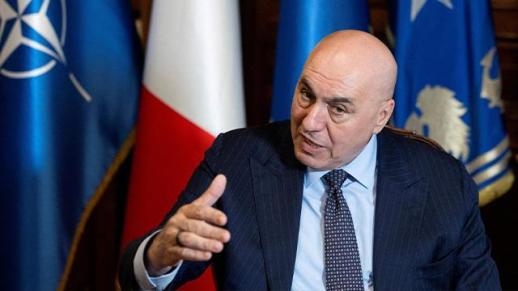 Italy's Defense Minister Advocates for NATO Expansion to Include Global Partners Guido Crosetto, Italy's Defense Minister, has called for the expansion of the North Atlantic Treaty Organization (NATO) to include countries beyond Europe and North America. He specifically mentioned South Korea, Japan, India, Brazil, and Australia as potential partners. In an interview published on June 5, Crosetto stated, "The world has changed," emphasizing that NATO must consider new strategic partners. He argued that NATO should not remain solely a military alliance centered on Europe and North America. Crosetto remarked, "NATO was created to provide security and stability to a region of the world. Now, we need an organization that can ensure safety and stability globally." He insisted that NATO should not continue to be a "club for global northern elites." However, his comments do not suggest an immediate push for NATO membership for countries like South Korea. Instead, they highlight the need to reassess NATO's role and scope. According to Article 10 of the North Atlantic Treaty, NATO membership is currently limited to European countries that can contribute to the security of the North Atlantic area. For nations outside Europe, such as South Korea and Japan, formal membership would require changes to the existing treaty and consensus among member states. Crosetto also proposed a European self-defense initiative, which he described as a plan for a "European continental defense" involving 40 countries, including the 27 European Union member states, along with the United Kingdom, Norway, Turkey, and Ukraine. He submitted this proposal to defense ministers and NATO leaders in April. He clarified that this initiative is not intended to replace NATO but to enhance Europe's defense responsibilities within the alliance. The urgency for such measures has increased following Russia's invasion of Ukraine and discussions by U.S. President Donald Trump regarding potential reductions of American troops stationed in Europe, prompting European nations to strengthen their own defense capabilities. Crosetto noted that the U.S. has not officially notified the Italian government of any troop withdrawals. However, he acknowledged that the U.S. is demanding increased defense spending. He highlighted ongoing debates in Italy regarding military versus welfare spending, stating, "We need to explain to voters that the world we live in is much more unstable and unsafe than it was ten years ago."* This article has been translated by AI. 2026-06-08 13:15:00