

Journalist

Michael Head
-
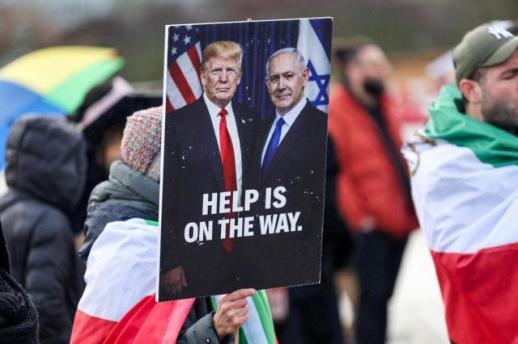 100 days of conflict in Middle East with no end in sight SEOUL, June 8 (AJP) - One hundred days in, the U.S. finds itself trapped in a conflict it didn't fully plan for and can't easily end. When American and Israeli warplanes struck Iran on Feb. 28, the operation seemed almost surgical in its ambition. Within hours, Iran's Supreme Leader Ali Khamenei was dead, and confidence was running high in Washington. Many believed Iran might quickly unravel, much as Saddam Hussein's regime collapsed within weeks of the U.S. invasion in 2003. U.S. President Donald Trump, never one to undersell a moment, boasted the conflict in the Middle East would be over "in four to five weeks." But 100 days on, the conflict has evolved into a grinding stalemate, with no clear end in sight. What was promised and what has been achieved are starkly different. Iran's theocratic regime — battered, grief-stricken and economically strangled — has not collapsed. Ali Khamenei's son, Mojtaba, has stepped into the role, and if anything, the hard-liners around him have consolidated power rather than cracked under pressure. Once again, the Islamic Republic has shown itself to be more than any single man. The human cost, meanwhile, has been staggering. Iranian military and civilian casualties have surpassed 3,500 dead, with tens of thousands wounded. About a dozen American service members have been killed. Even countries like Oman and the United Arab Emirates (UAE), thought to be bystanders, have seen casualties on their soil. This was not supposed to be that kind of war. And then there is the Strait of Hormuz. Iran's decision to block the critical chokepoint, through which roughly one-fifth of the world's oil passes, transformed a military operation into an economic crisis with global consequences. The number of vessels transiting the strait fell from roughly 100 per day to just a few. U.S. crude prices surged nearly 40 percent. Oil inventories dropped to their lowest level in more than two decades. Norwegian energy consultancy Rystad Energy estimates that repairing damage to Middle East energy infrastructure could cost up to $60 billion. The diplomatic landscape also looks nearly as bleak. The coalition of Gulf Arab states has frayed badly following Iranian attacks on neighbors cooperating with Washington. North Atlantic Treaty Organization (NATO) allies declined Trump's request for military support, leaving a lasting bruise on the alliance. The U.S. and Israel, long bound by an almost unconditional partnership, now look at each other with growing suspicion, with American officials involved in back-channel negotiations reportedly fearing that Israeli intelligence services have been listening in on their conversations in what they believe goes beyond the permissive standards of allied espionage. Talks continue, fitfully, with Pakistan serving as an unlikely intermediary. Washington and Tehran have come tantalizingly close to a broad framework that would begin with the full reopening of the Strait of Hormuz to restore shipping, and then proceed to formal nuclear negotiation. But disagreements on core issues remain unresolved. Trump insists that Iran cannot be allowed to possess nuclear weapons, while Iran demands that sanctions be lifted and some $24 billion in frozen assets released before any meaningful concessions. Trump's own remarks reflect how stalled the conflict has become. Early last week, he said a deal could come "this weekend" and that Iran was "quite close" to signing. But just a few days later, he was comparing the conflict to Viet Nam, saying, "You know, the Vietnam War lasted 19 years," as if it did not matter. Tensions continue with repeated attacks and retaliation. The U.S. and Iran have exchanged drone and missile strikes, but neither side wants full-scale war, and neither can find an exit. In Lebanon, Israel has expanded its strikes on Hezbollah in the south. When the U.S. launched its airstrikes on Iran, the Trump administration had two goals: regime change in Tehran and the destruction of Iran's nuclear program. But neither has been achieved. The leadership has changed, but the regime has not. Nuclear facilities were struck, but Iran's remaining highly enriched uranium, the material that could be turned into a weapon, remains unresolved. Trump has been down this road before. During his first term in 2018, he withdrew from the nuclear deal signed under then-President Barack Obama, which had required Iran to reduce its enriched uranium stockpile by 98 percent from roughly 10,000 kg to 300 kg. With midterm elections in November approaching, Trump would need a better deal than Obama's, the one he could use to justify his war in Iran. In Washington, hard questions are being asked: why did this war begin, how does it end, and what does "winning" even mean? The bombs have fallen and talks continue, but these key questions remain unanswered. As the conflict reaches 100 days, the world waits to see whether this conflict ends in a handshake or something far worse. 2026-06-08 11:27:23
 -
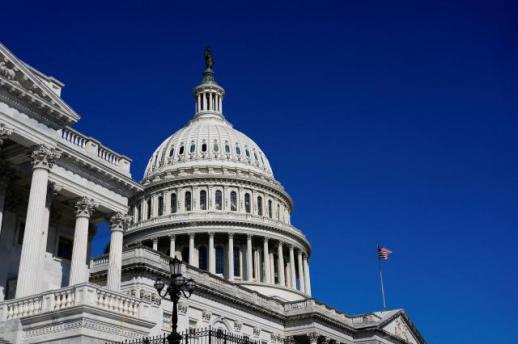 US House panel passes defense bill provision barring foreign construction of Navy warships SEOUL, June 08 (AJP) - A U.S. House committee has approved a provision in the fiscal 2027 defense policy bill that would prohibit the Navy from using funds to build warships at foreign shipyards, a move that could complicate Washington’s recent push to tap allied shipbuilding capacity, including South Korean yards. Rep. Jared Golden, a Democrat from Maine, said in a press release on Friday that the House Armed Services Committee had adopted his amendment to the fiscal 2027 National Defense Authorization Act, or NDAA, saying, “Under a provision in the NDAA approved by the House Armed Services Committee early this morning, the U.S. Navy will have to scrap plans to send shipbuilding jobs overseas.” The NDAA is an annual bill that authorizes defense spending and sets policy priorities for the Pentagon. It must still pass both the House and Senate and be signed by the president before taking effect. The House Armed Services Committee passed the fiscal 2027 NDAA on June 5 in a 44-12 vote after considering a series of amendments. Golden said two of his amendments were approved by the committee, including one aimed at blocking what he called the Navy’s outsourcing plan. According to his office, the amendment states that none of the funds authorized for the Navy in fiscal 2027 may be obligated or spent to enter into a procurement plan for a battle force ship that would be built in a foreign shipyard. “American military spending should support American jobs,” Golden said. “The idea that any part of our surface fleet would be built on foreign soil, by foreign labor, is unacceptable.” He added that the plan posed a threat to U.S. industry, jobs and national security. The provision is not final, as the bill still needs approval from the full House and must be reconciled with the Senate’s version. Still, if the restriction survives the legislative process, it could affect recent Pentagon discussions on using allied shipyards to help procure next-generation naval vessels. South Korean shipbuilders have been seen as possible partners as Washington seeks to address delays, cost overruns and limited capacity in its own naval shipbuilding sector. The move could also weigh on broader South Korea-U.S. shipbuilding cooperation under the MASGA initiative, short for “Make American Shipbuilding Great Again,” which has been promoted as part of efforts to strengthen U.S. maritime industrial capacity through cooperation with allies. Breaking Defense reported last month that the Pentagon had requested $1.85 billion to study and potentially procure future Navy ships from allied shipbuilders, including yards in South Korea and Japan. South Korean shipbuilders have expanded their presence in the U.S. shipbuilding and maintenance market in recent years, while Seoul and Washington have discussed ways to link Korea’s shipbuilding capacity with U.S. efforts to rebuild its maritime industrial base. 2026-06-08 11:22:19
 -
 Key highlights from Nvidia CEO Jensen Huang's Seoul itinerary SEOUL, June 8 (AJP) - Nvidia's CEO Jensen Huang is in the final leg of his four-day visit to Seoul, which included meetings with business leaders, artificial intelligence (AI)-related startups and entrepreneurs, and researchers. His trip also featured a visit to T1 Base Camp, where he met T1 players including esports player Faker, as well as a television appearance and a ceremonial first pitch at a baseball stadium in Jamsil, southern Seoul. He also had another casual gathering over chicken and beer with tech business leaders and executives, a reminder of his visit here last fall. The visit comes as Nvidia deepens cooperation with major South Korean memory-chip makers and other partners amid surging global demand for AI chips. 2026-06-08 11:19:04
 -
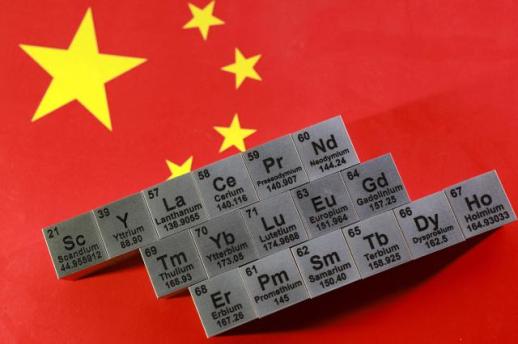 China's Rare Earth Exports to Japan Plummet by Over 80% China's tightening of export controls on rare earth elements has raised alarms for Japan's critical supply chains. As securing materials essential for electric vehicles (EVs), advanced electronics, and semiconductor equipment becomes increasingly difficult, Japanese companies are accelerating efforts to diversify their sources, turning to Australia and India. According to an analysis by the Nikkei, China's customs trade statistics revealed that exports of seven rare earth elements targeted by export restrictions dropped by 88% in March and 82% in April compared to the same months last year. Cumulatively, exports from January to April fell by 34% year-on-year. Notably, the decline in March and April significantly exceeded the 42% drop observed immediately after China implemented export restrictions on these elements in May of the previous year. The Chinese government introduced export regulations on Dysprosium, Terbium, and five other rare earth elements in April 2022. Since January of this year, it has intensified scrutiny on exports to Japan under the guise of dual-use items that can be utilized for both military and civilian purposes. The Nikkei noted that the deterioration of Sino-Japanese relations following comments made by Japanese Prime Minister Sanae Takaichi in November 2022 regarding Taiwan has likely influenced these developments. With China accounting for approximately 70% of global rare earth production, it appears to be leveraging this dominance to exert economic pressure on Japan. An official from the Japan-China Economic Association reported that during a Sino-Japanese summit in October 2022, China had temporarily eased some export restrictions. However, the official added, "Since the beginning of this year, government-to-government exchanges have ceased, leading to a complete halt in exports to Japan that had been temporarily sustained." In terms of specific items, there have been no exports of Dysprosium and Terbium to Japan since January. These elements are crucial for high-performance magnets used in EV motors and enhance the heat resistance of magnets. Although exports remained unstable after the introduction of China's export regulations in April 2022, there were signs of recovery toward the end of last year amid easing U.S.-China tensions. However, with the cooling of Sino-Japanese relations this year, exports to Japan have effectively ceased. Yttrium, used in medical devices, semiconductor manufacturing equipment, and aerospace applications, has also faced significant impacts. From January to April this year, China's exports of yttrium to Japan plummeted by over 90% compared to the same period last year. Yttrium is a material used in laser-related equipment and is difficult to replace in the short term. Exports of high-performance magnets that utilize rare earths are also facing disruptions. A representative from a Japanese company told the Nikkei, "Export permits for high-performance magnets containing Dysprosium and other elements are hardly being issued." China is known to dominate over 90% of the global market for subsequent processes such as rare earth separation, refining, and alloy processing. In response to the reduced reliance on China, Japanese companies are seeking alternative sources. JX Metals is investing in Australian mines rich in rare earth deposits. Proterial (formerly Hitachi Metals) is considering building a neodymium magnet factory in India that does not use heavy rare earths. Australia ranks third globally in rare earth production, while India is sixth. Mitsubishi Materials has decided to invest in a U.S. company specializing in rare earth recycling technology. However, establishing a supply chain to replace China in the short term is challenging. An executive from a major Japanese manufacturing firm expressed concern, stating, "If the current situation continues, it could disrupt production in Japan, potentially leading to factory shutdowns." Some companies have begun assembling motors and electronic components that use rare earth magnets in China before importing them to Japan. The Japanese government is monitoring the possibility that companies may shift production bases to China to avoid procurement difficulties. In 2010, during a period of heightened tensions over the Senkaku Islands, China temporarily halted rare earth exports to Japan, which subsequently led to an increase in local production by Japanese magnet companies and enhanced the technological capabilities and market influence of Chinese firms.* This article has been translated by AI. 2026-06-08 11:18:00
 -
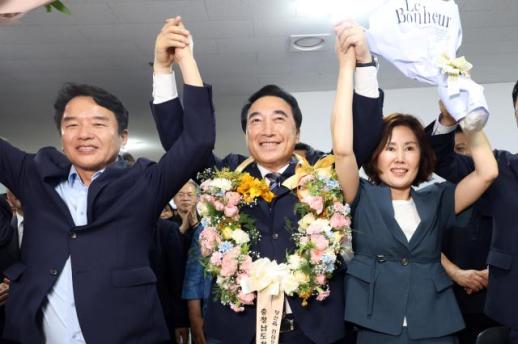 Park Soo-hyun: Chungnam Must Become South Korea's AI Manufacturing Capital "Governor, Chungnam is the heart of South Korea's manufacturing industry. However, in the age of AI, the winners will not be the regions with the most factories, but those that innovate the fastest. Will you keep Chungnam as a manufacturing city, or will you make it the capital of South Korea's AI manufacturing revolution?" Chungnam has always been a hidden champion in South Korea's industrial history. Key industries such as semiconductors in Cheonan, automobiles and displays in Asan, steel in Dangjin, and petrochemicals in Seosan have supported the country's export and manufacturing competitiveness. However, as AI changes the rules of industry, past success formulas can no longer guarantee the future. Park Soo-hyun, the newly elected governor of Chungnam, has made 'AI Capital Chungnam' his top pledge, declaring a 'Chungnam AI Transformation' that encompasses manufacturing, administration, agriculture, care, education, and healthcare. He also presented a broader vision of completing the administrative integration of Chungnam and Daejeon. Chungnam now stands at a critical crossroads. Will it remain a success story of the industrial era, or will it redesign the future of South Korean industry through the AI manufacturing revolution? Manufacturing Powerhouse Chungnam Faces a Future Without AI Transition Chungnam's strength lies in its manufacturing sector. The region hosts South Korea's leading industries, including semiconductors, displays, automobiles, steel, petrochemicals, and batteries. During the industrial era, Chungnam's power was its production capacity; competitiveness was determined by how much could be produced and how quickly. However, the AI era is redefining manufacturing itself. Now, competitiveness stems not from the size of factories but from the scale of data. It arises from algorithms that enhance productivity rather than sheer output, and from the ability to utilize AI rather than just machinery. In the past, labor determined productivity; in the future, AI will take that role. The era of predicting machine failures before they occur, analyzing supply chain risks in advance, and optimizing production processes autonomously has already begun. Park Soo-hyun's emphasis on 'AI Capital Chungnam' reflects this reality. He defines AI not as a tool for specific industries but as a new public infrastructure that will transform all sectors of life, including manufacturing, agriculture, healthcare, education, and administration. It is crucial to note the current situation in Chungnam. The region is not merely experiencing growth; it is in the midst of a significant industrial transformation. The steel and petrochemical industries face global oversupply and pressure for carbon neutrality. The battery industry is also confronting new challenges from slowing global market growth and competition from Chinese firms. The automotive sector is undergoing massive changes with the convergence of electric vehicles, hybrids, and autonomous driving technologies. Ultimately, Chungnam's future depends not on how many new factories are built but on how quickly existing industries can integrate AI. AI is not just an option for Chungnam; it is a matter of survival. Bay Valley Must Evolve into an AI Mega-ClusterA key aspect of Park Soo-hyun's administration is Bay Valley. However, it is important to clarify that Bay Valley is not a project originally proposed by Park. It is a super-regional economic project that former Governor Kim Tae-heum promoted as a core initiative of the 8th elected Chungnam administration. The plan envisions a large industrial belt connecting Cheonan, Asan, Dangjin, Seosan, and Yesan with Pyeongtaek, Hwaseong, Anseong, Ansan, and Siheung in Gyeonggi Province. The challenge for Park's administration is not to create new projects but to upgrade the existing Bay Valley for the AI era. The reason is clear. Bay Valley is already a core pillar of South Korea's manufacturing sector, with concentrations of semiconductors, displays, automobiles, batteries, steel, and energy. The issue is that these industries still remain in their respective domains.In the AI era, the winners will be the regions that connect industries, not the individual industries themselves. Semiconductors are no longer just about the semiconductor industry. They are connected to automobiles and AI. Batteries connect the automotive and energy sectors. Displays are becoming essential components for AI devices and future mobility. Chungnam already possesses all these elements. Cheonan and Asan have semiconductors and displays. Asan has the automotive industry. Dangjin and Seosan have steel and energy industries. The challenge lies in the connections. For Bay Valley to have true significance, it must evolve from an industrial belt into an AI mega-cluster. Semiconductor companies must connect with automotive firms, battery companies with AI firms, and universities, research institutes, startups, and large corporations must form a cohesive ecosystem. The vision of AI Capital Chungnam articulated by Park Soo-hyun must start from this connectivity. Bay Valley should become a platform for industrial innovation, not just an expansion of industrial complexes. Chungnam-Daejeon Integration: A Survival Strategy for the AI Era Another key pledge from Park Soo-hyun is the administrative integration of Chungnam and Daejeon. Many view this integration as a simple administrative reorganization. However, Park sees it as having much greater significance. He views the integration of Chungnam and Daejeon as central to South Korea's balanced development strategy and has reiterated his commitment to pursuing this integration since his election. In the AI era, the unit of competition is no longer individual cities but vast economic regions. The United States has Silicon Valley, China has the Shenzhen-Guangdong economic region, and Japan has the Tokyo megacity.Chungnam, on its own, has limitations. However, when connected with Daejeon, the narrative changes. Chungnam is strong in manufacturing, while Daejeon excels in research and development. Chungnam has industrial sites, while Daejeon has research personnel. Chungnam has production capacity, while Daejeon has technology. The combination of these strengths could create South Korea's largest AI manufacturing innovation belt. The true significance of Park Soo-hyun's vision for AI Capital Chungnam lies here. It is not merely about attracting a few AI companies; it is about transforming the entire region into an AI-based economic zone. It aims to create a new growth axis where manufacturing, research and development, energy, mobility, universities, and industries are interconnected. Ultimately, the success of Park Soo-hyun's administration will not be measured by the number of pledges made. What matters is not how many factories were attracted, but how many factories have transitioned to AI. It is not about how much budget was secured, but how many future jobs were created. It is not about how many buildings were constructed, but how strong an innovation ecosystem was established. In the AI era, Chungnam's competitors are not Chungbuk or Sejong. They are the manufacturing innovation regions of the United States, Shenzhen in China, and industrial clusters in Germany. If Chungnam succeeds in the AI manufacturing revolution, South Korea's manufacturing sector could leap forward once again. :SWOT Analysis: Strength: Chungnam has the largest manufacturing belt in South Korea, encompassing semiconductors, displays, automobiles, steel, petrochemicals, and batteries. Governor Park Soo-hyun has proposed 'AI Capital Chungnam' as his top pledge and is pursuing an AI transformation strategy that applies AI across industries and administration, agriculture, and welfare. He also has a vision for the super-regional growth of Chungnam-Daejeon administrative integration. Weakness: The AI industry base and venture ecosystem are relatively weaker compared to the capital region. The high proportion of traditional manufacturing industries like steel and petrochemicals may face shocks during the industrial transition. Opportunity: The AI manufacturing revolution presents new opportunities for Chungnam. If Bay Valley and the Chungnam-Daejeon integration materialize, the largest AI industrial zone in the country could be formed, combining research and development with manufacturing. Threat: Challenges such as slowing growth in the battery industry, competition from Chinese manufacturing, restructuring in the steel and petrochemical industries, and population decline pose real threats to Chungnam. Failure to transition to AI could weaken existing manufacturing competitiveness.* This article has been translated by AI. 2026-06-08 11:18:00
 -
 Korea's Drug Agency Discusses Clinical Trial Approval Reforms with Industry The Korea Food and Drug Administration (KFDA) is set to collaborate with the pharmaceutical industry to revise the clinical trial approval and review system. Recently, South Korea's pharmaceutical and biotech sector has been recognized as the 'second innovation engine' in Asia, following China. However, a decline in clinical trials and a slowdown in new drug approvals have been identified as weaknesses, prompting the government to accelerate discussions on regulatory improvements.On June 5, the KFDA held a meeting titled 'Regulatory Innovation for Clinical Trial Approval' to address industry concerns and discuss necessary reforms. This meeting aimed to establish a foundation for rapid clinical approvals in response to the changing global clinical trial landscape and to enhance the competitiveness of the approval and review process.The KFDA plans to review the policy recommendations and discussions from the meeting to incorporate them into future regulatory improvements and policy operations.Shin Jun-soo, Director of the KFDA's Drug Safety Bureau, stated, "We will continuously listen to voices from the field and rationally improve regulations to ensure a balance between securing clinical trial safety and accelerating development, while maintaining communication with the industry."The KFDA has been discussing improvements to the clinical trial system since last year, resulting in the creation of a supplementary casebook for clinical trial plan approvals and criteria for selecting participants in early-stage cancer clinical trials.Meanwhile, ING Research, the economic and financial market analysis arm of the global financial group ING, recently published a report titled 'Korea: The Second Innovation Engine in Asia,' in which it described South Korea as "one of the most trusted countries for biopharmaceutical innovation in Asia."However, ING Research pointed out that for the growth of South Korea's biopharmaceutical industry to continue, improvements in clinical trials and the regulatory environment are essential. According to the report, the number of ongoing domestic clinical trials decreased from 2,307 in 2024 to 2,175 last year. The number of new drug approvals also fell by 38% from 23 in 2024 compared to the previous year.ING Research emphasized that reforms in drug pricing systems, expedited approval processes, clear patent protections, and improvements in insurance coverage will determine whether Korea can advance as a global leader in innovative drug development.* This article has been translated by AI. 2026-06-08 11:15:00
 -
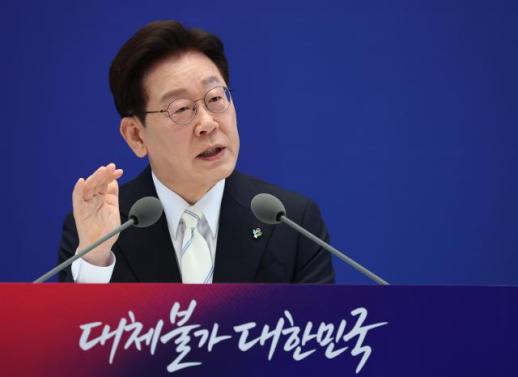 Lee vows to nurture super-gap growth engines beyond semiconductors SEOUL, June 08 (AJP) - South Korean President Lee Jae Myung marked his first year in office on Monday by unveiling plans to aggressively expand the country's economic focus, pledging to discover and nurture global super-gap growth engines beyond the semiconductor sector. Lee assumed the presidency on June 4 last year, following a snap election triggered by the December 2024 impeachment of his predecessor, Yoon Suk Yeol, who had briefly declared emergency martial law. Lee framed his first year in office as a period of overcoming the resulting crisis of democracy and stabilizing the nation, setting the stage for a new era of proactive national growth. Speaking during a press conference at the state guest house at the presidential Blue House, Lee declared 2026 as the year South Korea begins its bold dream of becoming an irreplaceable nation. He presented four primary national objectives aimed at transforming the country into an industrial powerhouse where all citizens share the economic benefits. "I will continuously discover and nurture 'global super-gap growth engines' that will serve as South Korea's next-generation cash cows in industrial sectors other than semiconductors," Lee said. To execute this vision, the president promised to unveil a large-scale investment project soon, designed to fundamentally shift the national economic strategy. He emphasized that the financial rewards of this expansion must not remain trapped within specific corporations or regions, but must instead flow to small and medium-sized venture companies and spread evenly across the country. "I will carefully monitor the highly supported National Growth Fund so that it can fulfill its role for the growth of everyone, and I will also prepare measures to utilize the excess tax revenue generated by semiconductors in the most effective way," Lee said. On the security front, Lee committed to elevating South Korea's standing as a global diplomatic and military power under the principle that peace directly supports economic livelihoods. The government has recently accelerated efforts to build an independent defense framework in response to shifting global alliances and regional security demands. "I will do my best to ensure that the precious diplomatic and security achievements made over the past year, such as the revision of the South Korea-US nuclear energy agreement, the introduction of nuclear-powered submarines, and the push for an early recovery of wartime operational control, bear concrete fruit," Lee said. Domestically, the president promised to aggressively dismantle privileges and correct market irregularities to build a society where rules are respected. He vowed to strictly punish crimes that harm the economic well-being of the public. "I will thoroughly crack down on civil crimes that disrupt market order, such as stock manipulation and real estate offenses, and I will unwaveringly implement structural reform tasks to dismantle privileges," Lee said. "I will run with all my might, as if every single day given to me is my last day in office, so that this government will be more anticipated for the next four years than it was over the past year," Lee said. 2026-06-08 11:13:21
 -
 Paradise City to Host World-Class Bartending Competition Finals Top bartenders from across South Korea will compete for a coveted championship ticket at Paradise City in Incheon, Yeongjongdo.Paradise City announced on June 8 that it will host the finals of the international bartending competition, "World Class Korea 2026," in collaboration with beverage company Diageo. The event will take place on June 13 at the live music lounge bar "Rubik."Now in its 17th year, World Class is the largest bartending competition globally, featuring around 10,000 bartenders from over 60 countries who advance through national qualifiers to compete for the title of the world's best.Rubik is a cultural space where guests can enjoy live performances by domestic and international artists alongside cocktails crafted by professional mixologists. Last November, the venue hosted a guest bartending event featuring Park Hee-man, the winner of "World Class Korea 2025," which drew significant attention. The event combined unique cocktails with jazz performances from 7 PM to 11 PM, receiving enthusiastic responses from attendees.Notably, the finals will feature legendary mixologist Ago Perrone, who elevated the bar at London's five-star hotel "The Connaught" to international acclaim. He will serve as a judge and perform a bartending demonstration for the first time in South Korea. Contestants in the top 10 will present cocktails using martinis and tequila "Don Julio" as a tribute to Perrone. The top five will then face a pairing challenge, creating cocktails that complement dishes prepared by Chef Kim Ho-yoon, known for his appearance on the entertainment show "Black and White Chef Season 2," to determine the ultimate winner.Following the competition, a special guest bartending event will take place featuring Ago Perrone, Kim Do-hyung from "Zest," and Park Hee-man from "Ace for Club." Chef Kim Ho-yoon's signature dish, "Herb Shrimp Porridge," will also be served.Paradise City continues to enhance the global competitiveness of South Korea's bar culture. On June 12, the day before the finals, a "Six Hands Gala Dinner at Sarase" will be held at the on-site fine dining restaurant, featuring Chef Kang Min-goo from the only Michelin 3-star restaurant in Korea, "Mingles," Chef Shin Chang-ho from New York's Michelin 2-star "Joo Ok," and bartender Lim Byeong-jin, who represents Korean bar culture.Paradise City recognizes cocktails as a vital component of fine dining and aims to promote bar culture through immersive dining experiences that integrate plating and bar pairing. A representative from Paradise City stated, "We will strive to contribute to the growth and recognition of South Korea's bar culture centered around the live music bar Rubik, and we will continue to enhance our culinary content to provide customers with new cultural inspiration and experiences within the hotel."* This article has been translated by AI. 2026-06-08 11:09:00
 -
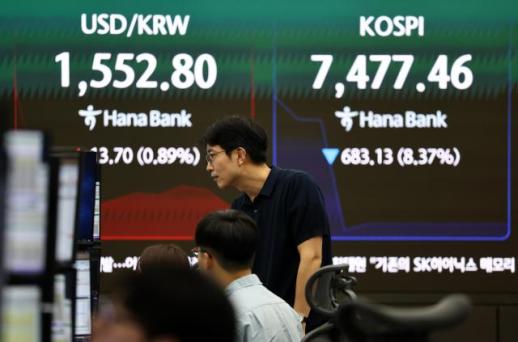 Won hits 17-yr low at open, bonds extend losses SEOUL, June 8 (AJP) - The South Korean won fell to its weakest level at the start of trading on Monday, hitting a 17-year low as the currency was battered by expectations of a hawkish Fed and speculative offshore bets amid the prolonged conflict in the Middle East. The domestic debt market also suffered a severe rout, spreading intense volatility across broader financial markets. The won opened at 1,555.2 won per dollar, tumbling 16.1 won from the previous session. This marks the lowest level for the local currency since March 6, 2009, when it began trading at 1,597 won during the global financial crisis. Severe weakness had already materialized in the offshore non-deliverable forward (NDF) market, where the rate broke through 1,560 won over the weekend. Meanwhile, retail exchange rates at several physical booths fell below 1,600 won. Market sentiment crumbled after stronger-than-expected U.S. non-farm payrolls fueled expectations that the Federal Reserve, led by Chair Kevin Warsh, would pivot back to raising interest rates. Following the data, the Nasdaq plunged over 4 percent and the Philadelphia Semiconductor Index crashed more than 10 percent, while the U.S. Dollar Index surged past the 100 level. These dual pressures are being directly reflected in South Korea's equity and foreign exchange markets. The benchmark KOSPI triggered a circuit breaker after plunging 8.37 percent to open at 7,477.46, while foreign investors offloaded over 900 billion won (US$578.7 million) during the morning session, further compounding downward pressure on the won. As the currency rattled, heads of the nation's four financial watchdogs convened an emergency meeting on Sunday to issue high-intensity warnings against speculative one-way bets. Despite repeated hawkish signaling from Bank of Korea governor Shin Hyun-song hinting at rate hikes, exchange rate anxieties have shown no signs of calming. While financial authorities refrained from announcing explicit direct interventions, market participants suspect that dollar-selling measures, including currency swaps with the National Pension Service, are actively underway. After opening around 1,550, the won pared some early losses to trade near the upper 1,550s by mid-morning. "While direct smoothing operations cannot be officially confirmed, we are observing tangible movements to cushion the currency's floor," an FX trader said on the condition of anonymity. The debt market also faced severe disruption, with sovereign yields spiking to multi-year highs. As of early morning, the benchmark three-year government bond yield crossed 3.9 percent and the 10-year yield topped 4.3 percent, marking their highest levels since November 2023. Downward pressure intensified as a domestic interest rate hike is increasingly viewed by the market as a foregone conclusion. Sentiment was further dampened as major global sovereign debt yields spiked in tandem, with the 30-year U.S. Treasury yield breaking above the 5 percent threshold. South Korea's phased inclusion into the World Government Bond Index (WGBI) since April was intended to drive foreign capital inflows, but external shocks have completely muted its impact. A near-record net purchase of 10-year bonds by foreign investors on June 2 proved short-lived, as it was driven primarily by temporary 30-year bond auction rollovers. 2026-06-08 11:06:46
 -
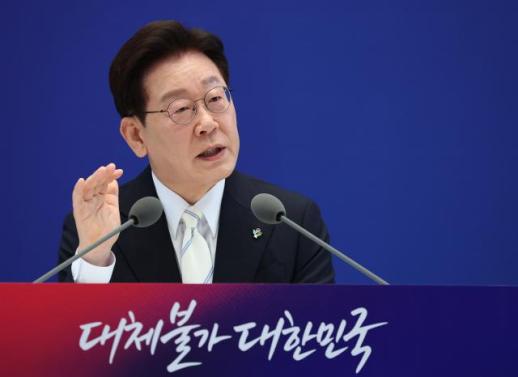 President Lee Addresses Inflation Amid Middle East Conflict President Lee Jae-myung addressed the inflation crisis resulting from the ongoing conflict in the Middle East during a press conference on June 8. He stated, "The issue is inflation," and emphasized his commitment to mobilizing the government's resources to minimize price increases. During the press conference held at the Blue House, Lee remarked, "The Middle East conflict does not seem likely to end easily in the near future." He noted that despite the current situation, oil supply has stabilized significantly, with over 87% of supply being managed through diversified import sources and stabilization measures. He acknowledged that there is still a shortfall of about 10%, but expressed confidence that it could be sufficiently managed through export controls. Lee also highlighted the government's strategies to combat high inflation, including implementing price controls, utilizing strategic oil reserves, and providing cost support for diversified import sources. He stated, "We are working to minimize inflationary pressures." Looking ahead, Lee asserted that by normalizing market order and managing unnecessary price surges, the worst-case scenarios could be avoided. He concluded that the overall inflation rate is being managed relatively stably compared to other countries.* This article has been translated by AI. 2026-06-08 11:03:00