
Journalist

Park Heewon
-
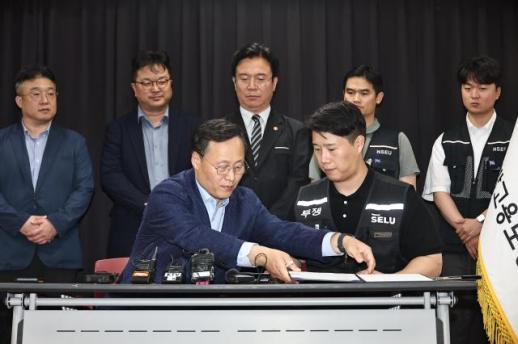 Samsung Electronics' Performance Bonuses Could Lead to High Tax Burden Samsung Electronics and its labor union have agreed to partially pay performance bonuses in company stock, raising concerns about the tax implications of these high bonuses. With the semiconductor supercycle, bonuses could reach up to 600 million won, pushing recipients into the highest income tax bracket of 42%. According to the National Tax Service on May 21, stock received as performance bonuses is classified as earned income under current tax law and is taxed in the same manner as cash bonuses. Taxes are assessed based on the market value at the time of payment, even if the stocks are not sold. The agreement to include company stock in performance bonuses is a first for Samsung Electronics, as the company and its labor union reached a tentative wage and collective bargaining agreement the previous day. A simulation by the National Tax Service indicates that for a family of three, with one spouse and one child over eight years old, a worker earning an annual salary of 100 million won without additional bonuses would face a tax liability of approximately 12.74 million won, with an additional payment of 2.66 million won after withholding taxes. If the same worker receives an additional performance bonus of 600 million won, their total salary would rise to 700 million won, and the taxable income would surge to 675.5 million won. This would place them in the highest tax bracket, resulting in a tax liability of 247.19 million won. After accounting for withholding taxes, they would still owe an additional 7.19 million won. However, this simulation does not include local income taxes. When factoring in local taxes, which are approximately 10% of the calculated tax amount, the total tax burden could approach 2.7 billion won. Analysts warn that since performance bonuses are paid in stock rather than cash, a decline in stock prices could exacerbate the perceived tax burden. Taxes are assessed at the time of payment, meaning that even if stock prices fall afterward, the tax already paid remains unchanged. The recent increase in performance bonuses among semiconductor companies is also impacting income tax revenues. In the first quarter of this year, income tax revenue rose by 4.7 trillion won year-on-year to reach 35 trillion won, largely due to increased bonuses at Samsung Electronics and SK Hynix.* This article has been translated by AI. 2026-05-21 20:37:01
 -
 Rising Demand for Health Supplements During Family Month As Family Month and Couples' Day approach, the demand for health supplements aimed at caring for parents and spouses is on the rise. Recently, the consumption of health supplements has expanded beyond simple gifts to focus on health management across generations. According to KGC, during this year's Family Month promotion period from April 23 to May 16, sales of its menopause health brand 'Hwaerak' increased by 1.3 times compared to the previous year. Sales of the men's vitality brand 'RXGIN' also rose by 1.4 times during the same period. Notably, there was a significant increase in sales among consumers in their 20s and those aged 50 and older. Consumers in their 20s showed a strong demand for gifts focused on their parents' health, while those over 50 demonstrated a higher proportion of purchases aimed at their own health management. KGC's women's health brand 'Hwaerak' focuses on products for managing menopause. Since its launch in 2003, it has continued research on women's health and has received recognition from the Ministry of Food and Drug Safety for its effectiveness in menopause health. The brand targets overall women's health based on functions such as immune enhancement, fatigue improvement, and blood circulation and memory enhancement. The flagship product, 'Hwaerak Jin Total Solution,' combines red ginseng with KGC's patented women's health formulation, deer antler extract, saffron extract, and low-molecular collagen peptides. It aims to address the complex health concerns of menopausal women while minimizing calorie content. The RXGIN men's vitality brand has also seen increased sales due to the rising demand for health gifts during Family Month. The recently renewed 'RXGIN Hongcheon-Woong' combines KGC's red ginseng concentrate with Rhodiola extract (SHR-5) and a blend of plant extracts including deer antler, goji berry, black raspberry, and five-flavor fruit, enhancing its formulation for men. Industry experts note that the consumption of health supplements is shifting from traditional 'filial gifts' to a lifestyle focused on meticulous family health management. Consumers in their 20s are seeking practical gifts for their parents' health, while the active senior demographic over 50 is increasingly investing in their current vitality and condition management rather than just preparing for old age. A KGC representative stated, "As Family Month and Couples' Day approach, more consumers are looking to care for the health of their parents and spouses. We plan to strengthen our product competitiveness tailored to health concerns across different life stages." Meanwhile, the Korea Health Supplements Association reported that the domestic health supplements market size reached 5.9626 trillion won last year. The purchase rate of health supplements within the past year hit 83.6%, the highest level recorded in the last five years.* This article has been translated by AI. 2026-05-21 20:34:30
 -
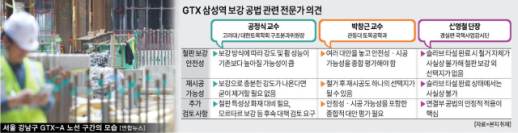 Will Steel Plate Reinforcement Ensure Safety at GTX Samsung Station? Concerns are growing over the structural safety of the GTX-A Samsung Station after it was revealed that rebar was missing from the construction site. Hyundai Engineering & Construction has proposed a "steel plate reinforcement method" to address the issue, but experts are questioning whether this approach can ensure safety. While adding steel plates to the exterior of concrete columns is being considered a practical solution, it must undergo comprehensive verification due to the unique characteristics of deep underground railway structures, including repeated train vibrations, fire resistance, and long-term maintenance. On May 20, the National Assembly's Land and Transport Committee held an urgent inquiry regarding the substandard construction at GTX-A Samsung Station. Minister of Land, Infrastructure and Transport Kim Yoon-deok stated, "We will conduct a comprehensive investigation of all columns and evaluate the reinforcement plan proposed by the Seoul City through accredited institutions to determine the optimal reinforcement method." The issue arose in the underground level five of the GTX platform at the Yeongdong-daero underground space complex development project. Out of 80 columns in this section, 50 were classified as not meeting structural standards. The design required two strands of 29-32 mm main rebar to be bundled together, but only one strand was placed during the concrete pouring process. Approximately 2,500 pieces of rebar, totaling 178 tons, were reported missing. As an alternative, Hyundai Engineering & Construction suggested wrapping the concrete columns with structural steel plates to enhance strength, a method estimated to cost around 3 billion won. The key question is whether this method can withstand the long-term usage conditions of the Samsung Station structure. Unlike ordinary buildings, the GTX Samsung Station is a deep underground railway transfer facility, which requires stricter scrutiny regarding load, vibration, and fire response standards. The Ministry of Land believes that the reinforcement plan proposed by Seoul City needs verification by accredited institutions. The effectiveness of the steel plate reinforcement method depends on the steel plates and concrete columns functioning as a single structure, necessitating verification of adhesive durability, bonding strength, connection quality, and fire resistance performance. Experts acknowledge the structural benefits of steel plate reinforcement but emphasize the importance of long-term maintenance and verification processes. Professor Gong Jeong-sik from Korea University, who chairs the Structural Division of the Korean Society of Civil Engineers, stated, "Reinforcing with steel plates could significantly increase strength depending on the method used. However, additional measures may be necessary to address fire risks, and the stability of the connection method will be crucial." Professor Park Chang-geun from Kwandong University noted that redoing the construction could be an option, but the Ministry of Land should comprehensively assess various alternatives for safety and feasibility. Conversely, some experts argue that redoing the construction may not be practical. Shin Young-cheol, head of the Economic Justice Action Citizens' Coalition's National Project Monitoring Team, explained, "If the slab has already been poured on top of the columns, demolition is practically impossible. Realistically, there may not have been many options other than steel plate reinforcement." Shin also pointed out issues related to subcontracting and inadequate oversight. He stated, "It appears that both the construction company and the supervisory team delegated responsibilities to subcontractors without proper verification, and the failure to check the rebar placement before pouring concrete is the biggest issue." A representative from Hyundai Engineering & Construction remarked, "After reviewing various structural analysis methods, the opinion from Seoul City is that there are no structural problems. We are focusing on how to safely repair and reinforce the structure."* This article has been translated by AI. 2026-05-21 20:33:00
 -
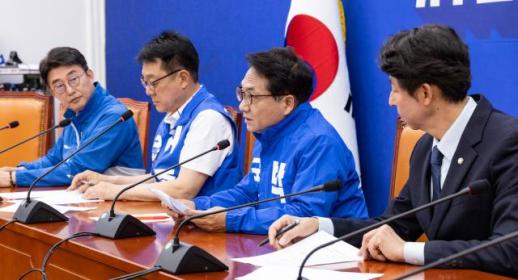 Democratic Party Demands Resignation of Incheon Mayor Candidate Over Crypto Allegations The Democratic Party on May 21 publicly demanded the resignation of Yoo Jeong-bok, the People Power Party's candidate for Incheon mayor, following the release of recordings that suggest he may have concealed virtual assets. The party also indicated plans to file a complaint against him. During a press conference at the National Assembly, lawmakers representing Incheon, including Heo Jong-sik, Noh Jong-myeon, Park Sun-won, and Lee Hoon-ki, unveiled recordings involving an individual identified as A, who is believed to have managed Yoo's virtual assets, and Yoo's spouse, Choi. According to Noh, the recordings indicate that during Yoo's tenure as mayor in April 2024, A and Choi discussed how to handle asset declarations, including a suggestion to receive virtual assets through the overseas exchange Binance. He further revealed an additional recording, likely made in December 2024, stating, "It is presumed that virtual assets were maintained in an overseas account from April to December. Yoo's claim of 'managing his brother's money' lacks credibility." Lee added, "Despite the obligation to disclose virtual assets for public officials established in 2023, Yoo failed to report accurately and misled the public with flimsy lies. Immediate compulsory investigations should be conducted, and Yoo must apologize and resign from his candidacy." The Democratic Party also mentioned that the campaign for Incheon mayor candidate Park Chan-dae is considering additional legal actions, including a formal complaint. Noh stated, "The campaign's complaint is expected to be filed on May 22. We have been verifying the matter and reviewing legal actions."* This article has been translated by AI. 2026-05-21 20:27:00
 -
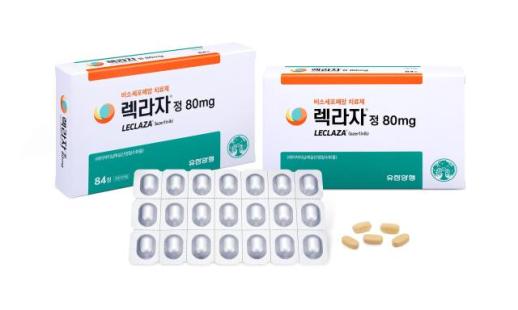 Emerging Drugs Transform South Korea's Pharmaceutical Landscape The landscape of South Korea's pharmaceutical industry is changing. The focus has shifted from domestic and wholesale markets to global sales and royalties from new drugs in markets such as the United States, Europe, and Japan. Major companies like Yuhan, GC Green Cross, HK Inno.N, and SK Biopharm are increasingly competing on the international stage.According to the pharmaceutical industry on May 21, the sales performance of new drugs approved in advanced markets and the accompanying licensing and royalty income have become key components of annual results for domestic pharmaceutical companies.Yuhan is a leading example of this trend, having joined the "2 trillion won club" last year. Its non-small cell lung cancer treatment, Lecare (known as 레이저티닙 in Korea), received approval in major markets like the U.S. and Europe, leading to stable overseas sales and royalty income that boosted the company's revenue. Analysts expect Lecare's milestones and royalty income to drive growth, projecting operating profit to exceed 100 billion won this year, following a similar performance last year.In 2018, Yuhan licensed Lecare to Johnson & Johnson's subsidiary Janssen for approximately $950 million, of which it has received about $300 million to date. This agreement also anticipates additional milestones and over 10% in sales royalties as global sales expand.GC Green Cross aims to enter the "2 trillion won club" this year, led by its immunoglobulin product, Aliglo. The company is currently collaborating with local pharmaceutical firms for co-commercialization in major markets, particularly showing strong sales growth in the U.S. Analysts project Aliglo's U.S. sales to reach around $300 million by 2028.SK Biopharm is fundamentally changing its performance structure through its product, Cenobamate. Since its launch, Cenobamate has rapidly gained market share in the U.S., achieving annual sales between $400 million and $600 million, establishing itself as a key product in the global market.In the first quarter of this year, Cenobamate's U.S. sales reached 197.7 billion won, a 48.4% increase compared to the same period last year. As of March, the total monthly prescriptions (TRx) for Cenobamate reached approximately 47,000 and continues to trend upward.HK Inno.N entered the "1 trillion won club" for the first time last year, driven by its gastroesophageal reflux disease treatment, K-Cab. The domestic product, K-Cab, recorded prescription sales of 58.5 billion won in just the first quarter, contributing significantly to its growth.An industry insider stated, "Companies with new drugs targeting global markets are becoming the performance leaders. The structure is such that domestic prescriptions serve as a foundation, while overseas performance creates the premium, indicating a shift in the domestic pharmaceutical industry towards R&D and global commercialization capabilities."* This article has been translated by AI. 2026-05-21 20:24:00
 -
 Samsung and SK Hynix Labor Disputes Intensify Over Profit-Linked Bonuses Following an agreement between Samsung Electronics and its labor union to link bonuses to operating profits, demands for profit-sharing bonuses based on a percentage of operating income are expected to grow louder. Concerns are rising that escalating labor disputes and feelings of relative deprivation could undermine the competitiveness of South Korea's industries. On May 21, industry sources indicated that the tentative agreement on bonuses at Samsung Electronics could signal a new phase in labor relations. The focus of negotiations has shifted from wage increases and job security to the previously secondary issue of profit-linked bonuses. Professor Hwang Yong-sik of Sejong University expressed concern that the Samsung union's approach, which mirrors that of SK Hynix, may encourage other unions to adopt a similarly hardline stance. He stated, "This has essentially ignited a new spark of labor conflict in the industry." The demand for profit-linked bonuses is already spreading across various sectors. Industries entering a so-called supercycle, such as shipbuilding, power equipment, and defense, are particularly vocal about these demands. The integrated union of HD Hyundai Heavy Industries has proposed that over 30% of operating profits be allocated for bonuses. Similarly, unions at Hyundai Motor and LG Uplus plan to prioritize profit-sharing bonuses in their collective bargaining agreements. The union at Samsung Biologics is requesting 20% of operating profits, while Kakao's subsidiaries are asking for 13-15%. Emeritus Professor Choi Jun-sun of Sungkyunkwan University Law School explained, "The original intent of profit-sharing bonuses was to provide a flexible compensation mechanism that could reduce labor costs during downturns. However, the current discussions lack any consideration of shared responsibility when operating losses occur." Currently, among South Korea's top 30 companies, only Samsung Electronics, SK Hynix, and KT are operating or planning to implement profit-linked bonus systems. SK Hynix agreed in 2021 to allocate 10% of its operating profits for bonuses and decided to distribute the full amount of that percentage last September, coinciding with the onset of a semiconductor supercycle. KT also reached an agreement in 2021 to allocate 10% of its operating profits for bonuses. Experts widely agree that a profit-based bonus system is not suitable for South Korea's manufacturing sector, which is characterized by cyclical booms and busts. A CFO from a mid-sized company remarked, "From a financial perspective, a profit-based bonus system is only applicable in industries like telecommunications, where annual revenue and operating profit can be accurately predicted based on ARPU (average revenue per user). In cyclical industries like semiconductors, automobiles, shipbuilding, steel, petrochemicals, and shipping, this system could severely diminish funds for research and development, mergers and acquisitions, shareholder returns, and crisis management during downturns." Previous implementations of such systems at SK Hynix and KT have faced criticism for lacking sophisticated financial modeling. In fact, SK Hynix introduced its system in response to employee dissatisfaction over lower bonuses during semiconductor downturns, while KT's decision was influenced by employee grievances regarding lower compensation compared to competitors and issues surrounding executive reappointments. In contrast, Samsung Electronics has set a financial safety net, stipulating that bonuses linked to operating profits will only be paid if profits exceed a specific threshold (100 trillion to 200 trillion won). As industries entering a boom period receive bonuses in the hundreds of millions, feelings of deprivation among workers in struggling sectors like steel and petrochemicals are likely to intensify. These sectors have reported little to no bonuses or only minimal consolation payments in the past year due to oversupply issues stemming from China. Employees at Yeocheon NCC, once known for its high salaries, now face large-scale layoffs due to restructuring in its naphtha cracking facility.* This article has been translated by AI. 2026-05-21 20:16:54
 -
 Samsung Electronics Faces Internal Strife Despite Wage Agreement Samsung Electronics has narrowly avoided a total strike by reaching a tentative wage agreement, but internal labor conflicts are intensifying. Tensions are rising not only between the Semiconductor (DS) and non-Semiconductor divisions but also within the DS division itself, particularly between memory and non-memory sectors, complicating efforts to stabilize the situation.As of May 21, anonymous posts on Samsung Electronics' internal community have escalated, with employees criticizing the performance bonus criteria outlined in the tentative agreement. Many in the excluded mobile and consumer electronics (DX) division are expressing feelings of betrayal, alienation, and deprivation. The fallout from the negotiations aimed at preventing a total strike is shaking the organization to its core.The conflict between the DS and DX divisions is particularly acute, with employees in these sectors representing a 60-40 ratio. DX employees argue that their contributions helped sustain overall company performance during the semiconductor downturn, and they feel that the recent agreement undermines their efforts. Some are advocating for the establishment of a separate union for the DX division, especially as certain DS sectors, despite posting losses, are expected to receive substantial bonuses.Internal divisions within the DS sector are also significant. Tensions are growing between the memory division, which has driven performance, and the non-memory sectors, such as foundry and system LSI. Expected bonuses for the non-memory division, projected to be around 160 million won, are only a quarter of the 600 million won bonuses anticipated for memory employees. Non-memory staff claim that the union has neglected their interests, while memory employees argue that guaranteeing bonuses for loss-making divisions is unfair.For Samsung Electronics' management, resolving these internal conflicts has become a top priority. Critics point out that the synergy that once characterized the company has dissipated, leaving behind a culture of departmental self-interest. The discord between the DS and DX divisions is likely to persist. Currently, DX union members have filed a court petition to halt collective bargaining, claiming that the leadership of the Samsung Electronics branch of the labor union acted unilaterally without the consent of all members.* This article has been translated by AI. 2026-05-21 20:14:35
 -
 Samsung's New Compensation Model Raises Concerns Over Profit Sharing Samsung Electronics, South Korea's largest company, has avoided a total strike but has accepted a tentative agreement that ties a portion of its operating profit to long-term performance bonuses. This move has raised concerns that it could set a new standard for compensation practices across South Korean companies. According to industry sources on May 21, Samsung Electronics' management and labor union reached a dramatic agreement around 10:30 p.m. the previous day, postponing a planned total strike and agreeing on wage and performance bonus terms. The agreement will be put to a vote among union members from May 23 to 28. The anticipated first strike in the company's history has been halted. However, if the agreement passes the union vote, Samsung will be obligated to pay special management performance bonuses annually for the next ten years, contingent on achieving a minimum operating profit threshold. This effectively institutionalizes the allocation of some operating performance to long-term compensation. Allowing bonuses for loss-making divisions poses a larger issue. During negotiations, both sides reportedly found common ground by recognizing a certain level of distribution for loss-making units, deferring penalties for one year. Despite management's insistence on the principle of rewarding performance, they ultimately conceded. Professor Hwang Yong-sik of Sejong University expressed concern, stating, "Institutionalizing performance bonuses in loss-making situations could undermine the principle of meritocracy. Compensation should be the result of performance, and broadly recognizing losses could lead to moral hazard, increased cost rigidity, and weaken companies' investment capacity." In the business community, there are concerns that this agreement could serve as a 'new normal' for labor relations in South Korea, given the tendency of local companies to benchmark Samsung's practices. A precedent has been set where unions may demand a share of corporate profits. Despite government mediation, the agreement tilted in favor of the union, raising the likelihood of similar demands in low-performing or loss-making divisions in the future. This is particularly concerning in cyclical industries such as refining, shipbuilding, batteries, automotive, and steel, where performance-based bonuses tied to peak results could severely impact corporate management. A representative from a major corporation noted, "Samsung has effectively served as a benchmark for the compensation system in Korean manufacturing. This agreement is likely to lead to other large companies facing similar demands, with unions arguing, 'If Samsung can do it, why can't we?'" If the tentative agreement is approved by union members, the total strike will be called off. However, the 'Samsung situation' may not be over but rather just beginning, as internal conflicts over performance bonuses and compensation pressures across industries are expected to intensify. Kim Yong-seok, a distinguished professor at Gachon University's Semiconductor School and a former Samsung employee, cautioned, "Fixing temporary performance due to market improvements into a decade-long system is quite risky, especially with a structure that distributes bonuses to loss-making divisions, which could weaken motivation across the entire organization." He added, "The compensation structure created by Samsung could influence other corporate unions, making it difficult to rule out demands for minimum compensation even in loss-making situations across other industries."* This article has been translated by AI. 2026-05-21 20:12:00
 -
 Samsung's Performance Bonuses Could Increase Severance Pay by Sixfold Samsung Electronics and its labor union have agreed to a performance bonus system that will allocate more than 10% of business performance as bonuses, including a special management performance bonus based on 10.5% of the semiconductor division's (DS) business performance, to be maintained for the next decade. While the company has specified conditions for bonus payments, such as achieving an operating profit of 200 trillion won in the DS division, concerns remain that these bonuses could be included in the average wage used to calculate severance pay, potentially increasing the company's severance obligations by more than eightfold, which could negatively impact the South Korean economy. According to industry sources on May 21, the special management performance bonuses agreed upon by Samsung and its union are not expected to be included in the regular wage calculations. The Supreme Court's full bench ruling in 2024 stated that for bonuses to be considered part of regular wages, they must meet criteria of regularity, uniformity, and fixity. The general consensus is that this agreement does not satisfy all three conditions. Specific conditions outlined in the agreement, such as achieving 200 trillion won in operating profit in the DS division from 2026 to 2028 and 100 trillion won annually from 2029 to 2035, along with unspecified minimum payment amounts and the variability of the total fund based on 10.5% of business performance, do not qualify as 'value of labor' according to recent court rulings on regular wages. Despite the expectation that the special management performance bonuses will not be included in regular wages, there are concerns that they could still be factored into average wages in the future. Severance pay is calculated by multiplying the average wage over the last three months before retirement by the length of service. If bonuses amounting to several hundred million won are included in the average wage, the severance pay burden on companies could increase significantly. Recently, the Supreme Court ruled that if bonuses are predetermined based on individual employee standards and exhibit a degree of 'fixity,' they should be considered in the calculation of average wages for severance pay. If Samsung's promised separate bonuses are perceived as predetermined wages, they could indeed be included in average wages. A legal expert noted, "If this agreement is explicitly stated in the collective bargaining agreement and operates for ten years, the court may interpret that the payment obligation has been institutionally confirmed beyond mere practice. In this case, there could be an increase in lawsuits from retirees claiming average wages." A simulation conducted by Aju Economic Research based on the performance bonuses calculated under the Samsung Electronics labor agreement indicates that the average severance pay per employee could increase sixfold compared to current levels. Assuming an average annual salary of 100 million won and one year of service, the severance pay per employee, currently at 8.2 million won, could rise to 56.7 million won, reflecting a 592% increase when factoring in the special management performance bonuses. When converted into severance pay based on years of service, the severance pay for employees at the assistant manager and manager level with five years of service would increase from 41 million won to 283.5 million won when including bonuses. For employees with ten years of service (senior manager and department head level), severance pay would rise from 82 million won to 567 million won, and for those with twenty years of service (senior managers and executives), it would increase from 164 million won to 1.134 billion won. Last year, Samsung Electronics had 78,000 employees in the DS division, with an average length of service of 12 years. This implies that Samsung could face an additional severance pay burden of 582 million won per employee. The total severance pay liability could increase from approximately 8 trillion won to 45 trillion won, a 463% rise. While the likelihood of this scenario materializing is low, given the court's ruling and the assumption of all employees leaving, it raises concerns within the business community about potential legal disputes in the future. Looking ahead, a key issue will be the extent to which the conditions for performance bonuses are linked to labor outcomes. An industry source commented, "The specific conditions proposed by Samsung, such as achieving 200 trillion won in annual operating profit in the DS division, are dependent on external factors like the AI semiconductor big cycle and surging memory prices, rather than labor outcomes. If bonuses are paid under such circumstances, the connection to labor compensation may be diluted, making it less likely to be included in average wages."* This article has been translated by AI. 2026-05-21 20:06:35
 -
 Samsung Electronics Reaches Wage Agreement Amid Performance-Based Pay Focus Samsung Electronics has reached an agreement on wage and collective bargaining negotiations this year. The fact that both labor and management found common ground amid prolonged conflicts and the potential for strikes is a positive development. This resolution could signal a meaningful shift in the industrial landscape, demonstrating that a leading domestic company can find solutions through negotiation rather than extreme confrontation. However, for this agreement to be regarded as a true success, it must also gain the trust of shareholders and investors, beyond merely satisfying labor interests. In recent years, Samsung has emphasized a performance-based compensation system. The goal is to differentiate rewards based on performance and contributions rather than seniority and tradition, thereby enhancing the organization’s innovative capabilities. In the context of intensifying global technological competition, this approach is seen as an unavoidable choice. It is natural for companies competing in the global market to manage labor costs as an investment linked to productivity rather than merely an expense. The challenge lies in whether this performance-based system instills confidence in the market that it is indeed generating results. If the expansion of compensation appears unrelated to performance and leads to increased fixed costs, investors are likely to express concern. Samsung Electronics is currently facing a challenging reality. Despite expectations for a recovery in the semiconductor market, the competitive landscape remains fierce, and the burden of future business investments is growing. In this context, the market's criteria are straightforward: do increased costs lead to enhanced competitiveness and profitability? Particularly regarding this compromise, some market observers have raised concerns that the principles of performance-based pay may have been compromised. While it is possible for a company to adjust its compensation system for short-term organizational stability and internal satisfaction, if this process occurs without clear principles and explanations, the market may interpret it as a signal of rising costs and declining profitability. This sensitivity among domestic and international institutional investors to corporate governance and capital efficiency is a key factor. It is crucial that the goal of labor-management compromise does not become an end in itself. The purpose of a corporation is not merely to satisfy specific stakeholders but to achieve sustainable growth. Employees seek stable compensation and growth opportunities, while investors expect reasonable returns on their capital. A structure that satisfies only one side is unlikely to endure. Particularly for publicly traded companies, operations rely on the trust of both labor and capital. For Samsung to successfully implement its performance-based pay experiment, what follows this agreement is even more critical. The company must transparently explain to the market the performance metrics on which compensation is based, how additional labor costs are linked to productivity, and the impact on research and development and business competitiveness. Without proving this through numbers and results, performance-based pay risks being criticized as merely a cost-driven approach. Moreover, performance-based pay should not simply be a system of giving more or less bonuses. It must create a belief that the entire organization can compete and grow under fair standards. A structure that employees can accept and investors can trust is essential for long-term competitiveness. When there is confidence that performance is linked to compensation, and that these results will lead to increased corporate value, the market will support the company’s choices. Shareholders are not merely entities demanding short-term profits. There must be capital that supports future investments and patiently awaits the company’s long-term growth for innovation to be possible. Conversely, companies must respond to investors with predictability and responsible management. Trust is built not only during earnings announcements but also at critical decision-making moments. Samsung's recent labor-management compromise marks not an end but a beginning. Only when performance-based pay is accepted by employees and secures market trust can it truly become a competitive advantage. The assurance must be that the compensation is not just for performance but is designed to create performance. Achieving satisfaction among labor and trust from capital is the challenge Samsung must prove it can meet.* This article has been translated by AI. 2026-05-21 20:01:08