
Journalist

Park Heewon
-
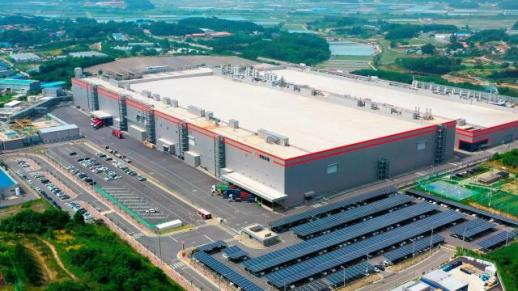 Hanwha Q CELLS to Supply 640,000 Solar Modules for Major Solar Project in Jeollanam-do Hanwha Solutions Q CELLS (hereafter Hanwha Q CELLS) will supply high-efficiency solar cells and modules manufactured in South Korea for a record-breaking 400MW solar power project by Korea Southern Power at a single domestic site. According to industry sources on May 21, Korea Southern Power plans to develop a large-scale solar power plant in the Munnae-myeon area of Haenam-gun, Jeollanam-do. The project aims to complete the solar power plant on approximately 1.4 million pyeong (4.79 km²) of land by June 2028. On May 20, Korea Southern Power selected a preferred bidder for the EPC (engineering, procurement, and construction) contract for this project. Hanwha Q CELLS plans to install about 640,000 solar modules using cells produced domestically. The solar cells and modules supplied for this project will be entirely produced at Hanwha Q CELLS' largest manufacturing facility located in Jincheon, Chungbuk. Yoo Jae-yeol, head of Hanwha Q CELLS' Korea division, stated, "By supplying high-efficiency solar cells and modules made in Korea for this large-scale project, we have an opportunity to demonstrate the technological competitiveness of our solar industry. Especially with the government's policies to expand renewable energy and the ongoing trend to utilize domestically produced products, we expect positive impacts on the restoration of the domestic solar industry ecosystem and increased related investments." He added, "We hope this project will revitalize the solar market, which has been stagnant, and establish a virtuous cycle leading to increased investments and job creation, laying the foundation for the growth of South Korea's renewable energy industry." Meanwhile, Hanwha Q CELLS has launched a solar module recycling initiative called EcoRecycle by Q CELLS in the United States, operating a recycling center near the solar hub in Cartersville, Georgia, capable of processing up to 500,000 discarded modules annually. The company is actively expanding its business both domestically and internationally, providing resource recycling solutions.* This article has been translated by AI. 2026-05-21 19:52:35
 -
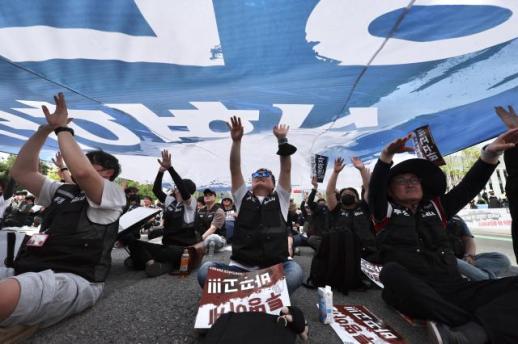 AJP Watch: Samsung still unpatched as CEO and union plea exposes internal strife SEOUL, May 21 (AJP) -Samsung Electronics may have pulled back from the brink of an unprecedented general strike with a dramatic last-minute wage agreement, but the company is not yet out of trouble as internal divisions continue to simmer over a bonus structure that many employees say has shattered the sense of balance inside South Korea’s biggest company. The tentative 2026 wage agreement, reached late Wednesday after marathon negotiations involving the labor ministry, still requires approval through a union vote scheduled to conclude next Wednesday. Its fate remains uncertain as resentment spreads among non-chip employees and even within parts of the union itself. The deal prevented what would have been an 18-day strike involving tens of thousands of workers, largely from Samsung’s semiconductor operations, at a time when the company is riding a historic AI-driven boom in memory chips. But the structure of the agreement — particularly the scale of payouts for semiconductor employees — has exposed widening tensions between Samsung’s highly profitable chip division and its other businesses. In an unusually direct message to employees on Thursday, Samsung Electronics Device Solutions chief Jun Young Hyun issued a formal apology and appealed for unity, acknowledging the strain created during months of labor conflict. “Although there were differences during the negotiations, we confirmed that our shared commitment to the company remained the same,” Jun said in a companywide message. “What matters now is moving beyond the time of conflict and joining forces as one.” He also described the agreement as “a new beginning” and urged employees to support the ratification process for “the future of both the company and its members.” Union leadership separately moved Thursday to appease internal complaint and muster support ahead of next week’s ratification vote. Choi Seung-ho, head of Samsung Electronics’ chapter of the Samsung Group Super Enterprise Labor Union who led the negotiations, described the tentative agreement as “the result that the union and the joint struggle headquarters achieved with their best efforts,” adding that the vote outcome would serve as “a report card” from members on the union leadership. Choi stressed that the dispute went beyond wages, calling it “a fight where the company’s principles and the union’s principles collided head-on", assuring that the union “continued to demand the values it pursued until the very end.” The back-to-back appeal reflected growing concern inside Samsung that the deal, while avoiding a disruptive strike, may have deepened internal fractures. Under the tentative agreement, Samsung will maintain the existing Overall Performance Incentive system capped at 50 percent of annual salary across both the semiconductor-focused Device Solutions (DS) division and the Device Experience (DX) division, which includes smartphones, TVs and home appliances. But the agreement also introduces a separate special management bonus exclusively for DS employees, funded with 10.5 percent of semiconductor operating profit without an upper ceiling. With Samsung’s semiconductor business generating record profits from the AI memory boom, the numbers quickly became explosive inside the company. Samsung reported first-quarter operating profit of 57.2 trillion won ($38 billion), an all-time high, with the DS division alone contributing 53.7 trillion won. Industry estimates cited during negotiations projected that if the semiconductor division were to generate around 300 trillion won in annual operating profit, the special bonus pool could reach roughly 31.5 trillion won. Distributed among approximately 78,000 DS employees, some memory division workers could receive payouts approaching 600 million won based on a 100 million won salary. Meanwhile, employees in the DX division — contributing roughly 3 trillion won in first-quarter operating profit — would remain limited to the existing capped incentive system, with maximum payouts around 50 million won. The widening gap has triggered backlash among non-chip employees who argue the compensation structure now treats Samsung as two separate companies under one name. According to industry officials, dissatisfaction inside the DX division has intensified since last month, with some employees leaving the union in protest. Membership in Samsung Electronics’ largest union reportedly fell from around 77,000 members to closer to 70,000 recently. Some DX union members have also filed for an injunction challenging the legitimacy and procedural fairness of the negotiations, arguing the bargaining process disproportionately reflected the interests of semiconductor workers. Even Samsung’s attempt to soften the divide by offering DX employees company stock worth about 6 million won has done little to ease frustration, with some workers viewing the measure as symbolic compensation compared with the potentially massive DS payouts. The internal discord highlights how the AI boom is reshaping traditional corporate compensation structures across Korea’s technology sector. While semiconductor profits have surged amid explosive demand for high-bandwidth memory and AI infrastructure, other divisions inside Samsung continue to face slower growth, higher costs and tariff pressures. The imbalance has increasingly complicated how one of the world’s largest conglomerates distributes rewards among businesses operating under vastly different market realities. Samsung has avoided the immediate economic and reputation damage from a prolonged strike that had alarmed investors, policymakers and global supply-chain partners alike. Shares hit all-time high on Thursday by gaining more than 8 percent and lifting the main index by the same scale. Inside the company, the harder test of uniting employees across Samsung’s sprawling businesses amid uneven fruits of AI bonanza persists. 2026-05-21 19:51:42
 -
 Actress Kim Kyu-ri's Home Burglarized; Roommate Injured A burglary occurred at the home of actress Kim Kyu-ri. According to a report by Channel A on May 21, a man in his 40s unlawfully entered Kim's residence in Bukchon Hanok Village, Jongno District, Seoul, around 9 p.m. the previous night, attempting to commit robbery before fleeing the scene. A woman living with Kim discovered the intruder, who reportedly attempted to steal money but was caught in the act and fled. During the incident, the woman sustained injuries. Police began their pursuit after receiving a report from Kim's side stating that the burglar was trying to bind them. The suspect surrendered to authorities approximately three hours after the incident. This incident follows a similar case in November of the previous year, when actress Nana was also victimized by a home invasion alongside her mother. Kim Kyu-ri has previously showcased her traditional hanok home on a television program, where she also shared insights into her work as a Korean artist. As more programs feature celebrity homes, concerns are rising about the potential for such residences to become targets for violent crimes like burglary. Meanwhile, police have arrested the man who turned himself in on charges of robbery and injury, and they will determine whether to seek an arrest warrant after investigating the premeditated nature of the crime.* This article has been translated by AI. 2026-05-21 19:51:00
 -
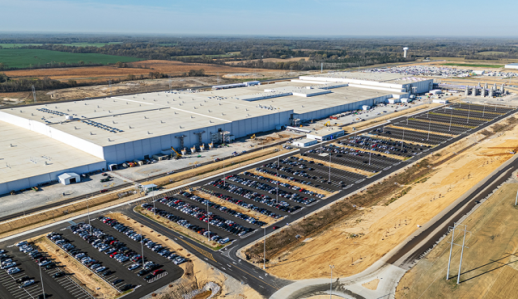 SK On Transitions Tennessee Battery Plant to Independent Operation SK On has completed the restructuring of its battery joint venture, BlueOval SK, with Ford and has transitioned its Tennessee plant to an independent operation. On May 21, SK On announced that it has rebranded the former BlueOval SK Tennessee plant as SK On Tennessee and has entered a phase of sole operation. As a result of this restructuring, SK On will fully own and operate the Tennessee plant, while the two Kentucky plants under BlueOval SK will remain owned and operated by Ford. SK On anticipates that the conclusion of the joint venture will reduce its debt burden by approximately 54 trillion won. Given the current high-interest environment, the company expects to save about $18 million (approximately 27 billion won) annually in interest costs. Additionally, the annual depreciation costs associated with the Kentucky plants, estimated at around 33 billion won, are also expected to decrease. A representative from SK On stated, "This restructuring of the joint venture will strengthen our financial structure and enhance the efficiency of our production operations in the U.S. We aim to actively respond to changes in the North American market based on our newly secured independent production base." In the first quarter of this year, SK On reported revenues of 1.7912 trillion won and an operating loss of 349.2 billion won. However, with the recent acquisition of 284 megawatts (MW) out of a total of 565 MW in the bidding for the second ESS (Energy Storage System) central contract market, combined with the end of the joint venture, the company expects to see improvements in its performance both domestically and internationally.* This article has been translated by AI. 2026-05-21 19:48:24
 -
 Yang Hyang-ja Launches Campaign for Gyeonggi Province Governor, Promises 100,000 Jobs Yang Hyang-ja, the People Power Party candidate for Gyeonggi Province governor, held a campaign launch event in Suwon on May 21, officially kicking off her campaign for the June 3 local elections. At the event near Paldalmun, Yang expressed her determination, stating, "We are beginning our journey to find our three dreams," which include the dream of Gyeonggi Province, the dreams of youth and children, and the aspirations of the People Power Party. To achieve the dream of making Gyeonggi Province a 'world-class economic city,' she promised to reach a per capita Gross Regional Domestic Product (GRDP) of 100 million won. Her plan involves transforming the region into a hub for semiconductors, artificial intelligence, materials, components, equipment, biotechnology, information technology, cultural tourism, and advanced industries. Yang also unveiled her vision to create 100,000 jobs with an annual salary of 100 million won, aiming to attract young people to Gyeonggi Province to pursue their dreams. Additionally, she expressed her commitment to restoring the glory of the People Power Party, which she believes is loved by all. After the event, she visited Nammun Market, appealing to merchants by saying, "I will create a Gyeonggi Province that generates wealth." Meanwhile, on May 18, Yang began a hunger strike in front of the Samsung Electronics Pyeongtaek Campus, urging a labor-management agreement. Samsung Electronics reached a tentative agreement late on May 20 after failing to reconcile differences over performance bonus criteria. Following this development, Yang ended her hunger strike and shifted her focus to active campaigning.* This article has been translated by AI. 2026-05-21 19:45:57
 -
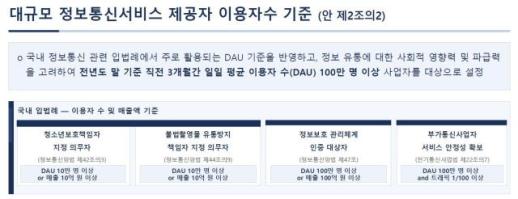 Combatting Fake News: Platforms with 1 Million Users and 100,000 YouTubers Targeted The Broadcasting and Media Commission (BMC) has unveiled a revised enforcement decree of the Information and Communications Network Act aimed at curbing the illegal distribution of false information. The key points of the revision include targeting platforms with an average daily user count (DAU) of over 1 million and specifying criteria for increased damages applicable to creators with over 100,000 subscribers. On May 21, the BMC held a discussion on the revised enforcement decree at the Broadcasting Hall in Mokdong, Seoul, focusing on systematic responses to false information. A major point of contention is the definition of a "large-scale information service provider." The BMC has set the threshold for regulation at platforms with a DAU of over 1 million in the past three months. Shin Young-kyu, head of the BMC's Broadcasting and Telecommunications User Policy Bureau, explained, "We chose DAU over monthly active users (MAU) due to its social impact and existing legislative precedents." The regulation will apply to social networking services (SNS), online communities, video-sharing platforms, and open markets that facilitate information exchange among users. Shin noted, "Private conversations, such as KakaoTalk group chats, are not included, but open chat rooms are subject to regulation." The criteria for increased damages will also be limited to revenue-generating information publishers with a certain level of influence. The enforcement decree defines those who earn income from delivering facts and opinions through advertisements or sponsorships and have posted information at least three times in the last three months. For SNS creators, including those on YouTube and Instagram, the threshold is set at 100,000 subscribers and a minimum of 100,000 views in the previous three months based on content virality standards. Additionally, the role of the "Transparency Center," which is being promoted as a key support organization for responding to false information, was also a significant topic of discussion. The BMC plans to operate the Transparency Center as a hub connecting the government, platforms, and fact-checking organizations. In line with the revised Information and Communications Network Act, the government will not directly assess the authenticity of posts or decide on their removal. Instead, the focus will be on supporting private fact-checking and platform self-regulation both technically and administratively. The Transparency Center will also analyze "transparency reports." The BMC intends to review the number of reports and processing cases published by platforms, as well as the outcomes of appeals, to evaluate the effectiveness of responses to false information. The BMC plans to gather public feedback on the legislative proposal until May 27, followed by regulatory review and committee approval in early to mid-June, with a goal of obtaining Cabinet approval by the end of June.* This article has been translated by AI. 2026-05-21 19:43:23
 -
 Huh Tae-jung Criticizes Lee Jang-woo's Campaign Promises Ahead of Local Elections Huh Tae-jung, the Democratic Party's candidate for Daejeon mayor, criticized Lee Jang-woo, his opponent from the People Power Party, on May 21, stating that he only has "absurd campaign promises and no achievements." He urged voters to judge the remnants of past turmoil in the upcoming local elections on June 3. Speaking at a campaign launch event in Daejeon's Eunjeong Cultural Street, Huh declared, "I will restore the collapsed citizens' rights and focus on people's livelihoods," adding, "I will be a mayor who serves the citizens, not one who rules over them." He called on supporters to make June 3 a day of victory for himself, district mayors, and council members. Jung Cheong-rae, the Democratic Party's campaign chair, praised Huh, saying, "Those who have experienced leadership do it well," referring to Huh's previous roles as a district mayor and his work in the Blue House. He emphasized that if voters entrust the position to Huh, he would perform even better than during his past tenure. Additionally, Jung expressed his affection for Huh by creating a short poem, stating, "Huh Tae-jung loves Daejeon like a mountain. He will work hard. Please vote for him." 2026-05-21 19:40:20
 -
 eBay Japan Launches K-Beauty Corner at Seven-Eleven Japan eBay Japan's online marketplace Qoo10 Japan is partnering with Seven-Eleven Japan to expand the offline sales of K-Beauty products. On May 21, eBay Japan announced that it will introduce a K-Beauty curation corner called 'Qoo10 Pick' in Seven-Eleven stores across Japan starting in September, with some locations excluded. Since September of last year, Qoo10 Japan has been testing the sale of K-Beauty products in select Seven-Eleven stores. During this trial, eight brands and 24 products were showcased, and based on the results over the past year, Qoo10 Pick will officially launch in late September. Qoo10 Pick will feature a selection of popular K-Beauty brands that have gained traction on the Qoo10 platform, allowing Japanese consumers to purchase trending K-Beauty products conveniently at their local convenience stores. An eBay Japan representative stated, "As demand for K-Beauty in Japan has surged, consumers are increasingly looking for easy and convenient ways to experience these products." The Qoo10 Pick section will offer limited mini-sized products and exclusive color items. Initially, brands such as Skin&Lab, Growers, and 23 Years Old will be featured, with plans to gradually expand the brand and product lineup based on consumer feedback and sales data. Dedicated display stands will also be installed in the stores. Kim Soo-ah, head of eBay Japan's Korean Sales Division, expressed optimism about the collaboration, stating, "We expect that this partnership will allow Japanese consumers to experience K-Beauty in their daily lives. We will support the growth of K-Beauty brands through various online and offline initiatives." Currently, Qoo10 Japan is a platform utilized by approximately 25 to 28 million Japanese consumers. It holds over 30% market share in the Japanese online beauty market and has maintained double-digit growth for eight consecutive years, particularly among women aged 10 to 30.* This article has been translated by AI. 2026-05-21 19:37:56
 -
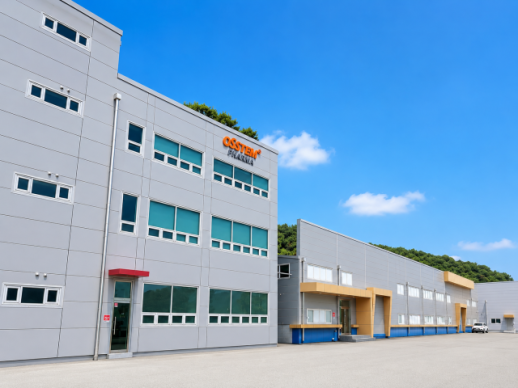 Ostem Pharma Expands CMO Business with Focus on Data Integrity Ostem Pharma is accelerating the expansion of its contract manufacturing organization (CMO) business while proactively ensuring data integrity. The company leverages its experience in producing and supplying its own pharmaceutical products, along with advanced manufacturing infrastructure, to embed the regulatory requirement of quality integrity into its digital systems. On May 21, Ostem Pharma announced that it is strengthening its production infrastructure and quality management systems at its pharmaceutical manufacturing facility in Osong, North Chungcheong Province. The company has developed and produced dental anesthetics, antibiotics, and anti-inflammatory drugs, accumulating quality management expertise, and has proactively secured data integrity (DI), which has become increasingly important in the pharmaceutical industry. Data integrity refers to the preservation of original data generated during the pharmaceutical manufacturing process, ensuring that it remains unaltered and free from manipulation or omissions. In the pharmaceutical sector, DI is considered a critical indicator of drug safety and efficacy, as well as a key measure of customer trust. Ostem Pharma has connected all processes from raw material receipt to finished product shipment through a digital quality management system, applying designs that prevent data manipulation and omissions to enhance the reliability of the manufacturing process. The company is also refining its quality assurance (QA) and quality control (QC) systems to improve both production efficiency and quality, focusing on minimizing regulatory and supply risks for its clients. Additionally, Ostem Pharma plans to pursue approval for essential medicines that are often subject to supply instability, particularly pain relievers. If successful, the company anticipates securing approval for pain relief ingredients by next year, contributing to the pharmaceutical supply chain. As certain ingredients, such as pain relievers, are linked to supply instability, it is crucial for domestic pharmaceutical companies to establish backup production capabilities. This not only ensures continuity in healthcare delivery but also aligns with the government's policies on stable pharmaceutical supply. Concerns have grown in the market as commonly used prescription medications, including pain relievers, cold medicines, and laxatives, have repeatedly faced shortages. According to data from the Ministry of Food and Drug Safety, there were 147 reports of supply interruptions for designated essential medicines from 2020 to August of last year. A total of 473 items have been identified as essential medicines. An Ostem Pharma representative stated, "Our manufacturing competitiveness is based on rigorous quality management capabilities. We aim to position ourselves as a business partner that can enhance both cost competitiveness and quality for our clients."* This article has been translated by AI. 2026-05-21 19:36:00
 -
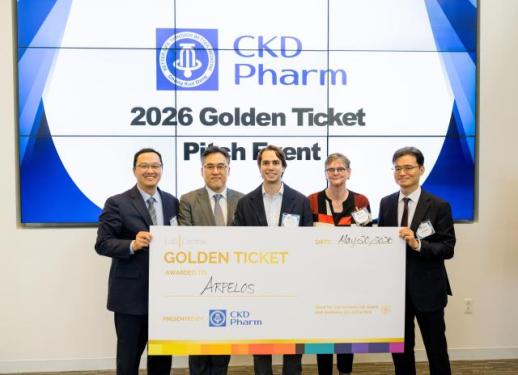 CKD Pharm Golden Ticket Event Held in Boston to Expand Global Open Innovation CKD announced on May 21 that it held the "2026 CKD Pharm Golden Ticket" event at the LabCentral Center in Boston on May 20, awarding the "Golden Ticket" to the biotech company Arpelos Biosciences. The "CKD Pharm Golden Ticket" is a sponsorship program hosted by CKD and operated in collaboration with LabCentral, a key institution in the Boston-Cambridge biotech cluster. The program provides promising biotech startups with opportunities to join LabCentral and access a global network, evolving into a global open innovation platform that proactively identifies early-stage innovative technologies. Open innovation is recognized as a strategy that reduces the risks of drug development and secures promising biotech technologies in advance. The event was attended by CKD Vice President Kim Jae-soon, CKD USA Corporate Director Kim Ho-won, Consul General of Boston Kim Jae-hwi, and Kim Hyun-cheol, Director of the Korea Health Industry Development Institute's U.S. branch. Arpelos Biosciences, selected for this year's award, is an early-stage biotech company founded in 2024. It is focused on developing next-generation treatments for autoimmune diseases based on artificial intelligence (AI)-driven protein engineering, T-cell biology, and multi-therapeutic development technologies. This year, approximately 50 biotech startups from various fields, including immunology, neuroscience, tumor and cancer immunotherapy, ophthalmic diseases, and AI-based research platforms, applied for the program, with three finalists competing for the award. LabCentral is a nonprofit organization managed by the Massachusetts state government and serves as a global incubator for biotech startups. It has supported over 344 early-stage companies to date, resulting in 1,846 patents and 171 clinical trial outcomes as of 2025. A CKD representative stated, "The Golden Ticket is an important gateway for proactively discovering promising biotech companies, and we aim to create tangible collaborative results through the expansion of our global network and joint research and development."* This article has been translated by AI. 2026-05-21 19:33:24