
Journalist

Park Heewon
-
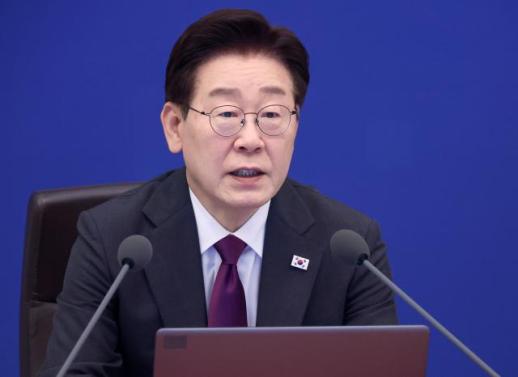 President Lee Calls for Action Against State Violence and Fake News President Lee Jae-myung stated on May 21 that all available means should be mobilized to punish those who spread malicious fake news, such as the theory of North Korean involvement in the Gwangju Uprising, and to address acts that glorify state violence or insult victims.During a senior advisors meeting at the Blue House, President Lee emphasized, "We must correct the wrong history to prevent the same tragedy from recurring." He highlighted the importance of confronting past mistakes rather than superficially reconciling them, advocating for a just integration based on reflection and accountability.His remarks appeared to target Starbucks Korea, which faced backlash for its recent 'Tank Day' marketing campaign that was deemed disrespectful to the Gwangju Uprising, as well as Musinsa, which used a controversial advertising slogan in 2019.President Lee criticized state violence as a serious crime that tramples on the human rights and lives of citizens, stating, "It is an inhumane and antisocial crime committed with the authority delegated by the sovereign to ensure the safety and better lives of the people." He argued that treating state violence on par with other crimes is unjust, citing that the Nazi war crimes are still held accountable today.He called for the swift enactment of legislation to abolish statutes of limitations for state violence crimes and to eliminate the expiration of civil claims for damages. He also stressed the need for a national compensation system to aid in victim recovery and to expedite the cancellation of honors awarded to those involved in state violence.Additionally, President Lee addressed the rising cost of living due to the prolonged conflict in the Middle East, urging strict oversight against unscrupulous price increases that exploit the current hardships without valid reasons. He requested meticulous administration to ensure that the second round of high oil price relief funds, which began accepting applications on May 18, is distributed smoothly, expressing hope that the support would alleviate some of the difficulties caused by the war.* This article has been translated by AI. 2026-05-21 16:15:00
 -
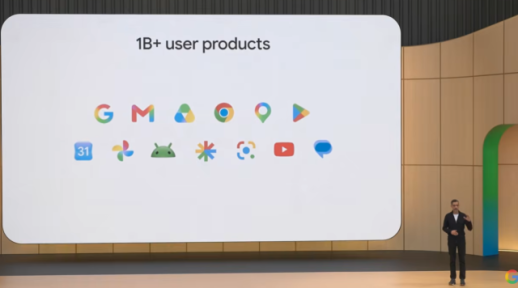 Google Fully Integrates AI into Online Advertising Market Google is set to fully integrate artificial intelligence (AI) into the advertising market. Beyond product promotion, AI will analyze context, recommend discounted products, and automatically generate tailored product descriptions, signaling a major transformation in the online advertising landscape. On May 21, Google announced a comprehensive overhaul to incorporate generative AI across all advertising and commerce sectors during its annual advertising event, Google Marketing Live (GML) 2026, held at its Bay View campus in Mountain View, California, as part of the Google I/O 2026 developer conference. Vidya Srinivasan, Vice President of Google Ads and Commerce, introduced the interactive advertising feature of AI mode, stating, "Now that you can ask Google any question, the best ads should be answers." This feature allows users to interact with product advertisements as if conversing with a chatbot, offering direct discounts when purchase intent is detected, and enabling Gemini to automatically generate product descriptions and respond to user inquiries within ads. In the commerce sector, the 'Universal Cart' has gained attention. This feature allows users to add products from multiple shopping sites into a single cart for direct payment through Google or to transfer to the respective shopping site. Google has announced new partnerships with Amazon, Meta, Microsoft, Salesforce, and Stripe, with the service initially available in the United States. Advertising material creation tools have also been upgraded. Google has integrated Gemini Omni into 'Asset Studio' to support video workflows and introduced 'One-Click Creative Testing' for ad material optimization. Additionally, Google's open-source marketing mix model, 'Meridian,' has been directly integrated into Google Analytics 360, and a new predictive metric, 'Qualified Future Conversions (QFCs),' has been established. Metrics revealed that AI Overview has surpassed 2.5 billion monthly active users, while AI mode users have reached 1 billion. The average session length per search in AI mode is three times longer than traditional searches, and exploratory searches such as "idea recommendations" or "what's better" are growing 30% faster than the overall growth rate of AI mode, according to Google.* This article has been translated by AI. 2026-05-21 16:12:29
 -
 ASIA INSIGHT: Samsung dispute exposes wider risks to chip supply despite last-minute deal SEOUL, May 21 (AJP) - For the past couple of weeks, Samsung Electronics was locked in a labor dispute that, on its surface, looked like a routine clash between management and workers over wages and performance bonuses. But the tremors it sent through markets suggested something far larger was at stake, not just a labor standoff over pay but the stability of the global semiconductor supply chain. Even before a tentative agreement was reached late last night, the negotiations, described by one analyst as a "clash between haves and have-mores," had become a gauge of investor anxiety. Major global indexes wobbled as headlines swung between strike threats and partial breakthroughs. Across Asia, Samsung's rivals from Taiwan to China wasted little time, as investors began betting on disrupted output from one of the world's largest chipmakers. At its core, the dispute boils down to who gets a share of Samsung's record profits and how much. Workers pushed for a guaranteed slice, seeking a fixed percentage of operating profit paid out annually as bonuses. Management pushed back, warning that locking in such an arrangement during boom times would become an unsustainable burden when the cycle turned. Semiconductor markets are notoriously cyclical, as what looks like a windfall one year can vanish the next. But what began as a boardroom disagreement quickly grew into something much bigger. Samsung is not just another company as it sits at the heart of the global technology supply chain, making the memory chips that power everything from smartphones to the servers driving the artificial intelligence (AI) boom. A strike, even a brief one, would have sent shockwaves far beyond South Korea, disrupting production lines at American tech giants, European automakers, and Japanese industrial suppliers alike. It is no surprise that the government stepped in to mediate. In export-dependent South Korea, where semiconductors are the backbone of the economy, the dispute quickly moved beyond corporate governance. The concern was not only about labor peace but also about keeping South Korea's reputation as a reliable supplier in an increasingly interconnected global supply chain, which accounts for about 4.3 percent of global logistics. Markets reacted quickly. As Samsung's labor talks dragged on, investors shifted their bets toward rival chipmakers in Taiwan, China and Japan. The logic was simple: if Samsung could not deliver, someone else would. In an industry where reliability is everything, that possibility alone was enough to move billions. The irony is that both sides were reacting to the same underlying reality, just in different ways. Workers wanted a bigger share of record profits generated by an unprecedented AI-driven chip boom. Management, on the other hand, wanted to keep enough of those profits to reinvest in research, new factories, and next-generation technologies, the kind of spending that would determine whether a company stays afloat or falls behind. History offers a cautionary lesson. Japan once dominated the global semiconductor market, controlling more than half of it in the late 1980s. Today, its share has shrunk to single digits, overtaken by more aggressive competitors in South Korea and Taiwan. The point is not just about competition, but about discipline. Complacency, whether among companies, governments, or investors, is often met with consequences slowly, and then all at once. This is why the stakes around Samsung's labor dispute extended far beyond its balance sheet. Any potential shutdown would have done more than disrupt supply as it would also have raised structural concerns among global customers already wary of concentration risk. High-performance chip buyers like Nvidia and AMD cannot afford uncertainty in their supply chains, nor can the growing ecosystem of AI infrastructure firms that depend on steady, predictable memory output. Although the tentative deal eased the immediate crisis by averting a full-scale strike that had been slated for later this week, its fate now rests on a union vote expected to conclude by the end of next week. It also leaves unresolved the deeper question of how to balance worker demands, corporate reinvestment, and national strategy in an industry where all three are closely linked. What remains is a larger question that extends well beyond Samsung. As chips become the foundation of artificial intelligence and the broader digital economy, a labor dispute at one company is no longer just a corporate headache. It is a signal, closely watched by governments, investors and competitors alike, of where the global supply chain is most resilient and where it may give way next. 2026-05-21 16:10:58
 -
 Samsung Biologics Seeks Compromise Amid Ongoing Labor Dispute As the labor dispute at Samsung Biologics remains unresolved, attention turns to whether the company can find common ground similar to the recent resolution at Samsung Electronics. Analysts suggest that Samsung Biologics, part of the Samsung Group's major labor union, may look to the electronics giant's negotiations for guidance. According to industry sources, Samsung Biologics management met with union representatives on May 19 under the auspices of the Ministry of Employment and Labor to discuss a new proposal, but no agreement was reached. A planned private meeting on May 20 was subsequently canceled, and no future meetings have been scheduled. The cancellation is seen as a reflection of the ongoing divide between the two sides and a strategy to observe the outcome of Samsung Electronics' negotiations. Reports indicate that the union at Samsung Biologics is demanding agreements that extend beyond profit-sharing to include personnel policies, institutional changes, and management rights, leading to significant differences in positions. Market observers note that within the union, there is growing concern about the burdens of a prolonged strike, risks of production disruptions, waning solidarity, and member fatigue. This has led to cautious optimism that a 'coordinated compromise' may emerge soon. Political voices have also called for a reevaluation of labor issues from the perspective of global supply chains and investment trust, adding pressure on the industry. Professor Hwang Yong-sik from Sejong University stated, "The management's stance has shifted from confrontation to a more accommodating approach, which has facilitated a compromise. As the dynamics of labor relations change, the atmosphere within subsidiaries like Samsung Biologics may also shift." Another industry insider remarked, "Even if negotiations extend over time, collective actions like a second strike will be difficult. The key to an agreement will be how much both sides are willing to compromise, particularly regarding management rights and operational matters." Samsung Biologics has grown primarily through its contract development and manufacturing organization (CDMO) business in the biotech and pharmaceutical sectors. While it still holds the top position globally in terms of production capacity, it faces stiff competition from companies like Switzerland's Lonza, China's CL Biologics, and Japan's Fujifilm. If the labor dispute continues for an extended period, global pharmaceutical companies may consider diversifying their production to other countries and CDMOs, making labor stability a crucial factor in maintaining global trust. Another industry representative emphasized, "The most urgent need is to achieve a compromise that restores both labor stability and investor confidence. Both sides must seek a long-term resolution." Meanwhile, the Samsung Biologics union is demanding a 14.3% wage increase, a bonus of 30 million won per employee, and the allocation of company shares over three years. They are also calling for the establishment of an excess profit incentive fund (OPI) based on 20% of operating profit and the removal of payment caps, along with prior consent on management issues such as new hires, performance evaluations, and mergers and acquisitions. Management has proposed a 6.2% wage increase and has set the OPI limits in line with the group's guidelines, which cap operating profit at 10% or economic value added (EVA) at 20%.* This article has been translated by AI. 2026-05-21 16:09:55
 -
 Kim Bo-mi Undergoes Surgery for Kidney Stones Actress Kim Bo-mi has revealed that she underwent surgery for kidney stones. On May 21, Kim shared a lengthy post on her social media account, describing her challenging hospital experience. She recounted, "The pain in my abdomen started on my birthday. I thought it would get better, but after attending my birthday party, I had to rush home. When I woke up the next morning, I felt fine, but by around 2 p.m., the pain returned, and I felt like I was going to lose consciousness, so I called an ambulance." Kim mentioned that she experienced pain even during the ambulance ride, stating, "Once I arrived at the emergency room, I received three bags of painkillers and finally managed to sleep. The diagnosis was kidney stones. However, due to it being the weekend, I had to find a facility that could perform shockwave treatment, but the stones did not break, leading me to return to the emergency room." She continued, "Ultimately, I was hospitalized, and it turned out that I had kidney stones not only in my abdomen but also in my kidneys, which shocked everyone. Anyway, the surgery went well, and I was discharged today. I need to rest at home for a while." Kim added, "They inserted something like a hose into my body, which I will have to remove in a month. I am still in a lot of pain, and there is significant bleeding when I urinate. Kidney stones are terrifying. Everyone, please be careful." Kim Bo-mi married ballet dancer Yoon Jeon-il in 2020 and has one son and one daughter with him. 2026-05-21 16:07:31
 -
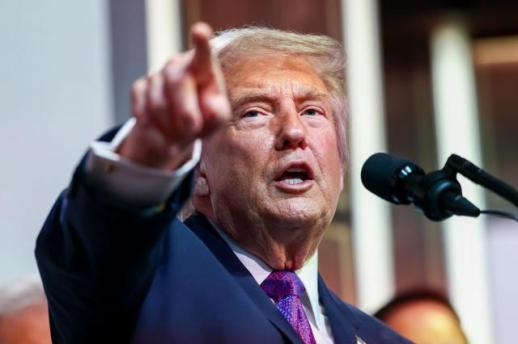 Concerns Grow Over Iran War Budget Depletion Within Three Months Concerns have emerged within the U.S. Republican Party that funding for the Iran war could run out in three months. As the conflict approaches its third month and shows signs of prolongation, worries are growing among Republicans ahead of the midterm elections scheduled for early November. On May 20, Tom Cole, the Republican chair of the House Appropriations Committee, warned that the Department of Defense's funding for the Iran-related war could be depleted by August. Cole expressed his concerns, stating, "We are running out of time to process additional budget proposals," adding that he is "very worried" about the situation. The House Appropriations Chair plays a crucial role in the federal budget process. Cole's comments indicate that the financial burden of the Iran war is becoming a significant issue within the Republican Party. This concern arises amid declining public support for the Iran war. A recent poll conducted by The New York Times and Siena College, released on May 18, revealed that 64% of respondents viewed the Iran war as a "bad decision," while only 30% considered it a "good decision." Congressional pushback is also intensifying. The U.S. Senate recently voted to advance a resolution limiting President Trump's war powers regarding Iran, passing the procedural motion with 50 votes in favor and 47 against. In this vote, Republican Senators Susan Collins (Maine), Lisa Murkowski (Alaska), Rand Paul (Kentucky), and Bill Cassidy (Louisiana) supported the measure. Only Senator John Fetterman (Pennsylvania) from the Democratic Party voted against it. Since the onset of the Iran war, the Strait of Hormuz, through which about one-fifth of the world's oil maritime transport passes, has effectively been closed. Consequently, international energy prices have surged, increasing the economic burden associated with the prolonged conflict.* This article has been translated by AI. 2026-05-21 16:03:47
 -
 Tesla Korea Transitions to Two-CEO Structure Following Executive Departure Tesla Korea has shifted from a three-CEO structure to a two-CEO model. According to industry sources on May 21, Kenneth Ernest Moore, who served as CEO of Tesla Korea, resigned on May 1. Moore took on the role on March 9, 2023, and has now stepped down after nearly three years. With his departure, the remaining CEOs are David John Feinstein and Seo Young-deuk. Moore is expected to take on a role in accounting and financial management at Tesla's headquarters in the United States. He did not have a significant presence in the Korean operations. However, there remains a possibility that Tesla Korea will appoint a new CEO, so it is uncertain whether the company will fully transition to a two-CEO structure.* This article has been translated by AI. 2026-05-21 16:03:00
 -
 Decision on Transfer of Wartime Operational Control Expected This Year South Korean military authorities believe that the evaluation and verification of the Full Mission Capability (FMC), the final stage in the transfer of wartime operational control, can be completed in about a year. The government is also considering a plan to finalize the verification of full operational capability this year and present a target year for the transfer of operational control. A Defense Ministry official stated on May 20 that if the target year for the transfer is determined during this year's verification of full operational capability, the evaluation and verification of FMC will begin immediately, leading into the final stage of the transfer process. Once the verification of the future combined command, which will oversee joint U.S.-South Korean operations during wartime, is completed, the defense ministers of both countries will propose a specific date for the transfer to their respective presidents. The government believes that the FMC evaluation and verification can be completed within a year since both processes can be conducted simultaneously. The Defense Ministry official added that during the U.S.-South Korea Integrated Defense Dialogue (KIDD) held on May 12 and 13, the goal was to finalize the roadmap for the transfer of operational control, but the process has been delayed due to the extensive content that needs to be addressed. He emphasized that the transfer is a matter decided at the policy and political level. Discussions are ongoing between the U.S. and South Korea regarding how to assess modern warfare, which has evolved with new weapon systems and changes in combat methods. Additionally, the management of the Northern Limit Line was officially discussed as an agenda item during the KIDD meeting. The Defense Ministry official noted that the Northern Limit Line is not a perfectly straight line and that since 2011, there has been a need to change the requirement for U.S. permission to cross certain areas. He stated that significant progress was made during this discussion. * This article has been translated by AI. 2026-05-21 16:00:12
 -
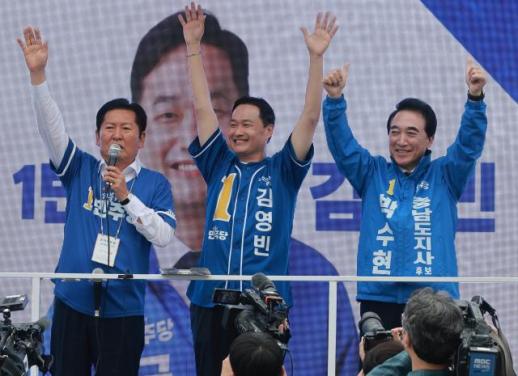 Jung Cheong-rae Supports Park Soo-hyun and Kim Young-bin in Chungnam Elections Jung Cheong-rae, the chief election officer of the Democratic Party, visited Chungnam on May 21, the first day of the official campaign for the June 3 local elections and National Assembly by-elections. He urged voters to choose candidates who can lead legislation and budget management, specifically supporting Park Soo-hyun for Chungnam governor and Kim Young-bin for the Gongju, Buyeo, and Cheongyang National Assembly seat. At a joint campaign rally held in Gongju, Jung stated, "For Chungnam to prosper, the government and local leaders must work in harmony." He praised Park, saying, "Among the lawmakers I have met, he is the most capable and attentive. He always carries a notebook, as if he has a tape recorder running, and he will consider everything the residents of Chungnam need." Jung also encouraged support for Kim, stating, "Help Kim continue Park's legacy in his district. If supporters of President Lee Jae-myung turn out to vote, both Park and Kim will win overwhelmingly." He added, "A harmonious household leads to effective management, so please assist in fostering cooperation between the governor and the National Assembly member for the development of Chungnam." Furthermore, he highlighted the progress made since overcoming the December 3 emergency martial law, asserting that South Korea is becoming increasingly normalized. He noted that during the Yoon Suk-yeol administration, the KOSPI index did not even reach 3,000, but it has more than doubled in the year since Lee Jae-myung's government took office. Jung remarked, "This indicates that the world recognizes South Korea, and it is evidence of restored national trust and democracy."* This article has been translated by AI. 2026-05-21 15:57:36
 -
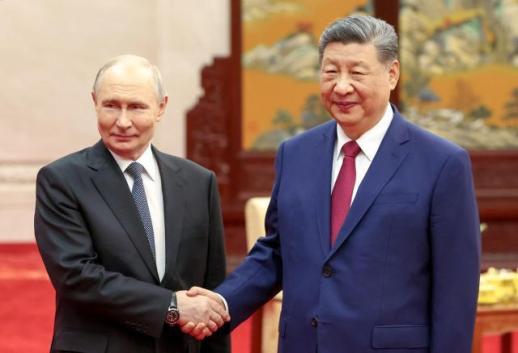 China and Russia Formalize Joint Front Against U.S. with Enhanced Military and Economic Cooperation China and Russia have agreed to expand their joint front against the U.S.-led international order across military, economic, and technological sectors. The two nations extended their existing friendship treaty and criticized U.S. missile defense plans and sanctions against Russia. They also aligned their positions on issues concerning Taiwan, the Ukraine war, and Iran, while agreeing to enhance joint military exercises and naval and air patrols. On May 20, Chinese President Xi Jinping and Russian President Vladimir Putin held a summit in Beijing, where they signed a joint statement on strengthening comprehensive strategic cooperation and deepening friendly ties. Putin visited China for two days starting May 19, and both leaders attended the opening ceremony of the 2026-2027 'China-Russia Year of Education.' Security Cooperation Aimed at the U.S. The core focus of the China-Russia partnership is its long-term sustainability. Both countries emphasized that this year marks the 30th anniversary of their strategic partnership and the 25th anniversary of the 'China-Russia Treaty of Good-Neighborliness and Friendly Cooperation.' They agreed to extend the treaty, stating that their relationship is characterized by non-alignment, non-confrontation, and not targeting third countries. However, the statement included language that appeared directed at the U.S. and the West regarding security, economic, and regional issues. The language targeting the U.S. was particularly strong. The statement declared opposition to “hegemonism and unilateralism,” as well as to unilateral and secondary sanctions, discriminatory tariffs, and restrictive measures. It also criticized actions that freeze, seize, or divert the national assets of other countries, interpreted as a reference to Western moves to use frozen Russian assets for aid to Ukraine and the U.S.-led sanctions regime. In the security domain, the statement directly criticized the U.S. 'Golden Dome' missile defense initiative. China and Russia argued that this plan, which combines ground and space-based defense systems, undermines strategic balance and increases the risk of an arms race in space. They effectively defined the U.S.-led next-generation missile defense system as a common security threat to both nations. Military cooperation was also specifically outlined. The two countries agreed to enhance mutual trust in military affairs and improve their cooperation framework. They committed to expanding joint exercises and naval and air patrols, as well as strengthening security coordination within bilateral and multilateral frameworks. Unified Stance on Taiwan, Ukraine, and Middle East Issues On the Taiwan issue, Russia fully supported China's position, reaffirming its commitment to the One China principle and stating that “Taiwan is an inseparable part of Chinese territory.” Russia opposed any form of “Taiwan independence” and expressed support for China's national unification efforts. China, in turn, affirmed its support for Russia's national security, sovereignty, and territorial integrity. Regarding the Ukraine war, the statement echoed Russian claims, asserting that the “root causes of the Ukraine crisis must be addressed” and emphasizing the need for “long-term and sustainable peace.” Russia praised China for taking an “objective and fair stance” on the Ukraine issue. The joint statement also addressed Northeast Asian issues, criticizing NATO's expansion into the Asia-Pacific and the AUKUS security pact involving the U.S., the U.K., and Australia. On the Korean Peninsula, they opposed diplomatic isolation, economic sanctions, and military pressure on North Korea, calling for a political and diplomatic resolution. In the Middle East, the statement directly criticized the U.S. and Israel, stating that “the military attacks by the U.S. and Israel against Iran violate international law and fundamental principles of international relations, undermining stability in the Middle East.” They called for a sustainable ceasefire and humanitarian access in Gaza and emphasized that the Palestinian issue should be resolved based on a two-state solution. Expanding Economic Cooperation in Response to Sanctions; Gas Pipeline Agreement Fails In the economic sphere, the focus was on responding to sanctions and stabilizing supply chains. The two nations agreed to expand cooperation in sectors such as automotive, shipping, civil aviation, digital economy, artificial intelligence, e-commerce, and mineral development. They also committed to increasing transactions in their national currencies and enhancing cooperation in banking and capital markets. Energy cooperation was also a major agenda item. Both countries agreed to strengthen collaboration in oil, gas, coal, civilian nuclear power, and renewable energy, ensuring stable operation of energy transport networks. However, the anticipated major gas pipeline project, 'Power of Siberia 2,' did not reach a final agreement. The Kremlin stated that there was a broad consensus, but key conditions such as pricing and timelines remain unresolved. Norms for AI and space cooperation were also included in their strategic partnership. They stated their opposition to using AI as a geopolitical tool for maintaining hegemony. Russia welcomed China's proposal to establish a global AI cooperation organization. In the space sector, they agreed to promote international lunar research bases and deep space exploration cooperation, as well as enhance the integration of the BeiDou and GLONASS satellite navigation systems.* This article has been translated by AI. 2026-05-21 15:55:46