
Journalist

by Abe Kwak
-
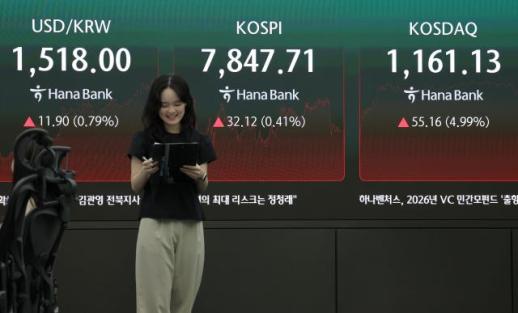 Korean Stock Market Stabilizes After Samsung Electronics Strike, Inflation and Rate Decisions Ahead Domestic stock markets have entered a period of stabilization following a sharp increase in volatility after the KOSPI index first surpassed the 8000 mark on May 15. While expectations for AI-driven investments in semiconductors continue to support the market, rising international oil prices, uncertainty over U.S. interest rates, and geopolitical risks in the Middle East are contributing to market fluctuations. Next week, the domestic market is expected to navigate significant events, including the U.S. Personal Consumption Expenditures (PCE) price index and the Bank of Korea's monetary policy committee meeting. According to the Korea Exchange, the KOSPI index rose by 32.12 points (0.41%) to close at 7847.71 on May 22. Over the week from May 11 to 15, the KOSPI and KOSDAQ indices increased by 4.73% and 2.77%, respectively. This week, the domestic market experienced sharp fluctuations due to profit-taking following the KOSPI's breach of the 8000 mark and concerns over interest rates. Negotiations between the U.S. and Iran have stalled, leading to a surge in international oil prices, while expectations for a rate cut by the U.S. Federal Reserve have diminished, dampening investor sentiment. Particularly, U.S. inflation data came in higher than expected, prompting the market to begin factoring in the possibility of interest rate hikes later this year. Concerns over a potential strike due to labor disputes at Samsung Electronics have also been cited as a factor increasing market volatility. However, by the end of the week, Samsung's management and labor reached a tentative agreement, and NVIDIA reported results and guidance that exceeded market expectations, helping to restore investor confidence in semiconductor stocks. In terms of supply and demand, retail and institutional investors net purchased 8.335 trillion won and 5.694 trillion won, respectively, while foreign investors net sold 14.307 trillion won. Analysts suggest that the outflow of foreign capital is more indicative of profit-taking following the semiconductor surge rather than a structural sell-off. Next week, several major macro events are scheduled. On May 25, stock markets in Korea, Hong Kong, the UK, and the U.S. will be closed. On May 27, single-stock leveraged ETFs for Samsung Electronics and SK Hynix will be listed in Korea for the first time. The U.S. PCE price index for April and the Bank of Korea's monetary policy committee meeting are set for May 28, followed by the MSCI quarterly rebalancing on May 29. The American Society of Clinical Oncology (ASCO) 2026 conference will also take place from May 29 to June 2. The U.S. PCE price index is viewed as a key variable that could influence short-term market direction, especially given the recent rise in international oil prices and concerns over inflationary pressures, which have increased uncertainty regarding Federal Reserve policy. According to Bloomberg consensus, the U.S. April headline PCE is expected to rise by 3.9% year-on-year, while core PCE is projected to increase by 3.3%. Jung Ye-kyung, a researcher at NH Investment & Securities, noted, "The recent rise in core Consumer Price Index (CPI) was significantly influenced by noise in rental statistics, so changes in housing costs may be limited in the PCE price index. However, market volatility could persist depending on oil prices and interest rate trends." Market attention is also focused on the outcome of the Bank of Korea's monetary policy committee meeting. While many expect the benchmark interest rate to remain unchanged, there are forecasts that a hawkish stance could strengthen due to recent trends in exports and domestic demand recovery, as well as inflationary pressures from high oil prices. Analysts believe that while short-term volatility is likely to continue, the attractiveness of earnings and valuations remains intact. They emphasize that the ongoing AI investment cycle and upward revisions in semiconductor profit estimates suggest limited risk to leading stocks. Na Jeong-hwan, a researcher at NH Investment & Securities, stated, "In a volatile market, the key factors are ultimately earnings and valuations. The current KOSPI forward price-to-earnings ratio (PER) is significantly below the average of the past decade, indicating that valuation attractiveness remains high. With the robustness of the AI infrastructure investment cycle reaffirmed, the investment appeal of sectors related to memory semiconductors and AI infrastructure is expected to stand out." * This article has been translated by AI. 2026-05-23 20:15:57
 -
 Chinese Film 'Dear You' Explores the History of Overseas Chinese “An audiovisual letter to hometowns and overseas compatriots.” On May 22, the Chinese state media outlet Global Times described the film 'Dear You' (original title: 給阿嬤的情書) as a recent box office sensation. Set in the Chao Shan region of Guangdong Province, which is home to many overseas Chinese in Southeast Asia, the film tells the story of Chinese immigrants who left for Southeast Asia in search of a better life and the families who awaited their return. The film follows Ye Su-lou, a grandmother living a quiet life in Chao Shan. Her husband, Zheng Wu-sheng, left for Southeast Asia long ago to earn money but has not returned, leaving only rumors of his success. Meanwhile, her grandson, Xiao Wei, burdened by debt, secretly travels to Thailand in search of the grandfather he has only heard about in stories. However, the truth he uncovers is unexpected. Zheng Wu-sheng has been deceased for many years, and the person who has been sending letters and money to Ye Su-lou for the past two decades is actually a friend of her late husband, Xie Nan-zi. The film delicately unravels themes of love, sacrifice, and the passage of time that have been hidden for over half a century. At the heart of the film is 'Chao Pi' (僑批), letters sent by overseas Chinese along with their remittances to family back home. In an era when communication was challenging, Chao Pi served not only as a means of sending money but also as the only link to families thousands of kilometers away. Today, Chao Pi is recognized as a UNESCO Memory of the World Register. The Global Times noted, “A single Chao Pi sent by overseas Chinese is not just a letter but a piece of Chinese history.” It added, “During times of turmoil and poverty, many residents of the Chao Shan region relied on remittances from overseas Chinese for their livelihoods,” emphasizing that the film captures the collective memory of the overseas Chinese community beyond individual stories. Initially, the film did not attract much attention. Released on April 30, just before the Labor Day holiday, it had a modest production budget of 14 million yuan (approximately $2.7 million) and earned only 3.77 million yuan on its opening day, with screenings limited primarily to the Chao Shan region. However, word of mouth during the Labor Day holiday changed its fortunes. As of May 21, the film's cumulative box office surpassed 760 million yuan (approximately $170 million), with projections from Chinese film ticketing platform Maoyan estimating final earnings to exceed 1.6 billion yuan. The film has received a rating of 9.1 on the review site Douban, making it the highest-rated Chinese film released this year. Critics attribute the film's success to its authenticity and realism. The main characters, Ye Su-lou and Xie Nan-zi, are portrayed by amateur actors without formal training. Their understated performances, delivered in the Chao Shan dialect, resonate deeply with audiences, leading some viewers to comment, “It feels like I’m watching my own grandparents.” Director Lan Hunchun reportedly spent nearly a decade refining the script, visiting numerous overseas Chinese families to gather real-life stories related to Chao Pi, which he incorporated into the film's narrative. Interestingly, the film has also found resonance in Taiwan. The Chao Shan dialect shares similarities with the Minnan language spoken in Taiwan. The term 'Amo' (阿嬷), which means 'grandmother,' is widely used in Taiwan as well. During a recent briefing, Zhu Fenglian, spokesperson for the Taiwan Affairs Office of the State Council, remarked, “The Chao Shan region and Taiwan share many linguistic and cultural similarities,” adding that Taiwanese audiences deeply empathized with the film's themes of loyalty, familial love, and patriotism expressed in the Chao Shan dialect. He further noted, “The term 'Amo' symbolizes the common roots and origins of people on both sides of the Taiwan Strait,” highlighting that the positive response from Taiwanese viewers reflects the shared cultural heritage and emotional connection between the two regions.* This article has been translated by AI. 2026-05-23 20:15:30
 -
 Im Sung-jae Sets Personal Best with Hole-in-One at CJ Cup Im Sung-jae recorded his third hole-in-one on the PGA Tour and set a personal best score of 61, marking a significant step toward his first tour victory in over four years. On May 23, during the second round of the CJ Cup Byron Nelson at TPC Craig Ranch in McKinney, Texas, Im shot a 10-under 61, which included one hole-in-one, one eagle, and seven birdies, with only one bogey. Im's score of 61 is a new personal best on the PGA Tour, surpassing his previous record of 62 set at the Wyndham Championship in August 2019. Starting on the 10th hole (par 4), Im made four birdies by the 17th hole (par 3) and continued his momentum with birdies on the 1st (par 4), 3rd (par 4), and 5th holes (par 5). He achieved a lucky hole-in-one on the 7th hole (par 3), marking his third hole-in-one in a PGA Tour event, following ones at the 2019 Players Championship and the Military Tribute that same year. Adding an eagle on the 9th hole (par 5), Im finished the day with a total of 10 strokes under par. With a cumulative score of 13-under 129, he was the first to complete the round and topped the morning leaderboard. After the round, Im expressed satisfaction with his performance, stating, "Overall, it was a satisfying day. My tee shots, iron shots, and putting were all good. I was surprised by the hole-in-one, as I thought it was a good shot, but I didn't expect it to go in." He added, "I’ll keep the lucky ball in my bag." His playing partner, Jordan Spieth, applauded Im's hole-in-one, saying, "The shot Im made was one of the most beautiful hole-in-ones I've ever seen. It was even better than any hole-in-one I've made." Riding this momentum, Im is aiming for his third career win, which would be his first since the Shriners Children's Open in October 2021. He remarked, "When my shots are feeling good, I feel like I can compete for the win. This week feels like my third opportunity. If the weather is good this weekend, I think I can play aggressively on this course. If the greens cooperate, I should have plenty of birdie opportunities. I want to capitalize on this momentum." Im also expressed confidence in his ability to compete for the title, noting, "It’s been about 4 to 5 years since I last won. However, I’ve been in contention twice this year, and those experiences have been very helpful. Competing for the win brings its own pressure and nerves, but having gone through it once this year, I plan to manage my emotions and focus on my game."* This article has been translated by AI. 2026-05-23 20:13:45
 -
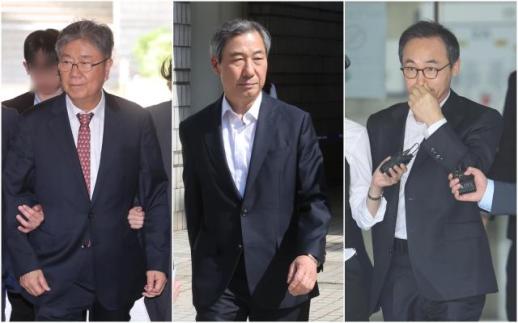 Court Issues Arrest Warrants for Kim Dae-ki and Yoon Jae-soon in Budget Misuse Case The Seoul Central District Court has issued arrest warrants for Kim Dae-ki, former chief of staff, and Yoon Jae-soon, former secretary for general affairs, in connection with allegations of illegal budget reallocations during the relocation of the presidential residence from Cheong Wa Dae to Hannam-dong. This marks the first arrest since the special prosecutor's team, led by Kwon Chang-young, was established in February. The court conducted a pre-arrest hearing for Kim Dae-ki, Yoon Jae-soon, and Kim O-jin, former secretary for management, on May 22, starting at 4 p.m. and concluding with the issuance of warrants for Kim and Yoon around 11:30 p.m. However, Kim O-jin's warrant was denied. The court determined that Kim Dae-ki and Yoon Jae-soon posed risks of flight and evidence destruction, warranting their arrest. In contrast, it found that Kim O-jin had acknowledged key facts and complied with bail conditions, thus posing no flight risk. The three officials are accused of illegally reallocating approximately 2.8 billion won (about $2.1 million) from the Ministry of the Interior and Safety's budget, which was unrelated to the relocation, to pay an unqualified contractor, 21Gram, for renovation work. The special prosecutor's team filed for arrest warrants on May 19, citing abuse of power. They revealed that despite objections from relevant departments, the officials illegally diverted funds from the Ministry of the Interior and Safety's budget for the management of government buildings, which was unrelated to the presidential residence. When the relocation was announced, former President Yoon Suk Yeol stated that the total cost for moving the presidential office and residence was estimated at about 49.6 billion won, with the relocation itself costing around 2.5 billion won. Of that, approximately 1.44 billion won was allocated for interior work. However, the special prosecutor's investigation found that the estimate provided by 21Gram for the renovation was about 4.12 billion won, but the presidential office proceeded with the work without verifying or adjusting the estimate. It was also revealed that necessary documents, such as contracts and blueprints, were not submitted at the time. The special prosecutor's team believes that the presidential office pressured the Ministry of the Interior and Safety to illegally reallocate 2.8 billion won in contingency funds to secure the increased construction costs. Reports obtained during the investigation indicated that the Ministry expressed difficulties in creating additional contingency funds. With the arrests of Kim Dae-ki and Yoon Jae-soon, the special prosecutor's team plans to investigate whether higher-ups in the presidential office, including Kim Geon-hee, were involved in the budget execution and contractor selection processes. A spokesperson for the special prosecutor's team stated, "We will adhere to legal procedures while striving to clarify the points of profit arising from illegal activities during the relocation process to address public concerns."* This article has been translated by AI. 2026-05-23 20:08:44
 -
 Exchange Rate Near 1520 Won Amid Middle East Tensions; Authorities Warn of Action Exchange rate rises to near 1520 won; authorities ready to intervene if needed The won-dollar exchange rate has climbed close to the 1520 won mark, prompting foreign exchange authorities to issue verbal interventions to stabilize the rate. This marks the highest level for the exchange rate since early last month. On May 22, the Bank of Korea and the Ministry of Economy and Finance issued a joint statement just before the close of trading in the Seoul foreign exchange market, stating, "The foreign exchange authorities are monitoring the won-dollar exchange rate closely, as it appears to be excessive compared to fundamentals." They added, "We will take decisive action if necessary." On that day, the exchange rate closed at 1517.2 won per dollar, an increase of 11.1 won from the previous session, marking the highest closing figure since May 2 (1519.7 won). The exchange rate opened at 1504.7 won but quickly turned upward, increasing further in the afternoon. At one point, it reached 1519.4 won, nearing the 1520 won threshold. The intraday high was also the highest since May 2 (1524.1 won). National Growth Fund sells out on first day amid high investor interest The National Participation Growth Fund has generated explosive interest, selling out its online allocation on the first day of its launch. The fund, which invests in advanced strategic industries while offering tax benefits and loss buffers, has attracted many investors. According to financial sources on May 22, all allocated amounts of the National Participation Growth Fund at the five major banks (KB Kookmin, Shinhan, Hana, Woori, and NH Nonghyup) have been exhausted. The total allocation for these banks was 220 billion won, with KB Kookmin receiving 65 billion won, Shinhan, Hana, and Woori each receiving 45 billion won, and NH Nonghyup receiving 20 billion won. Customers flocked to bank branches to sign up, with reports of 'open runs' at some locations where customers waited before opening hours due to concerns about stock depletion. Major securities firms, including Mirae Asset Securities, KB Securities, and Daishin Securities, also sold out their online allocations of the National Participation Growth Fund. Seoul mayoral race tightens as Oh Se-hoon leads Jung Won-o by 2.8 points With just 12 days until the June 3 local elections, the race for Seoul mayor has become extremely close. Recent polling shows Oh Se-hoon of the People Power Party leading Jung Won-o of the Democratic Party by a narrow margin. According to a poll released on May 22, Oh Se-hoon garnered 44.8% support, while Jung Won-o received 42.0%. The gap between the two candidates is 2.8 percentage points, within the margin of error (±3.1 percentage points). The survey, conducted by Research Well on behalf of New Daily from May 20 to 21, included 977 residents of Seoul aged 18 and older. In this poll, Kim Seong-cheol of the Reform Party received 2.1%, while other candidates accounted for 2.6%. Additionally, 6.1% of respondents indicated they did not support any candidate, and 2.4% were unsure. By gender, Oh Se-hoon showed strength among male voters, while Jung Won-o received relatively higher support from female voters. Among men, Oh Se-hoon led with 50.5% compared to Jung Won-o's 38.7%. Conversely, Jung Won-o had 45.0% support among women, while Oh Se-hoon received 39.6%. Age demographics also revealed clear trends. Jung Won-o was favored among voters in their 40s and 50s, while Oh Se-hoon was strong among those in their 20s, 30s, and seniors over 70. Notably, Oh Se-hoon received 57.1% support among voters in their 30s and 51.2% among those over 70, while Jung Won-o had higher support in the 40s (58.5%) and 50s (57.7%). Samsung Electronics union votes exceed 66% on first day amid bonus disputes As voting begins on the tentative wage agreement for 2026 between Samsung Electronics management and labor, the union reported a turnout exceeding 66% on the first day, indicating strong engagement among members. As of 8:25 PM on May 22, the voting rate for the Samsung Electronics union was recorded at 66.16%. The nationwide Samsung Electronics labor union's voting rate also reached 69.15%. This vote is to determine approval of the 'tentative wage agreement for 2026' reached between management and labor on May 20. Voting will continue until the morning of May 27, and if a majority of members participate and approve, the agreement will be finalized. The tentative agreement includes an average wage increase of 6.2%, the establishment of a special performance bonus for the semiconductor sector, and the introduction of a housing loan program of up to 500 million won. Notably, the semiconductor division plans to allocate 10.5% of its operating profit for the special performance bonus, allowing employees in the memory division to potentially receive bonuses up to 600 million won when combined with existing excess profit bonuses. However, there is growing discontent among employees in the non-memory sectors, such as system LSI and foundry, who may receive bonuses around 210 million won, while the DX (Device Experience) division is expected to receive only 6 million won in company stock. Starbucks apologizes again over controversial May 18 promotion; urges restraint towards staff Starbucks Korea has issued another apology following backlash over promotional language used during the May 18 Democratic Movement anniversary. On May 22, Starbucks Korea released a statement in all stores, saying, "We sincerely apologize for the significant hurt caused to the spirits of the May 18 Democratic Movement and to the victims' families and the public." Starbucks Korea clarified that the controversy was "entirely due to a mistake made during the operation of our online business" and distanced itself from store partners. They urged the public to refrain from criticizing the partners who strive to do their best every day. Additionally, they expressed gratitude for any warm consideration shown to partners to ensure they can work in a safe environment. The controversy arose when Starbucks Korea used phrases like 'Tank Day' and 'Bang! on the desk' during a tumbler promotion on May 18, leading to complaints directed at employees in stores. The additional apology appears to be an effort to protect staff from ongoing backlash.* This article has been translated by AI. 2026-05-23 20:06:00
 -
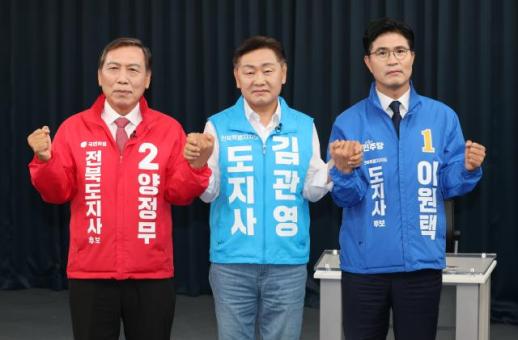 Candidates Clash Over Development Strategies in Jeonbuk Governor Debate Lee Won-taek of the Democratic Party, independent candidate Kim Kwan-young, and Yang Jeong-moo of the People Power Party engaged in a heated debate over regional development strategies and each other's political and legal vulnerabilities during a televised debate on May 22 at KBS Jeonju Broadcasting. During the debate, Kim criticized Lee's "internal development strategy," stating, "While I agree with the idea of nurturing local businesses over attracting external companies, the reality is that local firms have limitations in their assets and capabilities to grow on their own." He emphasized the necessity of attracting external capital and large corporations, pointing out that Jeonbuk's competitiveness index was among the lowest in 2019, indicating that the internal development strategy had already failed. In response, Lee argued that the weakening of local businesses was due to insufficient support for the economic ecosystem and stressed the importance of preparing for future industries while focusing on nurturing local enterprises. "It's not that we shouldn't pursue future industries and investment attraction; the internal development strategy must be at the core," he asserted. Lee also launched an attack on Kim, raising allegations of his complicity in the "insurrection at the provincial office." He questioned Kim's compliance with illegal directives on December 3, stating, "The documents from the provincial office indicate that you followed the Ministry of the Interior and Safety's orders to restrict access to the office." Kim countered, saying, "The second comprehensive special investigation concluded that there were no charges against me. Why should I apologize when that conclusion is not acknowledged?" He challenged Lee's claims, stating, "If the allegations of complicity in insurrection against me and the Jeonbuk provincial officials are false, I would stake my political life on it." Lee rebutted, saying, "During the night of the insurrection, the Yoon Suk-yeol government's illegal martial law should have been opposed, not complied with. I pointed out that you acquiesced to it. I never said I would take political responsibility if the special investigation found no charges." Yang also targeted Kim's political history and legal issues, questioning his ability to address Jeonbuk's pressing issues as an independent governor after changing parties six times. "Can you really resolve many of Jeonbuk's challenges as an independent governor?" he asked. Kim clarified, "I only left the Democratic Party once and returned. This time, I was expelled against my will. To call this a party change or defection is misleading." Yang further raised concerns about allegations of cash payments for a chauffeur service, labeling it a serious crime that could invalidate the election. "If you are elected governor and the judiciary deems your election invalid, it would paralyze the administration and incur huge costs for a re-election," he warned. In response, Kim stated, "It has been clarified that the payments were made to young people for chauffeur services, and I took immediate action to recover the funds. As a legal professional, I have thoroughly reviewed this, and I expect a reasonable outcome from the prosecution and the courts."* This article has been translated by AI. 2026-05-23 20:03:31
 -
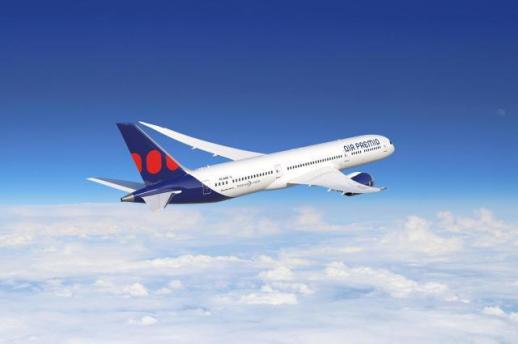 Air Premia Joins Growing Trend of Unpaid Leave Amid Rising Fuel Costs As the ongoing conflict in the Middle East continues to drive up fuel prices, Air Premia, a long-haul low-cost carrier, has announced it will implement unpaid leave for its employees. On May 22, the airline informed its current full-time cabin crew that it would accept applications for unpaid leave. The leave period is set to begin on July 1 and last for one month, with the possibility of extending unpaid leave into August if high fuel prices persist. In its announcement, Air Premia stated, "Due to the prolonged conflict in Iran leading to high fuel prices and exchange rates, we are experiencing numerous flight reductions. Therefore, we will offer voluntary unpaid leave for cabin crew within the limits of available personnel in July." This decision is seen as part of a broader trend among low-cost carriers (LCCs) to reduce operational costs amid rising exchange rates, increasing international oil prices, and a slowdown in travel demand. Previously, Jeju Air, the leading LCC in South Korea, began accepting applications for unpaid leave from cabin crew on May 8. Jin Air has also adjusted the hiring schedule for about 50 prospective cabin crew members to the second half of the year.* This article has been translated by AI. 2026-05-23 20:00:55
 -
 Samsung Electronics Union Vote Exceeds 66% on First Day Amid Bonus Dispute As voting begins on the tentative wage agreement for 2026 at Samsung Electronics, union participation surpassed 66% on the first day, indicating strong member engagement. According to the Samsung Electronics branch of the Korea Metal Workers' Union, the turnout reached 66.16% by 8:25 p.m. on May 22. The nationwide Samsung Electronics union reported a turnout of 69.15%. This vote is to determine approval or rejection of the '2026 wage negotiation tentative agreement' reached on May 20. Voting will continue until the morning of May 27, and the agreement will be approved if a majority of union members participate and vote in favor. The tentative agreement includes an average wage increase of 6.2%, the establishment of a special performance bonus for the semiconductor division, and the introduction of a housing loan program with a maximum of 500 million won. Notably, the semiconductor sector plans to allocate 10.5% of its operating profit for special bonuses, allowing employees in the memory division to potentially receive bonuses up to 600 million won, including the existing OPI (excess profit bonus). In contrast, employees in the non-memory sectors, such as system LSI and foundry, are expected to receive bonuses around 210 million won, while the DX (Device Experience) division is projected to receive only 6 million won in stock options, leading to increased internal dissent. The union representing the DX division, along with the Suwon branch of the Korea Metal Workers' Union, held a press conference outside the Samsung Electronics Suwon campus, stating, "DX employees have initiated a campaign to reject this tentative agreement," and pledged to collaborate with other divisions to ensure its defeat. Tensions between unions have also escalated. The largest union, the Korea Metal Workers' Union, stated that members of the Donghaeng Union, which did not participate in the joint negotiation team, are not eligible to vote. In response, the Donghaeng Union accused them of changing their stance as opposition votes began to rise. However, given the overwhelming membership of the Korea Metal Workers' Union and the Suwon branch, market sentiment leans towards a high likelihood of approval. If the agreement is ultimately rejected, both parties will need to re-enter negotiations, raising the possibility of a renewed strike at Samsung Electronics.* This article has been translated by AI. 2026-05-23 19:58:13
 -
 Police Investigate AI-Generated Fake Articles Distorting May 18 Democratic Movement Police are investigating the authors of fake newspaper articles that distort and mock the May 18 Democratic Movement using artificial intelligence (AI). On May 22, the National Police Agency stated, "We recognize the seriousness of recent violations of the May 18 Democratic Movement Act spreading online," adding that they are also investigating numerous posts claiming that "May 18 was a riot." Recently, images of fake newspaper articles, believed to be created using AI, have been circulating on social media, misappropriating the names of local Gwangju media outlets. These images feature the name of the local daily Gwangju Ilbo and are dated May 20, 1980. They contain false claims such as, "May 18, spies receiving orders from the North seized an arsenal, and the martial law troops launched indiscriminate attacks." A subtitle stating, "Remnants of spies joined forces with rioters to stain peaceful Gwangju with blood," has raised concerns about the distortion of the May 18 Democratic Movement. The police emphasized, "We will actively investigate the dissemination of false information related to May 18 on social media under a zero-tolerance policy," and stated that they are also requesting the deletion and blocking of such content. They added, "We will respond sternly to the dissemination of false information to ensure the significance of the May 18 Democratic Movement is not undermined."* This article has been translated by AI. 2026-05-23 19:55:08
 -
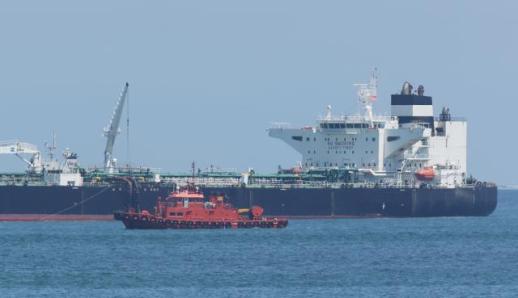 Iran's Revolutionary Guard Claims Control Over Hormuz Strait Shipping Iran has intensified its control over shipping in the Hormuz Strait by effectively requiring prior approval for vessels passing through the strategic waterway. On May 22, the Islamic Revolutionary Guard Corps (IRGC) Navy announced that "35 vessels, including oil tankers and container ships, have passed through the Hormuz Strait in the past 24 hours." The IRGC claimed that all these ships navigated approved routes with Iranian authorization, stating, "While U.S. military actions have destabilized the Hormuz Strait, the IRGC Navy has established safe routes to ensure the continuity of international trade." Iran has recently emphasized that vessels must obtain approval from its military and relevant authorities to transit the Hormuz Strait. On the same day, Iran's state-run Press TV released a video outlining the "guidelines for passing through the Hormuz Strait," detailing specific transit procedures. According to the video, vessels must submit their information via email to the newly established Persian Gulf Shipping Authority (PGSA) to receive prior approval, and may need to pay a toll if required. The video also included a warning that unauthorized navigation or deviation from designated routes would result in a firm response.* This article has been translated by AI. 2026-05-23 19:54:00