
Journalist

by Abe Kwak
-
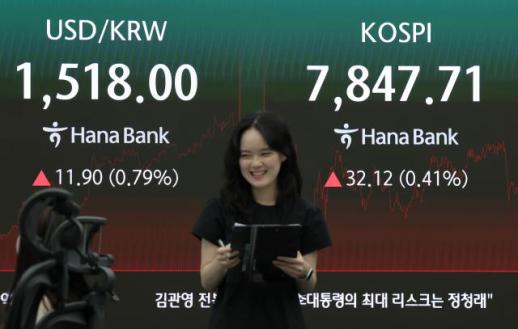 Korea's red-hot rally demands a cooler head SEOUL, May 24 (AJP) - South Korea's stock market has moved to the center of the global financial conversation. The country once defined by the "Korea discount" — that catch-all phrase for chronic undervaluation — is now one of the hottest markets that international investment banks and the financial press are watching. The Financial Times noted recently that the speed of Korea's rally has outpaced even the U.S. Nasdaq's climb during the late-1990s dotcom boom. The benchmark KOSPI has tripled in roughly 18 months, breaking through 7,200 after starting last year near 2,400. That ascent is steeper, by the FT's measure, than the comparable stretch of Nasdaq's bubble-era run. At the heart of the rally sit Samsung Electronics and SK hynix. The artificial intelligence build-out, surging global data center CAPEX, and a step-change in demand for high-bandwidth memory (HBM) have driven both companies to record earnings. Samsung Electronics has gained about 130 percent this year. SK hynix is up close to 170 percent. Their combined market capitalization now exceeds South Korea's gross domestic product — a milestone with few, if any, precedents in the country's economic history. But the hotter the market, the more valuable a cool head becomes. As the FT pointed out, this rally differs from the dotcom episode in one important respect. Nasdaq in 1999 was driven by expectations and multiple expansion, not earnings. Korea's chip rally, by contrast, is being delivered alongside real profit growth. Analysts argue that the global AI infrastructure build is restructuring the memory industry itself. That is why Goldman Sachs, JPMorgan and Citigroup have kept raising their KOSPI targets. Memory, long treated as a textbook cyclical, is increasingly being repriced as a structural growth industry inside the larger AI shift. The problem is balance. Korea's rally is dangerously concentrated. Strip out Samsung and SK hynix and a large share of the market remains in the doldrums. Small- and mid-cap value names are being passed over by liquidity, and the real economy bears little resemblance to the euphoria on the tape. In other words, what we are watching is not a broad-based rise in Korea Inc. so much as a hyper-concentrated rally in AI-linked semiconductors. History rewards remembering. Markets overheat in optimism and then forget risk inside that overheating. Korea is also structurally retail-heavy: the so-called "ant army" of individual investors has been a defining force in this rally, with money once parked in U.S. equities flowing back into Samsung and SK hynix. The worry is that margin debt — "bittu," money borrowed to chase the trade — is growing fast. During Korea's housing mania, people said "this time is different." The conviction that Seoul apartment prices could only rise pulled households into ever-larger loans, and ended in extreme volatility. Stocks are no different. Share prices reflect future cash flows, but markets never move in straight lines. The AI revolution is real; the corrections and drawdowns inside that revolution will be just as real. Foreign flows deserve particular attention. The Korean market is structurally dependent on foreign capital, which provides powerful thrust on the way up but is also the first to leave when risk appetite turns. U.S. interest rate policy, a global growth slowdown, U.S.-China tensions, Taiwan Strait risk and the Middle East — any of these external variables can amplify Korean volatility at short notice. In a market this concentrated in one sector and a handful of names, even a small shock can land outsized. The deeper concern is that the psychology of the market is drifting from investing toward chasing. Once "if I don't buy now I'll be left behind" replaces cold analysis of earnings and industry change, the warning lights come on. The risk is sharpest when retail investors lever up to crowd into a narrow group of stocks. And yet this rally cannot be dismissed as a simple bubble. Korean equities still trade cheaply against U.S. peers. Bloomberg data cited by the FT put the KOSPI's forward price-to-earnings ratio in the 8x range — less than half that of the S&P 500. Nearly half of listed Korean companies still trade below a price-to-book ratio of one. The country has not, in other words, fully escaped its structural discount. What matters from here is direction. For Korea to graduate into a genuinely mature capital market, it cannot ride on two stocks alone. Small- and mid-caps, value names, biotech, robotics, defense, shipbuilding, content and software all need to participate. The market's overall fitness has to improve. That is also why the government's corporate governance reforms and its low-PBR value-up program matter. Done well, they should raise trust in the capital market and strengthen the system as a whole. Above all, what Korea needs now is a sense of balance. The AI revolution is opening a genuine era of industrial transformation, and Korea's semiconductor industry sits at its center. But every market mania casts a shadow. Investors must price risk even when feeling optimistic. Government must stress-test the system even in a bull market. Companies must build long-term competitiveness rather than get drunk on their share price. The world is watching Korea's market. Whether this surge becomes the opening chapter of the country's industrial renaissance — or simply another entry in the ledger of extreme volatility — depends on the choices made from here. 2026-05-24 16:44:42
 -
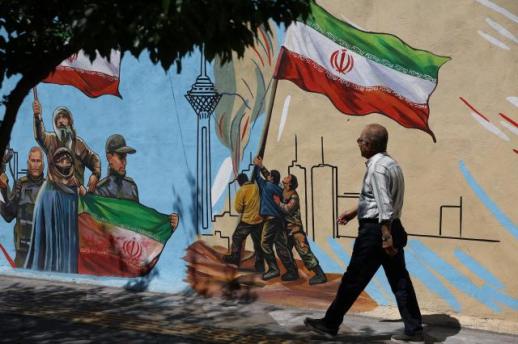 U.S. and Iran Near 60-Day Ceasefire Agreement, But Nuclear Deal Challenges Remain Speculation is growing that the United States and Iran are nearing a memorandum of understanding (MOU) that would extend a 60-day ceasefire and resume nuclear negotiations. However, experts warn that reaching a final nuclear agreement could take considerable time due to significant differences over key issues such as halting uranium enrichment, handling highly enriched uranium, and lifting sanctions against Iran. According to reports from Yonhap News and Axios, a U.S. political news outlet, discussions are underway regarding a draft MOU that includes extending the ceasefire and resuming nuclear talks. The draft reportedly states that Iran will negotiate on halting its pursuit of nuclear weapons, discontinuing its uranium enrichment program, and eliminating its stockpile of highly enriched uranium. However, many analysts believe the negotiation process will not be straightforward. The New York Times reported that while U.S. officials claim Iran has promised to forfeit its stockpile of highly enriched uranium, Iranian government representatives argue that the draft lacks specific details on handling the nuclear program and only includes a general agreement to discuss nuclear issues over the next 30 to 60 days. Moreover, the verification and inspection of nuclear materials are complex technical procedures that can take several months, making it unlikely that a final agreement can be reached within the 60-day timeframe. For context, the initial stages of the Iran nuclear negotiations, known as the Joint Plan of Action (JPOA), took six months to produce an agreement, followed by an extended verification period. The final agreement, known as the Joint Comprehensive Plan of Action (JCPOA), required an additional 20 months of negotiations. Currently, the negotiating environment is considered more challenging than it was during those earlier talks. Following the Trump administration's unilateral withdrawal from the JCPOA in 2018, distrust regarding the U.S. commitment to any agreement has deepened within Iran. A critical variable in the negotiations is the handling of highly enriched uranium. Reports indicate that Iran currently possesses approximately 440 kilograms of uranium enriched to 60%. However, Supreme Leader Ayatollah Mostafa Khamenei has stated that this material cannot be exported. Additionally, some nuclear materials are reportedly located within Iran's underground facilities in Isfahan, which have recently been targeted by U.S. airstrikes, complicating the verification process. As a result, market analysts suggest that even if the MOU is finalized, it is more likely to lead to a prolonged interim agreement characterized by repeated extensions of the ceasefire and negotiations, rather than a swift final nuclear deal.* This article has been translated by AI. 2026-05-24 16:30:57
 -
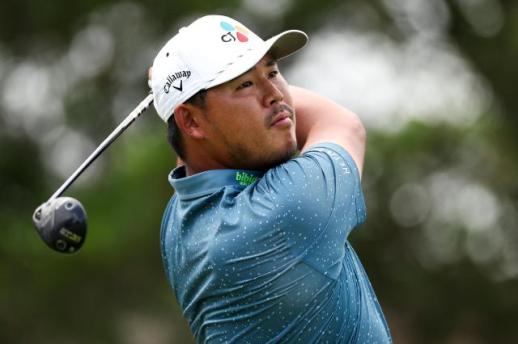 Kim Si-woo Maintains Lead at CJ Cup, Eyes Fifth PGA Tour Victory Kim Si-woo maintained his lead on the third day of the CJ Cup Byron Nelson, part of the PGA Tour, moving closer to his fifth career victory. On May 24, during the third round held at TPC Craig Ranch in McKinney, Texas, Kim shot a 3-under 68, with six birdies and three bogeys. With a total score of 21-under 192, Kim is two strokes ahead of defending champion Scottie Scheffler and Wyndham Clark, both at 19-under 194, marking his second consecutive day in the lead. Kim started strong, making his first birdie on the par-4 third hole. He followed this with another birdie on the par-4 sixth hole, sinking a putt from about three meters. However, he faced challenges starting from the par-4 eighth hole, where he recorded his first bogey. Although he bounced back with a birdie on the par-5 ninth hole, he suffered consecutive bogeys on the par-4 tenth and eleventh holes. Kim regained momentum with a birdie on the par-5 twelfth hole and added two more birdies on the par-4 fourteenth and par-3 fifteenth holes to maintain his lead. After the round, Kim reflected, "There were some tricky putts that I missed, which was disappointing. I received advice from my caddy that I seemed rushed, so I refocused. Thanks to that, I played well after the eleventh hole. I concentrated on my desired shots, which helped me perform well over the last seven holes." Kim is seeking his fifth PGA Tour win, his first since the 2023 Sony Open. He stated, "Rather than thinking about winning, I want to focus on my play. I had some ups and downs today, but I overcame them. This experience will give me strength in the final round, even if things don’t go well." Competing in the same group, Im Sung-jae recorded a 4-under 67 with six birdies and two bogeys, finishing the round with a total of 17-under 196, placing him in a tie for fourth. Im noted, "My tee shots were not as good as in the first two rounds. Still, I capitalized on opportunities and made several birdies. However, I regret not lowering my score further at the end." Im aims for a comeback victory in the final round. If he lifts the trophy, it would mark his third career win, nearly four years and seven months after his last victory at the Shriners Children's Open in October 2021. Im added, "This course allows for many birdies if you get into a good rhythm. In the final round, I want to play strategically from the start and aim to make as many birdies as possible."* This article has been translated by AI. 2026-05-24 15:52:12
 -
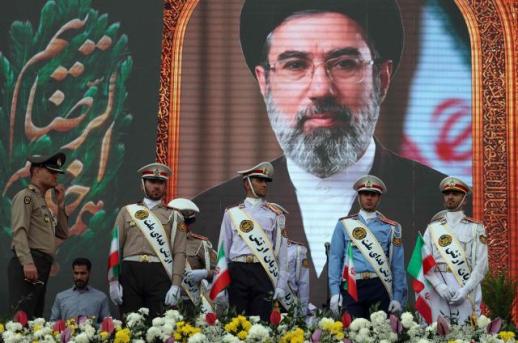 U.S. and Iran Near Agreement to End Hostilities As the U.S. and Iran appear to be nearing an agreement to end hostilities, Iranian state media reported that discussions have taken place regarding mutual restraint from attacks. Preliminary outlines of a potential agreement include a ceasefire extension and the opening of the Strait of Hormuz. On May 24, local time, Reuters and Yonhap reported that Iran's FARS news agency stated that a draft memorandum of understanding (MOU) between the U.S. and Iran includes a commitment from the U.S. and its allies not to attack Iran and its allied forces. FARS also reported that Iran has promised not to launch any preemptive military attacks against the U.S. and its allies. Previously, the online media outlet Axios reported that the U.S. and Iran are close to signing an MOU that would extend a ceasefire for 60 days, open the Strait of Hormuz, and resume nuclear negotiations. According to reports, both countries are discussing further negotiations regarding the opening of the Strait of Hormuz, lifting sanctions against Iran, halting uranium enrichment, disposing of highly enriched uranium, and easing sanctions. However, neither the U.S. nor Iran has officially announced the details of any related agreements as of yet.* This article has been translated by AI. 2026-05-24 15:45:45
 -
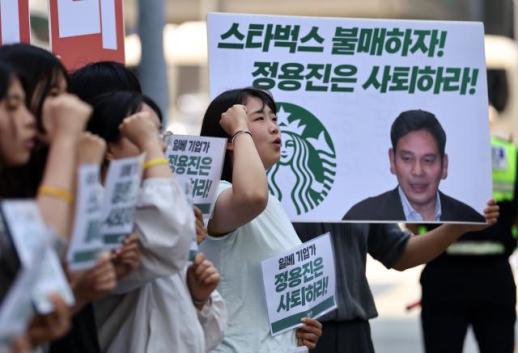 Political Tensions Rise Over Starbucks Controversy Linked to President Lee Jae-myung The political landscape has become increasingly contentious following President Lee Jae-myung's criticism of Starbucks over its marketing related to the May 18 Democratic Movement and the release of a 'Siren Mug' to commemorate the 10th anniversary of the Sewol ferry disaster. The opposition, particularly the People Power Party, has accused the president of excessive incitement, while the ruling Democratic Party argues he is voicing the public's justified anger. According to reports from Yonhap News and others on May 24, Jang Dong-hyuk, a senior member of the People Power Party, expressed on Facebook, "Lee Jae-myung has lost his reason. He speaks without understanding the facts." He added, "There was no event; it was merely a standard product announcement for the new 'Siren Classic.' 'Siren' is a symbol of Starbucks and is a common name for all products bearing the Starbucks logo." He further stated, "If that's the case, then we shouldn't have a 'Siren Order' on April 16 either," suggesting that the president was inciting public outrage to shift the narrative. Oh Se-hoon, the People Power Party's candidate for mayor of Seoul, remarked, "I heard that candidate Jeong Won-oh has also imposed a ban on Starbucks in his campaign. This is a very quick and precise alignment with the president's stance." Kim Ki-hyun, a member of the People Power Party, claimed, "At this point, it wouldn't be an exaggeration to say that the president's social media presence is becoming a form of state violence," likening it to a public trial under a North Korean dictatorship. Lee Jun-seok, the head of the Reform Party's campaign committee, criticized, "The president should be reflecting on himself, not targeting Starbucks, Netanyahu, or Ilbe." In contrast, the Democratic Party countered that the People Power Party is obscuring the essence of the controversy surrounding the May 18 distortion. Kang Jun-hyun, the party's chief spokesperson, stated, "The People Power Party suddenly attacked the Lee Jae-myung government and the ruling party regarding the Starbucks May 18 insult incident that has been controversial all week." He emphasized, "The government and the ruling party have not forced any anger or boycotts. It is the People Power Party that is misusing the call for correcting a distorted historical view as a tool for political strife and electioneering." Kang also noted, "While the president may be outraged over the May 18 and Sewol ferry disaster, so too are the people. It was appropriate for the president to convey a message representing the public's sentiments." Democratic Party spokesperson Park Ji-hye criticized the opposition's response, stating, "To label legitimate criticism of Starbucks' marketing that belittles the democratic movement as 'state violence led by the president' is an extreme distortion and incitement."* This article has been translated by AI. 2026-05-24 15:40:09
 -
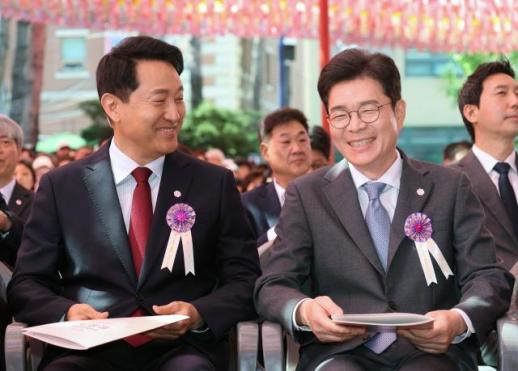 Seoul Mayoral Candidates Share Messages on Buddha's Birthday Seoul mayoral candidates Jung Won-o of the Democratic Party and Oh Se-hoon of the People Power Party met on May 24 to celebrate Buddha's Birthday. Jung stated, "I will become a mayor who takes care of the lives of vulnerable groups," while Oh expressed his commitment to "embracing the socially disadvantaged and creating a community in Seoul where the quality of life improves." The two candidates attended the Buddha's Birthday ceremony at Jogyesa Temple and later shared their celebratory messages on Facebook. Jung remarked, "The Buddha left teachings of compassion for those who are suffering and in need," adding, "I will become a mayor who alleviates the sighs of citizens amid high oil and food prices." He emphasized his intention to strengthen support for vulnerable groups and solidify the roots of people's livelihoods. He also stated, "I will not overlook even the smallest gaps that threaten citizens' safety, and I will create a special safety city in Seoul where everyone can feel secure in their daily lives," stressing that he will focus solely on the lives of citizens and the future of Seoul, undeterred by the political advantages or momentary emotions of the election. Oh noted, "The Buddha's teachings on the sanctity of life and harmonious coexistence serve as a warm beacon of hope for humanity suffering from conflict and strife," reflecting on the deep lesson of achieving harmony. He reaffirmed his commitment to focusing solely on the citizens of Seoul, stating, "I will work tirelessly to embrace the socially disadvantaged more warmly based on the spirit of the Buddha's compassion and to bridge the gaps between regions in Seoul, enhancing the quality of life for all ten million citizens."* This article has been translated by AI. 2026-05-24 15:07:05
 -
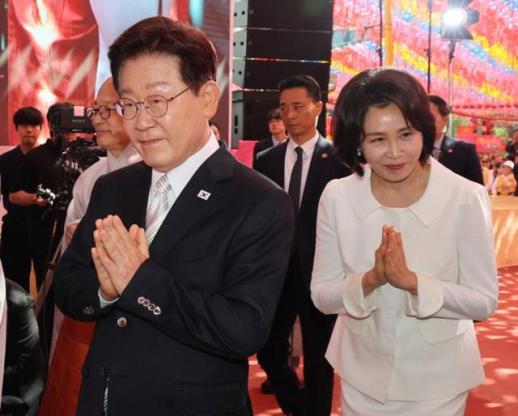 Lee calls for national unity on Buddha's Birthday SEOUL, May 24 (AJP) - President Lee Jae Myung pledged to build a government that "saves people's lives" in remarks at a Buddha's Birthday ceremony at Jogyesa Temple in central Seoul on Sunday. Lee said he would "do my utmost to build a government that saves people's lives" and put into practice Buddha's teaching that "everyone is noble and equal." "The government will take Buddha's precious words as a lamp," he added, vowing to pay closer attention to each person's life and to build a country that listens to "voices from the lowest places." Lee also highlighted Buddhism's enduring presence in South Korean society, saying temple lights never went out even in the darkest times such as war, poverty and disaster, offering people a place to pause and find solace. He also pledged to carry forward the religion's spirit of harmonizing differences into one and to overcome crises facing the country and its people through unity. Earlier in the day, Lee also wrote on Facebook a similar message on Buddha's teachings, calling for national unity. 2026-05-24 15:01:38
 -
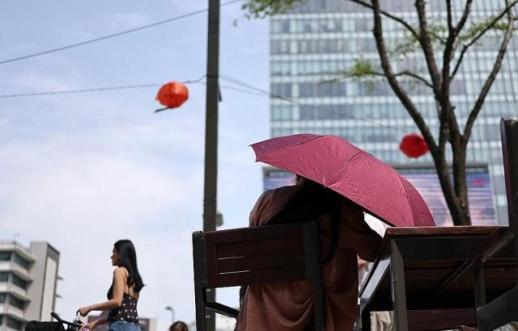 Rain Expected Nationwide on Monday with Temperature Variations On Monday, May 25, which is a substitute holiday, rain is expected across the country. The Korea Meteorological Administration announced on May 24 that rain will begin in Jeju Island in the afternoon and will spread to the Jeolla region and western South Gyeongsang Province by night. By May 26, cumulative rainfall is forecasted to reach 30 to 80 mm in Seoul, Incheon, Gyeonggi Province, Gangwon Province, and Chungcheong Province, while areas along the southern coast of Jeolla and near Jirisan Mountain, as well as the southern coast of Gyeongnam and Jirisan, could see 80 to 150 mm. The temperature difference is expected to be around 15 degrees Celsius, so residents should take care of their health. Morning lows are predicted to be between 12 and 18 degrees, while daytime highs will range from 22 to 30 degrees. Forecasted high temperatures in major cities include 30 degrees in Seoul, 29 degrees in Incheon and Suwon, 30 degrees in Chuncheon, 27 degrees in Gangneung, 29 degrees in Cheongju, Daejeon, and Jeonju, 27 degrees in Gwangju, 28 degrees in Daegu, 25 degrees in Busan, and 26 degrees in Jeju. Forecasted low temperatures are 18 degrees in Seoul and Incheon, 17 degrees in Suwon, 15 degrees in Chuncheon, 16 degrees in Gangneung, 18 degrees in Cheongju, 16 degrees in Daejeon, 17 degrees in Jeonju, 18 degrees in Gwangju, 15 degrees in Daegu, 17 degrees in Busan, and 19 degrees in Jeju. Waves in the inner seas (about 200 km from the coastline) are expected to reach 0.5 to 2.0 meters in the West and South Seas, and 0.5 to 1.5 meters in the East Sea.* This article has been translated by AI. 2026-05-24 14:27:45
 -
 President Lee Jae-myung Promises a Government That Saves Lives On Buddha's Birthday, President Lee Jae-myung stated at a ceremony at Jogyesa Temple in Seoul that he aims to create a government that "saves the lives of the people." He emphasized, "I will pay closer attention to the lives of each citizen and listen to the voices from the lowest levels of society." Highlighting the Buddhist principle of 'harmonious unity,' he stressed the need to overcome the nation's crises with collective strength. In a time of deepening political polarization and social conflict, the president's call for unity and coexistence carries significant weight. The concept of harmonious unity does not mean erasing differing opinions. It advocates recognizing differences without resorting to extremes and finding a path forward for the community. This aligns with the essence of democracy, which is not about eliminating opponents but about reconciling diverse opinions within a system. The challenge lies in the current political landscape, which seems to stray from this direction. Political parties react swiftly to each other's mistakes and inflammatory remarks but are reluctant to cooperate for the sake of people's livelihoods and the economy. Even in the context of local elections, emotional rhetoric and partisan rivalry often overshadow policy competition. While political criticism is necessary, repeated demonization of opponents can lead society to become accustomed to a politics of hostility. Buddhism emphasizes the Middle Way, which encourages finding balance without leaning towards extremes. The same applies to politics. While majority rule is a fundamental principle of democracy, a democracy that does not respect minority opinions is unlikely to endure. The president and the ruling party should not dominate simply because they hold power, and the opposition cannot gain public trust through unconditional opposition alone. Politics should focus on persuading the public rather than subduing opponents. Currently, South Korea faces significant economic challenges, including low growth, high inflation, an aging population, regional decline, youth anxiety, and industrial restructuring. The strategic competition between the U.S. and China, along with supply chain shifts and the AI revolution, has further increased national uncertainty. If politics becomes mired in division and confrontation during such times, the country's overall capacity to respond will inevitably weaken. Historically, moments when nations overcame crises were marked by the strength of unity over conflict. The gold-collecting campaign during the financial crisis symbolized national solidarity. During the COVID-19 crisis, the cooperation between healthcare workers and citizens sustained society. Conversely, when politics becomes extremely polarized, economic and social instability tends to increase. Politics should not create anxiety among the public but rather provide reassurance. The president's vision of a "government that saves the lives of the people" must start from this premise. Protecting citizens' lives encompasses more than just disaster response; it includes ensuring safe workplaces and streets, safeguarding the vulnerable through welfare, reducing conflicts through effective systems, and fostering a political culture that prevents hatred and violence. Politics that sustains the lives of the people must be proven through policies and actions, not just words. The spirit of harmonious unity is required from both the ruling and opposition parties. Politicians must break free from the habit of defining opponents as enemies during elections and solely focusing on rallying their support bases. They should cooperate on national issues, openly discuss policy differences, and use restrained language in front of the public. This is fundamental and common sense. The message of Buddha's Birthday should not end as a mere congratulatory remark at a religious event. Unity and coexistence must be a public commitment that the entire political sphere practices. The public desires a politics that solves problems rather than one that thrives on conflict. Harmonious unity is not a complex Buddhist term but a common sense that today's South Korean politics urgently needs to learn.* This article has been translated by AI. 2026-05-24 14:25:00
 -
 Samsung faces pressure from shareholders amid union vote on tentative deal SEOUL, May 24 (AJP) - Samsung Electronics has allowed access to its register of shareholders. It comes amid growing opposition from some retail investors over a last-minute, tentative deal between management and its labor union last week that averted an 18-day strike but sparked fresh controversy over how the electronics giant distributes its unprecedented profits, fueled by an artificial intelligence-driven chip supercycle. ACT, a platform for retail shareholders, said Samsung accepted its request to review and copy the register just two days after it was filed. The group is expected to carry out the review at Samsung Electronics' headquarters in southern Seoul later this week. The unusually swift approval gives ACT access to the register, which contains ownership details as well as voting rights and dividend eligibility, allowing the group to pursue coordinated shareholders' action at South Korea's largest listed company by market capitalization. Under South Korean law, shareholders have the right to request access to such records, a step often used as a starting point for collective action. The request was made after the company's tentative wage and bonus-related arrangements raised questions about whether shareholders were receiving a fair share of the company's profits. Once access to the register is completed, the group plans to contact institutional and retail investors, even those holding a minimum number of shares, to seek support for collective action. ACT plans to contact domestic and foreign investors holding over 6,735 Samsung shares, aiming to collectively reach the 1.5-percent threshold required under South Korean law to call an extraordinary shareholders' meeting. To qualify, shareholders must have held their shares for at least six months. The core concern centers on a bonus structure that allocates a fixed share of operating profit to bonus payments, which critics say could come at the expense of dividends and broader shareholder returns, infringing on their interests. ACT argues that while management can hand out one-off bonuses at its discretion, a permanent profit-sharing arrangement of this kind is significant enough that shareholders should have a say. ACT's push comes as Samsung union members are in the middle of a weeklong vote on whether to accept the tentative deal, putting the company under simultaneous pressure from both labor and shareholders. With voting set to close on Wednesday, more than 80 percent of the 57,290 eligible voters out of about 70,505 union members had already voted, raising the likelihood that the deal would pass, with members of the memory division accounting for the largest share at around 24,000, followed by roughly 17,000 from the non-memory business and about 22,000 from other divisions. For the deal to pass, more than half of eligible voters must participate and a majority must vote in favor. 2026-05-24 14:22:06