
Journalist

by Abe Kwak
-
 Korea's Financial Supervisory Service to Enhance Analyst Protection The Financial Supervisory Service (FSS) is considering reforms to strengthen the independence of research reports from securities firms and to establish protections for analysts. This initiative aims to address the prevalent practice of overly positive reports and the issue of external pressure on analysts. However, the effectiveness of these reforms may be challenged, as the existing reporting center has not received any complaints in its nine years of operation, rendering the current system nearly ineffective. According to the FSS, the 'Unreasonable Research Practices Reporting Center' was established in May 2017 to receive reports of coercion, threats, and undue pressure on analysts. However, since its inception, there have been no complaints filed. Despite the center being operational for nine years, the total number of reports remains at zero.Industry experts argue that the lack of reports does not indicate the absence of issues. Given the rarity of sell reports, if a report were to be filed, the author could be easily identified. Even if a report is made, there are insufficient means to resolve the issue or sanction the company involved. In light of the current ineffectiveness of the existing system, the FSS is internally reviewing measures to improve research practices at securities firms. Future discussions on reforms are expected to focus on creating an 'independent research environment' and establishing 'analyst protection mechanisms.' There is a growing need for institutional safeguards to ensure that research activities based on legitimate analysis and opinions are not stifled by external pressures or legal disputes. Recent backlash from companies and investors regarding certain stocks has also contributed to the discussions on reform. For instance, Samchundang Pharm recently initiated legal action against an analyst who presented an opinion contrary to the company's claims. In 2023, a Hana Financial Investment analyst faced conflicts with some investors after issuing a sell recommendation on EcoPro. Amid these developments, the trend of 'buy bias' in domestic securities reports remains pronounced. According to the Korea Financial Investment Association, as of the end of March last year, the proportion of 'buy' recommendations among the investment ratings of the top 10 securities firms, based on equity capital, averaged 88.5% over the past year. In contrast, the share of 'sell' recommendations was a mere 0.1%. Only Mirae Asset Securities (0.6%) and Meritz Securities (0.5%) issued sell recommendations among the top firms. The proportion of 'neutral (hold)' recommendations, which are often considered as sell signals, also remained low at an average of 11.4%. An FSS official stated, "There is a need for mechanisms to protect analysts when they produce legitimate reports," adding, "This is a matter that requires discussion with the Financial Services Commission, and we are reviewing internal measures for improving practices."* This article has been translated by AI. 2026-05-23 10:33:00
 -
 Bitcoin Surges to $77,500 Amid U.S. Stock Market Rally Bitcoin and other major virtual assets continued their upward trend. Analysts attribute this rise to the strong performance of the U.S. stock market and ongoing inflows into Bitcoin spot exchange-traded funds (ETFs), which have boosted investor appetite for riskier assets. According to CoinMarketCap, as of 8 a.m. on May 22, Bitcoin was trading at $77,547, up 0.19% from the previous day. Ethereum also saw a slight increase of 0.23%, reaching $2,129. Binance Coin (BNB), Solana, and Ripple (XRP) recorded gains of 1.29%, 1.37%, and 0.47%, trading at $656, $87, and $1.37, respectively. Market analysts suggest that the bullish sentiment in the U.S. stock market has improved investor confidence, leading to increased buying activity across the virtual asset market, particularly with the inflow of funds into Bitcoin spot ETFs. Additionally, expectations for the regulation of virtual assets in the U.S. and a favorable policy environment have further fueled this risk-on sentiment. As of 8 a.m. on the same day, Bitcoin was trading at approximately 115.18 million won ($77,604) on the domestic exchange Bithumb, marking a 0.57% increase from the previous day. The 'Kimchi Premium' stood at -1.454%, indicating that the price of Bitcoin in South Korea is lower than that in international markets.* This article has been translated by AI. 2026-05-23 10:30:17
 -
 Trump Delays AI Executive Order, Citing Need to Maintain U.S. Advantage Donald Trump, President of the United States, has postponed the signing of an executive order on artificial intelligence (AI). The order was intended to require companies to consult with the government before releasing advanced AI models, but Trump expressed concerns that it could slow the development of U.S. AI firms. He emphasized the need to maintain American superiority in the ongoing technology competition with China. According to Reuters and Axios, the White House announced on May 21 that the signing ceremony for the AI and cybersecurity executive order, scheduled for that day, would be delayed. The event was expected to include CEOs from major AI companies. Trump told reporters at the White House, "I postponed it because I didn't like some of the content. We are ahead of China and everyone else, and I don't want to do anything that could hinder that advantage." The draft of the executive order reportedly included provisions for companies to consult with the government before unveiling advanced AI models. It also suggested that government agencies could review models up to 90 days before their public release if necessary. Additionally, the order aimed to explore the use of advanced AI models in defending critical infrastructure, such as government systems, banks, and hospitals, against cyber threats. This approach seeks to enhance the defensive capabilities of the government and key facilities while assessing the potential misuse of AI in cyberattacks. This decision indicates that Trump prioritized industrial competitiveness over safety reviews. It suggests a greater emphasis on maintaining momentum in the technology race with China rather than addressing potential risks associated with AI models. The White House has not completely scrapped the executive order. There is a possibility that it will be revised and the signing process will be resumed.* This article has been translated by AI. 2026-05-23 10:27:37
 -
 President Yoon Addresses 'Predatory Finance' Concerns, Financial Services Commission Shifts to Inclusive Finance ◆Aju Economic Major News ▷President Yoon's Remarks on 'Predatory Finance' Prompt Financial Services Commission to Shift to 'Inclusive Finance' - The Financial Services Commission (FSC) has decided to pursue structural reforms in finance centered on the 'Three-Tiered Inclusive Finance' model to improve the system that excludes vulnerable borrowers from formal financial services, pushing them toward policy-based microfinance and illegal private loans. - FSC Chairman Lee Ok-yeol pointed out that formal financial institutions have failed to adequately perform risk selection and management functions, leading to middle- and low-credit borrowers being pushed into financial blind spots. He emphasized the need for alternative financing options that consider long-term recovery possibilities. - This structural reform aligns with President Yoon Suk Yeol's statement that 'inclusive finance is the obligation of financial institutions' and the presidential office's concerns regarding interest rate disparities and the exclusion of mid-credit borrowers. - The FSC also plans to implement a strategy for the globalization of capital markets, including allowing foreign integrated accounts for ETF investments and hosting the large-scale overseas IR event 'Korea Premium Week' to attract foreign capital to the domestic stock market. - Additionally, the FSC is considering the complete lifting of separation regulations for financial companies equipped with security capabilities and AI utilization, while also pursuing the introduction of restrictions on dual listings. ◆Major Reports ▷Reversing Adverse Factors Can Lead to Explosive Gains - Amid expectations for negotiations between the U.S. and Iran, oil prices and Treasury yields have both declined, while strong rebounds in semiconductor stocks were observed in U.S. and domestic markets, driven by Nvidia's earnings expectations and easing strike risks at Samsung Electronics. - Foreign investors continued to sell off in the KOSPI for the 11th consecutive trading day, but the scale of net selling was significantly reduced to about 220 billion won, with institutional and individual ETF buying driving the market rebound. - The recent sharp decline in the KOSPI was largely influenced by technical overheating due to short-term surges rather than external factors like oil prices, interest rates, and strikes. Analysts suggest that the current rebound reflects positive developments such as the labor agreement at Samsung Electronics and strong earnings expectations for Nvidia. - The tentative labor agreement at Samsung Electronics is viewed positively for the stock price, as it reduces concerns about cash outflows and overhang risks through its share buyback method and some lock-in structures. - Analysts note that the AI rally is showing a relatively free flow from macro variables like interest rates and consumption, unlike past IT cycles, and that strong semiconductor exports are supporting market strength. ◆Key Disclosures After Market Close (21st) ▷Plutos Decides to Issue 20 Billion Won in Convertible Bonds ▷Linked Resumes Stock Trading on the 22nd ▷JNK Global Signs 17.9 Billion Won Supply Contract for Furnaces ▷Pintek Resumes Stock Trading on the 22nd ▷Wellkeeps High Tech Resumes Stock Trading on the 22nd ▷UTI Decides to Issue 10 Billion Won in Convertible Bonds ▷CS Decides to Issue 5 Billion Won in Convertible Bonds ▷Memelavity Resumes Stock Trading on the 22nd ◆Fund Trends (As of 20th, Excluding ETFs) ▷Domestic Equity: -20.5 Billion Won ▷Overseas Equity: -16.8 Billion Won ◆Key Schedule for Today (22nd) ▷South Korea: Consumer Confidence Index (May) ▷Japan: Consumer Price Index (April) ▷Germany: Ifo Business Climate Index (May) ▷United States: Consumer Sentiment Index (Preliminary, May), Conference Board Leading Economic Index (April)* This article has been translated by AI. 2026-05-23 10:25:10
 -
 Airbnb Expands Beyond Lodging with New Super App Features Airbnb is expanding its business model from a simple lodging reservation platform to a comprehensive travel service provider. The company plans to introduce convenience services such as car rentals and grocery delivery, leveraging artificial intelligence (AI) to actively target global traveler demand. Recently, there has been a noticeable trend among global online travel agencies (OTAs), including Airbnb, to evolve into 'super apps.' This shift aims to diversify revenue models and enhance customer retention, reflecting a broader industry trend. By combining vast data with AI, Airbnb seeks to seamlessly integrate travelers' entire journey into its ecosystem. ◆ Comprehensive Travel Support from Transportation to Accommodation Starting this summer, Airbnb will gradually roll out new services that connect all aspects of travel, from transportation to accommodation and local experiences. Key new services include grocery delivery, airport pickups, luggage storage, and car rental connections. In major U.S. cities, Airbnb has partnered with Instacart to allow guests to order groceries before arriving at their accommodations. Additionally, the company will offer airport pickup services through Welcome Pickups and luggage storage options in collaboration with Bounce in key cities worldwide. By late summer, users will also be able to search for and book nearby rental cars through the app. ◆ Addition of Boutique Hotels and Local Experiences Airbnb will also revamp its accommodation lineup and experience offerings. The platform will add boutique and independent hotels in 20 major cities worldwide, selected based on location and design criteria, excluding large hotel chains. The local experience category will feature over 3,000 programs that allow travelers to explore global landmarks like the Tower of London and Tokyo Skytree with local experts, as well as 2,500 culinary experiences. Notably, ahead of the 'FIFA World Cup 2026' in North America, special experiences will be available for watching matches or training with legendary soccer players in host cities. ◆ Enhanced Platform Usability with AI Technology AI technology will be integrated across the platform to improve search and booking convenience. The AI will analyze over a billion accumulated reviews, summarizing key information such as location, amenities, and family-friendliness. In the second half of the year, a feature will be introduced that allows users to compare accommodations saved in their wish lists at a glance. Additionally, new features will include a 'shared itinerary' for planning trips with companions and a 'connections and travel map' to check recommendations from friends. The AI-based customer support assistant currently supports multilingual chat and will expand to voice support later this year. Brian Chesky, CEO of Airbnb, stated, "We aim to provide more meaningful travel experiences through unique accommodations, differentiated local experiences, and convenient additional services that go beyond simple lodging."* This article has been translated by AI. 2026-05-23 10:22:43
 -
 Food Companies Expand Offline Presence with Permanent Locations Food manufacturers are stepping out of their factories. The trend of offline marketing, which previously focused on short-term pop-up stores and limited-edition merchandise, is evolving into permanent brand spaces. These locations are designed to allow consumers to continuously experience the company’s food culture and brand philosophy in their daily lives, establishing a presence in key commercial areas throughout Seoul. According to industry sources, Harim Industries opened a 'Jangin Ramen' snack bar near Seoul City Hall on May 8. This permanent location features a menu that includes its premium brand, featuring Jangin Ramen, bibim-myeon, and juicy dumplings. It is considered unusual for a ramen manufacturer to operate a direct snack bar centered around its own products. A Harim representative stated, "We focused on allowing consumers to naturally experience the brand by tasting finished dishes firsthand." Ottogi is offering dining, café, and bakery services through its multi-cultural space 'Rolly Polly Cotto' in Nonhyeon-dong. The venue showcases a variety of unique dishes and desserts made with Ottogi products, along with exhibitions that highlight the brand's history. This initiative is interpreted as an effort to strengthen the image of Ottogi as a food culture brand, transcending its identity as a food manufacturer. Dongseo Foods is enhancing its premium coffee expertise at 'Maxim Plant' in Hannam-dong, where it showcases the coffee roasting process and production methods. Visitors can observe the transformation of green coffee beans into roasted coffee and enjoy a selection of single-origin coffees and signature drinks. This experiential space emphasizes the company’s identity as a premium coffee specialist through its expertise and R&D capabilities. Pulmuone is focusing on promoting plant-based food culture through its vegan restaurant 'Plantude.' While offering a menu composed entirely of plant-based ingredients, the restaurant does not overtly advertise itself as vegan. It aims to connect vegan food with a sophisticated and enjoyable dining experience. A Pulmuone representative described Plantude as a space that proposes a plant-based lifestyle. A commonality among these spaces is their prioritization of building relationships with consumers over profitability. An industry insider noted, "Considering rent and operating costs, the profitability of the dining business itself is not significant, but the goal is to create experiences that allow consumers to remember the brand physically." The strategic locations of these spaces in key commercial areas such as Hannam-dong, Nonhyeon-dong, and near City Hall are particularly significant. These areas attract a large influx of the trend-sensitive 2030 demographic and are frequented by foreign tourists. Another industry source remarked, "To move away from the outdated image of manufacturing companies, we needed spaces that young consumers would voluntarily visit and stay in." Experts analyze this trend as a structural change rather than a temporary fad. In an era where differentiating brands solely based on taste and quality has become challenging, the competitive landscape is shifting towards integrating deeply into consumers' daily lives and preferences. Lee Eun-hee, a professor of consumer studies at Inha University, stated, "It is now difficult to achieve clear brand differentiation based solely on product taste or quality. The future competition in the food industry will revolve around not just 'what is being sold,' but 'how it integrates into consumers' daily lives and the experiences it offers.'"* This article has been translated by AI. 2026-05-23 10:21:00
 -
 Seo In-young Reveals Conflicts with Jewelry Members: 'I Didn't Invite Jo Min-ah to My Wedding' Seo In-young, a member of the girl group Jewelry, has opened up about her conflicts with fellow members. On May 21, a video titled "Lee Ji-hye vs. Seo In-young: Why Did They Cry While Revealing a 20-Year-Old Story?" was posted on the YouTube channel "Mibji Anheun Gwanjong Unni." During the video, Seo In-young was asked, "Which Jewelry member did you have the most serious fights with?" She responded, "To be honest, I didn’t get along well with Lee Ji-hye. Back then, I wondered why she acted like an ice princess. Now we are very close and worry about each other when we talk, but when we were younger, we just didn’t click." She continued, "So I hung out with Jo Min-ah, but I don’t keep in touch with her now. I feel sorry about that. Min-ah reached out to me, but I was going through a tough time." Seo In-young added, "Min-ah isn’t good at sweet-talking. I wanted her to agree with everything I said, but I didn’t want to hear her say, ‘That seems a bit off,’ so I just stopped contacting her." She also mentioned, "I think that was my shortcoming, which is why I didn’t invite her to my wedding. I’m sorry." In response, Lee Ji-hye remarked, "If Min-ah was the only one not invited to the wedding, she might feel hurt." Previously, Jo Min-ah drew attention in 2023 for not attending Seo In-young's wedding. At that time, she expressed her disappointment on social media, stating, "On the day the news about my member's wedding came out, I received a call in the afternoon, and we talked for over 50 minutes, crying and laughing and sharing a lot of conversations. However, after that, I didn’t receive any calls, and I felt very sad about not being invited on such an important day, but I believe there must be a reason for it."* This article has been translated by AI. 2026-05-23 10:18:20
 -
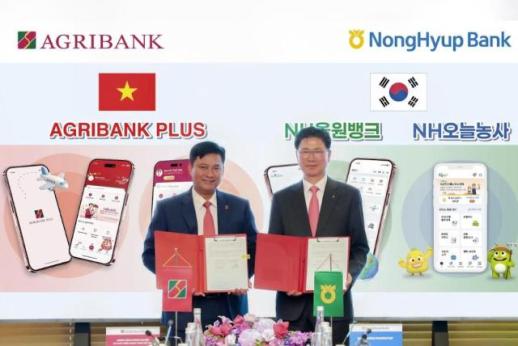 NH Nonghyup Bank's Taeyoung Kang Shifts Focus from Risk Management to Risk Prediction Taeyoung Kang's leadership at NH Nonghyup Bank stands out from the start. While most bank leaders reinterpret finance with a focus on growth and expansion, he begins by addressing the essence of 'risk.' Nonghyup Bank is structurally a blend of public service and commercial interests, deeply connected to the volatile sectors of agriculture and local economies. In this environment, entrepreneurial finance manifests not as aggressive expansion but as 'transformation within stability.'Kang approaches this challenge through technology. AI-based credit assessments, early warning systems, and data-driven risk management define his vision. He sees the future of finance not as 'lending more' but as 'making more accurate judgments.' This is not merely about efficiency; it is an attempt to redefine the direction of finance. If uncertainty cannot be eliminated, it must be transformed into a predictable domain, which is the core of Kang's leadership. Transforming Risk Perception from Avoidance to InterpretationThe essence of Kang's leadership lies in his perspective on risk. Traditional finance has focused on avoiding or controlling risks after they arise. When problems occur, the approach is to reduce them, and when risks increase, the response is to block them. However, Kang aims to fundamentally change this approach. He views risk not as something to eliminate but as data to be interpreted. Uncertainty does not disappear; instead, it can be transformed into an understandable domain.This distinction alters how finance operates. Avoidance is defensive, while prediction is strategic. Kang seeks to transition finance from an 'industry managing uncertainty' to one that 'interprets uncertainty.' This is not merely a philosophical stance but a choice rooted in the realities of Nonghyup Bank. The customer base, centered on agriculture, local economies, and small businesses, is inherently volatile, influenced by numerous variables such as climate, economic conditions, prices, and policies. In this structure, merely avoiding risk is insufficient for survival.Kang acknowledges this limitation and aims to overcome it through technology. He focuses on enhancing the ability to read risks rather than merely reducing them. This approach may appear conservative, but it is, in fact, the most proactive strategy. AI in Finance: An Experiment to Change Decision-Making StructuresIn Kang's leadership, AI is not just a tool; he defines it as a system that changes decision-making structures. Historically, financial decisions relied on experience, intuition, and limited data. The decision to approve loans was heavily influenced by the judgment of the responsible officer, and risk management was largely retrospective.However, Kang seeks to change this structure. AI-based credit assessments, early warning systems, and automated risk analysis are all interconnected in one direction: enhancing the precision of financial judgments. Data is collected more broadly, algorithms analyze it more quickly, and decisions are made more consistently.This change is different from mere digital transformation. It is an attempt to alter the decision-making process itself. This is particularly significant for organizations like Nonghyup Bank, which serve a diverse customer base with high information asymmetry. Farmers, small business owners, and local enterprises are difficult to assess accurately with standardized credit evaluations. Kang aims to address this issue through data and AI.Ultimately, his strategy is clear: it is not about making more judgments but about making more accurate ones. Balancing Public Interest and Profitability in BankingOne of the most significant characteristics of Nonghyup Bank is its simultaneous existence of public service and commercial interests. This structure creates ongoing tension. Pursuing profit can weaken public service, while strengthening public service can diminish profitability. Most financial institutions approach this as a matter of balance.However, Kang makes a different choice. He views public service not as a cost but as a market opportunity. Agricultural finance, local finance, and policy finance are not merely areas of support but sectors with emerging financial demands.This approach is crucial. It allows for the creation of a structure that can generate profits while maintaining public service. Kang combines AI and data to analyze agricultural data, local economic data, and customer behavior data to design financial products and risk management simultaneously.This goes beyond simple financial support. It is an attempt to create a new financial model that satisfies both public service and profitability. While other banks expand towards platforms and urban centers, Kang expands based on regions and industries. This strategy may be slower, but it is deeper. Overcoming Structural Limitations for Future GrowthKang's leadership has a clear direction but also faces structural limitations. Nonghyup Bank is a cooperative-based organization with a complex decision-making structure and strong public demands. This makes rapid strategic execution challenging.Additionally, it is relatively a latecomer in the digital platform competition. While internet banks and big tech companies are quickly expanding their customer touchpoints, Nonghyup Bank remains somewhat confined within traditional financial models.Nevertheless, Kang's strategy is a direct attempt to break through these limitations. He aims to change direction rather than merely keep pace with speed. The competitive standard for finance is shifting from 'expansion' to 'precision.'If this approach succeeds, Nonghyup Bank could present a new financial model beyond being just a local financial institution. Conversely, if it fails, there is a risk of being trapped by structural limitations. Ultimately, the success or failure of Kang's leadership boils down to one question: Can a finance model that predicts risk become genuinely competitive? SWOT Analysis:Kang's leadership is defined as 'AI-based risk prediction entrepreneurship.'Strengths include a strategic mindset that seeks to transform risk from mere control to a predictable domain. AI-based credit assessments and early warning systems are key tools that enhance the precision of financial decision-making, supported by Nonghyup Bank's extensive regional and agricultural data.Weaknesses involve structural constraints. The organization is required to balance public service and profitability, which limits the speed of strategic execution, and it is relatively a latecomer in the digital and platform competition.Opportunities are clear. The combination of agricultural and local finance with data-driven finance is an area that other banks may find difficult to replicate. The spread of AI in finance could strengthen Nonghyup Bank's strategy.Threats include external competition and internal structure. Big tech and internet banks are rapidly encroaching on customer touchpoints, and profitability pressures persist. Additionally, if risk prediction fails, the consequences could be significant.* This article has been translated by AI. 2026-05-23 10:14:35
 -
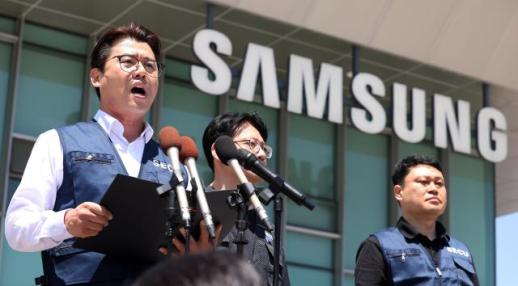 Samsung labor vote on wage deal tops 80% on second day amid bonus split SEOUL, May 23 (AJP) - Samsung Electronics union members voted for a second day on a tentative 2026 wage deal, with turnout exceeding 80 percent. According to industry sources, as of 6:40 p.m. Saturday, 46,185 of 57,290 eligible voters at the SGUU, Samsung Electronics’ largest union, had cast ballots, bringing turnout to 80.62 percent. At the National Samsung Electronics Union (NSEU), the second-largest union, 6,502 of 8,187 eligible voters had participated as of the same time, recording turnout of 79.42 percent. The combined turnout for the two unions stood at 80.47 percent. The agreement is expected to pass, but a widening bonus gap between business divisions has fueled a rejection campaign among DX employees, who work on smartphones, home appliances and TVs. Voting began at 2:12 p.m. Friday and will run until 10 a.m. May 27. The deal will be finalized if more than half of eligible union members take part and a majority of those voting approve it. If support falls short of a majority, the agreement will be rejected and labor and management will have to return to the negotiating table. The tentative deal, reached May 20, includes an average wage increase of 6.2 percent, a new housing loan program of up to 500 million won ($390,000) and a special bonus for semiconductor employees funded by 10.5 percent of the division’s business performance. Under the agreement, employees in the Device Solutions (DS) division could receive between about 210 million won and 600 million won in bonuses before tax, based on an annual salary of 100 million won. Including the new semiconductor special bonus and the existing Overall Performance Incentive (OPI), employees in the memory business could receive up to 600 million won, while those in non-memory units such as System LSI and foundry could receive about 210 million won. By contrast, DX employees are expected to receive only around 6 million won worth of treasury shares as a bonus, as the division is widely expected to miss out on OPI due to weak earnings this year. The union with the largest membership is the Samsung Electronics branch of the Samsung Group United Union (SGUU), with 70,850 members, followed by the National Samsung Electronics Union (NSEU) with 19,053 members and the Samsung Electronics Labor Union 'Donghaeng' with 12,298 members. The total membership stands at 102,298, including overlapping members. By division, DS has about 77,300 employees, outnumbering DX’s roughly 51,700. Among union members eligible to vote, 57,290 belong to the SGUU and 8,176 to the NSEU, a structure seen as favorable to passage. But opposition is growing among DX employees, as the expected bonus gap between divisions could reach nearly tenfold. Lee Ho-seok, head of the Suwon branch of the National Samsung Electronics Union, held a press conference with Donghaeng outside Samsung Electronics’ Suwon campus in Gyeonggi Province and said DX employees had officially launched a campaign to reject the deal. “We will do our best to ensure the deal is rejected by joining forces not only with DX employees but also with semiconductor employees outside the memory business,” Lee said. On May 21, DX employees joined the NSEU and Donghaeng in large numbers. Donghaeng’s membership jumped from around 2,600 to about 12,300 as of Friday morning, while the NSEU’s membership rose by roughly 3,000 from about 16,000 on May 20 to about 19,000 the following day. The SGUU told Donghaeng on Saturday that Donghaeng members would be excluded from the vote because the tentative deal was signed on May 20 after Donghaeng had left the joint bargaining group. It said eligible voters would be limited to SGUU and NSEU members listed as of 2 p.m. May 21. Donghaeng criticized the move as a reversal intended to help pass the deal, saying the SGUU had previously told unions by email that it would respect all unions’ voting rights. Donghaeng said it would proceed with its own vote regardless of the SGUU’s decision to exclude its members. Choi Seung-ho, head of the SGUU, said that if the deal is rejected, he would delegate the remaining 2026 negotiations to other union leaders and hold a vote of confidence on his leadership. If that happens, Samsung Electronics could once again face the possibility of a strike. 2026-05-23 09:48:43
 -
 U.S. flags chip tariffs in push on Korean memory makers to speed up US chip investments SEOUL, May 23 (AJP) -U.S. Trade Representative Jamieson Greer said Friday that Washington is not planning immediate semiconductor tariffs but stressed that duties remain an important tool to rebuild domestic chip manufacturing, signaling continued pressure on Asian chipmakers including Samsung Electronics and SK hynix to expand production in the United States. Speaking at a memory chip expansion project by Micron Technology in Virginia, Greer said the Trump administration’s Section 232 national security investigation into semiconductors aims to strengthen U.S. production capacity after decades of offshoring. “Having tariffs on semiconductors is really important,” Greer said, adding that any duties must be introduced with the “right timing and in the right amount.” He also said there was “not an immediate tariff coming.” The remarks come as President Donald Trump has repeatedly criticized Taiwan’s semiconductor industry and called for aggressive tariffs to revive U.S. chip manufacturing. In a recent interview with Fox News after his state visit to China, Trump reiterated that Taiwan “stole our chip industry” and argued that previous U.S. administrations should have imposed tariffs of up to 200 percent on imported semiconductors to prevent production from moving overseas. Trump has also promoted large-scale semiconductor investments into the United States as part of his administration’s push to strengthen domestic manufacturing and artificial intelligence infrastructure. Taiwan Semiconductor Manufacturing Company last year announced plans to increase its total U.S. investment to $165 billion, including five new fabrication facilities in Arizona. Samsung Electronics and SK hynix have also been accelerating their own U.S. expansion plans amid rising AI chip demand and growing geopolitical pressure surrounding semiconductor supply chains. Samsung is expanding its foundry operations in Taylor, Texas, where the company is building a semiconductor manufacturing complex expected to begin initial production by late 2026. The company is said to be reviewing additional foundry investments after securing a $16.5 billion supply agreement with Tesla. Samsung had previously reduced its planned Texas investment from $44 billion to $37 billion due to weaker-than-expected customer demand, but total spending could eventually exceed $50 billion as it estimated supply would remain below customer demand through 2027. SK hynix is also expanding its U.S. footprint with a planned $3.87 billion advanced chip packaging facility in Indiana. The project is expected to begin mass production in late 2028 and has qualified for proposed support under the U.S. CHIPS Act. The facility will focus on advanced packaging for AI memory products, an area where SK hynix currently leads the global market through its supply relationship with NVIDIA. Trump administration’s trade stance is reinforcing a broader shift in the semiconductor industry, where companies are increasingly being pushed to localize manufacturing in major markets to reduce geopolitical and supply-chain risks. The United States currently produces only about 10 percent of the semiconductors it consumes. 2026-05-23 08:55:17