
Journalist

by Abe Kwak
-
 Justice Innovation Party Calls for Kim Yong-nam to Consider His Position Amid Loan Shark Allegations The Justice Innovation Party criticized Kim Yong-nam, the Democratic Party's candidate for Gyeonggi Pyeongtaek, on May 24, calling him a "three-time disqualified candidate" due to allegations of being involved in loan sharking. They urged him to "seriously consider his position." Shin Jang-sik, a member of the Justice Innovation Party, held a press conference at the National Assembly, stating, "Kim has betrayed the trust of Pyeongtaek citizens and abandoned the minimum moral integrity required of a public office candidate with his false explanations and evasions. Most importantly, his qualifications as a candidate from the democratic reform camp have been compromised." Shin pointed out that while Kim denies owning the loan shark business, he admitted to it in a 2021 recording, where he stated, "I own 100% of the shares and earn 300 to 400 million won a year, and all dividends are mine." Regarding Kim's claim that there were no illegal dividends or profits, Shin questioned, "Is it acceptable for someone aspiring to public office to justify their actions by saying they received 'legal' profits from a loan shark business? The mere fact that he engaged in usury makes him unfit for public office." Shin also refuted Kim's recent explanation that he had ceased operations and was in the process of closing the business. He stated, "Last year, 'Mansamusa Lending' increased its capital from 300 million to 500 million won to continue its operations and completed a business renewal on May 18 to operate for another three years. His sudden closure announcement after media scrutiny is merely a legal technicality." Shin urged Kim not to burden the democratic reform camp and to seriously contemplate his position, adding that the Democratic Party should conduct an ethical investigation. The Democratic Party responded cautiously. Spokesperson Kang Jun-hyun stated after the press conference, "The candidate himself claims that the facts are different, and the party is monitoring the situation closely." Meanwhile, on the same day, Kim Yong-nam, along with Yoo I-dong of the People Power Party, Jo Guk of the Justice Innovation Party, and Kim Jae-yeon of the Progressive Party, attended a ceremony at Simboksa Temple to celebrate Buddha's birthday.* This article has been translated by AI. 2026-05-24 14:18:55
 -
 U.S. and Iran Near Agreement on 60-Day Ceasefire and Hormuz Strait Access The possibility of a renewed ceasefire in the Middle East has increased as the United States and Iran edge closer to an agreement. According to U.S. online media Axios and Yonhap News, the two nations are nearing a deal that includes a 60-day extension of the ceasefire and the opening of the Strait of Hormuz without tolls.Axios reported, citing a draft agreement obtained from U.S. government officials, that both sides are expected to sign a memorandum of understanding (MOU) that will be valid for 60 days and can be extended by mutual consent.This report follows a visit by a Pakistani mediation team to Tehran for high-level talks and a series of calls made by President Donald Trump with the mediating country, announcing that a peace agreement with Iran is imminent.Iran's Foreign Ministry is also working to finalize the MOU, proposing a three-step plan for an official end to hostilities and resolution of the crisis in the Strait of Hormuz, according to Iranian media.The draft MOU reported by Axios states that during the 60-day ceasefire, the Strait of Hormuz will be open without tolls, and Iran has agreed to remove mines to ensure freedom of navigation. In return, the U.S. will lift sanctions to allow Iran to sell oil freely.The draft also includes a commitment from Iran not to engage in nuclear weapons development and to participate in negotiations to halt uranium enrichment and dispose of high-enriched uranium.Iran has verbally communicated its position to the U.S. through the mediating country regarding how far it is willing to concede on issues such as halting uranium enrichment and relinquishing nuclear materials.The draft also indicates that U.S. troops stationed near Iran will remain in place during the 60-day ceasefire and will only withdraw once a final agreement is reached.* This article has been translated by AI. 2026-05-24 13:51:46
 -
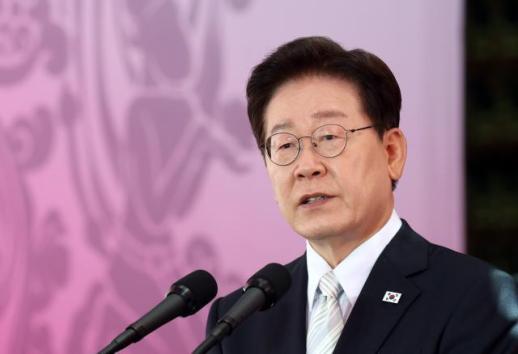 President Yoon Pledges to Create a Government That Saves Lives President Lee Jae-myung vowed to create a government dedicated to saving lives. In a speech at the Buddha's Birthday celebration held at Jogyesa Temple in Seoul on May 24, the president stated, "Above all, I will do my utmost to create a government that saves lives, practicing the teaching that all people are precious and equal." He added, "A government of the people will take the Buddha's precious words as a guiding light, ensuring that we pay closer attention to the lives of each citizen and listen to the voices from the most marginalized." President Lee remarked, "The teachings of the Buddha have accompanied us through joy and sorrow over the years, healing pain and embracing the marginalized during times of national crisis and grief." He noted that despite wars, poverty, disasters, and social conflicts, the light of the temples has never gone out, allowing citizens to pause and find peace in their lives. He also committed to overcoming national crises with the united strength inspired by the spirit of 'Won-yung Hwa-tong' (harmonizing different arguments into one). Earlier in the day, President Lee emphasized the teachings of the Buddha, which were born on the road, and the spirit of harmony in a post on Facebook, reiterating the importance of unity and understanding.* This article has been translated by AI. 2026-05-24 13:42:43
 -
 Kim Sang-wook Halts Unification Polls Amid Allegations of Interference As the Democratic Party and the Progressive Party conduct unification polls for the Ulsan mayoral race starting May 23, Kim Sang-wook, the Democratic Party's candidate, announced that he would halt the polls due to suspicions of organized interference by certain factions. The Progressive Party responded by expressing strong regret over what they termed a unilateral declaration. In a statement on May 24, Kim said, "I received information this morning that the polling agency discovered unusual circumstances, leading to the decision to suspend the polls. The trends observed during the polling were highly irregular and beyond what could be typically anticipated, raising suspicions of organized interference by certain factions." He continued, "We believe that proceeding with the unification primary under the current circumstances could infringe upon the democratic rights of Ulsan citizens, so we deemed it impossible to continue. An emergency meeting of the general election headquarters was convened, resulting in the decision to halt the polls." Kim clarified, "I want to make it clear that I am not abandoning or rejecting unification. I am not violating any agreements. We will quickly discuss alternative methods for unification and continue to work towards a beautiful unification without pause." However, the Progressive Party expressed their discontent. In a statement, they said, "We have not identified any unusual aspects regarding the mayoral candidate polling. While Kim's camp claims to suspect interference by certain factions, we have not received any concrete evidence to support this assertion." They added, "This unilateral declaration contradicts the spirit of our agreement and does not align with the citizens' demand for unity to resolve the ongoing turmoil. We call for a sincere attitude and position from Kim's camp." * This article has been translated by AI. 2026-05-24 13:09:51
 -
 AJP DEEP INSIGHT: The AI Semiconductor age and new strategic heart of global economy SEOUL, May 24 (AJP) - In 2026, the global economy increasingly revolves around three semiconductor giants: Samsung Electronics, SK hynix, and TSMC. In the 20th century, oil, automobiles, steel, and finance defined the architecture of global power. In the 21st century, however, the center of gravity is shifting decisively toward artificial intelligence and semiconductors. AI is no longer merely a technology sector. It is rapidly becoming the operating infrastructure of modern civilization itself — reshaping defense, finance, medicine, education, logistics, communications, manufacturing, and governance. At the core of this transformation lie GPUs, high-bandwidth memory, advanced foundries, and sub-nanometer process technologies. American technology companies may dominate the AI platforms and software ecosystems, but the physical engines powering the AI revolution are increasingly built in South Korea and Taiwan. If the United States controls much of AI's operating system and cloud architecture, then South Korea and Taiwan control the memory systems and production arteries of the AI age. This is why semiconductors are no longer viewed merely as industrial products. They have become strategic national assets — inseparable from economic security, geopolitical influence, and technological sovereignty. South Korea's economy today rests heavily upon semiconductors, particularly Samsung Electronics and SK hynix. Together, the two companies account for nearly half of the total market capitalization of the South Korean stock market. Their influence extends far beyond corporate earnings. Their performance directly affects the national pension system, retirement funds, exchange-traded funds, household wealth, tax revenues, exports, employment, currency stability, and overall economic growth. Samsung Electronics alone has approximately five million retail shareholders, making it one of the largest "national stocks" in modern financial history. When family exposure through pensions and indirect investment vehicles is included, a substantial portion of the South Korean population is tied — directly or indirectly — to Samsung's fortunes. SK hynix, meanwhile, has undergone a remarkable transformation. Once viewed primarily as a conventional DRAM manufacturer, it has emerged as one of the most strategically important companies in the AI era through its dominance in HBM, or High-Bandwidth Memory. HBM has become essential to advanced AI systems because modern AI servers require memory architectures capable of processing enormous volumes of data at extraordinary speed. If GPUs are the "brains" of AI, then HBM functions as the high-speed neural network enabling those brains to think. This has elevated both Samsung and SK hynix into indispensable pillars of the global AI supply chain. Taiwan's TSMC has risen through a different path, but with equally profound consequences. Unlike Samsung and SK hynix, TSMC is not primarily a memory producer. It is the world’s dominant advanced semiconductor foundry. Virtually every major AI and high-performance computing company — including NVIDIA, Apple, AMD, Broadcom, and Qualcomm — depends heavily on TSMC's manufacturing capabilities. TSMC is therefore far more than a contract manufacturer. It is arguably the most important industrial production platform in the modern world. Its strategic importance has transformed Taiwan itself. TSMC now represents roughly 35 to 40 percent of Taiwan's stock market capitalization, and its performance profoundly affects the island's exports, currency, fiscal revenues, employment, investment flows, and national security calculations. This is one reason why the Taiwan Strait issue has become inseparable from global technological stability. Behind the geopolitical tensions lies what analysts often call the "Silicon Shield" — the reality that any disruption to TSMC could destabilize the entire global AI ecosystem. Yet the defining challenge of the AI semiconductor era is not simply technological leadership. It is also the question of how nations allocate profits, sustain investment, reward talent, and preserve long-term competitiveness. This debate has now surfaced sharply inside South Korea. Recent labor agreements at Samsung Electronics and SK hynix have intensified discussion over performance-based compensation systems tied directly to operating profits. Samsung's tentative labor agreement reportedly allocates special performance bonuses equal to 10.5 percent of operating profit, while SK hynix has agreed to dedicate approximately 10 percent of operating profit to employee incentives. From the perspective of employees, the logic is understandable. Semiconductor manufacturing is one of the most demanding industries in the world. Engineers, researchers, and production workers operate under relentless pressure in an environment where technological precision determines global competitiveness. But semiconductors are also among the most capital-intensive industries ever created. Unlike many service industries, semiconductor leadership cannot be sustained through short-term profitability alone. It requires massive reinvestment during boom cycles in order to survive inevitable downturns and finance the next generation of process technologies. A single advanced semiconductor fabrication plant can cost tens of billions of dollars. Missing one technological cycle can result in years of strategic disadvantage. This is why many industry observers are increasingly concerned that rigid profit-sharing structures tied mechanically to operating income could weaken long-term investment capacity. The contrast with global competitors is striking. Micron Technology is dramatically expanding capital expenditures and investing heavily in large-scale fabrication facilities in the United States and Singapore. TSMC has announced plans to spend as much as $56 billion this year alone on capital investment while expanding production bases in Taiwan, the United States, Europe, and Japan. In semiconductors, capital expenditure is not optional. It is survival. This does not mean employee compensation should be minimized. On the contrary, sustainable innovation requires world-class talent and fair rewards. The real issue is balance. Global technology leaders rarely rely on operating profit alone when determining compensation. Companies such as TSMC, Apple, and NVIDIA typically combine multiple indicators: revenue growth, operating margin improvement, shareholder returns, long-term strategic contribution, stock-based incentives, and individual performance assessments. Most importantly, many global firms use restricted stock units and long-term equity compensation to align employee incentives with the company's future value creation. Samsung's recent decision to incorporate stock-linked compensation therefore represents an important shift toward a more globally aligned model. Yet further refinement may still be necessary. Sustainable compensation systems must balance employee rewards, shareholder interests, reinvestment needs, research funding, and long-term competitiveness. This debate is ultimately larger than labor negotiations. It raises a fundamental national question: how should a country distribute the enormous wealth generated by strategic technologies while preserving future competitiveness? Semiconductors today are not merely commercial products. They are strategic infrastructure. The United States clearly understands this reality. Through the CHIPS Act and broader industrial policy initiatives, Washington is attempting to bring advanced semiconductor production within its own national security perimeter. China, meanwhile, is accelerating efforts toward semiconductor self-sufficiency through companies such as Huawei, despite export restrictions and technology controls. Japan, once the world's semiconductor superpower, is also attempting a resurgence through Rapidus while leveraging its enduring strengths in semiconductor materials, chemicals, and precision equipment. The strategic contest now unfolding is therefore not simply economic. It is civilizational. The 19th century belonged to Britain. The 20th century belonged largely to the United States. The defining question of the mid-21st century may become this: Where is the industrial heart of the AI civilization being built? Increasingly, the answer points toward Northeast Asia. Military power may still be dominated by the United States. Global finance may still revolve around the dollar. But the critical production infrastructure of the AI era — memory, foundries, advanced packaging, semiconductor manufacturing ecosystems — is increasingly concentrated across South Korea, Taiwan, Japan, and parts of China. Samsung Electronics and SK hynix supply the memory systems of the AI age. TSMC manufactures many of its cognitive engines. Together, these companies are no longer ordinary corporations. They have become strategic pillars supporting the architecture of the global digital economy. Oil powered the 20th century. Semiconductors are powering the 21st. And today, the heartbeat of that semiconductor civilization can increasingly be heard in Northeast Asia. 2026-05-24 12:59:34
 -
 CJ Group Chairman Lee Jae-hyun Visits 'The CJ Cup' in the U.S. Lee Jae-hyun, Chairman of CJ Group, visited the PGA Tour's The CJ Cup Byron Nelson, which has a total prize of $10.3 million, to watch the tournament and evaluate global business operations. On May 24, Korean time, he visited TPC Craig Ranch in McKinney, Texas. This marks his first visit to the tournament since it was moved to the U.S. in 2020 due to COVID-19 and scheduling conflicts. During the event, he stayed in a hospitality tent set up between the 10th tee and the 18th green. He closely monitored the tournament, moving to the second-floor railing to watch the tee shots of sponsored players Kim Si-woo and Im Sung-jae as they approached the 10th hole. Lee's passion for golf and support for Korean players are well-known. He has developed the Jeju Club Nine Bridges and the Yeoju Heasle Nine Bridges to world-class standards and has helped Kim Si-woo and Im Sung-jae establish themselves on the PGA Tour. He continues to support emerging Korean professional golf (KPGA) players like Bae Yong-joon and Jung Chan-min. The CJ Cup, which Lee spearheaded as Korea's first PGA Tour event in 2017, moved to the U.S. in 2020. Initially facing challenges with venue changes each year, it has now integrated with the traditional Byron Nelson tournament in Texas, paving the way for a new chapter. Last year, it attracted 180,000 spectators, and this year, over 110,000 attendees were recorded after three rounds, solidifying its success in the local market. A CJ Group representative stated, "The company's core strategy is to expand beyond domestic markets into the global arena, which drives long-term investment. The alignment of our strategic direction with sports marketing has allowed us to actively utilize The CJ Cup as a global sports marketing platform." On the same day, he also visited the House of CJ booth, a global K-lifestyle space where visitors can experience K-food, beauty, and entertainment, to inspect the setup and brand expansion status. At the House of CJ booth, various experiences are offered under the themes of "taste, style, and fun," including displays of Bibigo products, a K-beauty experience zone by CJ Olive Young, CJ ENM music content, ScreenX screenings, K-cocktail tastings, Tous Les Jours bakery samples, merchandise giveaways, and photo zones. Chairman Lee is scheduled to continue his visit until the end of the tournament and is expected to visit the first CJ Olive Young store in the U.S., which opens on May 29 in Pasadena, California. Meanwhile, Korean players continued to compete for the championship. Kim Si-woo shot three under par in the third round, bringing his total to 21 under par, placing him in the lead. He will face world No. 1 Scottie Scheffler (U.S.) at 19 under par (194 strokes) in the final round. Im Sung-jae also made a strong showing, finishing four under par and tying for fourth place at 17 under par (196 strokes).* This article has been translated by AI. 2026-05-24 12:16:16
 -
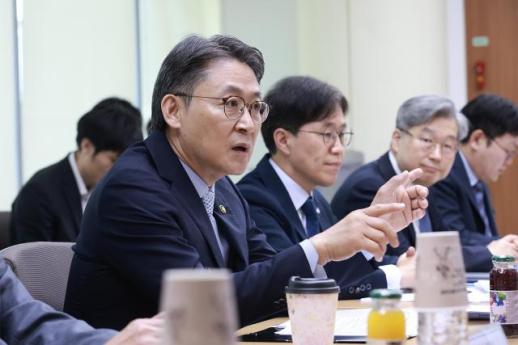 Financial Authorities Revamp Network Separation Regulations to Combat AI Threats In an effort to support the financial sector's transition to artificial intelligence (AI), South Korea's financial authorities announced plans to temporarily relax network separation regulations for security-focused AI applications. They are also considering a complete removal of these regulations for certain financial institutions in the future. Additionally, the authorities aim to bolster the establishment of an AI-based security framework in the financial sector through the creation of a Financial AI Security Research Institute and the development of AI security guidelines. The Financial Services Commission (FSC) revealed these measures during a meeting on May 22, led by Vice Chairman Kwon Dae-young. The meeting focused on addressing security threats posed by high-performance AI and included participation from the Financial Supervisory Service, the Financial Security Institute, and chief information security officers (CISOs) from major banks, securities firms, and credit card companies, along with AI and security experts. The FSC has decided to temporarily ease network separation regulations for security-focused AI applications. This includes allowing the use of high-performance AI for vulnerability assessments and the implementation of security Software as a Service (SaaS) solutions. This initiative comes in response to growing concerns about cybersecurity threats in the financial sector, particularly following the introduction of Anthropic's high-performance AI, Mythos. The FSC stated, "AI attacks must be defended against with AI," reflecting industry demands for a more flexible approach to existing network separation regulations. However, eligibility for this temporary easing will be limited to financial institutions with a certain level of security capability. Specifically, 49 financial companies with total assets exceeding 10 trillion won and a workforce of over 1,000 employees, each having a dedicated CISO, will be eligible. The FSC plans to evaluate the security management capabilities and AI utilization of these applicants before issuing a non-objection letter, allowing for a one-year temporary relaxation of network separation regulations. The timeline for this initiative has also been outlined. The first phase will involve up to 10 companies, with procedures expected to be completed between June and July. A second phase will select an additional 10 to 20 companies between August and September. Further evaluations will be conducted in the fourth quarter to accommodate remaining applicants. Financial institutions benefiting from the relaxed regulations will be required to share the results of their AI-based vulnerability testing and security SaaS usage with the government. The FSC aims to accumulate insights on the characteristics of high-performance AI security risks and response strategies, which will inform future guidelines for the entire financial sector. Moreover, the FSC indicated that it would consider completely removing network separation regulations for certain financial companies. The strategy involves selecting firms with advanced security capabilities and AI utilization to create successful case studies that can be disseminated throughout the financial sector. If full relaxation is implemented, these financial institutions could not only establish AI-based security frameworks but also expand the use of AI across various operations and services, including chatbot consultations, asset management, credit assessments, corporate finance, and internal controls. The FSC will also enhance its organizational and support structures. A private technical advisory group composed of AI, security, and information protection experts will be established to assess the security capabilities and readiness of financial institutions and to provide advice on domestic and international AI security threats and policy issues. The "High-Performance AI Security Threat Response Team" that has been operational since April will transition to a permanent operational structure. This team will include representatives from the FSC, the Financial Supervisory Service, the Financial Security Institute, and CISOs from all sectors to regularly check on field challenges and response statuses. The FSC also plans to strengthen the functions of the Financial Security Institute by establishing a Financial AI Security Research Institute to analyze trends in AI-based cyberattacks and develop response strategies. Additionally, an AI Security Support Center will be created to assist small financial institutions and fintech companies with vulnerability assessments and threat trend sharing. Next month, the FSC will introduce AI security guidelines for the financial sector. These guidelines will include practical standards such as criteria for classifying computing resources and prioritizing security patches. The FSC will also conduct on-site briefings and provide tailored support for financial institutions. To address minor system disruptions that may occur during the security patching process, the FSC is considering measures to reduce penalties or provide immunity. This comes in response to ongoing concerns from the financial sector about delays in applying necessary security patches due to fears of accountability for system errors. Support measures for small fintech companies will also be included. The FSC plans to enhance the security capabilities of these firms, which may lack sufficient resources for security responses, by providing financial support for AI-based security assessments and vulnerability testing tools. Kwon Dae-young emphasized, "High-performance AI security threats cannot be completely blocked like a cold virus; they are threats that must be managed while coexisting. Just as we wear masks, a routine cyber hygiene practice of establishing AI defense systems is necessary in the financial sector." He added, "The financial sector's transition to AI is not just about adopting new technology; it signifies a fundamental transformation of financial services. The government will also pursue bold regulatory improvements to enable the productive, inclusive, and trustworthy use of AI in finance."* This article has been translated by AI. 2026-05-24 12:04:19
 -
 Kevin Warsh Takes Office as Chair of the Federal Reserve Amid Dollar Strength Kevin Warsh has officially taken office as the chair of the U.S. Federal Reserve. The Fed announced on the 22nd that Warsh was sworn in as chair and elected as the head of the Federal Open Market Committee (FOMC). Former chair Jerome Powell served as interim chair until Warsh's appointment. The Federal Reserve, while the central bank of the United States, wields influence beyond its borders. A single statement from the Fed chair can shift the value of the dollar, affect U.S. Treasury yields, and alter capital flows in emerging markets. South Korea is no exception. The won-dollar exchange rate, foreign capital inflows and outflows, corporate investments, household debt, and the real estate market all operate under the shadow of U.S. monetary policy. In this context, Warsh's appointment signals that the South Korean economy is entering a new financial order rather than merely a change in personnel. In his inaugural remarks, Warsh stated that the Fed's mission is to ensure price stability and maximum employment. He emphasized the importance of independence, decisiveness, and a reform-oriented Fed. This conveys two key messages: first, he will not be swayed by President Trump’s pressure for interest rate cuts, and second, he intends to change the operational approach of the Fed established under Powell. President Trump also expressed his desire for Warsh's independence during the swearing-in ceremony. The challenge lies in how the market interprets these words. Warsh previously served as a Fed governor and closely experienced quantitative easing policies following the global financial crisis. He is known for his critical stance on the second round of quantitative easing, which he left the Fed over in 2011. This is why the market does not view him as merely a dove. At the same time, he has recently suggested that advancements in AI and productivity could enable growth without inflation. Notably, the Fed's monetary policy is now intertwined with U.S. industrial strategy, moving beyond simple interest rate adjustments. AI, semiconductors, energy, and supply chains have become core pillars of the U.S. economy. If the U.S. maintains confidence in its productivity advantage, it can sustain growth without rushing to lower interest rates. Conversely, if inflation becomes unstable, Warsh's Fed may maintain a tightening stance under the guise of independence. For the South Korean economy, neither scenario is easy. If U.S. interest rates remain high, the pressure for a stronger dollar will increase. While a rising exchange rate may provide short-term benefits for export companies, it also raises costs for energy and raw material imports, exacerbating inflationary pressures. As the attractiveness of U.S. assets grows, foreign capital may prefer U.S. markets over South Korea. The recent instability in the Middle East adds to the pressure, as simultaneous fluctuations in exchange rates and oil prices could place the South Korean economy under dual strain. A more significant concern is central bank independence. While Warsh speaks of independence, the Trump administration has been calling for reforms at the Fed. If the political sphere views interest rates solely as a tool for economic stimulus, the credibility of the central bank will be undermined. The power of currency stems not from interest rate figures but from the principles that the market believes in. The same applies to the Bank of Korea. If interest rate decisions are aligned with political schedules or public opinion pressures, maintaining stability in exchange rates and prices will become even more challenging. South Korea must prepare in three ways. First, it should strengthen its capacity to defend the exchange rate. This includes assessing foreign exchange liquidity, energy import costs, and corporate dollar debt risks. Second, it must move beyond passive responses that solely focus on U.S. interest rates. Enhancing South Korea's industrial competitiveness in AI, semiconductors, batteries, and shipbuilding is the strongest defense against currency fluctuations. Third, it must uphold the independence and credibility of the central bank. Ultimately, the market responds to principled policies.* This article has been translated by AI. 2026-05-24 12:01:01
 -
 Democratic Party Criticizes People Power Party for Focus on Smear Campaigns The Democratic Party criticized the People Power Party on May 24 for focusing solely on malicious smear tactics ahead of the June 3 local elections. They called for an apology from Kim Kwan-young, the candidate for governor of North Jeolla Province, for his claims of prior communication with President Lee Jae-myung regarding his independent candidacy, which they asserted were false. Kang Jun-hyun, the Democratic Party's chief spokesperson, held a press conference at the National Assembly, stating, "In the lead-up to the local elections, the People Power Party has spent the past week attacking the Lee Jae-myung administration and the ruling party over the Starbucks 5.18 Democracy Movement controversy." He added, "The People Power Party has yet to present any substantial election strategy to the public beyond these malicious smear campaigns." He continued, "Representative Jang Dong-hyuk has treated the emphasis on the spirit of May 18 as if it were an act of political coercion against the public, while Representative Na Kyung-won claims that the government and ruling party are engaging in a witch hunt. This is a serious insult to the history of those who fell victim to state violence, and the public is rightfully outraged." Kang emphasized, "The government and ruling party have not forced anger or boycotts upon anyone. It is the People Power Party that has misused the call to correct a distorted view of history as a tool for political strife and electioneering. This is not a normal way of thinking." He accused Representative Jang of attempting to launch a smear campaign against Park Soo-hyun, the candidate for governor of South Chungcheong Province, stating, "Despite a decision indicating that it is difficult to verify the substance of the claims, they are used every election cycle. The Democratic Party is considering legal action, including filing complaints, against the repeated and malicious dissemination of false information." Additionally, Kang criticized Kim Kwan-young for his claims of prior communication with President Lee regarding his independent candidacy. He stated, "After verifying the facts through the Blue House, we received confirmation that these claims are entirely false. This is a political maneuver to gain an advantage by invoking the president's name, which is an act of defamation." Kang concluded, "Instead of reflecting on the mistakes that led to his loss of eligibility as a Democratic candidate due to cash distribution, he has hastily declared his independent candidacy and is making absurd claims. I urge him to acknowledge his misuse of the president's name for electoral gain and to apologize promptly to President Lee, the Democratic Party, and the people of North Jeolla Province." 2026-05-24 11:57:47
 -
 Japan Shifts AI Strategy, Moves Away from ChatGPT Competition Japan's political landscape is changing its perspective on artificial intelligence (AI). Instead of the rallying cry of "catching up to the U.S. and China," a more pragmatic approach has emerged, focusing on areas where Japan can excel. This shift is symbolized by recent AI policy proposals from the ruling Liberal Democratic Party (LDP), which emphasize that "complete domestic production of AI across all fields is neither realistic nor strategic."Historically, Japan has been known for its strong nationalist tendencies, striving for self-sufficiency in sectors like semiconductors, operating systems, and mobile phones. However, this approach has led to harsh realities, as Japan's platforms, disconnected from global standards, have fallen behind in international competition. The term "Galapagosization" is often used in Japanese industry to describe this failure. The current AI strategy signals a commitment to avoid repeating past mistakes.Notably, the Japanese government and the LDP have effectively stepped back from competing in the development of a "Japanese version of ChatGPT." Initially, the Ministry of Economy, Trade and Industry aimed to invest government funds into developing a large-scale language model (LLM) unique to Japan. However, strong internal opposition within the LDP argued that pursuing this with limited resources against the U.S. and China was reckless. Consequently, the government has essentially abandoned its goal of developing a large foundational model.Japan's decision appears pragmatic when considering the current landscape of generative AI, which is dominated by the U.S. and China. Companies like OpenAI and Google in the U.S., along with Baidu and DeepMind in China, operate with astronomical capital, data, and semiconductor infrastructure. Between 2019 and 2023, Japan's AI investment was approximately $10 billion, while the U.S. invested $329 billion and China $133 billion, highlighting a significant disparity.Instead, Japan is pivoting towards areas where it has strengths, such as manufacturing, healthcare, robotics, and infrastructure control—collectively referred to as "field-based AI." The emphasis on physical AI has emerged from this focus, indicating a commitment to developing AI that can operate in factories, hospitals, and with vehicles and robots, rather than merely conversational AI.This strategy aligns closely with Japan's industrial structure. The country still possesses some of the world's best manufacturing data, with decades of accumulated information from automotive factories, precision machinery, and industrial robotics. While U.S. companies excel in platform and software competitiveness, Japan holds a wealth of data on actual industrial processes and production. The strategy is to exploit this niche.Interestingly, Japan is beginning to view AI not just as a technological competition but as a matter of economic security. The LDP's recent proposals even included the term "AI sovereignty." However, this does not imply a complete push for domestic production. Instead, it suggests a strategic distinction between what Japan will control directly and what it will collaborate on with allied nations.This approach resonates with Japan's long-standing practical industrial strategy. By cooperating with U.S. technology while retaining control over revenue-generating structures and core data, Japan aims to apply the same logic to AI.Underlying this shift is a sense of urgency within Japanese society. The country's digital deficit has ballooned to approximately 5 trillion yen (about $50 billion) annually, with cloud services, software, and platform fees predominantly flowing overseas. There is a strong concern that increased reliance on American platforms for AI could push Japanese industries into an "AI subcontracting structure."As a result, Japan is moving closer to the goal of "surviving as a manufacturing powerhouse in the AI era" rather than striving to create the world's best generative AI. While stepping back from the flashy generative AI competition, Japan is determined to maintain its leadership in the industrial sectors of factories, hospitals, vehicles, and robotics. This may well be the most authentically Japanese strategy for AI survival that the country has chosen today.* This article has been translated by AI. 2026-05-24 11:27:56