
Journalist

Lee Hugh
=
-
 Dongin Elects Attorney Won Chang-yeon as Fourth Managing Partner Law Firm Dongin has elected attorney Won Chang-yeon, a member of the Judicial Research and Training Institute’s 28th class, as its fourth managing partner. Dongin said it chose Won at a general meeting of its members held on the 27th at its headquarters in Seocho-dong, Seoul. Won graduated from Yonsei University with a degree in political science and diplomacy, earned a master’s in law from Yonsei University’s Graduate School of Legal Studies, and completed an M&A practice program at Seoul National University’s specialized legal studies course. He is known for corporate legal work including mergers and acquisitions, management control disputes, securities and capital markets, and corporate restructuring, and has handled numerous M&A and control-dispute cases. In a statement, Won said he would "develop a rational system" and recruit talent across fields, adding that he would pursue M&A between law firms and strengthen competitiveness through artificial intelligence-based innovation. Founded in 2004, Dongin has expanded through mergers with firms including Human and Dain. It now has about 230 attorneys. Dongin said it plans to use the leadership change to strengthen internal operations and improve external competitiveness.* This article has been translated by AI. 2026-04-27 18:24:51
 -
 PM Kim Min-seok: Nation Must Honor Sacrifice With Lasting Support for Veterans Prime Minister Kim Min-seok said April 27 that the government’s consistent goal is to build a country where honoring those who served becomes “common sense” and a source of pride. In opening remarks at the first National Patriots and Veterans Committee meeting of the new government, held at the Government Complex Seoul, Kim said veterans affairs is not simply about paying compensation for past sacrifice. “Through the memory of dedication, it binds the hearts of the people into one, and with that united strength opens the future of the Republic of Korea,” he said. Kim said it is a key government duty to ensure the state takes responsibility “to the end” for “special sacrifice” for the country and repays it in a special way, so the value of honoring service is remembered with the public and passed on to the next generation. Agenda items included the sixth basic plan for national veterans affairs development; a proposal to develop the National Hyochang Park as a major site of remembrance; a plan to bid to host the 2029 Invictus Games; and a plan to promote projects marking the 150th anniversary of the birth of independence leader Kim Gu. Ahead of the meeting, the committee also held an appointment ceremony for new members. Kim said their expertise and on-the-ground perspectives would help raise veterans policy to the next level, and urged them to pool their wisdom to elevate the honor of those who served the country and strengthen support for bereaved families.* This article has been translated by AI. 2026-04-27 18:24:06
 -
 Dining Industry Eyes Short-Term Boost as High Fuel Price Relief Payments Roll Out High fuel price relief payments have begun rolling out, and expectations are rising across South Korea’s dining industry. Because the payments can be used only at neighborhood businesses and small-merchant franchise outlets, the industry expects spending to flow to everyday dining such as fried chicken and snack foods. According to the industry on the 27th, dining franchises allow the relief payments to be used at franchisee-run stores, but not at company-owned outlets. Franchise operators have moved quickly, posting signs at entrances saying the payments are accepted. Headquarters are also supporting stores by distributing promotional materials, aiming to capture customers as the funds enter the market. The optimism reflects last year’s experience with government-issued consumer coupons. The Ministry of the Interior and Safety said that during last year’s livelihood recovery coupon program, restaurants accounted for 40.3% of total spending, or 3.6419 trillion won, making dining out a leading beneficiary. Major brands also reported measurable gains. Kyochon Chicken posted operating profit of 11.3 billion won in the third quarter of last year, up 47.2% from a year earlier, during the period when coupons were issued. BBQ and bhc said weekly sales rose by 18% and more than 25%, respectively, right after the payouts. Industry officials expect a similar pattern this time, noting that time-limited payments tend to be spent quickly on services such as dining out and delivery. “When payments are issued, the pattern has been that people first spend them on dining they can buy immediately near home,” one industry official said. “This time, too, we expect a noticeable improvement in sales, especially at franchise outlets.” The timing is also seen as favorable, with the spring and summer peak season for outdoor activity approaching and the professional baseball season underway, which could lift delivery and takeout demand, particularly for chicken, the industry said. Still, some analysts cautioned against overly rosy expectations. The payments are expected to be about 100,000 to 150,000 won per person for most people, excluding basic livelihood recipients and near-poverty households — about 40% of last year’s minimum consumer coupon amount of 250,000 won — raising doubts that the boost will match last year’s. With ingredient costs rising over the past year and labor costs still high, some also say the net benefit to franchise owners may be limited. “A temporary rebound is possible from the policy effect, but in a high-inflation environment, it remains to be seen whether it will lead to a real recovery in consumption,” another industry official said.* This article has been translated by AI. 2026-04-27 18:23:10
 -
 SSM Stores Say They’re Unfairly Excluded From South Korea’s High Fuel Price Relief Vouchers “In terms of being neighborhood shops where self-employed owners stake their livelihoods, we’re no different from regular supermarkets. It feels unfair that the vouchers can’t be used here.” A franchise owner in his 50s who runs a corporate supermarket, known as an SSM, in Seoul said he was disappointed by news of the government’s high fuel price relief vouchers. Unlike convenience stores and other franchise outlets, SSMs were excluded from eligible places to spend the support, prompting calls to revisit the criteria because many SSM locations are individually operated franchises. According to the retail industry on the 27th, the government began accepting first-round applications that day for high fuel price relief vouchers worth up to 600,000 won per person. The vouchers are designed for use at small businesses with annual sales of 3 billion won or less. Traditional markets and neighborhood marts, along with convenience stores, are anticipating a bump in sales. The four major convenience store chains — GS25, CU, Seven Eleven and Emart24 — launched broad discounts timed to the payout period, targeting everyday items such as ramen, instant rice, toilet paper and detergent. SSMs, big-box retailers and small merchants selling through e-commerce platforms said they were left out again, as they were during last year’s distribution of consumer coupons for livelihood recovery. Of the 1,457 nationwide stores operated by the four SSM chains — GS The Fresh, Lotte Super, Homeplus Express and Emart Everyday — nearly half, or 721, are run as franchise outlets. GS The Fresh has 471 franchise stores, or 81% of its 581 locations. One SSM owner said, “The franchise bakery or convenience store across the street can take the vouchers, so why can’t we, when we pay franchise fees and run the same kind of business?” Big-box retailers also expressed concern, saying spending is likely to shift toward convenience stores and neighborhood marts where the vouchers can be used. The Ministry of Trade, Industry and Energy said that in last year’s third quarter, when consumer coupons were issued, SSM sales fell 1.6% from a year earlier and big-box store sales dropped 10.2%. Seo Yong-gu, a professor of business administration at Sookmyung Women’s University, said limiting vouchers to selected retail channels inevitably creates blind spots and raises fairness concerns. He said the government should restrict only places that clearly should be excluded, such as department stores and large online shopping malls, and allow the vouchers to be used across other everyday retail channels.* This article has been translated by AI. 2026-04-27 18:22:00
 -
 TIPA, Ace Bed, SEMAS and Kiturami Announce Sales, Safety and Product Initiatives TIPA to support TV home-shopping sales for smart-factory firms The Korea Technology and Information Promotion Agency for SMEs said Sunday it is recruiting participants through May 22 for its “2026 Smart Manufacturing Innovation Companies Public Home Shopping Coaching Consultation.” TIPA said the program will provide one-on-one consultations with TV home-shopping product planners to assess marketability and offer step-by-step support aimed at helping companies enter distribution channels. The coaching event will be held July 8 at the aT Center in Seoul’s Yangjae area. TIPA said it will target 60 business-to-consumer small and medium-sized companies that took part in smart-factory support programs, and will be run in cooperation with Public Home Shopping to provide practical opportunities to enter the retail market. Based on the consultations, TIPA said it will select top performers, hold a product review, and provide TV home-shopping sales practice and advanced coaching to a final 25 companies. “ We are strengthening sales-channel support so manufacturing competitiveness secured through smart factories can translate into real market results,” said Ahn Gwang-hyeon, head of TIPA’s AI Innovation Promotion Unit. “We will continue expanding step-by-step support so SMEs can enter the distribution market in a stable way.” Ace Bed CEO joins campaign to curb youth illegal gambling Ace Bed said Sunday that CEO Ahn Seong-ho is joining the “Youth Illegal Gambling Eradication Relay Campaign,” hosted by the Seoul Metropolitan Police Agency. The public-interest campaign has been running since March last year to raise awareness of the risks of illegal online gambling among teenagers and to encourage broader prevention efforts. Participants post a photo carrying the message, “Illegal cyber gambling targeting youth is a scam crime you can never beat,” and nominate the next participant. Ahn joined after being nominated by Park Nae-won, CEO of Hi Plaza, and said he would help build public support for efforts to curb youth illegal gambling. He nominated Lee Young-gyu, chairman of the Welcron Group, as the next participant. Ahn Seong-ho said, “Youth illegal gambling is a serious social problem that goes beyond a simple lapse, destroying everyday stability and taking away opportunities to prepare for the future.” He added, “Just as the value of good sleep that Ace Bed pursues can help teenagers grow properly, we will serve as a reliable supporter so the next generation can protect a healthy life and grow up the right way.” SEMAS joins ‘Cheonmyeongjikkim Project’ to strengthen safety net for small merchants The Small Enterprise and Market Service said Sunday it took part in the “2026 Cheonmyeongjikkim Launch Ceremony” held April 24 at Cheonggye Plaza in Seoul, beginning full-scale activities to promote a culture of respect for life among small business owners and prevent suicide. The “Cheonmyeongjikkim Project” is a nationwide public-private campaign led by the Office for Government Policy Coordination’s pan-government life-guardian task force. It aims to reduce suicide deaths by 1,000 in 2026 and calls on government and society to “become guardians of life,” the agency said, as part of efforts to shed the stigma of having the highest suicide death rate among OECD countries. SEMAS said it was appointed at the ceremony as a “Cheonmyeong Guardian Office” for one of seven high-risk targets: men in their 50s. It said it will plan and run tailored suicide-prevention programs reflecting the agency’s role and characteristics. As a guardian office, SEMAS said it will expand the scale of its “Hope Return Package” psychological recovery support for small merchants seeking to restart, and significantly strengthen practical support programs, including those run with local governments. This year, it will provide a total of 150 sessions for 5,000 people. Small merchants who have closed or plan to close their businesses, along with accompanying family members, will be eligible for up to three healing programs a year, including overnight and day programs, at national forest healing centers and related facilities nationwide. “Small business owners often face psychological breaking points due to the economic slowdown and worsening management conditions,” SEMAS Chairman In Tae-yeon said. “Through participation in the Cheonmyeongjikkim Project, we will do our best to serve as a strong ‘guardian of life’ so small merchants are not isolated, and to support a healthy restart.” Kiturami launches WS stainless electric water heaters, emphasizing durability Kiturami said Sunday it is launching its WS series of storage-type stainless electric water heaters. The company said the WS lineup includes 15-liter models (wall-mounted and under-sink), 30-liter models (wall-mounted and under-sink), and 50-liter models (horizontal and vertical), allowing installation based on space and use. The 50-liter model is about 19% shorter than previous versions, making it easier to transport and install in tight spaces, it said. Kiturami said it applied a stainless hot-water tank and an Incoloy heater, a nickel alloy resistant to high-temperature corrosion, to help provide clean hot water over long periods. The outside of the tank is wrapped in high-density polyurethane foam to reduce heat loss, it said. A Kiturami Boiler official said the WS series is designed for use in a range of commercial spaces, focusing on durability, hot-water quality and ease of installation. * This article has been translated by AI. 2026-04-27 18:20:40
 -
 Olive Young to Hold Beauty Festa in Japan; Gmarket Taps Director Jang Hang-jun; Lotte Duty Free Signs Deal With Paradise City Olive Young to hold ‘Olive Young Festa JAPAN 2026’ in Chiba CJ Olive Young said Sunday it will hold “Olive Young Festa JAPAN 2026” from May 8-10 in Chiba Prefecture, Japan. The event is tied to “KCON JAPAN 2026” and will be staged at Makuhari Messe, a convention center in Chiba City, on a 164-pyeong site. A total of 55 brands will operate booths. The walkways will be designed to resemble the streets of Myeongdong and Hongdae to highlight K-beauty’s identity, the company said. Special areas will include a “K-Cosme Ranking Zone” and a “K-Beauty Select Zone,” showcasing Olive Young’s curation strengths. The company will also offer in-store-style experiences for local visitors, including a “quick touch-up” makeup service by Olive Young beauty consultants. Olive Young said the festival, launched in 2019 as the country’s first beauty festival, is expanding overseas this year. It plans to hold an Olive Young Festa in Los Angeles in September. Gmarket names film director Jang Hang-jun as new advertising model Gmarket said Sunday it has selected film director Jang Hang-jun as its new advertising model and will roll out campaign videos in stages. Gmarket said Jang, who recently joined the ranks of directors with 10 million moviegoers with “Wang and the Man,” will be featured in a campaign built around the concept of him taking on a new challenge as a “10 million-view” commercial director. The company said the videos combine Jang’s trademark humor and cinematic style to introduce popular items it recommends buying during its Big Smile Day promotion. Gmarket said “legendary” film actors will also appear, with the cast lineup to be revealed in the main video to be released May 1. The company noted that since last year it has drawn positive responses with its “G-Rock Festival” campaign, in which well-known artists sing signature songs with lyrics rewritten around shopping items. Lotte Duty Free, Paradise City sign MOU to attract foreign VIP visitors Lotte Duty Free said Sunday it has signed a memorandum of understanding with Paradise City to expand efforts to attract foreign tourists. Under the agreement, the two companies aim to build a one-stop consumer experience linking shopping and entertainment. Lotte Duty Free said it will provide Paradise hotel guests with a coupon book offering discounts of up to $121 and benefits such as an upgrade to Gold-tier membership. Paradise City said it plans to offer premium rates to Lotte Duty Free customers. Lotte Duty Free has been stepping up efforts to expand its foreign customer base after resuming operations at its Incheon Airport store on April 17, about three years after it stopped operating there. “Through this agreement with Paradise City, we will be able to provide foreign VIP customers with a premium experience that combines shopping and entertainment,” said Namgung Pyo, head of Lotte Duty Free’s marketing division. “With differentiated marketing that brings together the strengths of both companies, we will contribute to attracting visitors to Korea.” * This article has been translated by AI. 2026-04-27 18:19:10
 -
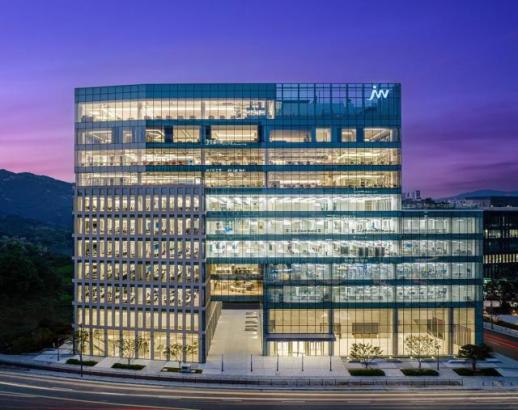 JW Pharmaceutical Completes Phase 3 Dosing for Gout Drug Candidate; Results Due by Year-End JW Pharmaceutical completes Phase 3 dosing for gout drug candidate epaminurad; results due by year-end JW Pharmaceutical said April 27 it has completed dosing the last patient in a multinational Phase 3 trial of its gout treatment candidate epaminurad (URC102). Epaminurad is an oral uricosuric drug designed to selectively inhibit hURAT1, promoting uric acid excretion. The company is developing it for hyperuricemia and gout, conditions marked by abnormally high blood uric acid levels. JW Pharmaceutical said it has been running the Phase 3 study in five Asian countries, including South Korea, after receiving approval for the trial plan (IND) from the Ministry of Food and Drug Safety in 2022. The study was designed to compare uric-acid lowering effects and safety against the existing treatment febuxostat, and the final patient was dosed in Malaysia. In an earlier Phase 2 trial, epaminurad met key efficacy endpoints and showed safety and tolerability, the company said. JW Pharmaceutical also said it recently secured a U.S. patent from the U.S. Patent and Trademark Office covering dosing and administration, extending U.S. exclusivity to 2038. The company plans to produce a clinical study report by the end of this year after follow-up and data analysis. HK inno.N expands collaboration to develop next-generation obesity drug using AI platform HK inno.N said April 27 it signed a joint research and development agreement with Atomatrix to develop a next-generation obesity treatment. The partners said they will use an artificial intelligence and computer-simulation drug design platform to identify small-molecule candidates with new mechanisms intended to address limitations of incretin-based obesity drugs, including GLP-1 receptor agonists. Under the agreement, HK inno.N will synthesize compounds and conduct biological evaluations to verify efficacy and safety, while Atomatrix will design and screen candidates using its platform, CANDDIE. CANDDIE applies molecular dynamics-based analysis to predict not only binding stability between target proteins and candidates but also drug-response effects after binding, the companies said. HK inno.N cited its commercialization track record with the gastroesophageal reflux disease drug K-CAB and said it aims to expand competitiveness in the obesity treatment market. SK Chemicals holds spring outing volunteer program with seniors to boost intergenerational ties SK Chemicals said April 27 it held a family volunteer program, “Norang, Spring,” bringing together seniors and employees’ families ahead of Family Month in May. The company said it is emphasizing hands-on volunteering, not only donations, as part of its social responsibility efforts. The event was organized with the Unjeong Comprehensive Social Welfare Center in Paju and travel agency Yellow Balloon, and took place around Insadong and Jongno in central Seoul. The program paired seniors living alone with SK group employees’ families for cultural activities and an outing in the city. About 50 people, including families from SK affiliates and seniors using the welfare center, took part, the company said. Activities included making rice cakes, visiting a museum, touring the city by bus and visiting the Cheong Wa Dae Sarangchae. Kolon Life Science publishes preclinical results for anticancer gene therapy candidate KLS-3021 Kolon Life Science said April 27 that preclinical findings on its anticancer gene therapy candidate KLS-3021 for cutaneous squamous cell carcinoma, or cSCC, were published in the international journal Molecular Therapy Oncology (impact factor 5.3). KLS-3021 is a candidate built on a recombinant vaccinia virus engineered for greater selectivity for cancer cells and loaded with therapeutic genes PH-20, IL-12 and sPD1-Fc. It is designed to lyse tumors, break down extracellular matrix within tumors and trigger immune responses, the company said. In the study, KLS-3021 showed higher selective cytotoxicity and viral replication in cancer cells than in normal cells, and the virus’s ability to replicate inside tumors suggested potential for additional therapeutic effects, the company said. In a metastatic model, viral spread was also confirmed at metastatic sites. The company said a single injection could allow the drug to circulate and target cancer cells at distant sites, raising the potential for treating metastatic cancer. The study also observed changes in the tumor microenvironment, including hyaluronic acid degradation, increased immune-cell infiltration and immunogenic cell death, suggesting it may be able to address physical and immunological barriers at the same time, the company said.* This article has been translated by AI. 2026-04-27 18:17:37
 -
 Honda Korea’s Auto Sales Exit Raises Used-Car, Service Concerns for Owners Honda Korea’s decision to end its auto sales business is fueling anxiety among current owners, from fears of falling used-car prices to concerns about gaps in after-sales service. Industry watchers say the pressure on resale values could intensify if the company discounts remaining inventory ahead of its exit and if cancellations of existing contracts increase. According to the industry on the 27th, Honda Korea has begun follow-up procedures to close the auto sales business by the end of this year. Starting this week, it plans talks with its seven dealers on how to handle inventory and respond to customers with contracts, before setting a specific end date for sales. Honda Korea announced the move at an emergency news conference on the 23rd, about 23 years after it began its auto business in South Korea in 2004. The company said it will stop selling cars around year’s end and focus on its motorcycle business going forward. Concerns spread quickly online. Posts in owner communities asked, “Will used-car prices drop a lot?” “How will we get service eight years from now?” and “What happens to the lifetime engine-oil coupon?” Owners are particularly sensitive to resale values. When an automaker exits a market, uncertainty about long-term service can deter buyers, weakening demand for used vehicles and pushing prices down. If Honda Korea moves to clear inventory before it exits, promotions could make it harder to support prices for existing vehicles. Added discounts could also widen if canceled orders rise after the announcement. The industry said inquiries from customers who already signed new-car contracts have been pouring in. Another point of dispute is whether buyers can still use the “lifetime engine-oil coupon” Honda Korea offered to new-car customers to mark the launch of the 2025 New Odyssey last year. The company promoted the coupon as providing free engine oil for life, but the exit announcement has raised questions about whether that period can be guaranteed just one year later. Under the Automobile Management Act, Honda Korea must maintain after-sales service for at least eight years. However, because service centers are operated through contracts with dealers, some observers say the network could still be reduced depending on the outcome of future talks.* This article has been translated by AI. 2026-04-27 18:16:43
 -
 Korean Power-Equipment Makers Pause in Q1, but Backlogs Hit Records on AI Data Center Demand AI data centers are driving a surge in electricity demand, and South Korea’s power-equipment makers posted strong year-over-year growth in the first quarter even as results cooled from the prior quarter. Industry officials said April 27 that Hyosung Heavy Industries, LS Electric, HD Hyundai Electric and Iljin Electric generally expanded sharply from a year earlier but saw some quarter-on-quarter easing. They cited a base effect from record fourth-quarter results and the seasonal first-quarter slowdown. Hyosung Heavy Industries reported first-quarter operating profit of 152.3 billion won, up 48.8% from a year earlier but down from the previous quarter as some revenue recognition was delayed during the off-season. The company secured about 4 trillion won in new orders for the quarter, and sales of ultra-high-voltage transformers are rising quickly, led by North America. Hyosung Heavy Industries’ share price recently topped 3 million won, and it traded above 4 million won intraday that day. The company has maintained that it is not reviewing a stock split. LS Electric posted first-quarter operating profit of 126.6 billion won, up 45% from a year earlier and a quarterly record, though slightly below 129.7 billion won in the prior quarter. With distribution-equipment orders for Amazon Web Services data centers being reflected in results, demand is spreading beyond ultra-high-voltage transformers into distribution. The company is also diversifying products from AC-focused equipment to DC power equipment. HD Hyundai Electric, which was set to report earnings April 28, was expected to show a similar pattern. FnGuide estimated first-quarter operating profit at about 270 billion won, up from a year earlier but slightly down from the previous quarter, reflecting the seasonal slowdown and some delayed revenue recognition for North American projects. Iljin Electric was also expected to extend its growth streak. First-quarter operating profit was forecast at about 50.8 billion won, up 49.2% from a year earlier, supported by expansion at its second plant in Hongseong, a higher share of higher-priced transformers for North America, and revenue recognition from long-term order backlogs. The four companies have already secured at least three years of work, with backlogs at record levels. Hyosung Heavy Industries’ heavy-industry division had an order backlog of about 15 trillion won. LS Electric’s backlog stood at 5.6425 trillion won at the end of the first quarter, up 13% from the prior quarter. HD Hyundai Electric had about 9.4 trillion won, and Iljin Electric about 2.39 trillion won. “The quarter-on-quarter decline in sales largely reflects the seasonal first-quarter slowdown and the fact that recently won orders have not yet been recognized as revenue,” an industry official said. “The boom in power equipment is expected to continue for the next four to five years, and backlogs are sufficient.”* This article has been translated by AI. 2026-04-27 18:15:49
 -
 Hyundai, Kia and Tesla Battle for South Korea EV Market as Subsidy Rules Shift South Korea’s electric vehicle market is seeing intensifying competition between domestic automakers and imported brands, with policy changes poised to reshape the landscape. The government has revised EV subsidies to award extra points based on contributions to domestic industry, raising the prospect of a shift in market dynamics. The local auto industry is also urging the government to include EVs in a planned “domestic production promotion” tax credit — often described as a Korean version of the U.S. Inflation Reduction Act — adding to uncertainty over how incentives will be set. As of Monday, the market has settled into a two-sided contest between Korean and imported brands, according to the Korea Automobile & Mobility Association and other groups. A total of 220,177 EVs were newly registered in South Korea last year. Kia led with 60,609, followed by Tesla with 59,893 and Hyundai with 55,461. Imported EV brands have closed in on domestic makers. Imported EVs accounted for 42.8% of the market last year, compared with 57.2% for Korean brands. The gap narrowed further this year. Tesla, after cutting prices, sold 20,964 vehicles in the first quarter — roughly half its total for all of last year. Over the same period, Hyundai sold 19,040 and Kia sold 34,303. Industry officials say the chase could be disrupted in the second half of this year, after the government said it will shift subsidy criteria from a focus on vehicle and battery performance to an emphasis on contributions to domestic industry and research-and-development results. Another potential turning point is a tax-credit plan scheduled to be announced in July. The domestic production promotion tax credit would allow corporate tax deductions tied to domestic production and sales of strategic-industry products, a structure that favors companies with larger investments in local manufacturing facilities. Hyundai Motor Group has said it will invest 125 trillion won in South Korea by 2030. Tesla, by contrast, has made little domestic production investment, according to the article. Regulatory filings cited by the report show Tesla Korea posted 3.3066 trillion won in revenue last year and recorded 0 won in donations. Most of its vehicles are produced in China and sold in South Korea. A key question is whether EVs will be included in the tax-credit program, which is currently limited to some advanced industries such as semiconductors and secondary batteries. The Korea Automobile & Mobility Association and others have formally asked the government to add EVs, arguing that subsidies alone have limits in encouraging domestic production. The association said the share of EVs produced in China in the South Korean market rose to 33.9% last year, and warned that the presence of China-made EVs is increasing. The report also noted that major countries including Japan provide tax credits for EVs through domestic production promotion policies. Still, some concerns have been raised that including EVs in the tax-credit program could shift imported-car prices and reduce consumer choice. Kim Ju-hong, executive director of the Korea Automobile & Mobility Association, said wider EV adoption is needed to energize the domestic EV industry and meet greenhouse-gas reduction targets in the transport sector. “We need to grow the ecosystem for both finished vehicles and parts through not only subsidies but also the introduction of a domestic production promotion tax credit,” Kim said. 2026-04-27 18:14:36