
Journalist

Lee Hugh
=
-
 South Korea Forecast: Cloudy Nationwide With Rain; Wildfire Risk Elevated 28일은 전국이 대체로 흐리겠다. Rain is expected in some areas: in the Chungcheong region through early morning, the Seoul metropolitan area through the afternoon, and Gangwon Province (excluding the southern East Sea coast) through the evening. Forecast rainfall: 5-10 mm in Seoul, Incheon and Gyeonggi; about 5 mm in the five West Sea islands; 5-20 mm in Gangwon inland and mountainous areas; and less than 5 mm along the central and northern Gangwon coast and the East Sea coast, as well as in Daejeon, Sejong, South Chungcheong and North Chungcheong. Dry air, especially across central regions and North Gyeongsang, is raising the risk of wildfires and other fires. Temperatures are forecast to range from lows of 9-14 C to highs of 14-24 C. Fine dust levels are expected to be "good" to "moderate" nationwide. Waves are forecast at 0.5-2.5 meters in the East Sea nearshore and 0.5-1.5 meters in the Yellow Sea and South Sea nearshore. In offshore waters within about 200 kilometers of the coast, wave heights are expected at 0.5-2.5 meters in the East Sea and 0.5-2.0 meters in the Yellow Sea and South Sea.* This article has been translated by AI. 2026-04-27 17:54:42
 -
 Lee Beom-heon Elected Chair of Arts Council Korea Arts Council Korea (ARKO) said Lee Beom-heon, a special-appointed professor at Shinhan University, was elected as its ninth chair at an extraordinary meeting held on the 27th. The term for the ninth committee, including the new chair, is three years (2026.4.27.~2029.4.26.). ARKO convened the extraordinary meeting with the ninth-term members appointed by the Ministry of Culture, Sports and Tourism. All 11 members attended, including eight newly appointed members and three members whose terms are still in effect. The chair was chosen by an internal vote. Born in 1963, Lee majored in East Asian painting at Hongik University and earned a master’s degree at its graduate school. He has held posts including 24th chair of the Korea Fine Arts Association (2017~2020), special adviser for culture and arts to the Seoul Metropolitan Office of Education (2019~2024), and 28th president of the Federation of Artistic and Cultural Organizations of Korea (2020~2024). He is currently a special-appointed professor at Shinhan University. ARKO said an inauguration ceremony for the ninth chair is scheduled for the 28th at ARKO Hall at its headquarters in Naju. * This article has been translated by AI. 2026-04-27 17:53:51
 -
 Hyundai’s Ioniq V Takes on China’s EV Battery and Energy-Tech Surge "When AI is combined with electric vehicles, the car chooses and manages energy on its own, so cost-effectiveness (efficiency) improves beyond imagination. That aligns with the Chinese government’s push for extreme energy efficiency. The era of a 4-minute full charge and 2,500 kilometers (1,553 miles) per charge has already arrived. There is no inconvenience that overwhelming value can’t solve," said an official at a Chinese company identified only as Company A. This year’s Beijing motor show looked less like a traditional auto exhibition and more like a massive energy expo. Among about 1,400 vehicles spread across an area the size of 53 soccer fields, crowds did not linger at supercars. They gathered instead at battery demonstrations: BYD showing a charge to 70% in five minutes inside a minus-35 Celsius (minus-31 Fahrenheit) icebox, and CATL promoting its third-generation battery technology with full charging in the six-minute range. China’s auto industry, once dismissed as a copycat, has become a center of innovation that global automakers study as it tightens its grip on energy-related competitiveness, the article said. Behind the rapid shift is China’s detailed strategy to foster so-called new energy vehicles. In the past, Beijing pushed electrification with subsidies, tax benefits and infrastructure support, along with strict license-plate rules. More recently, the government has shifted from acting as a market “guardian” to a tougher manager encouraging survival of the fittest. China is now cutting EV subsidies that helped fuel growth and is moving to weed out weaker players. Automakers, fighting to survive, are releasing new models every six months, cutting prices and pushing technology to the limit. Last year, the average operating profit margin for China’s auto industry fell to a record low of 4%. Still, companies that endured the pressure, including BYD and Geely Automobile Group, have emerged as “star” firms able to compete in any environment, the article said. For South Korea’s auto industry, China has become a harsh lesson. Hyundai Motor and Kia’s market share, once above 10%, has plunged, the article said, arguing the setback should now be used to find a new path. Hyundai’s Ioniq V, unveiled at the show, was described as a product of that reassessment. Hyundai dropped its insistence on using only its own platform and adopted one jointly developed with Beijing Automotive Group. It also integrated technology from CATL for batteries, Momenta for autonomous driving and ByteDance for infotainment. The localization approach was summed up as: borrow technology, but not brand value. The article said Hyundai will need a fundamentally different strategy in China than in South Korea. Chinese consumers increasingly view cars less as durable goods to keep for more than a decade and more like software devices updated every six months. Without sharply shortening development cycles and accelerating the shift to software-defined vehicles, the article warned, a reputation for hardware could erode quickly. It also urged Korean automakers to move beyond a closed ecosystem centered on domestic suppliers and strengthen open innovation by partnering flexibly with advanced global IT and battery companies, similar to how Mercedes-Benz, BMW and Volkswagen have worked with Chinese startups under an “In China, For China” approach. Hyundai Motor Group Vice Chairman Jang Jae-hoon said the company would “learn a lot and grow” in China. The article said technology proven in China — the world’s largest market and one of its most competitive — has become a strong credential for global success, and expressed hope that the Ioniq V can break through in China and expand beyond it. 2026-04-27 17:52:51
 -
 Delisting Tender Offers Rise in South Korea, but First-Round Successes Hit Zero This Year Tender offers aimed at delisting are increasing, but the share that closes successfully is falling. After revisions to the Commercial Act strengthened minority shareholder rights, the decision-making process has become more demanding, and second and third tender offers are becoming more common. According to the financial investment industry on the 27th, global private equity firm EQT acquired an additional 1,213,466 common shares through a second tender offer for Douzone Bizon conducted from March 27 to April 22. Excluding treasury shares, EQT secured a 94.0% stake including preferred shares, putting the company on track for delisting. Other companies have also struggled to complete tender offers this year. Roswell carried out two rounds of a delisting tender offer but failed to reach its target stake. Eco Marketing extended its bid to a third round after participation remained insufficient following a second offer. E-Mart secured 66.45% in the first tender offer for Shinsegae Food, but its push for a comprehensive share swap merger was slowed after the Financial Supervisory Service issued two correction orders. Taken together, the industry has seen virtually no cases this year in which a delisting tender offer succeeded in a single round. Data from the Financial Supervisory Service’s electronic disclosure system show the annual number of tender offers, based on tender offer filings, rose from 10 in 2010 to a record 26 in 2024, then 21 in 2025. Of 12 tender offers involving KOSPI- and KOSDAQ-listed companies this year, nine were aimed at delisting. Even as demand for delisting grows, completing these deals is becoming harder. Companies have stronger incentives to delist to reduce disclosure and internal control burdens and to gain greater management flexibility. But after the rule changes, price reviews by special committees and the collection of minority shareholder views have effectively become required steps, adding complexity. Eco Marketing and Douzone Bizon said special committees led by outside directors reviewed the fairness of the tender offer price and minority shareholder protections and issued favorable opinions, reflecting the Justice Ministry’s “Guidelines on Directors’ Codes of Conduct” distributed in February. At the same time, shareholders’ expectations have risen, widening the standoff over delisting bids. With more activist investors and stronger demands for shareholder returns, more investors are refusing to tender when they judge the offer price to be low relative to corporate value. The industry expects the trend to continue. “In the past, tender offers were relatively easy to complete if a certain level of premium was offered, but recently minority shareholders have increasingly judged prices by factoring in corporate value and even a control premium,” a financial investment industry official said. “Tender offers aimed at delisting will likely keep increasing, but the share that actually closes could remain limited.” * This article has been translated by AI. 2026-04-27 17:51:39
 -
 Busan mayoral candidate Jeong I-han hit by thrown drink during campaign; party condemns attack Jeong I-han, the Reform Party’s candidate for mayor of Busan, was struck by a drink thrown from a vehicle while campaigning on the 27th, the party said. According to the Reform Party, Jeong was greeting commuters and asking for support in Busan’s Geumjeong District when a car approached. The driver threw a drink at him and shouted an insult to the effect of, “How can a kid that young run for mayor?” Jeong was born in 1988. Startled, Jeong lost his balance and fell, hitting his head on the ground and briefly losing consciousness. He was taken to a hospital, regained consciousness and remains hospitalized with concussion symptoms. The Reform Party denounced the incident as “terror against democracy.” Party leader Lee Jun-seok told reporters after a meeting of the party’s top council at the National Assembly that people may choose not to support a candidate, but “committing terror is extremely immature behavior.” The party said attempts to resolve political differences through physical force must not be tolerated, adding it would not yield to any effort to suppress “a young candidate’s courageous challenge” through violence and hatred. It urged police to swiftly and thoroughly investigate without leaving any doubts, identify the attacker and hold the person strictly accountable, and take all necessary steps to prevent a repeat. Police are reviewing witness statements and nearby CCTV footage to determine what happened.* This article has been translated by AI. 2026-04-27 17:50:45
 -
 Lotte Tour Development Revamps Jeju Dream Tower Food Court With Budget-Friendly Menu With dining costs rising, a five-star hotel in Jeju is betting on sharply lower prices. Lotte Tour Development has overhauled its food court at the Jeju Dream Tower integrated resort, rolling out a menu that starts with bakery items priced in the 1,000-won range and tteokbokki in the 4,000-won range. Lotte Tour Development said on 27 it reopened the renovated “Dream Food Court” on the third floor of Grand Hyatt Jeju inside the Jeju Dream Tower integrated resort. The renovation rebrands the former “Popup Plaza,” aiming to offer premium dishes cooked by five-star hotel chefs at prices comparable to street food. The venue kept its existing cafe and juice bar and added three new counters — Korean Fried, Korean Rice & Noodle, and a bunsik snack shop — to broaden choices. ◆ Five-star chefs, street-level prices Prices have been cut significantly. Popular Korean street-food staples such as gimbap and tteokbokki are priced in the 4,000- to 5,000-won range. Dishes including spicy pork rice bowls, kimchi fried rice and noodle items are kept under 10,000 won. Fried chicken is available in the 13,000-won range. The company said it is strengthening its lineup of reasonably priced Korean food to draw not only hotel guests but also walk-in visitors. ◆ Open 7 a.m. to 10 p.m. Hours have also been extended. The food court will operate from 7 a.m. to 10 p.m., covering breakfast through late-night snacks. A “Morning Bakery Selection” runs from 7 a.m. to 11 a.m., selling freshly baked croissants and salt bread in the 1,000-won range, targeting customers looking for a cheaper alternative to a breakfast buffet. Health-focused items such as salads, wellness juices and yogurt are also offered for under 8,000 won. All items are available for takeout through an “All day Grab & Go” service. Customers can pack sandwiches or bibimbap for outings to Jeju’s oreum hills or beaches, or bring chicken and fried items back to their rooms. “In a time when eating-out costs have become a burden, we raised both value and satisfaction so anyone can enjoy premium dishes prepared by five-star hotel chefs without 부담,” a company official said. “We will provide a wide range of dining experiences tailored to travel schedules and tastes.” Jeju Dream Tower, described by the company as a landmark for Jeju tourism, has 1,600 all-suite rooms and 14 food-and-beverage outlets staffed by global star chefs.* This article has been translated by AI. 2026-04-27 17:45:30
 -
 Woman Accused of Drugging Men She Met Through Matchmaking, Stealing $48,000 A woman in her 20s is accused of drugging men she met through a matchmaking service and other introductions, knocking them unconscious and stealing tens of millions of won. Uijeongbu police in Gyeonggi Province said Monday they arrested and detained the woman, identified only as A, on suspicion of robbery causing injury and violating the Narcotics Control Act. Police said A is suspected of drugging four men in the Seoul metropolitan area from December last year through April and stealing about 48 million won. Investigators said she approached victims she met through a matchmaking company or acquaintances, lived with them to build trust, then gave them food or drinks laced with sleeping pills. Police said that after the victims fell asleep, she used their phones to transfer money to her own account or to buy items worth several million won. Sleeping-pill ingredients believed to be benzodiazepines were detected in the urine of one victim, identified as B, according to reports. Benzodiazepines are psychoactive prescription drugs used to treat insomnia and are the same type of drug used by Gangbuk District motel serial killer Kim So-young, 20, when she killed two men. A told police she was prescribed sleeping pills for panic disorder symptoms and claimed the men took the pills on their own, denying the allegations. Police also said they do not believe A committed the crimes by copying Kim's case. 2026-04-27 17:44:35
 -
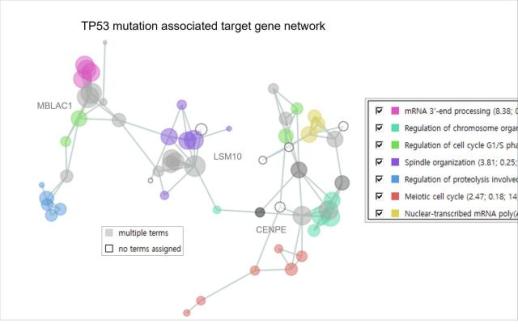 Sookmyung Women's University team develops gene data modeling tool SEOUL, April 27 (AJP) - A research team led by Professor Sukjoon Yoon at Sookmyung Women's University in South Korea has created an ontology-based framework to quantitatively interpret gene-based biological data, the prominent university said Monday. Biological data has historically been difficult for artificial intelligence to interpret because it lacks the clear contextual relationships found in standard text. To address this, the team used biological ontologies—systems that structure concepts for computer processing—to help AI analyze genetic information more effectively. The researchers developed an algorithm called NetCrafter that measures how much functional or disease-related context-specific genes share. It converts these relationships into numerical networks, allowing for a more precise analysis of complex interactions within multi-omics data. The team is currently working with CBiS Inc., a startup founded at the university, to build AI models that can automate the study of drug targets, biomarkers, and biological mechanisms. The NetCrafter technology is already available globally through the Q-omics platform, and the university is currently pursuing a patent for the system. "This research will contribute to the realization of biological intelligence that understands data more deeply, moving beyond large language models," Professor Yoon said. Professor Hohsuk Noh at Sookmyung Women's University's Department of Statistics and Eunah Chung, a researcher at the Research Institute of Women's Health, contributed to the study, alongside Dr. Jaemoon Shin from the Life Science Data Center in Japan. The findings appeared in the journal Briefings in Bioinformatics. (Reference Information) Journal/Source: Briefings in Bioinformatics (IF 7.7, JCR top 2.78 percent) Title: NetCrafter: ontology-derived gene network modeling and functional interpretation Link/DOI: https://doi.org/10.1093/bib/bbaf631.024 2026-04-27 17:44:30
 -
 Boy band NEXZ showcase new album in Seoul SEOUL, April 27 (AJP) - Boy band NEXZ, made up mostly of Japanese-born members, held an event in Yongsan, Seoul on Monday to promote their new album. According to their management agency JYP Entertainment, "Mmchk," an onomatopoeic word coined to reflect the rhythmic sound of their music, is the septet's second album, following their debut in May 2024 after being formed through a global audition. The album contains three tracks, which are set to be available on major streaming sites later in the day. 2026-04-27 17:44:29
 -
 Seoul Voters Split Ahead of June 3 Local Elections: Jung Won-oh vs. Oh Se-hoon 6·3 local elections are shaping up as a tight contest in Seoul, with voters voicing divided support for Democratic Party mayoral candidate Jung Won-oh and People Power Party candidate Oh Se-hoon. With President Lee Jae-myung’s job-approval rating averaging above 60%, some expected Jung — often described as Lee’s pick — to dominate. But interviews suggested a competing desire among some voters to check the government and ruling party. Aju Economy spoke on April 27 with residents in Seoul’s Jongno, Yongsan, Seongdong and Seocho districts. In Jongno, home to the presidential office complex and major government buildings, and in Yongsan, a key part of the so-called “Han River belt” of swing districts, voters offered mixed views rather than rallying behind one candidate. Some Jung supporters cited trust in the president more than the candidate himself. A 71-year-old woman selling snacks at Gwangjang Market said, “You have to pick someone who does a good job. This time, everyone says they’ll vote No. 1, the Democratic Party,” adding, “Isn’t the president doing well?” A 74-year-old taxi driver said the president’s approval “keeps going up” and that Lee “seems to work hard and pay attention even to small things.” He argued that Oh has served as mayor multiple times and said, “He hasn’t done anything, and we need to change to someone new.” Oh supporters, however, voiced skepticism about the government’s cash-aid policies. A 66-year-old who has run a wrapping-cloth shop at Gwangjang Market for 20 years criticized what she called “just handing out money,” saying it drives up prices and fabric costs and “the damage all goes to consumers.” She said politics should focus on the long term, not “momentary politics.” A 25-year-old woman working part time at a store inside Yongsan Station said she planned to vote for Oh because “there are a lot of things I don’t like about the current government’s policies.” She questioned whether handing out consumer coupons was anything more than temporary. At the Sewoon Arcade, an 80-year-old shop owner selling heating and cooling equipment said, “Everyone around here supports Oh Se-hoon,” adding that Oh’s pledge to redevelop the area should be completed with another term. Reactions were sharper in Seongdong, where Jung served three terms as district mayor, and in conservative-leaning Seocho. In Seongdong, several residents said they felt Jung’s policies delivered results. An 84-year-old woman who has lived in the district for more than 40 years said that when she called in complaints during Jung’s time as district mayor, she often saw changes “reflected the next day.” She said she had hoped he would become Seoul mayor even before he ran as a Democratic Party candidate. A 56-year-old self-employed resident of Geumho-dong said he would vote for Jung and hoped that, based on his administrative record, support for small businesses — such as Seoul Pay — would be strengthened. In Seocho, residents interviewed largely said they would back Oh. A 24-year-old who said he was born and raised in the district argued that Oh should be mayor “to check and stop the runaway” of the Democratic Party, which he described as the dominant ruling party. A 70-year-old resident who moved to Banpo-dong during a reconstruction project 10 years ago said Oh’s city administration was not perfect, but added, “No matter what, shouldn’t we vote for the People Power Party?” He said Oh’s push for development in northern Seoul appeared to be a strength. A 54-year-old resident of Bangbae-dong said she would vote for Oh but called for broader reform within the People Power Party and “new figures” to counter the Democratic Party. She also said party leader Jang Dong-hyeok should step down and take responsibility for the party’s falling approval ratings. 2026-04-27 17:43:28