
Journalist

Lee Hugh
=
-
 Pulmuone Opens Hands-On Cooking School; BBQ Expands in Thailand; GS25 Meal Sales Hit 100M; Beef Fund Backs Farm Solar Pulmuone opens hands-on cooking school ‘Tasty Pulmuone’ Pulmuone said April 23 it has opened a cooking school, ‘Tasty Pulmuone,’ at its headquarters in Suseo, Seoul, and has begun full operations. The opening ceremony was held the previous day with board chair Lee Hyoyul and chief executive Lee Woobong among attendees. The program is designed as a hands-on platform where consumers cook for themselves while learning meal planning that considers health and the environment. It is built around Pulmuone’s “211” approach, emphasizing vegetables, whole grains and low-saturated-fat protein. The curriculum has four tracks: vegetable-forward meals, using whole grains, cooking low-saturated-fat proteins, and practicing flexible vegetarian eating. Classes run as a two-day format, two hours per day, with eight participants per session, held twice a month. Enrollment is first-come, first-served through the official website. Sample dishes include a fresh dandelion-and-soybean salad, herb chicken breast with sweet pumpkin, glutinous brown rice vegetable sushi, and kale wraps with thick soybean paste. Pulmuone said the menu uses simple one-bowl and one-dish cooking to make it easier to apply at home. Pulmuone said it plans to expand participation to vulnerable groups, foreigners and food professionals, and to build a community to promote sustainable eating. Graduates will receive recipe cards and certificates. “‘Tasty Pulmuone’ was designed as a place where consumers can naturally learn sustainable eating by cooking and tasting for themselves,” said Yoon Myung-rang, head of global marketing at Pulmuone Foods. “We will expand everyday practice through a range of education programs.” BBQ signs Thailand master franchise deal, steps up Southeast Asia push Genesis BBQ said April 23 it has signed a master franchise agreement with a local company in Thailand, moving to scale up its business there and use the country as a base to expand across Southeast Asia. Its partner, Genesis BBQ (Thailand) Co., Ltd., is a corporation established by a company that has operated food-and-beverage and social overhead capital businesses based in Shanghai, China, BBQ said. The partner has experience running casual dining restaurants in Thailand and is seen as having a strong grasp of local commercial districts and consumer trends. Thailand, with a population of about 71 million and strong tourism demand, is viewed as a key Southeast Asian market, BBQ said. The company also cited local preferences for spicy flavors, fried foods and sauce-based dishes as factors supporting demand for chicken and other Korean food items. BBQ said it plans to open casual-dining flagship stores in major commercial areas in Bangkok, Chiang Mai, Phuket and Pattaya, including in large shopping complexes such as Siam Paragon and CentralWorld, and then expand franchising in stages. A BBQ official said the company plans to establish a foothold in Thailand and then expand into neighboring countries including Myanmar, Laos and Cambodia. GS25 ‘Hyeja’ ready meals top 100 million sold in three years since relaunch GS Retail said April 23 that cumulative sales of its GS25 private-label ready-to-eat line ‘Hyeja’ have surpassed 100 million units in the three years since the brand’s relaunch, as demand grows for budget-friendly meals amid high prices. Including sales since the brand’s first launch in 2010, cumulative volume totals 530 million units, the company said. The ‘Hyeja’ line is a private-brand convenience food range developed with actor Kim Hye-ja and marketed under the concept of “mom’s home cooking.” GS Retail said it has been credited with helping position convenience-store meals as a regular meal option by emphasizing reasonable prices and consistent quality. As dining-out costs rose and “lunchflation” intensified, consumers called for the brand’s return, GS Retail said. GS25 brought it back in February 2023 and said it overhauled ingredients and manufacturing processes to improve quality. The company said expanding beyond lunch boxes into salads and bread also supported growth. A 1,500-won ‘Hyeja’ dessert introduced in March sold 1 million units in a month, it said. “We earned customer trust through reasonable prices and steady quality improvements,” said Park Jong-seo, a GS Retail FF team manager. “We will further strengthen our position as a ‘national ready-meal’ brand by developing products that match changing food culture.” Korean beef fund, Solarwalk partner to expand solar power at livestock farms The Korean Beef Fund Management Committee said it is partnering with solar power company Solarwalk to help livestock farms adopt renewable energy, aiming to ease rising energy costs and support carbon-neutral efforts. The committee said April 23 it signed a business agreement with Solarwalk to expand the use of eco-friendly energy. The signing ceremony was held at Solarwalk’s headquarters in Gyeongsan, North Gyeongsang Province, with committee chair Cho Jae-sung and Solarwalk CEO Hong Hyun-jin attending. The agreement is intended to support Korean beef farms facing difficulties from higher energy prices and the climate crisis, and to build a production base aligned with carbon neutrality, the committee said. The two sides agreed to cooperate on improving energy efficiency and reducing operating costs through solar installations. Planned cooperation includes supporting the introduction and expansion of solar facilities at farms, jointly pursuing ways to cut energy costs, identifying projects tied to environmentally friendly livestock operations, and providing education and consulting. The committee said it will encourage participation nationwide and handle administrative support. Solarwalk will be responsible for installation and technical support and will provide tailored energy-saving solutions by farm. The company also plans maintenance and follow-up support after installation to ensure stable operations. “We expect this will provide practical help to farms facing heavier energy cost burdens,” Cho said. “I hope this agreement becomes a turning point for an environmentally friendly transition in the Korean beef industry.” * This article has been translated by AI. 2026-04-23 16:37:16
 -
 Korea FTC Vice Chair Urges Used-Goods Platforms to Meet E-Commerce Law Duties Nam Dong-il, vice chair of South Korea’s Fair Trade Commission, said on the 23rd that used-goods trading platform operators should fully understand the procedures and obligations under new rules introduced through revisions to the E-Commerce Act and meet their social responsibilities. Speaking at a meeting with industry officials at the EL Tower in Seoul’s Yangjae-dong, Nam said used-goods platforms have become core trading infrastructure used routinely by most people, making it urgent to create a safe marketplace where consumers can trade with confidence. The meeting was held to encourage platform operators to comply with the legal framework governing consumer-to-consumer (C2C) transactions. Under the revised E-Commerce Act now in effect, C2C transactions are included in the category of mail-order sales and are subject to oversight. Nam said the government is working across ministries to eradicate illegal ticket scalping in performance and sports events, and urged the industry to do its part by regularly checking for suspected scalping transactions and taking swift action to help curb illegal activity in areas closely tied to daily life. Platform executives attending the meeting pledged to faithfully carry out measures to protect users. They also asked that future policy design reflect the flexible nature of secondhand trading, where a wide range of parties and transaction conditions coexist. The FTC said it will continue active on-site communication with companies in the e-commerce sector to help establish a safe consumer environment and fair trading practices. * This article has been translated by AI. 2026-04-23 16:35:23
 -
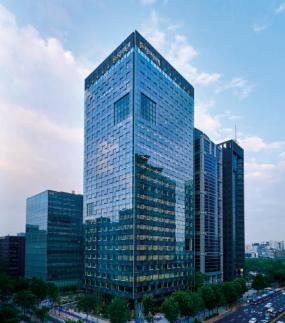 KB Financial Q1 Net Profit Rises 11.5% to 1.8924 Trillion Won; Nonbank Share Hits 43% KB Financial Group reported near-record quarterly earnings and said it will cancel all treasury shares it currently holds, signaling a push to pair strong results with bigger shareholder returns. In a regulatory filing on Thursday, KB Financial said its 2026 first-quarter net profit totaled 1.8924 trillion won, up 11.5% from a year earlier and the highest level on record. Results were supported by solid net interest income of 3.3348 trillion won and a sharp rise in net fee income, which grew 45.5% to 1.3593 trillion won. The nonbanking businesses accounted for 43% of group earnings, reflecting broad-based growth across affiliates. As of the end of March, the group’s nonperforming loan ratio stood at 0.73%. Its common equity Tier 1 ratio was 13.63%, and its BIS capital ratio was 15.75%, the company said. By unit, KB Kookmin Bank posted first-quarter net profit of 1.1010 trillion won, up 7.3% from a year earlier. KB Financial cited the fading impact of last year’s one-off, large provisioning, stable management of interest income and higher wealth-management fee income. The bank’s net interest margin rose 2 basis points to 1.77%. KB Securities reported net profit of 347.8 billion won, up 93.3%, helped by higher brokerage commissions and other wealth-management revenue as stock trading value increased amid a more active capital market. KB Insurance posted 200.7 billion won, KB Kookmin Card 107.5 billion won, and KB Life 79.8 billion won in net profit. KB Financial also announced it will cancel all 14.26 million treasury shares it holds, about 3.8% of shares outstanding, following a recent Commercial Act revision tied to mandatory treasury-share cancellations. The company said it is the industry’s largest single cancellation by value. Although the mandatory cancellation comes with a 1 1/2-year grace period, KB Financial said it decided to proceed immediately after the legal revision to maximize shareholder value and support government policy. The board also approved a quarterly cash dividend of 1,143 won per share and an additional 600 billion won share buyback and cancellation plan. * This article has been translated by AI. 2026-04-23 16:35:03
 -
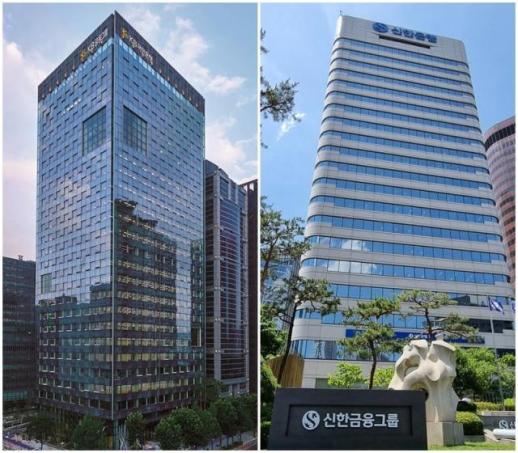 KB Financial, Shinhan post record Q1 profits on stock-market boom; step up shareholder returns KB Financial Group and Shinhan Financial Group, South Korea’s top two financial holding companies, posted record quarterly results, driven by steady net interest income and a surge in fee income tied to a strong stock market. Both groups also announced steps aimed at boosting shareholder value, including share cancellations and a new value-up plan. KB Financial said in a regulatory filing on Wednesday that its first-quarter 2026 net profit rose 11.5% from a year earlier to 1.8924 trillion won, the highest on record and above market expectations. Net interest income totaled 3.3348 trillion won, while net fee income jumped 45.5% to 1.3593 trillion won. The share of group earnings from nonbank units rose to 43%, as affiliates posted broadly even growth. By unit, KB Kookmin Bank earned 1.1010 trillion won in first-quarter net profit, up 7.3% from a year earlier. The group cited the fading impact of one-off provisioning booked last year, stable management of interest income and higher wealth-management fee income. KB Securities posted net profit of 347.8 billion won, up 93.3% from a year earlier, as higher stock trading value lifted brokerage commissions and other wealth-management revenue. Shinhan Financial also reported record quarterly results. In a filing Wednesday, it said first-quarter net profit rose 9.0% from a year earlier to 1.6226 trillion won, the highest for any quarter. As with KB, improved securities performance sharply lifted noninterest and nonbank earnings. Noninterest income, including securities fee income and the bank’s exchange-traded fund fees and trust income, rose 26.5% to 1.1882 trillion won. Shinhan Bank’s net profit increased 2.6% to 1.1571 trillion won, while Shinhan Investment Corp. surged 167.4% to 288.4 billion won on higher trading value amid a stronger market. Hana Financial Group and Woori Financial Group, set to report first-quarter results on Thursday, are expected to post net profits of 1.1553 trillion won and 815.2 billion won, respectively, up 2.45% and 32.42% from a year earlier. Shareholder returns also ramp up as groups move to lift value Following the record results, both groups unveiled shareholder-return measures. KB Financial said it plans to cancel all treasury shares it holds, totaling about 14.26 million shares, or roughly 3.8% of shares outstanding. The move follows a recent Commercial Act revision related to mandatory cancellation of treasury shares. KB said it is the industry’s largest single share-cancellation case by value. Although the mandatory cancellation comes with a 1 1/2-year grace period, KB said it decided to proceed immediately after the legal revision to maximize shareholder value and align with government policy. Shinhan Financial announced a new corporate value-enhancement plan, “Shinhan Value-Up 2.0.” It centers on managing its common equity Tier 1 ratio at an appropriate level and introducing a new shareholder-return target that links return on equity and growth. Growth will be set by the board, taking into account increases in capital and risk-weighted assets. With a target ROE of 10% and growth of 4% to 5%, Shinhan said the expected shareholder-return ratio would be 50% to 60%. The structure raises the return ratio as growth increases, effectively removing an upper limit. Shinhan also said it will seek, starting with this year’s year-end dividend, to expand tax-free dividends and dividends per share by at least 10% annually over the next three years, and use remaining resources for share buybacks and cancellations to improve consistency and flexibility in its shareholder-return policy. Jang Jeong-hun, executive vice president for finance at Shinhan Financial, said the plan is meaningful because it “builds a sustainable system in which the group’s growth and shareholder returns reinforce each other,” adding that the group will work to raise shareholder value through higher ROE and a predictable shareholder-return framework.* This article has been translated by AI. 2026-04-23 16:34:32
 -
 Special Prosecutor Raids Supreme Prosecutors’ Office in Probe of Shim Woo-jung The second comprehensive special prosecutor team has launched a forced investigation into allegations that Shim Woo-jung, former prosecutor general, was involved in martial law-related actions. In a notice to the media on the 23rd, the team said it was conducting a search and seizure at the Supreme Prosecutors’ Office in connection with Shim, a suspect, on allegations of “participation in key duties of insurrection” and abuse of authority. It said the probe focuses on the dispatch of prosecutors to a joint investigation headquarters and on allegations tied to waiving an immediate appeal. According to the report, on Dec. 3, 2024, before former President Yoon Suk Yeol declared martial law, then-Justice Minister Park Sung-jae returned to the Justice Ministry complex in Gwacheon after attending a presidential office Cabinet meeting and convened a meeting of senior officials. Shim is said to have reviewed sending prosecutors to the martial law joint investigation headquarters at Park’s direction. About 10 people, including bureau directors, attended the meeting, and controversy followed allegations that Park instructed the ministry’s prosecution bureau to “review dispatching prosecutors” to the joint headquarters. Earlier findings by the special prosecutor investigating insurrection allegations said Park spoke with Shim three times from 11 p.m. that day into the early hours of Dec. 4, raising suspicions Park directed Shim to send prosecutors. The comprehensive special prosecutor also said materials tied to Shim’s alleged decision to forgo an “immediate appeal” were included in the search and seizure, signaling a parallel investigation. The report said that in March last year, Yoon, who had been arrested and indicted on charges of leading an insurrection, asked a court to cancel his detention, arguing prosecutors indicted him after the detention period had expired. Presiding Judge Ji Gui-yeon granted the request. While the prosecution team argued it should file an immediate appeal of the court’s decision, the report said Shim, after internal meetings including a senior prosecutors’ session, chose not to appeal, and Yoon was released. The insurrection special prosecutor previously investigated the matter and, in September last year, questioned Shim as a person named in a complaint. But after the investigation period expired, the case was transferred to police, the report said. The comprehensive special prosecutor is expected to question Shim soon based on materials seized, including what he discussed with Park and how the decision to waive an immediate appeal was made, the report said.* This article has been translated by AI. 2026-04-23 16:34:02
 -
 Samsung Card Scales Back Appliance Installment Loans as Subscriptions Grow Samsung Card’s installment financing for home appliances is shrinking quickly as buying patterns change and the burden of purchasing appliances has eased. With subscription services spreading, demand for loan-based appliance purchases is fading further. According to the Financial Supervisory Service’s financial statistics system, Samsung Card’s durable-goods installment financing assets totaled 361.3 billion won at the end of last year, down 1.3% from 365.9 billion won a year earlier. Among six card companies that handle durable-goods installment financing — Shinhan, Samsung, KB Kookmin, Hana, Lotte and Woori — Samsung Card’s total was the smallest. Durable-goods installment financing is a loan-type product in which a card company provides financing for high-priced purchases such as cars and appliances, and consumers repay it in installments over an extended period. Within that category, Samsung Card’s consumer appliance installment financing stood at just 12 million won. Samsung Card has operated appliance financing largely tied to affiliate Samsung Electronics. Its related loan balance reached 149.5 billion won in 2013 but has declined sharply since then. Installment financing assets for business-to-business items such as multifunction printers fell to 2.8 billion won from 4.9 billion won a year earlier, a drop of 42.4%. That figure has declined for three straight years since reaching 10 billion won in 2022. The decline is seen as structural, reflecting shifts in how consumers pay. In the past, long-term financing helped reduce the upfront burden for expensive items such as TVs and refrigerators. More recently, consumers have increasingly been able to cover purchases with lump-sum payments or short-term card installments, reducing demand for long-term loans. Shinhan Card’s appliance installment financing also disappeared after 2015. The spread of appliance subscription services is expected to accelerate the drop in loan-based purchases. Subscriptions reduce upfront costs and include regular care services, becoming a broader trend among appliance makers including Samsung Electronics and LG Electronics. As appliance-focused installment financing fades, Samsung Card has also taken a cautious approach to auto installment financing. Its auto installment financing assets totaled 358.4 billion won at the end of last year, just 3.6% of the combined total of the six card companies, which stood at 9.8302 trillion won. Instead, Samsung Card has pursued exclusive partnerships with major imported car brands including Tesla, BYD, Polestar and BMW (through some dealers), focusing less on loan-type products and more on payment-based revenue, its core business. A Samsung Card official said the company is running its auto finance strategy with an emphasis on profitability and how it connects to the credit card business. 2026-04-23 16:27:09
 -
 HD Hyundai Heavy Skips KDDX Batch II Concept Bid, Focuses on Next Design Phase HD Hyundai Heavy Industries has again declined to bid for the concept design of the KDDX Batch II program, drawing attention as competition intensifies for South Korea’s next-generation destroyer project. Shipbuilding industry officials said Thursday that HD Hyundai Heavy did not participate in either of the two recent tenders for the KDDX Batch II concept design. Under current rules, if a tender fails twice, the government can sign a private contract with the sole bidder, increasing the likelihood that Hanwha Ocean will take the concept design work. KDDX is a national project to invest about 7.8 trillion won to secure six 6,000-ton Korean Aegis destroyers by 2030. KDDX Batch II is a follow-on model to the existing KDDX and is an early-stage effort to outline a future next-generation destroyer program. Concept design sets basic performance, weapons systems, radar configuration and hull form, and is considered a research-and-development step before full commercialization. Shipbuilding proceeds through concept design, basic design, detailed design and lead-ship construction, and then follow-on ship construction. Industry observers said HD Hyundai Heavy’s decision appears aimed at concentrating resources on the main competition, particularly the basic design phase. Basic design is widely viewed as the core stage, and in past naval programs the company responsible for basic design has typically carried work into detailed design. In the earlier Batch I program, Hanwha Ocean handled concept design and HD Hyundai Heavy took basic design. Some in the industry said the latest nonparticipation is unlikely to significantly weaken HD Hyundai Heavy’s competitiveness in the broader program. The decision may also reflect internal restructuring after HD Hyundai Heavy merged with HD Hyundai Mipo, integrating its naval vessel and mid-sized ship businesses. With both special-purpose and commercial ship lines to manage, the company may be prioritizing larger, more profitable contracts over pursuing multiple projects at once. HD Hyundai Heavy said the move does not mean it is abandoning the program. “Concept design is a pre-commercialization stage, and we have made participation decisions differently depending on business conditions,” a company official said. The Defense Acquisition Program Administration plans to accept KDDX proposals through May 15 and select a final contractor in July. Under the original plan, basic design was to be completed in December 2023, with detailed design and lead-ship construction starting in 2024, but the agency has been unable to reach a conclusion amid intensified competition between the two companies, delaying the project for a second year.* This article has been translated by AI. 2026-04-23 16:25:07
 -
 Uijeongbu mayoral hopeful Kim Won-gi faces plagiarism allegations over Ph.D. thesis Kim Won-gi, a Democratic Party of Korea preliminary candidate in the Uijeongbu mayoral race in Gyeonggi province, is facing allegations that he plagiarized his Ph.D. dissertation. If the claims are confirmed, they could expand into questions about his qualifications and ethics. According to reporting by Aju Business Daily on Wednesday, Kim’s 2011 doctoral dissertation, submitted to the graduate school of Konyang University, showed a 22% plagiarism rate in the plagiarism-checking program CopyKiller Campus. While direct comparisons with standards from 15 years ago are difficult, recent practice generally treats similarity rates above 20% as grounds for failing a thesis. Aju Business Daily said it compared the dissertation with another Ph.D. dissertation submitted to the same graduate school in 2010 and found multiple similarities under review criteria including research independence, originality of academic contribution, distinction from prior studies and whether the works are substantially identical. The report cited structural similarities in research conditions and the flow of argument, overlap in key theories and concept definitions, repeated use of research design and analytical frameworks, and recurring phrasing and narrative style. It said the number of similar sentences and descriptions raised concerns that the overlap went beyond ordinary citation. It also pointed to survey questions that were largely identical and to some survey items and analysis that were used in the same or similar form without separate notes or source citations. A professor who teaches at a university in Seoul said, “Rules differ by school, but for academic journals it is generally required that the plagiarism rate be under 9%,” adding, “Even considering various circumstances, 22% appears high.” The allegations have fueled debate in parts of academia over whether the dissertation meets the requirements of an independent study. They have also raised questions about whether political parties are adequately checking degrees and research ethics as they vet preliminary candidates for the June 3 local elections, with some warning that superficial screening could lead to repeated controversies. Aju Business Daily said it repeatedly tried to reach Kim’s camp for comment but was unable to make contact.* This article has been translated by AI. 2026-04-23 16:24:21
 -
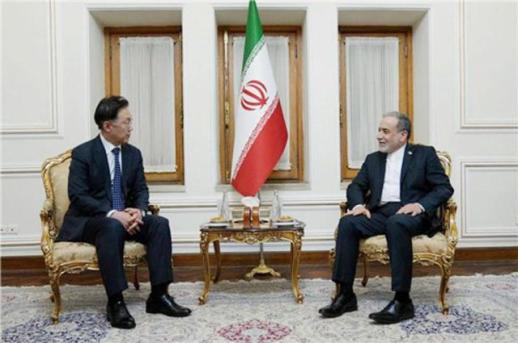 South Korean envoy meets Iranian foreign minister in Tehran SEOUL, April 23 (AJP) - South Korea's special envoy to Iran Chung Byung-ha has met Iranian Foreign Minister Abbas Araghchi in Tehran, Iran's Ministry of Foreign Affairs said on Thursday. According to the ministry, Chung, who was dispatched to the Middle Eastern country earlier this month, met Araghchi the previous day. During the meeting, which came about two weeks into his stay there, Chung reportedly sought Iran's cooperation, as he continues efforts to ensure the safety of South Korean vessels stranded in the Strait of Hormuz amid the prolonged conflict in the Middle East. Stressing the importance of strengthening bilateral ties, Chung expressed hope that diplomatic efforts would bring a complete end to the conflict and restore peace and stability to the region. Agreeing with that, Araghchi said Iran is also ready to actively cooperate with South Korea. But he defended Iran's blockade of the strait as a response to what he called "brutal crimes" by the "aggressors," referring to the U.S. and Israel, saying that "their aggression is the root of insecurity in the Persian Gulf and the Strait of Hormuz." Chung has reportedly been in talks with energy and other officials in Tehran to address supply disruptions caused by the closure of the strait, a critical chokepoint for roughly one-fifth of the world's oil supply. According to the Ministry of Oceans and Fisheries, about 26 South Korean vessels carrying 173 crew members remain stranded in or near the strategically vital waterway. 2026-04-23 16:22:15
 -
 Retail Trading and Wealth Management Lift Korean Brokerages as IB Lags With earnings season getting underway, South Korea’s securities firms are expected to post sharply improved first-quarter results, driven mainly by retail businesses such as brokerage trading and wealth management, analysts say. A stock-market rally has boosted trading value, which feeds directly into fee income. Investment banking, by contrast, has grown more slowly, reinforcing a shift in profit engines from IB to retail, according to market watchers. As of the 23rd, FnGuide estimates combined first-quarter net profit for five listed firms — Korea Financial Group, Mirae Asset Securities, NH Investment & Securities, Samsung Securities and Kiwoom Securities — at about 2.82 trillion won. That would be double the 1.41 trillion won posted a year earlier. Combined operating profit is estimated at 3.77 trillion won, up 106.6% from the same period last year. The improvement is tied to increased inflows into equities. The Korea Exchange said average daily trading value in the KOSPI market in the first quarter totaled 29.65 trillion won, up 78% from 16.56 trillion won in the fourth quarter of 2025. Because higher turnover translates into higher brokerage commission revenue, trading value is closely linked to securities firms’ earnings. Within retail, wealth management is expected to stand out. Most large firms reportedly met more than half of their annual WM revenue targets in the first quarter alone, and some are said to have already reached their full-year goals. IB, often described as the industry’s marquee business, is losing relative weight. While demand for corporate finance has remained steady, its earnings growth has not kept pace with retail, analysts say. The pattern has been evident since last year, when the market rally began. Average daily KOSPI trading value rose from 10.7 trillion won in 2024 to 16.9 trillion won in 2025, and major securities firms posted strong results over the same period. Higher turnover and greater participation by individual investors helped drive a surge in brokerage revenue. Last year, major firms’ brokerage revenue rose about 30% to 40% from a year earlier, while IB revenue growth was around 10%, according to the analysis. A downturn in the real estate project financing, or PF, market was cited as a factor. Industry officials expect the retail-led profit structure to persist for now, though some warn it could deepen polarization among firms. Large brokerages can capture trading flows with broad client bases and strong platforms, while small and midsize firms face limits in capital and brand strength. About 75% of the domestic retail market is concentrated among the top 10 large securities firms, while smaller firms account for only about 10%, the report said. Yeo Mil-lim, a senior researcher at the Korea Capital Market Institute, said the sustainability of PF-centered business models has weakened as PF risks materialize and regulation tightens. Large firms, Yeo said, are diversifying by strengthening WM-dedicated teams and family office capabilities, expanding profit and loss tied to financial products, increasing overseas branches and boosting global investment. * This article has been translated by AI. 2026-04-23 16:22:05