
Journalist

Lee Hugh
=
-
 Uijeongbu mayoral hopeful Kim Won-gi faces plagiarism allegations over Ph.D. thesis Kim Won-gi, a Democratic Party of Korea preliminary candidate in the Uijeongbu mayoral race in Gyeonggi province, is facing allegations that he plagiarized his Ph.D. dissertation. If the claims are confirmed, they could expand into questions about his qualifications and ethics. According to reporting by Aju Business Daily on Wednesday, Kim’s 2011 doctoral dissertation, submitted to the graduate school of Konyang University, showed a 22% plagiarism rate in the plagiarism-checking program CopyKiller Campus. While direct comparisons with standards from 15 years ago are difficult, recent practice generally treats similarity rates above 20% as grounds for failing a thesis. Aju Business Daily said it compared the dissertation with another Ph.D. dissertation submitted to the same graduate school in 2010 and found multiple similarities under review criteria including research independence, originality of academic contribution, distinction from prior studies and whether the works are substantially identical. The report cited structural similarities in research conditions and the flow of argument, overlap in key theories and concept definitions, repeated use of research design and analytical frameworks, and recurring phrasing and narrative style. It said the number of similar sentences and descriptions raised concerns that the overlap went beyond ordinary citation. It also pointed to survey questions that were largely identical and to some survey items and analysis that were used in the same or similar form without separate notes or source citations. A professor who teaches at a university in Seoul said, “Rules differ by school, but for academic journals it is generally required that the plagiarism rate be under 9%,” adding, “Even considering various circumstances, 22% appears high.” The allegations have fueled debate in parts of academia over whether the dissertation meets the requirements of an independent study. They have also raised questions about whether political parties are adequately checking degrees and research ethics as they vet preliminary candidates for the June 3 local elections, with some warning that superficial screening could lead to repeated controversies. Aju Business Daily said it repeatedly tried to reach Kim’s camp for comment but was unable to make contact.* This article has been translated by AI. 2026-04-23 16:24:21
 -
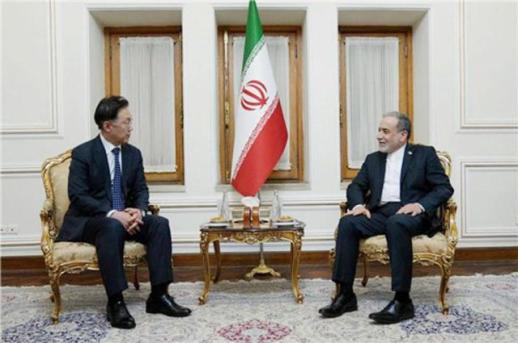 South Korean envoy meets Iranian foreign minister in Tehran SEOUL, April 23 (AJP) - South Korea's special envoy to Iran Chung Byung-ha has met Iranian Foreign Minister Abbas Araghchi in Tehran, Iran's Ministry of Foreign Affairs said on Thursday. According to the ministry, Chung, who was dispatched to the Middle Eastern country earlier this month, met Araghchi the previous day. During the meeting, which came about two weeks into his stay there, Chung reportedly sought Iran's cooperation, as he continues efforts to ensure the safety of South Korean vessels stranded in the Strait of Hormuz amid the prolonged conflict in the Middle East. Stressing the importance of strengthening bilateral ties, Chung expressed hope that diplomatic efforts would bring a complete end to the conflict and restore peace and stability to the region. Agreeing with that, Araghchi said Iran is also ready to actively cooperate with South Korea. But he defended Iran's blockade of the strait as a response to what he called "brutal crimes" by the "aggressors," referring to the U.S. and Israel, saying that "their aggression is the root of insecurity in the Persian Gulf and the Strait of Hormuz." Chung has reportedly been in talks with energy and other officials in Tehran to address supply disruptions caused by the closure of the strait, a critical chokepoint for roughly one-fifth of the world's oil supply. According to the Ministry of Oceans and Fisheries, about 26 South Korean vessels carrying 173 crew members remain stranded in or near the strategically vital waterway. 2026-04-23 16:22:15
 -
 Retail Trading and Wealth Management Lift Korean Brokerages as IB Lags With earnings season getting underway, South Korea’s securities firms are expected to post sharply improved first-quarter results, driven mainly by retail businesses such as brokerage trading and wealth management, analysts say. A stock-market rally has boosted trading value, which feeds directly into fee income. Investment banking, by contrast, has grown more slowly, reinforcing a shift in profit engines from IB to retail, according to market watchers. As of the 23rd, FnGuide estimates combined first-quarter net profit for five listed firms — Korea Financial Group, Mirae Asset Securities, NH Investment & Securities, Samsung Securities and Kiwoom Securities — at about 2.82 trillion won. That would be double the 1.41 trillion won posted a year earlier. Combined operating profit is estimated at 3.77 trillion won, up 106.6% from the same period last year. The improvement is tied to increased inflows into equities. The Korea Exchange said average daily trading value in the KOSPI market in the first quarter totaled 29.65 trillion won, up 78% from 16.56 trillion won in the fourth quarter of 2025. Because higher turnover translates into higher brokerage commission revenue, trading value is closely linked to securities firms’ earnings. Within retail, wealth management is expected to stand out. Most large firms reportedly met more than half of their annual WM revenue targets in the first quarter alone, and some are said to have already reached their full-year goals. IB, often described as the industry’s marquee business, is losing relative weight. While demand for corporate finance has remained steady, its earnings growth has not kept pace with retail, analysts say. The pattern has been evident since last year, when the market rally began. Average daily KOSPI trading value rose from 10.7 trillion won in 2024 to 16.9 trillion won in 2025, and major securities firms posted strong results over the same period. Higher turnover and greater participation by individual investors helped drive a surge in brokerage revenue. Last year, major firms’ brokerage revenue rose about 30% to 40% from a year earlier, while IB revenue growth was around 10%, according to the analysis. A downturn in the real estate project financing, or PF, market was cited as a factor. Industry officials expect the retail-led profit structure to persist for now, though some warn it could deepen polarization among firms. Large brokerages can capture trading flows with broad client bases and strong platforms, while small and midsize firms face limits in capital and brand strength. About 75% of the domestic retail market is concentrated among the top 10 large securities firms, while smaller firms account for only about 10%, the report said. Yeo Mil-lim, a senior researcher at the Korea Capital Market Institute, said the sustainability of PF-centered business models has weakened as PF risks materialize and regulation tightens. Large firms, Yeo said, are diversifying by strengthening WM-dedicated teams and family office capabilities, expanding profit and loss tied to financial products, increasing overseas branches and boosting global investment. * This article has been translated by AI. 2026-04-23 16:22:05
 -
 Dandadan Juicy Gyoza Izakaya to Open First Thailand Store in Bangkok in Late July Restaurant operator NATTY SWANKY Holdings Co., based in Shinjuku Ward, Tokyo, said on the 22nd that its subsidiary Dandadan will open its first store in Bangkok, marking the brand’s first overseas location. The gyoza izakaya, branded as “Dandadan of Juicy Gyoza Dumplings,” is scheduled to open in late July. The store will be on the fifth floor of Cloud 11, a large mixed-use complex in eastern Bangkok, in a rooftop garden area. The shop will cover 100 square meters. As in Japan, the signature item will be pan-fried “juicy gyoza,” while the menu will be localized for Thailand. The company expects average spending per customer to be about 1.3 times the level in Japan. A Dandadan spokesperson told NNA, “We will enter the Thai market in cooperation with a local partner.” The company will prioritize stabilizing operations at the first store and will decide on any further openings after assessing conditions. Dandadan has 131 locations in Japan. It previously ran a one-year, limited-time store in Malaysia as a test of overseas operations. The spokesperson said completing that Malaysia operation without major problems helped inform the decision to expand into Thailand.* This article has been translated by AI. 2026-04-23 16:20:19
 -
 SK hynix unveils HBM4 roadmap at TSMC symposium, deepening AI memory partnership SK hynix used a technology event hosted by Taiwan Semiconductor Manufacturing Co., the world’s largest foundry, to lay out a detailed roadmap aimed at strengthening its lead in next-generation high-bandwidth memory, or HBM. The company said it took part in the “TSMC 2026 Technology Symposium” held April 22 (local time) in San Jose, California, where it presented development progress on sixth-generation HBM and its next-generation packaging capabilities. SK hynix highlighted HBM4, a key component for the artificial intelligence era, and underscored a change in how the “base die” will be made starting with HBM4. Up to the fifth generation, SK hynix produced the base die using its own process. For HBM4, it plans to use TSMC’s advanced leading-edge logic process to manufacture it. The base die connects to a GPU and controls the overall memory stack. Applying an advanced process can enable a wide range of customer-specific functions, the company said. The cooperation is aimed at moving beyond parts supply to jointly target the market for customized HBM. SK hynix said it plans to optimize the combination of TSMC’s advanced packaging technology, CoWoS, with its own HBM technology to offer solutions that meet varied requirements from global big tech companies. Along with HBM4, SK hynix displayed products it described as essential for building AI infrastructure, including a 256GB 3DS RDIMM memory module for high-performance servers and data centers and GDDR7, its next-generation graphics memory. SK hynix said it plans to begin mass production of HBM4 in 2026, and to strengthen a close cooperation ecosystem linking customers, foundries and memory makers as it seeks to solidify its position as a total AI memory provider. Ahn Hyun, SK hynix president and chief development officer, said, “A key obstacle for AI technology today is a memory bottleneck, where bandwidth limits prevent rapidly processing the growing volume of data.” He added, “We will go beyond supplying standard HBM to provide ‘custom HBM’ tailored to specific customer needs, and expand to full solutions spanning DRAM and NAND flash.”* This article has been translated by AI. 2026-04-23 16:19:43
 -
 Han Dong-hoon Says He Will Not Leave Busan’s Buk District Ahead of By-Election Bid Han Dong-hoon, former leader of the People Power Party who is running as an independent in the by-election in Busan’s Buk District A constituency, said on April 23 that he would “never leave” Buk District. In a handwritten message posted to social media, Han called Buk District “the start of my politics and my hometown,” and said he would show “Han Dong-hoon-style politics” there. “I have never left this place, and no one sent me here,” he wrote, adding that he would “laugh together and cry together” with Buk District residents. “I will grow with Buk District and protect it. I will never leave,” he wrote. “I will prove it with politics that keeps promises.” Han previously formalized his bid on April 14 by filing a change-of-address report to an apartment in Manduk 2-dong, Buk District. After completing the paperwork, he said he had decided to live for Busan residents and would begin and end his political career there. The Buk A seat is currently held by Democratic Party lawmaker Jeon Jae-soo. A by-election is scheduled for June 3 after Jeon was chosen as the party’s candidate for Busan mayor. * This article has been translated by AI. 2026-04-23 16:14:47
 -
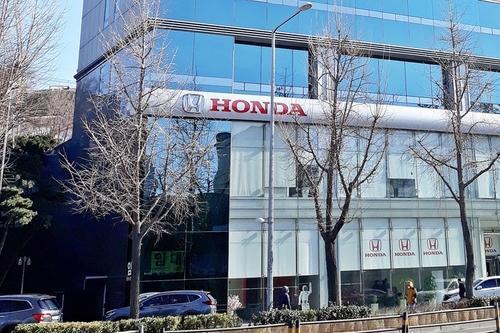 Honda Korea to exit car sales after two decades SEOUL, April 23 (AJP) - Honda Korea announced it will cease automobile sales in the country by the end of 2026, pulling the curtain on a presence that once crowned it the top-selling import brand but withered steadily over the past several years. Lee Ji-hong, CEO of Honda Korea, told a hastily convened press conference on Thursday at COEX in Seoul that the decision came after a thorough review of shifting market conditions and persistent currency headwinds. "We have comprehensively considered changes in the business environment and exchange rate fluctuations, and will terminate automobile sales operations in Korea by the end of 2026," Lee said. The retreat marks a stark reversal for a brand that in 2008 became the first import nameplate to sell more than 10,000 vehicles in a single year in South Korea. Annual sales have since cratered — from about 8,760 units in 2019 to 1,951 in 2025 — battered by what industry experts say is a relatively small portfolio strictly tied to internal combustion and hybrid powertrains in a market increasingly gravitating toward electrified alternatives. In February this year, Honda registered just 23 new vehicles, its lowest monthly tally on record and a mere 0.08 percent of all imported car registrations. Honda's Korean pullback comes as its Tokyo-based parent braces for potentially its first annual net loss since going public in 1957. Honda Motor said in March it expects to record losses of up to 2.5 trillion yen ($15.6 billion) in the fiscal year ending March 2026, driven by massive write-downs on scrapped electric vehicle programs in North America and deepening losses in China, where local EV makers have seized market share. The automaker has cancelled three battery-electric models that were months from production at its Ohio plant and slashed its global 2030 EV sales target from 30 percent to 20 percent. Honda Korea said it will continue to sell motorcycles and aim to strengthen product appeal, customer service and experiential marketing in the two-wheeler business going forward. 2026-04-23 16:11:56
 -
 South Korea Parliament Approves Expansion of Fair Trade Commission to 11 Members South Korea’s Fair Trade Commission will expand its roster of commissioners from nine to 11 for the first time in 30 years. The commission said on the 23rd that the National Assembly passed revisions to the Monopoly Regulation and Fair Trade Act to increase the number of members. Under the amendment, the commission will add one standing commissioner and one nonstanding commissioner, raising the total to 11 from the current nine. The new lineup will be six standing commissioners and five nonstanding commissioners, up from five and four, respectively. The commission’s membership cap has not changed since 1997. With the increase, officials expect reviews and decisions to move faster. The commission cited a rise in its caseload, saying it handled 2,400 cases over the past five years, nearly double the 1990s average of 1,300, while the number of commissioners remained unchanged. The revised law is expected to take effect immediately after it is transferred to the government, approved by the Cabinet and promulgated.* This article has been translated by AI. 2026-04-23 16:09:18
 -
 Korea Activates Emergency Import Financing to Secure Naphtha Supplies Middle East instability has heightened uncertainty over naphtha supplies, prompting South Korea’s financial sector to activate an emergency financing support system for the petrochemical industry. The goal is to quickly raise import letter of credit (L/C) limits to prevent disruptions in raw material imports. The Financial Services Commission said on the 23rd it has set up a joint financial-sector support framework for naphtha imports linked to the Middle East situation. The move follows a recent surge in naphtha prices and growing supply uncertainty as the situation in the Middle East drags on. Naphtha is a key feedstock for South Korea’s petrochemical industry, and any import disruption could affect production across the sector. At the center of the plan is expanding L/C limits. Korea Development Bank, the Export-Import Bank of Korea and commercial banks plan to increase L/C issuance limits for companies that have signed naphtha import contracts, helping them secure funding. When a company applies for L/C support through its main creditor bank, the bank will review the request and, after consultations with the creditor group, move quickly to provide support. Costs will be shared based on each institution’s credit exposure, and the Korea Trade Insurance Corp. plans additional support through import insurance. To speed up assistance, financial authorities will streamline procedures. The time typically required to expand L/C limits — usually more than six weeks — will be cut to within three weeks through simplified due diligence. If needed, the main creditor bank will issue a letter of intent, or LOI, to help companies finalize import contracts. The Financial Services Commission and the Financial Supervisory Service also said they will apply liability protection for staff involved in the process when there is no intent or gross negligence, to encourage active support by financial institutions. At a meeting held the same day, financial-sector officials agreed to maintain close coordination in responding to the Middle East-driven risks and to be ready to execute naphtha import financing support immediately.* This article has been translated by AI. 2026-04-23 16:08:20
 -
 Budget Planning Minister Park Hong-geun Pledges Stronger Role for Cooperatives in Public Services Park Hong-geun, minister of the Office of Planning and Budget, said he will actively support cooperatives so they can strengthen essential parts of people’s lives and play an integrated role linking local economies with welfare and care services. On the 23rd, Park visited the Salim Medical-Welfare Social Cooperative to review how cooperatives in the medical and care sectors are operating and to hold a policy meeting with cooperative officials. Participants included local council representatives and field workers from medical and care, housing, energy, education, employee and youth cooperatives. They discussed ways to revitalize the cooperative sector. The planning office previously set out five strategies under the “5th Basic Plan for Cooperatives (2026–2028),” branded S.M.I.L.E: Scale-up and competitiveness, Mutual cooperation and solidarity, Identity, Local community participation, and Efficiency. The meeting focused on how to apply those strategies in the field. Park said the government plans to flesh out key mid- to long-term tasks for cooperative development, including expanding the supply of public services in local communities and revitalizing federations. He added that support will extend beyond medical and care services to areas such as housing and village management, education and energy. He also said the government will work to create conditions for capable cooperative experts to be active by strengthening education and revitalizing federations, and will seek institutional improvements with relevant ministries so company employees can acquire and pass on businesses through cooperatives.* This article has been translated by AI. 2026-04-23 16:07:35