
Journalist

Lee Hugh
=
-
 Seoul mayoral rivals clash over villas as answer to rental crunch Seoul mayoral candidates Jung Won-oh of the Democratic Party and Oh Se-hoon of the People Power Party, who have traded barbs for days over the city’s housing policy, clashed again on Monday over whether “villas” can help ease the rental crunch. Oh’s campaign said Jung’s suggestion that supplying villas and similar housing could resolve the monthly rent and jeonse squeeze within two to three years was “dangerous.” Jung’s camp responded that villas are a legitimate form of housing and accused Oh of an apartment-only mindset. Park Yong-chan, a spokesperson for Oh’s election committee, said in a statement that Jung “caused trouble again,” criticizing Jung’s remarks as implying the rental crisis could be solved in two to three years by supplying villas. Park was referring to Jung’s comments the previous day at a meeting with district chief candidates, where Jung said the city could craft measures within two to three years and increase supply by using villas, officetels and “living-type lodging facilities.” Park argued the core cause of Seoul’s rental turmoil is an “absolute shortage” of apartment rental supply stemming from what he called the Lee Jae-myung administration’s misguided real estate policies. He said criticism is mounting that Jung is offering an “absurd” alternative while ignoring the root problem. Kim Jae-seop, a lawmaker who serves as a co-chair of Oh’s campaign, also attacked Jung’s remarks. In a Facebook post, Kim criticized what he called a “Jung Won-oh-style ‘crab, carp and frog’ theory,” saying Jung lives in a “proper apartment” while telling Seoul residents to live in villas. Kim wrote that the Democratic Party’s “hypocrisy DNA” was showing again, referring to a phrase used to criticize telling ordinary people not to aspire upward. Kim also said President Lee Jae-myung raised barriers for young people and newlyweds seeking apartments through what he called a “double shackle” of lending restrictions and the land transaction permit system. He said offering non-apartment housing as an alternative to people who want to live in apartments is either deceiving Seoul residents or “nonsense.” Jung’s camp said Seoul’s housing problems should not be viewed only through the lens of apartment supply. Lee Ju-hee, a spokesperson for Jung’s campaign, said Oh was “looking in the wrong place,” adding that criticism of so-called “villa phobia” was aimed not at residents who live in villas but at Oh’s “narrow” insistence on apartments. “Villas are clearly one form of housing,” Lee said, arguing that the city should consider flexible and diverse housing types. She said Oh’s apartment-centered view shows a “fatal” lack of policy imagination and flexibility, and called it “shallow” to reduce Seoul’s housing prices solely to a shortage of apartment supply. Lee also accused Oh of failing to move beyond an outdated view of housing as a tool for speculation and investment, and said it would be “close to impossible” to expect innovative city administration given what she called Oh’s decade of uncommunicative governance. Kim Nam-geun, a lawmaker who heads policy for Jung’s campaign, joined the criticism, saying Oh was “consistently distorting” Jung’s remarks. Kim said that given the time required for redevelopment projects, it is the mayor’s duty and a public role to reduce supply-demand instability by quickly supplying non-apartment housing such as villas and officetels. Kim said Oh’s camp had turned Jung’s comment — that “if the public sector leads the supply of villas and officetels, it can be done in two to three years” — into a claim that “the rental crunch will be solved in two to three years,” calling it a “clear falsehood.”* This article has been translated by AI. 2026-05-05 16:57:17
 -
 Trump Says Tariffs Aren’t High Enough, Signals Push for Additional Duties President Donald Trump said current tariff levels are not high enough, openly signaling interest in additional duties as large-scale refunds are set to begin next week following a U.S. Supreme Court ruling that invalidated his administration’s “reciprocal” tariffs. The Trump administration is expected to use this week’s hearings under Section 301 of the Trade Act to press ahead with what it has described as “alternative tariffs.” According to CBS and other outlets, Trump told a White House Small Business Summit held during U.S. Small Business Week on May 4 (local time) that while people had said they were thankful for tariffs, “I think those tariffs are actually not high enough.” He added that the administration is reviewing alternative tariffs and said, “Refunding tariffs is really terrible.” The remarks came after the Supreme Court in February struck down reciprocal tariffs and other duties the administration had imposed under the International Emergency Economic Powers Act, or IEEPA. Reuters, citing a statement from U.S. Customs and Border Protection, reported that the refund process is expected to begin May 12. CBP estimates it collected about $166 billion in IEEPA-based tariffs from 330,000 importers, suggesting refunds could be substantial. CBS, citing CBP data, reported that as of April 26 more than 11 million refund claims had been filed. As the administration looks beyond IEEPA, the Office of the U.S. Trade Representative is preparing tariffs under Section 301 and plans hearings May 5-8 involving 16 countries, including South Korea and China, on issues tied to overproduction. After the reciprocal-tariff ruling, the administration imposed a 10% global tariff, and since March USTR has launched Section 301 investigations of major trading partners over overproduction and forced labor. Section 301 allows the United States to respond to foreign policies and practices deemed unfair and harmful to U.S. trade. USTR is expected to complete its investigation by July 24, and it is widely expected the administration will impose tariffs on countries where it finds practices it considers unfair. Still, with public sentiment souring amid high prices linked to tariff policy, concerns are also emerging within the Republican Party ahead of this year’s midterm elections. Small businesses, with limited leverage to negotiate prices, are seen as especially vulnerable because they may struggle to pass higher costs on to consumers. Rep. Max Miller, R-Ohio, said, “This tariff policy is not working for them (small businesses),” adding, “Overall, it is not having a positive effect. Overall, it is a negative effect.” CBS also reported that Ford, a major U.S. automaker, has asked the Trump administration not to introduce additional tariffs beyond those already in place.* This article has been translated by AI. 2026-05-05 16:39:14
 -
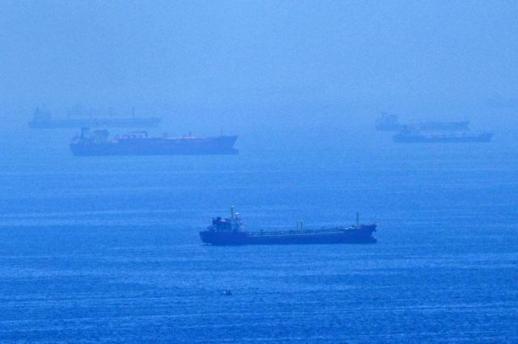 South Korea reviewing U.S. call to join Hormuz operation, citing legal steps and readiness South Korea’s government said May 5 it is reviewing U.S. President Donald Trump’s call for Seoul to take part in a military operation in the Strait of Hormuz following an explosion and fire involving a South Korean vessel, citing readiness on the Korean Peninsula and domestic legal procedures. The government also said it will move quickly — and accurately — to determine the cause of the incident and disclose findings transparently to the public. The presidential office said the government’s position is that the safety of international sea lanes and freedom of navigation serve the common interests of all countries and must be protected under international law. It said South Korea is actively participating in international efforts to stabilize, restore and normalize global maritime logistics networks as soon as possible. “In that context, we are also paying attention to President Trump’s remarks,” it added. On the U.S. military’s launch of “Project Freedom,” aimed at helping merchant ships leave the Strait of Hormuz, the presidential office said South Korea and the United States have remained in close communication on the stable use of major sea lanes, including the strait. The presidential office held a meeting chaired by presidential chief of staff Kang Hoon-sik to discuss response measures related to the South Korean ship incident that occurred in Hormuz the previous day. Attendees included the head of the crisis management center, the secretary for oceans and fisheries, the secretary for foreign policy, and the head of the national situation room. For the investigation, the government plans to move the vessel to a nearby port using a tugboat contracted by the ship’s operator, berth it, and then immediately dispatch personnel from the Dubai branch of the Korean Register to conduct a safety inspection. To ensure a more objective and reliable determination of the cause, it also plans to send investigators from the Korea Maritime Safety Tribunal and forensic experts from the National Fire Agency, separate from the operator’s own inquiry. The presidential office said the analysis is expected to take several days, given the time needed to deploy the tugboat, berth the ship, dispatch investigators from South Korea and conduct analysis. Diplomatic efforts are also underway. South Korea is sharing relevant information and maintaining close communication with the United States, Iran and member states of the Gulf Cooperation Council, it said. Trump wrote on social media platform Truth Social on May 4 that Iran had fired several times toward “unrelated countries,” including a South Korean cargo ship, over ship movements linked to “Project Freedom,” adding that it seemed time for South Korea to join the operation. Yoo Ji-hoon, a research fellow at the Korea Institute for Defense Analyses, said that at this stage, with the cause of the explosion and the party responsible not clearly identified, confirming the facts should come first. He said that rather than immediately joining combat operations, it would be preferable to maintain a balance between alliance cooperation and preventing escalation through limited, noncombat contributions such as information sharing, maritime surveillance and dispatching liaison officers.* This article has been translated by AI. 2026-05-05 16:30:16
 -
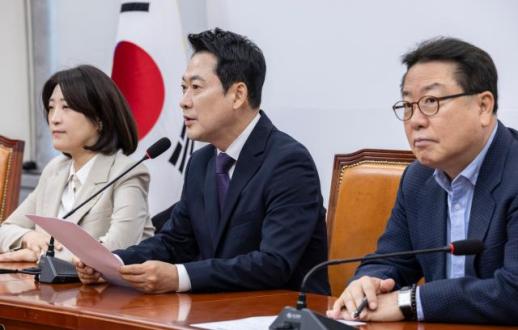 South Korean Opposition Blasts Proposed Special Counsel With Power to Drop Charges Opposition parties including the People Power Party and the New Reform Party on May 5 stepped up attacks on a bill to appoint a special counsel to investigate allegations of “fabricated investigations and fabricated prosecutions” under the Yoon Suk Yeol administration. They criticized President Lee Jae-myung’s comments a day earlier that the issue requires public input and deliberation, arguing he was seeking to delay action until after the June 3 local elections. People Power Party leader Jang Dong-hyeok told a news conference at the National Assembly that Lee was not only adopting “every method used by dictators around the world to control the judiciary,” but also seeking to appoint a special counsel himself “to erase crimes.” He said Lee was writing a “dictator’s guidebook” that would “remain in world history.” Jang also said Lee’s stance amounted to canceling indictments “but trying to push back the timing,” adding that “something unconstitutional does not become constitutional just because the local elections pass.” People Power Party floor leader Song Eon-seok wrote on Facebook that Lee had defined the “indictment-cancellation special counsel” as something that “must be done.” Song said Lee should say “I will not cancel indictments,” not call for deliberation on timing and procedure. He vowed to block what he called an attempted “judicial coup” through indictment cancellations. People Power Party candidates for metropolitan and provincial governor posts also held an emergency news conference in front of Bosingak pavilion in central Seoul, calling the bill “a serious act that destroys the rule of law” and “directly undermines the constitutional order.” In a statement, candidates including Seoul mayoral candidate Oh Se-hoon, Incheon mayoral candidate Yoo Jeong-bok and Gyeonggi gubernatorial candidate Yang Hyang-ja demanded that the bill be withdrawn; that Lee declare, “There will be no indictment cancellations, and I will stand trial according to law and principle”; and that Democratic Party candidates for those posts state whether they support the bill. The New Reform Party also labeled the bill a “judicial coup.” Party leader Lee Jun-seok wrote on Facebook a day earlier that the president likely knows why he cannot bring himself to say, “Don’t do it.” Lee said the opposition must secure not a vague timetable but a clear declaration that the plan is being abandoned. He also shared information about a signature campaign opposing the proposal. The party’s chief spokesperson, Lee Dong-hoon, said in a statement May 5 that he could not help but laugh at what he called a “shallow calculation” to “cover the public’s eyes and just get past the local elections.” He said a law that shakes the foundation of separation of powers should be “scrapped immediately,” not slowed down. New Reform Party candidates Cho Eung-cheon for Gyeonggi governor and Kim Jeong-cheol for Seoul mayor met a day earlier with People Power Party candidates from the Seoul metropolitan area to coordinate opposition to the bill. The Democratic Party introduced the special counsel bill on April 30, saying it aimed to uncover alleged abuses of prosecutorial power tied to cases including the Ssangbangwool remittances to North Korea case and allegations of corruption in the Daejang-dong, Wirye and Baekhyeon-dong development projects. Under the bill, a special counsel could take over designated cases and decide whether to file charges or maintain prosecutions. Opposition parties argue the special counsel would take over cases in which Lee is a suspect and attempt to cancel indictments. They say the legislature and executive branch would be using the special counsel to infringe on judicial independence and threaten separation of powers. Democratic Party leader Jeong Cheong-rae told reporters in Dongducheon, Gyeonggi Province, after a public outreach event that if a strict special counsel investigation proves prosecutions were fabricated, defendants who suffered from that fabrication “should of course be relieved.” He said the question of when to proceed would be decided by gathering the views of the public, party members and lawmakers to make the best choice.* This article has been translated by AI. 2026-05-05 16:22:28
 -
 US Treasury chief urges China to press Iran to reopen Strait of Hormuz The United States is publicly pressing China to help end the blockage of the Strait of Hormuz ahead of a U.S.-China summit. The New York Times reported that Treasury Secretary Scott Bessent said in a Fox News interview on Sunday that he was urging China to join what he called an international effort and to use diplomacy to persuade Iran to reopen the strait. “Iran is the largest state sponsor of terror, and China has been buying 90% of Iran’s energy, so it is effectively funding the largest state sponsor of terror,” Bessent said. Bessent also highlighted the U.S.-led maritime operation, saying, “We have full control of the strait.” He said the United States is demanding that Iran release the ships “for the benefit of the international community,” and he added that Washington expects international partners to engage similarly and that it is “the right time” for them to pressure Iran. He said the United States is returning fire only if attacked and “is not the side provoking,” but added that if Iran seeks to escalate, the United States is prepared to respond. The remarks came about a week before a summit between President Donald Trump and Chinese President Xi Jinping, and were widely seen as a pointed public message to Beijing. The United States has recently tightened sanctions targeting China. The State Department and Treasury Department last month sanctioned the Chinese refining company Hengli Group over imports of Iranian crude. On May 1, the United States added sanctions on operators tied to a “shadow fleet” linked to Iran’s petroleum product exports. Treasury also sanctioned three Iranian exchange houses and related front companies accused of brokering foreign-exchange transactions worth billions of dollars a year, cutting off financial dealings. The groups are suspected of converting yuan flowing in from China into other currencies that could be repurposed for military funding. China has pushed back against U.S. sanctions on its companies, signaling it opposes compliance. The U.S. pressure campaign over Iran has also raised concerns it could reignite tensions between Washington and Beijing. Strategic competition has continued, including China’s decision last month to bar investment in Meta’s AI company Manus and to demand the acquisition be withdrawn. On oil prices, Bessent said he understands that a short-term spike is affecting Americans, but predicted prices would fall “very quickly” once the situation passes. He estimated the Iran war has reduced oil supply by about 8 million to 10 million barrels a day. He said a tanker passing through the Strait of Hormuz can carry about 2 million barrels, and that normal passage of just four to five ships a day could ease the disruption. Given current conditions, he said “150 to 200” ships that had been stuck could get out, adding that the market would see supply flow much more smoothly. He also said the United Arab Emirates, which has left the Organization of the Petroleum Exporting Countries, is expected to increase oil production, which he said would further support supply.* This article has been translated by AI. 2026-05-05 16:21:20
 -
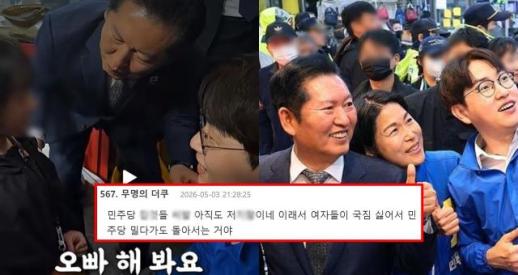 Online backlash after Democratic Party leader urges schoolgirl to call candidate 'oppa' in Busan race Online communities erupted with criticism after Jung Cheong-rae, leader of the Democratic Party, urged a first-grade elementary school girl to call Ha Jung-woo — a candidate in the Busan Buk-gu Gap parliamentary by-election — “oppa,” a Korean term often used by younger women to address an older brother or an older male. Posts about the incident spread across multiple online forums on May 4, with commenters accusing Jung of crossing a line and calling for him to step down. One poster, identified as A, wrote, “For reference, Jung Cheong-rae (born 1965 — age 61), Ha Jung-woo (born 1977 — age 48),” and added, “Didn’t Jung’s own son cause trouble at school over a sex-related issue? Like father, like son ... no reflection?” Another commenter, B, wrote, “At this point, it makes sense why sex-related incidents keep happening in the Democratic Party,” adding that if Jung acted that way “in front of lots of cameras,” he would likely “habitually sexually harass” staff or aides. Other comments included, “He’s lost it,” “This really crossed the line,” and calls for Jung to resign as party leader. Some posts used crude, derogatory nicknames for the party. The article noted that much of the negative reaction appeared in women-dominated online communities that are generally considered favorable terrain for the Democratic Party, with many users urging Jung to resign. Jung drew the backlash after campaigning on May 3 in the Busan Buk-gu area, including Gupo Market, to rally support for Ha. During the visit, Jung told a girl who appeared to be in the lower grades of elementary school, “Here’s Jung-woo oppa — say ‘oppa.’” Ha, seated in front of the child, pointed to himself and echoed the term, calling himself “oppa.” When the girl looked around, Jung again pressed her to say it. After she responded quietly, Jung clapped and said, “Oh my.” As the video spread online, People Power Party lawmaker Park Jung-hoon wrote on Facebook the same day that telling an elementary school student to call a politician more than 40 years older “oppa” was “clear sexual harassment of a child.” Park added, “That someone like this is the leader of the ruling party is the laughably sad reality of Korean politics.” Park also criticized Ha, saying the candidate was “just as pathetic” for smiling and playing along. People Power Party lawmaker Sung Il-jong also wrote on Facebook that it was “embarrassing” to see “62-year-old leader Jung Cheong-rae and 50-year-old candidate Ha Jung-woo” pressuring a first-grade girl to call them “oppa.” He said the two repeatedly urging the hesitant child was “no different from a form of child abuse.” Sung added that the child likely felt uncomfortable being made to address someone “presumed to be much older than her father,” and asked whether it was acceptable to cause a young child distress “no matter how desperate they are for votes.” The Democratic Party said on May 3 that Jung expressed regret, saying he was sorry to the child and her parents because the child “ended up at the center of controversy” during the market visit. Ha also apologized the previous day, saying that while meeting residents, the child became the focus of the controversy. “I offer my apologies to the child and the parents who may have been hurt,” he said, adding that he would be more careful and meet residents with a “low and humble” attitude.* This article has been translated by AI. 2026-05-05 16:18:16
 -
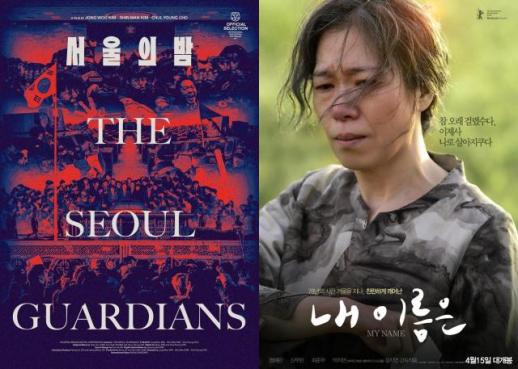 Korean Films Win Top Honors at Italy’s Udine Far East Film Festival Korean films “Seoul at Night” and “My Name Is” won awards at Italy’s Udine Far East Film Festival (FEFF), Europe’s largest Asian film festival. Both works drew attention for confronting painful chapters of modern Korean history and earning support from audiences and critics. At the 28th FEFF, which ended on May 2 (local time), the MBC-produced documentary film “Seoul at Night,” directed by Kim Jong-woo, Kim Shin-wan and Jo Cheol-young, received the Black Dragon Audience Award, selected by critics and the media. The award is given by festival officials to only one film; this year it was shared with the Japanese film “Fujiko.” “Seoul at Night” also won the Silver Mulberry Audience Award, which corresponds to second place in the general audience vote, and received a jury special mention for the White Mulberry Award for new directors, making it a triple winner. The film covers the tense situation at the National Assembly immediately after the declaration of martial law on Dec. 3, 2024. It was the first documentary to enter the festival’s competition section and went on to take major honors. It previously won the Bill Nemtin Award at Hot Docs in Toronto, North America’s largest documentary film festival, which recognizes works credited with spurring social change. Director Jeong Ji-young’s new film “My Name Is” won an Audience Mulberry Award, drawing a strong response from local viewers. The film directly addresses the Jeju April 3 incident, a tragedy in modern Korean history, and was praised for building emotional resonance across language and cultural barriers. Executive Director Sabrina Baracetti said the film “kept a balanced tone based on real events and drew empathy from audiences worldwide,” and also praised the performances of actors Yeom Hye-ran and Shin Woo-bin. In the competition section, six Korean films were invited, including “Seoul at Night” and “My Name Is,” as well as Jang Hang-jun’s “The Man Who Lives With the King,” Kim Tae-yong’s “Number One,” Kim Do-young’s “If We,” and Yoon Ga-eun’s “Owner of the World.”* This article has been translated by AI. 2026-05-05 16:09:21
 -
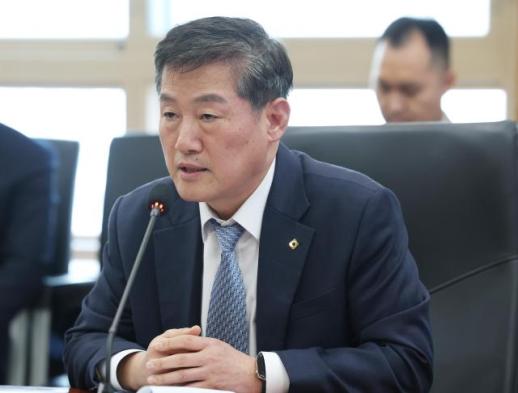 Credit Finance Association to Open Applications for Next Chair Starting May 6 The Credit Finance Association will begin recruiting candidates on May 6 as it moves into full-scale preparations to select its next chair, financial industry officials said. The appointment could be finalized as early as June. According to the financial sector on May 5, the association held a board meeting the previous day and approved in writing a plan to form its chair nomination committee. The committee will have 15 members: 14 representatives from member companies — seven from card issuers and seven from capital companies — plus one auditor. The committee will be chaired by Seong Young-su, CEO of Hana Card. The association plans to post the election notice on May 6 and accept applications through May 19. It will narrow the field through a document review on May 27. On June 4, candidates will be interviewed and committee members will hold a secret ballot. If the vote produces a single nominee, the nominee will be confirmed through a general meeting and must win a majority vote to be formally appointed chair. If the nominee comes from the private sector, the process is expected to conclude at a general meeting in June. If the nominee is a public official, the association is expected to hold a general meeting in July because the candidate must undergo an employment review under the Public Service Ethics Act. The association has been led by an acting chair for more than seven months since the term of Chair Jeong Wan-gyu ended in October last year. The delay is attributed to uncertainty in senior government personnel schedules amid discussions on reorganizing financial authorities, along with the expiration of terms for some member company CEOs, officials said. Industry officials say the sector needs a leader who can convey to the government and the National Assembly the challenges facing the industry amid fee and lending regulations. Names mentioned include Seo Tae-jong, former head of the Korea Financial Training Institute, and Kim Geun-ik, former chief of the Korea Exchange market surveillance committee. Private-sector names include Lee Dong-cheol, former vice chairman of KB Financial Group, and Woo Sang-hyeon, former vice president of BC Card. In academia, Kim Sang-bong, an economics professor at Hansung University, has also been cited.* This article has been translated by AI. 2026-05-05 16:05:31
 -
 KOSPI Nears 7,000 as Short-Selling Balances Top 20 Trillion Won, Up 36% in a Month As South Korea’s benchmark KOSPI pushes toward the 7,000 mark, short-selling balances have climbed rapidly, adding to investor caution. Short positions have stayed above 20 trillion won for three consecutive trading sessions, holding near record levels. According to the Korea Exchange on Monday, net short-selling balances in the KOSPI market totaled 20.1086 trillion won as of April 29. That was up 36.5% from 14.7313 trillion won at the end of March. The balance first topped 20 trillion won on April 27 at 20.5083 trillion won, then remained above that level on April 28 (20.3887 trillion won) and April 29. While slightly below the peak, it remains elevated. As of April 29, Hyundai Motor had the largest net short position at 1.9531 trillion won. It was followed by Hanmi Semiconductor (1.9276 trillion won), HD Hyundai Heavy Industries (1.6839 trillion won), Mirae Asset Securities (936.6 billion won), POSCO Future M (758.7 billion won), Korea Aerospace Industries (537.2 billion won), Samyang Foods (453.4 billion won), Hanwha Systems (449.8 billion won), Daewoo Engineering & Construction (374.5 billion won) and Hyundai Engineering & Construction (334.2 billion won). Short selling is a strategy in which investors borrow shares and sell them, then buy them back later to return the shares, aiming to profit if the price falls. A rise in short-selling balances is often read as reflecting expectations of a decline or increased hedging demand. The latest surge is widely seen as a move to brace for a short-term pullback after the KOSPI’s steady rally. The index on the previous trading day rose above 6,800 intraday for the first time and climbed as high as 6,900, leaving it 63.01 points short of 7,000. Still, brokerages have continued to emphasize further upside. Samsung Securities raised its year-end KOSPI ceiling to 8,400 points. Daishin Securities set a first-half target of 7,500, and Kiwoom Securities projected an upper range of 7,200 for this month. Lee Kyung-min, a researcher at Daishin Securities, said valuation pressure remains limited even as the market hits fresh highs. He said the KOSPI’s 12-month forward price-to-earnings ratio stood at 7.12 as of April 30, “still in undervalued territory.” He added that 12-month forward earnings per share rose to 926.8 points at the end of April from 666.6 points at the end of March, and said that given upward revisions to earnings forecasts, “there is still ample room for further gains.”* This article has been translated by AI. 2026-05-05 16:04:40
 -
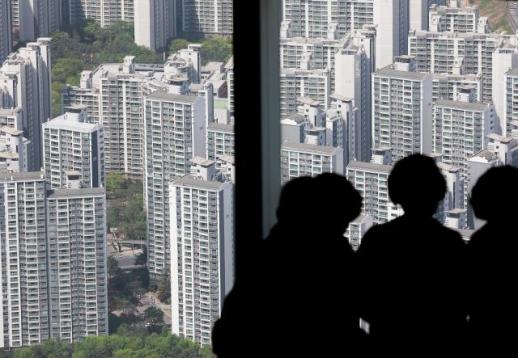 Seoul Area Jeonse Supply-Demand Imbalance Hits Worst Level in Five Years The jeonse rental market in the Seoul metropolitan area is showing a supply-demand imbalance approaching the level seen during the 2020 jeonse crisis. With Seoul’s jeonse supply-demand index at its worst level in five years, more households unable to secure leases are shifting to buying midpriced homes in Seoul or apartments in nearby Gyeonggi Province. According to KB Real Estate statistics released on the 5th, the monthly jeonse supply-demand index for the capital area (Seoul, Gyeonggi and Incheon) stood at 176.8 last month, the highest since August 2021 (179.1). Incheon posted 181.4, its highest since October 2021, while Gyeonggi came in at 175.1, reaching a critical level for the first time in 56 months since August 2021. In Seoul, the index for the city’s 14 northern districts rose to 187.2 last month, the highest since November 2020 (190.7), a 65-month high. The shortage is also visible in listings. Asil data show that the Boram Apartments complex in Sanggye-dong, Nowon-gu, with about 3,315 households, had zero jeonse listings as of that day. A local broker said the remaining listings — fewer than five — were all taken by the end of last month. SK Bukhansan City in Gangbuk-gu, a 3,830-household complex, had only two registered jeonse listings. The article attributes the decline in rental supply to tighter owner-occupancy requirements after the Oct. 15 measures, which designated all of Seoul as a land transaction permit zone. Jeonse prices are rising quickly. KB Real Estate data show the average jeonse deposit for Seoul apartments reached 681.47 million won last month, the highest since the series began. Gangbuk-gu’s jeonse price increase in April was 3.86%, a record. Seongbuk-gu (1.86%), Seongdong-gu (1.32%) and Gwanak-gu (1.31%) also posted monthly gains of more than 1%. The squeeze is accelerating a shift from jeonse demand to homebuying in nearby Gyeonggi cities. In March, sale prices jumped in Anyang’s Dongan-gu (up 2.73%), Gwangmyeong (up 2.65%) and Hanam (up 2.40%). The article says the dominant view is that the surge reflects “survival buying” by end users fleeing the rental crunch, rather than pure investment demand. Despite concerns in the market, the government struck an optimistic tone. Kim Yong-beom, the presidential office’s policy chief, said at a briefing on the 4th that it was “highly unusual” to see prices falling in the so-called “warm spots” such as Seoul’s three Gangnam districts and Yongsan, calling it evidence the market is moving toward normalization. He added that rising prices in outlying areas were not a major concern because apartments priced under 1.5 billion won are seeing substantial purchases by younger end users. The government also said it would maintain the long-term holding special deduction while considering a redesign focused on actual occupancy, a move intended to reduce benefits for periods when owners do not live in the home. Some observers warned it could further reduce rental listings. Nam Hyeok-woo of Woori Bank’s Real Estate Research Center said supply conditions, including the availability of jeonse and monthly-rent listings, have an outsized impact on the midpriced market. “The price strength now seen in Seoul’s lower- and mid-tier areas will spread to nearby Gyeonggi areas where rental listings are also scarce,” he said, urging policymakers to consider measures to expand non-apartment supply, including increased purchases of non-apartment housing.* This article has been translated by AI. 2026-05-05 16:03:15