
Journalist

Lee Hugh
=
-
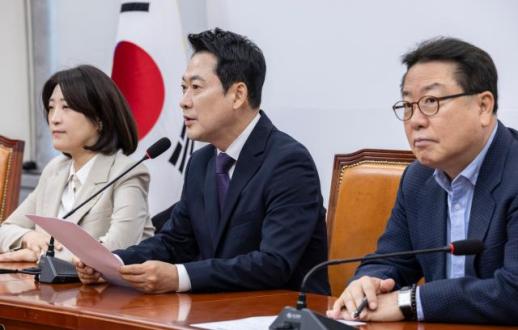 South Korean Opposition Blasts Proposed Special Counsel With Power to Drop Charges Opposition parties including the People Power Party and the New Reform Party on May 5 stepped up attacks on a bill to appoint a special counsel to investigate allegations of “fabricated investigations and fabricated prosecutions” under the Yoon Suk Yeol administration. They criticized President Lee Jae-myung’s comments a day earlier that the issue requires public input and deliberation, arguing he was seeking to delay action until after the June 3 local elections. People Power Party leader Jang Dong-hyeok told a news conference at the National Assembly that Lee was not only adopting “every method used by dictators around the world to control the judiciary,” but also seeking to appoint a special counsel himself “to erase crimes.” He said Lee was writing a “dictator’s guidebook” that would “remain in world history.” Jang also said Lee’s stance amounted to canceling indictments “but trying to push back the timing,” adding that “something unconstitutional does not become constitutional just because the local elections pass.” People Power Party floor leader Song Eon-seok wrote on Facebook that Lee had defined the “indictment-cancellation special counsel” as something that “must be done.” Song said Lee should say “I will not cancel indictments,” not call for deliberation on timing and procedure. He vowed to block what he called an attempted “judicial coup” through indictment cancellations. People Power Party candidates for metropolitan and provincial governor posts also held an emergency news conference in front of Bosingak pavilion in central Seoul, calling the bill “a serious act that destroys the rule of law” and “directly undermines the constitutional order.” In a statement, candidates including Seoul mayoral candidate Oh Se-hoon, Incheon mayoral candidate Yoo Jeong-bok and Gyeonggi gubernatorial candidate Yang Hyang-ja demanded that the bill be withdrawn; that Lee declare, “There will be no indictment cancellations, and I will stand trial according to law and principle”; and that Democratic Party candidates for those posts state whether they support the bill. The New Reform Party also labeled the bill a “judicial coup.” Party leader Lee Jun-seok wrote on Facebook a day earlier that the president likely knows why he cannot bring himself to say, “Don’t do it.” Lee said the opposition must secure not a vague timetable but a clear declaration that the plan is being abandoned. He also shared information about a signature campaign opposing the proposal. The party’s chief spokesperson, Lee Dong-hoon, said in a statement May 5 that he could not help but laugh at what he called a “shallow calculation” to “cover the public’s eyes and just get past the local elections.” He said a law that shakes the foundation of separation of powers should be “scrapped immediately,” not slowed down. New Reform Party candidates Cho Eung-cheon for Gyeonggi governor and Kim Jeong-cheol for Seoul mayor met a day earlier with People Power Party candidates from the Seoul metropolitan area to coordinate opposition to the bill. The Democratic Party introduced the special counsel bill on April 30, saying it aimed to uncover alleged abuses of prosecutorial power tied to cases including the Ssangbangwool remittances to North Korea case and allegations of corruption in the Daejang-dong, Wirye and Baekhyeon-dong development projects. Under the bill, a special counsel could take over designated cases and decide whether to file charges or maintain prosecutions. Opposition parties argue the special counsel would take over cases in which Lee is a suspect and attempt to cancel indictments. They say the legislature and executive branch would be using the special counsel to infringe on judicial independence and threaten separation of powers. Democratic Party leader Jeong Cheong-rae told reporters in Dongducheon, Gyeonggi Province, after a public outreach event that if a strict special counsel investigation proves prosecutions were fabricated, defendants who suffered from that fabrication “should of course be relieved.” He said the question of when to proceed would be decided by gathering the views of the public, party members and lawmakers to make the best choice.* This article has been translated by AI. 2026-05-05 16:22:28
 -
 US Treasury chief urges China to press Iran to reopen Strait of Hormuz The United States is publicly pressing China to help end the blockage of the Strait of Hormuz ahead of a U.S.-China summit. The New York Times reported that Treasury Secretary Scott Bessent said in a Fox News interview on Sunday that he was urging China to join what he called an international effort and to use diplomacy to persuade Iran to reopen the strait. “Iran is the largest state sponsor of terror, and China has been buying 90% of Iran’s energy, so it is effectively funding the largest state sponsor of terror,” Bessent said. Bessent also highlighted the U.S.-led maritime operation, saying, “We have full control of the strait.” He said the United States is demanding that Iran release the ships “for the benefit of the international community,” and he added that Washington expects international partners to engage similarly and that it is “the right time” for them to pressure Iran. He said the United States is returning fire only if attacked and “is not the side provoking,” but added that if Iran seeks to escalate, the United States is prepared to respond. The remarks came about a week before a summit between President Donald Trump and Chinese President Xi Jinping, and were widely seen as a pointed public message to Beijing. The United States has recently tightened sanctions targeting China. The State Department and Treasury Department last month sanctioned the Chinese refining company Hengli Group over imports of Iranian crude. On May 1, the United States added sanctions on operators tied to a “shadow fleet” linked to Iran’s petroleum product exports. Treasury also sanctioned three Iranian exchange houses and related front companies accused of brokering foreign-exchange transactions worth billions of dollars a year, cutting off financial dealings. The groups are suspected of converting yuan flowing in from China into other currencies that could be repurposed for military funding. China has pushed back against U.S. sanctions on its companies, signaling it opposes compliance. The U.S. pressure campaign over Iran has also raised concerns it could reignite tensions between Washington and Beijing. Strategic competition has continued, including China’s decision last month to bar investment in Meta’s AI company Manus and to demand the acquisition be withdrawn. On oil prices, Bessent said he understands that a short-term spike is affecting Americans, but predicted prices would fall “very quickly” once the situation passes. He estimated the Iran war has reduced oil supply by about 8 million to 10 million barrels a day. He said a tanker passing through the Strait of Hormuz can carry about 2 million barrels, and that normal passage of just four to five ships a day could ease the disruption. Given current conditions, he said “150 to 200” ships that had been stuck could get out, adding that the market would see supply flow much more smoothly. He also said the United Arab Emirates, which has left the Organization of the Petroleum Exporting Countries, is expected to increase oil production, which he said would further support supply.* This article has been translated by AI. 2026-05-05 16:21:20
 -
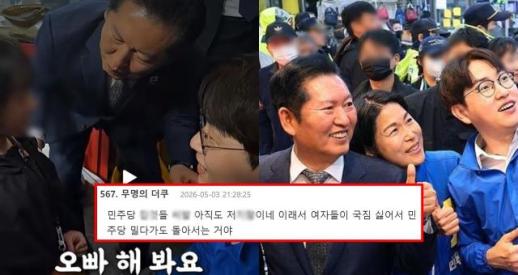 Online backlash after Democratic Party leader urges schoolgirl to call candidate 'oppa' in Busan race Online communities erupted with criticism after Jung Cheong-rae, leader of the Democratic Party, urged a first-grade elementary school girl to call Ha Jung-woo — a candidate in the Busan Buk-gu Gap parliamentary by-election — “oppa,” a Korean term often used by younger women to address an older brother or an older male. Posts about the incident spread across multiple online forums on May 4, with commenters accusing Jung of crossing a line and calling for him to step down. One poster, identified as A, wrote, “For reference, Jung Cheong-rae (born 1965 — age 61), Ha Jung-woo (born 1977 — age 48),” and added, “Didn’t Jung’s own son cause trouble at school over a sex-related issue? Like father, like son ... no reflection?” Another commenter, B, wrote, “At this point, it makes sense why sex-related incidents keep happening in the Democratic Party,” adding that if Jung acted that way “in front of lots of cameras,” he would likely “habitually sexually harass” staff or aides. Other comments included, “He’s lost it,” “This really crossed the line,” and calls for Jung to resign as party leader. Some posts used crude, derogatory nicknames for the party. The article noted that much of the negative reaction appeared in women-dominated online communities that are generally considered favorable terrain for the Democratic Party, with many users urging Jung to resign. Jung drew the backlash after campaigning on May 3 in the Busan Buk-gu area, including Gupo Market, to rally support for Ha. During the visit, Jung told a girl who appeared to be in the lower grades of elementary school, “Here’s Jung-woo oppa — say ‘oppa.’” Ha, seated in front of the child, pointed to himself and echoed the term, calling himself “oppa.” When the girl looked around, Jung again pressed her to say it. After she responded quietly, Jung clapped and said, “Oh my.” As the video spread online, People Power Party lawmaker Park Jung-hoon wrote on Facebook the same day that telling an elementary school student to call a politician more than 40 years older “oppa” was “clear sexual harassment of a child.” Park added, “That someone like this is the leader of the ruling party is the laughably sad reality of Korean politics.” Park also criticized Ha, saying the candidate was “just as pathetic” for smiling and playing along. People Power Party lawmaker Sung Il-jong also wrote on Facebook that it was “embarrassing” to see “62-year-old leader Jung Cheong-rae and 50-year-old candidate Ha Jung-woo” pressuring a first-grade girl to call them “oppa.” He said the two repeatedly urging the hesitant child was “no different from a form of child abuse.” Sung added that the child likely felt uncomfortable being made to address someone “presumed to be much older than her father,” and asked whether it was acceptable to cause a young child distress “no matter how desperate they are for votes.” The Democratic Party said on May 3 that Jung expressed regret, saying he was sorry to the child and her parents because the child “ended up at the center of controversy” during the market visit. Ha also apologized the previous day, saying that while meeting residents, the child became the focus of the controversy. “I offer my apologies to the child and the parents who may have been hurt,” he said, adding that he would be more careful and meet residents with a “low and humble” attitude.* This article has been translated by AI. 2026-05-05 16:18:16
 -
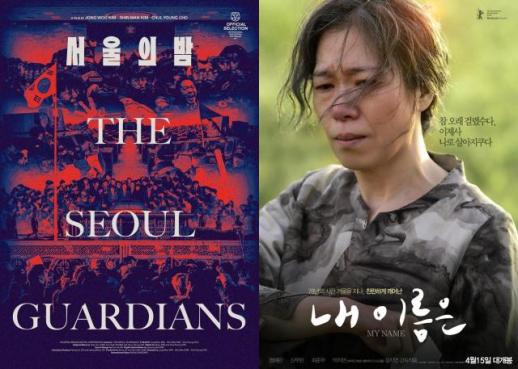 Korean Films Win Top Honors at Italy’s Udine Far East Film Festival Korean films “Seoul at Night” and “My Name Is” won awards at Italy’s Udine Far East Film Festival (FEFF), Europe’s largest Asian film festival. Both works drew attention for confronting painful chapters of modern Korean history and earning support from audiences and critics. At the 28th FEFF, which ended on May 2 (local time), the MBC-produced documentary film “Seoul at Night,” directed by Kim Jong-woo, Kim Shin-wan and Jo Cheol-young, received the Black Dragon Audience Award, selected by critics and the media. The award is given by festival officials to only one film; this year it was shared with the Japanese film “Fujiko.” “Seoul at Night” also won the Silver Mulberry Audience Award, which corresponds to second place in the general audience vote, and received a jury special mention for the White Mulberry Award for new directors, making it a triple winner. The film covers the tense situation at the National Assembly immediately after the declaration of martial law on Dec. 3, 2024. It was the first documentary to enter the festival’s competition section and went on to take major honors. It previously won the Bill Nemtin Award at Hot Docs in Toronto, North America’s largest documentary film festival, which recognizes works credited with spurring social change. Director Jeong Ji-young’s new film “My Name Is” won an Audience Mulberry Award, drawing a strong response from local viewers. The film directly addresses the Jeju April 3 incident, a tragedy in modern Korean history, and was praised for building emotional resonance across language and cultural barriers. Executive Director Sabrina Baracetti said the film “kept a balanced tone based on real events and drew empathy from audiences worldwide,” and also praised the performances of actors Yeom Hye-ran and Shin Woo-bin. In the competition section, six Korean films were invited, including “Seoul at Night” and “My Name Is,” as well as Jang Hang-jun’s “The Man Who Lives With the King,” Kim Tae-yong’s “Number One,” Kim Do-young’s “If We,” and Yoon Ga-eun’s “Owner of the World.”* This article has been translated by AI. 2026-05-05 16:09:21
 -
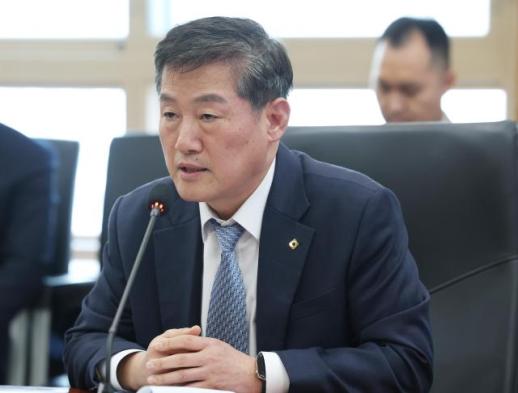 Credit Finance Association to Open Applications for Next Chair Starting May 6 The Credit Finance Association will begin recruiting candidates on May 6 as it moves into full-scale preparations to select its next chair, financial industry officials said. The appointment could be finalized as early as June. According to the financial sector on May 5, the association held a board meeting the previous day and approved in writing a plan to form its chair nomination committee. The committee will have 15 members: 14 representatives from member companies — seven from card issuers and seven from capital companies — plus one auditor. The committee will be chaired by Seong Young-su, CEO of Hana Card. The association plans to post the election notice on May 6 and accept applications through May 19. It will narrow the field through a document review on May 27. On June 4, candidates will be interviewed and committee members will hold a secret ballot. If the vote produces a single nominee, the nominee will be confirmed through a general meeting and must win a majority vote to be formally appointed chair. If the nominee comes from the private sector, the process is expected to conclude at a general meeting in June. If the nominee is a public official, the association is expected to hold a general meeting in July because the candidate must undergo an employment review under the Public Service Ethics Act. The association has been led by an acting chair for more than seven months since the term of Chair Jeong Wan-gyu ended in October last year. The delay is attributed to uncertainty in senior government personnel schedules amid discussions on reorganizing financial authorities, along with the expiration of terms for some member company CEOs, officials said. Industry officials say the sector needs a leader who can convey to the government and the National Assembly the challenges facing the industry amid fee and lending regulations. Names mentioned include Seo Tae-jong, former head of the Korea Financial Training Institute, and Kim Geun-ik, former chief of the Korea Exchange market surveillance committee. Private-sector names include Lee Dong-cheol, former vice chairman of KB Financial Group, and Woo Sang-hyeon, former vice president of BC Card. In academia, Kim Sang-bong, an economics professor at Hansung University, has also been cited.* This article has been translated by AI. 2026-05-05 16:05:31
 -
 KOSPI Nears 7,000 as Short-Selling Balances Top 20 Trillion Won, Up 36% in a Month As South Korea’s benchmark KOSPI pushes toward the 7,000 mark, short-selling balances have climbed rapidly, adding to investor caution. Short positions have stayed above 20 trillion won for three consecutive trading sessions, holding near record levels. According to the Korea Exchange on Monday, net short-selling balances in the KOSPI market totaled 20.1086 trillion won as of April 29. That was up 36.5% from 14.7313 trillion won at the end of March. The balance first topped 20 trillion won on April 27 at 20.5083 trillion won, then remained above that level on April 28 (20.3887 trillion won) and April 29. While slightly below the peak, it remains elevated. As of April 29, Hyundai Motor had the largest net short position at 1.9531 trillion won. It was followed by Hanmi Semiconductor (1.9276 trillion won), HD Hyundai Heavy Industries (1.6839 trillion won), Mirae Asset Securities (936.6 billion won), POSCO Future M (758.7 billion won), Korea Aerospace Industries (537.2 billion won), Samyang Foods (453.4 billion won), Hanwha Systems (449.8 billion won), Daewoo Engineering & Construction (374.5 billion won) and Hyundai Engineering & Construction (334.2 billion won). Short selling is a strategy in which investors borrow shares and sell them, then buy them back later to return the shares, aiming to profit if the price falls. A rise in short-selling balances is often read as reflecting expectations of a decline or increased hedging demand. The latest surge is widely seen as a move to brace for a short-term pullback after the KOSPI’s steady rally. The index on the previous trading day rose above 6,800 intraday for the first time and climbed as high as 6,900, leaving it 63.01 points short of 7,000. Still, brokerages have continued to emphasize further upside. Samsung Securities raised its year-end KOSPI ceiling to 8,400 points. Daishin Securities set a first-half target of 7,500, and Kiwoom Securities projected an upper range of 7,200 for this month. Lee Kyung-min, a researcher at Daishin Securities, said valuation pressure remains limited even as the market hits fresh highs. He said the KOSPI’s 12-month forward price-to-earnings ratio stood at 7.12 as of April 30, “still in undervalued territory.” He added that 12-month forward earnings per share rose to 926.8 points at the end of April from 666.6 points at the end of March, and said that given upward revisions to earnings forecasts, “there is still ample room for further gains.”* This article has been translated by AI. 2026-05-05 16:04:40
 -
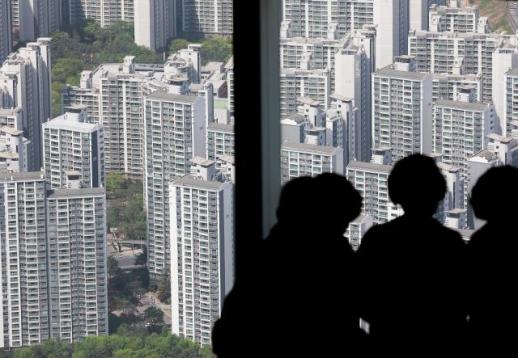 Seoul Area Jeonse Supply-Demand Imbalance Hits Worst Level in Five Years The jeonse rental market in the Seoul metropolitan area is showing a supply-demand imbalance approaching the level seen during the 2020 jeonse crisis. With Seoul’s jeonse supply-demand index at its worst level in five years, more households unable to secure leases are shifting to buying midpriced homes in Seoul or apartments in nearby Gyeonggi Province. According to KB Real Estate statistics released on the 5th, the monthly jeonse supply-demand index for the capital area (Seoul, Gyeonggi and Incheon) stood at 176.8 last month, the highest since August 2021 (179.1). Incheon posted 181.4, its highest since October 2021, while Gyeonggi came in at 175.1, reaching a critical level for the first time in 56 months since August 2021. In Seoul, the index for the city’s 14 northern districts rose to 187.2 last month, the highest since November 2020 (190.7), a 65-month high. The shortage is also visible in listings. Asil data show that the Boram Apartments complex in Sanggye-dong, Nowon-gu, with about 3,315 households, had zero jeonse listings as of that day. A local broker said the remaining listings — fewer than five — were all taken by the end of last month. SK Bukhansan City in Gangbuk-gu, a 3,830-household complex, had only two registered jeonse listings. The article attributes the decline in rental supply to tighter owner-occupancy requirements after the Oct. 15 measures, which designated all of Seoul as a land transaction permit zone. Jeonse prices are rising quickly. KB Real Estate data show the average jeonse deposit for Seoul apartments reached 681.47 million won last month, the highest since the series began. Gangbuk-gu’s jeonse price increase in April was 3.86%, a record. Seongbuk-gu (1.86%), Seongdong-gu (1.32%) and Gwanak-gu (1.31%) also posted monthly gains of more than 1%. The squeeze is accelerating a shift from jeonse demand to homebuying in nearby Gyeonggi cities. In March, sale prices jumped in Anyang’s Dongan-gu (up 2.73%), Gwangmyeong (up 2.65%) and Hanam (up 2.40%). The article says the dominant view is that the surge reflects “survival buying” by end users fleeing the rental crunch, rather than pure investment demand. Despite concerns in the market, the government struck an optimistic tone. Kim Yong-beom, the presidential office’s policy chief, said at a briefing on the 4th that it was “highly unusual” to see prices falling in the so-called “warm spots” such as Seoul’s three Gangnam districts and Yongsan, calling it evidence the market is moving toward normalization. He added that rising prices in outlying areas were not a major concern because apartments priced under 1.5 billion won are seeing substantial purchases by younger end users. The government also said it would maintain the long-term holding special deduction while considering a redesign focused on actual occupancy, a move intended to reduce benefits for periods when owners do not live in the home. Some observers warned it could further reduce rental listings. Nam Hyeok-woo of Woori Bank’s Real Estate Research Center said supply conditions, including the availability of jeonse and monthly-rent listings, have an outsized impact on the midpriced market. “The price strength now seen in Seoul’s lower- and mid-tier areas will spread to nearby Gyeonggi areas where rental listings are also scarce,” he said, urging policymakers to consider measures to expand non-apartment supply, including increased purchases of non-apartment housing.* This article has been translated by AI. 2026-05-05 16:03:15
 -
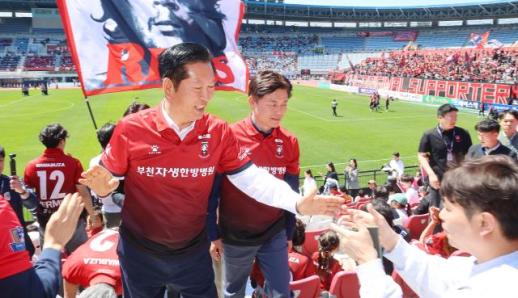 Jung Cheong-rae says timing of special counsel bill will follow public, party input Jung Cheong-rae, leader of the Democratic Party, said Monday the party will decide when to move a bill calling for a special counsel to probe alleged manipulated investigations and indictments under the Yoon Suk Yeol government after gathering views from the public, party members and lawmakers. Jung spoke to reporters after a visit to Dongducheon Big Market in Dongducheon, Gyeonggi Province. He said the party should coordinate with the presidential office, noting that on May 4 President Lee Jae-myung asked the party to determine the timing after collecting public opinion and holding deliberations. “Since the presidential office has stated its position, the party will also decide what to do by collecting lawmakers’ views through a caucus meeting and asking party members,” Jung said. At the same time, Jung reiterated his push to hold what he called “political prosecutors” accountable for actions taken under the Yoon administration and said Lee should be relieved through a special counsel probe. “If, under the Yoon Suk Yeol government, they were obsessed with taking down political opponents and suppressing the opposition and tried to indict and punish people with falsehoods or fabrication, that itself is a crime,” Jung said. He added that the Ssangbangwool remittances-to-North-Korea case and the Daejang-dong case involving Lee were “clearly” fabricated indictments and said “the victim should, of course, be given relief.”* This article has been translated by AI. 2026-05-05 16:00:13
 -
 Samsung Biologics union to shift from strike to open-ended work-to-rule campaign The Samsung Biologics labor union is ending a five-day, full-scale strike that began May 1 and will return to worksites on May 6, shifting to an open-ended work-to-rule campaign. The union is also said to be weighing an extension of the strike, raising the possibility of a prolonged dispute if an agreement is not reached soon. Industry officials said May 5 that labor and management plan to resume talks with a one-on-one meeting on May 6 between a human resources executive and the union chair, followed by a tripartite meeting on May 8 with the Labor Ministry participating. With the sides far apart, however, many in the industry say a deal remains uncertain, fueling concerns that production disruptions and losses totaling several hundred billion won could become reality. The two sides held their first tripartite meeting at 10:15 a.m. the previous day for about two hours but only confirmed their differences. They later met separately with the Labor Ministry, but did not produce additional agenda items or a concrete path forward. In a statement, the union said management asked both sides to halt all forms of labor action and to mutually withdraw legal disputes, including allegations of unfair labor practices. The union said it refused, arguing it would only lower the level of action without gaining anything in return. The union launched the company’s first full-scale strike since Samsung Biologics was founded in 2011, starting on Labor Day, May 1. Estimated losses so far are about 150 billion won to 300 billion won. If the stoppage continues, projected losses from production disruptions could reach about 640 billion won, according to estimates cited in the industry. Ahead of the planned May 1 strike, the union also abruptly halted work in some processes starting April 28. That stoppage reportedly froze a key aliquoting process, triggering knock-on disruptions across production lines and disrupting process flow. The company has reportedly selected which products to keep producing and discarded some products that were deemed likely to deteriorate. As a result, production has already been disrupted for products including cancer drugs, medicines related to human immunodeficiency virus, or HIV, and treatments for atopic dermatitis, according to the report. An industry official said biologic drugs can require an entire batch to be discarded if even one step is delayed, amplifying losses. A major sticking point is the union’s demand that the collective bargaining agreement require prior union consent for key management matters such as hiring, performance evaluations and mergers and acquisitions. The company has maintained that such provisions are difficult to accept because they directly affect management and personnel authority, viewing them as an infringement on management rights. A business community official warned that requiring prior union consent for M&A or major staffing decisions could undermine management’s ability to make decisions for future growth and could ultimately leave the company less competitive. The union plans to return to work starting the afternoon of May 6 but begin an open-ended work-to-rule campaign by refusing overtime and holiday work. It has also signaled it could launch a second strike if no agreement is reached. An industry official said the risks extend beyond direct losses from halted production, citing potential penalties for contract nonperformance, heightened scrutiny from regulators and customers switching to alternatives. The official added that in the global contract development and manufacturing organization, or CDMO, market, fast-following competitors are closing in, and delayed decision-making could cost orders. The official also said the strike risk, emerging amid an international environment of strengthening U.S. protectionism, could increase the chance of competitors benefiting at Samsung Biologics’ expense. 2026-05-05 15:49:14
 -
 South Koreans’ Crypto Holdings Halve in a Year as Stablecoin Holdings Double South Korean investors’ crypto holdings and trading volume have dropped by more than 60 trillion won over about a year, while stablecoin holdings moved in the opposite direction, more than doubling. The shift is widely attributed to money moving into a strong stock market and to a preference for dollar-linked assets amid a weak won. Data the Bank of Korea submitted on Monday to Rep. Cha Gyu-geun of the Rebuilding Korea Party, a member of the National Assembly’s Planning and Finance Committee, showed domestic crypto holdings totaled 60.6 trillion won as of the end of February. The figure sums investors’ assets at month-end market prices across the country’s five major crypto exchanges: Upbit, Bithumb, Korbit, Coinone and Gopax. Holdings surged from 50.6 trillion won in August 2024 to a peak of 121.8 trillion won in January last year, when U.S. President Donald Trump took office. They have since fallen to less than half that level in 1 year and 1 month. Average daily trading value also declined. It rose from 2.7 trillion won in August 2024 to 17.1 trillion won at the end of December that year, but stood at about 4.5 trillion won in February. Won-denominated deposits on exchanges, often seen as funds waiting to be invested, fell to 7.8 trillion won in February from 10.7 trillion won at the end of December 2024. The decline was attributed to a combination of a buoyant domestic stock market drawing investment funds and falling crypto prices. Stablecoin holdings, however, increased. They rose from 88.5 billion won at the end of July 2024 to a peak of 872.3 billion won at the end of December last year. The total eased to 607.1 billion won in February, but was still about 2.2 times the level in January last year (278.2 billion won). Industry officials pointed to stronger demand for dollar-based assets amid a high exchange rate. Kim Min-seung, head of Korbit’s research center, said fluctuations in the won-dollar exchange rate appeared to have influenced demand for stablecoin investments. He added that with most coins weakening on overseas exchanges, funds that had moved abroad may also have returned to the domestic market. * This article has been translated by AI. 2026-05-05 15:48:17