
Journalist

Lee Hugh
=
-
 Hyundai Casper Electric Tops Auto Bild’s Small EV Comparison in Germany Hyundai Motor said on 23 that its Casper Electric (Inster) won a small electric vehicle comparison test by Germany’s automotive magazine Auto Bild, finishing first in every category. Auto Bild scored the vehicles on a 800-point system across seven areas: body, convenience, powertrain, driving performance, connectivity, environmental impact and cost efficiency. The Casper Electric led all seven categories and scored 558 points, well ahead of the BYD Dolphin Surf (503) and the Citroen e-C3 (501). Auto Bild cited the Casper Electric’s strong power-consumption efficiency as a key advantage in the powertrain category. In Auto Bild’s real-world driving test, the Casper Electric posted an average measured efficiency of 6.71 kilometers per kilowatt-hour, about 20% to 30% higher than the e-C3 (5.49 km/kWh) and Dolphin Surf (5.10 km/kWh). Based on that measured consumption, its calculated real-world range was 308 kilometers, compared with 241 kilometers for the e-C3 and 253 kilometers for the Dolphin Surf. Hyundai also pointed to space use as a differentiator. In the body category’s versatility assessment, the Casper Electric scored 8 points, while the two rivals each scored 2. Auto Bild credited features including a sliding second-row seat and a fully folding front passenger seat, which allow the cabin to be reconfigured for passengers or cargo. The Casper Electric’s braking distance from 100 kph to a stop was 35.8 meters, up to about 3 meters shorter than competing models, Hyundai said. Combined with precise steering, it earned the top score in the driving-performance category. Hyundai said the Casper Electric sold 9,447 units in Europe’s A-segment EV market in the first quarter, up 66% from a year earlier, keeping it among the segment’s leaders. “It is meaningful that the model not only ranked first overall, but also placed first in every category,” a Hyundai Motor official said. The Casper Electric has also won several awards, including the 2026 U.K. TopGear Awards city car of the year, the 2025 World Car Awards world electric vehicle of the year, the 2025 Germany Golden Steering Wheel award for best car under 25,000 euros, and the 2025 U.K. What Car? Awards best small electric city car.* This article has been translated by AI. 2026-04-23 09:16:56
 -
 Barun Law Firm, KMAC sign MOU on energy and infrastructure advisory work Barun Law LLC said it signed a memorandum of understanding with Korea Management Association Consulting, or KMAC, on April 22 to cooperate on advisory work in the energy and infrastructure sector. Barun is led by managing partners Lee Dong-hoon, Lee Young-hee and Kim Do-hyeong. KMAC is led by CEO Han Su-hee. The agreement comes as major tasks in the sector — including functional restructuring of the five power generation companies, rail-sector restructuring, responses to rules affecting nuclear power and renewable energy, and overseas expansion of energy and infrastructure projects — increasingly require combined legal and institutional reviews alongside management strategy, organizational operations and financial feasibility assessments. The two organizations said they aim to combine Barun’s legal expertise in energy and infrastructure with KMAC’s management consulting capabilities to provide integrated solutions for complex assignments that are difficult for a single institution to handle alone. KMAC said it participates in designing energy policy, including carbon neutrality, hydrogen energy, power generation and nuclear power, and provides consulting across national infrastructure such as transportation, aviation, ports and smart cities. Barun said it has advised across the sector, from conventional generation such as gas combined-cycle, cogeneration, nuclear and hydropower to renewables including solar, wind, BESS (battery energy storage systems) and clean hydrogen. It also cited experience in public-private partnership projects involving roads, railways and airports, as well as overseas energy and infrastructure investment and development projects (IPP). The firm said its work spans the full project life cycle, from contract structuring at procurement and bidding to regulatory responses during execution and litigation or arbitration when disputes arise. Under the MOU, the two sides plan cooperation in four areas: jointly identifying new business opportunities and joining consortia; building a business model for integrated strategy, organizational and legal advisory services; cross-selling to existing clients; and holding joint seminars and forums on energy and infrastructure issues and publishing policy reports. Lee said regulatory compliance and the predictability of legal risks are key factors that can determine success or failure in energy and infrastructure projects. He said Barun will combine its advisory experience in renewables, PPPs and overseas projects with KMAC’s strategic consulting to help clients manage complex risks in advance and support new business opportunities. Han said clients in a rapidly changing energy industry want comprehensive solutions that integrate management strategy with legal risk management, rather than fragmented advice. He said KMAC’s industry expertise and Barun’s legal capabilities will be combined to set a new business standard for the energy and infrastructure market. Barun said it plans to further strengthen its integrated advisory system through close cooperation with KMAC and provide more specialized, practical services to a range of clients, including public and private project owners as well as investors and project developers. * This article has been translated by AI. 2026-04-23 09:16:08
 -
 China Piracy Hits MBC Drama 'The Grand Prince’s Wife in the 21st Century,' Starring IU and Byeon Woo-seok Illegal distribution of South Korean content continues in China. A page for MBC’s Friday-Saturday drama ‘The Grand Prince’s Wife in the 21st Century’ was recently created on Douban, China’s largest review site. As of April 23, about 10,000 users had already taken part in star ratings, and roughly 4,000 reviews had been posted. Disney+ is not officially available in China, suggesting viewers watched the series through illegal streams before leaving reviews. Seo Kyoung-duk, a professor at Sungshin Women’s University, said free streaming sites are easy to find by searching for the drama on Baidu, China’s largest portal. “Illegal viewing has become routine in China,” Seo said, adding that what is “even more shocking” is that people “don’t feel any shame.” Seo said Chinese authorities should step in and “actively inform” the public about the problem of illegal viewing and take steps to prevent a repeat. The drama, starring IU and Byeon Woo-seok, is set in a 21st-century South Korea under a constitutional monarchy. It follows a romance between a wealthy conglomerate heiress frustrated by her commoner status and a king’s son saddened by having nothing, as they try to break through social barriers. * This article has been translated by AI. 2026-04-23 09:15:16
 -
 U.S. Navy Secretary John Phelan resigns amid Iran war; Pentagon says effective immediately U.S. Navy Secretary John Phelan resigned on April 22, the Pentagon said. Sean Parnell, the Pentagon’s chief spokesperson, wrote on X that Phelan is leaving the administration and that the resignation is effective immediately. Parnell, speaking on behalf of the secretary and deputy secretary of defense, thanked Phelan for his service to the department and the Navy and wished him well. He did not give a reason for the resignation. Navy Undersecretary Hung Cao will serve as acting secretary. Cao is a retired service member who spent more than 20 years in the Navy, including deployments to combat zones. The Navy secretary is the civilian head responsible for the training, equipping and administration of the Navy and Marine Corps. The post is filled through a presidential nomination and Senate confirmation and reports directly to the defense secretary. Phelan is not a military commander, but he is a key member of the Pentagon’s leadership. His departure drew attention because it comes while the war is underway and as the Navy he led is spearheading a maritime blockade of Iran under orders from President Donald Trump. The Associated Press called the resignation sudden, saying it came a day after Phelan delivered a speech at the Navy’s annual conference. Some observers have suggested the move could be part of a broader leadership shake-up at the Pentagon, coming about 20 days after Defense Secretary Pete Hegseth fired Army Chief of Staff Randy George on April 2. There has also been speculation that Phelan had clashed with Hegseth. The Wall Street Journal reported that last fall Phelan bypassed Hegseth to propose a modern warship concept directly to President Trump, which the defense secretary reportedly disliked.* This article has been translated by AI. 2026-04-23 09:12:29
 -
 Tesla Q1 Revenue Misses Estimates; Profit, Free Cash Flow Beat as AI Spending Rises Tesla said first-quarter revenue fell short of market expectations, while operating profit and free cash flow came in stronger than forecast. With its core electric-vehicle business still slowing, the company said it plans to expand investment in artificial intelligence, self-driving technology, robots and semiconductors. In its first-quarter report released Tuesday local time, Tesla posted revenue of $22.39 billion, below the market estimate of $22.6 billion. Operating profit was $941 million, with an operating margin of 4.2%. Free cash flow totaled $1.44 billion, remaining positive. Earlier sales results had disappointed. Tesla delivered 358,023 vehicles in the first quarter, up 6.3% from a year earlier but below Wall Street expectations. Reuters reported that the end of tax incentives and intensifying competition in lower-priced EVs have weighed on demand. After the earnings release, attention shifted to Tesla’s spending plans. The company raised its 2026 capital-expenditure outlook to more than $25 billion and said initial production of its self-driving taxi, the “Cybercab,” will begin this year. As the EV business slows, Tesla pointed to energy storage as a growth driver. Tesla also warned that as large-scale investment centered on AI and robotics accelerates, free cash flow could turn negative again over the remainder of the year. The company is also moving to expand its robotaxi business. It said the service, launched last year in Austin, Texas, has recently been extended to Dallas and Houston, and that it is preparing to expand to five additional cities in Arizona, Florida and Nevada.* This article has been translated by AI. 2026-04-23 09:11:59
 -
 NH Investment & Securities Raises KEPCO E&C Target on Expected Large Nuclear Orders NH Investment & Securities on April 23 raised its target price for KEPCO E&C to 240,000 won from 220,000 won, citing expectations that the company will win more large nuclear power plant orders in the United States and Europe. It maintained its “buy” rating. Analyst Lee Min-jae said investment in large nuclear plants is becoming more visible, led by the United States, and KEPCO E&C is expected to benefit as AP1000-based projects expand. He said that if “Team Korea” participates, the company is likely to secure orders centered on comprehensive design services, strengthening earnings growth momentum. Lee said the key basis for the higher target price was an upward revision to the assumed order price for 10 large U.S. reactors. He added that, within a cooperation structure with Westinghouse, KEPCO E&C is likely to take on stable design work. He also said Europe is showing a clearer move to expand nuclear adoption after geopolitical risks, and that additional order momentum is expected as more countries choose the AP1000. Lee said that if “Team Korea” wins more orders across the Middle East, Europe and South Korea, and projects in additional countries materialize, the company’s order backlog could exceed forecasts. Over the medium to long term, he said, valuation could be reassessed as the nuclear market grows.* This article has been translated by AI. 2026-04-23 09:11:16
 -
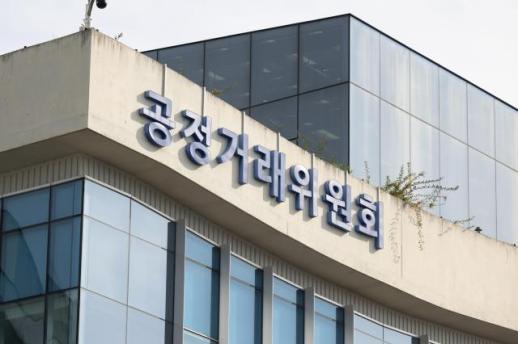 South Korea to Double Fines for Repeat Cartels, Cut Leniency for Self-Reporters The South Korean government said it will toughen penalties for repeat price-fixing, imposing a 100% surcharge increase even for a single repeat offense within 10 years. It also plans to scale back leniency for companies that self-report when collusion recurs within 10 years. The Fair Trade Commission announced the measures on 23 at a meeting of the interagency task force on special management of consumer prices at the Government Complex Seoul. The government said repeated collusion by major businesses, including in sugar, has continued, and that stronger economic sanctions are needed to deter repeat offenders. Under the plan, the FTC will raise the surcharge add-on for repeat violations. Currently, surcharges are increased by 10% to 80% depending on the number of violations over the past five years. The new rule would apply a 100% increase for one repeat offense within 10 years. For self-reporters, the FTC plans to strip immunity or reductions when repeat collusion occurs within five years, and to cut the reduction in half when it occurs within 10 years. The government also plans corrective steps aimed at preventing recurrence, including requiring companies to build and operate internal monitoring systems such as a compliance program and to report price changes to the FTC for a set period. It said it is also considering an "executive removal order" system that would allow the FTC to demand the dismissal or suspension of executives at companies involved in collusion. To make damages claims easier, the government said it will revise litigation rules to expand the current class-action system — which now allows only requests to stop illegal conduct — to include claims for damages from major violations such as collusion. In cartel damages suits, it plans to require the FTC to submit relevant materials when a court requests documents needed to prove illegality or the amount of damages. Market access restrictions would also be tightened for repeat offenders. For industries that require registration or permits under individual laws, the government plans to introduce measures such as canceling registrations or permits or suspending business operations. It said it will expand approaches already used under laws such as the Framework Act on the Construction Industry to major sectors where collusion is frequent. Limits on participation in public procurement would be strengthened as well. The FTC plans to revise the demerit-point system so it must request that the Public Procurement Service restrict repeat offenders from bidding. It also plans to increase restriction periods by six months each for ringleaders and for other participants. An FTC official said the government concluded that sanctions for repeat collusion should be strengthened to the level of pushing offenders out of the market to "completely break the chain" of collusion. The official said the FTC plans to move ahead with the measures this year in consultation with relevant ministries. * This article has been translated by AI. 2026-04-23 09:10:27
 -
 Tata Daewoo Mobility Unveils Hi-Ssen Medium-Duty Truck to Target Urban Logistics Niche 타타대우모빌리티가 중형 상용 트럭 신차를 투입하며 도심형 물류 시장 공략에 나섰다. 대형 모델보다 가격 부담을 낮추면서도 적재 성능과 기동성을 함께 확보해 실수요를 겨냥했다. 타타대우모빌리티는 22일 전북 군산에서 신차 발표회를 열고 중형 트럭 하이쎈을 공개했다. 2024년 선보인 전기 중형 트럭 기쎈에 이어 나온 하이쎈은 시장에서 드문 중형급 모델로, 기존 준중형·대형 라인업이 충분히 포섭하지 못한 ‘틈새 시장’을 겨냥했다. 준중형 트럭 플랫폼을 활용하면서도 5t 규모의 적재 중량을 갖췄다. 임중우 타타대우모빌리티 상품기획팀장(상무)은 “중형 시장에서 보조축 미장착 수요가 전체의 32%에 달한다”며 “중단거리 수송과 도심 작업형 특장차에 적합한 성능과 가격을 구현하는 데 개발 철학을 뒀다”고 말했다. 내연기관 트럭인 하이쎈은 중형 최적화에 초점을 맞춘 전략 모델이다. 회사는 전통적인 대형 트럭 이미지보다 실용성을 강조하며 최고 효율(H), 높은(H) 기동력, 다양한(H) 특장을 내세운 ‘3-HIGH’ 콘셉트를 적용했다고 설명했다. 중형급 대비 325mm 낮춘 컴팩트한 캡을 적용해 도심 운행에 맞췄고, 환경차·냉동탑차·덤프 등 특장차 확장성을 고려한 구조 설계를 반영했다. 하이쎈은 중형급 최초로 LED 헤드램프를 기본 적용했다. 실내는 기쎈의 형태를 계승해 승용차 수준의 환경을 구현했다고 회사는 밝혔다. 전축에는 TLS 서스펜션을 적용해 프레임 강도를 확보하는 동시에 경량화 설계로 주행 안정성과 연비 효율을 높였다고 설명했다. 좁은 도심과 골목길, 특장 작업 환경에서의 기동성도 고려했다. 타타대우모빌리티는 하이쎈 출시로 대형 트럭 ‘맥쎈’, 중형 트럭 ‘구쎈’, 준중형 트럭 ‘더쎈’으로 이어지는 쎈(XEN) 라인업을 구축해 전 세그먼트를 아우르는 체계를 완성했다고 밝혔다. 회사는 차세대 수소내연기관(H₂ICE)과 자율주행 기술 개발도 병행하며 친환경·스마트 모빌리티 기업으로의 전환을 추진하고 있다고 덧붙였다. 이어진 타타대우모빌리티 군산 공장 견학에선 하이쎈과 더쎈 생산을 담당하는 LD숍을 찾았다. 이곳에서는 캡과 샤시 조립부터 최종 품질 검사까지 완성차 생산의 마지막 단계를 수행한다. 시간당 약 1.25대 수준의 생산 능력을 갖췄다. LD 공정은 의장 라인과 샤시 라인을 중심으로 구성되며 총 15개 공정을 통해 차량이 완성된다. 의장 라인과 샤시 라인은 각각 6개 공정으로 이뤄진다. 발표 이후에는 시험 양산 중인 전기 중형차 ‘기쎈’에 대한 질의가 이어졌다. 회사는 기쎈의 양산 준비는 마친 상태라고 설명했지만, 상용 트럭 보조금 정책의 직접적인 영향을 받고 있다고 밝혔다. 김태성 타타대우모빌리티 사장은 “정부와 지자체가 지급하는 보조금이 차량 규격 대비 낮아 생산 금액을 맞추기 어렵다”면서도 “올해 말 생산 라인을 가동해 내년에 판매하고, 현재 무공해차 판정을 받지 못한 수소 내연기차 또한 국제 규격에 맞춰 (정부의) 긍정적인 반응을 이끌어 내겠다”고 말했다.* This article has been translated by AI. 2026-04-23 09:09:25
 -
 Dormitory Cram Schools Gain Traction Among Repeat CSAT Test-Takers in South Korea As more students in South Korea try again for college admission, demand is rising for dormitory-style private academies that combine study support with day-to-day supervision. With repeat preparation requiring long-term focus, analysts say a controlled living-and-learning environment can become a key factor in test scores. According to the Education Ministry and the Korea Institute for Curriculum and Evaluation, graduates have consistently made up about 20% of College Scholastic Ability Test takers in recent years. As competition intensifies and preference for top-tier universities continues, a steady number of students are choosing to repeat the exam or retake it after enrolling elsewhere. In that context, dormitory academies are drawing attention because they can reduce outside distractions compared with commuting programs. They typically restrict smartphone use, enforce regular wake-up and bedtime schedules, and require supervised self-study hours. Megastudy Boarding Academy’s comprehensive campus said it is recruiting additional students to fill openings in its regular program, which begins on the 27th. The program targets students preparing to retake the CSAT and is designed to maintain a consistent study routine alongside structured 생활 management. Admissions experts cite sustainable study routines, a distraction-free setting and systematic oversight as major factors in successful repeat preparation. They say maintaining a steady workload over a long period matters more for score gains than short bursts of performance. In many successful top-tier admissions cases, daily study time and adherence to a routine are cited as key variables. Study management is also shifting away from lecture-only formats toward more individualized support, including analysis of weak subjects, weekly and monthly progress checks, and counseling-based study planning. Some dormitory academies have introduced systems that review students’ study patterns using learning data analysis. Megastudy Boarding Academy’s comprehensive campus said it operates schedules that link regular classes with self-study while running a parallel 생활 management system to improve consistency. It said it focuses on maintaining study rhythm through daily schedule oversight beyond class hours and through counseling programs. To prevent common problems in repeat preparation — including slumps and disrupted daily rhythms — it also runs a management system that combines regular counseling with 생활 checkups. The academy said it applies close supervision that reflects each student’s study situation and psychological condition. An education industry official said, “In repeat preparation, not only study ability but also keeping a consistent daily pattern directly affects scores,” adding, “It is important to reduce the impact of the outside environment and create conditions that allow students to focus on studying.”* This article has been translated by AI. 2026-04-23 09:08:19
 -
 South Korea to Expand LPG Butane Fuel Tax Cut to 25% Starting Next Month The government will expand fuel tax cuts on liquefied petroleum gas (LPG) butane used mainly by lower-income households, anticipating that international LPG price swings tied to the Middle East war will be more fully reflected starting next month. Deputy Prime Minister and Minister of the Ministry of Finance and Economy Koo Yun-cheol announced the plan on the 23rd at a meeting of the interagency task force on special management of cost-of-living prices, releasing a set of measures for items under special monitoring. The government has operated a public suggestion channel since February to gather views on price pressures. It received 117 proposals, with respondents citing food, energy and housing as the biggest burdens, in that order. Reflecting those suggestions, the government said it is implementing steps including tougher penalties for unfair pricing. Starting next month, it will widen fuel tax cuts for LPG expected to rise in price. The tax cut on butane, widely used by lower-income households for small trucks and other vehicles, will increase to 25% from 10%. The government expects savings of 31 won per liter. The cut will run from the first day of next month through June 30. After international oil prices rose following the Middle East war and gasoline prices topped 2,000 won per liter, the government said it has tempered price increases since last month’s 13th by introducing a maximum price system for petroleum products and expanding fuel tax cuts. A fourth maximum price, scheduled to be announced on the 24th, will be set by considering international oil trends along with market impact and the public’s burden, it said. The government also moved to stabilize prices for key food items. It will provide 32 billion won in discounts for agricultural, livestock and fisheries products through June, and will strengthen efforts to curb grocery costs through tariff-rate quotas and import diversification. It will apply tariff-rate quotas to 22 food inputs, including processed egg products, coffee and cocoa beans, and will encourage alternative packaging by easing packaging-material regulations. It plans to wrap up collusion cases involving eggs, flour and starch syrup in the first half of this year. For raw materials and consumer goods with supply concerns, including naphtha and urea and urea solution, the government said it is responding with measures such as bans on hoarding and emergency supply-demand adjustments. Naphtha prices remain elevated compared with levels before the Middle East war, it said. The government has secured 2.1 million tons of naphtha from Oman and Saudi Arabia and will begin bringing it in sequentially from the end of this month. Urea and urea-solution inventories remain relatively stable, but retail prices for vehicle urea solution have edged up, the government said. To address urea shortages at some companies, it will preemptively release public stockpiles and pursue a program to support the price gap for vehicle urea. The government also issued a notice banning hoarding of syringes after finished-product shipment prices jumped 20% due to supply concerns and higher raw material costs. It formed 35 inspection teams to check for hoarding and other violations and to stabilize distribution, it said. Measures were also announced for service items such as private academy fees and telecom bills. Authorities found 2,763 cases of overcharging, including excessive tuition and other fees, and imposed a total of 1.04 billion won in fines. The government said it will create a new penalty to recover unjust gains and raise whistleblower rewards tenfold. Household telecom burdens are easing overall, but some users limit usage due to concerns about extra charges after using up included data or voice minutes, the government said. It will include a bill-protection option in all data plans and provide additional voice and text allowances for those 65 and older. With jet fuel prices surging due to the Middle East war, fuel surcharges on domestic and international routes have risen at South Korean airlines, the government said. To prevent airline difficulties from being passed on to consumers, it will seek to defer financial-improvement measures and also pursue deferrals for airport facility-use fees and slot recoveries. 2026-04-23 09:07:22